
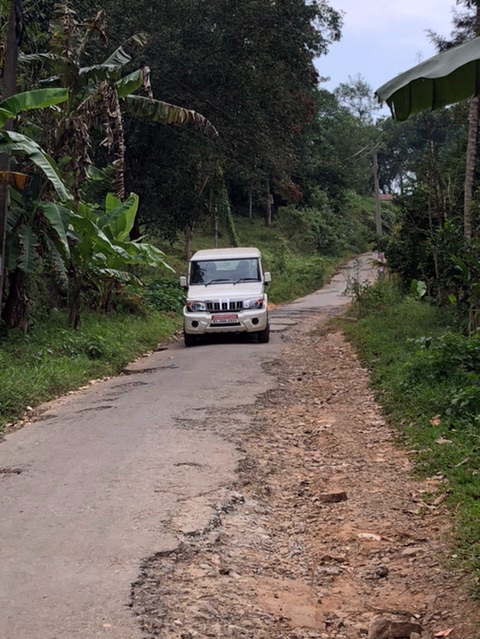
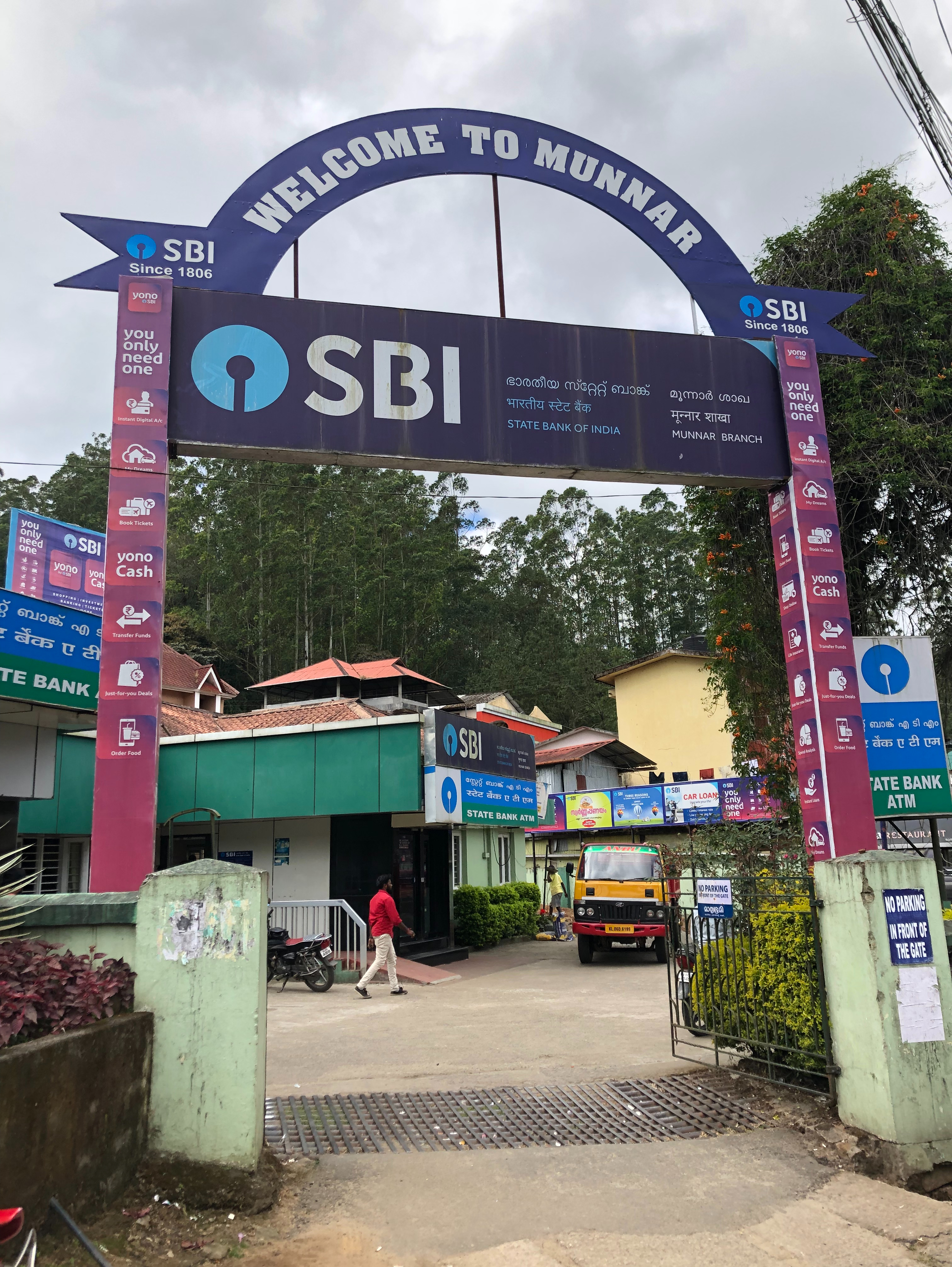
Yesterday was a travel day. Yep, we ventured out of our little piece of heaven. Traveled forty minutes on the sometimes barely existent road in a tuk-tuk to Munnar – the big city in these parts – town of 38,000 inhabitants.
Our plan for the day was to check out Munnar and then go on a TripAdvisor tour called The Tea Trail which included a visit to the Lockheart Tea Museum and Tea Factory as well as a visit with the tea pluckers as they’re called, and the chance to pluck some tea and follow it through until it turned into a cup of tea. We should’ve been suspicious right away since, the tea process being what it is, there’s no way our freshly picked tea leaves could turn into a cup of tea within an hour.
But all in good time.
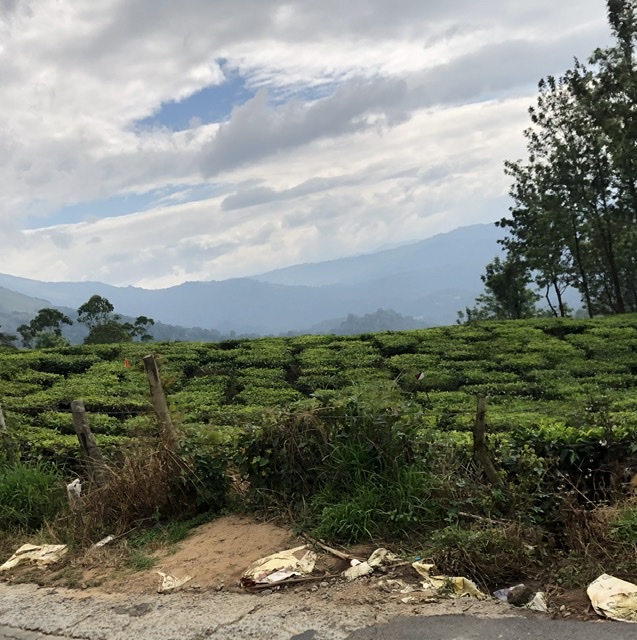
The twisty, uphill road into Munnar, aside from being narrow and deeply rutted at least half the time, was breathtaking not only because of the near-collisions but also the fantastic views of the tea, which grows all over the place in extremely well-ordered glory, under a dramatic sky with clouds wisping around and in front of mountain peaks.
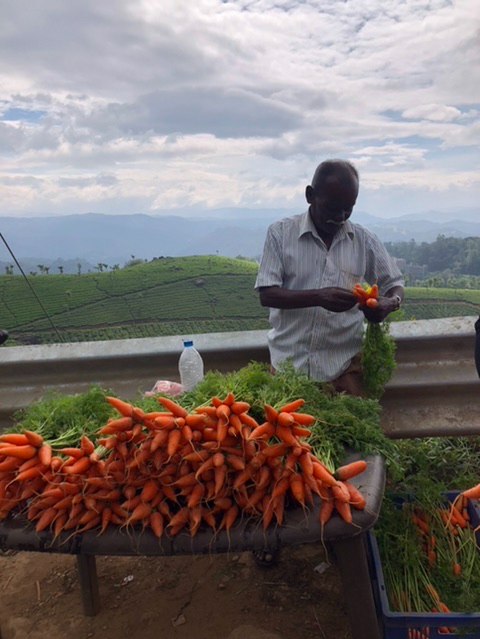
And then, suddenly, and for no apparent reason, there was this.
Why carrots? Who knows. But they were incredibly fresh and their color was the brightest I’ve ever seen. Tempting to buy but we had nothing imaginable to do with them so we sadly gave them a pass.
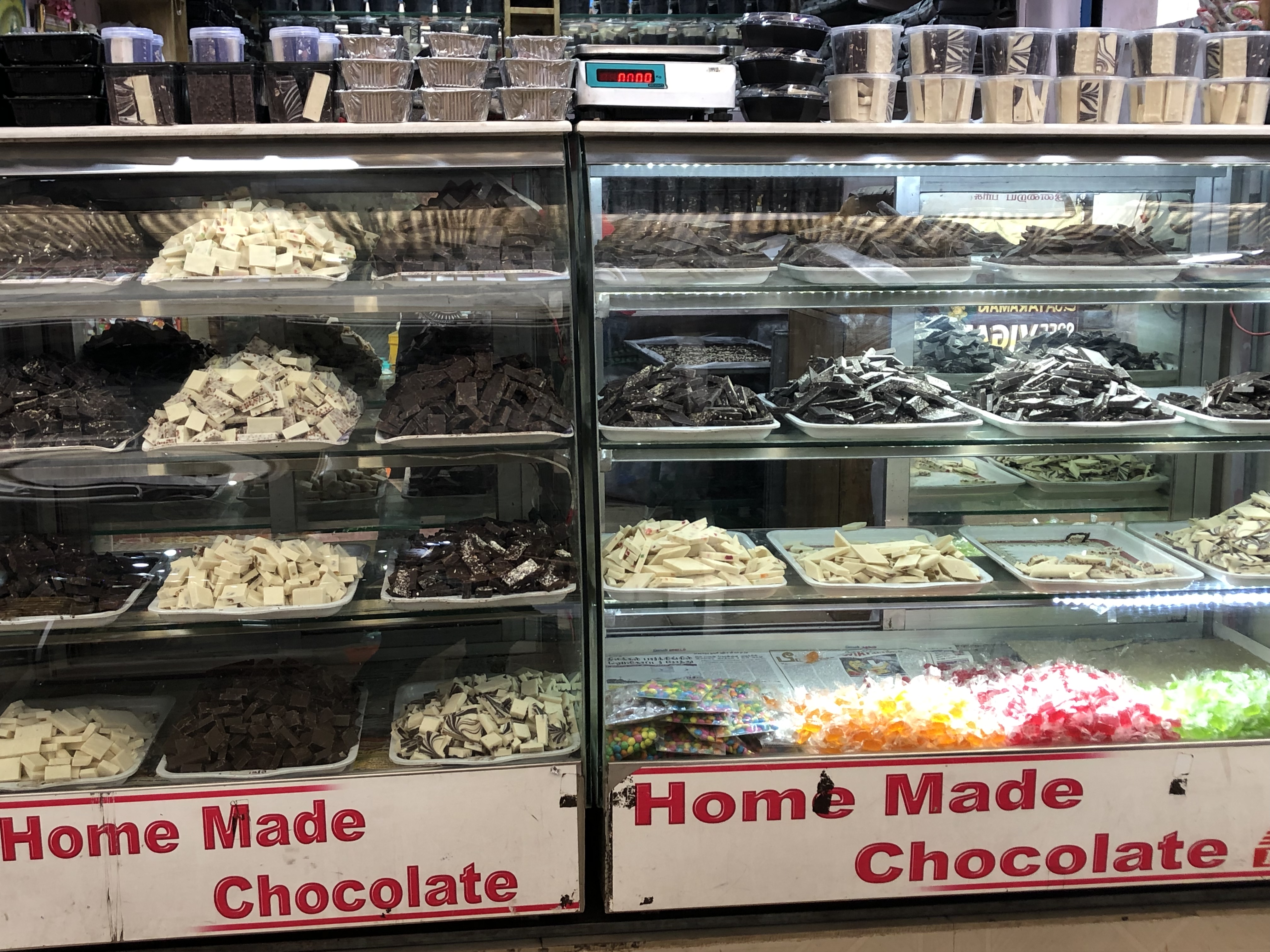
After a discussion about our finances just days ago, we’d decided to be more cautious with our spending (read“my” for “our” and “I” for “we”). But within minutes I’d bought handmade chocolates for one sister’s upcoming birthday and a mini-kurta and smaller box of chocolates for the other. This necessitated our third post office experience – the oddest and funniest yet. But that will appear in a much later post with tips for the traveler to India.
There’s a saying that everyone you meet is your teacher. Way back in Mumbai we had a young man guide us through the Mumbai markets. He was sweet but not much of a guide. We didn’t learn anything about Mumbai markets but we did learn little tips for getting along in India. One of the most useful of his instructions concerned bargaining – always start with an offer of 1/3 the asking price. Sounds insulting but it’s right on the mark. You get a feeling when the seller is finished and really won’t go lower. The final price will be 1/2 to 2/3 of the original price and everyone will be happy.
Our tuk-tuk driver from Munnar to the pick-up point for the tour started at 300 rupee ($4) and ended up taking us for 200. It was a 25-minute drive similar to the one from Ayursakthi Riverdale to Munnar – bumpy, with hairpin turns. He dropped us off at 14:10 for our 14:30 tour. It was a beautiful location overlooking the tea fields. We’d brought warmer clothes so the chilly mountain air didn’t lessen our enjoyment of the luscious green surrounding us.

At 14:40 there was still no sign of our guide/car and TripAdvisor wasn’t answering emails so we began walking the 500 meters downhill to the Lockheart Tea Museum through the enchanting (enchanted?) Eucalyptus tree forest.
My partner’s knee had started giving him grief in the morning. Downhill aggravated his discomfort more than uphill. He’s very fit – a gym fanatic – and definitely not a complainer, but at some point I waved down a tuk-tuk to take us the rest of the way, fuming at TripAdvisor and planning my scathing review of the tour we’d paid for.

At the museum and factory there was still no sign of TripAdvisor other than their stickers all over the place. The cashier spoke no English but the word TripAdvisor gained us free entry. We bumbled along on our own in the amusing museum with its silly relics – like ‘an English bathtub’ and a rusty old iron – and fascinating photos. Once again we found ourselves wondering about British rule. Every photo showed a work crew or social group with at least 15 Indians to every Brit. How in the world did they control India for 300 years?
As we sat at a picnic bunch overlooking the plantation, pondering the lovely view, TripAdvisor and other questions, a woman came running over and asked if we were with the French group. We said ‘no’ and once again tried to explain that we were a TripAdvisor ‘group’. She turned a puzzled face to ours.
No French. No TripAdvisor. No worries. She herded us to the factory entrance where a pleasant man with excellent English said he’d been told we’d arrive at 10 (Eureka!), which was later corrected to 13:00, but happily agreed to guide us through the factory if we would just put on little blue crime-scene booties.
The tour was very interesting. Who knew?
Turns out that all tea – black, green, and white – (white?!) – Orange Pekoe, Earl Gray and Chai – is made from the same tea plants. Black tea is made from the lower leaves, green tea from the top two leaves only, and white from the lone bud between the top two leaves.
Black tea is more processed, going through three drying stages, one of which lasts either 30, 60 or 90 minutes, a heating process, and one of three grinding options. Green tea is processed far less and white tea is barely processed at all.
Black tea is ground fine, finer or even finer, while green and white tea are not ground at all.
Finally, the death blow to my teabag drinking days, we saw that black tea, in its final stages, is separated out by color-sensitive cameras into leaves, stems and fiber. Some tea is packaged with only tea leaves while other are packaged with a mixture of leaves, stems and fibers. It’s the second kind that goes into teabags.
Ugh!
The stems have no flavor but add color. The fiber adds bulk. The first is labeled ‘Orthodox’ tea and the second is ‘CTC’ tea. I never noticed that on boxes of tea but I’ll be looking for it.
When we had a tea tasting experience at the end of our tour we could definitely discern the difference. The CTC tea had a very bitter aftertaste and the taste in general was less pleasing. Sadly, the white tea, which is coveted, has the most health benefits, and is very expensive, was flavorless.

On to the fields where we were too late to meet the all-female tea pluckers. Yes, that’s what they’re called, though it may be a translation from some other language.
Turns out you have to arrive by 13:00 to actually meet those plucky women who are paid the equivalent of $5.65/day to pick 27 kilo of black tea with machines or 400 grams of green or white tea by hand. Pick less than 27 kilo and the per kilo rate drops. Oddly enough, a lower per kilo rate is paid for every kilo over 27, also. Go figure.
Pluckers who are permanent employees are given free lodging but we couldn’t figure out why some workers are eligible while others are not.

22.4 million tons of tea are bought annually in the world. That’s one heckuva lot of tea. China is first in the world of tea production with India a solid second and many other countries, like Sri Lanka, trailing behind.
The Lockheart Tea Factory sells tea to Twinings, Tetley and other tea brands. We might be able to see their export name, Harrison, on some boxes. I’ll be looking for that, too.
The lovely woman who accompanied us in the tea fields lives seven kilometers from the factory. She takes a short cut through the forest, which reminded us of the children we saw in Peru walking home from school up into the mountains. She laughed when we exclaimed at her daily journey saying that she’s still fat. While I found her pleasingly rounded, I wouldn’t have called her fat. Indians don’t find that a derogatory term, though, and use it freely about themselves and others.
She kindly arranged a tuk-tuk to come get us, realizing that my partner’s knee was bothering him. She negotiated a price and we were off. The young driver was truly a maniac on the road, even more than usual, but we negotiated with his sweet brother (picked up along the way) a good price to wait for us while we ate dinner and then drive us back to Ayursakthi Riverdale.
Weighed our options ⚖️ – possible death on the road, good price, possibility that none of the other many many tuk-tuk drivers would be willing to risk life and limb on that road at night – and confirmed the deal.
He took us to a pure veg restaurant where we had what was very possibly our best meal yet. Manchurian Mushroom, Green Pea Masala, Coconut Rice, Garlic Naan, Coffee and the best Masala Chai I’ve had so far – all for a total of about $6.50. Our dinner was served on big banana leaves.
No forks in sight.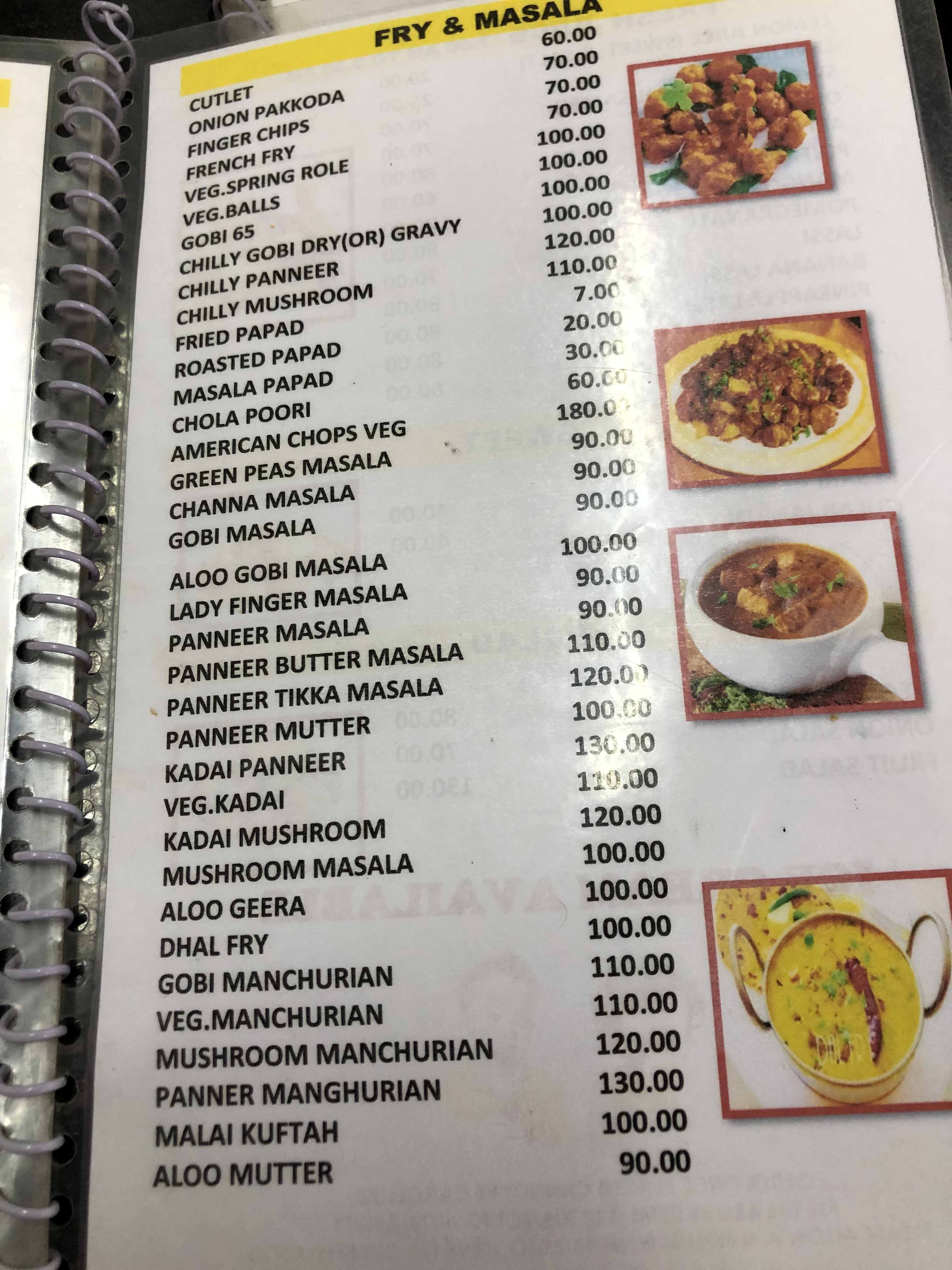
Indians eat with their hands – actually one hand;their right – which is why only foreign tourists get forks in many restaurants and why there’s a sink or two in the restaurant. Washing one’s right hand is essential after the meal. Before the meal is optional.
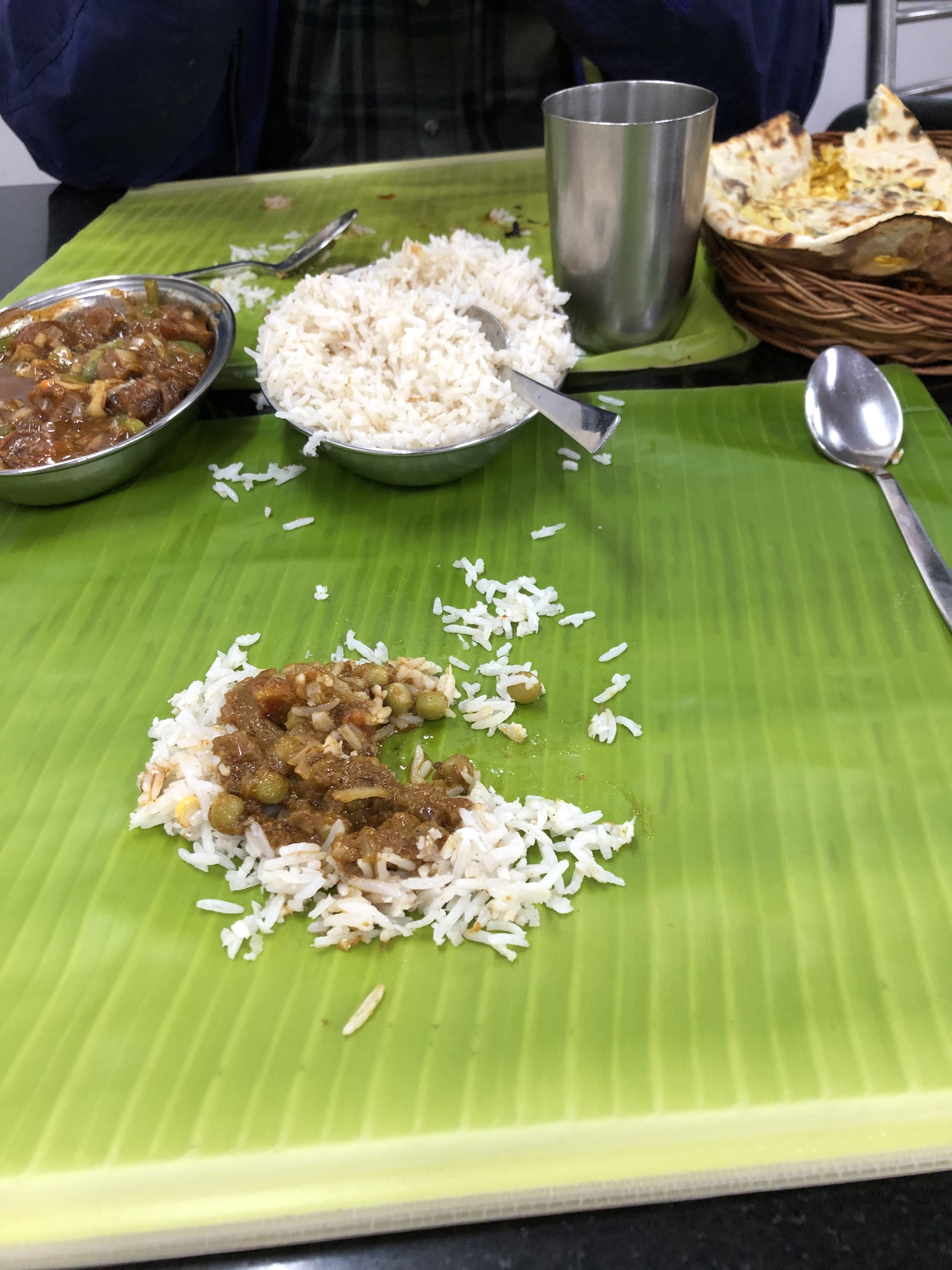
Some foreign tourists emulate the eating with the hands thing. I have to admit, I don’t get it. Adopting customs that are pretty, like wearing a kurta, or practical, like the Indian version of the bidet, is nice. Using a banana leaf instead of a plate is genius. Roll it up & throw it out after dinner. No dishes to wash! But foregoing forks? Really? A bit silly, imo.
Lessons learned from our Munnar Tea Outing:
1. It only takes 3 minutes to steep tea leaves and is well worth the wait.
2. The Lockheart tea trail tour is great! Do it! But it’s done just fine without the commission to TripAdvisor and the added hassle of trying to hook up with them. Go on Monday – the only day the manual plucking of green and white tea is done. Get there before 13;00.
3. Pure veg restaurants probably prepare better veg meals than restaurants that provide veg and non-veg options.
4. Locals know the better restaurant choices. Ask them.
 gettingoutalive