Unknown's avatar

About gettingoutalive

Brought up in one of "those" families - a challenge. Lucky enough to marry someone who inspired me to create a much-healthier family and have a life which helped me begin to love myself. From Texas to California to Wisconsin to Israel. From reliable, responsible child to rebellious teen to fearless young adult to grateful grandmother. Five beautiful, fascinating grown children. Fourteen amazing, enchanting grandchildren. From university teacher to researcher to couple counselor to political spokesperson to yoga instructor. Still married after all these years.

Time, Space, and Soul

Most of us acknowledge that we live in time and space. Many of us also recognize the existence of our soul. These, then, are the three elements in which we live our lives here on earth.

We are influenced by the time of the world that is the 21st century, the time of our specific (in my case baby boomer) generation, the time of our family, the time of our physical lives, the time that is this day, this hour, this minute. Our particular presence influences all those times – some more than others.

We are influenced by the space in which we live. Our country. Our town. Our neighborhood. Our school. Our place of employment. Our home. Our presence influences those spaces as we enter, leave, and re-enter them – some more than others.

Our soul manifests in our daily life as a subtle, animating force that moves us toward compassion, peace, and authenticity often acting as an inner voice or whisper that guides our choices beyond mere ego-driven survival. Often described as the invisible subject that witnesses life’s sensory inputs, it is a shift from body consciousness to a state of peace and empathy.

People we think we know, places we are intimately familiar with, times that seem indistinguishable from one another – never once has there been a person, place, or time that’s been repeated. The river of life is constantly flowing, and we can never reenter it at the same place. The present moment never was nor will it ever be again.

People, places and times all have an effect on us. And each of us has an effect on the people, places and times where we are present in any given moment.

Have you ever approached a small group of people and encountered a sudden silence?

Do you remember the indentation of your foot on the wet sand as a small wave goes back out to sea?

Did you watch the Berlin wall fall? The resignation of Richard Nixon? The change in attire in public places over the late 20th century?

Certain times, place, and people draw us closer to Divinity, closer to the authentic valued direction of our lives, just as certain times, places and people obstruct us from this path. These realities sometimes lead us to procrastinate in our journey toward the Divine, toward our own best selves.

If only this were happening at a different time, a different place, with different people. There will be a better time, place or person. When the semester ends. When I’ve found the right partner. When we can afford a bigger house. Tomorrow, tomorrow, and tomorrow.

Or we can realize that every ‘broken’ time or place or personal interaction occurs for us to have the opportunity to restore, mend, repair it with exactly the resources that we have at hand in that moment. Every moment, place, or person is a half life waiting to be completed by us, exactly as we are in that moment.

We are needed as much as we need others. And we do need others. In this moment.

And this moment.

And this one.

This person, time, place has been waiting especially for us and this moment. Maybe for a simple hello, a gesture, a smile, a nod. Pulling a weed, turning on a faucet, lighting a candle.

Right now, in this moment, in this place, there is a soul that is half. Maybe it’s your soul.

When we are living completely in the moment, we are living unfragmented. We are living with the full awareness and consciousness of our own Divinity. We are forging heaven and earth into a complete circle. No magic or complex spiritual devotions. Simple and profound recognition of here and now.

There is a parable of a person walking between small villages at night through a forest. Her last candle sputters out and she’s unclear of her path forward. Suddenly there is a bright flash of lightning and the entire road ahead, leading into the next village, is illuminated.

That flash of lightning is the present moment. Clarity is not to be found in the past or the future.

How many times, when in conversation, do we find ourselves having lost the thread of the other person’s thoughts because our minds were on possible responses?

Can we trace the source of our irritation with another’s speech or slowness of movement to our concern about our next task?

Do we find ourselves avoiding people who dress or look like people from our past with whom we’ve had unfortunate encounters?

What’s so hard about being in the present moment? Once we’re convinced of its importance for our mental health, our happiness, our relationships, our successes, getting to where we want to go, just do it.

Let’s carry out an experiment.

Find a comfortable place to sit. You can add a scent you love, calm music, wear comfy clothes, or come as you are to the place closest at hand. Arrange your limbs so that there’s no pressure on any joint. Sit up straight and close your eyes.

Now, clear your mind and stay present in every minute that arises.

Uh oh, my left forearm itches. And what is that annoying noise coming from upstairs?

Back to clearing the mind.

Did I remember to buy tortillas for tonight’s dinner? Tomato sauce? Did I put the beer in the fridge?

Back to clearing the mind.

And so it goes. It’s been called mental clutter or monkey chatter or life. It’s how we get pulled back to the conversation or outing that didn’t go as planned, to the broken wine glass, to a lost opportunity, and pulled forward to the next vacation, the day we’ve finally lose that last pesky 5 kilo, the clothes that our teenager has undoubtedly left on the floor in his room…again.

What did she really mean? Why don’t they listen to what I have to say? Why doesn’t this hotel room look like the photo on booking.com? How long will it take the airline to refund my money? Will they ever refund my money? How can I convince him that he’s going about it all wrong? The solution is so simple, why can’t she see it? Again with the complaints about the food?

What’s it all about, Alfie? In mediation we call it the underlying interests. What’s going on on the surface as opposed to what’s really the motivator. We can’t hear it if we’re living in a different moment.

Lech lecha…לך לך. The Jewish forefather, Abraham, heard God’s directive and listened to it carefully. A direction not to just physically leave his location but to go inward. Go into yourself. Discover who you really are. Until we do the work the present moment will continue to be elusive.

Until we quiet the cacophony of the never ending internal voices – our parents, our teachers, our friends, our colleagues, our spouses, our neighbors, and, perhaps the noisiest of all, our ego – we cannot hear the quiet, constant, inner voice we all possess. From that inner, authentic voice comes our ability to be in the present moment. And from the present moment, the only place that life is actually lived, emerges compassion, kindness, acceptance, seeing the other, understanding the underlying interests (even our own), inner quiet, and, ultimately, happiness.

This is who I am now, in this moment. This is where I am in this one precious life, in this moment.

I’m sitting with my friend. I’ve heard everything she’s said but I want to check to make sure I’ve understood what’s really going on.

I recognize my rising feeling of discomfort from having overstayed the time my life comfortably allows for getting back to work. I’ll be gentle but honest about our time having come to a close.

He associates not being able to walk into the kitchen because the floor’s just been washed with his mother’s obsession with cleanliness. It’s fine to go over where he’s walked so that he doesn’t have to face that particular demon.

Remove annotated region only

My stomach feels fluttery. My heart is pounding. What’s going on?

Nothing is actually going on in this moment. Maybe something went on a few minutes ago or I’m remembering something from yesterday or my mother’s last visit. Maybe it’s a vestigial remnant of a past danger.

I don’t know what’s going on. But something sure is. I feel anxiety threatening to overwhelm me.

How do we bring ourselves into the present moment when our bodies are in freeze or flight mode?

The answer is quite simple. Simple like being in the present moment in general. That is, simple in theory.

Just breathe.

We all do it. We do it all the time. But – and here’s the catch – we don’t notice that we’re breathing. It’s a spectacularly huge gift we’ve all been given at the very moment of our birth. It’s free. It accompanies us in every second of our lives without our having to make an effort.

And that’s the catch.

Let’s do an experiment.

Find a comfortable place to sit. You can add a scent, some calm music, comfy clothes or come as you are to the place closest at hand. Set a timer for five minutes. Arrange your limbs so there’s no pressure on any joint. Sit up straight and close your eyes.

Lech leicha – go into yourself.

Follow the breath rising in the middle of your body with your natural inhalation and descending in the middle of your body with your natural exhalation. After three breaths start counting slowly for the duration of your natural inhalation and a new count for the duration of your natural exhalation. After three breaths, if the count is unequal, add to the shorter of the two to equalize your inhalation and exhalation. If they’re equal add one count to each.

Let your belly pouch outward with the inhalation and draw inward with the exhalation. Let your chest rise slightly at the end of the inhalation and return to its natural resting place during the exhalation.

Feel your deepening breath.

If it suits you, hold your breath at the end of the next inhalation, releasing it when your body invites your exhalation. Remain at the bottom of your exhalation until your body asks for new air.

Now, just breathe.

Paying close attention to your inhalation, the holding of breath, your exhalation, and the stillness of your body momentarily emptied of breath.

With the sound of the timer, slowly open your eyes.

Do you feel calmer?

Nothing has changed. You’ve simply allowed yourself to return to the present moment. The very definition of anxiety is the fear of something that hasn’t happened. It might happen. It might not happen. Anxiety is amorphous.

As Mark Twain once said: “I’ve had a lot of worries in my life, most of which never happened.”

Anxiety feeds on imagined future scenarios rather than present reality, but our bodies experience them as quite real. Our conscious breathing brings us back to the present moment where the causes of our anxiety are somatically recognized as non-existent.

Living in the present moment is not a fad. It’s not New Age. It’s not woke. It may be all those things but it’s also none of those things.

Living in the present moment allows us to be in touch with the spirit of Divinity that resides in each and every one of us – believers, agnostics, and atheists alike.

Living in the moment reduces stress and anxiety, brings greater joy and contentment in simple everyday activities, improves our health and mental clarity, improves our relationships with others and with ourselves.

Letting go of the need to control everyone and everything around us. (and, truly, was there ever a more unrealistic goal?) Acknowledging and accepting that our way isn’t the only way; sometimes not even the best way for ourselves!

The obstacles can be troublesome:

ego

sloth

ill will

restlessness and worry

doubt

These hindrances, if not managed, lead to unskillful actions and unhappiness – exactly the opposite of living in the present moment. Paradoxically, perhaps frustratingly, they are managed through meditation, mindfulness, breathing and cultivating opposing mental states such as lovingkindness for ill will.

No one said having a calm life would be easy.

But so worth it.

It’s a lifelong process.

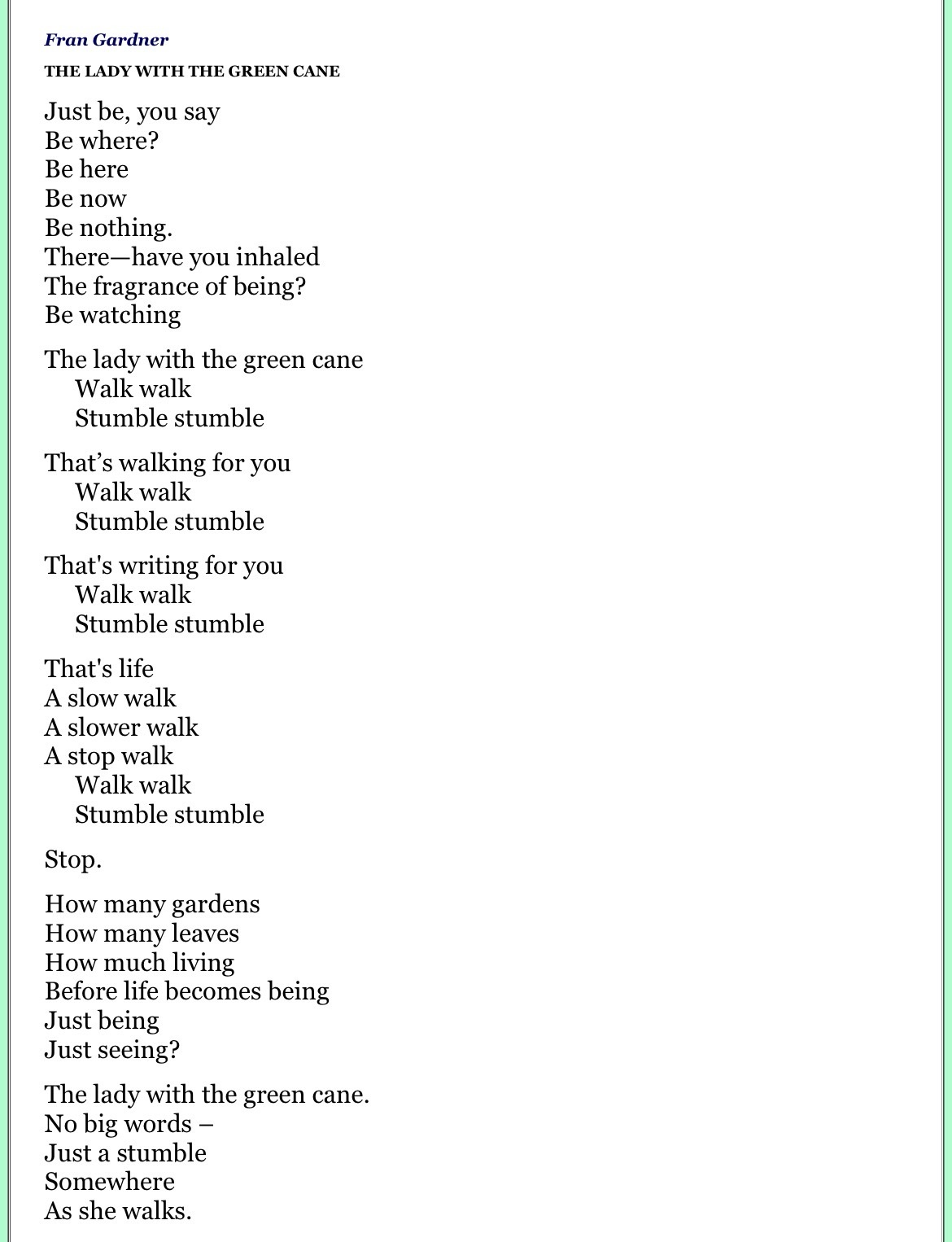
The Green Cane

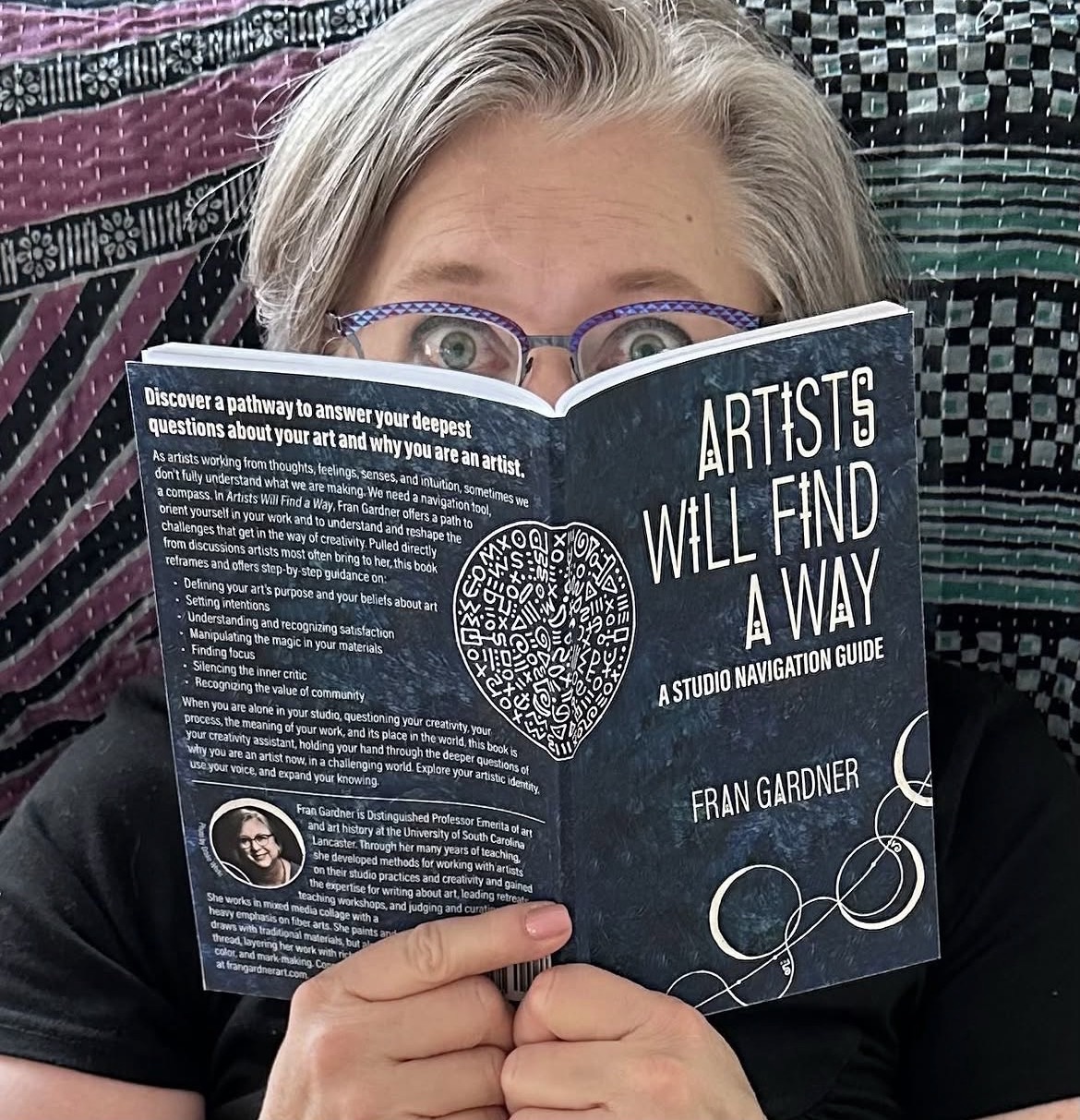
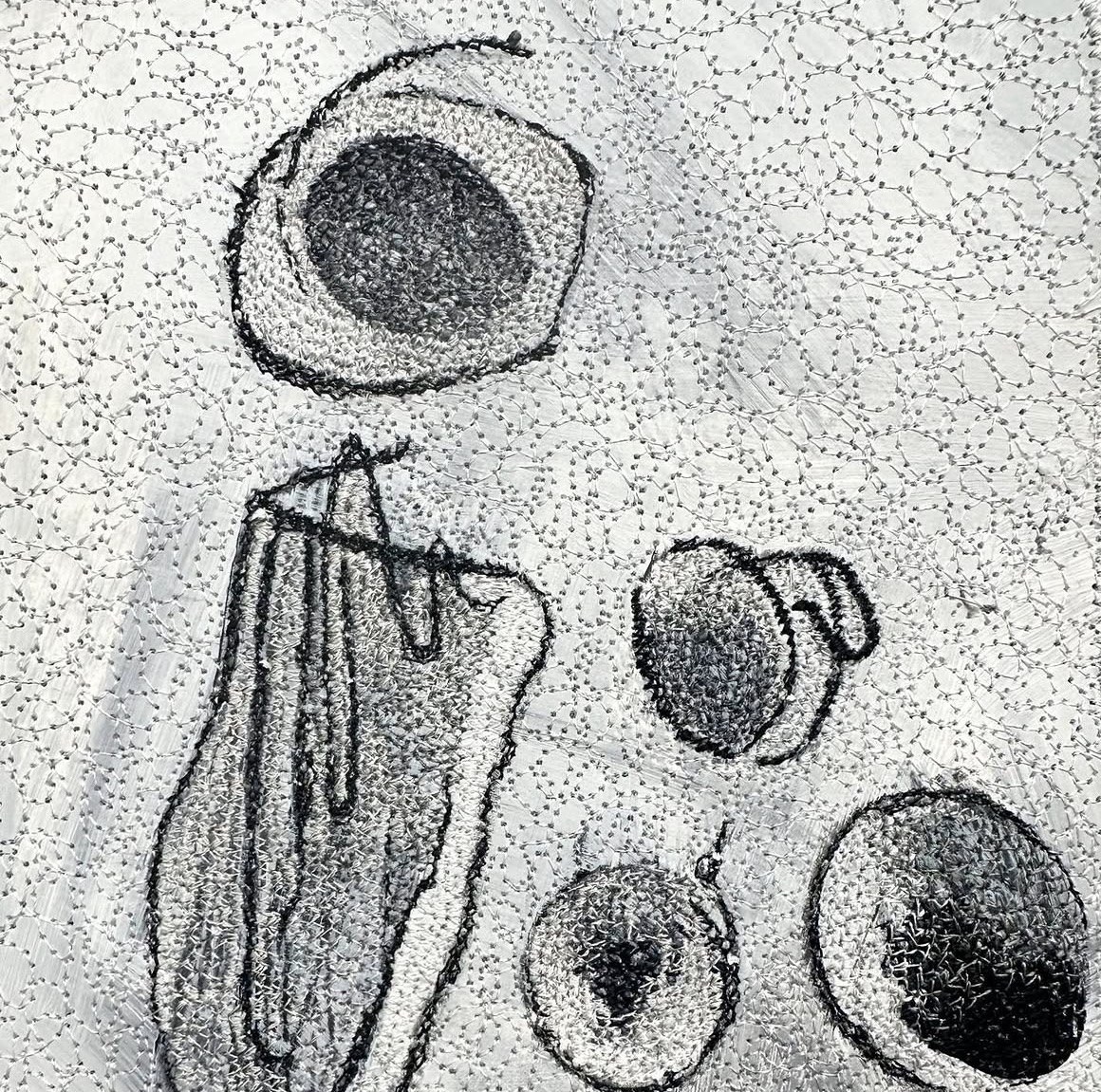
In this week’s writing class our teacher offered us a poem called The Green Cane by Fran Gardner. The poem is from an anthology called Wordgathering: A Journal of Disability Poetry and Literature. Ms Gardner is an award winning artist and professor emerita of art and art history at the University of South Carolina Lancaster. She paints and draws with traditional materials, but also with the sewing machine, layering her work with rich texture, color and mark-making. She writes critical essays about art, leads retreats, teaches workshops, and judges and curates exhibitions.

She also has MS

Dealing with Polymyalgia rheumatica (PMR), an inflammatory disorder causing severe stiffness, pain and reduced mobility, for the past three and a half years, and having had a hip replacement four and a half months ago, and maybe just being blessed with 73 years on this earth, these words had a profound affect on me. I don’t even remember what our teacher’s prompt was.

My mind embraced Gardner’s situation – an artist whose hands might not be consistently trustworthy – and my thoughts tumbled on from there. Of course I thought about the effort I exercise every morning to get my body moving and the mind over matter it now requires to keep my joints oiled during the day. Of course I did.

I instantly identified with the question of the worthiness, the significance, the raison d’etre of a life with decreased mobility and, perhaps, one day, much more compromised mobility. Of course I did.

My mind swirled on from there.

I flashed on the many times I walk, slowly, carefully, often painfully, and notice younger people around me walking, climbing stairs, seemingly without noticing their movement. I used to be like that. I don’t think I appreciated it nearly enough.

But my thoughts didn’t stop there.

They began to inspect the word ‘stumble’ like so many smooth stones in my hand, making a soft clicking sound, here smooth, there a slight roughness.

There are many ways we stumble in our lives.

In our relationships

In our speech

In our memories

And, yes, in our bodies

In my conversations with my students, my grown children, my grandkids, my young friends, I listen to their indecision, their parenting issues, their anxieties, their stumbles and feel empathy and also deep gratitude that those kinds of stumbles are no longer mine.

My memories, always as selective as everyone’s invariably are I suppose, are far gentler and kinder in their stumbles. I care less when asked if I remember a shared experience, a place, even a person, when the answer is ‘no’ often followed with the pleasure of an old memory becoming a new/renewed experience.

Stumbling can be scary. Relationships damaged, bones broken, feelings hurt, tangible productivity diminished.

Who are we when those results show up in our lives?

I didn’t mean to take that tone with him…again.

Surely that wasn’t me she’s remembering on that beach trip.

He just wouldn’t have fit in with the other people I invited.

I wish I could still volunteer for food distribution to families in need.

Who are we when our life becomes just being and seeing? When we just stumble somewhere as we walk through our lives?

What is the inherent value in a human life?

Judaism sees life as a mission to bring divine light and compassion into everyday existence, transforming the material into something spiritual.

Christianity claims the primary purpose of life as glorifying God and preparing for eternal life.

The Dalai Lama says that his religion is kindness.

Nietzsche argued that human existence is only eternally justified as an aesthetic phenomenon. Art making life life bearable by transforming suffering into beauty.

Oscar Wilde, saying life imitates art, defined the meaning of life as treating our days, choices and identity as a work of art – a living masterpiece of self-expression.

Sometimes attributed to Osho is the thought that yoga and meditation are not Hindu but ‘undo’; the benefit in learning to cherish and breathe in our one precious life, as the poet Mary Oliver had described our time on earth, not by doing.

Can we inhale the fragrance of being?

It’s harder than it sounds.

All These Places had their Moments

Rishikesh circa 1968.

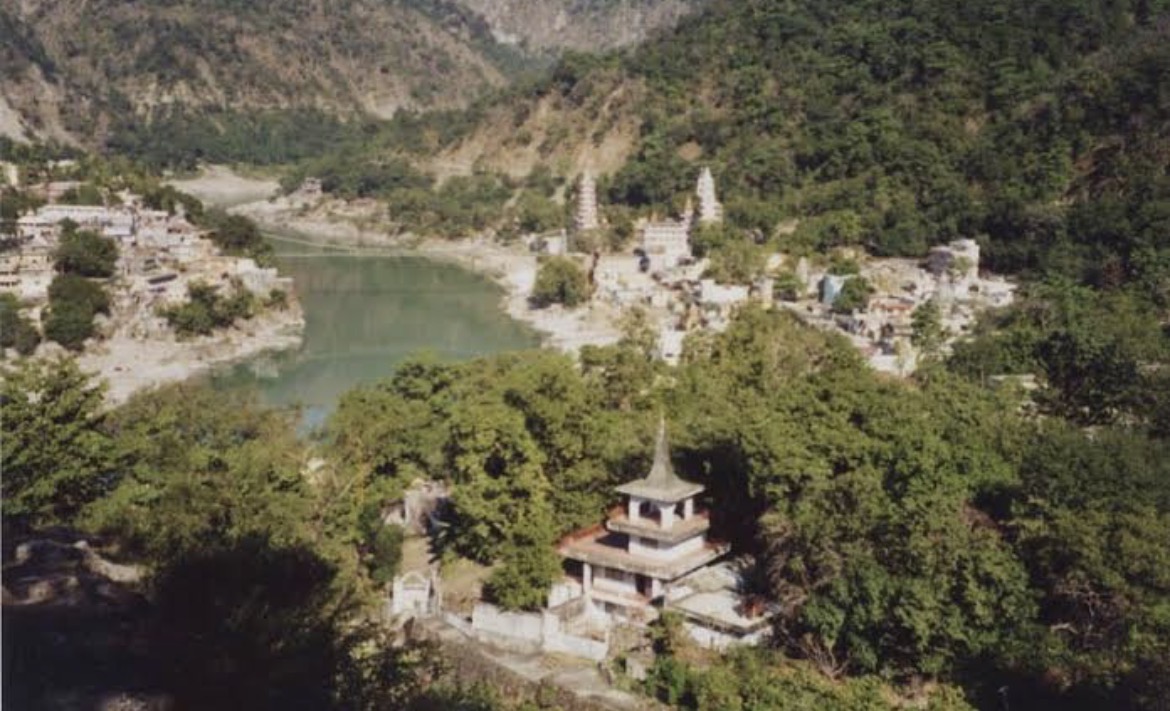
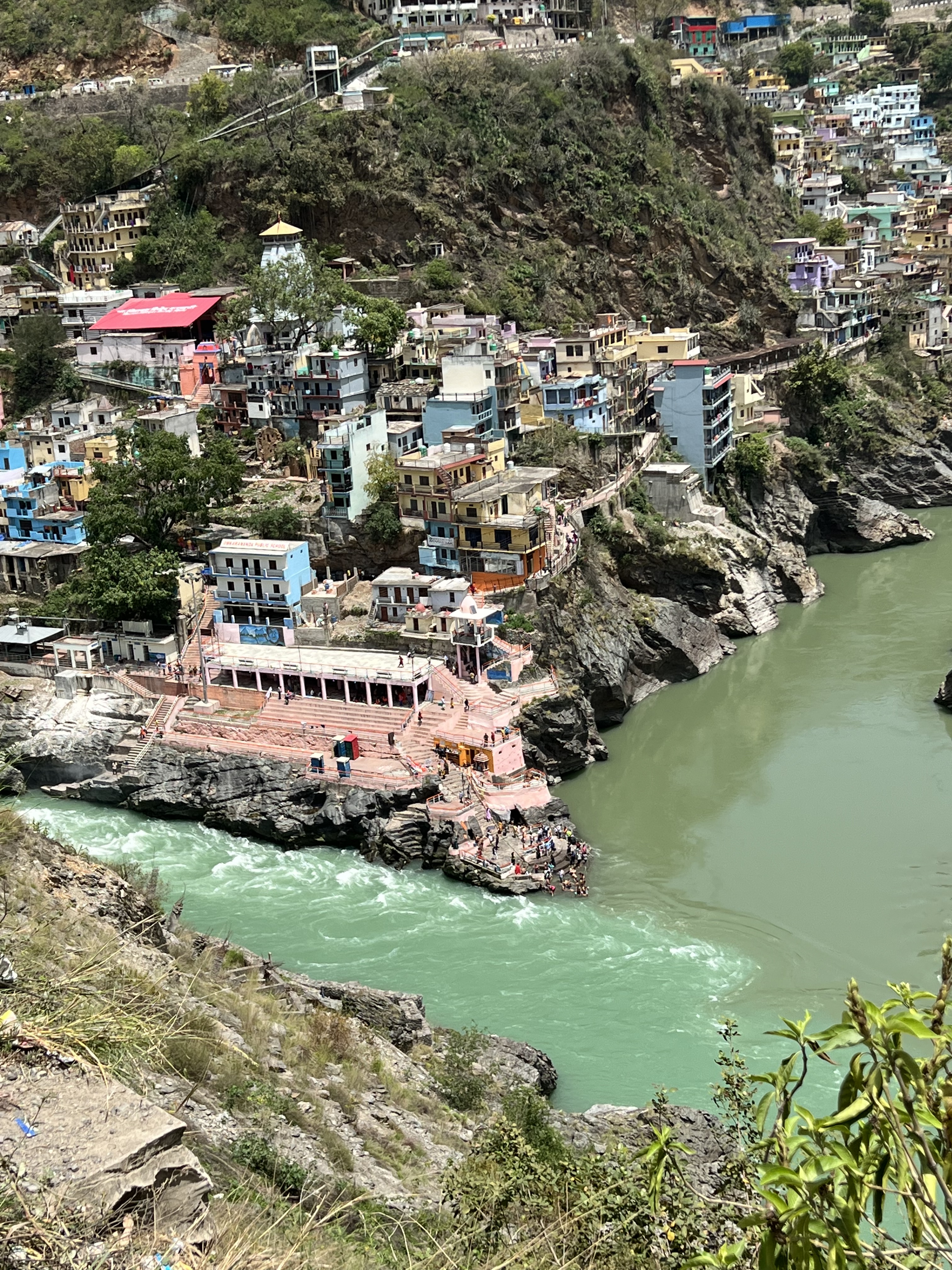
Undeveloped. A sleepy town of approximately 20,000 souls. Essentially a collection of isolated ashrams and small neighborhoods. It was primarily for dedicated Hindu pilgrims and ascetic monks (sadhus). Considered a sacred spiritual capital where meditation is believed to lead directly to Moksha (liberation from the cycle of birth), Rishikesh has served for centuries as an ideal environment for those who have renounced worldly life to focus on intense spiritual practice, penance, and the study of the ancient Hindu scriptures. There are laws against the possession of alcohol and meat products within the city limits to this day.

The Ganges River descends from the Himalayas and enters the plains at Rishikesh. The Holy Ganges is believed to originate from the hair of Lord Shiva, one of the three primary gods of Hinduism, as a lessening of the overwhelming destruction that would have befallen the people along its banks were it to be unleashed with no restraints. Its waters are clean there to this day.

In 1968 Rishikesh was still an ideal place for isolation and solitude. The surrounding forested hills and natural caves provided the deep quiet and stillness required for advanced meditation and sadhana – the conscious effort to refine one’s inner and outer self.

February, 1968, brought cataclysmic change to Rishikesh.

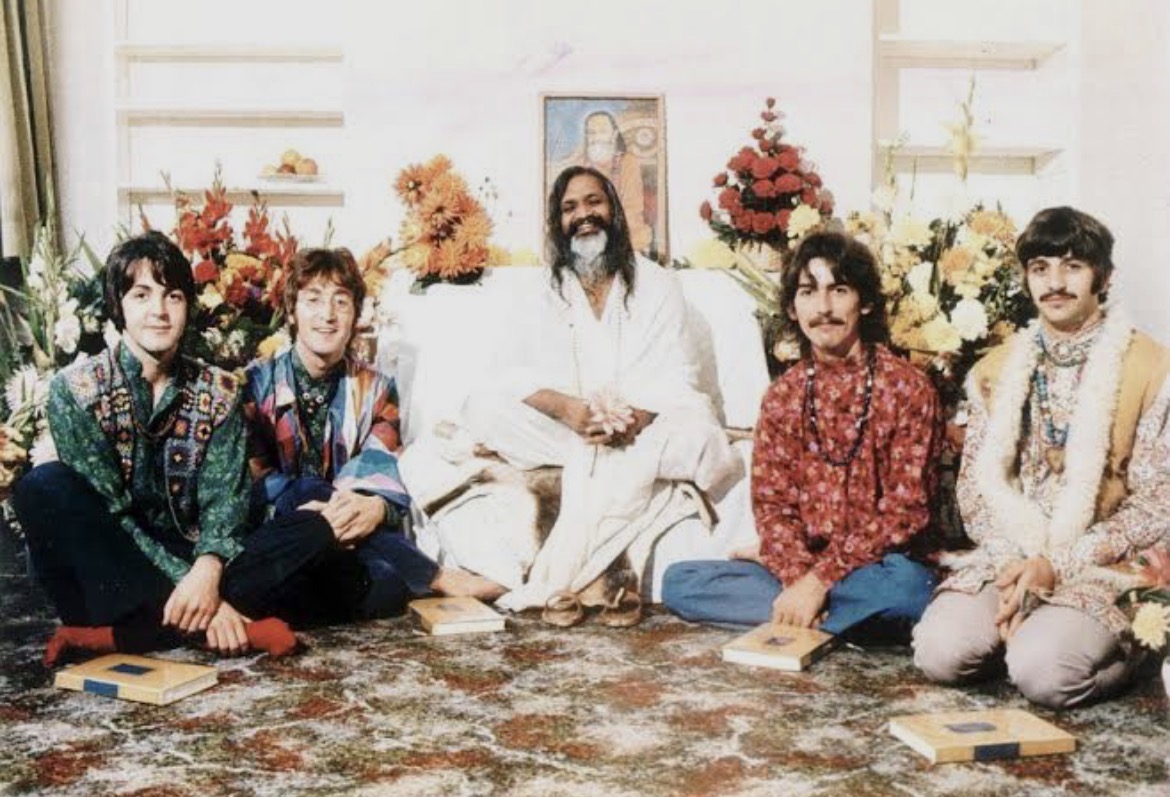
George Harrison’s wife, Pattie Boyd, had enthusiastically recommended Maharishi Mahesh Yogi’s lecture at the Hilton in London on August 24, 1967. John Lennon, Paul McCartney and George Harrison attended (Ringo was admirably with his wife, Mauareen, who had just given birth to their son, Jason.) After the public lecture they had a 90-minute private audience with the Maharishi.

The Fabulous Four cancelled their recording sessions to travel with the Maharishi by train to a 10-day retreat in Bangor, North Wales. It wasn’t long before they made the pilgrimage to Rishikesh to the Maharishi’s ashram, The International Academy of Meditation (today known as The Beatles’ Ashram) – 84 beehive-shaped meditation huts. 84 holds spiritual significance, representing the 8.4 million species believed to exist in Hindu philosophy or the 84 classic yoga postures.

Between February 1968 when the Beatles first came to Rishikesh to study at the ashram until mid-June 1968 when they made a dramatic departure from the ashram, later claiming rumors regarding the Maharishi’s inappropriate behavior toward female students (including Mia Farrow), Rishikesh’s population exploded from 20,000 to approximately double that. By 2011 the population was estimated to be 70,000. Today there are almost 250,000 residents in Rishikesh.

Aside from the rumors of inappropriate behavior, sadly a common rumor attached to many gurus (Bikram Choudhury, Yogi Bharani, K Pattabhi Jois, Amir Desai, Kausthub Desikachar and Osho, to name just a few), there were significant differences in lifestyle. The Maharishi strongly opposed the use of drugs particularly hallucinogens like LSD. He was repeatedly angry with the Beatles’ violation of the ashram rules by using drugs.

At the time, the Beatles, or some of the Beatles, felt that the Maharishi was exploiting their name for financial gain. In later years, however, both George Harrison and Paul McCartney expressed doubt about that initial judgment. Harrison visited the Maharishi in 1993 to ask forgiveness.

It’s my personal belief that the Maharishi, rumored to have been brought up in a comfortable, high status family, was familiar with the possibilities improved finances could provide for the spreading of Transcendental Meditation worldwide as well as in Rishikesh. He was a bit of an enigma which opened him up to detractors and devoted followers. When he traveled to spread his philosophy and practices he spared no expense. Private helicopters, private airplanes, an expensive car and driver. In his daily life he saw material wealthy as irrelevant, wearing simple robes, keeping a strict vegetarian diet, and living in the ashram under the same conditions as his followers.

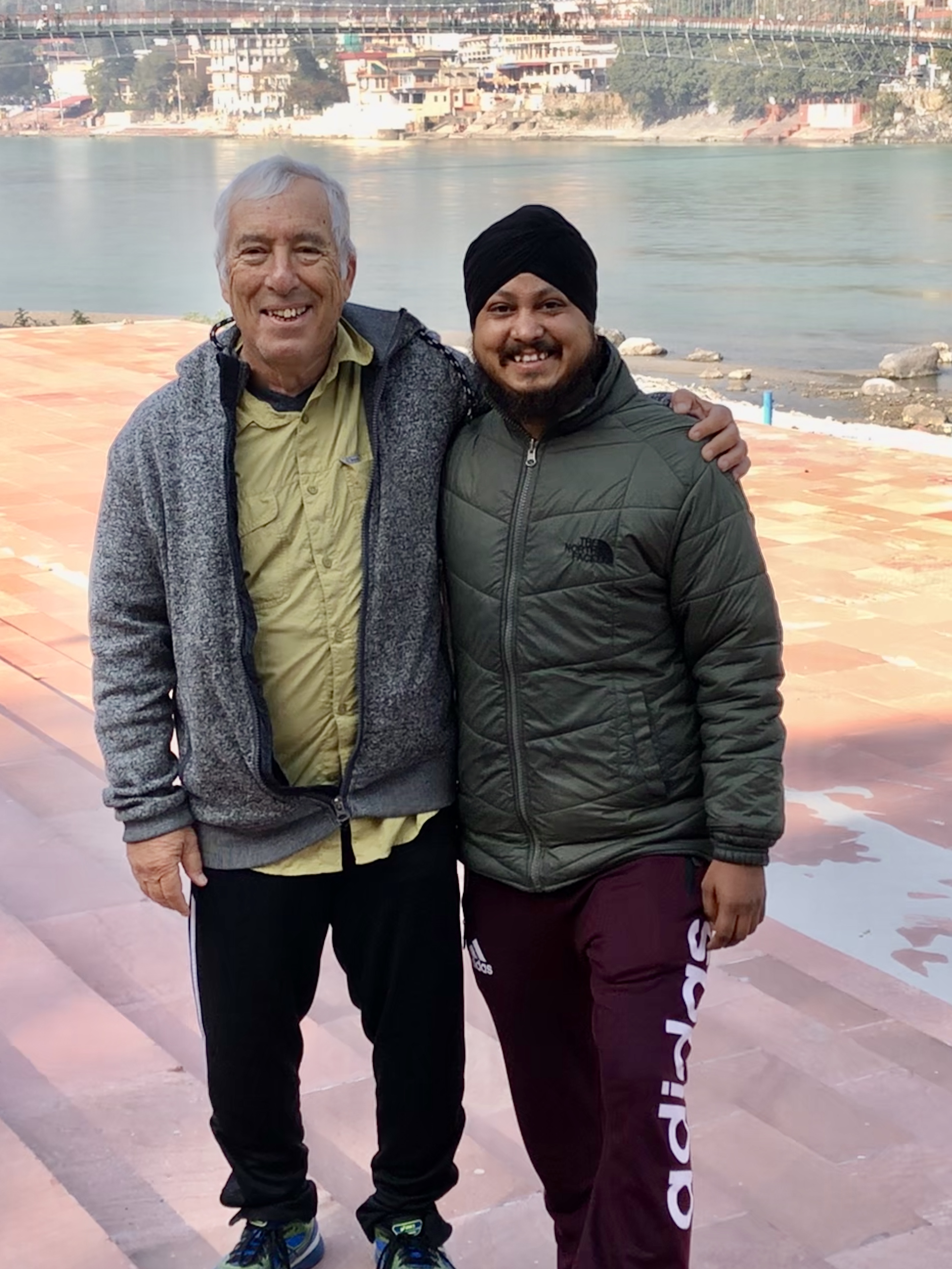
I’ve experienced two yoga gurus in Rishikesh – both young men; one a Sikh and one a Hindu. I began learning with each of them when they were more or less just beginning to teach. One was an excellent teacher and very devoted to Ayurvedic practices. The other (the Sikh) was quite sweet and, while my own yoga practice was on a higher level than his, I enjoyed his approach to life and the practice.

They both started out with the age old practice of Dana – there’s no set price for paying the teacher; one pays as she sees fit or can afford. As a Westerner, and a yoga teacher myself, I always paid well. But after a year or two each started charging a set price. The Sikh had started teaching Europeans, primarily Germans and Brits, online and was charging a pretty exorbitant price. The other guru charged a reasonable amount but preferred to teach 4 or 5 students at a time so that he could earn more. Reasonable but annoying as I no longer practiced yoga with him but my husband, who was a reluctant yogi, had started going every day and didn’t feel comfortable in a group.

The point being that there may be a cultural element involved in the world of remuneration when Westerners and Indians find themselves in new and unexplored waters. The Beatles and the Maharishi. Myself and my two yoga gurus.

While George Harrison remained the most dedicated to Indian spirituality and meditation, Paul McCartney and John Lennon both continued to practice Transcendental Mediation after their split from the Maharishi. Though other than Harrison’s trip to Rishikesh to ask forgiveness they did not spend more time in India, McCartney met up with the Maharishi again in Holland in 2008. John Lennon, the most angered and disillusioned, (writing “Sexy Sadie” about the Maharishi) summarized his feelings in The Beatles Anthology saying “We believe in meditation, but not the Maharishi.”

Fair enough.

The world of Eastern philosophy and the meditative way of life is not our Western philosophy or way of life. It has much to offer. My 30 years of study has certainly changed my life – and only for the better. Entry into that world should be done with care and understanding. There are adjustments to be made for it to be compatible with our lives. There are many young people, and not-so-young people, who have lost themselves and become mostly confused as a result of dabbling, or following the wrong teacher, too deeply and too far.

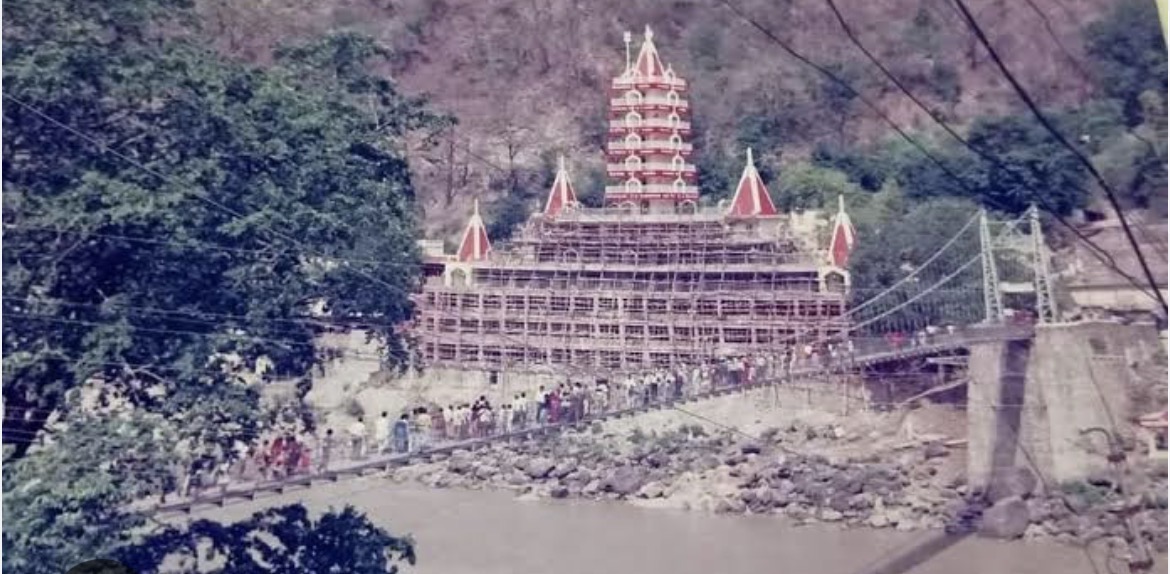
The town of Rishikesh has suffered from the reverse process; the uncontrolled, reckless entry of Western philosophy and way of life.

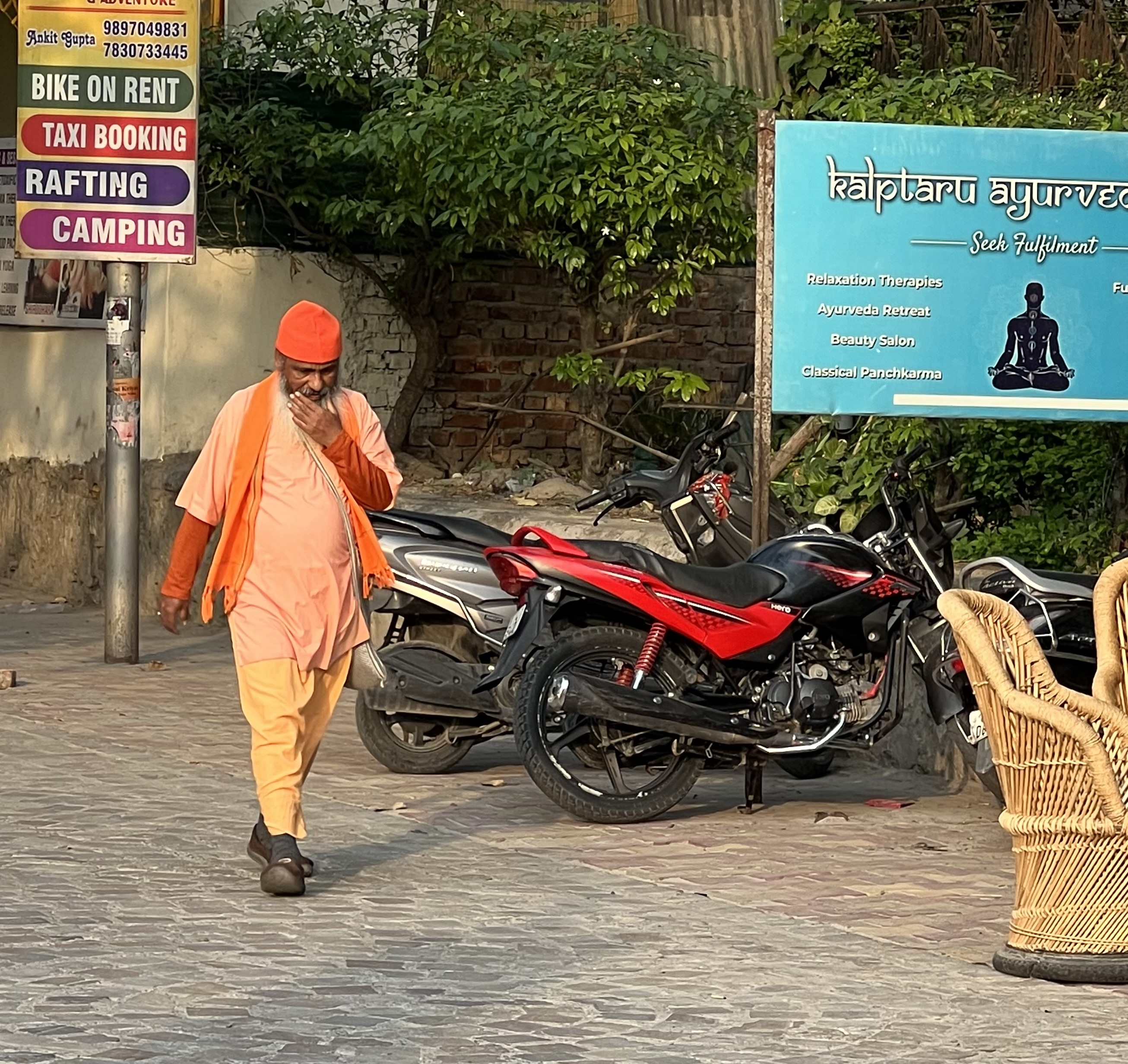
Noisy, crowded, commercial, chaotic, only the beauty of the mighty Ganges and the sweetness of the native population continue to save it from totally losing itself in confusion.

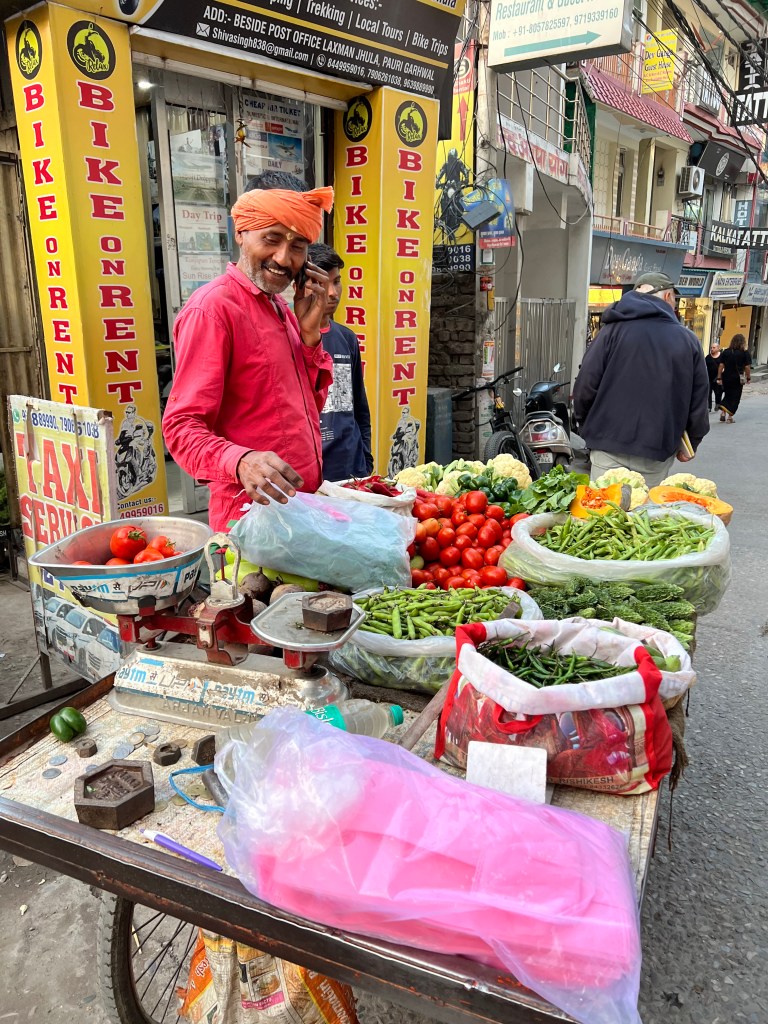
Walking down the street, both sides are filled with shops. Honking horns of motorcycles and jeeps carrying rafts keep pedestrians jumping out of the way. Many shopkeepers try to take advantage of language differences. Their currency- rupees – is not strong and often they want to make what amounts to an additional dollar, and, really, who can blame them, and, for most of us, who cares? But just this week I had a shop owner try to charge more than double the international price of gold.

That didn’t used to happen. It’s still an anomaly but not a good sign.

And, yet, as I write I can hear the evening Puja ceremony across the river and look out on the Ganges and anticipate a pleasant, perhaps familiar, server at one of our favorite restaurants. It will cost the equivalent of $3 or $4 and be delicious. I know that I’ll sit on the ghat tomorrow and watch the Ganges flowing past me and spend a pleasant two or three hours just being in the serenity that is still Rishikesh off the beaten path.

Rishikesh is still a place where one can…just be.

Namaste

Ilia Malinin on Loss

By Robert Snow 

1845

When to his feet the skater binds his wings,

As of Jove’s messenger the poet sings,

He, like the hare, outstrips the Northern wind,

And casts, in doubling, a keen glance behind.

By art that to the frozen lake conveys

A glowing interest in winter days,

Before the gazer now he seems to fly,

Now with a backward stroke deludes the eye;

Precipitating curves on curves anew,

Retuning ever, to his centre true.

With air of noble ease, and swan-like grace,

He balances awhile in narrow space;

Then sweeps far round with power not shown before,

And on his crystal plain does all but soar.

Yet is his pastime brief; the solar heat

Grows strong; again the lapsing waters meet,

And to dull, plodding earth confine his daring feet.

I fell in love with the free skating clips shown endlessly in the weeks leading up to the Olympics in Milano Cortina. Specifically I was mesmerized by Ilia Malinin, Alysa Liu, and Maxim Naumov. I watched spellbound as they executed quad axels, back flips, and splits in the air all to beautiful music. I had fun watching Ilia’s creative performance inspired by Hope by the rapper NF two years ago.

And then…the Olympics. 

Alysa Liu took the gold with a breathtaking performance after years off the ice to experience normal life focusing on school, socializing, and traveling to Nepal. (Good for her!)

Maxim Naumov, the emotional favorite, didn’t win a medal but he won the hearts of all who watched his tribute to his parents/coaches who were killed in a plane crash just one year ago. His winning a place on the Olympic team was an odds-defying accomplishment. 

Ilia Malinin was the perfection everyone expected in his short program, performed to the music of a video game (Prince of Persia). 

And then came the men’s single free skate event; the one so many of us were waiting for. To see the “Quad God” thrill and enchant us. 

He chose to use his own voice and his own message for the music; something never done before. When interviewed prior to the big event he spoke about the importance of being 100% committed and focused when following a dream with a need to excel. His practice run through, while lackluster, was technically pristine.

When Ilia walked onto the ice for his big event, his demeanor seemed strong but once he took his first fall it all fell apart. His concentration was lost. He fell again. He popped three jumps (unexpectedly reducing the number of rotations while in the air – often caused by fear, nerves, or technical errors). It was clear he was in his head and not on the ice.

We’ve all been there.

We’ve all taken on a task, a job, an outing, a relationship, an educational goal and lost our focus. We’ve all fallen, “popped” our expectations, disappointed ourselves and others. Sometimes it’s a small, even inconsequential loss – a missed deadline at work, picking up falafel for the dinner there’s no longer time to prepare. Or it might be a bit larger – the forgotten birthday of a grandchild. It might have small consequences – hurt feelings, losing a client, having to take an exam over. Or it might have big consequences – a broken leg, divorce, going bankrupt, coming in 8th place instead of taking home the Gold at the Olympics.

Generally speaking, these kinds of losses are a result of being in our heads and losing focus of the task, job, outing, relationship, or goal of some other kind; just as Malinin explained his failure on the ice. “All the traumatic moments of my life really just started flooding my head.” He noted that “negative thoughts” flooded his mind, leading to a freeze response.

Sound familiar?

“I’m not good enough.”

“It won’t be good enough.”

“I fell last time I tried to hike this kind of trail. I won’t make it this time either.”

“I’m not really what he’s looking for. This relationship is doomed.”

Whether or not we could succeed at the task, job, outing, relationship, we’ve made it much less likely when we open the gates of our minds to these thoughts.

We fall. We pop. We disappear into a narrative that erases our potential…and our joy.

While the first Noble Truth states that “Life is suffering.”  The third Noble Truth encourages us by telling us exactly how to calm or even eradicate that suffering. And again here we can learn a lesson from Ilia, emulate his reaction to his loss, and reduce our suffering in the face of inevitable loss in our lives.

He explained that he’d decided to treat the experience (of loss) as a “lesson in humility” and vowed to “regroup for the future.”

I know a man who is currently lost in the loss of his 90+ year old father. He’s lost focus. He’s taking on strange new habits including absences from his family for odd stated reasons.

I know a young woman who has created a huge loss in her life based on events that may or may not have happened 30 years ago. The reality of her life today is covered over by a thick fog – suffering – that she is unable or unwilling to relinquish.

I’m blessed to know many, many more people who are able to let go of narratives of loss which have dominated their minds in a way that’s created chaos and suffering. 

May we all precipitate curves on curves anew

May we find the courage to return to our true center

With air of noble ease, and swan-like grace

And sweep far round with power not shown before.

Going Over, Around, and Through

I used to think my family was exceptional in its dysfunctionality. I would often tell people that I grew up in a dysfunctional family. It never really impressed anyone, not even me. It was becoming a common description even back then, forty-five years ago. It took me a while, but I finally internalized the fact that it would be tough to find the family that wasn’t what I was calling ‘dysfunctional’.

And then, just the other evening, I heard my youngest son say the same thing.

He said that for many years, well into adulthood, he thought his family (the one I raised!) was exceptional in its dysfunctionality, but he’s come to realize over the past decade that our family is quite normative in its beautiful dysfunctionality. And, in fact, that we may even excel in our normalcy. In a good way.

There’s no lack of quirky personalities among the now 24 of us, three having become disconnected by divorce as they were once connected by marriage. And the divorces themselves only serve to make us more the norm than the anomaly we’d be these days if all five of our offspring (and we ourselves) were still married. But, as he said, each and every one has chosen professions to do good in the world in one way or another, and each excels in that chosen profession. Each and every one married and brought children into the world. In spite of very different parenting styles, all the grandchildren are thriving, each with her or his own wonderful talents and quirks. All our grown children have an active, close social life together and are there for each other.

We had a long, friendly chat about the whole question of normative and dysfunctional, and how we view the difference between the two. The examples from our own family, and some from friends’ families who are close enough to be like family had us laughing, but affectionately. Not in a judgmental way. Those who populate our lives are, after all, funnier than most other areas of our lives, although almost everything can be pretty funny in retrospect.

There was also more serious talk, though, each of us sharing our thoughts about the ways our closest and dearest have navigated and continue to navigate the challenges, obstacles, tragedies, and near-tragedies in their lives. Like, as it turns out, most families, we’ve encountered it all, and we’re not only still standing but flourishing. Not an easy task considering that seven of our grandchildren are teenagers at the moment.

So why is it that some of us find joy, gratitude, fun, passionate interest, adventure, empathy, emotional strength, and good humor in the face of all the craziness, noise, dissonance, disappointments, and failures, and others of us…not so much.

I’ve been participating in a wonderful writing workshop for the past few months. The stated theme is loss, and we’ve come at it in many different, and mostly indirect, ways. This week one of the prompts was to take five minutes to write a list of sentences starting with ‘What if’. It wasn’t an immediately easy prompt for me, and I realized that was because I rarely think about the ‘what ifs’ in life. I managed to write a list of fifteen or so ‘what ifs’ in the end. Some were a little silly, like ‘What if I were five inches taller?’ or ‘What if there were more natural light in my home?’, but there were some more serious ‘what ifs’, too, like ‘What if my husband hadn’t agreed to move to Israel?’

Looking over them while listening to my colleagues’ ‘what ifs’ I realized that one thing each of the ‘what ifs’ on my list had in common with the others on my list was that I didn’t really care. The outcome of each as is in reality is just fine with me. I’ve adjusted. I’ve accepted. I’ve received. I’ve reframed. Even the one that read ‘What if all five of my kids were happy in their marriages?’ I trust my children to have made the best decisions for themselves and their families.

As I looked over my list, I heard the lilting lyrics of a song called “It’s Okay” by a talented young woman who called herself Nightbirde. She had terminal cancer and, since her appearance on America’s Got Talent, died from the disease not long after her appearance on the show. With her pixie post-chemo haircut and big beautiful smile she sang about her situation with a refrain of ‘it’s okay’ and ‘it’s alright’ and I think we all believed her.

It’s not that bad things don’t happen to all of us. Nightbirde’s cancer was certainly a bad thing.

Bad things happen in life; the inevitable first arrow piercing each of us. But some of us don’t loosen the second arrow toward ourselves; the optional second arrow of suffering.

We feel the loss, the challenge, the pain, the tragedy to its fullest. We internalize, perhaps interpret, then put it in perspective and, when the time is right, we let it go. It might be a minute or a day or a week or a month, but the intensity lessens, and we find the joy again. The pain doesn’t turn into suffering.

It doesn’t control us. We don’t get swept away.

We live our lives recognizing that the hard things may make up ten percent of our lives, regardless of how painful they may be, and the other ninety percent of the time our lives are neutral – okay – interspersed with magnificent.

I think the difference between normative and dysfunctional is that recognition; that acceptance. That authentic voice inside saying hello to another day with optimisim. That unspoken belief that in spite of the challenges, and some of them are doozies, or maybe in a way because of them, our lives are amazing in their unpredictability and surprise.

Just yesterday on my daily walk I had a talk with myself. I said ‘Self, everything physical that you do is an effort. It all entails discomfort or pain. But it’s okay. It’s alright. Luckily, none of it is going to kill you. So you just need to get on with it.”

Keep walking. Keep traveling. Keep growing. Keep changing. Keep loving.

It’s not a spectacular thought.

It’s normative.

But Nobody Died!

Our youngest son, Rafael, moved with his family to New Jersey last night. We don’t know how long they’ll be there. We don’t know why they moved.

Neither of their excellent jobs requires the move. They have a beautiful house here that they renovated just 5 years ago to their exact specification. Their garden is flourishing, as are their kids. All four kids have many friends and are happy here. They have an active social life with friends and with their siblings/cousins. The other grandparents live a 15-minute walk away, are retired, and are always happy to have the kids over, pick them up, and take them places.

The given reason is that they get itchy when they’re in one place too long. They seek adventure (in New Jersey? 😂) They seek a challenge when things are too settled and smooth. Our son fears getting stodgy (he’s 42). At 40, having made partner at the most prestigious law firm here, he quit to do something else. He didn’t want to get stuck in a rut.

I sort of get it. I was that way myself. But once we had kids, I reframed my need for change into something more compatible with having first one and then, within 7 years, five kids. I changed professions six times; just about every 2 or 3 years. I wrote a few books. Once the kids were a bit older we traveled…a lot.

And, of course, the biggie – we moved from the US to Israel.

Rafael and his family moved to the US once already. They spent 5 years in Silicone Valley. He’s a hi-tech lawyer so that made sense. It provided him with the lift he needed to become one of the younger partners in his law firm. We missed him. The 10-hour time difference and 16-hour flight were brutal. But it made sense. And once was enough.

This move makes less sense to us.

Of course, we’re ten years older.

My in-laws were devastated when we moved our own young family to Israel. My mother-in-law literally keened and wailed when we parted at the airport. But, we felt, we were moving toward something. It was an ideological move. It was living our dedication to Zionism. We still feel that way.

What kind of ideology could possibly warrant a move to New Jersey – the state Americans love to mock? Clearly (to us) they are moving away from something and not toward something.

I get that, too. Living in Israel is not for the faint of heart.

Although it has one of the strongest, most stable economies in the world, wages are relatively low, real estate is ridiculously priced out of most young families’ reach, and many families struggle to get through the month. None of this applies to Rafael, who is blessed with financial stability.

Israel has been at war from the moment the state was established in 1948. Sometimes the war is more volatile and sometimes less, but it’s a constant threat. Our neighbors make no bones about hating us and have consistently made clear their goal of destroying our state and killing us all. The past two years, since the atrocities of October 7th, have been traumatic for every single family in Israel, and continue to be so.

Hard times, however, seem to strengthen Israelis’ resolve, not weaken it.

The divisiveness in Israeli society over politics and religion seems to be more of a factor in people leaving Israel than the war. The exaggerations and fears on each side lead to a lack of tolerance that feeds on itself.

For those of us who left comfortable lives in the US (or other Western countries) to live in Israel, we take a dim view of those who leave. It would be more accurate to say that many of us look upon it as betrayal of an ideal; betrayal of the country. In addition, given the current ugly anti-Semitism in the world, we believe that Jews should be aware today more than ever that Israel is the place for Jews to live.

We worry about our children and grandchildren’s safety. We worry about our grandchildren being taken out of a place where they are like most everybody else – it’s not an issue – and put in a place where they are ‘the other’.

We believe that our son and daughter-in-law have a tremendous amount of talent and skills to give to our country, and that our country needs people exactly like them.

And, perhaps most of all, I’ll miss being able to drive an hour whenever the spirit moves me and enjoy a good cup of coffee and great conversation with my youngest son. He’s the best! I’ll miss all the many special things about each and every one of those four delicious children. And, yes, sometimes, of course, I feel that strong twinge of sadness and loss in my heart.

Tisha B’Av is the day that our first two holy temples were destroyed. The date is commemorated with a 25-hour fast and special prayers. When tragedy strikes and someone is very sad we might say she has on her Tisha B’Av face.

That’s the face I see on many of our friends lately when considering our son’s departure with his beautiful family.

And, ironically enough, I want to console them.

“But nobody died! They’re only going to New Jersey!”

As hard as it is for us to imagine, they’re off on what they see as an adventure for their family. We made our choices. Some of them were great and some not so great, but they were ours to make. And if they turned out to be not so great, we readjusted and reframed and began a new adventure. Or at least I hope you all did, because we sure did. Why be stuck when life is so fleeting?

I, personally, believe they’ll be back in a couple of years. After all…New Jersey. And in the meantime, how fortunate that in this day and age there’s Facetime and WhatsApp and convenient flights.

They’re a happy, successful, healthy couple with four amazing, funny, quirky, interesting, healthy kids. We’ve had them near us for five blessed years and, G-d willing, we’ll have them near us again one of these days.

So chin up, friends, no Tisha B’Av faces, please.

Lucky, Blessed, or Something Else?

I was reading a book by one of my favorite authors the other day (Table for Two by Amor Towles). In a bit of a digression, where some of the best of his extraordinarily expressive language lives, he took me back over 50 years to my first encounters with my husband. When I say he took me back, I mean in that instant I felt a flash of pure joy all through my body. It wasn’t just a memory of thought. It was a full body experience of the senses.

I saw him sitting with one blue-jeaned leg dangling, the other under his butt, leaning forward, crossed arms resting on his thighs. His hair was dark and long – a little under his chin all over. He was wearing a dark green, long sleeve t-shirt. His eyes were sparkling – sorry if that sounds kitsch but I don’t know how else to convey the feeling that his eyes conveyed.

I imagine the immense talent of an author to create such an event in his reader makes it all worth it.

It was a flash. No more than 5 seconds. But it started me on a journey.

My husband and I have been together for over 50 years. We thought we were all grown up, adults, when we met. We’d both been living on our own for several years. He was 23 and I was 21. Kids. It was the early 70s. We’d come of age in the 60s with all that entails: the music, the drugs, the irreverence, the belief that we could change the world.

He was the political activist: co-founder of the very first Earth Day, member of SDS (until their anti-Israel stance, an anathema to him even in those days), arrested at anti-Vietnam war demonstrations. I was the flower child, grooving to The Jefferson Airplane and Country Joe and the Fish on the grass in Golden Gate Park, selling candles at Woodstock.

We fell in love over bowls of chili at Rennebom’s Drug Store, 6 foot tall photographs of Galapagos turtles, street parties, and listening to Nixon resign the presidency where we sat in a small bar in Texarkana and the big-haired bartender cried.

We were first stunned to find out we were going to be parents and then confident that we would be able to do it all. Finish graduate school, feed and house the three of us, and continue to change the world

I had the confidence and sense of adventure to be immediately excited at the prospect of what our love had produced (how hard could it be?) and he had the concern about how we were actually going to make it work to keep us grounded. From food stamps, to married student housing, to a cooperative day care solution, our two natures combined to see him through his Masters degree, and nourish a beautiful, sweet natured little girl who constantly charmed us both.

From digging our car out of the snow to get to a pharmacy during a miscarriage scare, to meandering with my best friend, our first daughter, through the arboretum, to the shock of looking at the primitive ultrasound of our twin babies two years later we lived the roller coaster together.

As anyone who’s been lucky or blessed or stubborn enough to persevere and arrive at the point where a marriage can be labeled a Long Term Relationship knows, it’s not always smooth sailing. Plenty of drama, tears, and crises. And it doesn’t always seem worth it. Raising five children with no financial support, not having experience a good example of parenting, and doing it all in a country with a new language and culture is not a recipe for harmony.

I know that my spontaneity, sense of adventure, confidence, and love of change can be scary and downright annoying for someone whose natural need to think things through, check things out, and retain a sense of skepticism and pessimism can drive me from eye rolling to distraction.

We started our lives together as kids, believing ourselves to be quite grown up, unformed but quite sure of our opinions about and view of the world. Life is a better argument for Darwinism than the finch in the Galapagos. It molds us as we make many seemingly inconsequential decisions (as well as the obvious big ones, of course) and we evolve without realizing just how much until a trigger has us looking back at the journey as Amor Towles triggered me.

It’s satisfying for me, having gone on this journey, to realize that it’s been a good journey so far.

Sure, I would change some of my decisions and behaviors if I had it to do over again, but I also forgive myself because I remember where I started, who I was, and who I’ve become. I couldn’t have made those better decisions or behaved in those better ways before I became who I’ve become.

One very gratifying feeling is that of great appreciation of and love for my husband and partner of over fifty years. Sure, I would change some of his behaviors and decisions if someone put me in charge of such things. It’s a very good thing that no one will be doing that because I have a feeling it’s the disconsonance of our natures that makes it all work.

And, after all, he was doing yoga every morning for over a month in Rishikesh and is even beginning to be less squeamish about calling it yoga instead of exercise.

I don’t know where I’m going with this Ode to My Long Time Relationship just as I don’t know where our life together will take us from this charming old fashioned haveli lodging in Jaipur. I think I write partially out of nostalgia for a simpler time when couples more often stuck it out long enough to reap the benefits of the companionship and kindness of a Long Term Relationship. And maybe partially out of an awareness of the constantly evolving nature of love born from extended travel together.

It’s a wonderful thing and I wish it for more people even as I recognize that the Western world has been moving in the other direction.

I think this sociological evolution is the bastard child of good intentions. In my generation’s desire to change the world we went dashing down the path with little awareness of possible consequences. They’ve not all been good.

But that’s a thought for a different time and place.

Do We Really Get It?

All told, we’ve been in India almost a year. We’ve spent over two months in Kerala, four months in Rishikesh, and a week to ten days in Hampi, Meysore, Delhi, Goa, Mumbai, Varanasi, Darjeeling, Khajuraho yogashram, Kaziranga, Puri, Shimla, Dharamshala, Dalhousie, Chennai, Pondicherry, Auroville, Bandhavgargh, Rambagh, Jim Corbett, and the Andaman Islands.

My partner has been learning Hindi off and on for 7 years. Between his Hindi and Google audio translate we’ve had many conversations with people about their lives and their opinions about many issues – geopolitical, philosophical, sociological, religious, and how they view the future.

We’ve observed familial interactions, public and less public behaviors, hygiene and eating habits, changing clothing preferences, and acceptable and less acceptable commercial activities.

We’ve experienced the kindness, patience, and acceptance of Indians in many different situations from driving to waiting in line to communication difficulties to cultural misunderstandings.

When asked how many children an Indian has they will invariably give a number that reflects only male children. Mothers as well as fathers respond in this way. Sexist? I don’t think so. It seems that in traditional Indian families (and in spite of rapid and visible change it’s estimated that over 90% of Indian marriages are still arranged marriages) sons remain in the nuclear family home after they marry. Their wives become subservient to the matriarch who travels with them on vacations and sets the tone for parenting. Daughters move on to their spouse’s family. They are only temporarily part of their parents’ lives. I’ve come to believe that is why they’re not included in the natural spontaneous reply about the number of children in the nuclear family.

Is this belief accurate? Maybe. Maybe not. One thing I’ve learned is there’s no point in asking for clarification. Such requests are met with puzzled expressions followed by acceptance of my theory regardless of its accuracy or inaccuracy.

Here’s a much more prosaic, but much more day to day question I’ve been asking in vague euphemistic terminology since our very first visit in 2016. Why don’t Indians, especially women, use toilet paper? It’s excellent for the ecology of every country and certainly one with a billion and a half people, and yet… What’s the deal? It’s all well and good that our tushes and other intimate places are actually cleaner after that spritz from the bidet but what is it about walking around wet that doesn’t annoy them? And is it even hygienic?

They’ve learned that foreigners need toilet paper. Hotels provide small rolls of it and are happy to replenish it as frequently as their patrons allow themselves to make the request (we tend to buy our own to avoid the issue altogether). But when asked why they don’t require it themselves I’ve been met with puzzled expressions and literally no answers, They don’t understand why I do require it but accept it and I don’t understand why they don’t require it but still ask from time to time.

The nearest things I’ve received to an answer have been (1) the concept of the comfort of dry being preferable over damp is a Western concept (really?!?) and (2) you can carry a small towel to dry off, keep it in a small plastic bag all day and wash it in the evening (a nice solutionbut I doubt Indian women actually do that).

That may be similar to something an Indian friend of ours said recently. He owns an amazing guesthouse literally 50 meters from a pristine Arabian Sea beach. He’s made lots of improvements over the past few years. Indian tourists are accustomed to ordering their meals and eating in their rooms. They seem to prefer it. It might be a question of the chicken and the egg. Maybe at one time hotels didn’t have restaurants. So our friend didn’t have a restaurant but realized that the (mostly foreign) guests preferred not to eat in their rooms so he added a really nice place to eat.

His showers had no hot water. Granted it’s quite hot in Thumboly Beach and the locals see no need for hot water but others do. As a result, he decided to arrange hot water and told us he had done so. In most Indian showers there’s a shower head and also a faucet beneath it about a foot annd an half off the floor with a bucket and plastic cup below it. Turns out he set up water in the lower faucet and not in the shower head.

When we laughed about it with him he said something quite true and profound. He said that one of the differences between Israelis and Indians is that Israelis look at something and immediately start figuring out ways to improve upon it while Indians look at the same thing, accept it as is, and immediately figure out a way to live with it. There are pluses and minuses in both approaches.

And what about respect for personal space, acceptable noise levels in public places or in hotels late at night, what it means to be a couple, the relative merit of avoidance or honesty in confronting legitimate disagreement or misunderstanding; the cultural differences go in and on.

Even when we think we get it we have to keep asking ourselves if we really get it.

There’s no escaping the fact that part of the joy in being in India is the adventure of the Western shrug of shoulders or the Indian wag of the head. The humor in “I don’t know.” The puzzled expression followed by a smile.

You aren’t in Kansas anymore, Dorothy. And ain’t that grand?

South India Revisited 2025

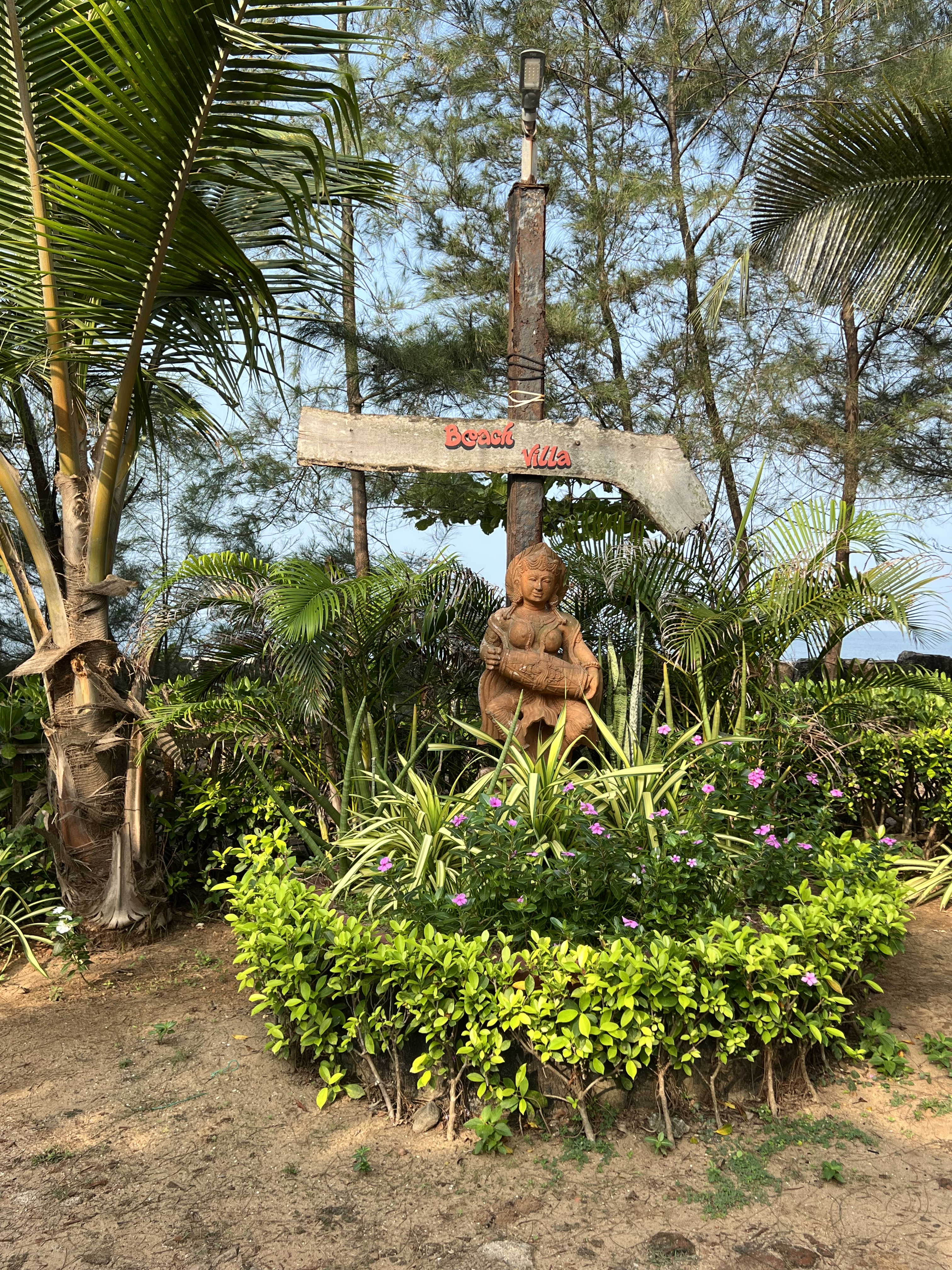
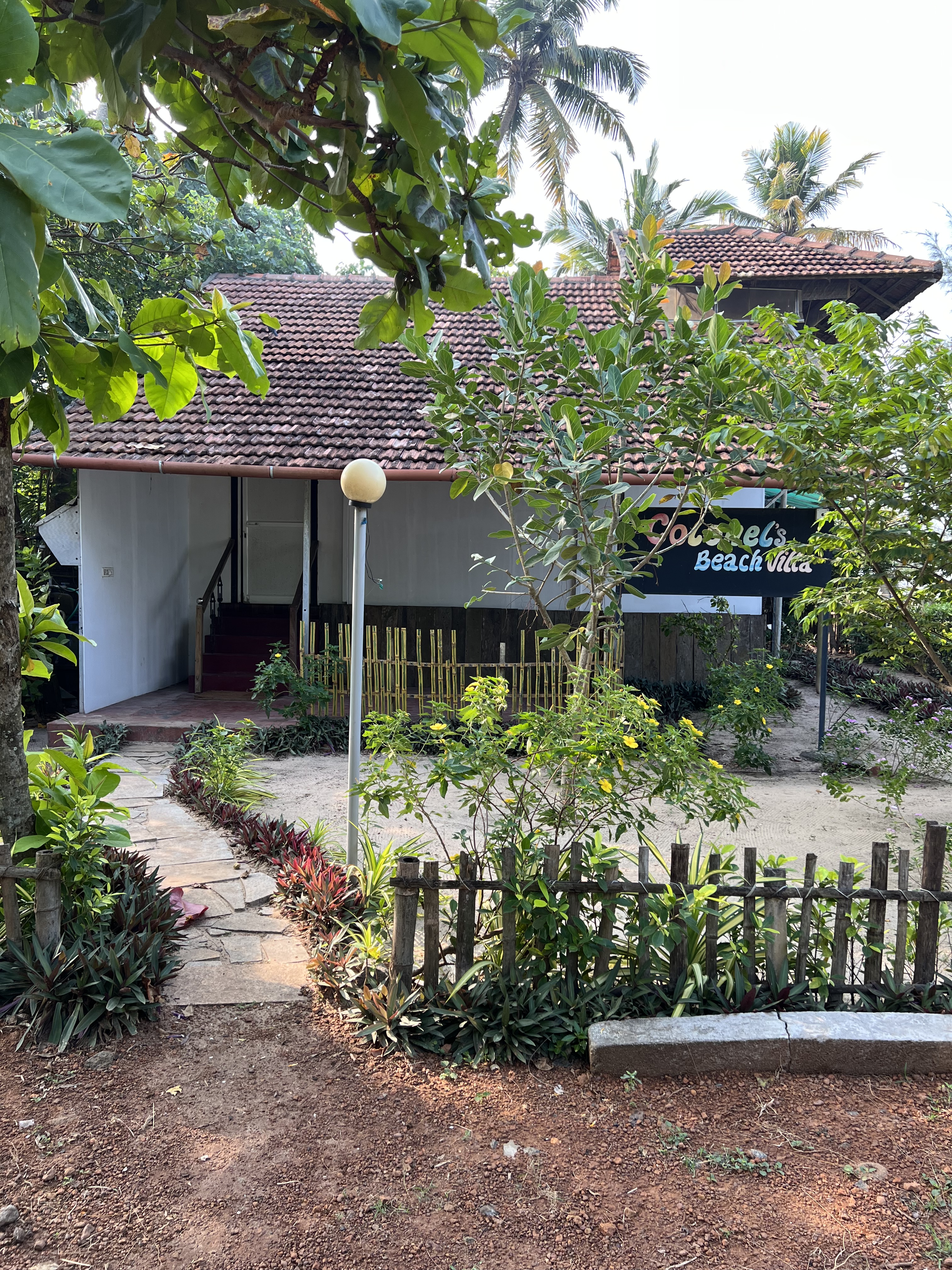
Our third week in the small fishing village of Thumboly Beach, half an hour by tuk tuk to Alapphuzha (aka Alleppey) about an hour from Kochi (aka Cochin). Our third time here at Colonel’s Beach Villa. It gets better every time and harder to leave.

Our room has an upstairs balcony that looks out onto The Arabian Sea. The sound of the waves provides constant companionship – gentle in the morning and more forceful from afternoon on into the night.

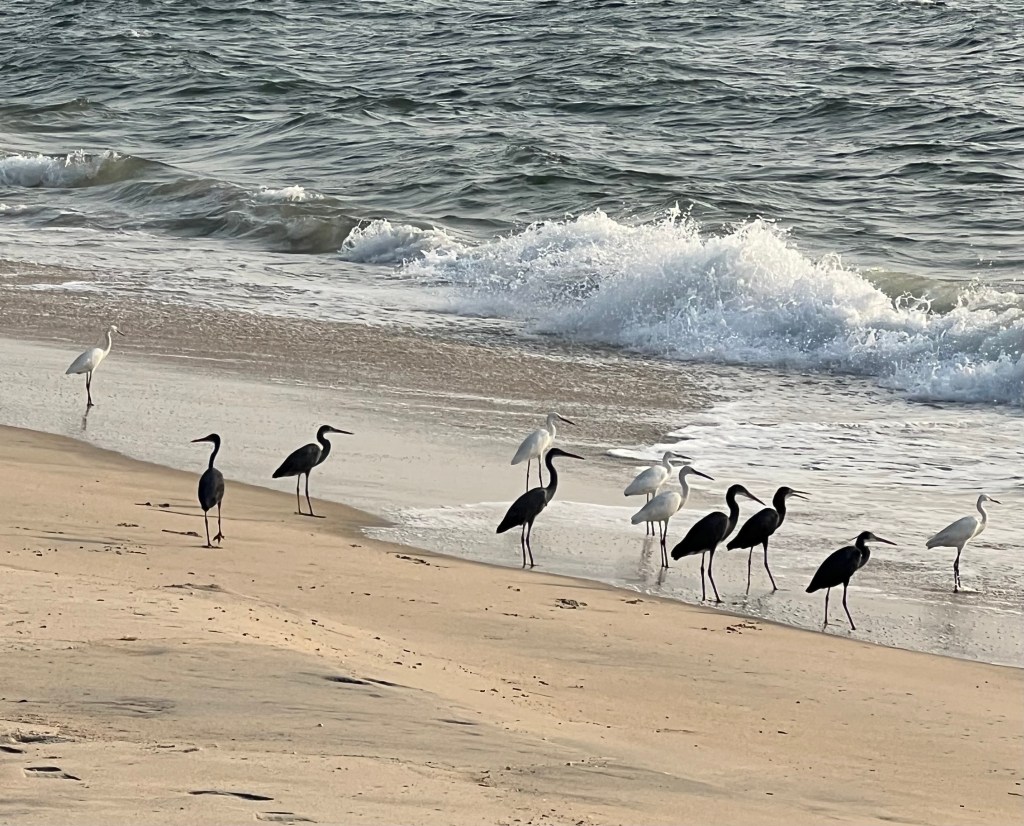
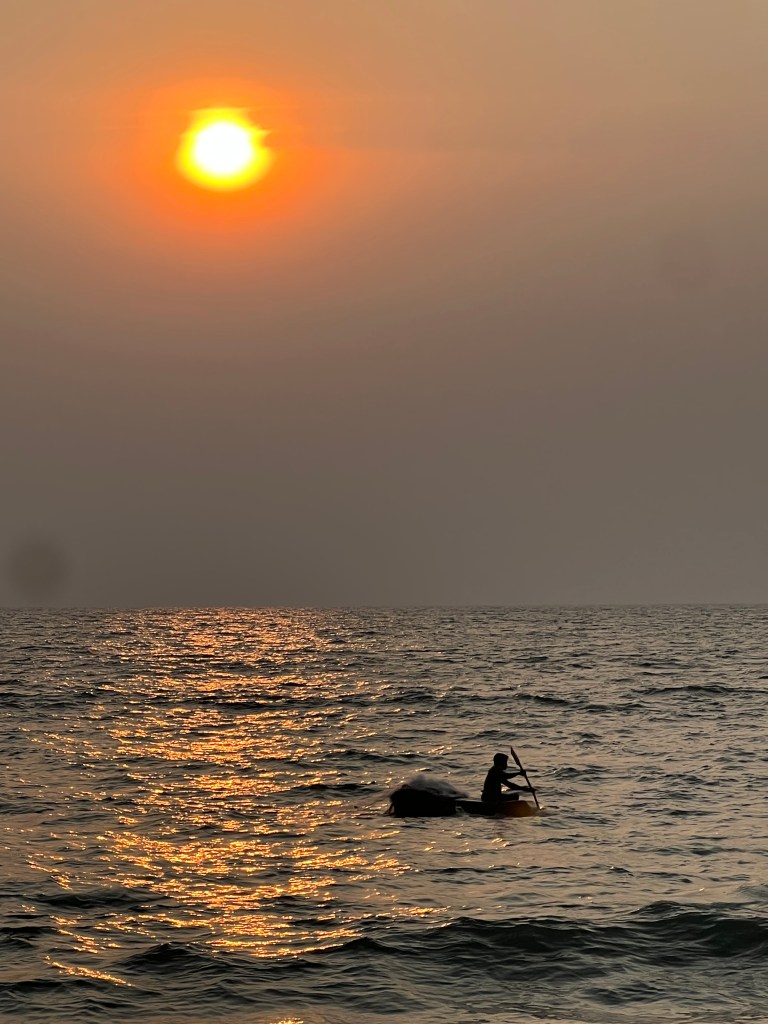
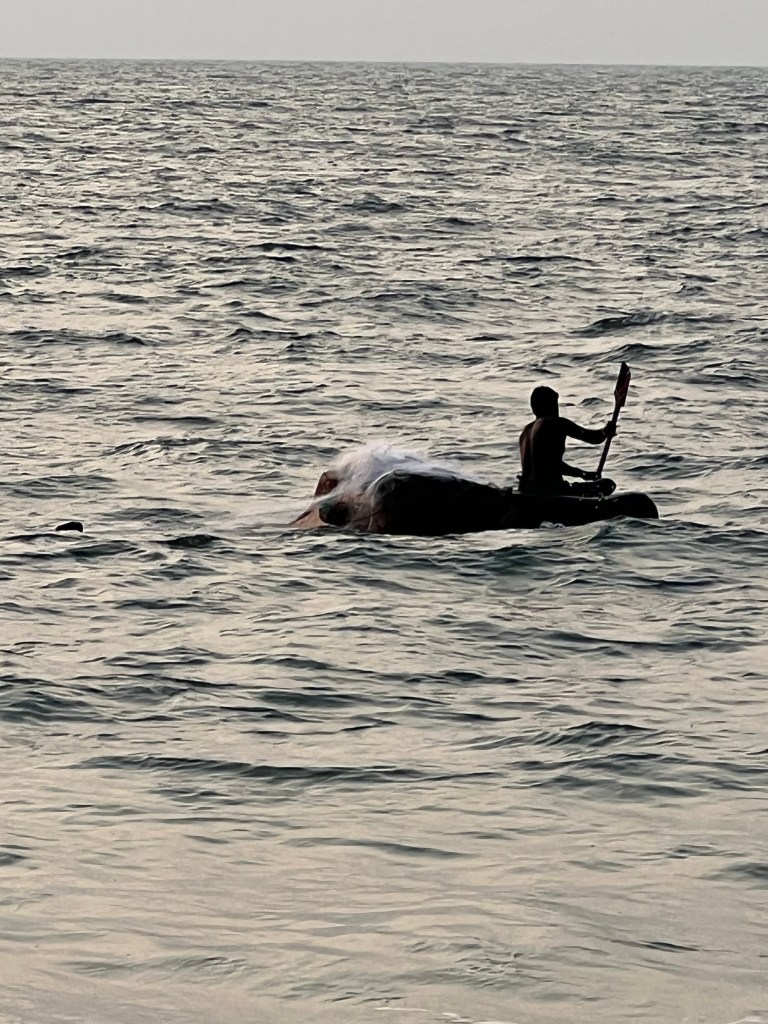
My partner goes out around 6 every morning to watch the fisherman carefully removing their catch from their nets. It’s a careful process. Some days there might be over 50 kilo of sardines and some days maybe a paltry kilo or two. Dogs and crows wait patiently nearby waiting for the rejects to be thrown their way.

Later in the day, after a delicious, simple vegetarian breakfast, and after reading and chatting on the balcony until the day cools off, we go for a walk around the village or take a tuk tuk to Alapphuzha.

People in the village have become familiar with us. They smile warmly and speak with us in the limited English they know. When I hurt my arm and had a bandage on it they seemed to all know about it and expressed concern. We stop in to say hello to Tomas at his market and Elsbet at her small store. The people at the corner fruit store let us know if they have pineapple because they know how much we like it.

Villagers are quite laid back. Many women walk together in pairs or more in the cooling day holding umbrellas to protect them from the sun. They wear light long dresses with slits up the side and leggings underneath. Most women do not work outside their homes and the daily socializing is a pleasant part of their day.


Many men can be seen sitting together on plastic chairs or on the sand under trees on the beach playing Rummy. They go out at 4 am in their small boats, fish until 6, gather their catch from the nets until 7, and then take their share of the day’s catch to sell on the nearby highway.

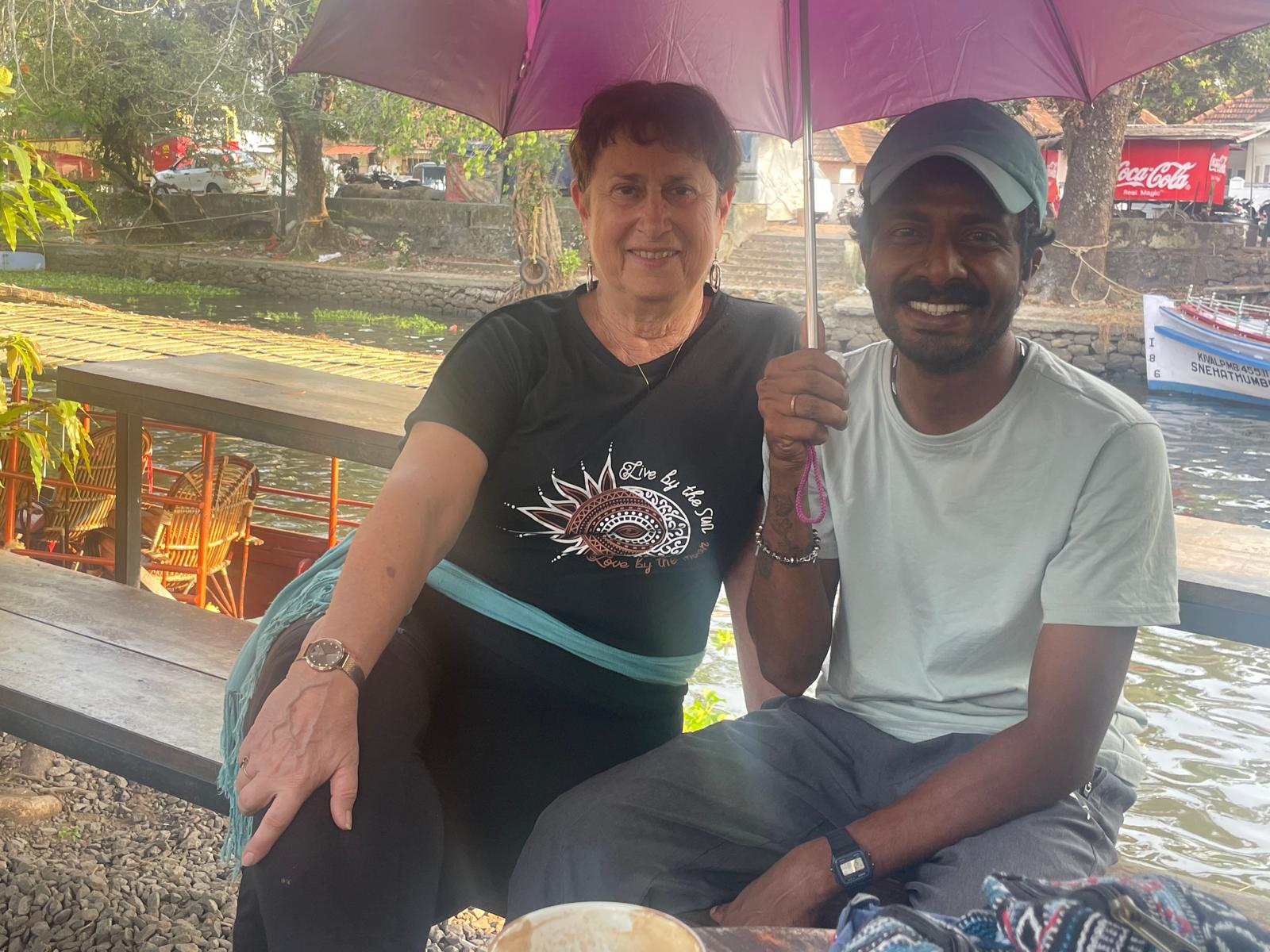
The guesthouse calls their tuk tuk to take us to Alapphuzha when we go there. He charges less than the tuk tuks we might flag down in the village. He drops us off in the commercial area where we like to absorb the colorful atmosphere and sometimes pick up a few things. There are aromatic spices, fresh garlands, fresh fruit and vegetable stands, kitchen shops, clothing shops including places to choose material, get measured, and have clothes made and ready in 24 hours. There’s an excellent bookstore and our favorite coffee shop by the river. We always stop in to say hello to Raul there, have a good cup of coffee and some fresh cold cut up watermelon.

The two young men from northeastern India – a 3 or 4 day train ride away – who do just about everything around the guesthouse are very quiet but have warmed up to us. They make us special little treats when they can. They know how we like our tea and coffee and when. They’re happy to see us in the morning and when we come back from our wanderings. Our customs, especially our Shabbat observance, are unusual for them. But they accept and adjust to everything with interest.

The serenity of The Arabian Sea, the beautiful garden, and the peaceful nature of the people provide the perfect background for my yoga practice. A small patch of red cemented patio just outside my door, shaded by a outhanging is just the right size and atmosphere. Teaching for 15 years, I often feel a staleness creep into my practice. Time spent in Southern India always inspires me to change it up, deepen it, renew the spirituality of it.

No hot water comes out of the shower head. At first we were taken aback. What?! No hot water for our shower? There’s a bucket and a big plastic cup inside. Hot water comes out of a spigot into the bucket. Cold water from the shower head to soap up and hot water from the cup in the bucket to wash off the soap. What!?! But we’re ENTITLED! Get with the program. This is India. You’d be surprised how quickly the system makes perfect sense in this climate.

Adapt. Adjust. Accept. And be pleasantly surprised when a cabinet shows up after you mention it’d be nice.

The city can be a cacophony of people and vehicles but absolutely serene and clean compared to Delhi.

It’s difficult to explain my love for Southern India and this area specifically. I wish my words t could make you smile and feel as happy as I feel when I’m here.

In a world so full of strife, confusion, fear, aggression and diviseness, Southern India is full of the opposite of all that. A local friend here thinks it’s because there have been no wars here for centuries. The culture looks askance at hostility and unkindness. Perhaps. Whatever the reason, I wish I could package this place and gift all of you with it.. .

Not Agreeing to Disagree

We live in an age where so-called enlightened people (you know who you are) are reluctant to stand up for their beliefs. Where the words “right” and “wrong” are taboo, “evil” is an archaic term, “good” is a question of perspective, and regarding all disagreements people prefer to politely agree to disagree.

I know someone who has decided to not regard himself as a member of humanity because of all the terrible things people do to each other.

Is that really a possibility?

While I don’t believe so, I don’t close my eyes to the terrible things happening in the world or my part in them as a member of humanity. But I also refuse to see all actors and all actions as a question of perspective.

I don’t agree to disagree.

I acknowledge that I am not knowledgeable about every conflict around the globe. I am too lazy or busy with other things of more importance to me to educate myself about most of them. I accept that my opinion about those conflicts, should I be foolish enough to insist on an opinion, is of little value or accuracy. I don’t agree to disagree with those who have an opinion. I simply confess my ignorance.

I accept that unfortunately it is no longer possible to trust news sources as accurate and unbiased. Lacking a simple alternative, I concede that my opinion can only be superficial, uninformed, and speculative. Not to mention lacking in importance, and very likely offensive to many of those who have done the research, spent the time to form an educated opinion, or who are actually living in the conflict.

I live in an area of conflict. I live in Israel. The conflict in our very tiny country has been going on since biblical times. The names and faces of our enemies have changed over the centuries but the conflict is the same.

It’s unclear to me why so many people around the world feel the need to focus on and weigh in with an opinion about our conflict.

More than 45 armed conflicts are going on today in Africa alone. I challenge you to even recognize some of the names of the countries where these conflicts are taking place (how about Burkina Faso? I had to look that one up.) There are 21 such conflicts going on in Asia, 7 in Europe, and 6 in Latin America.

Why don’t we see demonstrations about any of those conflicts? Why aren’t there daily “news” reports about them? No outrage about them?

My friend who no longer considers himself part of humanity is right – we’re a harsh, often brutal, murderous species. Many of us would like to think of ourselves as having progressed past territorial, ethnocentric, belligerence but the facts on the ground prove otherwise.

Why, then, is Israel constantly under the world’s microscope? Why is the lens of that microscope constantly out of focus? Why is the eye looking through the microscope so willing to ignore the possibility of a resultant lack of accuracy? So sure of the hypothesis that there’s absolutely no modesty about the conclusions.

I rarely allow myself to get dragged into conversations about what’s going on in our corner of the Middle East with people who live in other corners of the world. It seems pointless to talk about reality on the ground as seen through the eyes of someone who actually lives on that ground. As the saying goes – “Don’t confuse me with the facts.”

It’s a bit disappointing to hear the same tiresome rhetoric when the rhetoric makes no logical sense and is being spouted by people who one is justified in considering intelligent.

The rhetoric of “We realize that burning babies alive, decapitating people, gang-raping women, and starving hostages is truly terrible, but surely murdering 30,000 innocent (sic) residents of Gaza is a disproportionate response.”

I can hear the echo, echo, echo from the media and Arab propaganda. Why can’t they?

I don’t intend to explain why that rhetoric is patently ridiculous and totally transparent to anyone who cares to put their preconceived notions and biases aside. I just want to put forth the question of why people are so eager to have an opinion based on nothing when it comes to Israel.

And now comes another wake-up call.

People! There is good and evil in the world. As much as we prefer to say it’s all a question of perspective, we all actually know it when we see it.

We all know in our hearts that whatever our differences may be politically and philosophically, it is evil for us to machete limbs from the bodies of those with whom we disagree (Sierra Leone), to throw gays off roofs to their death (The Islamic State – Iraq and Syria) and to sex traffic women and children (Libya and others), just to name a few of the actions of obvious evil.

We all know that it’s good to provide shelter for abused women, food for those who don’t have enough, medical care for those for whom it’s unaffordable, to listen to people in distress who need an empathetic ear, and share our resources with those who have limited access. We may not do all of it, but we recognize the good nature of those activities.

It’s not rocket science and it’s not a matter of culture or perspective.

I don’t agree to disagree about any of the above and I’m past being tired of those who are. I’m disappointed and I’m sometimes angry and, while not interested in shouting it from the rooftop, I’m no longer willing to smile when told we’ll just have to agree to disagree. I’m willing to agree to disagree about the best restaurant in Jerusalem or the most fun activity in Disneyland.

Our world is a tough neighborhood with some very evil, brutal residents. It always has been. In the past, the good guys didn’t accept evil as a given and didn’t excuse it as cultural or a reasonable response on the part of the downtrodden. There were clear rules of conduct even for the resistance of the downtrodden that didn’t include beheading and rape.

Regardless of what my young-ish friend thinks, we cannot drop out of humanity. We’re all a part of humanity whether we approve of the behavior of all our counterparts or not. So let’s get on with realizing the limitations of our knowledge, acknowledging the presence of evil actions and evil people who carry them out, and refusing to agree to disagree with uninformed opinions and evil.

Whether or not you choose to recognize this reality – Israel has restructured the Middle East to secure relative peace and quiet for a decade to come with all that entails for the rest of the world. None of it at our own instigation nor without a high price in lives lost and families without one parent home for months at a time.

We don’t expect a thank you but we could do without your slogans condemnation.