Time, Space, and Soul

Most of us acknowledge that we live in time and space. Many of us also recognize the existence of our soul. These, then, are the three elements in which we live our lives here on earth.

We are influenced by the time of the world that is the 21st century, the time of our specific (in my case baby boomer) generation, the time of our family, the time of our physical lives, the time that is this day, this hour, this minute. Our particular presence influences all those times – some more than others.

We are influenced by the space in which we live. Our country. Our town. Our neighborhood. Our school. Our place of employment. Our home. Our presence influences those spaces as we enter, leave, and re-enter them – some more than others.

Our soul manifests in our daily life as a subtle, animating force that moves us toward compassion, peace, and authenticity often acting as an inner voice or whisper that guides our choices beyond mere ego-driven survival. Often described as the invisible subject that witnesses life’s sensory inputs, it is a shift from body consciousness to a state of peace and empathy.

People we think we know, places we are intimately familiar with, times that seem indistinguishable from one another – never once has there been a person, place, or time that’s been repeated. The river of life is constantly flowing, and we can never reenter it at the same place. The present moment never was nor will it ever be again.

People, places and times all have an effect on us. And each of us has an effect on the people, places and times where we are present in any given moment.

Have you ever approached a small group of people and encountered a sudden silence?

Do you remember the indentation of your foot on the wet sand as a small wave goes back out to sea?

Did you watch the Berlin wall fall? The resignation of Richard Nixon? The change in attire in public places over the late 20th century?

Certain times, place, and people draw us closer to Divinity, closer to the authentic valued direction of our lives, just as certain times, places and people obstruct us from this path. These realities sometimes lead us to procrastinate in our journey toward the Divine, toward our own best selves.

If only this were happening at a different time, a different place, with different people. There will be a better time, place or person. When the semester ends. When I’ve found the right partner. When we can afford a bigger house. Tomorrow, tomorrow, and tomorrow.

Or we can realize that every ‘broken’ time or place or personal interaction occurs for us to have the opportunity to restore, mend, repair it with exactly the resources that we have at hand in that moment. Every moment, place, or person is a half life waiting to be completed by us, exactly as we are in that moment.

We are needed as much as we need others. And we do need others. In this moment.

And this moment.

And this one.

This person, time, place has been waiting especially for us and this moment. Maybe for a simple hello, a gesture, a smile, a nod. Pulling a weed, turning on a faucet, lighting a candle.

Right now, in this moment, in this place, there is a soul that is half. Maybe it’s your soul.

When we are living completely in the moment, we are living unfragmented. We are living with the full awareness and consciousness of our own Divinity. We are forging heaven and earth into a complete circle. No magic or complex spiritual devotions. Simple and profound recognition of here and now.

There is a parable of a person walking between small villages at night through a forest. Her last candle sputters out and she’s unclear of her path forward. Suddenly there is a bright flash of lightning and the entire road ahead, leading into the next village, is illuminated.

That flash of lightning is the present moment. Clarity is not to be found in the past or the future.

How many times, when in conversation, do we find ourselves having lost the thread of the other person’s thoughts because our minds were on possible responses?

Can we trace the source of our irritation with another’s speech or slowness of movement to our concern about our next task?

Do we find ourselves avoiding people who dress or look like people from our past with whom we’ve had unfortunate encounters?

What’s so hard about being in the present moment? Once we’re convinced of its importance for our mental health, our happiness, our relationships, our successes, getting to where we want to go, just do it.

Let’s carry out an experiment.

Find a comfortable place to sit. You can add a scent you love, calm music, wear comfy clothes, or come as you are to the place closest at hand. Arrange your limbs so that there’s no pressure on any joint. Sit up straight and close your eyes.

Now, clear your mind and stay present in every minute that arises.

Uh oh, my left forearm itches. And what is that annoying noise coming from upstairs?

Back to clearing the mind.

Did I remember to buy tortillas for tonight’s dinner? Tomato sauce? Did I put the beer in the fridge?

Back to clearing the mind.

And so it goes. It’s been called mental clutter or monkey chatter or life. It’s how we get pulled back to the conversation or outing that didn’t go as planned, to the broken wine glass, to a lost opportunity, and pulled forward to the next vacation, the day we’ve finally lose that last pesky 5 kilo, the clothes that our teenager has undoubtedly left on the floor in his room…again.

What did she really mean? Why don’t they listen to what I have to say? Why doesn’t this hotel room look like the photo on booking.com? How long will it take the airline to refund my money? Will they ever refund my money? How can I convince him that he’s going about it all wrong? The solution is so simple, why can’t she see it? Again with the complaints about the food?

What’s it all about, Alfie? In mediation we call it the underlying interests. What’s going on on the surface as opposed to what’s really the motivator. We can’t hear it if we’re living in a different moment.

Lech lecha…לך לך. The Jewish forefather, Abraham, heard God’s directive and listened to it carefully. A direction not to just physically leave his location but to go inward. Go into yourself. Discover who you really are. Until we do the work the present moment will continue to be elusive.

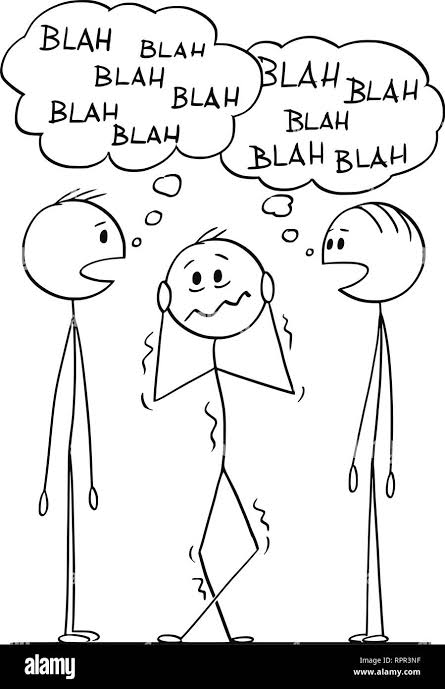
Until we quiet the cacophony of the never ending internal voices – our parents, our teachers, our friends, our colleagues, our spouses, our neighbors, and, perhaps the noisiest of all, our ego – we cannot hear the quiet, constant, inner voice we all possess. From that inner, authentic voice comes our ability to be in the present moment. And from the present moment, the only place that life is actually lived, emerges compassion, kindness, acceptance, seeing the other, understanding the underlying interests (even our own), inner quiet, and, ultimately, happiness.

This is who I am now, in this moment. This is where I am in this one precious life, in this moment.

I’m sitting with my friend. I’ve heard everything she’s said but I want to check to make sure I’ve understood what’s really going on.

I recognize my rising feeling of discomfort from having overstayed the time my life comfortably allows for getting back to work. I’ll be gentle but honest about our time having come to a close.

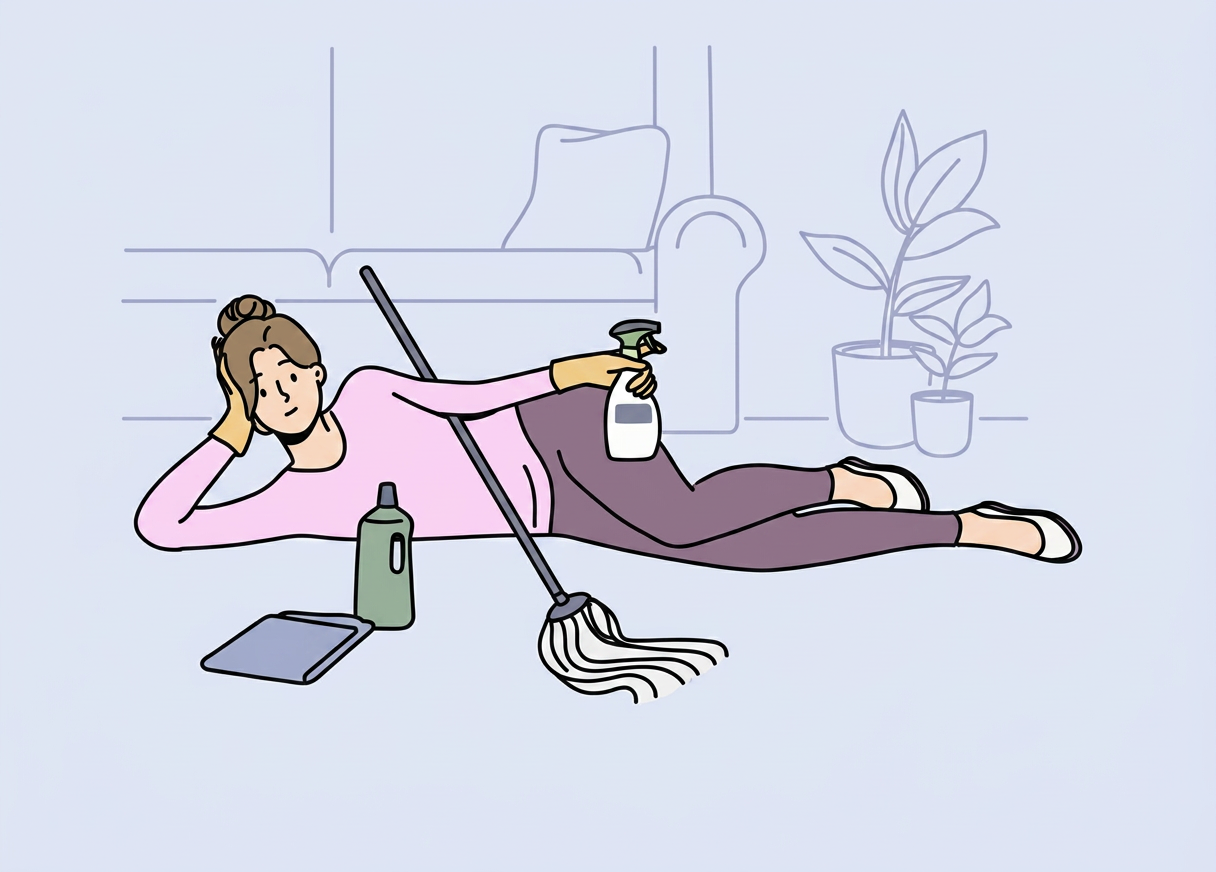
He associates not being able to walk into the kitchen because the floor’s just been washed with his mother’s obsession with cleanliness. It’s fine to go over where he’s walked so that he doesn’t have to face that particular demon.

Remove annotated region only

My stomach feels fluttery. My heart is pounding. What’s going on?

Nothing is actually going on in this moment. Maybe something went on a few minutes ago or I’m remembering something from yesterday or my mother’s last visit. Maybe it’s a vestigial remnant of a past danger.

I don’t know what’s going on. But something sure is. I feel anxiety threatening to overwhelm me.

How do we bring ourselves into the present moment when our bodies are in freeze or flight mode?

The answer is quite simple. Simple like being in the present moment in general. That is, simple in theory.

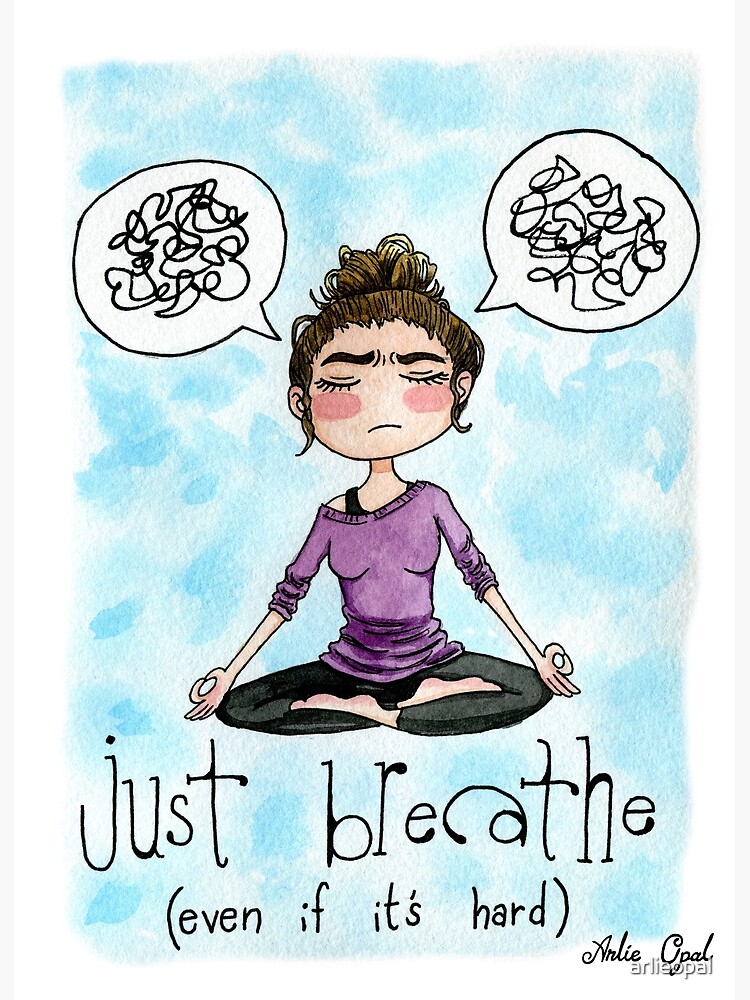
Just breathe.

We all do it. We do it all the time. But – and here’s the catch – we don’t notice that we’re breathing. It’s a spectacularly huge gift we’ve all been given at the very moment of our birth. It’s free. It accompanies us in every second of our lives without our having to make an effort.

And that’s the catch.

Let’s do an experiment.

Find a comfortable place to sit. You can add a scent, some calm music, comfy clothes or come as you are to the place closest at hand. Set a timer for five minutes. Arrange your limbs so there’s no pressure on any joint. Sit up straight and close your eyes.

Lech leicha – go into yourself.

Follow the breath rising in the middle of your body with your natural inhalation and descending in the middle of your body with your natural exhalation. After three breaths start counting slowly for the duration of your natural inhalation and a new count for the duration of your natural exhalation. After three breaths, if the count is unequal, add to the shorter of the two to equalize your inhalation and exhalation. If they’re equal add one count to each.

Let your belly pouch outward with the inhalation and draw inward with the exhalation. Let your chest rise slightly at the end of the inhalation and return to its natural resting place during the exhalation.

Feel your deepening breath.

If it suits you, hold your breath at the end of the next inhalation, releasing it when your body invites your exhalation. Remain at the bottom of your exhalation until your body asks for new air.

Now, just breathe.

Paying close attention to your inhalation, the holding of breath, your exhalation, and the stillness of your body momentarily emptied of breath.

With the sound of the timer, slowly open your eyes.

Do you feel calmer?

Nothing has changed. You’ve simply allowed yourself to return to the present moment. The very definition of anxiety is the fear of something that hasn’t happened. It might happen. It might not happen. Anxiety is amorphous.

As Mark Twain once said: “I’ve had a lot of worries in my life, most of which never happened.”

Anxiety feeds on imagined future scenarios rather than present reality, but our bodies experience them as quite real. Our conscious breathing brings us back to the present moment where the causes of our anxiety are somatically recognized as non-existent.

Living in the present moment is not a fad. It’s not New Age. It’s not woke. It may be all those things but it’s also none of those things.

Living in the present moment allows us to be in touch with the spirit of Divinity that resides in each and every one of us – believers, agnostics, and atheists alike.

Living in the moment reduces stress and anxiety, brings greater joy and contentment in simple everyday activities, improves our health and mental clarity, improves our relationships with others and with ourselves.

Letting go of the need to control everyone and everything around us. (and, truly, was there ever a more unrealistic goal?) Acknowledging and accepting that our way isn’t the only way; sometimes not even the best way for ourselves!

The obstacles can be troublesome:

ego

sloth

ill will

restlessness and worry

doubt

These hindrances, if not managed, lead to unskillful actions and unhappiness – exactly the opposite of living in the present moment. Paradoxically, perhaps frustratingly, they are managed through meditation, mindfulness, breathing and cultivating opposing mental states such as lovingkindness for ill will.

No one said having a calm life would be easy.

But so worth it.

It’s a lifelong process.

Going Over, Around, and Through

I used to think my family was exceptional in its dysfunctionality. I would often tell people that I grew up in a dysfunctional family. It never really impressed anyone, not even me. It was becoming a common description even back then, forty-five years ago. It took me a while, but I finally internalized the fact that it would be tough to find the family that wasn’t what I was calling ‘dysfunctional’.

And then, just the other evening, I heard my youngest son say the same thing.

He said that for many years, well into adulthood, he thought his family (the one I raised!) was exceptional in its dysfunctionality, but he’s come to realize over the past decade that our family is quite normative in its beautiful dysfunctionality. And, in fact, that we may even excel in our normalcy. In a good way.

There’s no lack of quirky personalities among the now 24 of us, three having become disconnected by divorce as they were once connected by marriage. And the divorces themselves only serve to make us more the norm than the anomaly we’d be these days if all five of our offspring (and we ourselves) were still married. But, as he said, each and every one has chosen professions to do good in the world in one way or another, and each excels in that chosen profession. Each and every one married and brought children into the world. In spite of very different parenting styles, all the grandchildren are thriving, each with her or his own wonderful talents and quirks. All our grown children have an active, close social life together and are there for each other.

We had a long, friendly chat about the whole question of normative and dysfunctional, and how we view the difference between the two. The examples from our own family, and some from friends’ families who are close enough to be like family had us laughing, but affectionately. Not in a judgmental way. Those who populate our lives are, after all, funnier than most other areas of our lives, although almost everything can be pretty funny in retrospect.

There was also more serious talk, though, each of us sharing our thoughts about the ways our closest and dearest have navigated and continue to navigate the challenges, obstacles, tragedies, and near-tragedies in their lives. Like, as it turns out, most families, we’ve encountered it all, and we’re not only still standing but flourishing. Not an easy task considering that seven of our grandchildren are teenagers at the moment.

So why is it that some of us find joy, gratitude, fun, passionate interest, adventure, empathy, emotional strength, and good humor in the face of all the craziness, noise, dissonance, disappointments, and failures, and others of us…not so much.

I’ve been participating in a wonderful writing workshop for the past few months. The stated theme is loss, and we’ve come at it in many different, and mostly indirect, ways. This week one of the prompts was to take five minutes to write a list of sentences starting with ‘What if’. It wasn’t an immediately easy prompt for me, and I realized that was because I rarely think about the ‘what ifs’ in life. I managed to write a list of fifteen or so ‘what ifs’ in the end. Some were a little silly, like ‘What if I were five inches taller?’ or ‘What if there were more natural light in my home?’, but there were some more serious ‘what ifs’, too, like ‘What if my husband hadn’t agreed to move to Israel?’

Looking over them while listening to my colleagues’ ‘what ifs’ I realized that one thing each of the ‘what ifs’ on my list had in common with the others on my list was that I didn’t really care. The outcome of each as is in reality is just fine with me. I’ve adjusted. I’ve accepted. I’ve received. I’ve reframed. Even the one that read ‘What if all five of my kids were happy in their marriages?’ I trust my children to have made the best decisions for themselves and their families.

As I looked over my list, I heard the lilting lyrics of a song called “It’s Okay” by a talented young woman who called herself Nightbirde. She had terminal cancer and, since her appearance on America’s Got Talent, died from the disease not long after her appearance on the show. With her pixie post-chemo haircut and big beautiful smile she sang about her situation with a refrain of ‘it’s okay’ and ‘it’s alright’ and I think we all believed her.

It’s not that bad things don’t happen to all of us. Nightbirde’s cancer was certainly a bad thing.

Bad things happen in life; the inevitable first arrow piercing each of us. But some of us don’t loosen the second arrow toward ourselves; the optional second arrow of suffering.

We feel the loss, the challenge, the pain, the tragedy to its fullest. We internalize, perhaps interpret, then put it in perspective and, when the time is right, we let it go. It might be a minute or a day or a week or a month, but the intensity lessens, and we find the joy again. The pain doesn’t turn into suffering.

It doesn’t control us. We don’t get swept away.

We live our lives recognizing that the hard things may make up ten percent of our lives, regardless of how painful they may be, and the other ninety percent of the time our lives are neutral – okay – interspersed with magnificent.

I think the difference between normative and dysfunctional is that recognition; that acceptance. That authentic voice inside saying hello to another day with optimisim. That unspoken belief that in spite of the challenges, and some of them are doozies, or maybe in a way because of them, our lives are amazing in their unpredictability and surprise.

Just yesterday on my daily walk I had a talk with myself. I said ‘Self, everything physical that you do is an effort. It all entails discomfort or pain. But it’s okay. It’s alright. Luckily, none of it is going to kill you. So you just need to get on with it.”

Keep walking. Keep traveling. Keep growing. Keep changing. Keep loving.

It’s not a spectacular thought.

It’s normative.

Like Father; Like Daughter

I was looking for something in an old file the other day and came across a letter my father sent me 33 years ago. It was the day he found out that his cancer had returned and the prognosis was not good. In fact, within six months he would be dead.

When I showed it to my partner, he said that it looked exactly like something I might have written. The sentiment is mine, Even the language is mine. And it’s very 2024, even though it was written in 1991.

My Dad. What a special person. A complicated man. A man never quite at home with his emotions. Quick to smile; slow to hug. A very active inner life. A very active public life. But most often not emotionally present for those of us he shared a house with.

I like to think things would be different today.

So here’s that very special letter, with those very special thoughts, lessons for us all, from that very special man who was my father.

  It was an idyllic morning in sunny Sarasota.

  I stepped outside the hospital, blinking in the sunlight. The everyday sights and sounds were different; they were as never before. The deep blue sky, the gently moving leaves, the traffic flow, the people — all seen in a new light.

  I reflected on how casual I had been, before my traumatic experience, to such common phenomena and to so much else in life — indeed, to life itself. And so I resolved to spend wisely whatever of life was yet to be mine; not to squander it. For life, I saw with stark clarity, is an incalculable gift. It should be held close, made the most of, constantly enriched, and cherished.

  That is one half of the lesson I learned there, standing in the sun. There was another.

  The wondrous sunlight enveloping me, could I retain it? Could I keep that sun from setting? Had I tried to halt its slipping away, and inevitably failed, how frustrated and saddened I could have been. But if that were my reaction I’d have transformed the glorious moment into one of regret and sorrow.

  But it is not only the sunlight which must slip away. Our youth and our years, our senses and our lives, these must go also. And we must accept their inevitable departure; be ever ready to let go.

  That is the other half of the lesson.

  This, then, is the paradoxical conclusion. Hold fast, hold close the precious gift of life, but with arms so loose as to be ever ready to release it; with arms virtually open.

  Is this an impossible challenge? Physically, yes; mentally, emotionally, of course not. We do it repeatedly throughout our lives. We give away our hearts in love, and we have more heart to give. We wear out our minds in deep thought, and we have a better, sharper mind. We are smitten by pity for the deprived, and we are the stronger for it.

  The key word in the conclusion about life is ‘inevitability’.

  Aware that life must and will inevitably end, each of life’s moments becomes all the more cherishable. The sole unknowns are the when and the how; when and how these moments will end. The choice is between succumbing to fruitless agonizing — fear and dread of the when and how — or living those moments richly, fully, gratifyingly; savoring them and saying, in effect, “I’ll relish this as long as I may, and whenever it ends I’ll be grateful for having had it — and hope there are some others who will be grateful that I had it also.”

  I imagine nodding heads. It does seem logical. But is it unduly difficult to transfer from the thought process to one’s inner being? To transplant the idea into actual, living reality? To live by it?

  It is not difficult. We do it again and again in our daily lives.

  Look. We are enthralled by a spectacular sunset. We are immersed in passionate expression of our love. We are transported by a rapturous violin concerto. Do we destroy such moments by dwelling upon their transitory nature? Our minds tell us these moments will pass. We know it. But do we permit that knowledge to suck out our enjoyment? How infinitely sad that would be. And in truth, we don’t, do we?

  So it is, or so it should be, with life.

  Life, that wonder-filled possession, is ours to keep for a while. Think of it as the wise sage Bruriah, wife of the Tanna Rabbi Meir, did, as a divine loan. How wholesome, how sensible, to make the most of the temporary gift while accepting that one day, any day, it will be taken back; that one day, as in Joshua Leibman’s lovely Day in the Park fable, the Great Nurse will beckon, “It’s time to go home now.”

  And, so, hold life close, with open arms.

  Of course, I have had frequent occasions in my life to recognize life’s precious worth — in peak moments of joy, or when escaping serious dangers. And, of course, I have long known that being mortal, my life must end at some time. But my acceptance of both of these truths was tucked away inside me somewhere. They were concepts I did not question. They were “givens”. I was never challenged to affirm them. I was never tested. How, then, could I be certain? When the Angel of Death confronted me, how would I really react?

  I have been tested now.

  And I thank God that I found, find, myself in total accord with the balance; with the synthesis of holding life close and readiness to let it go — of holding life with open arms. And in cognizance that I really believe this, that it has penetrated my inner being, I am warmed, strengthened, grateful, at peace.

  For you who may read or hear this, I pray that you find the wisdom to enjoy life, to cherish it, to make the very most of it for yourself and for those with whom your life is entwined; to hold it close — all the while accepting its inevitable departure without fear, frustration, or dread; prepared to let it go.

  And if you do that, if you really make that belief your innermost conviction, you will be among the most fortunate of mortals. For you will not only rob death of its anticipatory fright, replacing that with inner peace, but your life will be enriched beyond measure.

Amran Prero, March 1991

Addendum: I was with my father for the last few days of his life. We watched television together, chatted about my kids and about Israel, and he told me about a series of dreams he had on the nights leading up to his death. He was calm, at peace, happy, and in good spirits. He laughed at Tom Selleck’s Magnum P.I. as usual, giving him a constant barrage of advice.

He truly held life close with open arms.