
Before coming to India, every time the topic of Kerala came up we heard about Munnar. I would have thought the town of 48,000 would be overflowing with foreign tourists. Not so. In fact, if we’ve seen more than twenty foreigners during our five weeks in Kerala, including Fort Kochi, Alleppey and the Munnar area, that’s saying a lot, and most were in Kochi.
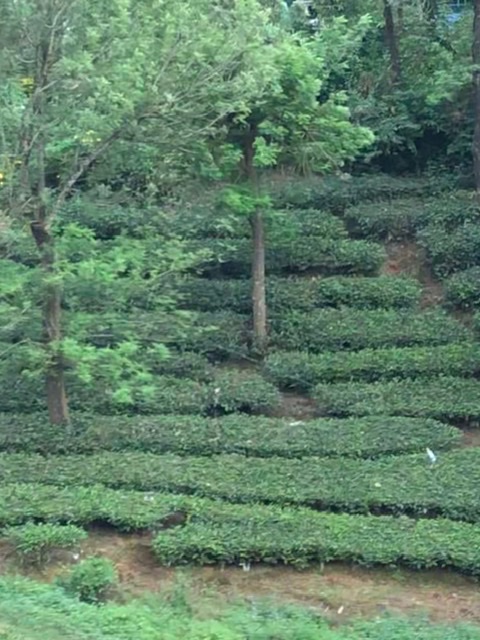
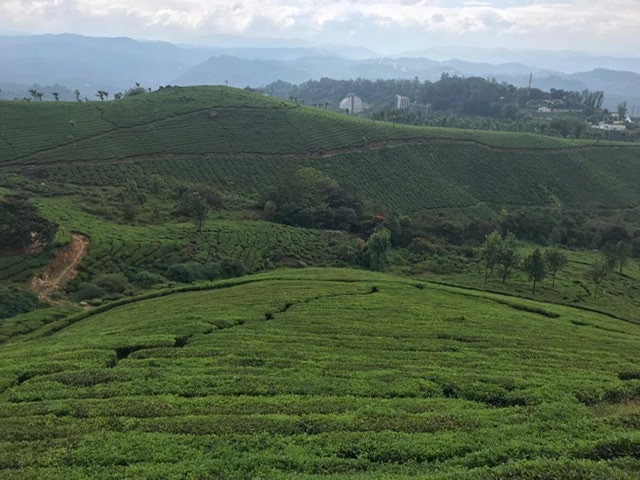
What we did see was lots and lots of tea plants. I fell in love with the quilted look of the hillsides with the orderly rows of bushy tea plants. I never tired of seeing how they cover the hills, in the shadow of the mountains with their wispy cloud cover. It never ceased to amaze me to think that every single one of those hundreds of thousands of tea plants is harvested, by either a small hand-held machine or, in the case of green and white teas, by hand. Incredible.



The town of Munnar itself is a bustling place with the usual tuk-tuks, motorcycles, trucks, buses, and cars. Many, if not most, pedestrians (and there are lots of them) dress in traditional Kerala clothes: kurtas and sarees for the women, long and short wrapped skirts for the men. Some of the sarees look almost like wedding clothes with their silver or gold sparkles. Some of the men wear turbans made from orange terrycloth. Many of the women have painted foreheads; not with only a bindi spot but with lines that certainly signify something. I remain ignorant as to what significance each design represents.

Mayalayam can be heard, as well as Hindi. As we’ve found in most of India, English is very rudimentary and often non-existent.
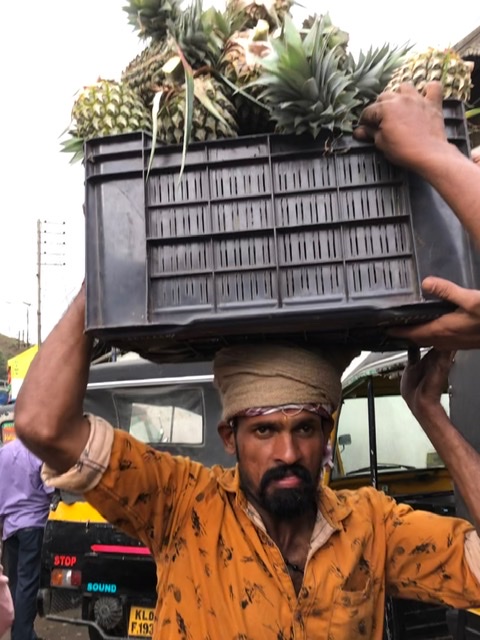
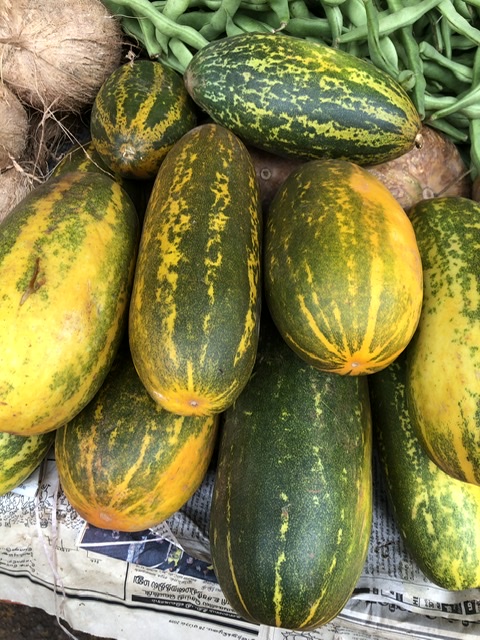
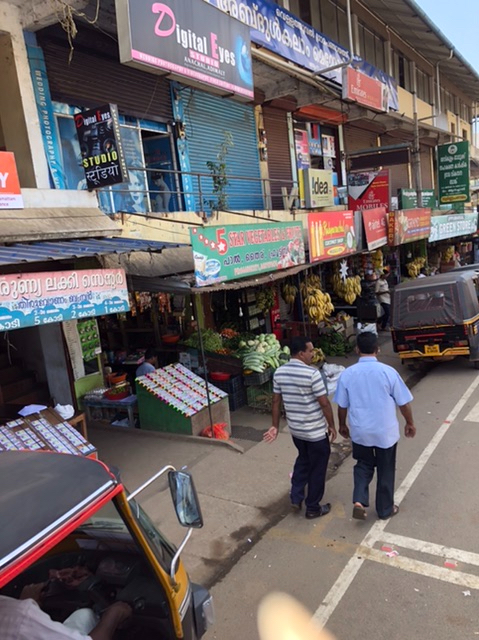
The shuk is divided into two distinct sections; fruits and vegetables in one section and almost everything else in the other. Both are colorful, busy, and interesting places. Vendors are happy to explain their wares and solve some mysteries for us as far as the vegetables we find in our sambar and other South Indian dishes.


When we wanted to send two packages to the U.S. for my sisters’ birthdays, the post office clerk, after trying to explain the packaging we would need, caught up with us as we were on our way to purchase the box we thought he’d described. He walked us through narrow pathways in the back part of the produce shuk to a row of tailors. There he found one specific tailor who understood the process and sewed a cloth mail bag for the each of the gifts. I wrote the addresses directly on the sewn-closed, white bags, as instructed by the postal clerk. He then disappeared back through the secret byways of the shuk and we found our own way back to the post office.
On another visit to Munnar we went back to that tailor, who we miraculously found, and had him make another mail bag for a present for our daughter-in-law’s birthday, as well as sew the tears in the cheap cloth bag I’d been using ever since buying it in Mumbai two months earlier. By then his wife, who sits by him in her fancy saree, was our friend. She insisted we jump the long line (he’s a very popular tailor) and took a photo with me. She speaks only Tamil so we communicated with many smiles and a translator app from my phone, which was only sometimes decipherable for her.

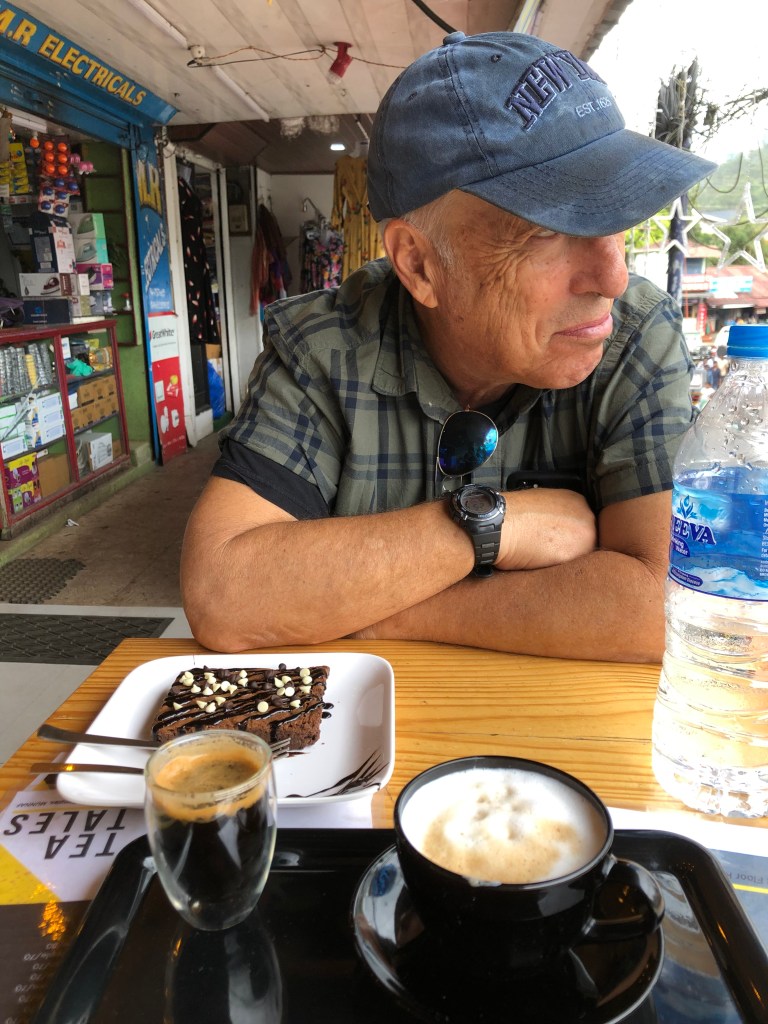
It’s hard to explain why we both liked Munnar so much. It may have been the shuk and our tailor friends. It may have been the amazingly wonderful pure veg restaurant we ate at each of the three times we visited the town (Saravana Bhavan – try it!). It may have been the first good cup of coffee we had in two months at the Tea Tales upstairs coffee and tea shop. It may have been the glorious drive thereף from our quiet river stay forty minutes away, curving around mountains, past glorious tea plantations. It may have been a combination of all those things.
Munnar town is locked into our hearts’ memories as one of our favorites.

We also visited the Lockheart Tea Factory, where we thoroughly enjoyed the Tea Trail Tour. Go on Monday when they pick the green and white teas by hand. Arrive before 13:00 so you can actually see the tea pluckers at work. Take a tuk-tuk there on your own. No need to go with an organized group or guide.
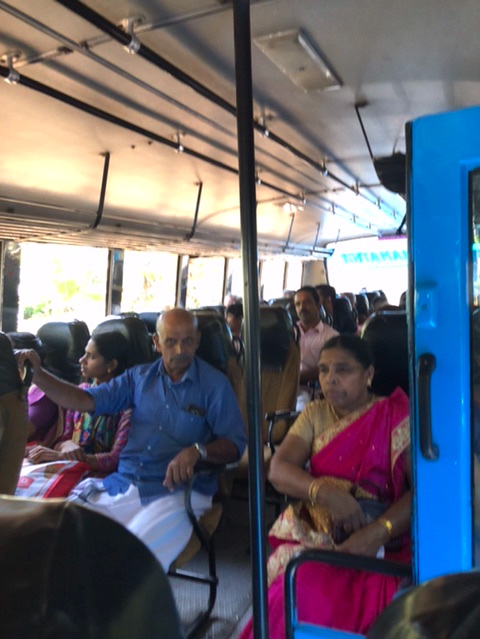
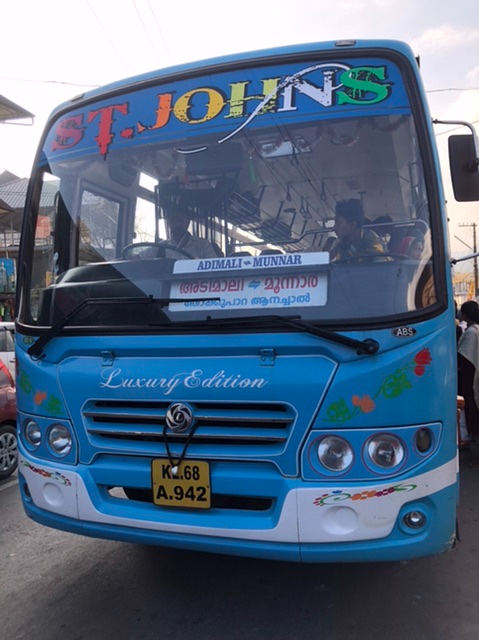
We took a local bus, a kilometer and a half walk from our Homestay, to Adimali – a commercial, industrial city and not particularly interesting – and to Anachal – a pleasant town with an amusement park. The adventure of taking a local bus was fun. If you want the experience of a local bus, better to do it in a pleasant, rural setting where the buses are less crowded. Personally, I wouldn’t subject myself to it in any of the cities we’ve visited, where people hang off the roof and the door handles.
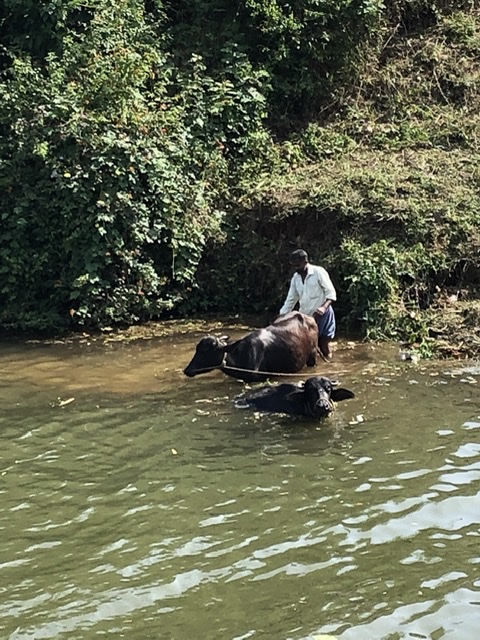
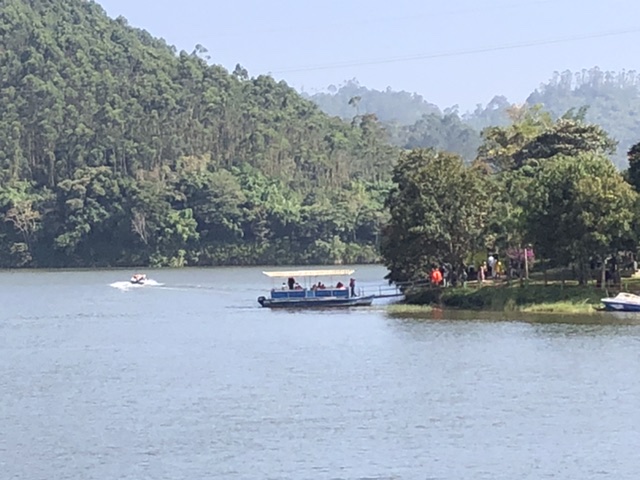
We stopped off at Sengulam Dam. A lovely lake with speed boating and quieter river boating available. A nice, unplanned attraction there was watching a farmer bathe his water buffalo in the lake.

A word about our Homestay.
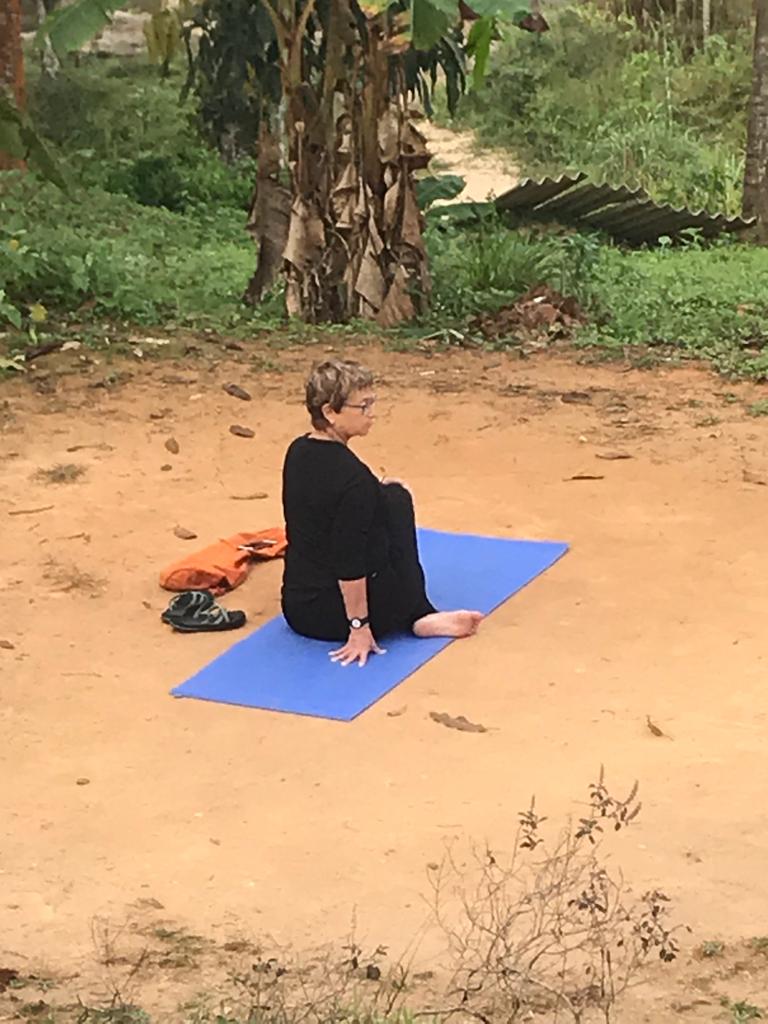
Most tourists in the area are Indian tourists on their way somewhere else. They stay a night or two at most. We planned almost two weeks in the area as a peaceful place to wander around in nature, write, read, do yoga and meditate. That’s how we arrived at our choice of Ayursakthi Riverdale Resort.
Just as a ‘hotel’ is often a restaurant in Kerala towns, ‘resort’ in this case is actually ‘homestay’, an all-encompassing term for anything from a 2-star hotel to a b&b. I doubt they’ve EVER had someone stay for two weeks. Just as it took us a couple of days to acclimate to the sleepy peacefulness of absolutely nothing to do, it took them a few days to realize that we didn’t expect entertainment.
The room smelled a bit of camphor, but we got used to it. The bed was comfy, the fan was sufficient, the shower had plenty of hot water if we turned it on for five minutes before getting under the stream, the breakfast was tasty, and, as in every Indian lodging we’ve ever been in, the staff was extremely nice.
The smiling, shy woman who cooked breakfast and cleaned the rooms, brought us fresh passion fruit from the trees in her home garden, and let me watch her make sambar one morning, complete with photos, so I could replicate her particular recipe at home.

One young man on staff invited us to rousing games of badminton in the back yard with his very respectful, nice friends.
They were all a bit perplexed by us but caring and amenable to any and every eccentricity.
The restaurant next door was a convenient place for dinner with a fairly varied menu. We don’t eat meat but were able to find different things to eat most nights. Feel free to eat their fish dishes and fresh salads. All is safe for foreign tourists and very tasty. The paneer paratha was especially good.
Serenity of nature with the friendly town of Munnar just a short beautiful tuk-tuk ride away. A bit sad, but ready, to move on,


 gettingoutalive