Unknown's avatar

About gettingoutalive

Brought up in one of "those" families - a challenge. Lucky enough to marry someone who inspired me to create a much-healthier family and have a life which helped me begin to love myself. From Texas to California to Wisconsin to Israel. From reliable, responsible child to rebellious teen to fearless young adult to grateful grandmother. Five beautiful, fascinating grown children. Fourteen amazing, enchanting grandchildren. From university teacher to researcher to couple counselor to political spokesperson to yoga instructor. Still married after all these years.

Enduring equals endearing

A couple of weeks ago I had one of those days where circumstances bring about epiphanies from the ordinary.

My cell phone’s batteries, unbeknownst to me, didn’t get charged properly even though I dutifully plugged the charger in before going to sleep. In the morning, I plucked the phone out of the charger on my way to the car and, blissfully unaware of impending crisis,  drove to Ramat Gan to spend time with my oldest daughter and her baby.

I was meeting Gershon at a restaurant later in the day before joining friends to go to a movie. Which restaurant? What time? We hadn’t finalized either choice. Why bother when we could talk later on the cell phone?

I parked my car outside Hana’s apartment and used my cell phone to call the automated parking payment provider I use.  I could only pay for 2 hours of parking at a time but, hey, no problem! I’d call again in two hours to renew the process.

Two hours later my older granddaughter came home from daycare to excitedly see her first bicycle. It was her afikoman gift and I’d brought it so we could take it out for the first time.

We all trooped downstairs but when I went to call and renew my parking – whew! good thing we came down in time because we saw the meter guy checking a few cars up from mine – uh oh! no phone batteries.

Yikes!

I called Gershon who promised to call the automated parking place to rescue my car from danger and we made up to meet at 6 at Aroma in the shuk. Okay. All’s well that ends well.

Or not.

I told the meter guy what had happened and that my husband would take care of it.  One crisis averted.

It turns out that learning to pedal a bicycle isn’t as easy as it might be but Yarden loved the bike anyway. All pink and sparkly as she likes everything to be.

We parted ways. I got to my eye doctor appointment in Jerusalem. Finished in time. Got to Aroma in the shuk. No Gershon. 6 o’clock passed. 6:15 and 6:30 passed, too. Ordinarily I’d call to see what was up and make new plans if these didn’t work. Hmm.

And then I saw a familiar face. A woman. Smiling. Waving. At me.

Took a minute but it dawned on me that it was Michal – a woman who lives a few streets over from me. She teaches nature classes to the children in my community. I hardly ever see her now that all our children are grown and have moved away. I heard, though, that she and her husband, a nature guide,  just got back from a month in India.

I could feel a nice, warm feeling spread through my heart. I’d always liked Michal.

We hugged and chatted and then I told her what was going on.

“Why not call him on my phone”,  she asked.

Saved!

So I called Gershon on her phone…but he didn’t answer. We decided she’d send him a text message and laughed that neither of us was sure what we’d sent since we didn’t have our reading glasses on. Wow! She’s alot younger than I am. I’d always thought of her as such a young person. Reading glasses indeed!

As we parted I began to think about living in the same community for 30 years. In my days of wandering from the Bay Area to Orange Country to Sonoma to San Antonio to Madison – and moving from apartment to apartment in each of those places – I sure never thought I’d live in one place for 5 years, much less 30.

For the past 30 years I’ve lived in a small, religious community in Israel. All of that is a bit foreign to me. Small. Religious. Israel. And I’ve certainly had my issues with it all at one time or another.

Small means everybody thinks they know everybody’s business…and how it should be best conducted. Monkey chatter out loud – or almost out loud – in the background all the time.

Religious equals rules, rituals and, for me, rebellion.

Israel’s an amazing, beautiful, intense place and, more than that, it’s Home, but it also means a foreign culture, a foreign language and all those foreigners!

Needless to say, I’ve had my ups and downs with my community. Many, MANY times I’d have moved away if Gershon hadn’t been so connected to the community and intransigent about moving.

But as I watched Michal walk off I realized something about long term relationships.

If you can endure them, the ups and downs, the irritations and frustrations, the anger and hurt, the rub of too small and the sloppy discomfort of too big, they endear themselves to your heart, making a place that’s warm, familiar, comforting and safe.

There are 650 families in my community. About 100 of them have spent the last 30 years with mine. They’ve known me in all my metamorphoses. They’ve watched my children grow up as I’ve watched theirs. There were times when mydifferences from them chafed – them and me.

Some of my children still feel resentment toward our community about the gossip that accompanied their childhood and the cultural differences from the home they grew up in. None of them have chosen to raise their families here.

But for me – I think my relationship with my community is like my relationship with my husband. We’ve been together 37 years. (who even does that anymore?) More than once “we’ve called it everything but quits”. I look around at all the people who don’t make it past the inevitable crises of marriage and feel alot of gratitude that we made it to this place – this peak of the mountain – where we have that lofty perspective of a lifetime of companionship.

Hana and Archie were together for quite awhile before they decided to get married. She asked me a few times how you KNOW when he’s the right person and it’s the right time. I gave her that annoying answer we give – “When it’s right, you’ll know.” And she did.

The beauty of a long term relationship is like that. You don’t know how worth it it is until you get there.

A community. A partner. A friend.

Enduring equals endearing.

From the Depths of the Holocaust to Heights of Statehood

A week ago we stood in a moment of silence to remember the 6 million Jews who vanished in the ovens and mass graves of Hitler’s Europe. For 24 hours we once again heard the stories of atrocities, of the heroics of bravery and small kindnesses in the face of unimaginable degradation and physical hardship. We saw survivors speaking about the richness of the extended family which was extinguished so unspeakably and so completely.

One short week later we again stood in a moment of silence to remember Jewish deaths and have now spent almost 24 hours hearing stories of those killed once again for being Jews. The atrocities of bombing buses, shooting women and children, bombing Jews conducting a seder on Passover, and, of course, the horrific butchery of five members of the Fogel family just weeks ago in the community of Itamar.

Nowhere in the world can Holocaust Remembrance Day and Memorial Day for Fallen Soldiers and Victims of Terror be as poignant as in Israel. Nowhere in the world is the Jewish Family so concentrated and interconnected as in Israel.

From the depths of despair, at the mercy of the most uneducated, the simplest of peasants nurtured with hatred engendered by ignorance, starved, killed on the slightest whim, deprived of the most basic need – that of protecting our children- we rose, literally from the ashes, in only one generation to a state of our own where we can never again be helpless to protect our families.

The week beginning with Holocaust Remembrance Day and culminating in Israel Independence Day is a roller coaster of emotions for the entire nation. We – that noisy, rowdy bunch – Israelis – actually stop and collectively, as one, stand silently in awareness of our history.

I read about Anne Frank and many other books on the Holocaust when I was in my early teens. I watched Holocaust movies and heard Holocaust stories. It was a phase, like loving horses, and then it was over. I rarely picked up another Holocaust book afterwards.

I made aliya to Israel as an adventure and, partially, to try to make a difference in a new country. I was neither fervently  religious  nor much of a Zionist – though a little bit of both.

I loved living in America and had it pretty good there. Fortunate enough to be born into a family with enough money (not under a bridge in Bombay, as I tell my children when they complain). I had the luxury of rebelling against the establishment and protesting the government without getting mowed down by tanks, still managing to receive multiple university degrees.

I didn’t feel discriminated against. I rarely felt uncomfortable as a Jew.

And yet, for the past 32 years I’ve lived in a country steeped in the emotions of Holocaust survivors and their children. I’ve never passed through a Holocaust Remembrance Day emotionally unscathed.

I’ve lived in a country where Jews don military garb (sloppy but military nevertheless), sacrificing three years of their young lives when most American kids are off exploring campus life. In a country where hi-tech workers, lawyers and accountants leave their jobs for a month every year to train,  guard and sometimes fight so that the rest of us can live a somewhat normal life in this crazy, tiny country of ours.

I’ve never passed through the Memorial Day for Fallen Soldiers and Victims of Terror without that schizophrenic sadness and immeasurable pride and gratitude.

Every year I go to a ceremony about 10 minutes from my house in a beautiful valley surrounded by heights covered with olive trees and scrub brush and gorgeous rock formations where 10 reserve duty soldiers were ambushed and killed. It’s a ceremony for all those in my region who died for our country’s continued existence. At the end, the mayor of our region reads the list of those people. I knew many of them. I remember some of them as children and some as colleagues and neighbors.

This year, for some reason, I thought alot about Hana, a friend who came from Russia, with a frizzy reddish afro, an inexhaustibly happy spirit, who was learning flamenco when she was blown up on a bus in Jerusalem.

It’s a long list.

This year Udi Fogel’s mother spoke through her tears about her son and her grandchildren who were butchered in their sleep. Shlomo Riachi openly wept as he said kaddish. I remember his son, Kfir, as a smiling, happy child who grew into the 15 year old shot many years ago as he played basketball with his friends.

I cried, too. I do every year.

Yesterday I went to the brit (circumcision) of my best friend’s grandson. I’ve known the father of the baby, Ehud, since he wasn’t much more than a baby himself. He spoke about how his new baby, Nir, was born on Holocaust Remembrance Day and his brit was on the eve of Memorial Day for Fallen Soldiers and Victims of Terror.

He spoke about the vast difference – one being the very depths of Galut (the Diaspora) and the other commemorating the heights of the beginning of the Geula (Redemption).

He spoke about how the brit is a contract between Jews and God which, like any legal contract, binds both sides. He said that he often wonders why his parents’ generation was blessed with the creation of the State of Israel when so many great people came before them and were not so blessed. Somehow during the week between Nir’s birth on Holocaust Day and his entering into the brit with God on Memorial Day for Fallen Soldiers and Victims of Terror, it started to make sense to him.

The brit or contract with God challenges both parties. It is only with great effort that we earned the beginning of the Geula in the creation of the Jewish State. That great effort is what binds God to the Geula.

The ultimate “what goes around, comes around”.

In two hours Memorial Day will be over for another year. We’ll begin Israeli Independence Day. We’ll sing and watch our children perform. We’ll ooh and aah at another great fireworks show in the skies over Ofra.

And, finally, before heading home, we’ll sing the Israeli National Anthem, HaTikva (The Hope)  – maybe the only national anthem which sounds a bit like a funeral dirge in parts – and I’ll get a lump in my throat again, for the thousandth time, and feel a pride and comfort that no international community, world media, J Street (or L, M, N, O, P Street) can stamp out.

Thank you, Kfir, Hana, Udi, Gabriel. Thank you Irit, Miri, Erez, Noa. Thank you Aryeh, Asaf, Ofra, Sarah. Thank you, thank you to the 20,000 plus Jews who have died to strengthen the State of Israel for me to live in today.

Wow! I’ve become a Zionist!

Bookmooch

I’m one of those people who can de-clutter my house and my life every day and always have more stuff lying around. I accumulate stuff like Pigpen accumulates dust. It’s like spontaneous generation.

You know how there are some “truisms” that seem ironclad? One of them for me is that I should have less stuff. I should toss out things that I don’t love, that I haven’t used in the last year (or is it the last 6 months? yikes!) and/or that doesn’t work.

I was happy to have that truism debunked a couple of weeks ago by someone who has debunking power with me. She said that she, too, was caught up in all the fascination with de-cluttering until she looked around at the “clutter” in her house and realized that most of it was simply a reflection of a wonderfully rich life filled with people she’s blessed with loving and being loved by.

Okay, that calmed my de-cluttering guilt quite a bit. But even a reflection of all that rich life has to have limits aside from the very furthest reaches of the walls of the house and every flat surface therein.

I’ve chosen the holy of holies when it comes to collections of baby boomers – books – to assuage my de-clutter urge. Granted, this may be easier for me than for some other people in a few ways.

1. None of my children read books in English when it comes to reading for enjoyment. So that seriously limits the number of people with whom I just have to share wonderful books I’ve loved.

2. Most of my friends either don’t exactly share my taste in books or they have ebook devices.

3. I, myself, have a Kindle and do most of my reading on that device so I accumulate far fewer books than I did before an extended period of travel which encouraged me to buy an ebook device in the first place. (Yes, even a committed bookaphile like me does abandon holding a “real” book in my hands for the comfort and convenience of holding an ebook device!)

And, yet, I find myself with anywhere from 30-50 non-resource books on my shelves at any given time. The number creeps up on me. Maybe the books clone in the dark while I’m asleep. I diligently de-clutter, give away, sell to the used book store for awhile and then I guess I don’t.

Along came the solution in the form of bookmooch.com. Very simple idea really.

You register the books you are willing to part with and, when other members of the site ask for them, send them off in the mail and gain credits. Once you have credits you can browse the books listed by site members (there are many thousands) and spend your credits receiving books from others.

Sure, you have to pay for postage on the books you send out but that costs alot less than a new book and, in Israel, even less than a used book. And – here’s the point – it’s de-cluttering par excellence. Books magically appear and disappear. I’ve now happily sent off 12 books – gone – poof! – off the shelves – and received 3 with 5 more on the way.

I even listed two books on my wishlist and one of those is on its way from the US to my post office box. A book I’ve been wanting to read for almost a year, but not enough to buy a new copy. (btw, if you have My Korean Deli, please let me know – i’m wishing for it)

Several years ago, one of my daughters-in-law introduced me to an organization dedicated to not buying new things. People sign up with a commitment to buy only used items all year long. She mostly tries to follow this philosophy and succeeds admirably. Manhattan being what it is, she’s even found some gorgeous furniture for her living room down in the basement of her building awaiting incineration or on the curbside out on the streets of the Upper West Side.

I like shopping for new clothes for my granddaughters, new girlie accessories for them, new clothes for myself, new gadgets…hmmm, shopping for new stuff in general, I guess…too much to give it up altogether.

But bookmooch.com is going on my list of three things to be grateful for today and that new blender I bought to make smoothies that I’ve never eaten before in my life and apparently am in no danger or eating in the near future, is going to my son-in-law who will actually use it.

No Death No Fear?

On Monday nights I join with other women to practice meditation and yoga for an hour and a half. We’re a small group – sometimes only 4 of us meet – and our backgrounds and ages are quite diversified.

Last night the first woman to join me on my back porch was my neighbor, Nechama. She was born in Ethiopia, married at 14 to Yaakov, an unassuming, gentle, quiet man who, as it turns out, worked for several years leading people across the desert under cover of darkness to escape to Israel.

Nechama is a tall, graceful woman of about 40 who told me that signing up for the yoga and meditation group was the first thing in her entire life that she had done to set aside time for herself. New to yoga, and new to feeling and acknowledging her lovely body underneath her modest clothes, Nechama quickly became a joy to look at in yoga positions, asanas, and to see her own joy at her body’s possibilities.

She didn’t come to our group last time we met and last night she explained that when her daughter told me on the phone that her mother was on her way to our group last time, she was actually on her way to a quiet place to cry.

The Ethiopian community in Israel is made up of many interrelated families. Being isolated from the main Jewish populations of the world for so many decades, they generally married within the large framework of family to remain confident of their Jewish roots. As a result, in many cases, they are related to each other many times over.

Yaakov has 15 siblings, all from the same father but from two different mothers. They relate to each other as siblings in every way and are very close to each other. Yaakov is the only brother who has chosen to live outside of the Ethiopian-Israeli community.

Their mother has been in a home for the ailing elderly for 9 years as a result of her failing health. Her 15 children take turns being with her and she is rarely alone. Recently when Nechama’s sister was about to marry, Nechama prepared her home every day for the possibility of Yaakov’s mother’s death.

However, nothing could prepare her or her home for the death which actually occurred.

Yaakov’s oldest brother was the beacon and role model for Yaakov and many of his siblings. He was Nechama’s brother-in-law and also her much beloved uncle in the complicated way of the Ethiopian community’s structure. He was a healthy man who did physical work all his 69 years and died suddenly while sitting with fellow gardeners, taking a short break at his gardening job the day before Nechama’s sister’s wedding.

As we waited for the other women to join us for yoga and meditation last night, Nechama told me that the past few weeks have been very difficult for her and Yaakov. Neither of them is finding it easy to move on after her uncle’s death.

She spends alot of time crying.

Later, before we began the second meditation sitting of the evening, she said that she’s been finding it impossible to quiet her mind.

The Vietnamese monk, Thich Nhat Hanh, is  one of the most renown and respected poets, philosophers and practitioners of Zen meditation in the world. He helped found the “engaged Buddhism” movement in the early 60’s in response to the Vietnamese War – a movement dedicated to encouraging meditators to get off their cushions and put their practice to use helping other people and improving the world situation.

In Judaism we call it “tikun” and have long held it to be one of the main purposes in our existence as human beings on the earth.

One of Thich Nhat Hanh’s many books is called No Death No Fear, in which he examines concepts of death, fear and the very nature of existence.

Immediately upon reading the introduction and first chapters of this book many years ago I felt a relaxing in my heart. And in the years since, whenever confronted with the death of someone I love or someone loved by others close to me, that feeling has returned when I’ve brought my mind and heart back to his words.

Thich Nhat Hanh’s mother died when he was already a seasoned meditator and Zen practitioner. He was very sad – they had been very close – and the sadness showed little sign of lifting even close to a year after she died. One night he had a dream in which he was sitting and having a wonderful talk with her. She looked young and beautiful in the dream and they were sharing a very pleasant time. He awoke from the dream at 2 in the morning with the feeling that he had never lost his mother. The feeling that she was with him was very strong. It was suddenly clear to him that the idea that he had lost his mother was just an idea. He realized that she is always alive in him.

He went outside of his highland hut and walked in the moonlight among the tea plants. He felt his mother alongside him. “She was the moonlight caressing (him) as she had done so often, very tender, very sweet…wonderful! Each time (his) feet touched the earth (he) knew (his) mother was there with (him). (He) knew that this body was not (his) alone but a continuation of (his) mother and (his) father and (his) grandparents and (his) great-grandparents. Of all (his) ancestors. Together (his) mother and (he) were leaving footprints in the damp soil”

Thich Nhat Hanh wrote about seeing his mother in his hands and his feet and then in all that was around him – the trees, the flowers, the sky and in all of creation. And knowing that all are manifestations of his mother and of all the people who have died loved by others. He explained that, though we all suffer when we lose people we love, if we can look deeply enough to see their manifestation in our world we can again embrace the joy of life.

In Judaism, often when we ask if there is an afterlife, if a loved one who has died can see us on earth in our daily lives, we receive the answer that whether or not there is “heaven” and an afterlife in some form similar to the one we know on earth, a person who has been loved lives in the memories of those who have loved her.

When I was young, that answer didn’t satisfy me much. As I got older it seemed to sit a bit more comfortably inside. And when I read Thich Nhat Hanh’s words, I felt my heart embracing the combination of the two concepts – like so many other Jewish concepts re-stated in Eastern Thought in that uncanny way that makes them a bit more user-friendly.

Later today I hope to find some quiet time with Nechama to remind her of ThichNhat Hanh’s writing. We shared his thoughts when a tragic fire took the life of a close friend of my daughter’s and a bus full of others. But until death is up close and personal, many of us don’t integrate such ideas into our hearts. As Nechama said about her own children – “They don’t understand why I’m so sad. They say that he was old anyway.”

Our lives are made up of the people who inhabit them. The landscape of our life changes when one of them dies. But those who have died remain part of our inner landscape as soon as we can stop and recognize our loved oen manifesting again and again in many forms.

There is an interesting parable about ideas and notions.

“A young tradesman came home and saw that his house had been robbed and burned by bandits. Right outside what was left of the house, there was a small, charred body. He thought the body belonged to his little boy. He did not  know that his child was still alive. He did not know that after having burned the house, the bandits had taken the little boy away with them. In his state of confusion, the tradesman believed the body he saw was his son. So he cried, he beat his chest and pulled out his hair in grief. Then he began the cremation ceremony.

This man loved his little boy so much. His son was his reason for living. He longed for his little boy so much that he could not abandon the little boy’s ashes for one moment. He made a velvet bag and put the ashes inside. He carried the bag with him night and day.

One night his son escaped from the robbers. He came to the new house his father had built. He knocked excitedly on the door at two o’clock in the morning. His father called out as he wept, still holding the bag of ashes, “Who is there?”

“It’s me, your son!” the boy answered through the door.

“You naughty person, you are not my boy. My child died three months ago. I have his ashes with me right here.”

The little boy continued to beat on the door and cried and cried. He begged over and over again to come in, but his father continued to refuse him entry. The man held firm to the notion that his little boy was already dead and that this other child was some heartless person who had come to torment him.

Finally, the boy left and the father lost his son forever.”

If you get caught in one idea and consider it to be “the truth”, then you miss the chance to know the truth. Even if the truth comes in person and knocks at your door, you will refuse to open your heart and your mind.

For many of us, our greatest pain is caused by our notions of coming and going – of birth and death. How comforting to nourish our understanding of no birth and no death in our daily lives. This is the wonderful gift of non-fear. And with non-fear, we still miss the manifestation of the one we love as we knew it in our daily life and may wish for her to return but we can also experience her over and over in new ways with love in our hearts.

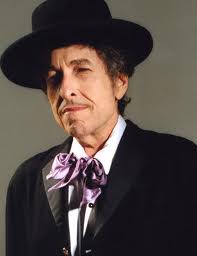
Bob Dylan…again


I can still remember my oldest sister, Tamar, 9  years older than me, coming home from the University of Arizona talking about a new singer she’d seen in concert, Bob Dylan.

I remember her showing us the album cover.

I remember listening to the music.

I liked the words. I liked the sound of his voice.

It was so different from anything I’d ever heard before.

He couldn’t carry a tune.

I always felt different from everyone around me. I was Jewish in Texas…different. I was the Rabbi’s daughter…different. I had a crazy mother…different. I was willful and brash…different. When life kicked me around, I kicked back…different.

And there was Bob Dylan…a Jewish boy in Minnesota…singing off key with a gravelly voice and an in your face message to the world.

No wonder I liked his sound.

20 years later I had a bout of encephalitis. Mostly it was the headache from hell. But I also had tickets to see Bob Dylan in Jerusalem. No question. I was going. Headache or high water.

He was amazing. A grumpy old man. Pitted face. More pitted voice. No stage presence. No funny chatter between songs. No encore. Just a more gravelly, more off key voice with an in your face message.

My sister saw Joan Baez in concert a few years ago. She was old. She forgot some of the lyrics to one of her most popular songs in the middle. She yelled a politically incorrect epitaph at a heckler.

It’s 20 years since I last saw Bob Dylan in Jerusalem and I’ll be seeing him in Ramat Gan next month. He’s turning 70 this year. He  sings about love now. He sings about beyond the horizon. Still singing about the things most poignant in my life.

He’s changed and so have I.

But my oldest daughter saw him in Italy 5 years ago. Still grumpy. Still no stage presence. Still no encore.

A legend in his time.

Starting Out

How many books and articles have we read about growing up in a dysfunctional family?

Parents who abused alcohol, drugs…us.  

Narcissistic parents. Negligent parents. Absent parents.

Over-protective parents. Over-indulgent parents. Overwhelmed parents.  

Confused parents. Abused parents. Amused parents.

It so often starts out badly for us in one way or another.

Somewhere on the spectrum of unhealthy, problematic, foreshadowing of complications to follow.

If our childhood were a movie, the background music would warn the audience of dark possibilities.

But in every book, every article, every home, each of us coped in our own way. Each of us took a different path. It twisted and wound its way through our childhood, adolescence and young adulthood. For many of us, the path went on to our own young parenthood. Our formative years shaped each of us differently. And with that we met all of life’s circumstances and made decisions which led to other circumstances…

and other decisions…

and on and on.

All interconnected. One step on the path to the next. One decision at one crossroad to the next.

They say that children raised in dysfunctional families fall into three categories:

One child made of glass. Fragile.

One child made of clay. Malleable.

One child made of steel. Tough.

I think they may be right…and wrong. The teenager or young adult may be that child when she leaves home but then her meandering path takes over. Where it leads may be out of fragility, out of malleability, out of toughness into limitless possibilities and permutations.

I was raised in a dysfunctional family. I was the child made of steel. At 58 the steel has become a crystal. With all the diversity of the fragility of glass, malleability of fractured light and toughness of tempered geometry. The beautiful diversity of the human condition.

Every day is a reflection of that diversity.