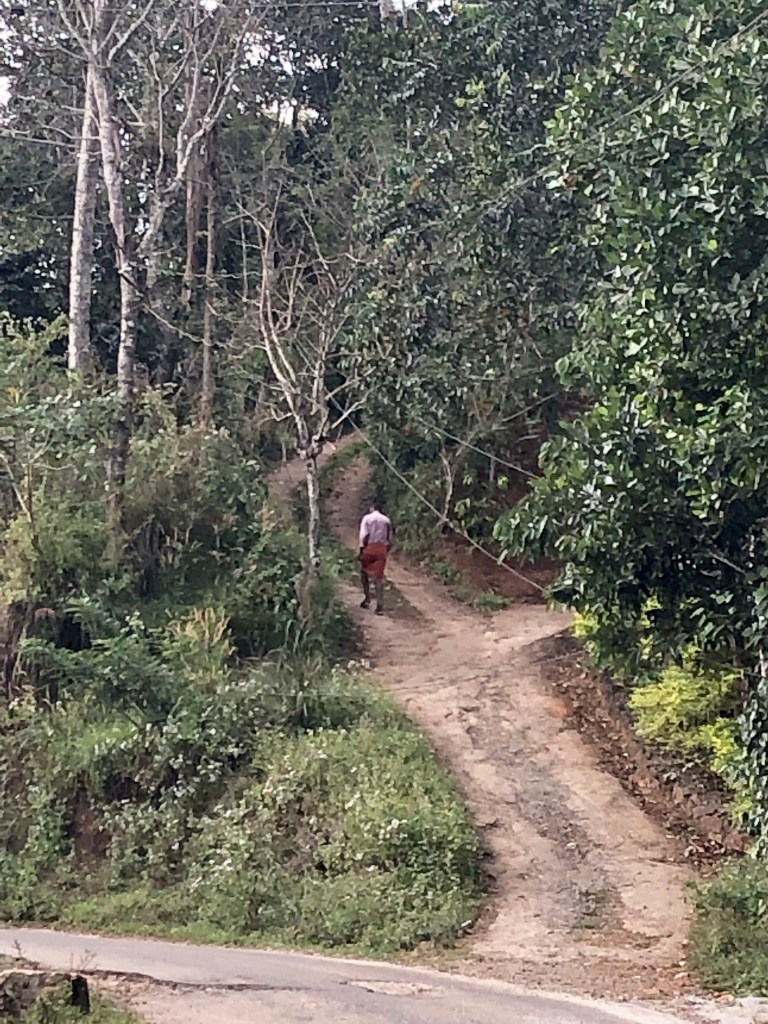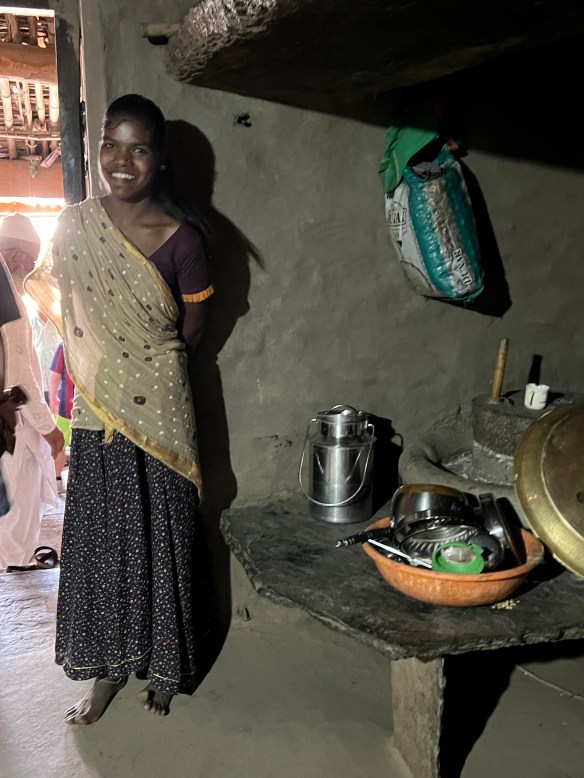
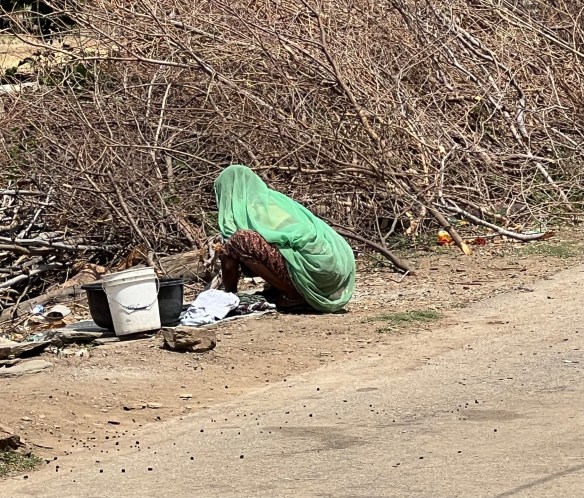
A Gentler Way of Life

We’re leaving Thumpoly Beach later today.
Yesterday I spent two hours happily painting with acrylics surrounded by paintings of local artists and classical music in a specially designated room in a local art gallery. The owner of the gallery, a retired professor of political science and engineering, provides this wonderful experience for any tourist fortunate enough to learn of the possibility and make a reservation. There’s no fee.
He explained as we shared a cup of (way too sweet) coffee that he left the university five years before the age of retirement because his wife left her teaching position and was at home. There was a hint of illness on her part but he didn’t elaborate and I didn’t ask.
I sensed that the experiential opportunity he offers is an opportunity for him to socialize with people from all over the world now that he’s restricted to this lovely but insular fishing village. We chatted for an hour as he brought out spicy roasted cashews and cookies. A little politics (a big Modii and Bibi fan). A little religion (he’s Christian and fondly recalled his pilgrimage to Israel). A little economy (India has a vastly more reasonably priced medical system and price of living).
A man happy with his lot in life.
As I walked home I thought it could be very pleasant to be in Thumpoly for an extended visit and share afternoon tea and conversation with him from time to time.
I recognized several of the women I passed in their colorful saris with an umbrella held overhead to protect them for the sizzling sun. We smiled at each other, wagged our heads and offered a soft ‘namaste’.
Most stores are closed for a few hours when the sun is at its hottest and only now, at five o’clock, people are again out and about.
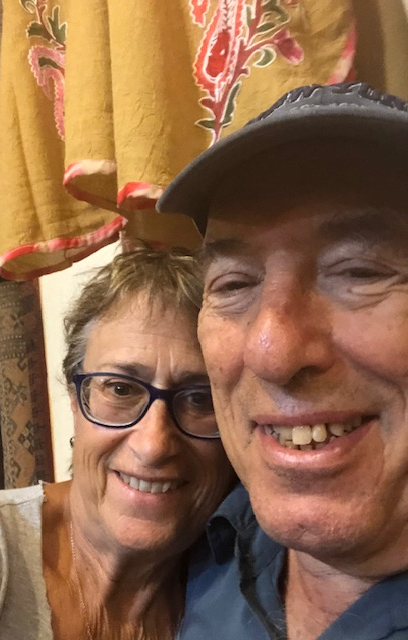
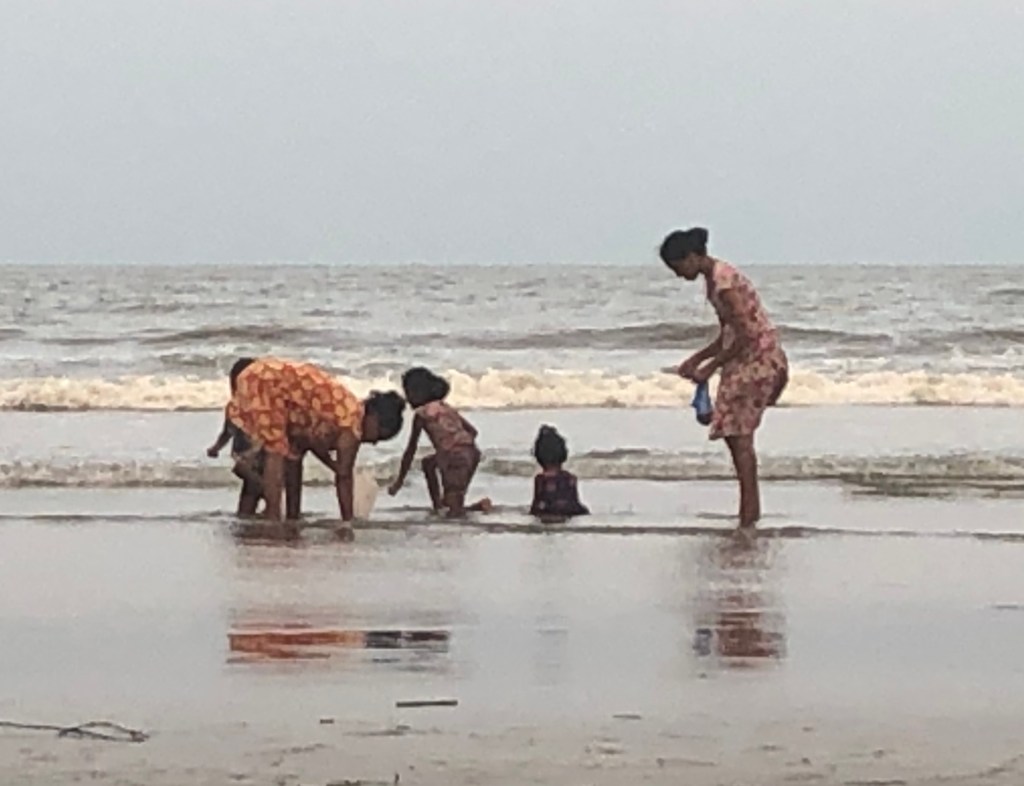
My partner and I had agreed just that morning that, as wonderful as it is here, we were ready to move on. But as I gazed at The Arabian Sea and the young men strolling along the beach I realized that I’m a little sad to be leaving.
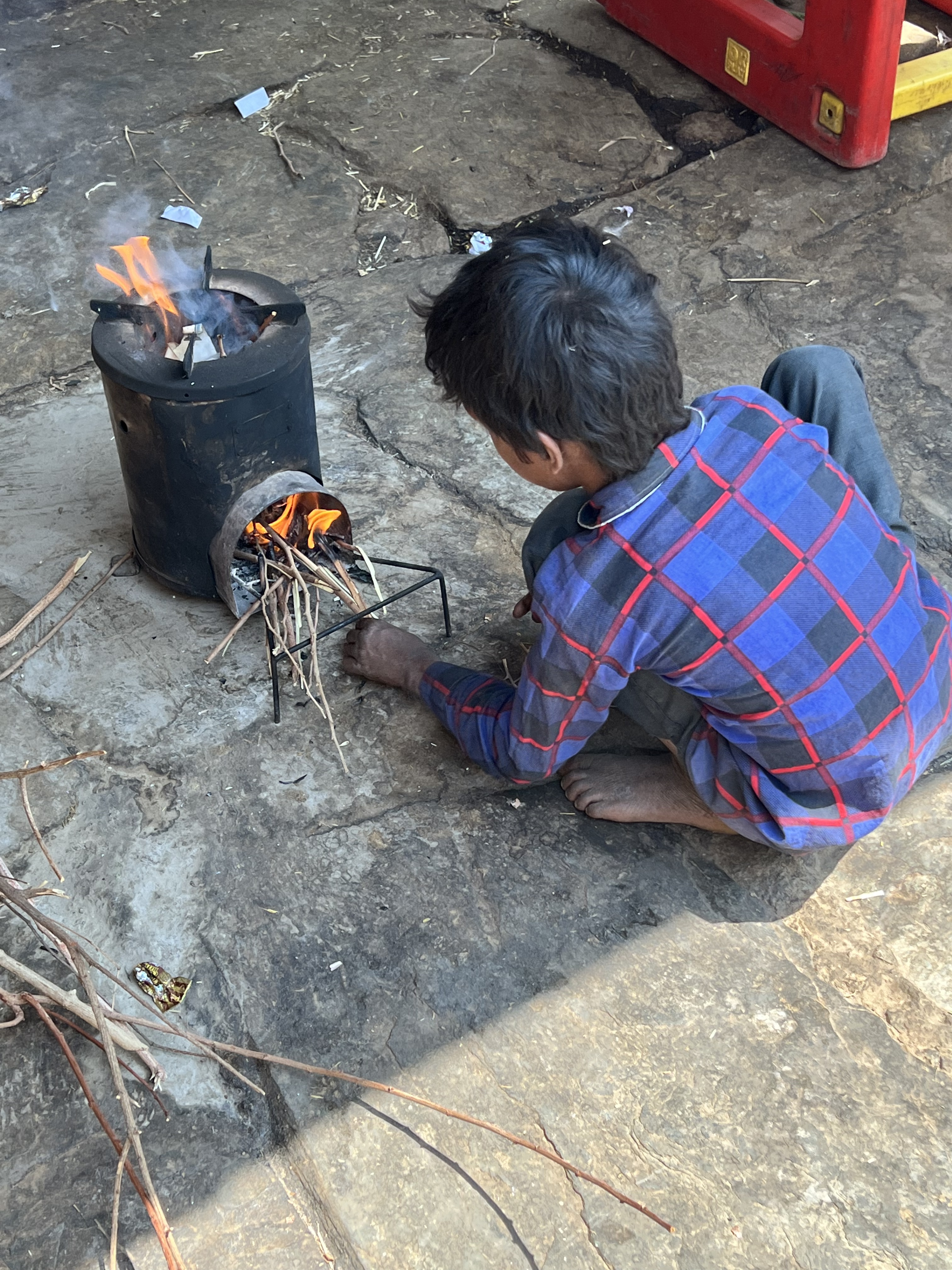
Every morning we see the fishermen heading out for another day of catching whatever they can – and it isn’t much this time of year. They throw their gill nets or small trawling nets and harvest what they can. A few shrimp. A crab or two. A kilo of very small fish if they’re lucky. Later in the day we see exuberant children walk by in their school uniforms. Inevitably they stop to say hello, ask our names (again) and inquire after our health.
In the late afternoon, when there’s more of a breeze, we see various village residents walking by on the dirt path along the shore in front of our balcony. No one is in a hurry. They seem to be enjoying the sea air and the crash of the waves as much as we do, even though they’ve undoubtedly lived here all their lives.
I suppose there’s gossip and intrigues here as there are everywhere; heartbreak, ill health, kids making life choices their parents don’t understand.
There are very big beautiful homes and tiny unkempt hovels.
But in general life here seems to have a gentle rhythm and people seem to smile much more than in the towns with which I’m more familiar.
Our friends here have two children, which is the norm. One, their daughter, was accepted into the engineering program at a prestigious university very far away. The other, their son, is finishing high school and plans to spend seven years in the army.
Our friend, Antony, raised in this village, the son of a fisherman, was a career officer, head of the anti-terrorist units fighting in Kashmir, and retired as a colonel, one of the wealthier residents of Thumpoly. His wife is a school principal who (in spite of her profession?) is almost always smiling and happy.
Antony and Teresa both give much of their time to the community. Whether from modesty or simply relaying this village’s reality, Antony has told us often that giving to the community is the norm and not the exception.
There are certainly downsides to life in this crazy patchwork of a billion and a half people, over 25 spoken languages, millions living in slums alongside the abundance of IT employment, jewelry production and export, and a caste system which refuses to die, just to name a few challenges.
At the same time, there is a gentler way of life and a serene inner beauty to those who have less, in many cases a whole lot less, but retain an appreciation for what they do have.
So, yes, I’m a little sad to be moving on, even while I look forward to better physical conditions and an evening cocktail.
Ah! The contradictions of life.

Differing Realities

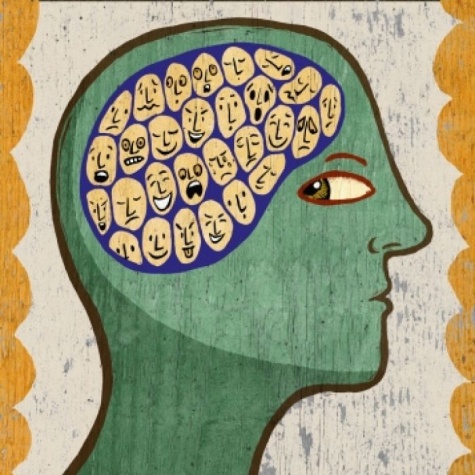
I’ve been teaching meditation in one form or another for the past 20 years. During that time I’ve listened to hundreds, maybe thousands, of hours of dharma talks given by insightful teachers. I’ve been a member of meditation groups – presently a wonderful group of people from the west coast of the USA on Zoom every other week – pretty much consistently for decades. I’ve read dozens of books about mindfulness, awareness, no self, here and now, letting go, equanimity, and lots and lots of other catchwords and phrases. You know the ones.

All this is to say that from many different sources, I’ve received the magnificent gifts of self-knowledge and the possibility of inner serenity during tough and not-tough times. I’m hugely grateful to all my many teachers, those who call themselves teachers and those who don’t, who give of themselves so generously and to God for giving me the time and resources to take advantage of it all. As my husband and I often say when thinking of our bountiful lives – We couldn’ve been born under a bridge in Mumbai.

But it’s only recently that the light went on over my head concerning not only the reality of being born under a bridge in Mumbai – having few material resources and few possibilities of their attainment – but living in a reality that doesn’t allow for integrating those catchwords into one’s life.

It came about one evening after teaching a Raja yoga class (which includes a segment of meditation). I stood talking to one of my students, a particularly beautiful young woman who looks startingly like a well-known gorgeous movie star. She’d obviously lost some weight from her already-very-thin frame and had black circles under her eyes. Her entire affect was one of misery. As it turns out she was caught up in the turmoil of what she saw as a terrible injustice on the part of the employer at the job she’d just left. She felt that, while she’d left the company, others were still suffering the injustice and she was struggling with the idea of suing the company. It took me a few questions to realize that, in fact, it had nothing to do with her directly anymore. I kept thinking surely I must be missing something.

She said that she hadn’t been sleeping and had lost her appetite; that she couldn’t stop thinking about the bad behavior of her former employer. I suggested that she might focus on her supportive husband, healthy scrumptious kids, and her new (more appropriate) employment. We spoke about the possibility of letting the drama and injustice go. She said she’d think about it, but I could tell she wasn’t happy with the direction our conversation had taken.

Since she only comes to my classes sporadically, I noticed that I hadn’t seen her in a while but didn’t think much of it. I wished her well in my heart and hoped that she was able to make peace with not championing those who had remained with her former employer.

About a month later she got in touch with me. She’d been on a 10-day silent retreat. Her first.

She said that when we’d had the conversation about her former employer she’d been very angry with me. She thought my idea of letting the injustice in her former workplace go was surrendering to unethical behavior and part of the larger problems in the world. (in the world!! no less). It was only very far along into the retreat that she felt what she called a clarification which was like the lifting of a heavy fog. She realized that the entire issue of the injustice wasn’t her issue at all; that her inability to see what was clear to me lay in her having always been responsible for her siblings and even her parents in her dysfunctional home. She needed to take care of everyone around her to feel okay about herself. Once she recognized that she was able to let it go. She felt a huge physical relief as if a suit of armor had been lifted from her body.

Of course, I was happy for her and hopeful that she would continue to safely investigate her feelings. I know there’s a lot of inner disquiet and deep fragility there. But I was also chagrined at my cavalier projecting onto others with catchwords and phrases I never stopped to consider might be out of the realm of possibility for some of them.

I know better than that on so many levels, and, apparently, know less than that on others.

I began to look more carefully at other concepts I act as though are healthy, positive, and accessible to all, with a more discerning eye. Is this one really accessible to all? And that one?

It’s all fine and well to talk about relinquishing our narratives and not letting them be in control of our present lives, for instance, but is that accessible to everyone in the present moment of their lives?

Easy to talk about being grateful and satisfied with what is, but how does that resonate with someone who never experienced the unconditional parental love that encourages an ability to feel that one has enough, that one is enough?

And what about letting go, being joyful at the happiness of others, and oh so many others?

I’m embarrassed to say that I seemed to operate on the belief that saying it’s possible, telling stories and legends about people who have integrated such things into their lives, could shine a light bright enough to make it come true for my students. But while I like to think that it could and did for many of them, I will be making amends/changes to accommodate those for whom it’s not part of their reality…yet.

My reality is an ever-changing thing. Nothing in this life is permanent. So why in the world should my ever-changing reality be anyone else’s reality. For the most part, even in our uniqueness, we share quite a bit of similarity to those in our general milieu, but not enough to assume….well, anything.

You know what they say about people who assume…

Loss and The Two Arrows

There are a bunch of things that no one tells you about aging. Or maybe they tell you but it goes in one ear and out the other. Not relevant. Things that register in the way the laws of physics register – ya da ya da ya da.

As I turned 60 and even more after 65, I became aware of the physical aches and pains that go along with aging and, in my case, are the price for having jumped and danced around and, taking advice from The Eagles, taken my body to the limits for decades. I remember an orthopedist once telling me to keep teaching hip hop, hiking, and doing whatever I loved because ultimately even sedentary people have joint aches and pains…but they have a lot less fun getting there. I totally agree. Even on the mornings that my knees wake me up with a call for help.

It’s some of the other things about aging that I never gave much thought to (or any).

  • finding conversations of people under 40 uninteresting
  • having read every permutation of book and movie plots ad nauseam
  • being cold (or hot) when no one else is
  • losing friends to illness, lack of mobility, or death
  • aging differently from significant people in my life

YIKES!!

It turns out that an inevitable part of aging is loss and grieving for those losses. Big losses and small losses. And some losses are harder than others; not necessarily the “big” ones.

We all do it differently. And it all looks different on other people.

I remember having no regrets at 50. Ha!

I remember letting go of hip hop and aerobics in the blink of an eye. Didn’t seem like fun anymore. Traded my spandex for yoga pants happily.

I remember not even entertaining the notion of a sedentary life requiring programmed exercise. Counting steps? Furthest thing from my mind.

I remember a time when illness and death weren’t even a tiny part of my thoughts.

I’d read about (other, much older) people complaining that many of their friends had fallen by the wayside one way or the other. I’d heard them extolling the virtues of cultivating younger friends to combat loneliness. Scroll up – in one ear and out the other.

My partner “lost” his mother 10 days ago. My mother-in-law died. She wasn’t a nice person. Not a good mother. A narcissist. She was lively and charismatic and loved to be the center of attraction, but her children and friends paid a heavy price. She had dementia for the last five of her 93 years and didn’t recognize my partner or his sister who, in spite of a complicated and challenging relationship, made sure her last years were comfortable. If emotions were rational, no one would mourn her death. But if emotions were rational they wouldn’t be called emotions.

emotion – derived from the Latin term emovere;

to agitate or stir up. The affective aspect of consciousness

My parents are both long gone. My father died thirty years ago and my mother about twenty. Fortunately for me, I made my peace with both of them while they were alive. They weren’t partners in the process, but the possibility of relating to them with equanimity in life was a blessing.

My partner wasn’t so fortunate.

Watching his mourning process has been thought-provoking and, yes, emotional. A loss of innocence. A loss of possibility. A loss of the luxury of avoidance. A recognition of the loss of reconciliation. A loss of the comforting delusion of immortality.

My mother had bi-polar disorder. The shadow of her disease lurked everywhere. Sometimes it blotted out all joy and normalcy; sometimes it was a vague and disquieting sadness in our house. It was always a sense of waiting for the other shoe to fall. I was entrusted with her care from a very young age. I gained confidence and self-esteem that’s served me well throughout my life. I also harbored resentment and fear of chaos in the world.

I used to imagine myself a very small figure, wrapping my arms around my knees, head bowed, before a huge Mr. Clean-type genie, rising out of a magic Aladdin’s lamp, arms folded, scowling down on me. I didn’t understand the image or why it recurred so consistently and persistently throughout my life.

Imagine him with a turban, beard, and ferocious expression

The image vanished, never to return again, once I worked through my relationship with my mother. It was a loss I recognized with gratitude. I forgave my mother, without her permission, and realized one day that I felt a loving, empathetic sadness for her; a brilliant woman whose life was taken from her by a crippling disease no one understood at the time. A tragic loss. No second chances.

Not so with my mother-in-law.

The frightening image my partner has of her is his to tell, not mine, but he has one no less frightening than mine.

It’s difficult to accept that a person can be unkind, cruel, and totally lacking in compassion. How much more so when it’s your parent; the person entrusted with your care, emotional and physical? It’s tempting – no, imperative – to search for an underlying reason to shed a more sympathetic light on such a parent.

He searched. We searched. The round of reasons we tried to fit into the square peg bulged and defied imagination.

Ultimately, the physical loss of his mother grew into the loss of innocence. The first kind of loss is met with a simple grief. She was, after all, turning 93 two weeks later and hadn’t been herself for years. The second kind of loss is far deeper and creates a grief that is painful at any age, but magnified at 70, after so many years of pretending, ignoring, excusing, and hoping.

Two of our sons were at their grandmother’s funeral to support my partner and express their respect for family ties. When I talked to our older son before he left to meet us at the airport, he asked how his father was doing. I explained that he had many unresolved issues with his mother and now they’d never be resolved. I added how important it is to confront unfinished business with a parent in life. Hint, hint. (He moved on.)

There’s a lot of loss involved in aging. Loss of a parent. Loss of freedom from pain. Loss of mobility. Loss of long term friends. Loss of mental acuity. Loss of hearing. (Shall I go on?)

A Buddhist parable addresses the problem of suffering. It describes the two arrows in every difficult situation in life. The first is the arrow of pain, in this case loss, and the second is the arrow of suffering. The first is inevitable but the second is optional. It’s the arrow we shoot into our own hearts with our reaction to the inevitable losses that come with aging.

So many circumstances are beyond our control. My mother’s disease; my mother-in-law’s nature.

We can only prepare ourselves by nurturing our souls. By taking a deep dive into ourselves and becoming familiar with the particles of a higher power which exist inside each of us. By honing our ear to hear the pure voice of equanimity which resides there.

Many years ago I weighed the option of starting a hospice center. I had a conversation with the man who created a small hospice center in Jerusalem. At the time he was in his early 80’s. He exuded empathy and kindness. We spoke after I took a tour of the center with a staff member. I was surprised to see that each of the rooms had two residents. I asked the founder of the center if it was disturbing for the residents to witness the death of their roommate. His answer equally surprised me. He said that with the work done with the residents, every death since the center’s inception had been peaceful, and inspired serenity in those who witnessed it.

Choosing equanimity isn’t a one shot deal, and it’s not easy. It takes diligence and practice and work. Committing ourselves to the effort doesn’t ensure total success, or success every time. But to quote a poet by whom many of our lives have been enriched, Mary Oliver,

“Tell me, what is it you plan to do with your one wild and precious life?”

India to Israel: Corona Again

For those of you who read my last post – yes, we made it home – by hook or by crook and by the hair on our chiny chin chins.

For those of you who remember the days when people used to kiss the tarmac when they arrived in Israel – for security reasons it’s no longer possible, but the feeling was certainly there for us on March 19, in these times of Corona.

We spent 27 hours getting home from India on Ethiopian Airlines and didn’t even grumble about it. Seventeen hours in Addis Ababa? No complaints. A long line in the airport (several times) to have our temperature taken? That’s fine, thank you. Rowdy passengers (my partner calls them ‘enthusiastic’) unrestrained by the crew? Peachy.

The main thing was to get out of India and back home.

Things changed literally from every morning to every evening and then again the next morning. Prime Minister Mod’i, like many of the world’s leaders, proclaimed increasing restrictions from announcement to announcement, the difference being that he is responsible for 1.5 billion people – 17% of the population of the world! A critical mistake on his part could very well mean millions of Corona deaths; maybe tens of millions.

Within days all pending visas were canceled, and India closed its borders to foreigners. Within twelve days the skies were closed – no flights in or out.


One by one, the 29 states in India began closing their borders to foreigners. After that, one by one, they began requiring all foreigners present within each state to leave.

Cab drivers began to refuse foreigners. Guest houses did as well. The railway system shut down. Over a period of 10 days, intercity buses were canceled. Foreigners asked to leave their lodgings had limited options for travel elsewhere. Some began sleeping in the streets.

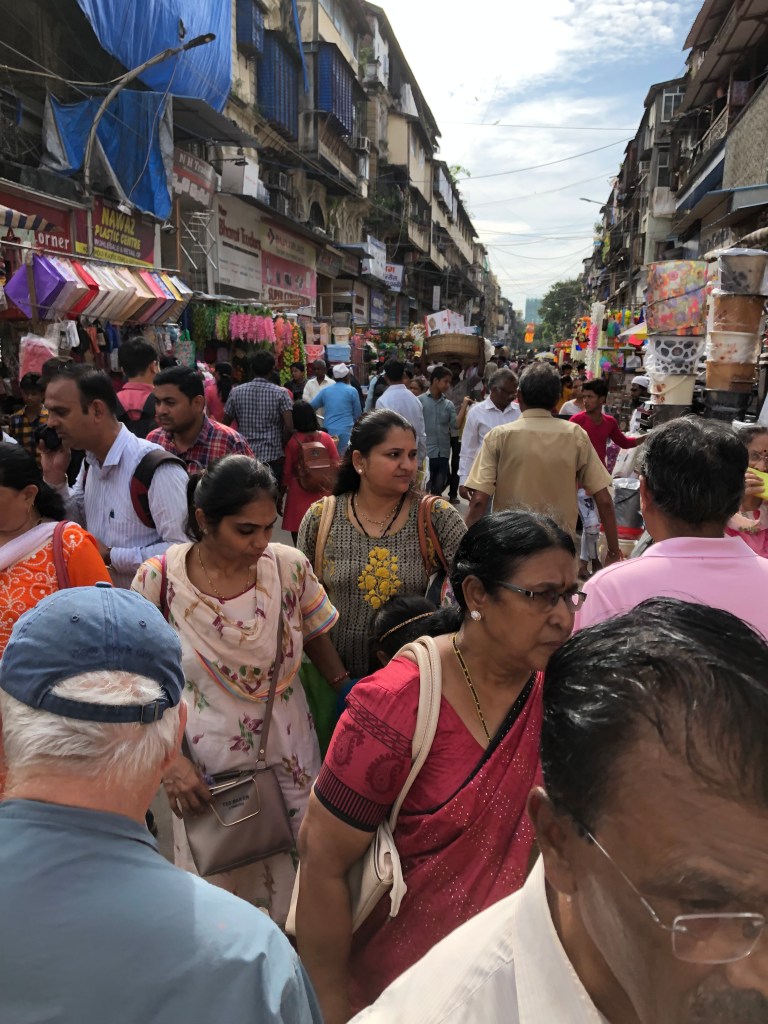
Within ten days Mod’i enforced a one day lockdown from 7 a.m. to 9 p.m. Four days later he proclaimed a nationwide lockdown…period. Anyone who’s experience the open market in Delhi or the crowded streets in Mumbai can imagine how eerie a sight that was.

By March 25th all domestic flights were canceled.

The Israeli embassy started organizing private buses to transport stranded Israeli citizens to Delhi and Mumbai to be close to an international airport for extraction.

In Israel, the restrictions of movement are barely enforced. In India, the police canvassed the streets beating non-complaint people with sticks.

We reserved flights with 5 airlines. They began canceling the day before take-off until we were left with Aeroflot and Ethiopian Air. We chose Ethiopian because Europe seemed unreliable with Russia announcing the closing of its borders for the day of our flight. After trying to get confirmation that our flight would still fly, calling Aeroflot offices in Israel, India, and Russia – including a conference call with a friend in Israel, me in India, my friend’s sister-in-law in Russia, and an Aeroflot agent in Moscow – the confirmation was still shaky.

We arrived in Israel at 3 a.m. Two friends had left one of our cars in the airport parking lot (one drove his own car to return both of them back home). No one spoke to us at the airport. No one asked us any questions or took our temperature. No one asked how we planned on getting home even though we were officially in quarantine once we touched down on Israeli land.

Go figure.

Our friends in Israel stocked our fridge and freezer. They decorated our home with welcome home posters. We even had daily visits with several of them on our back porch – six meters from us and on their own chairs. Friends are the best! We found out later than one of them called one of our children to enlist her aid in convincing us to leave India.

My Corona symptoms disappeared once I’d spent a few hours in my own home.

Friends we made in India were in touch with us – some more than once. They were all in lockdown but doing fine. Of course, none of our Indian friends are homeless or live in slums with collective toilets and corrugated roofs. They expressed happiness that we made it home, and, interestingly, appreciation for our sensitivity to India’s needs by leaving them to cope with Corona on their own.

We can’t go out for another eight days, not even to a pharmacy or grocery store, or to get exercise within 100 meters of our house, like others can do. But we’re fortunate in so many ways – first and foremost that we are healthy, and our children and grandchildren are healthy – and then:

  • We spent five months together in India and became even closer so that being together in our home with very limited contact with the outside world is not at all a hardship
  • We have a spacious house and even a yoga studio
  • We have a comfortable back porch with a large, lovely backyard
  • We live in a community where the youth are happy to help and have organized to do shopping and bring it to people’s homes
  • We have neighbors who pick up our garbage from the end of our front walk to throw it away.
  • We have enough income to survive these crazy times if we budget ourselves properly

Of course, we worry along with the rest of the world, listening to the horrific statistics of deaths and illness. Personally, I keep busy with yoga, meditation, reading and binging on tv series. All day I have a Pollyanna-ish feeling that all will be well soon, only to be brought down to earth when I listen to the evening news.

We check in with our children and grandchildren, with our friends and our siblings when the level of worry rises too high.

And we pray, along with other inhabitants of our beautiful earth, that we’ll emerge on the other side of this crisis more grateful for our lives and our many blessings, and with renewed commitment to ease the friction, poverty, and distress in the world.

If nothing else has taught us how interconnected we are, surely the map of COVID-19’s progress throughout the world is proof.

Is There a Spiritual-Material Spectrum?

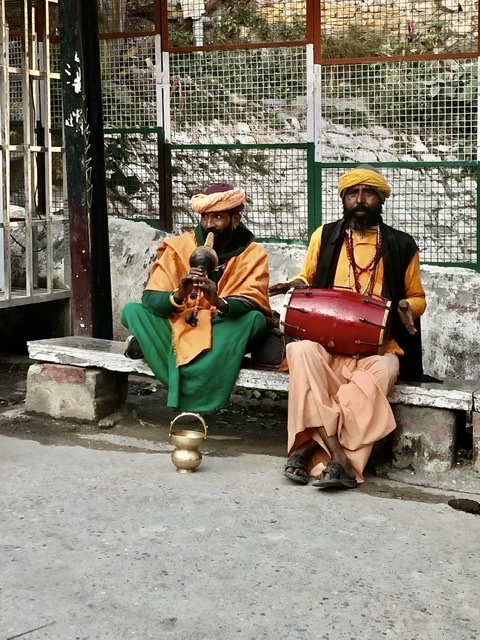
Rishikesh is one of seven holy cities, Sapta Puri, in India. Aside from being alcohol-free and vegetarian, the city is a spiritual center, pilgrimage location, yoga and meditation center, and home to many Sadhus.

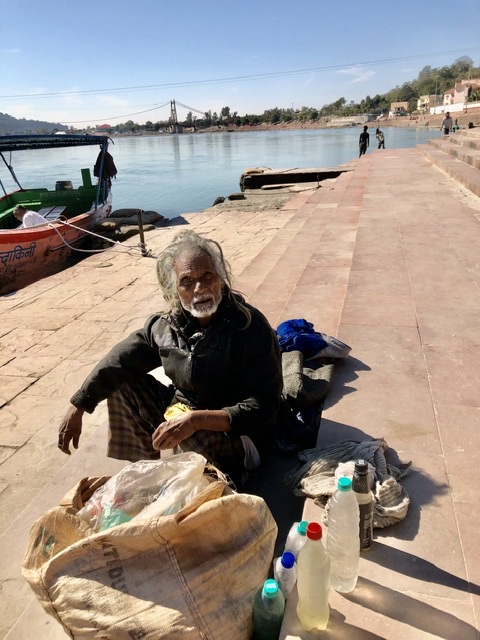
A Sadhu is a religious ascetic who has renounced the worldly life. He often lives on the street, with only the essential belongings for survival – his clothing, turban, towel, sandals, and beggar’s bowl. He is dependent upon the good will of others to provide him with enough money to buy sustenance-level nourishment each day.

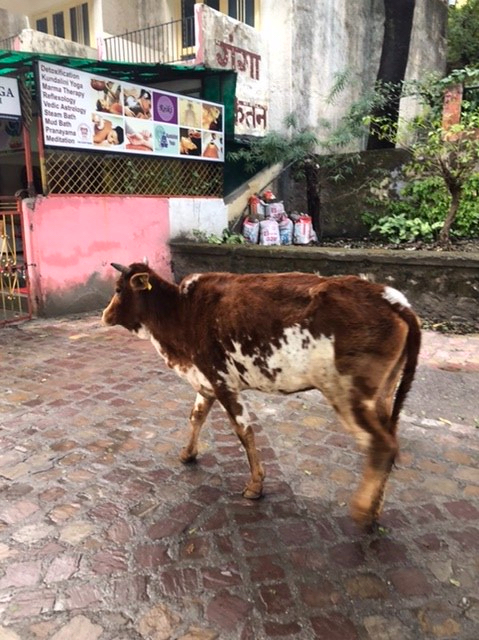
On my way to yoga in the morning, after crossing the Ram suspension bridge, which is blessedly motorcycle-free at that time of day, I meet only cows, dogs, and Sadhus, all waking up after a night spent outside.

Sadus may be said to be at one side of the spirituality-materialism spectrum. As I wait for my sweet yoga teacher, Gagan, to arrive on his motorcycle, sharing the pergola which overlooks the Ganges with the same Sadu each time, I can often hear a passing Sadu chanting quietly or not at all quietly.

“Ram. Ram. Ram. Ram. Ram. Ram. Ram.”

Though they’ve renounced family, home and worldly endeavors and accoutrements, I’ve noticed that they tend to hang out in twos, threes, and fours – a social group of sorts – and they gather their few belongings safely around them or cover them with a tarp on a nearby bench. Some take advantage of government incentives and work at ashrams where they receive food and shelter in return.

As my yogi says, human nature is one of collecting: things, acclaim, friends, knowledge, money. Another distinction between other animals and the human animal.

We ate dinner with a group of 20 strangers in Delhi not too long ago. Nice people. Friendly. As travelers are wont to do, people spoke freely about their lives, philosophies, travels, and families. The two men who sat closest to us got into a long conversation (with my partner) about their various, and, it turns out, multitude of real estate investments all over the world. The ones they sometimes live in, the travails of having renters, the value and tax issues of different locations.

Neither was Bill Gates but neither was a Sadu either.

We’ve been in India for over three months now. It’s a long time to be out of mainstream living. With each day that our work commitments, family and friend socializing, and community presence gets further away, our bonding to each other and our investigation of personal values and beliefs becomes more intriguing. There’s more time spent observing, thinking, integrating and softening.

It could be that the inherent nature of India is friendlier and more conducive to this transformative process. It could be that an extended period of free time would create the possibility of this process anywhere.

In India specifically, as we travel, meeting other travelers, shopkeepers, restaurant and guesthouse staff, yoga practitioners, musicians, and language teachers, we can’t help but observe their everyday life and that of passersby. Some of them become a regular part of our day for the week, two or three that we are in their vicinity. We seem to be seeing the spirituality-materialism spectrum in real time.

Spirituality is in the air.

From JP, the owner of our guesthouse near Munnar, who gets up at 4 am each morning for 20 minutes of yoga, to the shopkeeper in Rishikesh who closes his shop at 10 pm, bends down 3 times to kiss the step in front of his shop door, touches the doorframe and then his forehead before getting on his motorcycle to head home, to the clearly well-to-do middle-aged Indian couple who travel to The Ganges to dip themselves in holy water annually, to my lovely harmonium teacher who has a smile for the pesky monkey who pushes open her door when she shakes her head in that ubiquitous, multi-meaning Indian wag and says “He, too, is one of the gods’ creations.”


The human nature of collecting is evident, too.

The same people mentioned above charge money for their goods and services. In general, they unabashedly charge foreigners more – sometimes shocking attempts to charge 10 times more. A Sadu might complain about a donation of 10 rupee (“But a chapati costs 20!”). One South Indian man we befriended had a candid conversation with us about his constant efforts to accumulate more wealth. The yogi with whom I practiced four years ago didn’t charge money (he reluctantly accepted my ‘donation’ of $75 for 10 classes) and this time made his charges clear before we began (less than $6/class).

So where does each of us choose to be on this spirituality-materialism spectrum?

Does being a Sadu, at one side of the spectrum, preclude a bit of materialism? Does being Jeff Bezos preclude a smidgen of spirituality? (btw, did you know that there is not one woman on the list of the top ten richest people in the world?)

Gagan believes that it’s easier for those who have wealth to take on spirituality. Perhaps this originates from his vantage point as a Sikh yogi whose path of relative poverty and practice was inherited, clear from the age of 10. Perhaps he envisions those who have large bank accounts as having the luxury and ease to choose to invest time in introspection and seeking spirituality.

It seems to me, from my vantage point of never having had to concern myself with the possible absence of my next meal or a roof over my head, that it’s easier for those who have not been educated to chase ever-improving material circumstances to take on spirituality.

Clearly Gagan and I bring different life experiences to our sense of things.

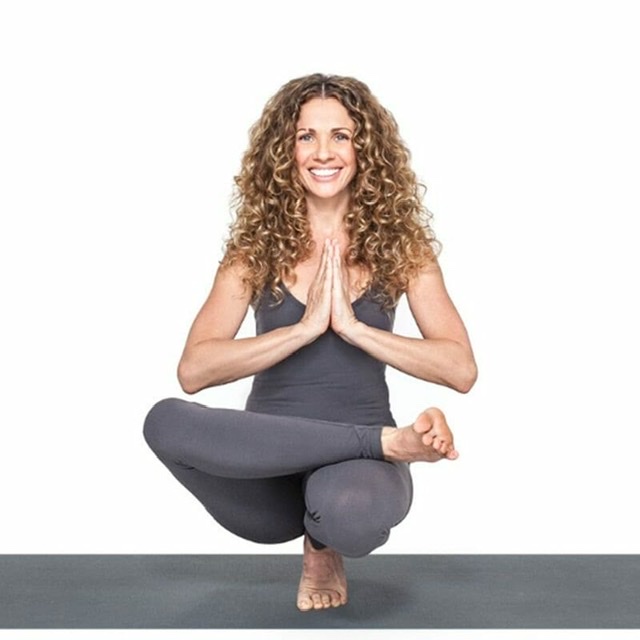
Seane Corn is one of the most famous (and wealthiest) yoga teachers in the world. Her net assets are reported to be over 20 million dollars. Not anywhere near Bill Gates’ estimated 100 billion dollars, but still not too shabby. While her exhibition-type, extreme style of yoga is not my cup of tea (maybe I just wish I could have her flexibility), I’ve admired her for years for her tireless work for altruistic causes. Her organization, Off the Mat into the World, offers yoga practitioners the opportunity to volunteer to build community centers in Africa, train young people to teach yoga and meditation in their villages and towns, and offer online courses for leadership initiative. A vegan, Seane teaches 250 days out of the year, and, when not teaching, calls a tiny yurt in Southern California home.

Miriam (not her real name) is a talented artist, living in a rural area of Israel. Her husband of 25 years is most often in the US where he teaches religious studies in a small community where there would be no religious learning if he didn’t offer it. They have little in the way of material wealth, other than the modest, heavily-mortgaged home Miriam lives in, and, sadly, have no children. Their daily lives are committed primarily to the deepening of their spiritual lives and sharing what they believe are their God-given talents – painting and teaching. Miriam offers half-day and full day retreats for women, providing spiritual, artistic and nutritional nourishment, charging on a sliding scale according to means. Her walls are covered with her beautiful original works, into which one can gaze, imbued with Kabbalist and/or personal spirituality.

(not Miriam’s work)

Most of us are neither Seane Corn nor Miriam. We’re neither millionaires nor Sadhus. Some of us may not give a second’s thought to spirituality or ethical behavior or the meaning of life; others may think about it fleetingly or in depth once a week, or at random times.
All that stuff has been in my thoughts for as long as I can remember. Sometimes it led me to political activism, sometimes to volunteer work, sometimes to prayer, sometimes to regrets, sometimes to books, sometimes to an open heart.
I’ve been blessed with 3 months of unrestricted time, a partner who’s happy to listen to and share philosophical thoughts, and surroundings that welcome it all.

We live in an age of moral subjectivism, relative realities, political correctness – some may be tempted to call it an age of wishy-washiness. We hear that there’s no objective right or wrong, better or worse, too much or not enough. It’s all what you choose for yourself. The glorification of the individual, regardless of…well, pretty much anything.

But, hand on heart, don’t we all actually know what having enough looks like? I’m guessing it doesn’t resemble Jay Leno’s collection of cars or Imelda Marcos’s shoe closet. It most probably isn’t even reflected in most American’s refrigerators or leisure time.
I’m a member of a FaceBook group of people traveling in India. Recently there was a post about whether or not to tip in India, and how much. Some of the responses were eye-openers. From ‘Indians don’t tip.’ to ‘It’s good enough to round up.’ to ‘They earn so little that 10 rupee significantly increases their income.’ (10 rupee is the equivalent of 15 cents)
Seriously, guys!?
Then there’s the feeling that we’re too busy to walk the breast cancer marathon or visit the aunt who’s broken her hip or volunteer at the literacy group downtown.

We each choose our own path, even though sometimes it doesn’t feel like it. We have internal voices that may sound a lot like one of our parents, our seventh grade teacher, our partner, our eighteen-year-old self, our rabbi, our neighbor, or all of those people and others besides. Voices that narrow our choices to, well, theirs. Or what they wish they’d chosen.

Confusing…and noisy. Hard to hear our own internal voice with all that racket going on.

Gagan shared his own belief about all this choosing, whether it’s about spirituality, materialism, or how much time to look at a screen of some sort. If you never regret your choice, your choice is good. (I wish you could see his expression and hear his voice as he says that.)

When I pushed him…what about an addict who ends up dying from his addiction?

The answer – If the addict dies with no regrets, then the choice is good.

Say whaaaat!?

That’s going too far for me, but I get it when he elaborates and adds that trying to guide someone else’s path is like trying to steer a passing car. Unless the driver pulls over, stops, and asks for directions, your shouts will just make you hoarse.

I’ve spent many hours perfecting work and making deadline only to find that the client didn’t bother to provide necessary material – and didn’t care. I’ve spent money and time fulfilling a promise that the person on the receiving end, it turned out, didn’t value much, or may have even forgotten. I’ve worried about people’s “wrong” decisions that turned out not to be so disastrous in the long run, or even had their positive aspects.

So if I believe people are happier with spirituality in their lives, authenticity, or altruism, or other people, I choose to resign as one of those internal voices that points it out.

I’ve chosen to integrate those attributes into my life and to respect your right to choose to integrate some, all or none of them into yours.

No regrets.


Nature or Nurture

Suspend the usual platitudes and accepted opinions of the social groups to which you’ve assigned yourselves. Mission accomplished? Now read on.

We’ve seen many beautiful animals over the past 10 weeks in India.

India really knows how to create and maintain national parks the way they should be. The kind where tourists are only allowed in a tiny percentage of the park lands and animals live in the rest according to their natural instincts and behaviors, without threat or fear of their main predator – us.

As it turns out, India also really knows how to create and maintain zoos the way they should be. The kind where the animals have enough space to live their lives as comfortably as possible, while being protected from their precarious reality out of captivity.

Of course the Saraus Crane, that very tallest of birds, might prefer to fly free, and that Bengal Tiger might prefer to roam the tropical and subtropical rainforests chasing prey, but their natural habitats are, sadly, disappearing or have become too dangerous for them.

We humans have been responsible for many of the causes of extinction and the threat of extinction for many members of the animal kingdom (though certainly not all). We have become one of the major causes of their comeback, too.

Wolves and buffalo, verging on extinction in the ‘60s, have made a valiant recovery as a result of protection laws passed in the ‘80s. Severals kinds of frogs, antelope, birds, turtles, and leopards have been saved from extinction by zoos. Yep, zoos.

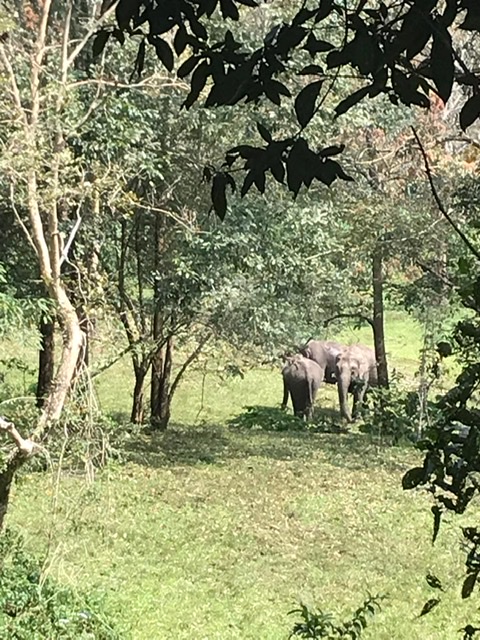
Seeing wild elephants from a safe distance in Periyar Park creates a very different visual than seeing elephants in the Mysore zoo. That difference makes it tempting to condemn the zoo concept.

But that condemnation could paradoxically lead to the extinction of a large number of animal species.
I admit to some of my very best memories being the Macaws at the clay lick in the Amazon, the playful Otter family in their natural waters near Sandoval, the Blue Boobies on the cliffs in the Galapagos, the warm weather Penguins in the Patagonia plains…you get the picture.

But I’m happy that the Golden Lion Tamarin, once almost extinct, is thriving in captivity so that my grandchildren can get acquainted. Same for the California Condor and other majestic beasts.

Sometimes generally accepted ideas need to be re-thought.

Just saying.

But what about the family?

This trip started out as one of those ‘round the world’ tickets where you have to keep traveling in one direction – east or west – and can’t cross any specific ocean more than once. I must’ve played with that planning tool on the Star Alliance site for twenty hours or more over the course of several months.

Tel Aviv – St. Petersburg – Mumbai – all over India – China – Bora Bora – Alaska – Oregon Coast – California – Salt Lake City – Mount Rushmore – The Badlands – New Mexico – San Antonio – Fort Lauderdale – New York City – Toronto – The Bay of Fundy/Nova Scotia – Iceland – Tel Aviv

Juggling weather, direction, time.

How much is too ambitious? Australia, yes or no?

Should we rent an RV to travel around the US? A car with motel stays? Flights for the long bits?

But then the time came to make real decisions like renting out the house for the year and what to do with my yoga studio and my husband started hemming and hawing. There were hesitant chords of concern about leaving our lives for so long. I tried to ignore them. Gloss over them. Treat them like background noise.

A year. Twelve months.

I had to admit to myself that it was sounding like a really REALLY long time to me, too.

The house wasn’t the problem. Neither was the studio. Though I love both.

It was the kids, the grandkids, and the friends who have become no less our family in the 30+ years that we’ve shared a life.

So twelve months became ten months became six months and here we are with the second month of our six-month trip drawing to a close.

In this technological era, it’s pretty easy to keep in touch with people. We share our amazing surroundings and the interesting people who inhabit them with a WhatsApp group for our English-speaking friends daily. We post on FaceBook for our Hebrew-speaking friends or send separate WhatsApps or emails. We send messages to our family WhatsApp group, too, and keep in touch with them with video WhatsApp weekly when we can find a strong enough WiFi connection, or with audio WhatsApp when we can’t.

We spoke with our youngest son and his wife yesterday from an isolated snack food kiosk in the jungle as they drove home from an office party in Silicon Valley, California.

We remember the days, not too long ago, when we sat in Internet Cafes, paying for the internet per minute and waiting endlessly for the atrociously weak and slow connection. Then there was Ko Mak, an island in Thailand, where we had to hike an hour to the other side of the island daily for the only internet connection because I had left Israel in the middle of interviewing candidates for a position and had to go over resumes.

Earlier there just was no internet – impossible for our grandchildren to envision – so we made the occasional phone call when we could.

It seems that most of the important people in our lives are healthy and major crisis-free so far during this trip.

Before we left we knew that one friend was scheduled to have a small, probably cancerous, tumor removed from her kidney, and after we left we received the good news that all had gone well with her surgery.

One granddaughter had an ugly eye infection that seemed to linger endlessly. Endlessly finally came to an end after way too long a time for my taste. Her swollen-closed eye then returned to normal.

The worst of it so far has been a shocking but benign head tumor with sudden, unexpected, surgery that’s meant weeks of rehab for a neighbor who’s like a younger sister to me. That was a tough one because I knew that my presence could’ve been important for her morale, but, thankfully, her recovery seems to be going well.

Life is full of surprises – big and small; pleasant, unpleasant and neutral – and they don’t cease when we’re far away from our usual haunts.

So here’s the deal.

Relationships with people are one of the most important ingredients in the tasty soup of life. There’s our relationship with ourselves; our inner world. The one we take with us wherever we go, whether it’s to the living room or to India. Then there are all the others.

The ones we choose; the ones we’re born into; the ones we birth; the ones we marry into; the ones we grow into because of circumstances; the ones who are part of the landscape of our lives.

There are even relationships we’re semi-unaware of until they’re brought to our attention.

There are close relationships and casual relationships. There are close relationships that become casual sometimes and casual relationships that become close at others.

There are relationships that take us by surprise and relationships like old slippers – comfy and constant.

But there’s one reality of important relationships that my husband has pointed out to me many times – they have a past, a present and a future. If one of those elements is missing, the relationship is a like the one with that second grade teacher you had in elementary school. She may have been one of the most significant people in your life when your were seven but she’s only a fond memory today.

Anyone who knows me knows that I’m a relentless technological freak. I love the newest, the most creative, the most surprising new concept, gadget or app. I’m that person that buys the out-of-the-box FaceBook solution for neck tension and was one of the first to contract out administrative projects to freelancers online fifteen years ago. I never give up communicating with people in the Mayalayam spoken and written on my translation app in spite of dozens of puzzled expressions. I trust Uber and Waze and UpWork.

I prefer email and WhatsApp to phone calls or personal business meetings. If you WhatsApp me, chances are you’ll get an immediate reply sixteen or seventeen hours out of twenty-four, even from the tropical jungle of Kerala.

And yet.

I’ve learned to embrace another reality about relationships.

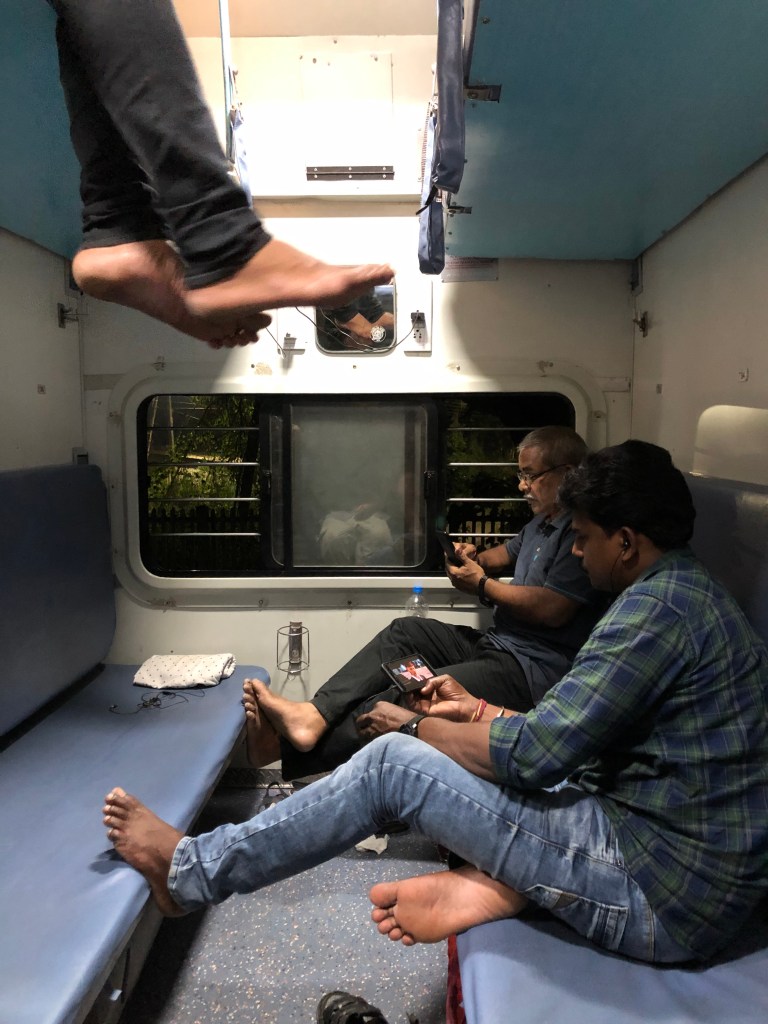
The important ones cannot, ultimately, be sustained with technology. They can be maintained temporarily in a loving electronic space when watered sufficiently – pardon the mixed metaphor – but they will eventually rise from the lower berth to the 3rd tier berth of relationships and become your second grade teacher.

It’s true of best friends, of sisters, of kids, and probably most of all of grandkids, who have the disadvantage of being too young to have solidified any relationship enough to withstand the loss of perpetual physical proximity.

I love to travel. Someday I may not be able, physically, to climb into a train berth or even get on a plane to travel to another exotic location, but I’m guessing I’ll become an armchair traveler. Meanwhile, I look forward to the next four months in India, a week in Greece with my daughter and granddaughter in July, and am already planning to rent a little place for three months in Guatemala next winter.

But I won’t be fiddling with that ‘round the world’ Star Alliance again in anticipation of a year of travel. I have a feeling that I won’t even be looking at six months again. I’m so happy that we grabbed the opportunity to take this incredible journey. I’m seriously enjoying every single day.

While I tend to feel ageless, I am aging. But that’s not the thing. It’s not fun to do many things I used to have fun doing but I’ve barely noticed that I’ve stopped doing them. I’ve moved on to things I may have once thought slow or unexciting and get a huge kick out them now.

The thing is that all the people I love are aging. Yep, even Alex, our youngest grandchild. And certainly our family-like-friends who have almost seventy years on her.

I want to be IN those important relationships. I don’t want a single one of them to become my second grade teacher and I don’t want to be theirs.

I’m so grateful that I’ve birthed, married into, grown into, chosen, and been brought by circumstances into relationships with multi-faceted, quirky, wonderful people whom I love and, wonder of wonders, love me back.

One of the best things about my life is that I’m fortunate enough to live in time that I can nourish both my love of travel and my love of relationship, if I can only remember to balance them and adjust to the times. After all, I could’ve been born under a bridge in Mumbai.

Happy Monday to all from 20 kilometers from the middle of nowhere.

Of Beaches, Lakes and Rivers

The word ‘traveling’ has nine letters and just as many aspects to the activity the word describes. There’s the actual mode of transportation involved which can fill hours, days, or even weeks,

seeing the sights, experimenting with new food, learning about new cultures, seeking spirituality, discovering history, embracing nature, deepening your understanding of yourself, your travel partner, and your relationships with both, opening your heart, your mind…YOUR EYES.

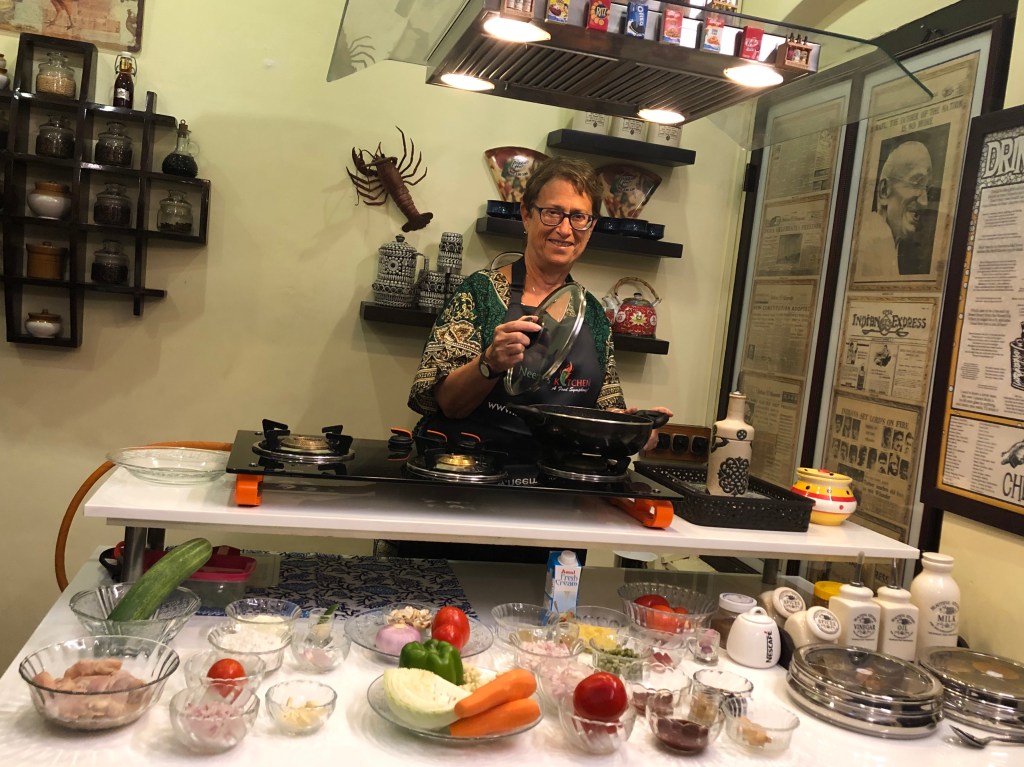
As the husband of my cooking teacher, who spent years on the sea as the captain of a commercial vessel, told me, “Life is like a book. Those who don’t travel are always reading the same page.”

At the risk of offending all too many of you, I have to admit to agreeing with that statement to some extent, but will rein in my judgey side a bit and add that there’s plenty to learn from our everyday lives in our very own homes, too. We just have to do it. Harder than it sounds.

But that’s another story.

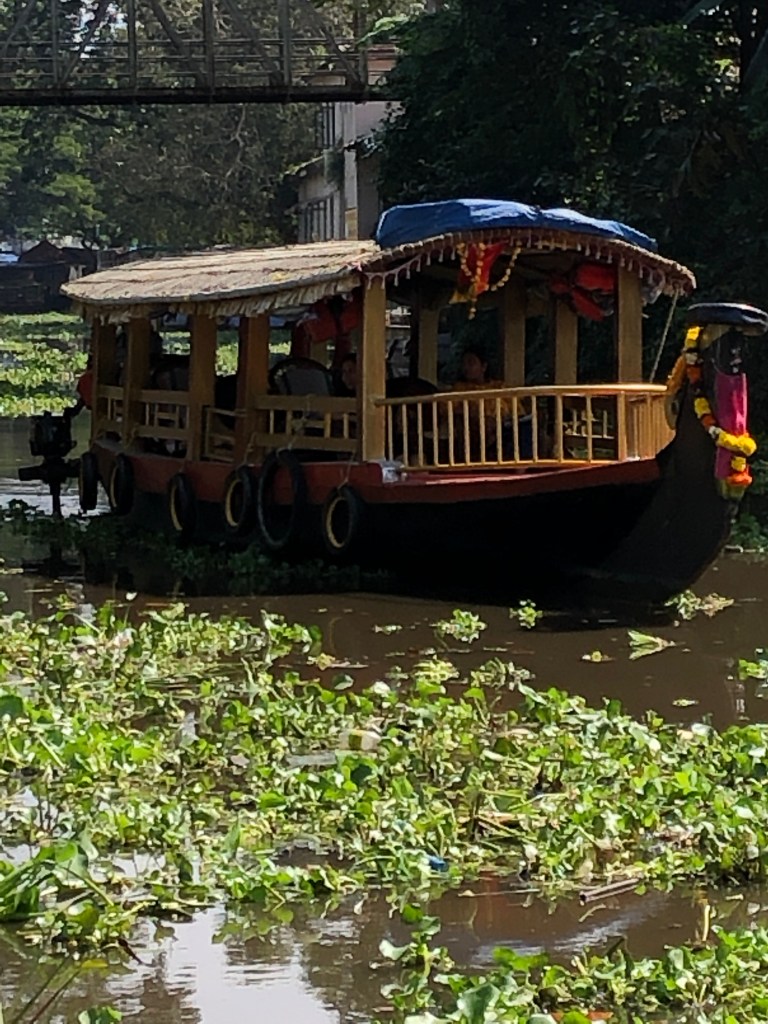
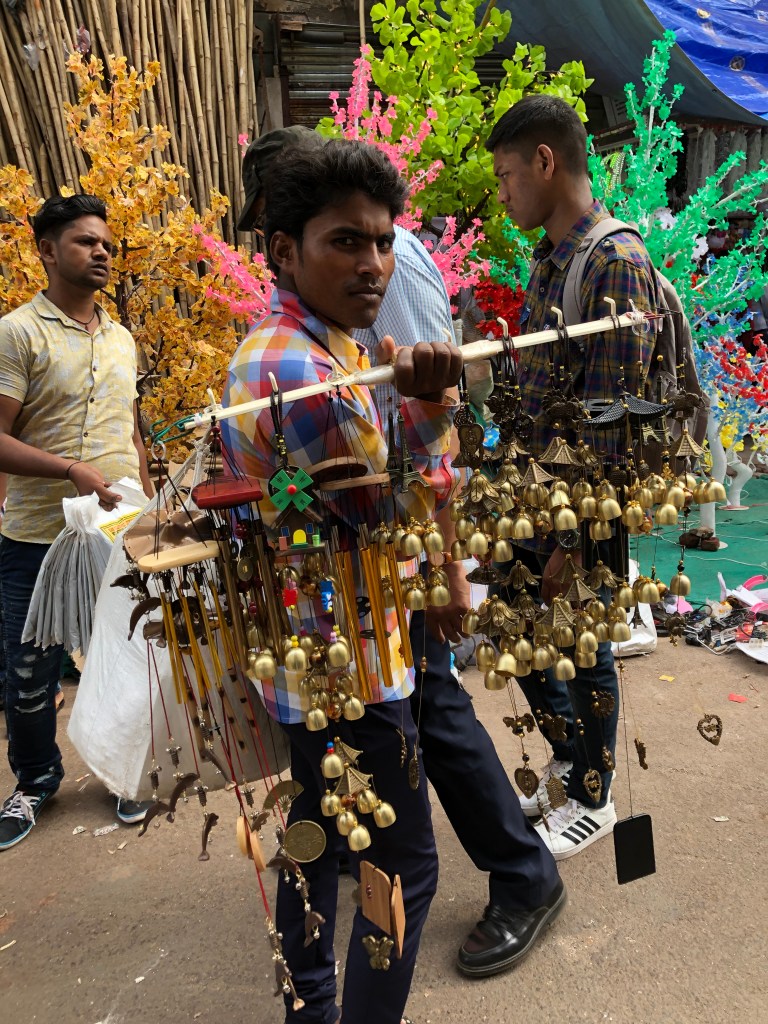
I could write an entire blog – or three – on each aspect of traveling, and might do just that, but this one is about an epiphany I’ve had as I’ve moved from my western, Israeli, specifically ideology-driven, life, to crowded Diwali Mumbai, the vast sandy beaches of Goa, the serene backwaters near Alleppey and now to the hill station, tropical green mountain area near Munnar.

I get into the vibrancy of the city-even Diwali Mumbai with all the millions- the constant movement, lights, traffic, endless options and continual visceral stimulation. There seems to be no limit to the number of shops I enjoy entering. I’m happy walking for hours down busy streets, wandering through museums – both conventional and quirky – waiting in winding snake lines of multitudes of people to see the most touristy of sights or hop on the boat, tuk-tuk, or train at the end of the crowd. I have no problem with getting lost for a while or not understanding or being able to make myself understood. It all works out in the end.

I’m attracted to drama, and there’s plenty of that to be observed in the city. Participation voluntary. For the most part.

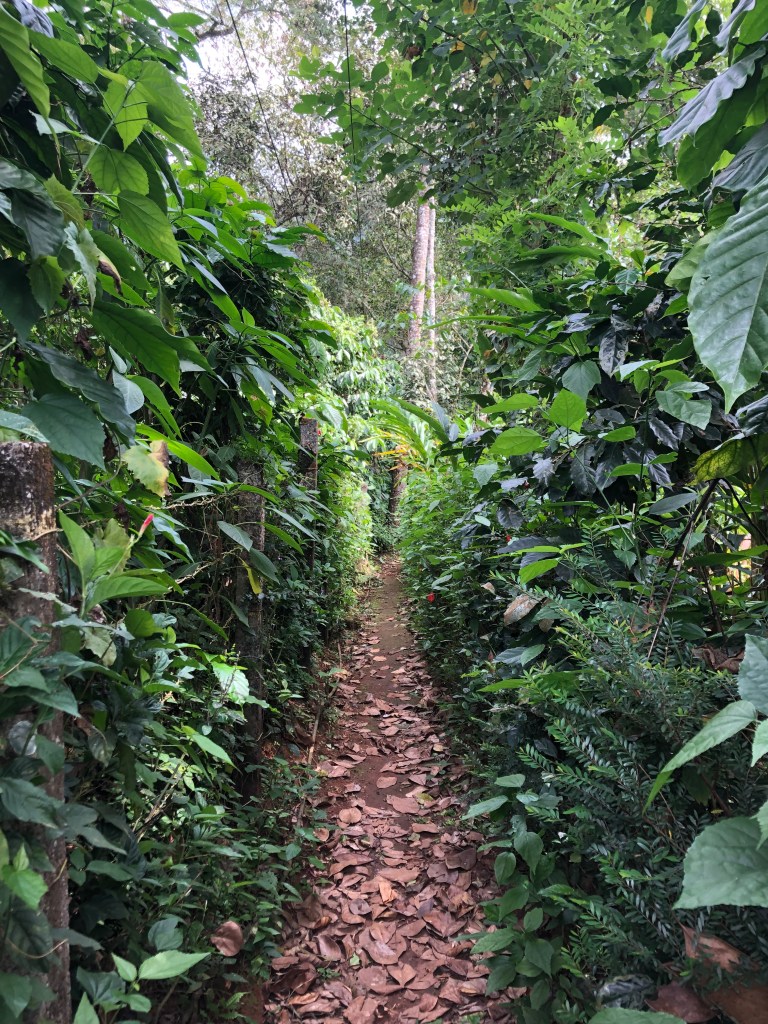
Over the past eight weeks we’ve gradually made the transition inland. From waves crashing onto the rock barrier thirty meters from our balcony and dolphins playing twenty meters beyond that, to the gurgling stream just outside our backyard tropical mountain surroundings. We were somewhat prepared by the serenity of Kerala’s backwaters, running alongside the noisy towns of Alleppey, Ernakulum and Fort Kochi, as well as the steadily deteriorating road between Kochi and Pallivasal near Munnar but nothing can really prepare you for the quiet here.

Being isolated in nature is something that has to be experienced.

We made a conscious decision to settle into our new environment and let it settle into us. No martial arts performance yet. No trip into the town of Munnar. No tea plantation or spice garden tour. Just nature and quiet and us.

It took 24-hours for the monkey chatter to subside.

My yoga practice has been evolving…getting better and better.

I experienced a meditation so deep two days ago that it scared me a bit. The pang of fear brought me to the surface so fast I thought I’d get whiplash. Fear of what? Who knows.

Yesterday’s yoga, just before dusk, was the best yet. Fluid. Soothing and refreshing simultaneously.

At one point I felt I wanted to continue forever.

And then it was just the right moment to finish.

There’s such an awareness of productivity – accomplishing things – in the city.

There’s more an awareness of being out here.

Is there a productiveness in being? Can there be?

Since getting more involved in Eastern Philosophy, yoga and meditation, I find that there’s far less drama in my relationship with the people I love. I’ve integrated the concept of non-grasping without really making an effort to do so. It’s just happened with all the reading, thinking and practice of the past two decades. I worried that it was too much. That I’d become too detached from the lives and challenges of the people I love.

He asked me to close my eyes and try to take myself back to the time when there was more drama and intensity in my relationships. It took a minute of my precious 15 minutes with him but I was able to do it.

Then he asked me to return to a more recent time, with less drama in my relationships and, after a minute or two, asked what I felt in those moments as opposed to the previous ones.

I didn’t have to answer out loud. I opened my eyes to the answering smile on his face.

I love the city. I love the satisfaction of completing many, many tasks during the day. Love noise and crowds and shops and movement.

My body and soul are nourished by nature, by being, by deep silence.

Shabbat Shalom – Peace to us all.

News Flash: Old Age is Not the Enemy

Old Super people                            Old People iin Wheelchairs

Fight                                   Or flight?

Remember when 40 sounded old? Remember when you weren’t sure if your mother was 38 or 83 (because, hey, what was the difference?) Remember when you hoped you’d live long enough not to have to do homework? Or wait for summer to have some fun?

Okay, kids, here we are. We made it!

anxiety

NOW WHAT?!?

Truth is that it kind of creeped up on me. The 40’s were great years. And then the 50’s? Even better. And then came…THE SIXTIES.

I breezed past my 60th birthday. We had a big birthday to mark the accomplishment. But, really, I just liked having all those people in the same room – the people I love and like and some I hadn’t seen in awhile. I didn’t really think of being 60 as a big deal.

The rest of that year began what I like to think of as my period of enlightenment.

Awakening to the reality of small aches and pains becoming larger and not so easy to ignore. Awakening to an EVEN SLOWER metabolism. (how was that even possible?)

And as the 60’s progressed I couldn’t deny that I  had less energy, less ambition and less cartilage in my knees.

Old white water rafting                                                                       =   Old canoe

A new stage in life began the day I closed  my company.

Stage One

business woman>>>>>>  No work

Another stage of life began when I stopped agreeing to meet with people who just “have a couple of questions”.

Stage Two

Then another stage when the answer to “So, what do you do?” began without disclaimers.

justify

Followed by a blissful couple of years when I:

  1. wrote a book and published it.  http://www.amazon.com/Yoga-Detectives-Lesson-A-E-Prero/dp/1512109371

Yoga Wed am 002                   Yoga photos 004

2. created a yoga studio

and 3. filled it with classes

4. got into a regular habit of spending quality time with my grandchildren

036  (maybe the most fun of all)    001

And now? Now I seem to have arrived at Stage Four.

Partially I’ve arrived here on my own, in a natural kind of way, and partially I’m being dragged into it and, I admit, initially with a bit of kicking and whining, by my friends. Noooo

This is a Stage of wondering a lot about how to best do this thing called “Old Age”. Give into it? Okay, THAT sounds bad. Fight it? Hmm. That sounds tiring.

Road Lesds Traveled And I haven’t found a good guide book yet. Not on Lonely Planet or Footprint or even Google.

Oh, there are plenty of books out there on the topic. I’ve read a bunch of them. Probably the one I liked the best was From Age-ing to Sage-ing http://www.amazon.com/Age-Ing-Sage-Ing-Revolutionary-Approach-Growing/dp/1455530603/ref=sr_1_1?s=books&ie=UTF8&qid=1449132020&sr=1-1&keywords=from+age-ing+to+sage-ing+a+revolutionary+approach+to+growing+older   But I don’t seem to have many people in my life who are looking for a sage. And, truth be told, it sounds a teeny big presumptuous.

Coach?  Yuck! Gives me a rash thinking of that title. Mentor? Better but headed toward ‘sage’.

And, anyway, is this Stage about what I am for others or for myself!?

pondering

When I taught aerobics and hip hop it was all about pushing to your limit and going one step beyond.

When I teach yoga it’s more about investigating your limits and taking one step back.

But in this evolving life of mine, where old age has creeped up on me? A step forward? A step back? What does that even MEAN?

Many of us loved what Dylan Thomas had to say about it:

Do not go gentle into that good night,

Old age should burn and rage at close of day,

Rage, rage against the dying of the light

But, you know what?, now it just makes me roll my eyes. And, hey, he was in his mid-40’s when he wrote that. I might have agreed more when I was in MY mid-40’s.

Raging and burning? Unh unh. No raging and burning for me. I have a feeling that road leads to frustration and grumpiness.

Old and grumpy

For the past 2-3 months I’ve been feeling like I’ve over-scheduled my life; like there’s not enough time to sit and write or sit and read or just sit. But facts must be faced…right?…and the fact is that I’m still teaching the same amount of classes and private lessons a week and I’m still traveling each week to visit the same number of homes to which I’ve lent my grandchildren.

It’s that bogeyman of all bogeymen…old age. I just have less energy for it all. So when I’ve finished teaching all the classes and private lessons and finished driving and playing with my amazing grandkids and finished shopping and cooking and cleaning, I’m POOPED.

Now there are some who make fun of us older people and our running out of energy mid-afternoon

Old Woman sleeping  but there can be some nice things about napping.  Old People Napping  And maybe, just maybe, that’s part of it all.

No, no, not napping. But pedaling down some of those things we love to more manageable bites.

Meditation for Elders  Old woman enjoying music   Old person reading

And maybe we can sage our way into some nourishing and gratifying volunteering  Old professors  Old knitter

Okay, so we tend to freak about forgetting a couple of details

Old person forgetting

But young people forget stuff, too, they just don’t worry about it.

Young person forgetting

And there are some great things about long term memory.

Old woman telling stories

I think I DO want to fight the tendency to decrease the size of one’s world to the boundaries of what’s familiar to me; to what’s easy and comfy. I want to fight to keep my boundaries open to new ideas and new activities, new places and new people.

But, at the same time, I want to accept gracefully my decreasing physical energy and re-direct my time to the ever-changing physical reality of old age. And, yep, I want to accept that my mind isn’t quite so quick, quite so sharp and, at times, quite so reliable.

Ultimately, I know that ‘old age’ is NOT the enemy. It’s my own fears that I need to remain mindful of and face with compassion, kindness and awareness.

Older yoga  Old women walking  Old cooking

I can hear you saying, “Yeah, right. Blah blah blah.” So here’s what I have to say to you…

mountain out of molehill

Well, maybe.

Let’s hope so!


Gratitude in the Challenging Situations

Have you ever been struck to discover that all that reading you’ve done over recent years has actually made an integral change in your life…just like “they” say it can?

For the past 5 years or so, I’ve been  reading a lot of the research coming out of the Laboratory for Affective Neuroscience, The Waisman Center for Brain Imaging and Behavior (Richard Davidson), the Massachusetts Neuropsychological Society and The Center for Mindfulness in Medicine, Health Care and Society at UM/Boston (Jon Kabat-Ziin).

In fact, I get a weekly email from Rick Hanson (http://www.rickhanson.net/writings/just-one-thing/) which is often based on Richard Davidson’s work. Nice, succinct and almost always useful.

For awhile I kept up a Gratitude Journal

gratitude journal

Writing 3 things that happened during the course of a day (even a crappy day) toward which I could nod a quick “thank you” before going to sleep.

Research shows that writing down 3-5 things to be grateful for each night develops and then strengthens new neuro-passages in the brain, eventually creating a default there.

That particular outlook on life and life’s daily events strengthens the part of the brain anatomically associated with happiness, satisfaction and positive self-image which, in turn, have been shown in other research to be associated with physical health, healthy relationships and, perhaps surprisingly, task completion.

brain neuronsWho knew?

Well, it turns out quite a few people knew. It just took time for “real” scientists, respected in the “real” sciences, to prove it with the amazing tools, developed over the last decade or so, which map the brain.

Many of us, Jews, begin our day everyday with a one-sentence prayer, thanking God for compassionately returning our soul to us.  Personal confession: I grew up doing this but have only returned to it over the past couple of years after more than a few years of rolling out of bed, headed for my toothbrush, with nary a thought as to how that happened , or that it happened at all. wake up

And, really, isn’t it a great idea to be grateful for opening our eyes to a new day, full of potential, just waiting for us to make choices – again – about what we do and how we do it?

So  maybe we don’t all think there’s a God who gave us this gift again this morning. But can most of us agree that, if we made it, we might want to say a word of gratitude for the opportunity, regardless of how it happened?

Here’s the rub. And many of you may have thought of this instantly when you read the last sentence of the paragraph before this one.

For some of us, our reality seems more like this –

Suffering

Maybe not everyday. But maybe a lot of them.

Maybe our health is dicey. Maybe we’ve lost people, jobs, capabilities, relationships, opportunities that were really REALLY important to us.

Maybe our goals, our path, our very existence has gotten a little fuzzy, out of focus or just plain LOST.

Life has a way of knocking us around, off balance.

Remember those neuro-passages we can develop and strengthen? The downside is that the people and situations that insult, hurt and humiliate us, the tasks, improvements, and goals we don’t accomplish, the aches and pains (psychic and physical) that pop up (and the ones that stick around) – these all build and strengthen neuro-passages, too.

Sometimes we feel like Sisyphus with the proverbial rock, trying to stave off impending doom and disaster in our lives – day after day after day.

sysiphus


And are we really grateful for the opportunity to do THAT – again?


Well, here’s the deal, guys. Feeling gratitude for the small, maybe tiny and flickering, lights of goodness in our lives will help break up that huge boulder into more manageable rocks and then, maybe someday, stones and, maybe, if we’re really lucky, pebbles.

Those little specks of goodness can be so tiny that our frontal cortex has trouble overriding the medulla oblongata, which controls our fight, flight or freeze response. That’s the part of the brain that insured our survival back in the days when our major threat was the lion that might be lurking behind the trees waiting to pounce on his dinner (us). lion 2


We should be grateful for this part of our brain, too.


But our threats today, for the most part, are more psychological than physical. Even our physical threats are influenced by our psychological responses to them it seems.

Yesterday I had an appointment with a doctor I’d waited almost 3 months to see. Unfortunately, he’d forgotten to tell his office (or computer scheduler) that he would be on vacation last week when I (and lots of other folks) had my appointment scheduled.

The office ended up scheduling in all the people whose appoinwaitingtments had to be re-scheduled into this week’s schedule in between other clients.

Yay!

Not so much.


Naturally, there were the people who forget (or never learned) that a public place isn’t their personal space. Lots of cell phones ringing, loud conversations (on the phone or with their companions), and those people who “only have a quick question”.

In short, what could’ve been a 20 minute event in my day ended up being a 3-hour event.

There was a time when I would’ve been in alert, tense mode (fight) to prevent people from cutting in front of me with their “quick questions”, or just because my medulla oblongata was being activated way before I even got there. Maybe even when I got the original phone call telling me of the re-scheduling. meditating woman

Not to say that I was calmly in touch with  my inner peace for 3 hours. Oh no!

There were certainly moments of consciously going into meditative Ujai breathing…right after that inner voice shouted “SERIOUSLY? Talking on the phone – in my ear – again, dude?!?) and “Who the hell has a Barbra Streisand ringtone…and then let’s it ring 10 damn times…EVERY time?!”

But, aside from Ujai, I had my gratefulness practice, and all those articles and emails, to steer me into the very objective reality of being grateful for (basically) FREE MEDICAL CARE! How amazing is that in this day and age where (here’s a shocker) 45,000 Americans die annually from inadequate or inaccessible health care? And that’s not the Third World where who-the-Sam-Hill knows how many people lack health care.  doctor appt

Yep, folks, we, in Israel, get it for free.

And it’s great health care for the most part. Up to date tests and treatments. Excellent doctors.

So the price we pay is waiting for certain kinds of specialists and being patient with our fellow patients-in-waiting by cultivating some patience-in-waiting skills.

Wow! Small price to pay, right? Feeling grateful yet?

Waiting for the doctor pales in comparisons to many of the Sisyphus-ian boulders in many people’s lives but it’s a practice.

And, really, how many of our boulders are our  medulla oblongata seeing a mountain where there’s a proverbial molehill?

So – lots of compassion for those whose mountains are mountains and also compassion for those of us whose mountains are molehills but still mountains for us in our mind’s eye and in our hearts. mountain out of molehill


No judgment. Just a suggestion.


Set aside 30-60 seconds every night before you roll over to go to sleep to think of 3 things for which, in spite of all, you can, in all honesty, be grateful.

food


Even if it’s as basic as the food on your table.


deep breath


Or the ability to breathe.


                                            I make one promise:  ONLY GOOD THINGS CAN HAPPEN.