Do We Really Get It?

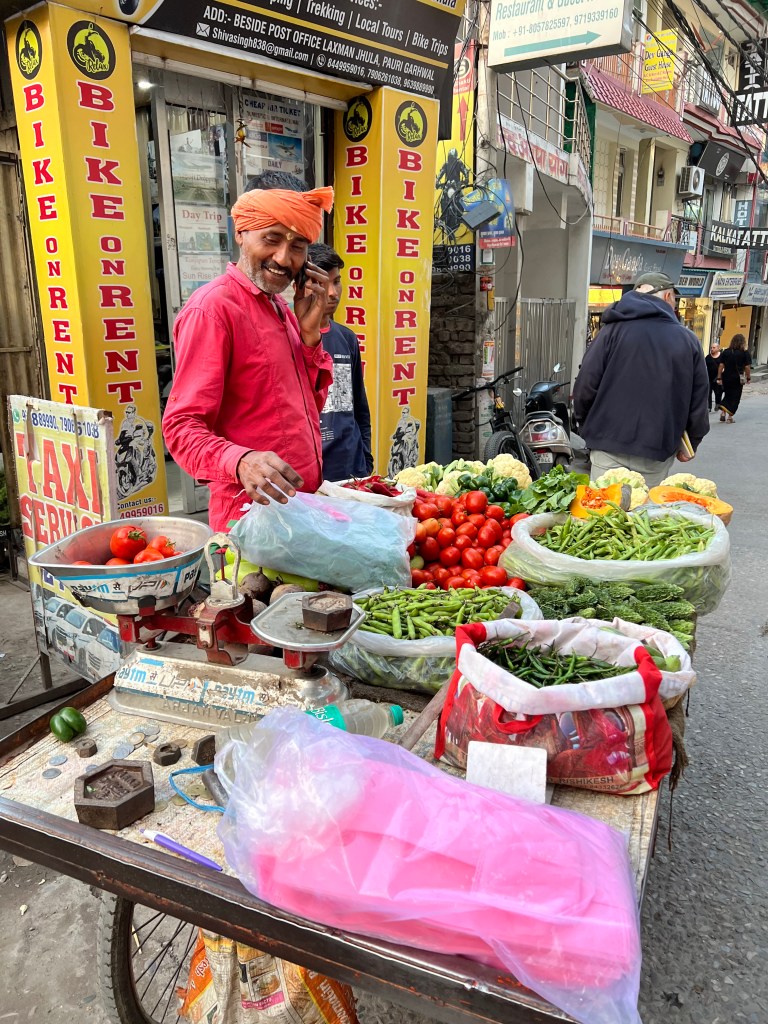
All told, we’ve been in India almost a year. We’ve spent over two months in Kerala, four months in Rishikesh, and a week to ten days in Hampi, Meysore, Delhi, Goa, Mumbai, Varanasi, Darjeeling, Khajuraho yogashram, Kaziranga, Puri, Shimla, Dharamshala, Dalhousie, Chennai, Pondicherry, Auroville, Bandhavgargh, Rambagh, Jim Corbett, and the Andaman Islands.

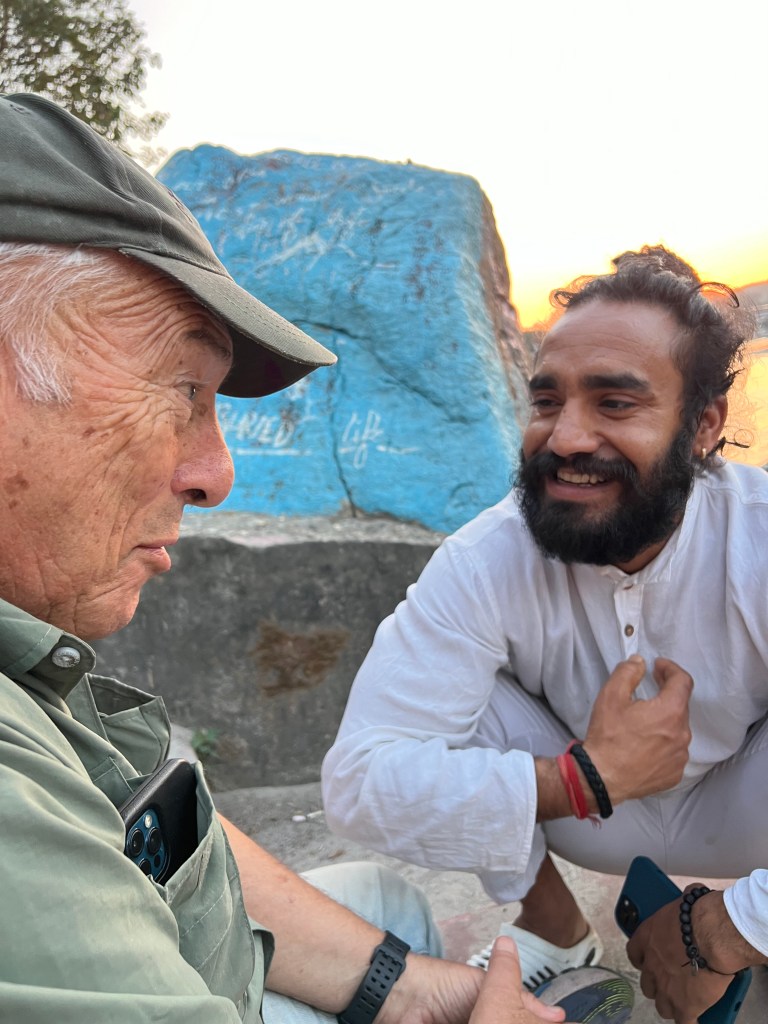
My partner has been learning Hindi off and on for 7 years. Between his Hindi and Google audio translate we’ve had many conversations with people about their lives and their opinions about many issues – geopolitical, philosophical, sociological, religious, and how they view the future.

We’ve observed familial interactions, public and less public behaviors, hygiene and eating habits, changing clothing preferences, and acceptable and less acceptable commercial activities.

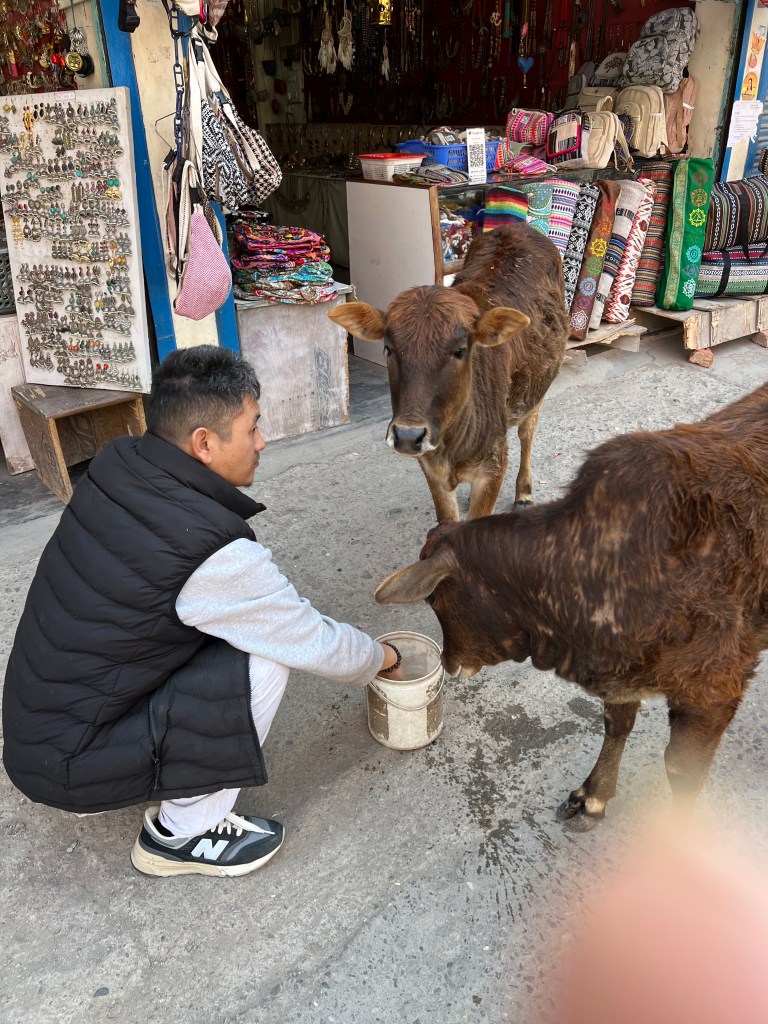
We’ve experienced the kindness, patience, and acceptance of Indians in many different situations from driving to waiting in line to communication difficulties to cultural misunderstandings.

When asked how many children an Indian has they will invariably give a number that reflects only male children. Mothers as well as fathers respond in this way. Sexist? I don’t think so. It seems that in traditional Indian families (and in spite of rapid and visible change it’s estimated that over 90% of Indian marriages are still arranged marriages) sons remain in the nuclear family home after they marry. Their wives become subservient to the matriarch who travels with them on vacations and sets the tone for parenting. Daughters move on to their spouse’s family. They are only temporarily part of their parents’ lives. I’ve come to believe that is why they’re not included in the natural spontaneous reply about the number of children in the nuclear family.

Is this belief accurate? Maybe. Maybe not. One thing I’ve learned is there’s no point in asking for clarification. Such requests are met with puzzled expressions followed by acceptance of my theory regardless of its accuracy or inaccuracy.

Here’s a much more prosaic, but much more day to day question I’ve been asking in vague euphemistic terminology since our very first visit in 2016. Why don’t Indians, especially women, use toilet paper? It’s excellent for the ecology of every country and certainly one with a billion and a half people, and yet… What’s the deal? It’s all well and good that our tushes and other intimate places are actually cleaner after that spritz from the bidet but what is it about walking around wet that doesn’t annoy them? And is it even hygienic?

They’ve learned that foreigners need toilet paper. Hotels provide small rolls of it and are happy to replenish it as frequently as their patrons allow themselves to make the request (we tend to buy our own to avoid the issue altogether). But when asked why they don’t require it themselves I’ve been met with puzzled expressions and literally no answers, They don’t understand why I do require it but accept it and I don’t understand why they don’t require it but still ask from time to time.

The nearest things I’ve received to an answer have been (1) the concept of the comfort of dry being preferable over damp is a Western concept (really?!?) and (2) you can carry a small towel to dry off, keep it in a small plastic bag all day and wash it in the evening (a nice solutionbut I doubt Indian women actually do that).

That may be similar to something an Indian friend of ours said recently. He owns an amazing guesthouse literally 50 meters from a pristine Arabian Sea beach. He’s made lots of improvements over the past few years. Indian tourists are accustomed to ordering their meals and eating in their rooms. They seem to prefer it. It might be a question of the chicken and the egg. Maybe at one time hotels didn’t have restaurants. So our friend didn’t have a restaurant but realized that the (mostly foreign) guests preferred not to eat in their rooms so he added a really nice place to eat.

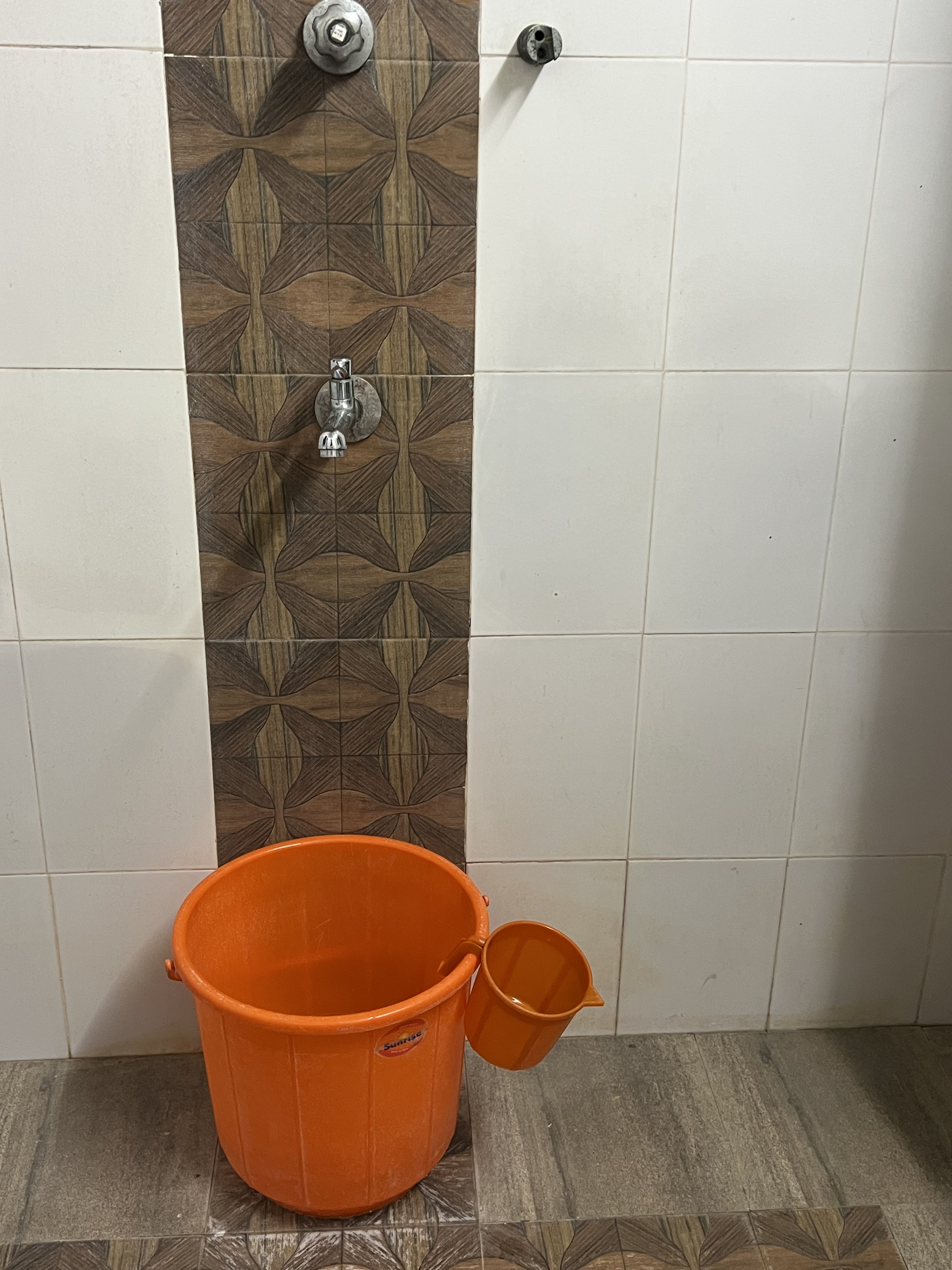
His showers had no hot water. Granted it’s quite hot in Thumboly Beach and the locals see no need for hot water but others do. As a result, he decided to arrange hot water and told us he had done so. In most Indian showers there’s a shower head and also a faucet beneath it about a foot annd an half off the floor with a bucket and plastic cup below it. Turns out he set up water in the lower faucet and not in the shower head.

When we laughed about it with him he said something quite true and profound. He said that one of the differences between Israelis and Indians is that Israelis look at something and immediately start figuring out ways to improve upon it while Indians look at the same thing, accept it as is, and immediately figure out a way to live with it. There are pluses and minuses in both approaches.

And what about respect for personal space, acceptable noise levels in public places or in hotels late at night, what it means to be a couple, the relative merit of avoidance or honesty in confronting legitimate disagreement or misunderstanding; the cultural differences go in and on.

Even when we think we get it we have to keep asking ourselves if we really get it.

There’s no escaping the fact that part of the joy in being in India is the adventure of the Western shrug of shoulders or the Indian wag of the head. The humor in “I don’t know.” The puzzled expression followed by a smile.

You aren’t in Kansas anymore, Dorothy. And ain’t that grand?

Loss and The Two Arrows

There are a bunch of things that no one tells you about aging. Or maybe they tell you but it goes in one ear and out the other. Not relevant. Things that register in the way the laws of physics register – ya da ya da ya da.

As I turned 60 and even more after 65, I became aware of the physical aches and pains that go along with aging and, in my case, are the price for having jumped and danced around and, taking advice from The Eagles, taken my body to the limits for decades. I remember an orthopedist once telling me to keep teaching hip hop, hiking, and doing whatever I loved because ultimately even sedentary people have joint aches and pains…but they have a lot less fun getting there. I totally agree. Even on the mornings that my knees wake me up with a call for help.

It’s some of the other things about aging that I never gave much thought to (or any).

  • finding conversations of people under 40 uninteresting
  • having read every permutation of book and movie plots ad nauseam
  • being cold (or hot) when no one else is
  • losing friends to illness, lack of mobility, or death
  • aging differently from significant people in my life

YIKES!!

It turns out that an inevitable part of aging is loss and grieving for those losses. Big losses and small losses. And some losses are harder than others; not necessarily the “big” ones.

We all do it differently. And it all looks different on other people.

I remember having no regrets at 50. Ha!

I remember letting go of hip hop and aerobics in the blink of an eye. Didn’t seem like fun anymore. Traded my spandex for yoga pants happily.

I remember not even entertaining the notion of a sedentary life requiring programmed exercise. Counting steps? Furthest thing from my mind.

I remember a time when illness and death weren’t even a tiny part of my thoughts.

I’d read about (other, much older) people complaining that many of their friends had fallen by the wayside one way or the other. I’d heard them extolling the virtues of cultivating younger friends to combat loneliness. Scroll up – in one ear and out the other.

My partner “lost” his mother 10 days ago. My mother-in-law died. She wasn’t a nice person. Not a good mother. A narcissist. She was lively and charismatic and loved to be the center of attraction, but her children and friends paid a heavy price. She had dementia for the last five of her 93 years and didn’t recognize my partner or his sister who, in spite of a complicated and challenging relationship, made sure her last years were comfortable. If emotions were rational, no one would mourn her death. But if emotions were rational they wouldn’t be called emotions.

emotion – derived from the Latin term emovere;

to agitate or stir up. The affective aspect of consciousness

My parents are both long gone. My father died thirty years ago and my mother about twenty. Fortunately for me, I made my peace with both of them while they were alive. They weren’t partners in the process, but the possibility of relating to them with equanimity in life was a blessing.

My partner wasn’t so fortunate.

Watching his mourning process has been thought-provoking and, yes, emotional. A loss of innocence. A loss of possibility. A loss of the luxury of avoidance. A recognition of the loss of reconciliation. A loss of the comforting delusion of immortality.

My mother had bi-polar disorder. The shadow of her disease lurked everywhere. Sometimes it blotted out all joy and normalcy; sometimes it was a vague and disquieting sadness in our house. It was always a sense of waiting for the other shoe to fall. I was entrusted with her care from a very young age. I gained confidence and self-esteem that’s served me well throughout my life. I also harbored resentment and fear of chaos in the world.

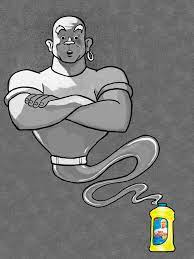
I used to imagine myself a very small figure, wrapping my arms around my knees, head bowed, before a huge Mr. Clean-type genie, rising out of a magic Aladdin’s lamp, arms folded, scowling down on me. I didn’t understand the image or why it recurred so consistently and persistently throughout my life.

Imagine him with a turban, beard, and ferocious expression

The image vanished, never to return again, once I worked through my relationship with my mother. It was a loss I recognized with gratitude. I forgave my mother, without her permission, and realized one day that I felt a loving, empathetic sadness for her; a brilliant woman whose life was taken from her by a crippling disease no one understood at the time. A tragic loss. No second chances.

Not so with my mother-in-law.

The frightening image my partner has of her is his to tell, not mine, but he has one no less frightening than mine.

It’s difficult to accept that a person can be unkind, cruel, and totally lacking in compassion. How much more so when it’s your parent; the person entrusted with your care, emotional and physical? It’s tempting – no, imperative – to search for an underlying reason to shed a more sympathetic light on such a parent.

He searched. We searched. The round of reasons we tried to fit into the square peg bulged and defied imagination.

Ultimately, the physical loss of his mother grew into the loss of innocence. The first kind of loss is met with a simple grief. She was, after all, turning 93 two weeks later and hadn’t been herself for years. The second kind of loss is far deeper and creates a grief that is painful at any age, but magnified at 70, after so many years of pretending, ignoring, excusing, and hoping.

Two of our sons were at their grandmother’s funeral to support my partner and express their respect for family ties. When I talked to our older son before he left to meet us at the airport, he asked how his father was doing. I explained that he had many unresolved issues with his mother and now they’d never be resolved. I added how important it is to confront unfinished business with a parent in life. Hint, hint. (He moved on.)

There’s a lot of loss involved in aging. Loss of a parent. Loss of freedom from pain. Loss of mobility. Loss of long term friends. Loss of mental acuity. Loss of hearing. (Shall I go on?)

A Buddhist parable addresses the problem of suffering. It describes the two arrows in every difficult situation in life. The first is the arrow of pain, in this case loss, and the second is the arrow of suffering. The first is inevitable but the second is optional. It’s the arrow we shoot into our own hearts with our reaction to the inevitable losses that come with aging.

So many circumstances are beyond our control. My mother’s disease; my mother-in-law’s nature.

We can only prepare ourselves by nurturing our souls. By taking a deep dive into ourselves and becoming familiar with the particles of a higher power which exist inside each of us. By honing our ear to hear the pure voice of equanimity which resides there.

Many years ago I weighed the option of starting a hospice center. I had a conversation with the man who created a small hospice center in Jerusalem. At the time he was in his early 80’s. He exuded empathy and kindness. We spoke after I took a tour of the center with a staff member. I was surprised to see that each of the rooms had two residents. I asked the founder of the center if it was disturbing for the residents to witness the death of their roommate. His answer equally surprised me. He said that with the work done with the residents, every death since the center’s inception had been peaceful, and inspired serenity in those who witnessed it.

Choosing equanimity isn’t a one shot deal, and it’s not easy. It takes diligence and practice and work. Committing ourselves to the effort doesn’t ensure total success, or success every time. But to quote a poet by whom many of our lives have been enriched, Mary Oliver,

“Tell me, what is it you plan to do with your one wild and precious life?”

A Good Heart

I was sitting with my husband and some friends yesterday studying a Jewish book called “The Sayings of the Fathers”. It’s a book of homilies. Seemingly simple stuff.

I used to study it sometimes with my father on the rare occasions that he would have the time and patience for or interest in that kind of thing.

It always seemed to lack the seriousness and depth of the heavier Jewish tractates. Maybe my father chose it as appropriate keeping in mind that one of the homilies advises men not to spend too much time talking to women so as not to engage in nonsensical conversation…or worse.

women chatting

Climbing out of the time machine back into the present, there we were studying this book of homilies and we came to 5 student rabbis and their teacher (the Big Rebbe) sitting around trying to determine what one needs most in order to lead a worthy life. (the first branch of yoga – the yamas)

One student claimed “A good eye”. The second said “a good friend”. Another said “a good neighbor”. The fourth offered, “the ability to foresee what is to come.” The final student countered with “a good heart.” Their teacher agreed with the last student saying that having a good heart incorporates all the other answers.

chassidim studying

Then the teacher asked his students what evil should one most shun in order to live a worthy life.  (the second branch of yoga – the niyamas).

One student said “an evil eye”. The second said “an evil associate”. Another said “an evil neighbor”. The fourth offered, “borrowing and not repaying”. The final student countered with “an evil heart”. Their teacher agreed with the last student saying that having an evil heart incorporates all the other answers.

In the Jewish tradition of learning (called pilpul; that sing-songy kind of debating) the conversation between us went on as to whether or not the students referred to being a good friend, being a good neighbor or having a good friend and a good neighbor; and what is a “worthy” life anyway? much less a “good heart” or an “evil heart”.

dizzy

But, really, we all knew what the book meant.

So I listened to the conversation with one ear (these are people I love after all) but found myself drifting peacefully inward like a fallen leaf floating gently downstream on a sunny autumn day when there’s very little wind.

stream

Years of listening to podcasts, reading books, meditating and leading meditation.

Lovingkindness meditations. Gratitude meditations.

Compassion. Equanimity. Non-violence. Impermanence.

Inter-connectiveness.

Beginner’s mind.

Letting go.

And it all comes down to a good heart, doesn’t it?

Thich Nhat Hanh calls it “love” and so does Rabbi Adin Steinsaltz.

Thich Nhat Hanh            ALL YOU NEED IS LOVEAdin Steinsaltz

A heart filled with love allows us to feel compassion for that crazy Israeli driver who zig-zags his way down the highway endangering himself…and all of us.

A heart filled with love allows us to keep our partner’s goodness in mind when some not so good things happen.

A heart filled with love helps us to meet our lives with an inner smile, with gratitude for the very breath that supports us in every moment, even the moments of sadness, illness and disappointment.

And, yes, a heart filled with love creates in us a good eye which creates in us a good friend and neighbor who sees the goodness in others a big heart and even the ability to foresee what is to come, because we are open to whatever it may be.

I’ve often told my children when they have a falling out one with the other or with me or their father that if we keep in mind that the foundation of our relationship is that we love each other and wish each other well – all can be forgiven as a misunderstanding or misstep. We need not suspect a hidden intended hurt or bad intention. Nor need we don our barbed, protective clothing after brushing our teeth in the morning.

And isn’t that what it means to have a good heart?

And isn’t that what leads to a worthy life?

Simple stuff? Maybe not so much.

As my husband says, we all may seem fine from the front but we each carry around a “peckelach” on our back carrying a heavy load

from life’s journey so far. The result of things not turning out quite as we planned. The odd hurtful comment here and whispered gossip behind our back there. The random betrayals and losses.

We may not have to protect ourselves (or at least not very often) from the animal predator pouncing on us from where it lies in wait but we’ve learned we have to protect ourselves from the hurts that human predators can inflict, some as poignant as that lion’s snarl and often even unintentional.

Not so easy to open our hearts.

It’s a journey of tikun, or mending.

Tikun of the soul.

Tikun of the heart.

Not always, but often, I recognize how far I’ve traveled down that path and feel mightily blessed.

And most days, even the recognition of how far I still must journey is no longer daunting.

SAMSUNG


Therapy at 60

I’ve started a therapeutic practice again. There! I said it!

My last go at it was almost 30 years ago. In a tiny office in Jerusalem I hung out my shingle as a “Couples Therapist” and met with a few unsuspectingly daring couples for awhile.

I think (know) I was more anxious than they were. What if I had no clue how to respond

to whatever goddess-forsaken issue they might bring up? 

After some (seemingly endless) amount of time, I gave it up with a sigh of relief. It still amazes me to run into some of those couples – who are still miraculously together in spite of my meddling – and listen to their kind words of undoubtedly distorted memories of my helpfulness.

When I think back to being 30 years old, and sitting in the therapist seat I can’t help but wonder,  WHAT THE *&^%$ DID I KNOW ABOUT LIFE?”

So, here I am, 30 years later, after a particularly daunting 60th year of life, in which I realized that 60 years old is, indeed, OLD! That one is NOT as young as one thinks – in body or mind! My knees are creaky. I’m tired earlier and more often. I don’t want to schlep stuff around or dance zumba, rumba or samba.

A lot of activities I once found tedious, slow and boring – too many to list but gardening, yoga and calligraphy were among them – have become my areas of expertise.

All this by way of saying that getting older is real, folks. It has its down sides (notice that’s plural) but I’m here to say it has its up side(s), too. And they’re not gardening, yoga and calligraphy (although those are all great and I highly recommend them)

.                                                                Acceptance of myself and others – Wow! The interesting new opinions to be considered if I let myself listen to the ideas of others without simultaneously thinking of a witty reparte, the impression I’m making or always being on top, up to date and in the know….or knowing someone who had a similar, better or much worse experience or idea.

                              Much wisdom simply by virtue of having been around for sooooo long (and having made lots of mistakes – just ask my kids).

                                                      Throw in patience & compassion

A dash of gratitude and a pinch of humor

A lot of humanity and humility.

But back to therapy at 60. I originally titled these thoughts “Procrastination” until I saw that my thoughts were taking off at a gallop in a different direction altogether.

Why “Procrastination”?, you ask.

Last Sunday I was looking at my legs and thinking to myself that surely it was high time to get rid of my winter fur, though at 60 it’s more like the wisps on a balding head than the pelt of a hibernating bear.

Then last Wednesday I straightened out a drawer “full” of old handwritten letters that has been waiting for my attention, well, since before emails, only to find that there were exactly 14 letters. Hardly a drawer full.

And now, today, I sat down to write my detective novel that I haven’t added to in about 2 months and thought of this blog and, lo and behold!, saw that I hadn’t added to it since January 2nd. (I hope it wasn’t a New Year’s resolution)

So – procrastination. Not a new topic for most of us. An everyday occurrence for many of us. And it brought me to a thought of a client of mind (ah ha! the connection to “Therapy at 60”) from last week’s session that I loved.

It’s the “Not To Do” List

                                                         The “Procrastination” List

We were talking about obsessive thinking. You know the kind of thinking I mean. Those stubborn, recurring thoughts. The variations on the theme of “I screwed up” or the ones that go something like “Oops! I forgot to…”. Or how about “If only I’d said…” or “Why does she always…” and “Should I…”

But that’s a whole other blog.

I mentioned one possibility of obsessive thinking being the constant loop of the “to do” list. Checking off tasks as we go through our day and constantly scanning the list mentally for the next task to tackle.

 and she said, “I’m more obsessive about my ‘not to do’ list.

Hmmm. A new concept to me. I’d always thought of those things left undone as “procrastination”…a word hinting at shame, embarrassment, and anxiety. Surely we’re meant to DO IT ALL (or it wouldn’t be on the list).

Just think of the possibilities of a “not to do” list. One you can look at with a whistle, feeling excellent about your accomplishments, as you  happily check off all those tasks you have successfully not done.

Do not shave legs. Check!

Do not straighten drawers. Check!

Or how about…

                                                                                Do not cut back on spending. Check!

Okay, let’s not get carried away because here comes the part where the past 30 years come in handy.

How lovely to be able to roll around the concept of a “not to do” list in a mind molded by wisdom, patience, compassion, gratitude, humility and humor, similar to rocks molded by the dripping water of decades, drop by drop.

As a therapist at 60, I can hope to help my client (let’s call her “Gladys”) internalize patience and compassion for the “Gladys” who hasn’t shaved her legs or straightened the drawer, done the dishes or balanced her checking account, met the deadline at work or been empathetic toward her child or colleague.

I can ask her questions that help her to smile at the “Gladys” who retains a rebellious streak toward authority or time or relationship or convention, even when it verges on cutting off her nose to spite her face.                                                                            (Ouch!)

And, just maybe, together, we can someday change the label of this list from “not to do” list to “not yet done” list, without judgment or self-criticism, without shame or embarrassment, even without a date for getting the tasks done.

Maybe someday we can look at the “not yet done” list with a sense of curiosity – “Hmmm. I wonder if I’ll do that task someday. Maybe today?” – or a sense of wonder – “How odd that once that task was undone for such a long time.”  or “Amazing! Once I thought that was something I should/wanted to do.”

Because, after all, life IS a wonder. It’s ever-surprising, whether we feel comfortable with surprises or not. Unpleasant surprises; pleasant surprises; neutral surprises.

We can try to control and list and be constantly checking it out and checking it off but those surprises just sneak right in there.   Ready or not, here they come!

Unpleasant (oy!)

Pleasant. (yay!)

Neutral. (yawn)

My clients will always surprise me, just like they did 30 years ago, but, at 60, that’s fine with me. I’ll just open my ears and open my heart.

Namaste
The godliness in me sees the godliness in you.

Patience and Determination; forgiving myself

Yom Kippur – probably the most serious day on the Jewish calendar. A day of introspection to take self-inventory, acknowledge all the places you’ve fallen down in being the person you want to be and resolve to make the changes you need to make.

Synagogues and temples fill up all around the world. People dressed in white with somber faces. There’s an earnestness in their prayer.

Notice I said “their”…hmmmm…yep, I’ve barely been in a synagogue on Yom Kippur in years. Our community shul is in my backyard. Well, right across the street from my backyard. I can hear the davening and the blowing of the shofar from my kitchen. And, yet, I haven’t walked in there much since I finished saying kaddish for my father almost 25 years ago.

My father was a community Rabbi. I hear that things have changed over the past few decades, but, when I was growing up, the Rabbi’s wife and kids were an unspoken part of the contract between the Rabbi and his congregation. We all had to tow the line. We were examples of correct Jewish life in a town which couldn’t support a kosher restaurant and in which most social events and interactions took place on the Jewish Sabbath when we couldn’t participate.

My father was from a rabbinic family. Nine generations of Rabbis, or so the story goes. He was the black sheep because, although he was certified as an orthodox Rabbi, he became a conservative community Rabbi instead of orthodox. To his hassidic, Israeli father, who had been the head of a yeshiva, my father was a minimally better Jew than his brother who had married a shiksa and for whom he and my grandmother had sat shiva. So suffice to say that my father had his own issues with Judaism.

Looking back from my own life perspective of living in a community where people take joy in their Judaism, I understand how the stern, unemotional Judaism of the home in which I grew up created obstacles to my own Jewish observance. Every Shabbat, every holiday, three afternoons a week and Sunday morning – all filled with restrictions and none of the incredible beauty and spiritual fullness I’ve seen in my Israeli community’s observance.

And all carried out in our glass house under the scrutiny of my father’s employers.

So, no, I don’t join in the davening on Yom Kippur or any other day. It’s all too fraught with darkness for me.

But over the past 20 years an apparent need for spirituality – the seed of spiritual growth – has been watered and nurtured in a constant and persistent manner. An unconscious patience and determination took advantage of every opportunity, every glimmer of interest, to lead me to a softer, kinder relationship with spirituality.

Patience and determination. They go hand-in-hand.

Patience without determination can mean mediocrity, settling for less, never becoming the person you want to be and could be, never having the influence for good in your own life and the lives of others that you might.

Determination without patience can mean aggression, violence, insensitivity to yourself and those around you, hurrying ahead, constantly pushing, mowing down the fragile buddings of beauty in your path.

Patience without determination may lead to frustration, sadness, regret.

Determination without patience may lead to disappointment, self-flagellaltion, isolation.

I’ve been harsh to myself for the past couple of weeks. Critical of my lackluster pre-Yom Kippur state.

Always before I’ve justified my lack of formal Jewish observance in knowing that pretty much every day is a day of introspection and self-inventory for me. Pretty much every day for the past 20 years or so has been a day filled with spirituality and filled with God. But this year I’ve felt removed from that place.

Not that it’s never happened before.

As is truth for so many aspects of life, I see my spirituality and partnership with God in terms of waves. Waves that come in and go out. Just as I wouldn’t try to grab onto a wave and hold it constant and I wouldn’t try to make a wave rise and come toward me (what could come of that other than failure and frustration?), so I don’t try to force spirituality to reside in me. I encourage it with reading and music and meditation and yoga but, ultimately, I am like the ocean – providing a welcoming home but knowing that waves come and go in their natural rhythms.

But it’s never happened before around Yom Kippur.

So for quite a few days I felt irritated with myself, disappointed and impatient.

And then, yesterday, on my morning walk, I listened to one of my favorite teachers, who has regrettably few teachings available, Phillip Moffit (www.dharmaseed.com look for his Oct. 24, 2010 talk), speaking about patience and determination. And then saw in an email post I subscribe to by Rick Hanson (http://www.rickhanson.net/writings/just-one-thing) about having compassion for yourself.

I didn’t have that “Poof, you’re spiritually enabled” moment that I might have wished for but I felt immeasurably kinder toward myself and more able to recognize my oceanness and my spirituality’s waveness.

And, so, I’ve shared with you below a short “compassion for yourself” exercise after having done it myself a time or two. Maybe you’re being kind to yourself anyway these days. No worries, there’ll be days for which you’re happy to have saved it.

Sending prayers for your inscription in the Book of Life…and the book of spiritual nourishment and personal growth…

* Take a moment to acknowledge your difficulties: your challenges and suffering.

* Bring to mind the feeling of being with someone you know cares about you. Perhaps a dear friend, a family member, a spirit, God . . . even a pet. Let yourself feel that you matter to this being, who wants you to feel good and do well in life.

* Bring to mind your difficulties, and imagine that this being who cares about you is feeling and expressing compassion for you. Imagine his or her facial expression, gestures, stance, and atti­tude toward you. Let yourself receive this com­passion, taking in its warmth, concern, and goodwill. Open to feeling more understood and nurtured, more peaceful and settled. The expe­rience of receiving caring primes circuits in your brain to give it.

* Imagine someone you naturally feel compassion for: perhaps a child, or a family member. Imagine how you would feel toward that person if he or she were dealing with whatever is hard for you. Let feelings of compassion fill your mind and body. Extend them toward that person, perhaps visualized as a kind of light radiating from you (maybe from your heart). Notice what it’s like to be compassionate.

* Now, extend the same sense of compassion toward yourself. Perhaps accompany it with words like these, heard softly in the back of your mind: May this pain pass . . . may things improve for me . . . may I feel less upset over time. Have some warmth for yourself, some acknowledg­ment of your own difficulties and pain, some wish for things to get better. Feel that this com­passion is sinking in to you, becoming a part of you, soothing and strengthening you.

Nemaste!