I’m sitting on the wooden balcony just outside our room, watching the mid-morning calm waves, really ripples, just as I’ve been contented to do most of my waking hours over the past four days.
There’s a rhythm to the sea. Several actually. And a rhythm to life here dictated by the sea.
The waves arrive from the south and break on the shore traveling northward, but oddly seem to recede back into the sea at the same time along the shore for quite a way. I’m sure there are physicists among you who can explain that phenomenon to me in language I wouldn’t understand.
In the morning the sea is so calm that the ripples have no sea froth. By mid-morning they are already small waves complete with white caps. In the afternoon the waves become quite healthy. At night they are loud and powerful and often stormy.
When they are at their calmest the fishermen in this small village of Thumboly are out in force. They employ several different techniques but none of them catches much, and the few fish they catch are tiny. We’re told there was a time when fishing was a viable industry here but that time is long over.
By mid-morning there isn’t a soul on the pristine beach other than the occasional tourist. By mid-afternoon the fisherman are out repairing their nets or playing card gambling games , sitting on the sand in groups of six to ten men.
It’s a bit of a mystery where the women are. Home, I suppose. We see the occasional woman shopkeeper and saw a little girl out playing with a little boy on their shared bicycle on one of our afternoon walks. But mostly we see men and boys. Playing soccer. Playing volleyball on the beach. Walking the village streets.
Our days are quite serene.
My partner takes a morning beach walk early every morning. He always comes home with a new adventure to tell me about. One morning it was two children out walking their crab…on a leash.
We have a breakfast of some kind of unfamiliar grain dish in various forms, a vegetable in soupy sauce to put over it, papaya or some other fruit, and tea.
Once breakfast is digested I spend an hour on my yoga mat. My practice immediately returned to its full glory with the first unfurling of my mat opposite The Arabian Sea. It had sadly stagnated for the past six months.
We read, write, and chat most of the day to the accompaniment of the sea’s music.
In the late afternoon we take a walk through the narrow byways of the residential area, where people happily greet us with a friendly “Namaste” and often ask us in to eat (which we politely decline) or into the small commercial area just past the large church.
Today, we decided, was the day we would venture into the water. We were out there at 9:45 when the waves were just starting to be more than ripples. My partner went in first to scout out the drop off and reported that it was sudden but not too steep. The water was warm and delightful.
In I went. But not far and not for long.
Sixty years ago my mother told me about her good friend, Joseph. They were childhood friends and both enrolled at Northwestern University in Chicago. He was an engineering student and she was a drama major so they didn’t share classes but they shared social circles.
In their sophomore year they went to the beach one afternoon with a group of friends. A beach on Lake Michigan they often frequented. Like Israel’s Kineret, Lake Michigan could be treacherous in the afternoon, with a strong undercurrent.
As the story went, on that fateful day Joseph decided to go back in the water long after the others deemed it unwise. As my mother and her friends watched helplessly he was rolled over and over, dragged under and drowned. No one could save him without endangering their own lives.
I love the ocean. If I have a few free hours I sometimes jump in the car and drive an hour or more to walk along the beach. On my way home from visiting grandkids I often take the slower, longer route to stop off for a half hour of breathing sea air and watching sea birds hop in the shallows.
I’m not convinced that my mother’s story about her friend, Joseph, was true or just a cautionary tale, but it accompanies me to the beach every time I go. I rarely go in the water past my ankles or, if I do, it’s only a little above my waist. I need both feet firmly planted. I have what I like to call a healthy respect for the power of the ocean, while recognizing it as anxiety that’s not always justified.
I enjoy my grandchildren’s fearless frolicking in the waves and beyond but only while keeping an eye on the lifeguard to make sure she remains alert. I’m happy that some of my children and grandchildren surf; proof that Joseph isn’t a filter through which they experience the sea.
I’d love to ask my mother if she actually had a friend named Joseph and if she actually watched him drown in Lake Michigan. But she’s been dead for twenty years and, really, does it even matter?
Beware all you parents out there. Stories our parents tell us are powerful beyond logic.
Rishikesh is one of seven holy cities, Sapta Puri, in India. Aside from being alcohol-free and vegetarian, the city is a spiritual center, pilgrimage location, yoga and meditation center, and home to many Sadhus.
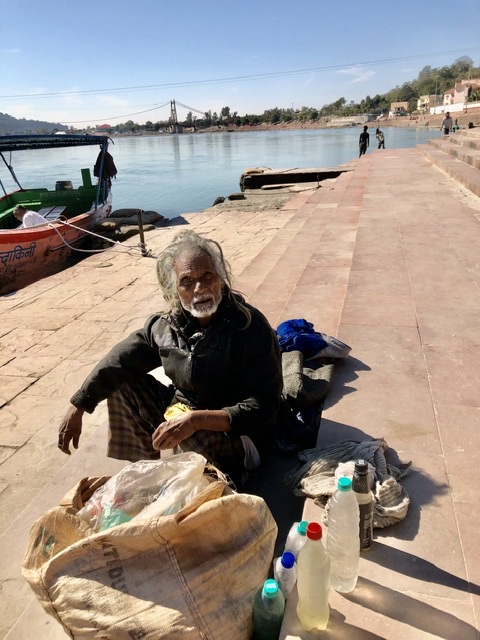
A Sadhu is a religious ascetic who has renounced the worldly life. He often lives on the street, with only the essential belongings for survival – his clothing, turban, towel, sandals, and beggar’s bowl. He is dependent upon the good will of others to provide him with enough money to buy sustenance-level nourishment each day.
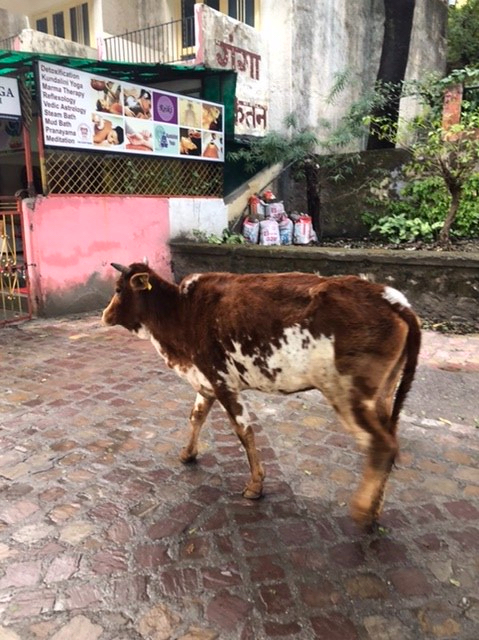
On my way to yoga in the morning, after crossing the Ram suspension bridge, which is blessedly motorcycle-free at that time of day, I meet only cows, dogs, and Sadhus, all waking up after a night spent outside.
Sadus may be said to be at one side of the spirituality-materialism spectrum. As I wait for my sweet yoga teacher, Gagan, to arrive on his motorcycle, sharing the pergola which overlooks the Ganges with the same Sadu each time, I can often hear a passing Sadu chanting quietly or not at all quietly.
“Ram. Ram. Ram. Ram. Ram. Ram. Ram.”
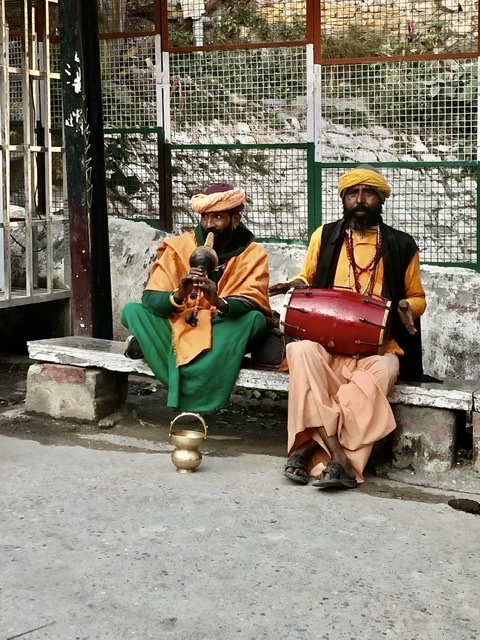
Though they’ve renounced family, home and worldly endeavors and accoutrements, I’ve noticed that they tend to hang out in twos, threes, and fours – a social group of sorts – and they gather their few belongings safely around them or cover them with a tarp on a nearby bench. Some take advantage of government incentives and work at ashrams where they receive food and shelter in return.
As my yogi says, human nature is one of collecting: things, acclaim, friends, knowledge, money. Another distinction between other animals and the human animal.
We ate dinner with a group of 20 strangers in Delhi not too long ago. Nice people. Friendly. As travelers are wont to do, people spoke freely about their lives, philosophies, travels, and families. The two men who sat closest to us got into a long conversation (with my partner) about their various, and, it turns out, multitude of real estate investments all over the world. The ones they sometimes live in, the travails of having renters, the value and tax issues of different locations.
Neither was Bill Gates but neither was a Sadu either.
We’ve been in India for over three months now. It’s a long time to be out of mainstream living. With each day that our work commitments, family and friend socializing, and community presence gets further away, our bonding to each other and our investigation of personal values and beliefs becomes more intriguing. There’s more time spent observing, thinking, integrating and softening.
It could be that the inherent nature of India is friendlier and more conducive to this transformative process. It could be that an extended period of free time would create the possibility of this process anywhere.
In India specifically, as we travel, meeting other travelers, shopkeepers, restaurant and guesthouse staff, yoga practitioners, musicians, and language teachers, we can’t help but observe their everyday life and that of passersby. Some of them become a regular part of our day for the week, two or three that we are in their vicinity. We seem to be seeing the spirituality-materialism spectrum in real time.
Spirituality is in the air.
From JP, the owner of our guesthouse near Munnar, who gets up at 4 am each morning for 20 minutes of yoga, to the shopkeeper in Rishikesh who closes his shop at 10 pm, bends down 3 times to kiss the step in front of his shop door, touches the doorframe and then his forehead before getting on his motorcycle to head home, to the clearly well-to-do middle-aged Indian couple who travel to The Ganges to dip themselves in holy water annually, to my lovely harmonium teacher who has a smile for the pesky monkey who pushes open her door when she shakes her head in that ubiquitous, multi-meaning Indian wag and says “He, too, is one of the gods’ creations.”
The human nature of collecting is evident, too.
The same people mentioned above charge money for their goods and services. In general, they unabashedly charge foreigners more – sometimes shocking attempts to charge 10 times more. A Sadu might complain about a donation of 10 rupee (“But a chapati costs 20!”). One South Indian man we befriended had a candid conversation with us about his constant efforts to accumulate more wealth. The yogi with whom I practiced four years ago didn’t charge money (he reluctantly accepted my ‘donation’ of $75 for 10 classes) and this time made his charges clear before we began (less than $6/class).
So where does each of us choose to be on this spirituality-materialism spectrum?
Does being a Sadu, at one side of the spectrum, preclude a bit of materialism? Does being Jeff Bezos preclude a smidgen of spirituality? (btw, did you know that there is not one woman on the list of the top ten richest people in the world?)
Gagan believes that it’s easier for those who have wealth to take on spirituality. Perhaps this originates from his vantage point as a Sikh yogi whose path of relative poverty and practice was inherited, clear from the age of 10. Perhaps he envisions those who have large bank accounts as having the luxury and ease to choose to invest time in introspection and seeking spirituality.
It seems to me, from my vantage point of never having had to concern myself with the possible absence of my next meal or a roof over my head, that it’s easier for those who have not been educated to chase ever-improving material circumstances to take on spirituality.
Clearly Gagan and I bring different life experiences to our sense of things.
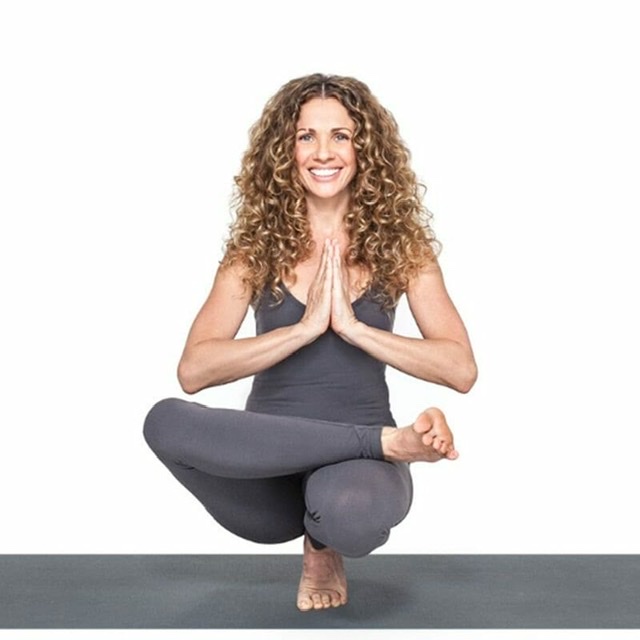
Seane Corn is one of the most famous (and wealthiest) yoga teachers in the world. Her net assets are reported to be over 20 million dollars. Not anywhere near Bill Gates’ estimated 100 billion dollars, but still not too shabby. While her exhibition-type, extreme style of yoga is not my cup of tea (maybe I just wish I could have her flexibility), I’ve admired her for years for her tireless work for altruistic causes. Her organization, Off the Mat into the World, offers yoga practitioners the opportunity to volunteer to build community centers in Africa, train young people to teach yoga and meditation in their villages and towns, and offer online courses for leadership initiative. A vegan, Seane teaches 250 days out of the year, and, when not teaching, calls a tiny yurt in Southern California home.
Miriam (not her real name) is a talented artist, living in a rural area of Israel. Her husband of 25 years is most often in the US where he teaches religious studies in a small community where there would be no religious learning if he didn’t offer it. They have little in the way of material wealth, other than the modest, heavily-mortgaged home Miriam lives in, and, sadly, have no children. Their daily lives are committed primarily to the deepening of their spiritual lives and sharing what they believe are their God-given talents – painting and teaching. Miriam offers half-day and full day retreats for women, providing spiritual, artistic and nutritional nourishment, charging on a sliding scale according to means. Her walls are covered with her beautiful original works, into which one can gaze, imbued with Kabbalist and/or personal spirituality.
(not Miriam’s work)
Most of us are neither Seane Corn nor Miriam. We’re neither millionaires nor Sadhus. Some of us may not give a second’s thought to spirituality or ethical behavior or the meaning of life; others may think about it fleetingly or in depth once a week, or at random times. All that stuff has been in my thoughts for as long as I can remember. Sometimes it led me to political activism, sometimes to volunteer work, sometimes to prayer, sometimes to regrets, sometimes to books, sometimes to an open heart. I’ve been blessed with 3 months of unrestricted time, a partner who’s happy to listen to and share philosophical thoughts, and surroundings that welcome it all.
We live in an age of moral subjectivism, relative realities, political correctness – some may be tempted to call it an age of wishy-washiness. We hear that there’s no objective right or wrong, better or worse, too much or not enough. It’s all what you choose for yourself. The glorification of the individual, regardless of…well, pretty much anything.
But, hand on heart, don’t we all actually know what having enough looks like? I’m guessing it doesn’t resemble Jay Leno’s collection of cars or Imelda Marcos’s shoe closet. It most probably isn’t even reflected in most American’s refrigerators or leisure time. I’m a member of a FaceBook group of people traveling in India. Recently there was a post about whether or not to tip in India, and how much. Some of the responses were eye-openers. From ‘Indians don’t tip.’ to ‘It’s good enough to round up.’ to ‘They earn so little that 10 rupee significantly increases their income.’ (10 rupee is the equivalent of 15 cents) Seriously, guys!? Then there’s the feeling that we’re too busy to walk the breast cancer marathon or visit the aunt who’s broken her hip or volunteer at the literacy group downtown.
We each choose our own path, even though sometimes it doesn’t feel like it. We have internal voices that may sound a lot like one of our parents, our seventh grade teacher, our partner, our eighteen-year-old self, our rabbi, our neighbor, or all of those people and others besides. Voices that narrow our choices to, well, theirs. Or what they wish they’d chosen.
Confusing…and noisy. Hard to hear our own internal voice with all that racket going on.
Gagan shared his own belief about all this choosing, whether it’s about spirituality, materialism, or how much time to look at a screen of some sort. If you never regret your choice, your choice is good. (I wish you could see his expression and hear his voice as he says that.)
When I pushed him…what about an addict who ends up dying from his addiction?
The answer – If the addict dies with no regrets, then the choice is good.
Say whaaaat!?
That’s going too far for me, but I get it when he elaborates and adds that trying to guide someone else’s path is like trying to steer a passing car. Unless the driver pulls over, stops, and asks for directions, your shouts will just make you hoarse.
I’ve spent many hours perfecting work and making deadline only to find that the client didn’t bother to provide necessary material – and didn’t care. I’ve spent money and time fulfilling a promise that the person on the receiving end, it turned out, didn’t value much, or may have even forgotten. I’ve worried about people’s “wrong” decisions that turned out not to be so disastrous in the long run, or even had their positive aspects.
So if I believe people are happier with spirituality in their lives, authenticity, or altruism, or other people, I choose to resign as one of those internal voices that points it out.
I’ve chosen to integrate those attributes into my life and to respect your right to choose to integrate some, all or none of them into yours.
This trip started out as one of those ‘round the world’ tickets where you have to keep traveling in one direction – east or west – and can’t cross any specific ocean more than once. I must’ve played with that planning tool on the Star Alliance site for twenty hours or more over the course of several months.
Tel Aviv – St. Petersburg – Mumbai – all over India – China – Bora Bora – Alaska – Oregon Coast – California – Salt Lake City – Mount Rushmore – The Badlands – New Mexico – San Antonio – Fort Lauderdale – New York City – Toronto – The Bay of Fundy/Nova Scotia – Iceland – Tel Aviv
Juggling weather, direction, time.
How much is too ambitious? Australia, yes or no?
Should we rent an RV to travel around the US? A car with motel stays? Flights for the long bits?
But then the time came to make real decisions like renting out the house for the year and what to do with my yoga studio and my husband started hemming and hawing. There were hesitant chords of concern about leaving our lives for so long. I tried to ignore them. Gloss over them. Treat them like background noise.
A year. Twelve months.
I had to admit to myself that it was sounding like a really REALLY long time to me, too.
The house wasn’t the problem. Neither was the studio. Though I love both.
It was the kids, the grandkids, and the friends who have become no less our family in the 30+ years that we’ve shared a life.
So twelve months became ten months became six months and here we are with the second month of our six-month trip drawing to a close.
In this technological era, it’s pretty easy to keep in touch with people. We share our amazing surroundings and the interesting people who inhabit them with a WhatsApp group for our English-speaking friends daily. We post on FaceBook for our Hebrew-speaking friends or send separate WhatsApps or emails. We send messages to our family WhatsApp group, too, and keep in touch with them with video WhatsApp weekly when we can find a strong enough WiFi connection, or with audio WhatsApp when we can’t.
We spoke with our youngest son and his wife yesterday from an isolated snack food kiosk in the jungle as they drove home from an office party in Silicon Valley, California.
We remember the days, not too long ago, when we sat in Internet Cafes, paying for the internet per minute and waiting endlessly for the atrociously weak and slow connection. Then there was Ko Mak, an island in Thailand, where we had to hike an hour to the other side of the island daily for the only internet connection because I had left Israel in the middle of interviewing candidates for a position and had to go over resumes.
Earlier there just was no internet – impossible for our grandchildren to envision – so we made the occasional phone call when we could.
It seems that most of the important people in our lives are healthy and major crisis-free so far during this trip.
Before we left we knew that one friend was scheduled to have a small, probably cancerous, tumor removed from her kidney, and after we left we received the good news that all had gone well with her surgery.
One granddaughter had an ugly eye infection that seemed to linger endlessly. Endlessly finally came to an end after way too long a time for my taste. Her swollen-closed eye then returned to normal.
The worst of it so far has been a shocking but benign head tumor with sudden, unexpected, surgery that’s meant weeks of rehab for a neighbor who’s like a younger sister to me. That was a tough one because I knew that my presence could’ve been important for her morale, but, thankfully, her recovery seems to be going well.
Life is full of surprises – big and small; pleasant, unpleasant and neutral – and they don’t cease when we’re far away from our usual haunts.
So here’s the deal.
Relationships with people are one of the most important ingredients in the tasty soup of life. There’s our relationship with ourselves; our inner world. The one we take with us wherever we go, whether it’s to the living room or to India. Then there are all the others.
The ones we choose; the ones we’re born into; the ones we birth; the ones we marry into; the ones we grow into because of circumstances; the ones who are part of the landscape of our lives.
There are even relationships we’re semi-unaware of until they’re brought to our attention.
There are close relationships and casual relationships. There are close relationships that become casual sometimes and casual relationships that become close at others.
There are relationships that take us by surprise and relationships like old slippers – comfy and constant.
But there’s one reality of important relationships that my husband has pointed out to me many times – they have a past, a present and a future. If one of those elements is missing, the relationship is a like the one with that second grade teacher you had in elementary school. She may have been one of the most significant people in your life when your were seven but she’s only a fond memory today.
Anyone who knows me knows that I’m a relentless technological freak. I love the newest, the most creative, the most surprising new concept, gadget or app. I’m that person that buys the out-of-the-box FaceBook solution for neck tension and was one of the first to contract out administrative projects to freelancers online fifteen years ago. I never give up communicating with people in the Mayalayam spoken and written on my translation app in spite of dozens of puzzled expressions. I trust Uber and Waze and UpWork.
I prefer email and WhatsApp to phone calls or personal business meetings. If you WhatsApp me, chances are you’ll get an immediate reply sixteen or seventeen hours out of twenty-four, even from the tropical jungle of Kerala.
And yet.
I’ve learned to embrace another reality about relationships.
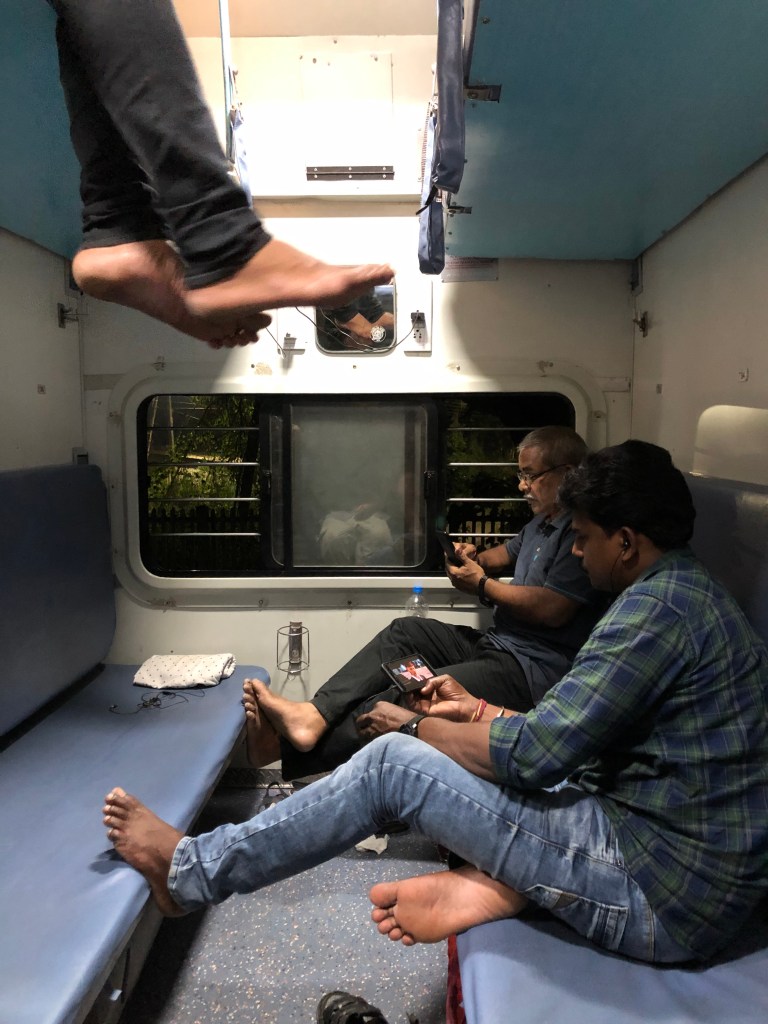
The important ones cannot, ultimately, be sustained with technology. They can be maintained temporarily in a loving electronic space when watered sufficiently – pardon the mixed metaphor – but they will eventually rise from the lower berth to the 3rd tier berth of relationships and become your second grade teacher.
It’s true of best friends, of sisters, of kids, and probably most of all of grandkids, who have the disadvantage of being too young to have solidified any relationship enough to withstand the loss of perpetual physical proximity.
I love to travel. Someday I may not be able, physically, to climb into a train berth or even get on a plane to travel to another exotic location, but I’m guessing I’ll become an armchair traveler. Meanwhile, I look forward to the next four months in India, a week in Greece with my daughter and granddaughter in July, and am already planning to rent a little place for three months in Guatemala next winter.
But I won’t be fiddling with that ‘round the world’ Star Alliance again in anticipation of a year of travel. I have a feeling that I won’t even be looking at six months again. I’m so happy that we grabbed the opportunity to take this incredible journey. I’m seriously enjoying every single day.
While I tend to feel ageless, I am aging. But that’s not the thing. It’s not fun to do many things I used to have fun doing but I’ve barely noticed that I’ve stopped doing them. I’ve moved on to things I may have once thought slow or unexciting and get a huge kick out them now.
The thing is that all the people I love are aging. Yep, even Alex, our youngest grandchild. And certainly our family-like-friends who have almost seventy years on her.
I want to be IN those important relationships. I don’t want a single one of them to become my second grade teacher and I don’t want to be theirs.
I’m so grateful that I’ve birthed, married into, grown into, chosen, and been brought by circumstances into relationships with multi-faceted, quirky, wonderful people whom I love and, wonder of wonders, love me back.
One of the best things about my life is that I’m fortunate enough to live in time that I can nourish both my love of travel and my love of relationship, if I can only remember to balance them and adjust to the times. After all, I could’ve been born under a bridge in Mumbai.
Happy Monday to all from 20 kilometers from the middle of nowhere.
The word ‘traveling’ has nine letters and just as many aspects to the activity the word describes. There’s the actual mode of transportation involved which can fill hours, days, or even weeks,
seeing the sights, experimenting with new food, learning about new cultures, seeking spirituality, discovering history, embracing nature, deepening your understanding of yourself, your travel partner, and your relationships with both, opening your heart, your mind…YOUR EYES.
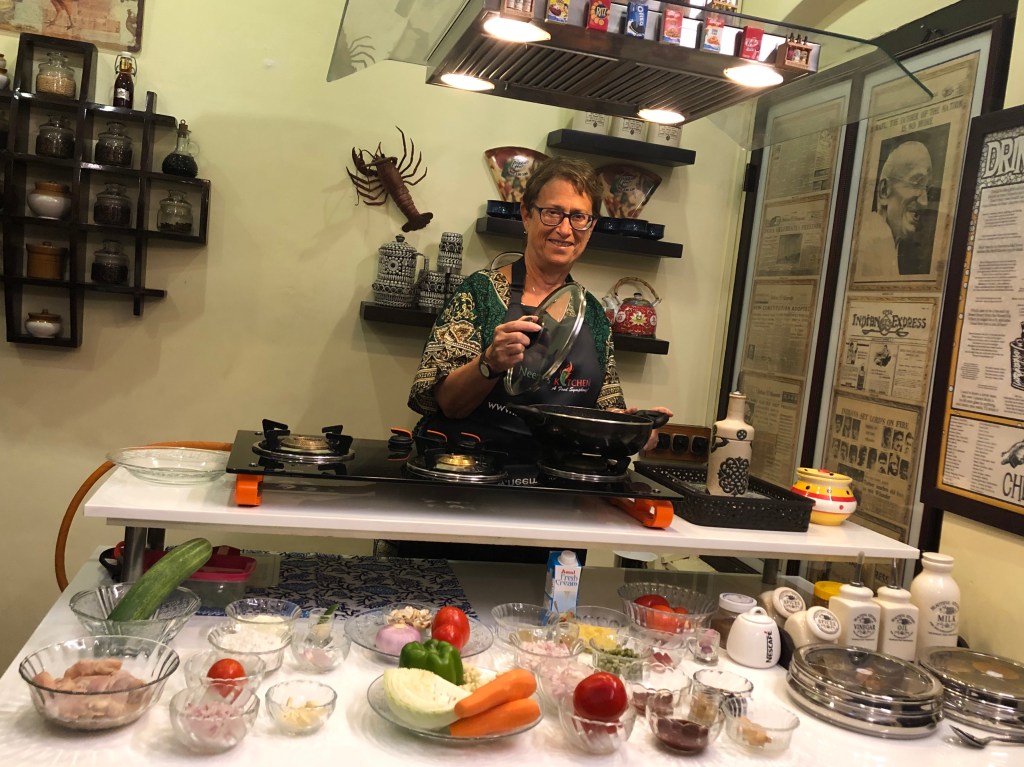
As the husband of my cooking teacher, who spent years on the sea as the captain of a commercial vessel, told me, “Life is like a book. Those who don’t travel are always reading the same page.”
At the risk of offending all too many of you, I have to admit to agreeing with that statement to some extent, but will rein in my judgey side a bit and add that there’s plenty to learn from our everyday lives in our very own homes, too. We just have to do it. Harder than it sounds.
But that’s another story.
I could write an entire blog – or three – on each aspect of traveling, and might do just that, but this one is about an epiphany I’ve had as I’ve moved from my western, Israeli, specifically ideology-driven, life, to crowded Diwali Mumbai, the vast sandy beaches of Goa, the serene backwaters near Alleppey and now to the hill station, tropical green mountain area near Munnar.
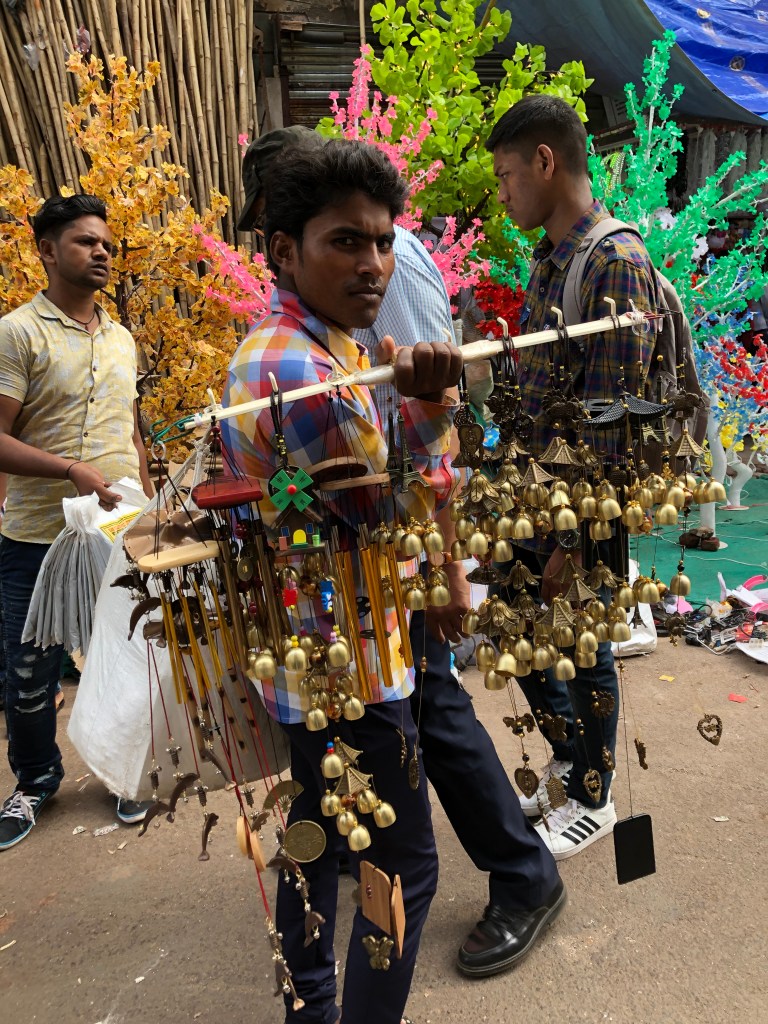
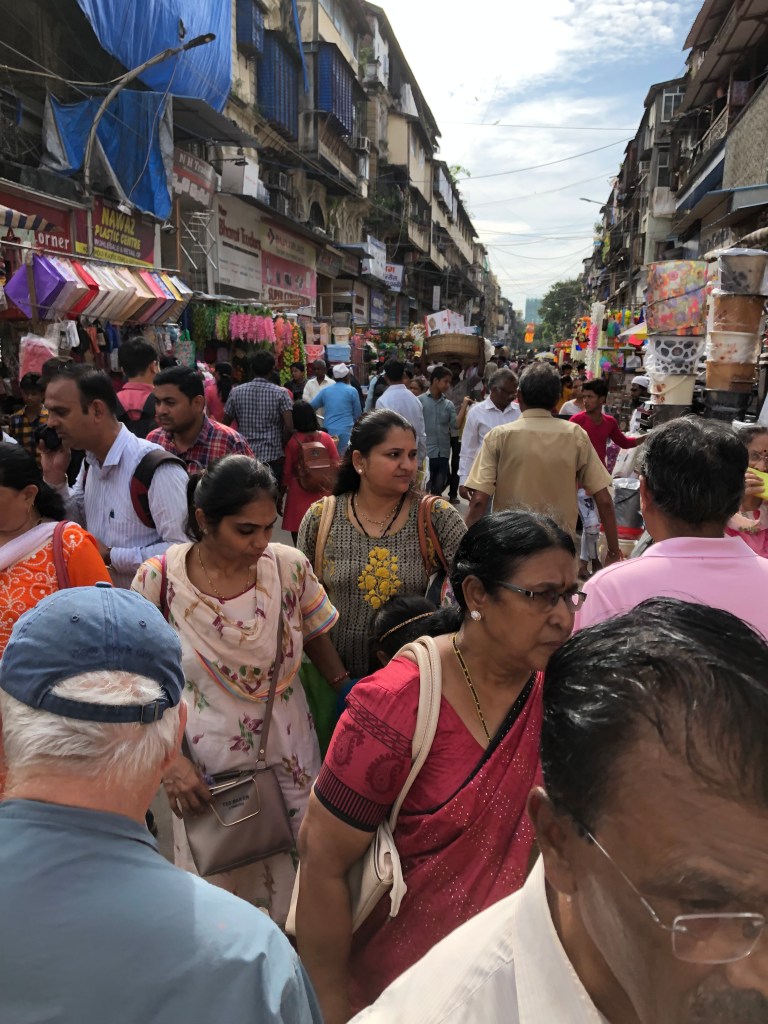
I get into the vibrancy of the city-even Diwali Mumbai with all the millions- the constant movement, lights, traffic, endless options and continual visceral stimulation. There seems to be no limit to the number of shops I enjoy entering. I’m happy walking for hours down busy streets, wandering through museums – both conventional and quirky – waiting in winding snake lines of multitudes of people to see the most touristy of sights or hop on the boat, tuk-tuk, or train at the end of the crowd. I have no problem with getting lost for a while or not understanding or being able to make myself understood. It all works out in the end.
I’m attracted to drama, and there’s plenty of that to be observed in the city. Participation voluntary. For the most part.
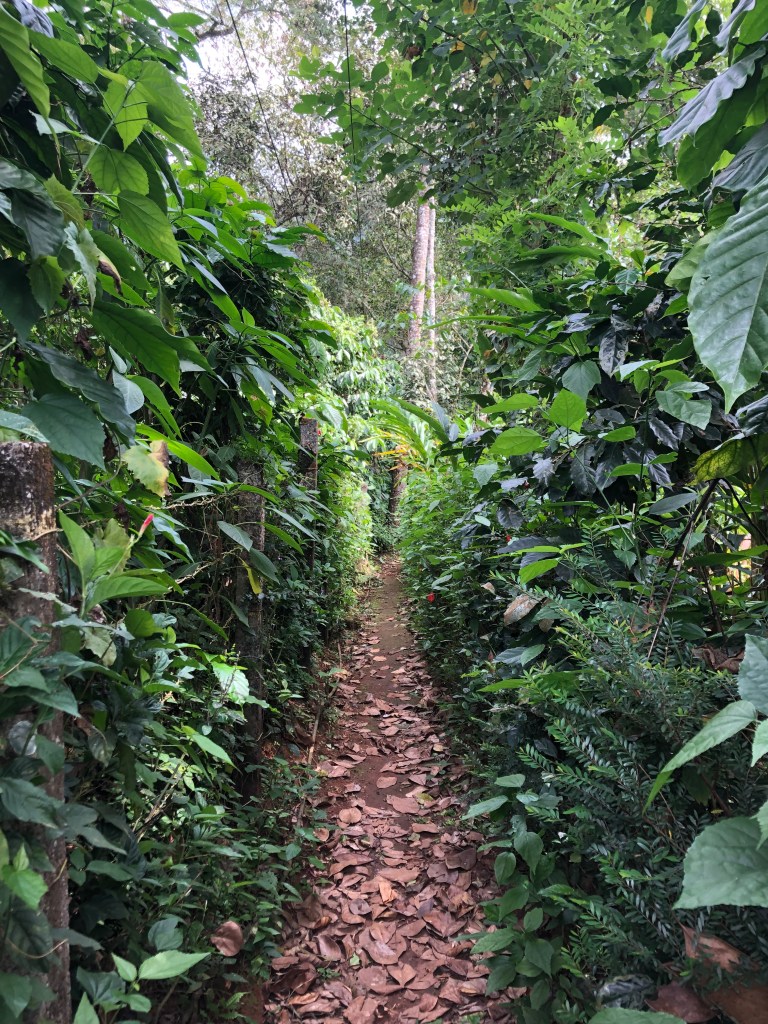
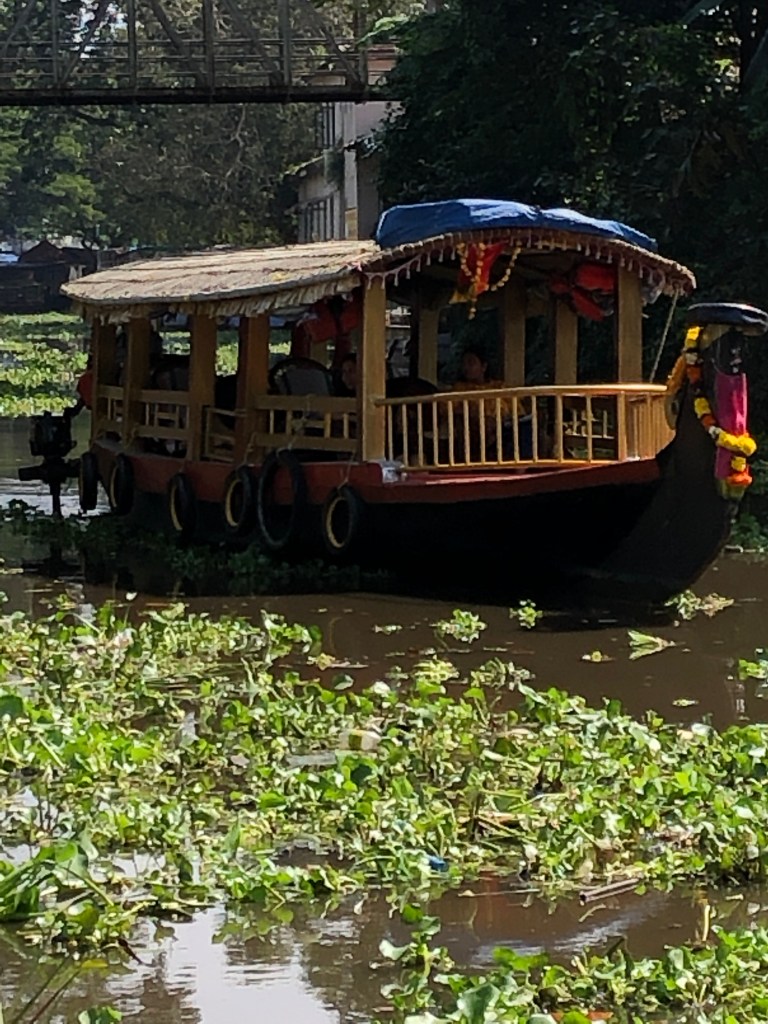
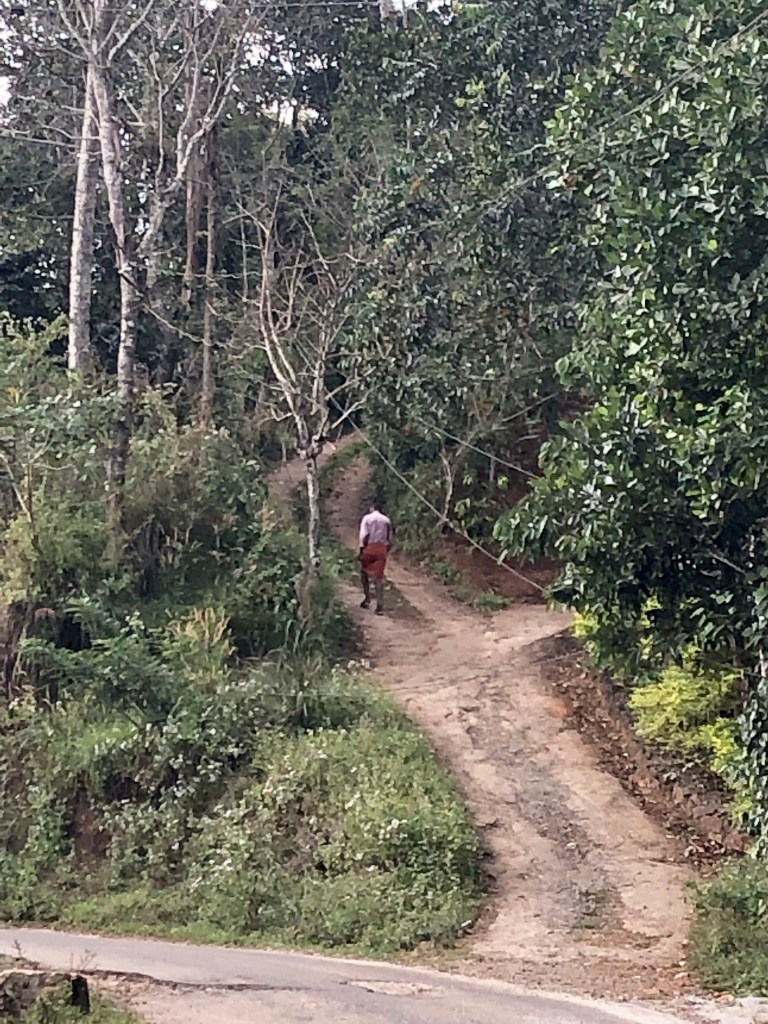
Over the past eight weeks we’ve gradually made the transition inland. From waves crashing onto the rock barrier thirty meters from our balcony and dolphins playing twenty meters beyond that, to the gurgling stream just outside our backyard tropical mountain surroundings. We were somewhat prepared by the serenity of Kerala’s backwaters, running alongside the noisy towns of Alleppey, Ernakulum and Fort Kochi, as well as the steadily deteriorating road between Kochi and Pallivasal near Munnar but nothing can really prepare you for the quiet here.
Being isolated in nature is something that has to be experienced.
We made a conscious decision to settle into our new environment and let it settle into us. No martial arts performance yet. No trip into the town of Munnar. No tea plantation or spice garden tour. Just nature and quiet and us.
It took 24-hours for the monkey chatter to subside.
My yoga practice has been evolving…getting better and better.
I experienced a meditation so deep two days ago that it scared me a bit. The pang of fear brought me to the surface so fast I thought I’d get whiplash. Fear of what? Who knows.
Yesterday’s yoga, just before dusk, was the best yet. Fluid. Soothing and refreshing simultaneously.
At one point I felt I wanted to continue forever.
And then it was just the right moment to finish.
There’s such an awareness of productivity – accomplishing things – in the city.
There’s more an awareness of being out here.
Is there a productiveness in being? Can there be?
Since getting more involved in Eastern Philosophy, yoga and meditation, I find that there’s far less drama in my relationship with the people I love. I’ve integrated the concept of non-grasping without really making an effort to do so. It’s just happened with all the reading, thinking and practice of the past two decades. I worried that it was too much. That I’d become too detached from the lives and challenges of the people I love.
He asked me to close my eyes and try to take myself back to the time when there was more drama and intensity in my relationships. It took a minute of my precious 15 minutes with him but I was able to do it.
Then he asked me to return to a more recent time, with less drama in my relationships and, after a minute or two, asked what I felt in those moments as opposed to the previous ones.
I didn’t have to answer out loud. I opened my eyes to the answering smile on his face.
I love the city. I love the satisfaction of completing many, many tasks during the day. Love noise and crowds and shops and movement.
My body and soul are nourished by nature, by being, by deep silence.
I think that after those last few days of stomach butterflies at home leading up to our departure from life as we know it, we chose well with Mumbai as our first stop. The drastic difference of Morjim Beach from those days of checking off the last items on our “to do” list would’ve have been too great a shock to our systems. Mumbai, with its crowds and our 17,000 steps-a-day touring, was a perfect jumping in point.
The five days of incredible Mumbai, with its teeming population of 22 million and the additional Diwali festival crowds, may sound even more hectic than organizing our life to exist without us, but the contrast between colorful India, spicy Indian food, traditionally clothed people passing us on the street and our own reality in Israel made it perfect.
Five days was enough.
We chose Morjim Beach in Northern Goa for two reasons: for the promise of turtles coming ashore to lay their eggs (which hasn’t happened yet) and the claim of serenity and lack of crowds.
Expectations are problematic for travelers. We choose because we can’t stand at the intersection without choosing right, left or straight, but if we expect our lodging to be exactly as pictured/described or expect the town/beach/tourist site to be exactly what we were looking for, without leaving our mind and heart open to accepting a different reality, we’re often setting ourselves up for a bad time.
The relatively few tourists on beautiful, sandy Morjim Beach are Russian (true to what’s reported by google), and Indians. We’ve yet to meet a tourist from an English-speaking country or an Israeli. The beach is almost deserted most of the day. People frolic in The Arabian Sea from early morning until around 10, before the extreme heat arrives, and wander back down to the beach about an hour before sunset to watch the big event.
There are pubs here and there for nightlife but pulsing music is very localized and can’t be heard from our hotel.
Our first week in Morjim Beach was spent at Baywalk Goa where two exceedingly nice, polite, helpful men eased us into beach life. Breakfast was delicious. Service was immediate. Our room was spacious and had a front and back balcony. The older of the two men even showed me his yoga routine, which included an interesting pose that was new to me. The only drawback was that it was not directly on the beach (about 100 meters away) and about a kilometer down the beach from the restaurants.
We spent the weekend in Anjuna, about 30 kilometers away, where the Chabad House correspondence had prepared us for the possibility of it being non-existent that Shabbat. Not that they said that, but they just sounded flakey. As a result, we chose a more luxurious hotel ($40/nite instead of $30) with a quiet Shabbat around the pool as a possibility. In fact, Chabad House was closed and we loved our Shabbat in the pampered surroundings. There was even a surprise bonus of a wonderful Rajasthani Dance and Music performance on Saturday night. The beautiful dancer invited me to dance with her, which I did, and I had a great time.
On Friday we walked to a coffee shop/restaurant that I’d been following online and getting some India travel tips from for several months. The owners are an Israeli man, Moshe, and his German wife, Anastasia. There’s a big lending library with books in a multitude of languages in the restaurant, a wide variety of “Mediterranean” food options – all vegetarian or vegan – a space for yoga, and a bulletin board filled with notices about yoga classes, meditation groups, tai chi classes and upcoming concerts. A very comfortable, safe hang-out for travelers and people like Moshe and Anastasia who have made Anjuna their home.
I IMd Moshe after we left asking if he’d like to be interviewed for the book I’m writing about people who have stood at that proverbial intersection and chosen a path very different from their background and peers. I mentioned that we would be at our hotel all the next day because we keep Shabbat and suggested we get together on Sunday. Then Shabbat started and I wasn’t online to receive his answer.
Saturday in the early afternoon we were sitting around the pool and Moshe appeared. He had come to be interviewed. We sat and talked (mostly I asked a question here and there and he talked) for over two hours. I don’t know if his story will end up in my book – maybe – but it was interesting and I liked him. He’s been in Anjuna for almost 25 years. He’s approaching 50 years old. He sees himself as a citizen of the world and when asked to visualize his two daughters’ future (they’re now 10 and 12), he imagines they will live somewhere out there in the world – not India – and he’ll relish their happiness. Having had three children spend years each in the U.S., I could tell him that it’s much easier to relish one’s children’s happiness from closer up, but why burst his bubble. And, who knows, maybe he won’t feel that way.
Back to Morjim Beach on Sunday but to a place directly on the beach this time and close to restaurants – Ciiroc. Gershon found the manager taciturn and took an instant dislike to him. We’d checked the place out when we were at Baywalk and it seemed very nice. Little cabins surrounding a pristine pool, with comfy beds, a fridge, and pleasant porch.
Expectations.
Reality came in the form of a small(ish) cockroach prancing across the bed as we watched Blue Bloods on my iPad, an internet connection that was so slow that it was truly useless, and no cups to go along with the hot water kettle. As it turns out, though, one has only to ask and everything appears. The “taciturn” manager provides whatever we ask, including better internet by turning off and on the router whenever we ask.
The cockroach had no friends.
We’d eaten at the restaurant the previous week and already knew that they didn’t have about 3/4 of the items listed on the very extensive menu. When we tried (again) to order fish and were told they didn’t have any, the manager came over with an explanation. The fish in the market hadn’t been good that day so they were only serving it to non-guests. He hoped to have better luck the next day at the market and would make fish available to us then. A little scary for those non-guests, eh?
One important thing to note is that every single dish we ordered (that they actually had) was delicious and more than made up for the 3/4 of things on the menu that were unavailable.
We were the only customers most evenings for dinner and could only wonder at the four or five people in the kitchen. I was invited in to take a look at the kitchen and, while primitive, it was clean and a great space to prepare food.
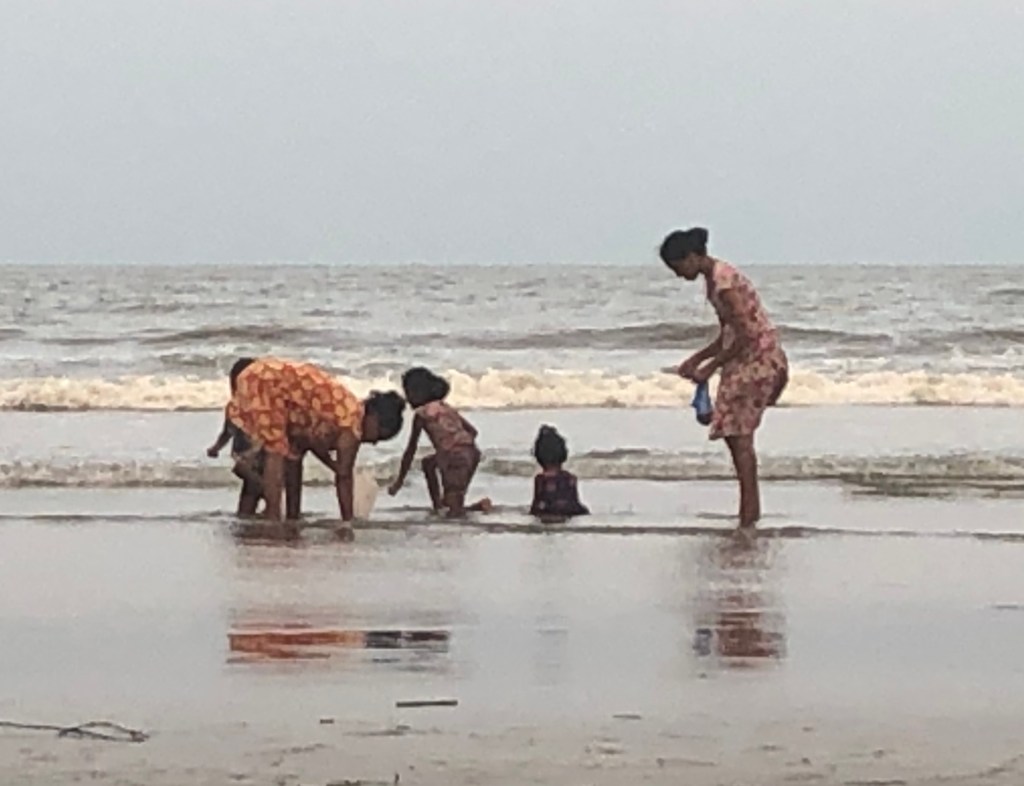
Today we walked the other way on the divine beach and spent an hour or more investigating a rock jetty with tidal pools and many, many living things. There are four kinds of crabs here – bubbler crabs with their amazing artwork, hermit crabs who teach us an important life lesson – to be satisfied with what we have and not chase what looks a bit better – ghost crabs, and a kind of crab we saw on the rocks that Gershon has not as yet identified. The beach and shallows are populated by thousands of tiny clams that women bring their children to gather to add flavor to their soups. There are fish in the tidal pools and the inevitable birds who feast on crabs and fish.
I participated twice in a yoga and meditation class on the beach giving by a 68 year old yogi who seems to be the real deal. I could probably learn a lot from him but each class is a basic class because he caters to the Russian tourists who come and go. Too much talking and not enough meditating or yoga for my taste. But a very cool experience.
I have to go now. It’s almost time to see the sunset.
I made a new friend on my walk today. We’ve met with mutual suspicion six times a week for a few weeks now. He lowers his head, looks at me surreptitiously, and keeps his distance. I keep my eye on him as I pass on the other side of the path. But today was different.
I walk for about an hour every day except Thursday, usually alone. It’s a peaceful time. I listen to a talk for part of the time, and to music the rest of the time, except for Saturday morning. Saturday is Shabbat and my time off from electronics. My Saturday walk is a little less quiet – all that noise in my head. That’s okay, too, though. My curiosity gets a kick out of all those thoughts. “What? THAT one again?”
I started this walking thing – or I should say I got back to it after a very long break – about 2 months ago. It seemed an easily accessible habit, useful for changing the sedentary lifestyle that crept up on me when I began having hip pain from my Nordic machine.
Research shows that it takes 28 days to create a habit. That seems true for my walking regime. It’s become a habit. I check the weather & my schedule to decide the best time to get out there. The time arrives and I lace up my sneakers. I connect my earbuds, choose the talk I want, slip the phone into a back pocket, and I’m out the door.
Today’s walk started out the same. Aside from a sore throat and a little cough, nothing warned of a difference in today’s walk. After almost a full day of rain yesterday – with just enough delay to allow for a walk under threatening skies – the sun warmed the crisp mid-winter air just enough to allow me to shed my down jacket after fifteen minutes.
The talk I chose was good. They always are. The winding road up the hill was pleasant – not too easy and not too challenging. It always is.
The difference came from inside, I guess. One of those awakenings that come upon us all of a sudden. Or it seems to be all of a sudden, but I’m betting it’s the culmination of lots of stuff. For some reason, today, after about forty similar walks, I felt how strong my legs have become and how easy my breath comes on the incline now. I was aware of my sure-footedness coming downhill on loose gravel. I realized that I was enjoying the walk for its own sake. I had a glimmer of why hikers love to hike. Today it wasn’t about being healthier or exercising my knee or my hip. Today was pure pleasure.
When I got near the top of the penultimate hill I saw the same dog I’d seen in the very same place on every walk, but this time I didn’t pass him warily. This time I approached him with my hand extended. He didn’t move. He, too, had created a habit. But he let me rest my hand on his head and, after a few seconds, his tail started wagging as I massaged his neck. It was only a moment in time. Then he went his way and I went mine.
Later, on a secluded, wooded path, I danced to “Fallin’ All in You” before resuming a sedate demeanor more suitable to a 66-year-old woman on a bright noon somewhere in January.
(please click on the photo)
Hours later I can’t stop the feelings of gratitude. Thankful for my body’s vitality (with all its aches and pains of aging, coughs and sniffles of winter) – the muscles in my legs, my lungs, my heart. Thankful for the undeveloped countryside right near my home. Thankful for the resources and the freedom to wander. Thankful for my many teachers – official & unofficial – who imbue me with the ability to see the half-full glass (and the occasional moments when I realize that it’s full).
I was sitting with my husband and some friends yesterday studying a Jewish book called “The Sayings of the Fathers”. It’s a book of homilies. Seemingly simple stuff.
I used to study it sometimes with my father on the rare occasions that he would have the time and patience for or interest in that kind of thing.
It always seemed to lack the seriousness and depth of the heavier Jewish tractates. Maybe my father chose it as appropriate keeping in mind that one of the homilies advises men not to spend too much time talking to women so as not to engage in nonsensical conversation…or worse.
Climbing out of the time machine back into the present, there we were studying this book of homilies and we came to 5 student rabbis and their teacher (the Big Rebbe) sitting around trying to determine what one needs most in order to lead a worthy life. (the first branch of yoga – the yamas)
One student claimed “A good eye”. The second said “a good friend”. Another said “a good neighbor”. The fourth offered, “the ability to foresee what is to come.” The final student countered with “a good heart.” Their teacher agreed with the last student saying that having a good heart incorporates all the other answers.
Then the teacher asked his students what evil should one most shun in order to live a worthy life. (the second branch of yoga – the niyamas).
One student said “an evil eye”. The second said “an evil associate”. Another said “an evil neighbor”. The fourth offered, “borrowing and not repaying”. The final student countered with “an evil heart”. Their teacher agreed with the last student saying that having an evil heart incorporates all the other answers.
In the Jewish tradition of learning (called pilpul; that sing-songy kind of debating) the conversation between us went on as to whether or not the students referred to being a good friend, being a good neighbor or having a good friend and a good neighbor; and what is a “worthy” life anyway? much less a “good heart” or an “evil heart”.
But, really, we all knew what the book meant.
So I listened to the conversation with one ear (these are people I love after all) but found myself drifting peacefully inward like a fallen leaf floating gently downstream on a sunny autumn day when there’s very little wind.
Years of listening to podcasts, reading books, meditating and leading meditation.
And it all comes down to a good heart, doesn’t it?
Thich Nhat Hanh calls it “love” and so does Rabbi Adin Steinsaltz.
ALL YOU NEED IS LOVE
A heart filled with love allows us to feel compassion for that crazy Israeli driver who zig-zags his way down the highway endangering himself…and all of us.
A heart filled with love allows us to keep our partner’s goodness in mind when some not so good things happen.
A heart filled with love helps us to meet our lives with an inner smile, with gratitude for the very breath that supports us in every moment, even the moments of sadness, illness and disappointment.
And, yes, a heart filled with love creates in us a good eye which creates in us a good friend and neighbor who sees the goodness in others and even the ability to foresee what is to come, because we are open to whatever it may be.
I’ve often told my children when they have a falling out one with the other or with me or their father that if we keep in mind that the foundation of our relationship is that we love each other and wish each other well – all can be forgiven as a misunderstanding or misstep. We need not suspect a hidden intended hurt or bad intention. Nor need we don our barbed, protective clothing after brushing our teeth in the morning.
And isn’t that what it means to have a good heart?
And isn’t that what leads to a worthy life?
Simple stuff? Maybe not so much.
As my husband says, we all may seem fine from the front but we each carry around a “peckelach” on our back
from life’s journey so far. The result of things not turning out quite as we planned. The odd hurtful comment here and whispered gossip behind our back there. The random betrayals and losses.
We may not have to protect ourselves (or at least not very often) from the animal predator pouncing on us from where it lies in wait but we’ve learned we have to protect ourselves from the hurts that human predators can inflict, some as poignant as that lion’s snarl and often even unintentional.
Not so easy to open our hearts.
It’s a journey of tikun, or mending.
Tikun of the soul.
Tikun of the heart.
Not always, but often, I recognize how far I’ve traveled down that path and feel mightily blessed.
And most days, even the recognition of how far I still must journey is no longer daunting.