Families are complicated. Large families are largely complicated. I used to think my own dysfunctional family – bipolar mother and clergyman father – was more complicated than most. Then I grew up.

My partner and I have five adult children and sixteen grandchildren. It goes without saying that each of the twenty-eight people in our family is a multi-faceted, quirky, fascinating person in her own right (we are 17 females and 11 males but I’ll be using all sorts of pronouns).
Just the fact that, to my mother-in-law’s great anger, we “turned our backs on the great country which gave us so much” and moved to Israel already sets us apart from mainstream USA. Add to that oh so many others of our personal traits and decisions and it becomes easy to see why I add the word ‘quirky’ to a list that otherwise applies to one and all.
But this isn’t about our family in entirety, just Tsippy’s family of 4 (not counting her soon-to-be ex-husband), and us.
As you read in Part 1, Tsippy is a successful career woman who has been raising her three children virtually on her own for the past two years. Her kids are 14, almost-12, and almost-8. Not particularly easy ages, but are there really easy ages? I think that might be a myth.
One of the things you didn’t read in Part 1 is that her oldest is a trans boy. There’s so much that entails. Heartache and joy, difficult challenges, serious crises and decisions, celebrated achievements, lots of introspection, acceptance, juggling, tears, eye-rolling, embarrassment, laughter, and, finally, and most importantly, love.
He and I are very close.
He doesn’t like a lot of people. He has no patience for bullsxxt.
He can take social situations like school (because he has to) and family gatherings (because he’s learned they’re theoretically healthy and relatives’ intentions toward him are good) but only in limited doses. After 3-4 hours he’s emotionally exhausted and needs alone time,
For whatever reason, he’s chosen me as “his person”. If his Mom is his coping strategy, as he’s told me, I’m his #2 (At least most days).
He agreed to come to India because I’d be there. I was flattered.
His almost-12 year old sister is the exact opposite socially. She has a gajillion friends, is a talented dancer, and a good student. She’s cheerful, physically affectionate (a great hugger), and has a killer smile. She drives her brother crazy and, at the same time, idolizes him. She’s ridiculously understanding of how hard his life is and the attention he requires from their Mom. She reminds her Mom that she requires attention, too…a lot.
The youngest is the kind of boy who wakes his Mom up every morning with “I love you, Mommy.” An amazing soccer player. Give him a soccer ball, pizza with lots of tomato sauce, and his Mom, and he’s good to go.

Tsippy herself is an inspiration. Many single Moms are. She’s learned the importance of balance the hard way – each of her kids’ needs, her own needs, work, home, friends, extended family, keeping up appearances and also not giving a crap, asking for help from the right people, accepting that she’s not in control of how a lot of stuff turns out – even the stuff she cares about the most.
So that’s the constellation, other than me and my partner. You’ve met us and gotten to know us here over the past umpteen posts. If you haven’t, you can go back and do your homework.
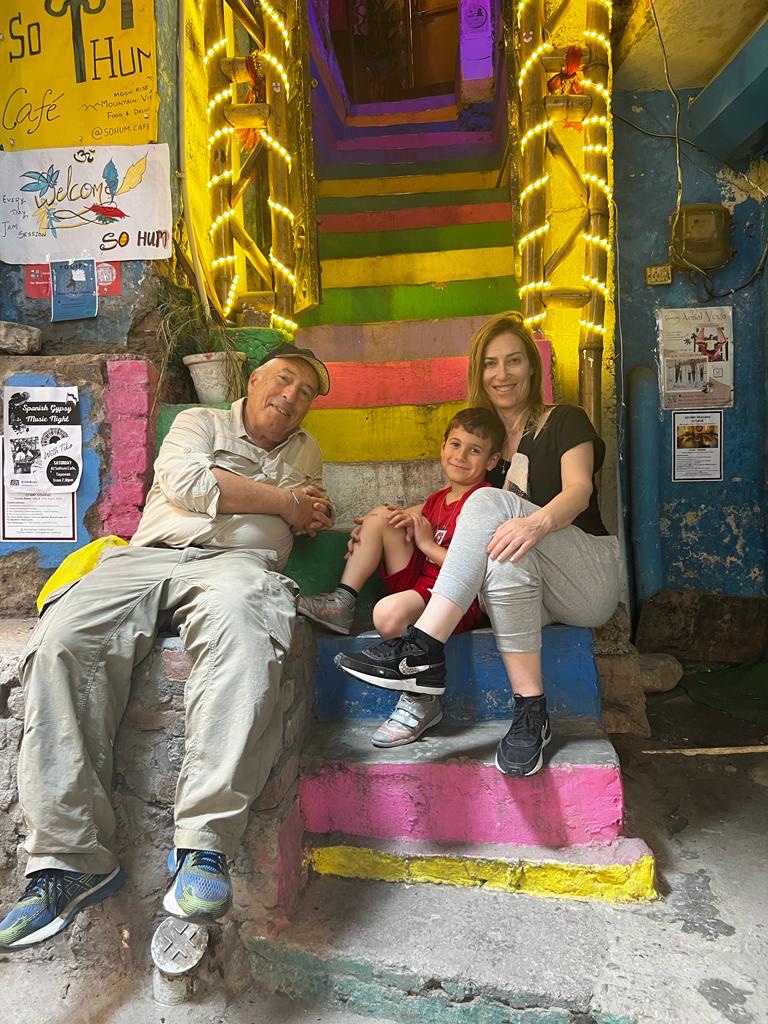
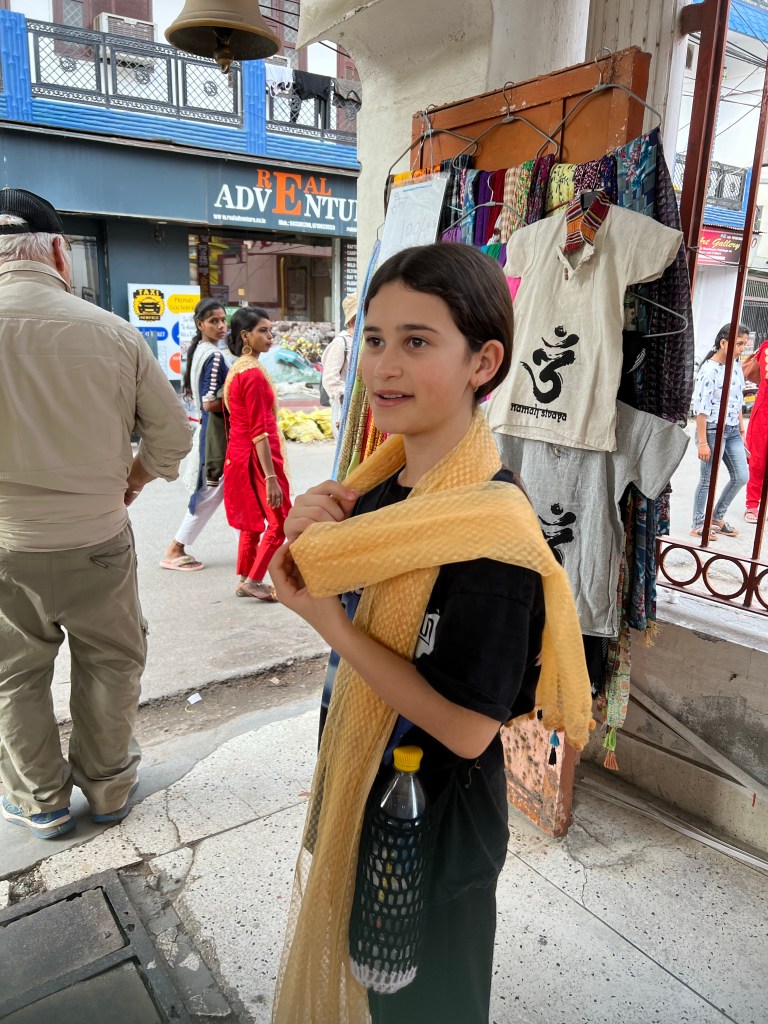
We met up with them after their 5 hour cab ride from the Delhi airport to Rishikesh. They’d slept in the car and were on a high. Excited about the cows wandering the streets, the kiosks with colorful clothes, jewelry, and bags of all sizes, and the diversity of dress and skin color of the people passing by.
They wanted to taste all the street food we saw and tell us all about their flights. Preferably at the same time. They tried on scarves and checked out the saris and salwar kameez. They only very reluctantly agreed to go to their hotel.


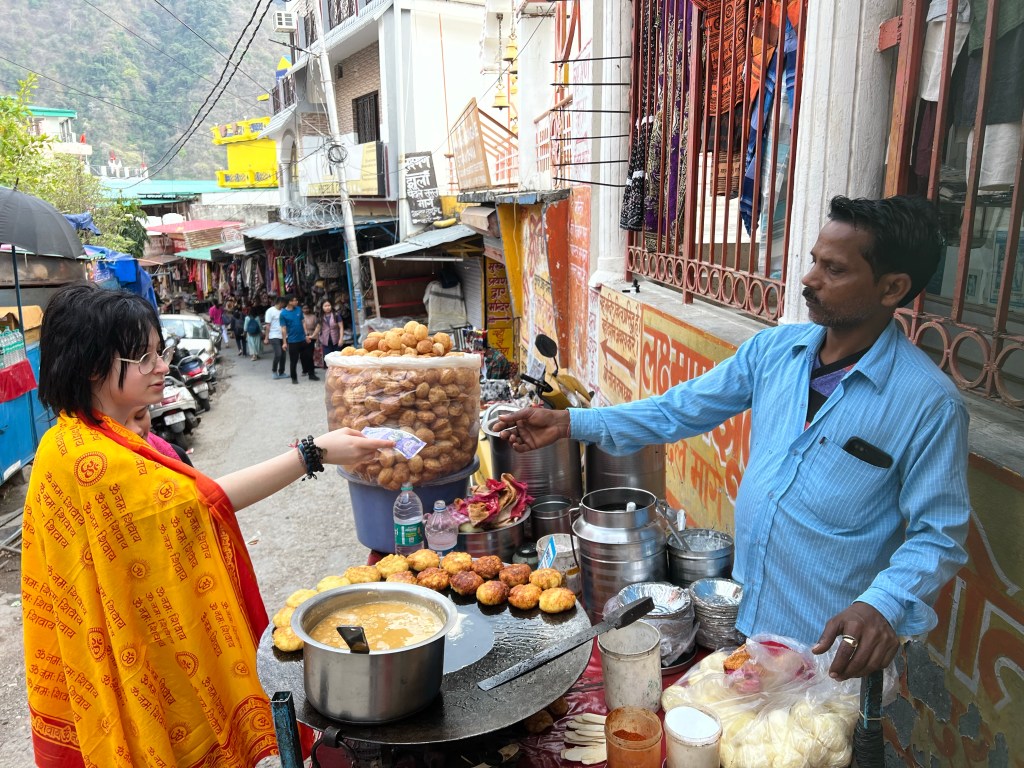
Food became an issue. We’d discussed it before the trip and prepared for it as well as we could. We chose restaurants with varied menus; Indian food but also pizza, chips (French fries), and cornflakes. The pizza and chips were a bit different than what they were used to so we often left 3/4 of every dish behind. They ate pringles, chocolates, rice, cornflakes, and doughnuts. Not a great way to sustain human life but it was only for two weeks.
They didn’t complain.
Not about the food, or the endless shopping, or the loud craziness on the streets, horns blaring, or the cow sxxt which required diligent attention, or the limitations we set on how much money they could each give to the ubiquitous (and deserving) kids and adults with their hands out and a sad look in their eyes.
There was very little bickering – much less than at home – and not many flare ups.
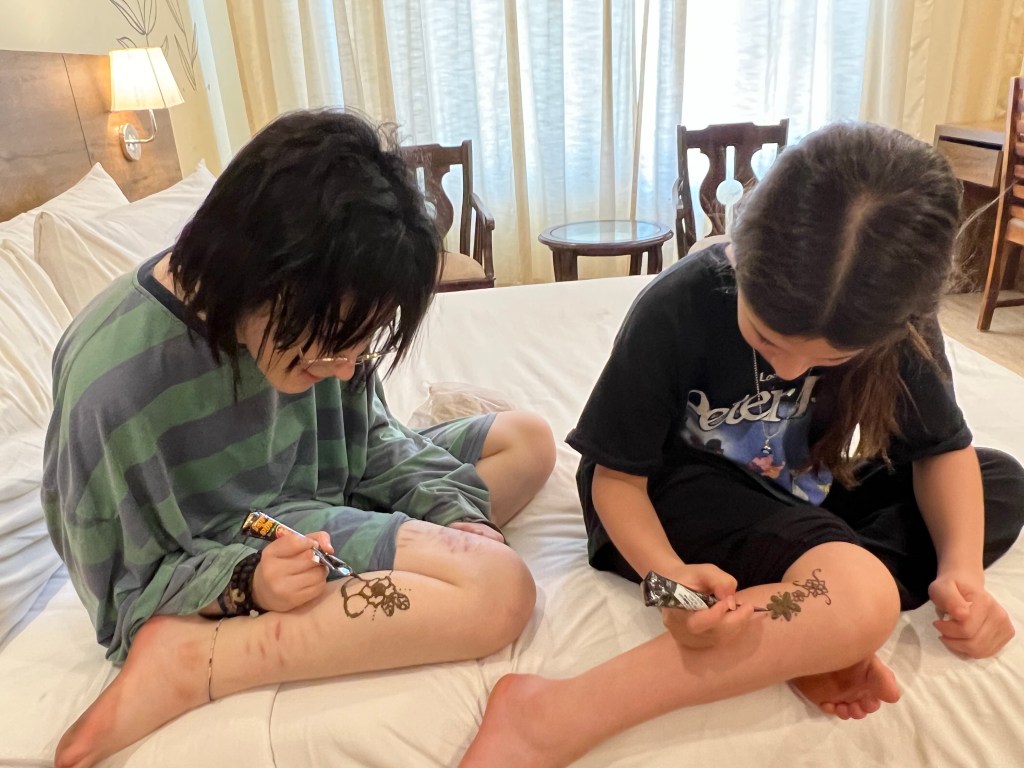
When the henna drawing on the oldest’s leg didn’t come out like he hoped, he took it out on his sister. Big time. Why? (what silly person asks a 14 year old why?)
We all saw how much of an effort the oldest made to participate in all our activities. He really wanted to be a part of it all. Even the activities that strained his coping skills to the max. When his perfectionism ruined his pleasure in his miniature painting of a peacock during our 3-hour workshop, he barely mentioned it. He just set it down, wandered off, and found a place to sit with his phone.

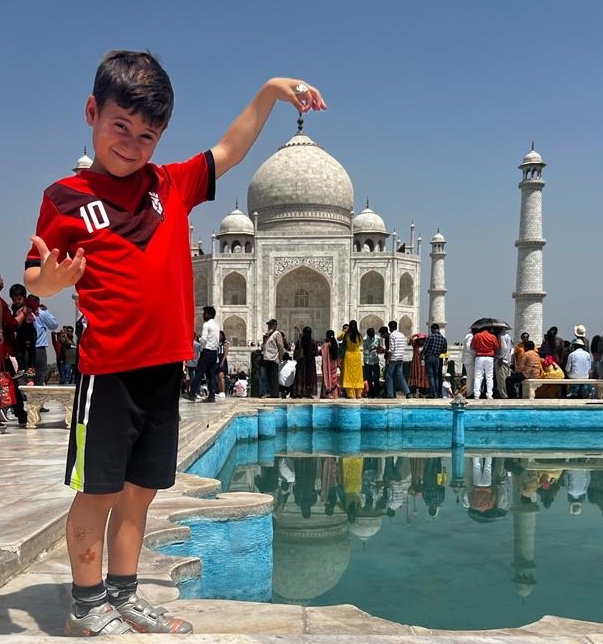
When he chose to remain in the hotel in Agra, Tsippy and the others went to the Taj Mahal on their own and had a great time taking goofy photos. No guilt tripping. Everybody was happy.




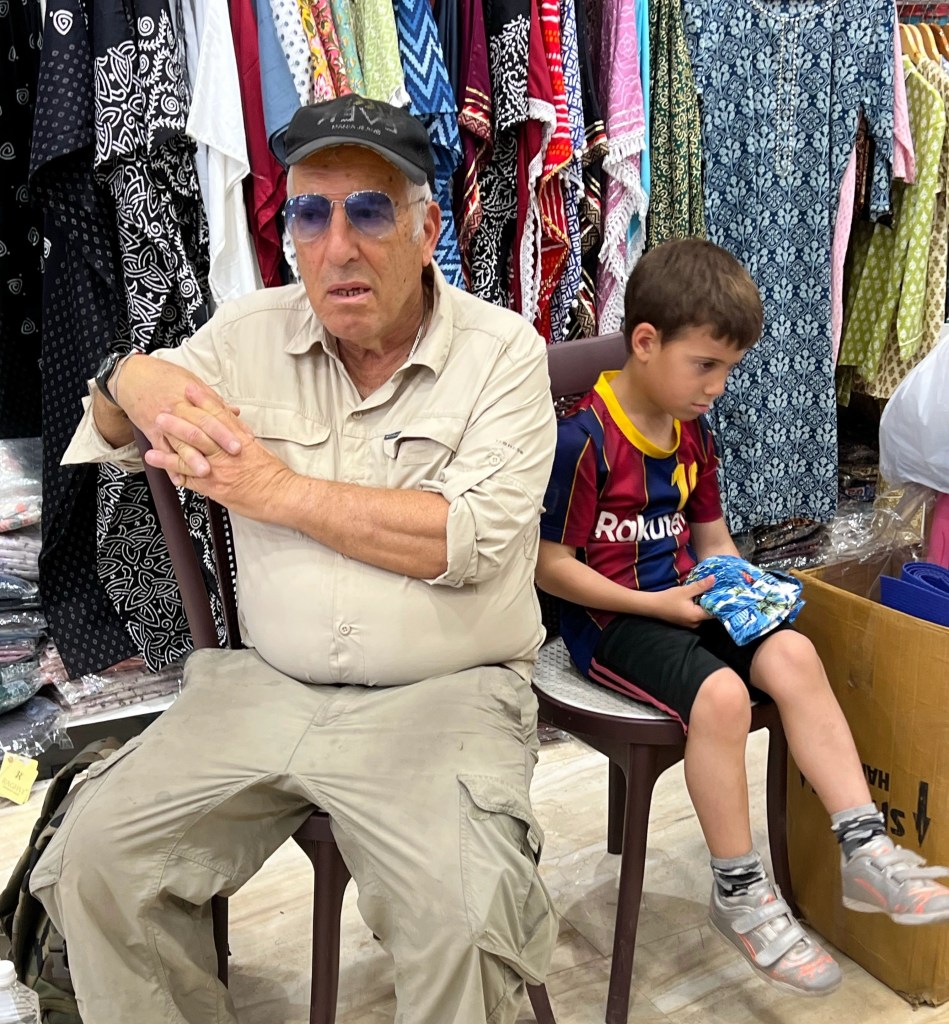
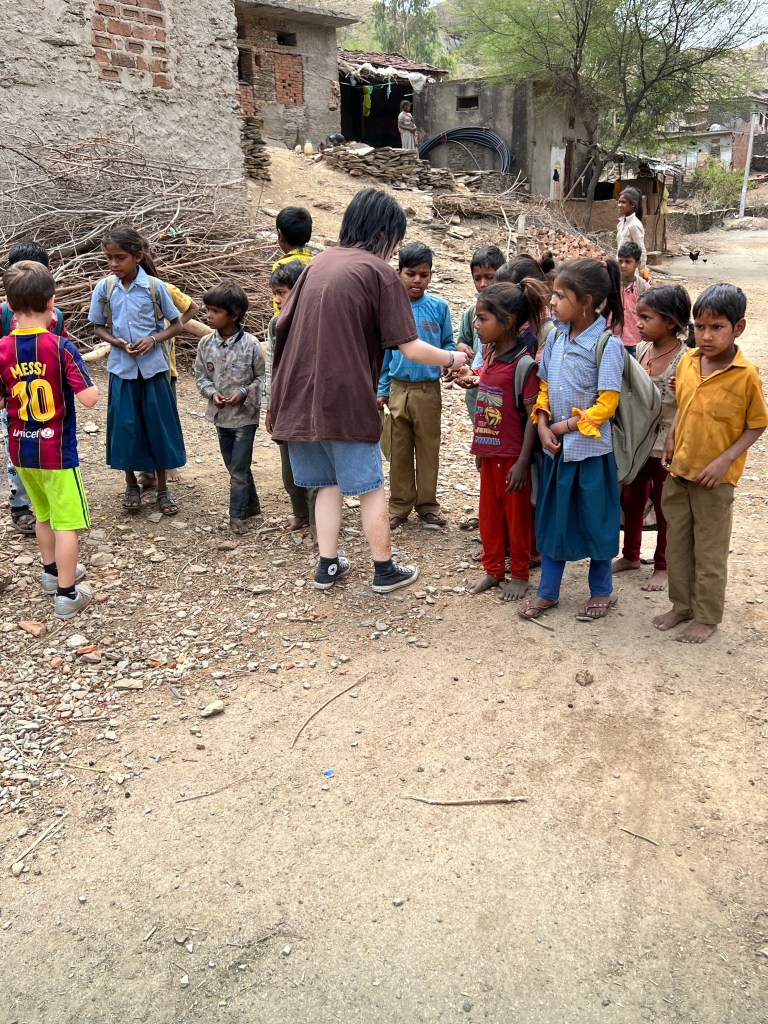
The youngest was patient (long suffering) as we shopped. He had his grandfather to hang out with. He got compensation with a long dip in the (very cold) Ganges. The oldest was happy to hand out candies to all the village children in compensation for what he defined as the day from hell (4 hours of extreme heat). The sandwich kid who has a VERY hard time making decisions was allowed all the time she needed, even when (inevitably) she decided not to decide.
There was a lot of give and take. A lot of mutually respecting personal boundaries and foibles. A lot of appreciation for our time together; even if it required taking a few deep breaths from time to time. Even when the oldest said at one point, admirably, “You know, I’m totally restraining myself from yelling at you for that very annoying comment.”



And it wasn’t only an amazing bonding experience for the grandkids.
My partner is quite religious. He observes all the rituals; keeps all the restrictions. Our kids aren’t religious and have always had a strained relationship with their father around these issues. They see him as inflexible and putting religion before his relationship with them.
He feels that because he’s “the religious one” and none of the kids observe the rituals and restrictions, if he doesn’t make a point of observing them when he’s with our kids and grandkids there won’t be any room for those observances there. No one will make sure there’s a space for him to do what he needs to do.
I see both sides and understand the behaviors but it’s mostly not my story to rewrite. I know that he puts his family above and before everything else in his life.
Of course if no one felt threatened the kids would make a respectful place for my partner’s religious observances in their homes, and he would be more flexible and make space for them not to observe while he does.
Easier said than done.
Our time in India with Tsippy and her family coincided with the Jewish holiday of Passover. Lots of restrictions and observances.
Tsippy and the grandkids were positive and respectful at the Seder and my partner was understanding and encouraging when they’d had enough and asked to be excused.
We found out which of the many Indian bread options are not made with wheat, and made the decision to eat kitniyot (legumes and rice) which are not considered “not kosher for Passover” but are, for the most part, not eaten by Ashkenazi Jews (which we are). That made it possible for us to eat with our family, and for Tsippy to say towards the end of the trip that his flexibility made her very happy and feel very embraced by him.
No words were ever more welcome.
It was two weeks of grace; of kindness, love, acceptance, and gratitude. It wasn’t without its sad moments; realizing (not for the first time) that we can’t create a bubble of perfection and ease for the people we love. But it was two weeks we’ll all remember for the bonds we made.
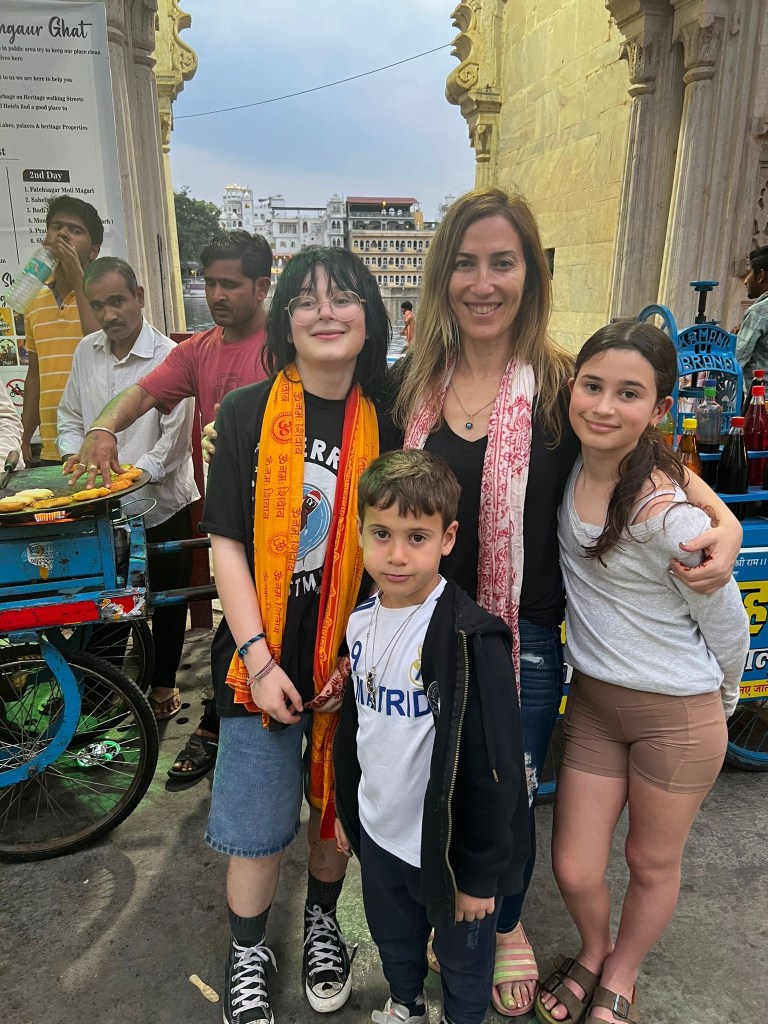
There’s talk of a trip together to the Serengeti.