Whatever happens, I’m satisfied

In Israel parents teach their children a saying very early on in life – Whatever happens, I’m satisfied. It rhymes in Hebrew and expresses a futile hope on the part of parents that it will nip complaining in the bud.

Pretty ironic since Israelis (and maybe Jews in general) are among the most, ahem, discerning (read critical, judgmental, complaining) people I’ve come across in my extensive travels. And I am one, so I’ve had plenty of experience.

On the positive side, perhaps that’s why we’re the start-up nation with more technological and medical innovation than any other place on earth. That squinting one-eyed gaze at everything around us and thinking…hmmm. I could do that better.

On the not-so-positive side, it’s a pain in the rear end to be so often surrounded by people who are almost never satisfied with the way things are. The food in the restaurant is never quite right even after an order reminiscent of Jack Nicolson in Five Easy Pieces (I’ll have omelette plain, with a chicken salad sandwich on wheat toast, no butter, no lettuce, no mayonnaise, hold the chicken). The room temperature is too cold or too hot. The teacher doesn’t pay enough attention to my kid or singles her out for special (not good) treatment.

I wasn’t feeling great the other day. Stuffed up, headache, scratchy throat, didn’t sleep well. Here I am in southern India. Home of Ayurvedic medicine. Decided to get an Ayurvedic massage. For the uninitiated, this involves total nudity and more oil than a Mediterranean diet calls for in a lifetime.

The very sweet young woman spoke no English – zero – and my Malayalam is pretty rusty. There was absolutely no possibility of any request whatsoever. None of the usual massage direction – harder, softer, higher, lower. Nada.

As I lay there swimming in oil I thought THIS is the opportunity of a lifetime to fulfill that Israeli saying – Whatever happens, I’m satisfied.

I found thoughts popping up about how I might prefer this, that, or the other thing she was doing but they disappeared as quickly as they arose. They were irrelevant given our mutual lack of communication skills.

Ultimately, after she wiped off a lot of oil and I pulled my shift over my head – this not being my first rodeo I knew that less is more is the rule when committing to a Ayurvedic massage – I showered and crawled back into my stuffed up, scratchy throated, headachy nest and realized my headache was gone, my throat a bit less scratchy, and that prickly low grade fever feeling had disappeared.

I woke up this morning with more energy than the past couple of days. Had a peaceful, flexible hour on my yoga mat, and sat down to ponder the potential of “Whatever happens, I’m satisfied.” She knew what she was doing and any direction from me would have just gotten in the way.

It’s a continual conundrum in my mind. This contentment with what is versus the striving for improvement.

What do you think?

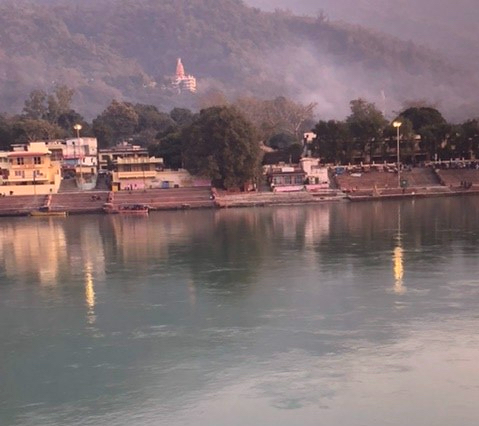
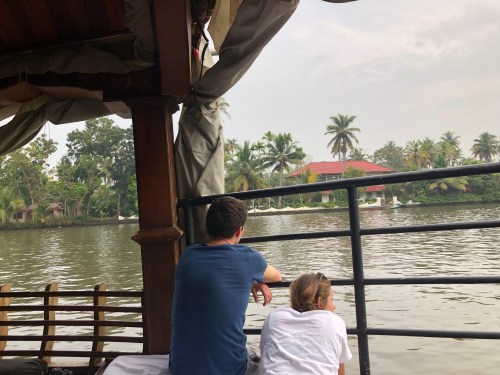
PS The above photo was taken from this very balcony three years ago. The most peaceful place on earth, Thumboly Beach


What’s the Deal about Travel?

My partner and I love to travel Have you ever had a dog who was at the door every time she heard the jangle of the car keys? That’s us.

As soon as our youngest child was old enough to be left with his brother and sisters and a caretaker we started taking at least a month of our winters to travel to far-flung places.

We’ve been to the Peruvian Amazon twice, Patagonia, the Galapagos Islands and lots of other places in South and Central America, Spain, Amsterdam, South Africa, three of the more out-of-the-way islands in the Caribbean, and to India twice for over six months altogether.

We have a friend who says he prefers to see the world from the comfort of his easy chair on his big screen tv – without the humidity, bugs, crowded trains and lack of electricity and WiFi. I get that but it makes me sigh.

Traveling by small motor boat for four hours to reach a lodge deep in the Amazon forest, feeling the weight of the heat and humidity, hearing bird calls in a night that is totally black because there’s no electricity for kilometers in every direction, coming upon thousands of ants who eat all the leaves off a huge tree in a day or two, peeling a cocoa plant to taste the bitter chocolate inside; you can’t experience any of that watching National Geographic on your tv.

But when I might answer the question of why we like to travel so much with that paragraph somehow it still leaves people puzzled.

I’m reading a book called Under the Wide and Starry Sky by Nancy Horan. It’s basically a sweet romance between the Scottish writer and poet, Robert Louis Stevenson, and his American wife, Fanny. A pleasant story; nothing earth-shattering. Very nicely written. And then I came across a few paragraphs written about Stevenson introducing Fanny to all the places in Paris that he remembers from trips there with his parents as a child. Many have been changed by war and the interceding years. They also explore new places together. Only a few paragraphs but the excitement of sharing the sights and memories and it all came together for me.

The bonding and beauty of travel.

Experiencing a new culture together; realizing how different cultures can be and, at the same time, how many commonalities there are between people, seeing animals in the wild, on their turf, living in freedom, moving out of our routine and, sometimes, out of our comfort zone – together – sharing the confusion, the hilarious mistakes, the unexpected.

We were once surprised by an elephant who stepped languidly out of the forested side of the narrow road and stood 15 feet from us calmly staring at us and munching on big leaves, before sauntering off to the other side of the road.

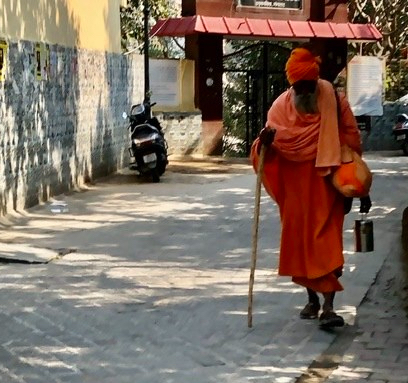
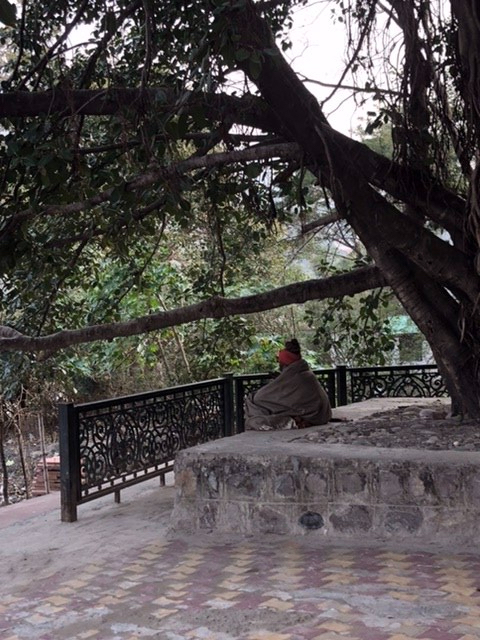
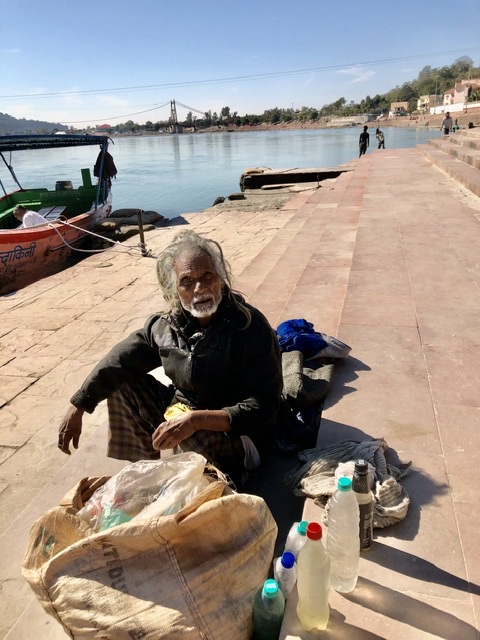
There was the exotic, elderly Sadu (spiritual street person) with whom we shared a few words every morning on our way to Hindi class. One day he told us he wouldn’t be there for a few days because he was going home to see his family. What? His family?

We traveled by train, plane, and taxi for the privilege of seeing families of some of the 3000 remaining white rhinoceroses in the world – mom, pop, and children – wandering freely in large fields.

And the bonding isn’t only between my partner or child and myself on our trips but between other travelers with whom we share a few days or a week in a place foreign and sometimes challenging for us all. Travelers tend to share intimacies their long-time friends have yet to hear. A Latvian couple, traveling with their two young children, left their kids in our care overnight while they spent a day and night with a shaman in the forest. We shared dinner with a couple from San Francisco several times over the years after becoming friends in South America.

How often is one of us reminded of something from our travels that when shared takes us both back to something amazing or funny or breathtaking or just brings a wistful smile to our lips?

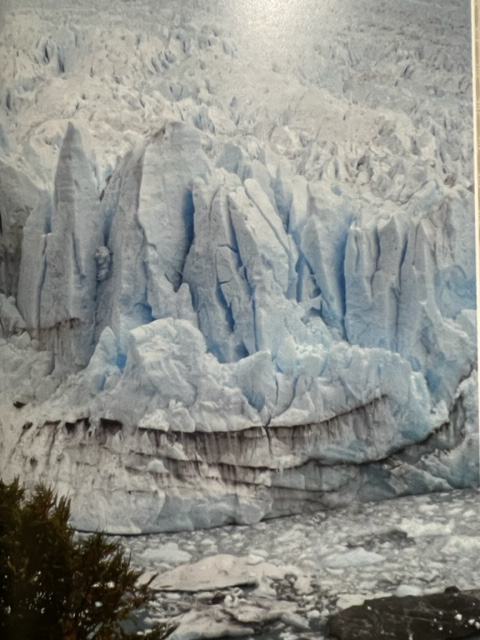
The magnificent noise and sight of a glacier calving into the water in Puerto Merino, hundreds of macaws congregated on a clay lick across from the small boat where we’ve spent an hour waiting for them to arrive, the impromptu street musicians sitting by the Laxman Bridge (where, incidentally, I was bitten by a monkey on one of our trips – ouch), the friendly guide who suggested we come home with him to meet his young family in their home in the slums of Mumbai.

The memories of the things that went “wrong’ are often the best memories of all.

My daughter and I alighting from a park employee transport in NE Thailand. The people on the transport knew no English but we understood from them that we just needed to follow the narrow asphalt trail to arrive at our bamboo hut in the cloud forest. Many kilometers later, with all our possessions on our backs, the asphalt path had become a dirt path and there was still no sign of civilization, much less our bamboo hut. At some point, after hours or walking, we had to put our backpacks down because we were giggling so hard that we couldn’t see for the tears of hilarity at our situation. No worries. We came upon the bamboo hut after about 10 kilometers and had an amazing time deep in the forest.

Driving a recommended shortcut through the mountains to reach an isolated farm, we suddenly found ourselves socked in by dense fog. I, the designated driver in countries where driving is on the left, literally photographed what I could see in front of me in my mind and closed my eyes in prayer driving each 50 feet, with a steep chasm on my right and a road not wide enough for two cars to pass each other. When we arrived, safely, at the farm, and described our hair-raising drive through the mountain pass he’d recommended, the wrinkled, crotchety old farmer wasn’t impressed. “Yep, it sometimes gets like that.”

Hill?!? Can’t see a sign thrugh dense fog, guys

I think many people don’t like to travel exactly because of all the surprises, challenges, lack of home familiarity and comfort, language issues, and that beast – the unknown. But in my opinion, all those parts make up the wonder and beauty of travel.

It’s a surprising and delicious world out there.

Close your eyes, take a deep breath, and jump into it all with both feet, and someone you love to share it with. Take a chance on being clueless, making the “wrong” decision, taking a turn by way of eeny meeny mayni mo and exploring whatever you find there.

One answer to Mary Oliver’s question of what you might do with your one precious life.

Thoughts from Corona India

Disclaimer: My thoughts are just that…MY thoughts. Based on my limited experience in India over the past week. India is a huge country and things may be very different in places other than those we’ve been. I’ve heard lots of stories from others, especially in two of my FaceBook groups specifically for people traveling in India, and they’re included in this post. Still – these thoughts only reflect my reality.

There are many wonderful things about India. That’s why so many people get bitten by the India bug and keep coming back.

Before the first trip there’s a feeling of trepidation. More so than a trip to South America or Canada. The names – of people and places – are ridiculously long and unpronounceable. They fly out of your head immediately, making it hard to figure out where to go and who to speak with. The food is spicy, fragrant (smelly), and unrecognizable, with names that don’t tell you anything. Driving is beyond conceivable. Rumored (and real) poverty and garbage everywhere doesn’t entice.

But a week into your first trip, you either want to beg to go home or you know you’ve found a place which will always occupy a part of your heart.

The country is full of color. The houses and the people’s clothing. It’s filled with people who radiate kindness in their smiles and in their eyes. They’re curious about you, open up their homes, their lives and their hearts to you. The natural wonders show the hand of God in a way that never ceases to be awe-inspiring. People are helpful beyond words. They love to help you navigate their food, their customs, and their railway system.

About a week ago, the background of positive curiosity and kindness began to change.

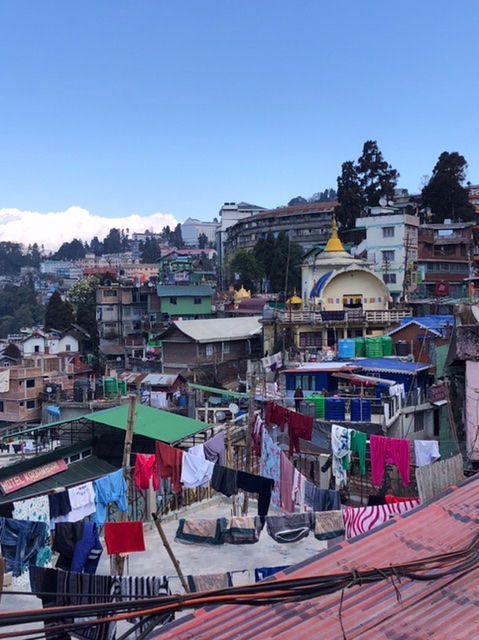
We were in a lovely hill station called Darjeeling. Neither of us knew why we wanted so much to go there – it’s way off the beaten track – but we felt a magnet drawing us there. The people there look very different from Indians in any of the other places we visited. Sort of Mongolian mixed with Chinese. The shops sell the types of mountain village items we’d seen in Mussoorie – another town in the foothills of the Himalayas but much, much further west.

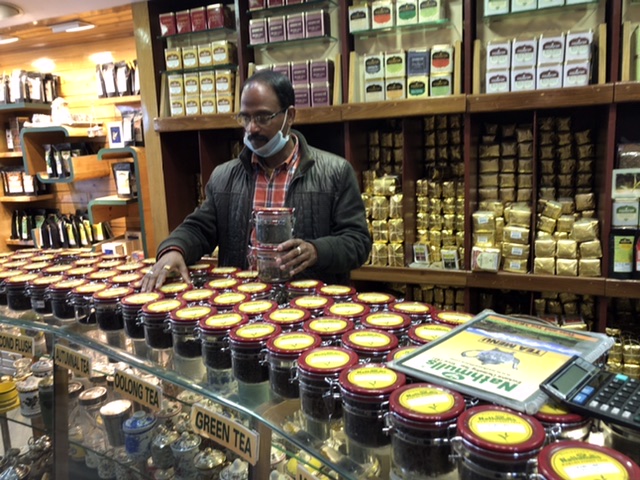
The staff at the hotel were as kind and welcoming as every other place we stayed – which is to say super kind and welcoming. We wandered up and down the steep streets daily, drank tea (Darjeeling, as its name suggests, is a center for excellent tea), took the World Heritage Toy Train, ate wonderful food, and took in the awesome mountain views daily.

And then things began to change.

We’d been following the Corona situation along with the rest of the world. Things didn’t look good but they didn’t look frightening…until they did.

One afternoon our very attentive guesthouse manager showed us something he posted in his group of hoteliers which mentioned the increasing incidence of guest houses refusing to accept foreigners and cabs refusing to allow foreigners into their cars and his own comment that this was not good behavior and he, for one, planned to welcome foreigners as Indians have always opened their hearts to them before.

Wait. What?!

Very quickly we began to see online discussions about whether or not to grab the first plane home. Some people were panicky; while others were still posting lovely photos of where they were and recommending guides in various towns. The pressure mounted until we spent at least a couple of hours every day deliberating our plans.

We were reluctant to cancel our time in Shimla, a place we both really wanted to go, and our return to Rishikesh, a place we spent three weeks and loved it so much we were planning another ten days there.

Finally, the morning we were to fly to Shimla we decided we were in denial.

We were spending so much time worrying about our decision, and asking each other if we were fiddling while Rome burned, that what were the chances we’d enjoy Shimla?

With a flurry of activity, we canceled two flights (and were refunded 1/3 of each), canceled our Airbnb in Shimla (Airbnb, btw, was wonderful and refunded the entire amount of our stay), and reserved a hotel in Delhi near the airport to be ready to hop on any plane we could find.

We had already shortened our trip to the end of March (originally we were due to fly home at the end of April), optimistically thinking it would be okay to still go to Shimla, but decided that we could smell the fires of Rome creeping closer.

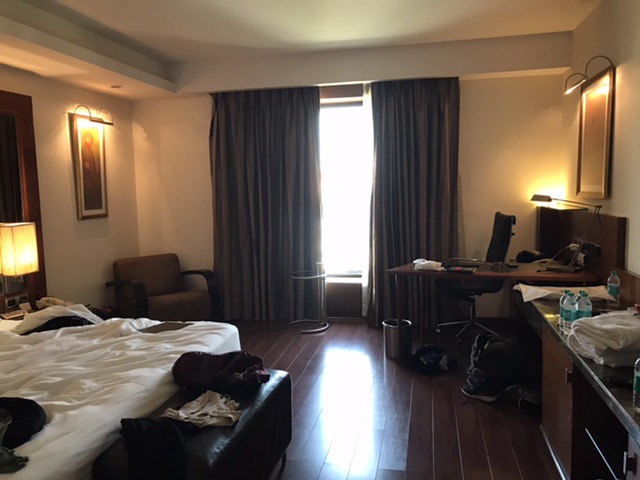
Decided to stay in a super pampering hotel (Radisson Blu Plaza) as compensation for our sadness in leaving India. Forget the fact that we’d already learned that the price of the food in these hotels is more than a 3-night stay in the level of places we mostly stayed.

The posts in my FaceBook group started changing dramatically. The panic was far more widespread. Entire regions of India closed off to foreigners. People being asked to leave their lodgings. More and more flights canceled. More and more countries closing their borders.

We’d reserved a flight on Ukraine Air only to hear the very next day that they closed their borders…and subsequently canceled our flight with no refund.

With the help of others in our FB group we found other options and eventually reserved tickets on Aeroflot (who closed their borders the next day) and Ethiopian Air (with a 17 hour layover in Addis Ababa – yikes!).

There’s no end to the getting home story yet, but we have boarding passes for Ethiopian Air for 02:40 which is 10 hours from now, so it’s looking hopeful. Aeroflot hasn’t canceled the connecting flight (Moscow to Tel Aviv), but we’ve heard rumors that some agents have said it won’t be happening. We’re not taking that chance. They’d advertised that because of Corona they’d give full refunds but now say that they won’t give any refund at all…and aren’t answering their telephones in India or Israel.

I don’t even want to start calculating the cost of all this. Money comes and money goes (as they say); and mostly goes. We want to get home, even though it means 2 weeks in quarantine in our home. Maybe that’ll be a good de-pressurizing time to gradually get back into our lives…in their new shape with this ongoing crisis.

One of the major points here, though, is the change in the social climate in India. There seems to be a natural desire to circle the wagons in face of fearful times, as can surely be seen in our crazed attempts to get home to a country which is in almost total lockdown. Many Indians have begun to fear foreigners as the source of Corona, in spite of the statistics which show that there are about 7 foreigners in India with Corona; all the others are Indians who came in contact with Indians returning from abroad. They want to distance themselves from the “other” and surround themselves with the familiar.

In our hotel there are mostly foreigners who are waiting to get a flight home. I keep imagining that this is how it must feel to be a foreign national fortressed in luxurious surroundings after a revolution, waiting to be evacuated home. The feeling is one of unpleasant desperation. The lower members of the staff are still helpful and kind; the upper levels not so much.

It’s impossible not to think of families in lockdown in small apartments, or people who are on forced leave from work (or fired) and have no income, or the elderly who are now isolated from everyone because of the danger to their health.

It’s important to keep our own experience in perspective. We’ve learned an important lesson about community, but we’re healthy and safe…and together.

When we all leave our bunkers once the danger passes, the world we find will be changed one. Entire sectors of the economy will have disappeared or altered drastically (air travel, hotels, tourism in general); debts will have incurred which may take years to tackle; styles of personal interaction will have to be rebuilt.

But as my oldest daughter said – maybe the changed world we find will be a better world.

From her mouth to God’s ear.

What is it About Rishikesh?

My partner and I spent 10 days in Rishikesh in 2016 and 3 weeks there so far on our current trip. We’ve decided to go back for another 10 days in April. We ran into many people there who told us they’ve been coming to Rishikesh every winter for the past 6 years, or 10 years or an incredible 20 years. One young person we spoke with last night (in Delhi) said he was there a month ago and finds that something about it is pulling him back.

So what is it about Rishikesh?

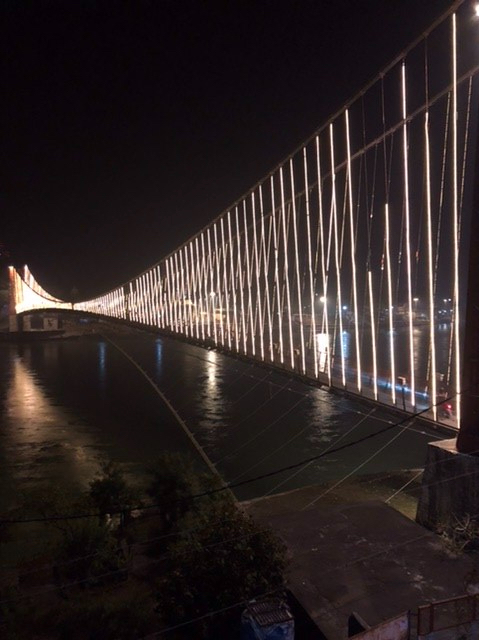
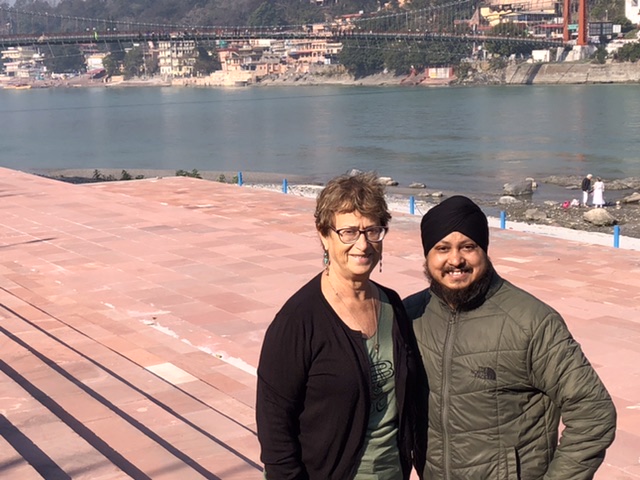
Rishikesh is a small city of a little over 100,000 people. It sits on both banks of The Ganges with two lovely suspension bridges spanning the river.

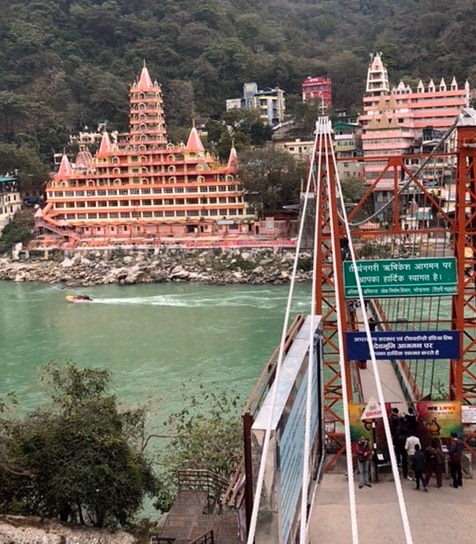
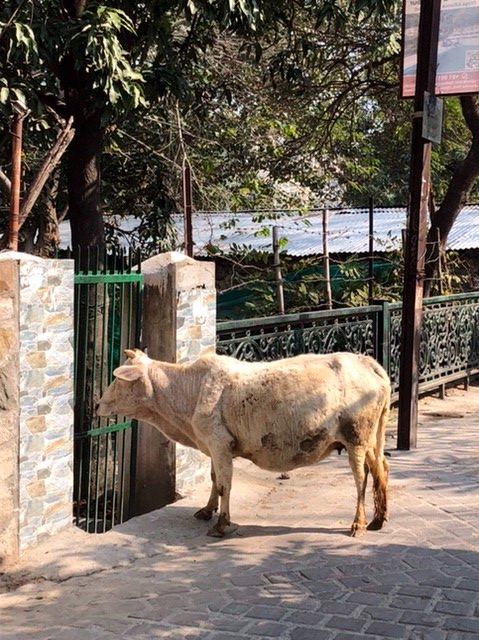
On one bridge, Ram Jhula, a few cows and monkeys maneuver between the foot traffic, motorcycles, carts, and bicycles. Things get busy on Ram by 9:30 am and don’t let up until twelve hours later, when the cacophony of horns and bicycle bells finally stops.

On the other, Laxman Jhula, they’ve recently installed barriers so there are no motorcycles or bicycles, but the monkeys there are far more numerous and aggressive (I was bitten by a monkey there in 2016).

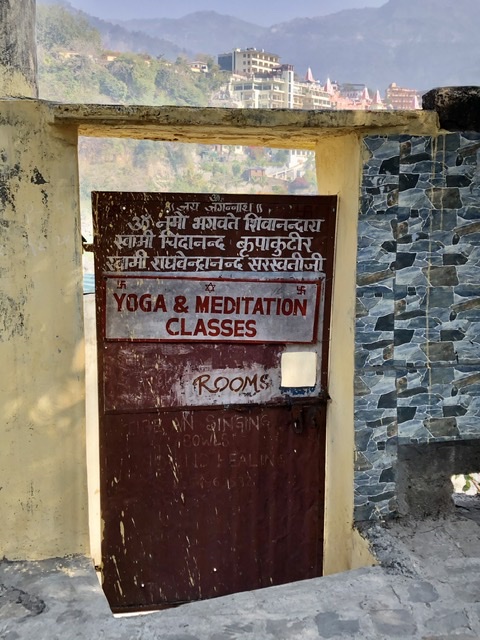
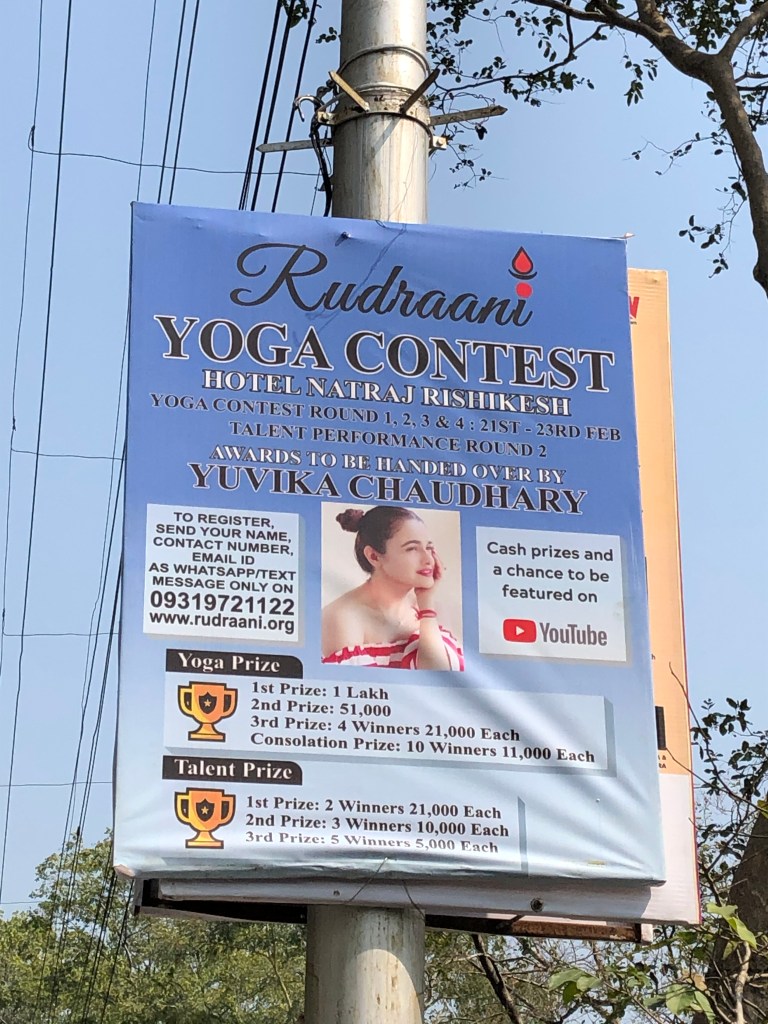
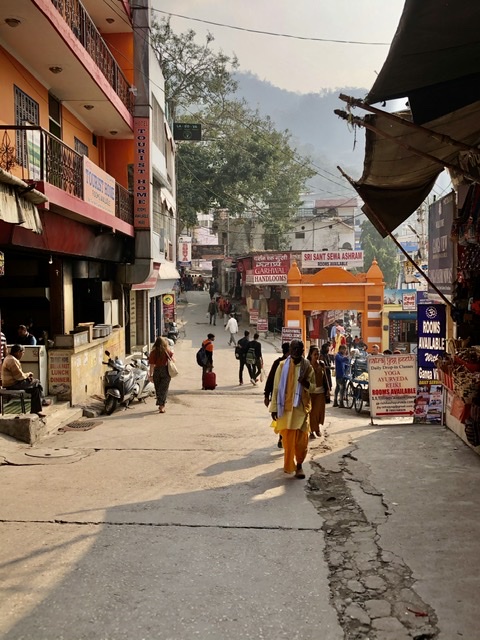
The small streets and alleyways are full of signs enticing people to take classes of all kinds – 200, 300, and 500 hour yoga certification courses, meditation classes, Hindi classes, music lessons of all kinds (harmonium, chanting, tabla, sitar to name a few), Ayurvedic massage and therapy classes – all for very low prices.

Some signs are in Hebrew, and many local people can speak a little Hebrew – a sign of how many Israelis visit and how much we make our presence felt wherever we are (for good and for bad – but mostly for good). In general, the average Indian is a big supporter of Israel, and especially of Bibi Netanyahu, expressing admiration for our strength in the face of great adversity. They enjoy the Israeli bonhomie and exuberance, responding to Israeli travelers’ warmth with readily extended friendship.

We’ve met with kindness, extraordinary customer service, warmth, and beauty all over India. We’ve been awed by the colors, the noise, the crowds of the huge cities and the striking isolation of much of the beaches, jungles, and countryside. And, still, Rishikesh inspires an attachment that’s different.

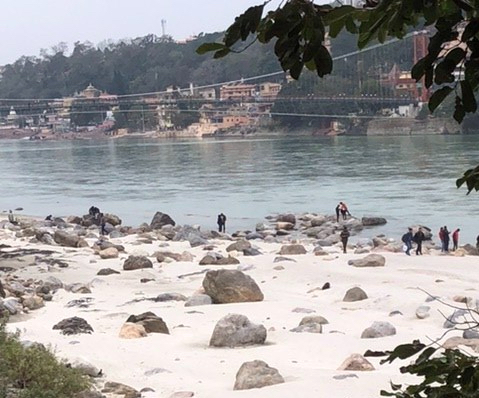
Maybe it’s The Ganges. Considered holy, originating from the matted hair of the Hindu god, Shiva, The Ganges starts in the western Himalayas, emptying finally into the Bay of Bengal. It becomes continually more polluted as it flows south and east. In Rishikesh it’s relatively clean. It also manages to be majestic and serene at the same time.

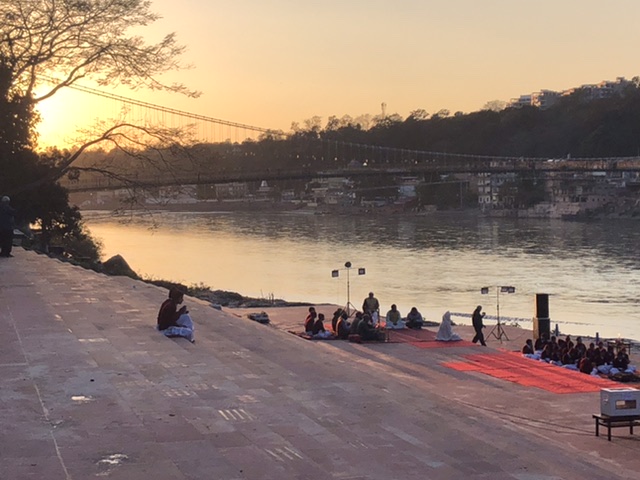
Half an hour before sunset, students and teachers from ashrams and schools congregate in their respective uniforms to sit by the river to prepare for the Puja ceremony. They chant to the music of the harmonium and the dholak drum. The ceremony culminates in fires being lit in small baskets of flowers, which are then put in the water to float downstream. As a Hindu ritual of reverence to the mother river, it is very removed from my own religion and culture. Yet the sound of the music and the sight of the small fires floating on the water are beautiful and moving. The respect for and love of the divine and nature found in India is close to my heart regardless of the different directions and beliefs that take us there.

Rishikesh is probably known best as the yoga center of India. Yoga practitioners from all over the world come to practice with Rishikesh yogis. Many of them come to take certification courses of varying lengths. From late February to mid-May it’s common to see people of all ages, speaking many different languages, walking through the streets of Rishikesh with a yoga mat slung over a shoulder.

The city is equally well-known as a spiritual center, hosting gurus such as Moojii for annual month-long retreats. Preparations begin several weeks in advance and in addition to meditation and satsang sessions for registered retreatants, a daily public talk with a Q&A session is open to all.

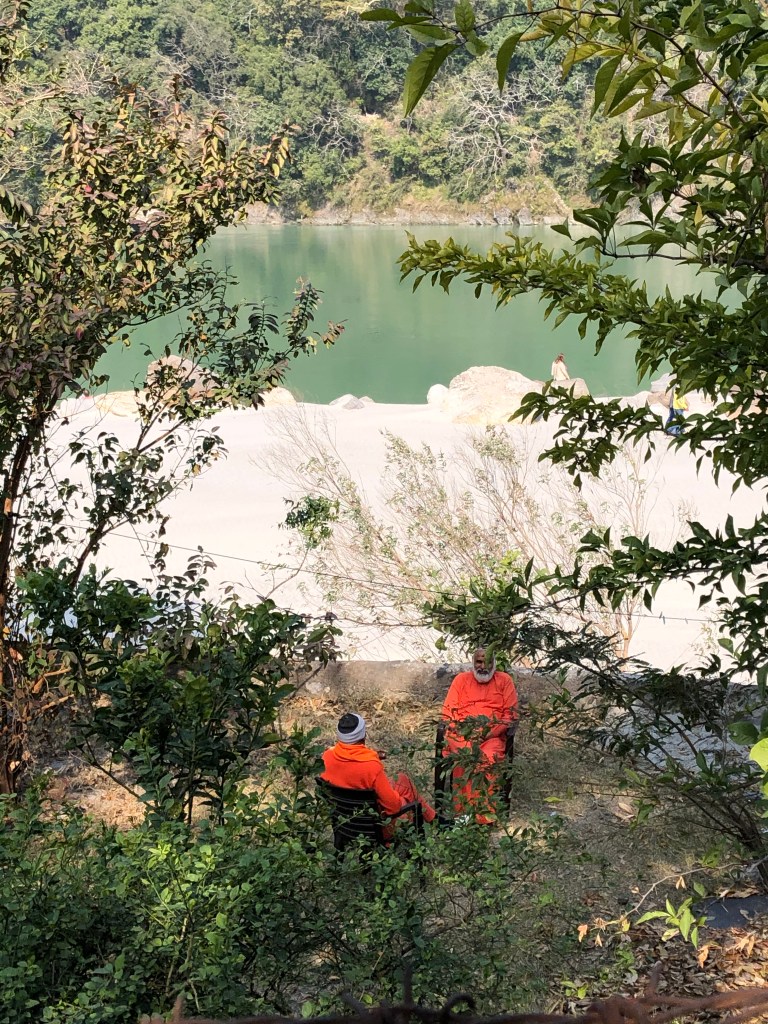
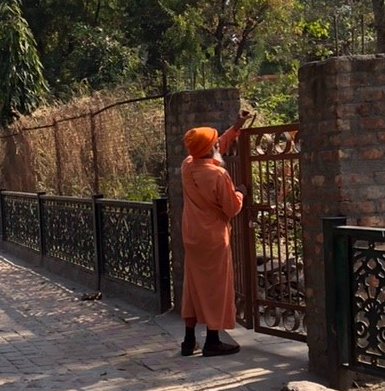
Orange is the color of Rishikesh. It is a sacred color in Hinduism, representing fire and the burning away of impurities. It’s the color worn by holy men…and many tourists. It brightens the atmosphere and, though thought garish in Western countries, is the norm in Rishikesh, just as the sound of bells – on anklets, cow collars and bags – is commonplace and cheery.

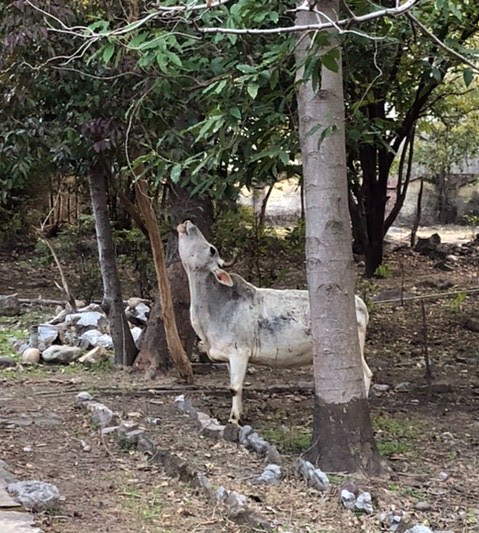
The Ganges, the chanting and music in the air, yoga, meditation, classes, cheery colors and sounds, cows and monkeys and dogs living in harmony with Sadus, spiritual seekers, tourists, shopkeepers and teachers. It’s all part of the magic of Rishikesh. But ultimately I really don’t know what it is about Rishikesh that imbues so many of us with peacefulness and calm smiles and burrows deep into our hearts.

The trick is safeguarding whatever that is and bringing it home with us.

Travel Buddies: Ephemeral Windows into Other Realities

Every single person on the planet has a story. We never even walk by the vast majority of them. Then there are those we walk by without seeing; the ones with whom we have brief encounters without really listening; those who share our lives in some way but whose hearts we rarely see into; and, if we’re very fortunate, a few with whom we exchange intimate confidences.

There’s an interesting phenomenon, a side effect of traveling, that involves the instant and inexplicably deep personal connection between people who meet, share a few hours or days, and never meet again.

A special bond is perhaps forged as a result of similar cluelessness about surroundings & cultural behaviors, or lack of routine and familiar faces. Or maybe the freedom of absolutely zero preconceived notions or previous acquaintance. Tabula rasa.

There was the family from Latvia who shared a lodge with us in the Peruvian Amazon. She confided that they’d been having marital problems & were moving to Boston where her husband had been offered a professorial position. Maybe a change of place would improve their relationship. They were traveling with their children for a year before the new academic year. He was determined to go to a shaman in the jungle to experiment with a special hallucinegen and unpleasant about her reluctance to join him. In the end, they left their young children and their passports with us – people they’d known for two days – and headed into the jungle.

In the morning they still hadn’t returned. Thankfully, they straggled back a little before noon. Hungover but healthy in body if not in mind.

And so it goes. We tell each other things we haven’t told close friends. We trust each other with confidences, money, and apparently sometimes our children. We enthusiastically join in adventures we might have had trepidations about. We listen to, tell, and enjoy vastly different opinions, occupational stories and familial foibles unselfish-consciously. We laugh a lot.

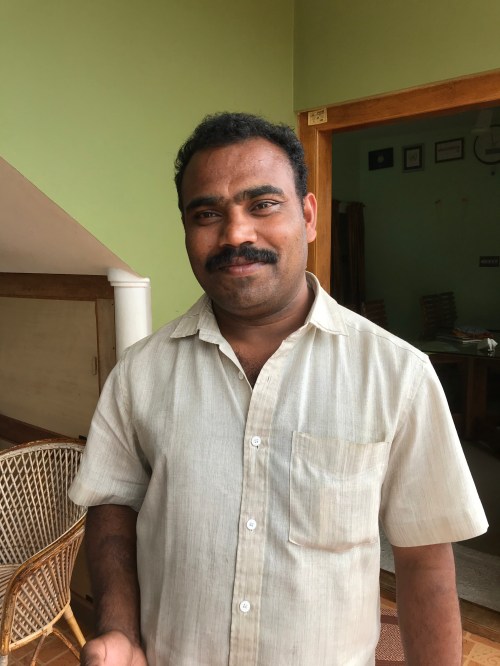
Antony (no ‘h’ in the many Antonys in Kerala, even St. Antony, and if you see an ‘h’, it’s not pronounced. There is no ‘th’ diphthong there.) was born in a very small fishing village in Kerala. Son of a fisherman, Antony loves nothing more than being out on the water in a small boat, meeting with childhood friends, hearing the waves lap the shore or crash on the rock barrier near his home. He chose a different life, though. Antony went to the military academy and spent 24 years in the military, retiring from his last position as Colonel, in charge of the anti-terrorist unit in northern India. He’s a hero in his hometown, and elsewhere. He went on to establish three businesses in the area surrounding his fishing village, employing over 90 people. It keeps him busy and away from his fishing village and the sound of The Arabian Sea. He’s not particularly interested in money for himself. His wife, Teresa, manages their bank accounts, saving what’s needed for their two children’s university educations, and gives Antony a small monthly sum to fill his motorcycle with gas and buy coffee during the day. He established businesses because he recognizes that along with employment comes dignity for his friends and neighbors. He’s also one of fifteen men who meet monthly to play games, share stories, and put money into the kitty for anyone who might be in need. His home is open to people at every level of society and they are happy to join him there for a drink or just a visit. Antony decided long ago that at sixty he’ll retire, he’s 49 now, and give himself the gift of The Arabian Sea’s whisper in his ear every day. An eclectic man, he never ceased to catch our interest or raise thought-provoking questions for discussion – philosophical as well as ‘what if’s’. We felt honored to be invited to his nearby home for dinner with his wife and son (his daughter was away at preparatory exams). It’s clear how much his son admires him and what a loving father he is (he told us that his wife keeps the kids in line because he can’t tell them ‘no’). I’m sure he was a tough officer in the military – he’d have to be – but in civilian life he has mischief and the sparkle of laughter in his eyes and a huge heart filled with kindness.

Katie’s only daughter lives in Pondicherry. Katie wasn’t much of a Mom. She was a flight attendant for Air France for her entire professional life, flying here and there and rarely at home. Her ex-husband raised their daughter. Retired now, she spends several months a year in Pondicherry, resigned to never being able to make up for lost time with her daughter, but determined to be a part of her life. A passionate woman, Katie’s views about French politics control a large part of her life. In the streets every weekend in her yellow vest, her harsh political rhetoric intrudes in almost every conversation. Macron, and Sarkozy before him, are the devil incarnate. And, yes, she does use those words. Enemies of the people, proponents of a new world order that disenfranchises everyone but the wealthy, robbers of the private benefits and income of the middle classes and the poor. Her political anger seeps into her extreme watchfulness in order to protect her from being taken advantage of, even by our sweet, accommodating host in Thekkady. We invited her to join us for a quiet day of walking in nature, surrounded by cardamom, coffee, and tea plants. Calmed by the sheer serenity of all that green, her political persuasions faded into the background, only occasionally peeking out to make a brief appearance.

Nancee was born and raised in a house in the forest, 40 kilometers southeast of the Kerala city of Munnar. She lives there still, in her house surrounded by fruit trees and passion fruit vines, and walks the kilometer to work as cook and cleaner in a three-story guesthouse/hotel owned and run by J.P. A quiet, shy woman, her smile can light up a room. When we commented on how much we loved the passion fruit that showed up on our breakfast table after we requested fresh fruit, she brought us a bag of the most delicious passion fruit I’ve ever eaten. I come from a country known for its plentiful, extraordinary fruit – picked in the morning and in the market in the afternoon. Passion fruit is one of my favorite fruits, but I’d never seen passion fruit so big, firm and tasty. She’d picked them from the vines surrounding her home, along with large cocoa pods (interesting, but not so tasty). She acquiesced graciously to my request to watch her cook our breakfast so that I would be able to replicate it at home, only a little embarrassed at first to have me looking over her shoulder. When we left, after two weeks at Arusakthi Riverdale, she approached me hesitantly, hugged me fiercely, then joined her palms at her heart and gave me a small bow. We didn’t understand each other’s verbal language but the language of our hearts was loud and clear.

Rav Yonaton wears a mixture of Indian and Hasidic clothing, along with his long payot (side curls) and large kippah (skullcap). Born and raised in London, the son of a totally secular family, he moved to Israel where he became religious, married, fathered a son, divorced, re-married, lived joyously in poverty, and shared in learning Torah with his new South African wife. Waking up to the necessity of providing for their upcoming baby, he lucked into a job as a mashkiach (kashrut supervisor) for a Baltimore company and relocated to Jewtown, India, near Fort Kochi (Kochin). His wife joined him there with their month old daughter two weeks later. Ever enthusiastic, ever sensitive to the cultural and social realities around him, Rav Yonaton has endeared himself to the largely Catholic community. A nice mural of him walking with his daughter can be seen on the wall of one of the newer, more comfortable hotels. The Hindu family across from a memorial headstone for a Kabbalist from the 17th century, located in an alleyway, helps to make sure the memorial’s burning light never goes out and joins the Rav there sometimes when he comes to daven (pray) there. We looked forward to having a bit of chicken after over a month as vegetarians, but there were only small bits of fish in the rice for Shabbat. Rav Yonaton explained to us later that he prefers to respect the poverty of his neighbors and not stand out as having the more expensive chicken on his Shabbat table. His contract will expire in the fall and he has no idea if he will be returning to unemployment, but his infectious smile precludes worry about his family’s future. As he walks us back to our hotel after havdala (the prayer to end Shabbat) at his house, he greets and is greeted by most of the passersby, each in his own language (and there are many). Loving and loved, he has no worries.

Vita and Ben are getting married in June after sharing their lives for over seven years. They’ve moved to Stamhope Hill in London, where she is a researcher for an NGO whose task is to evaluate the work of other NGOs and he is a youth worker in an adventure camp. They clearly both love their work and each other. She never wanted to marry and, in fact, when he proposed for the umpteenth time while on a romantic vacation in Japan (and was confident that she’d say ‘yes’), she told him to ‘Fxxk off!’ After a 20-minute conversation about why he wanted to marry, she was convinced, demanded he re-enact his proposal and afterwards said ‘yes’. He’s into the whole large wedding in a spectacular venue thing and she’s going along with only minor irritation in her voice as she reacts to his telling us the plan. Why marry at this point? Children are definitely on the horizon. They share a beer or two with my partner as laughter gets more and more raucous. Vita and I bond more over morning yoga on the balcony overlooking a tropical jungle. Our own temporary piece of paradise. We all swap hiking stories from beautiful Periyar National Park. They’re younger than our youngest child but age differences disappear easily among travel buddies.

Viktor is a solo traveler from Yerevan, the capital of Armenia. Somewhere in his late 40’s or early 50’s, he shares in the lives of his nephews but doesn’t see children in his future. A businessman, he’s not exactly rich but wealthy enough to help his extended family wage a decade-long (losing) battle for his ancestral home against the municipality, and pick up and come to a meditation seminar after an online Sadh Guru meditation course. Because of jet lag, he overslept and arrived two hours late to the seminar where he was turned away – ‘The Guru gave explicit instructions that no late arrivals were to be admitted.’ Offered an alternative – a 3-day retreat at the Sadhu Guru’s ashram in Coimbotore – he decided to attend and extend his time in India. That’s how we got the opportunity to make his acquaintance in Morjim Beach, Goa. We learned a lot about Armenia – he’s a super patriot. His only regret about living in Yerevan is that no one there is into spiritual meditation, or at least he hasn’t found anyone. He and my partner talked together for hours about Armenian history and politics. We visited the local fish market together and chose a big fish to have our cook fix for us one night. The cook didn’t like the look of the one we picked out so carefully, jumped on his motorcycle with it, returned it to the fish market, where he purchased a better fish for us. It was totally scrumptious and we shared a wonderful evening together with the sound of the waves and a lot of shared stories. Having fallen in love with Goa (What’s not to love? Beautiful, empty, clean sand beaches and gorgeous sunsets.), he extended his time there and we bid him adieu before heading for Kerala.

Ruth and Dieter, an Austrian couple, joined us for several days in Thekkady. We have a love of pure veg South Indian food in common that made walking down the potholed road outside our guesthouse together to The Hotel Aryas a given. They are as adventurous as we are when it comes to experimenting with new dishes and more so when it comes to eating with their hands. They went on a 20 km hike in Periyar National Park the day my partner went on a 15 km hike and I read for a couple of hours before meandering the streets and shops of Thekkady happily NOT hiking for hours and hours. They were to leave for a tree house hotel close to Ayursakthi Riverdale the next day but when they heard our praise for our amazing guide, Raj, on our 5 km nature hike earlier in the week, Dieter, a botanist finishing up his PhD, couldn’t leave without joining us on a return engagement with Raj. It meant they had to spend an extra 2500 rupee (about $40) to hire a taxi to get to their next town because they’d miss their bus, but they were game. We were happy to share the experience with them. Raj didn’t disappoint and it was so much fun watching how excited Dieter was to learn all about the flora in Periyar. Raj knows the common name and scientific name for every flower, tree and bush. Ruth, an occupational therapist, has amassed tons of botany from her many years with Dieter, as I have gained knowledge of bugs and crustaceans from my years with my partner. It was a pleasure spending time with such a like-minded couple, in spite of their being Austrian, barely thirty years old, and being in India for the first time.

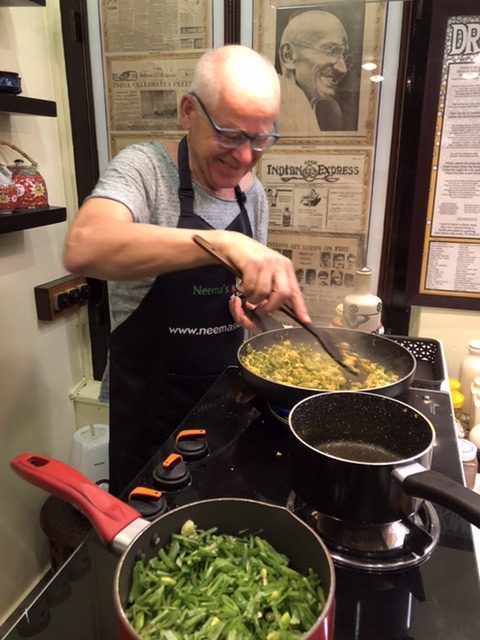
Neema taught me to cook South Indian dishes, including the masala dosa my partner loves so much. More importantly, she and her husband, Prasad, spoke to us for many pleasant hours about their India, their family, and their experience working with many tourists. A soft-spoken, gentle soul, Prasad actually worked for many years as the captain of a commercial line of ships. Neema spent her first five years of marriage (an arranged marriage, of course) traveling along with him, visiting ports all over the world, even after their daughter, Olivia, was born. It was a special privilege only the captain’s wife enjoyed. Once Olivia was a bit older, they settled down in Neema’s parents’ historical landmark home in Wypeen Island, just a short ferry ride away from Fort Kochi (Kochin). Neema’s parents live in the house as well, though we never caught sight of them. Prasad is well-read, andknowledgeable in many areas including history, Indian and world politics, world geography, ichthyology, a bit of botany, and many languages. As Neema taught me to cook, Prasad and my partner kept each other entertained. Prasad was the one to open up the, formerly unknown to us, history of Jews further north in Kerala. After cooking class, Neema put her feet up and we chatted about being mothers of independent, strong-minded young women, building a business which relies heavily on customer service, the trials & tribulations of developing and maintaining a social media presence, remembering to give back to the community, and, of course, where to shop for clothes and gifts close by for good prices and quality.

Raj Kumar is a member of the indigenous mountain tribe called the Munnan. To this day they live in small villages in the mountains with a king and village elders. When outsiders approach one of the villages, an elder meets them outside the borders of the village to decide whether or not to allow them to enter. The Munnan have control over Periyar National Park, though it’s technically a government park. The Munnan have always had control, considering it their tribal land. Of the the 357 square mile park only 118 square miles are accessible to tourists, in order to properly conserve the fauna and flora. As a result, elephant herds live in their natural age-old way, goddesses of their territory, are infrequently sighted, and make it clear with threatening noises and agitated behavior that they should never be approached from less than 100-150 meters. The park rangers are all Munnan. They guide small groups on nature hikes from 5-18 kilometers and carry out night patrols to be sure that poachers cannot harm the animals or protected flora, including sandalwood and mahogany trees. Raj Kumar was randomly selected to guide us on a 5 km hike. As we waited for a British couple, Peter and Sara, to join us, their hotel agent having asked if we agreed to add them to our private hike, Raj began to describe the park to us. We were immediately impressed by his knowledge, English, and ability to field queries. As we watched him pull the raft to shore for us to cross the small lake, he suddenly dropped the rope, patted me on the shoulder and said, excitedly, ‘Come! Come!’ He took off up a small hill and we took off after him. Once we hit the peak, our eyes followed his pointing hand across the water where a mama elephant and her baby were grazing. A beautiful sight that his sharp ears, hearing the older elephant cooing to the younger, made possible. We were to learn to trust his ears, eyes and instincts, which directed us to the huge Malabar Squirrel, two glorious Hornbill birds (who took off in flight and flew overhead, exhibiting their full colors and shapes), beautiful butterflies of many different colors, caterpillars of all sizes and monkeys high up in the branches (before they began throwing things at us). There was not a common name or scientific name of any flower, bush, or tree that he didn’t know and recite easily. He was happy to allow us to sit silently, without moving, for five minutes, at my partner’s request, in order to hear the increased sounds of forest birdsong and the noises of animals in the trees once their wariness disappears – a moving experience to try if you never have – but hold out for 20 minutes! My partner, a water biologist and ecologist with a PhD, and Raj, an autodidactic naturalist, found kindred souls in each other, swapping facts and vignettes from nature. Raj proudly told us, neither modestly nor arrogantly, that, though it was commonly believed that the jackal lived in Periyar, it had never been proven until he took a photo, at his own peril, after stalking a jackal for many hours. We arranged a second hike with him two days later and, had we stayed, would have been happy to go out with him a third and fourth time. There just seems to be no limit to the changes in the forest from day to day or to his understanding of nature’s glory.

Only a third of the way into our 6 month trip in India, I could add many more travel buddies to this already-too-lengthy post:

Abdul, our host, our twins’ age, who graciously took us on the worst road we’ve been on in India so we could have the day we wanted walking through quiet fields, unharrassed by tour guides or crowds, and was nonplussed when something important fell down from under his car after one particularly deep hole in the road. He found a piece of cardboard in the trunk and a tshirt and tied the cardboard under the car before happily climbing back into the driver’s seat and taking off. He explained one morning, with a chagrined smile, that his guesthouse, motorcycle, and junky car all belong to the bank – loans he hopes to pay off someday. A familiar cross-cultural story.

J.P., another host, perplexed that most days we just hung around the river behind the guesthouse or took the 8 km walk across the bridge, circling back through the small village. He never stopped asking eagerly if we wanted a tuk-tuk to go into Munnar each morning (we went 3 times during our two weeks there). He loved that he and I share a daily yoga practice and smiled with a small bow each time I came back in, though his own daily practice was long over (he does a half hour at 5 a.m.). When we left he gave us a brightly colored red and gold something or other (??) and said we would always be family. He’s since sent Whatsapp messages asking how our trip’s going and then wishing us a happy 2020.

Kavarappa maintains an art gallery on the third floor of his home on a sleepy residential road in Mysore. We found the Bharani Art Gallery online, hired a tuk-tuk to take us there, found the gate locked and no one around. Our driver called the number we found online and Kavarappa opened the gate and then the gallery for us. Some of the art was fascinating. My partner is contemplating buying a piece of Vedic art by a Finnish painter. Kavarappa then invited us into his home for coffee. The conversation was great and quite informative. He is Coorgi (Coorg is about 130 km from Mysore) and still has a coffee and pepper plantation there which, sadly, his two children will not take over from him. The way of things in India today.

The list goes on, but this post doesn’t.

One common denominator of travel buddy relationships is the desire of human beings to be really seen by other human beings. And it may be that reason that relationships are telescoped while traveling – because of their necessarily ephemeral nature.

The very sweet young waiter, who served us dinner for 13 nights, spoke almost no English but summed it up far better than I can explain it when he said shyly, as we departed the rooftop restaurant for the last time,

“Please remember me.”


Glorious India

The plan to spend an extended amount of time in India was conceived so long ago that trying to remember when, how and who initiated the thought leads mostly to fractured fairy tales.

I think it was my husband’s idea to change his life radically to serve the same function as cleaning your palate between courses. He was looking forward to total retirement and fantasized about a period of time to wipe the slate clean and begin to formulate a next stage in his life.

Life has a way of whisking away parts of our ideas and morphing them into other versions of themselves. Total retirement, when contemplated in the reality of the altering of lifestyle that financial change would necessitate, has been postponed for another few years and transformed into six months working and six months…not working. (Still no definition as to what that might entail.)

But that might be exactly what led us to sitting around the pool at The Fern Spazio Resort and Spa – which sounds far fancier than it is; though it’s very nice – in Arjuna, North Goa, India. It might be kismet, karma, or just one of life’s serendipitous events. It’s feeling a lot like one of those proverbial gift horses in whose mouths we’ve been forewarned not to look too carefully

Five days in bustling Mumba; a city with a population of an unbelievable 22 million people. Mumbai is a city of contrast. Extreme wealth in its commercial center and extreme poverty with literally millions living in the slums with which we became familiar in Slum Dog Millionaire (which, by the way, is quoted extensively by guides in Mumbai.)

We arrived during the Diwali Festival – five days of vacation celebrating the removal of darkness and ignorance; The Festival of Lights (not to be confused with Chanukah, though there are similarities). The fireworks were on Sunday so we missed them but we didn’t miss the crowds of Indians on holiday in Mumbai.

As we approached The Gateway of India, lovely architecture reminding us of the not-so-lovely period of British Rule when in 1911 the stone gateway was built for the king and queen’s visit, we saw a mass of humanity second only to the million people we joined at Woodstock. Dripping sweat in the hot Mumbai humidity, I could only smile at the outlandish possibility of inserting myself into that press of people. It seemed so ludicrous.

My children pointed out to me long ago that the only possibility of not having to stand in a long line for activities for kids is choosing really boring activities. I take my grandchildren into lines and crowds I never would’ve taken my children. The funny thing is that when I mentioned that recently to one of my kids she said she was happy that I take her kids to those crowded fun places because she’s not willing to.

A sweet young man was kind enough to show us the right line to be in to get onto the ferry to Elephant Island to see the caves, and seemed to be saying that the tickets would sort themselves out. The long but orderly snake line looked daunting but he assured us it would only take half an hour. Google advised getting on the 2 o’clock ferry so we were standing in the hottest sun Mumbai could serve up and it was plenty hot. At some point a man came and sold us tickets and, lo and behold, in 40 minutes we were on a ferry. The promised 45 minute ride stretched out to an hour and a half, but the breeze was welcome.

Elephant Island has no elephants and neither do the elephant caves. It seems that once upon a time there were two big statues of elephants at the entrance to the island. The British, as is their wont, stole them and took them wherever they fancied, but the name stuck.

We took a local guide, Harish, one of the 1200 inhabitants of the island, and made our way up 125 narrow stone steps, four and five abreast, with people packed in front of and behind us. Along both sides of the stairs was a market of trinkets, including wonderful Tibetan singing bowls for a tenth the price we pay for them in Israel. Carried along by the crowd, we ignored the vendors’ pleas.

The Portuguese (who also ruled here for a little more than 500 years) tried to destroy the elephant caves but the beautiful carvings of the nine images of Shiva as well as the caves themselves are made of basalt and remained mostly impervious to the attempts. The carvings are beautiful and their stories well told.

We went on a private car tour of Mumbai and a walking tour of the markets. The sights were interesting but the guides were more so. We saw the in/famous Mumbai laundry, got a peek at the slums surrounding it, and were fascinated by the Gandhi Museum.

Our driver/guide told us a tragic story that may or may not have been partially or totally true. He said his father died when he was 12 and his mother ran off. He slept on the streets or in temples and learned English from an old man who read the newspaper with him to teach him. He married and rents a tiny place in the slums for himself, his wife and their two children. We said hello to his two, very sweet, children on his phone.

There’s really no need for a guide in the Mumbai markets but our pleasant 25 year old guide gave us many tips for bargaining that have come in very handy as well as sharing his insights into Indian culture. He yearns to move out of his parents’ home and live independently, mostly to indulge his desire to have unbridled fun. He and his parents disagree about what he should be doing to prepare for his future as well as what his future should look like. (Sounds like young people here, or at least this one, have a lot in common with their age group in the States).

We both took to pure vegetarian food immediately again, as if we hadn’t been carnivores for the past 3 years since leaving India. We found our special place to eat dinner and ate there most evenings. At home I make an effort to get to 6000 steps a day; here I get to 11,000 and even 18,000 without trying. At home I’ve developed tricks to remain hydrated; here I swig liters of water constantly.

Feeling healthy and happy and relaxed after a week in Northern Goa. Met up with a wonderful yogi/teacher on the beach.

But that will wait for my next post.

Namaste