Whatever happens, I’m satisfied

In Israel parents teach their children a saying very early on in life – Whatever happens, I’m satisfied. It rhymes in Hebrew and expresses a futile hope on the part of parents that it will nip complaining in the bud.
Pretty ironic since Israelis (and maybe Jews in general) are among the most, ahem, discerning (read critical, judgmental, complaining) people I’ve come across in my extensive travels. And I am one, so I’ve had plenty of experience.

On the positive side, perhaps that’s why we’re the start-up nation with more technological and medical innovation than any other place on earth. That squinting one-eyed gaze at everything around us and thinking…hmmm. I could do that better.

On the not-so-positive side, it’s a pain in the rear end to be so often surrounded by people who are almost never satisfied with the way things are. The food in the restaurant is never quite right even after an order reminiscent of Jack Nicolson in Five Easy Pieces (I’ll have omelette plain, with a chicken salad sandwich on wheat toast, no butter, no lettuce, no mayonnaise, hold the chicken). The room temperature is too cold or too hot. The teacher doesn’t pay enough attention to my kid or singles her out for special (not good) treatment.

I wasn’t feeling great the other day. Stuffed up, headache, scratchy throat, didn’t sleep well. Here I am in southern India. Home of Ayurvedic medicine. Decided to get an Ayurvedic massage. For the uninitiated, this involves total nudity and more oil than a Mediterranean diet calls for in a lifetime.

The very sweet young woman spoke no English – zero – and my Malayalam is pretty rusty. There was absolutely no possibility of any request whatsoever. None of the usual massage direction – harder, softer, higher, lower. Nada.

As I lay there swimming in oil I thought THIS is the opportunity of a lifetime to fulfill that Israeli saying – Whatever happens, I’m satisfied.

I found thoughts popping up about how I might prefer this, that, or the other thing she was doing but they disappeared as quickly as they arose. They were irrelevant given our mutual lack of communication skills.

Ultimately, after she wiped off a lot of oil and I pulled my shift over my head – this not being my first rodeo I knew that less is more is the rule when committing to a Ayurvedic massage – I showered and crawled back into my stuffed up, scratchy throated, headachy nest and realized my headache was gone, my throat a bit less scratchy, and that prickly low grade fever feeling had disappeared.

I woke up this morning with more energy than the past couple of days. Had a peaceful, flexible hour on my yoga mat, and sat down to ponder the potential of “Whatever happens, I’m satisfied.” She knew what she was doing and any direction from me would have just gotten in the way.

It’s a continual conundrum in my mind. This contentment with what is versus the striving for improvement.

What do you think?

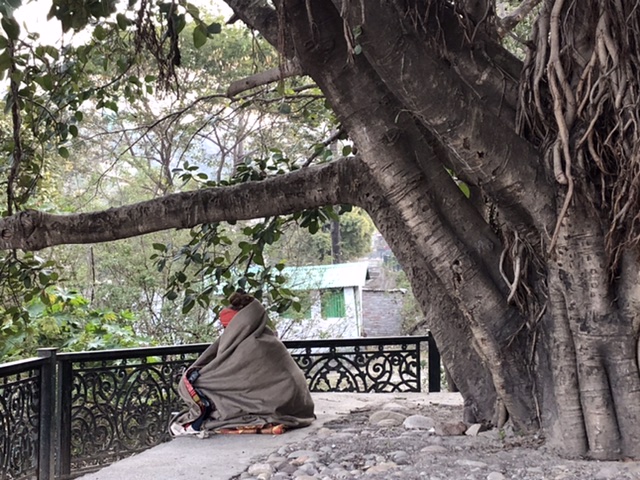
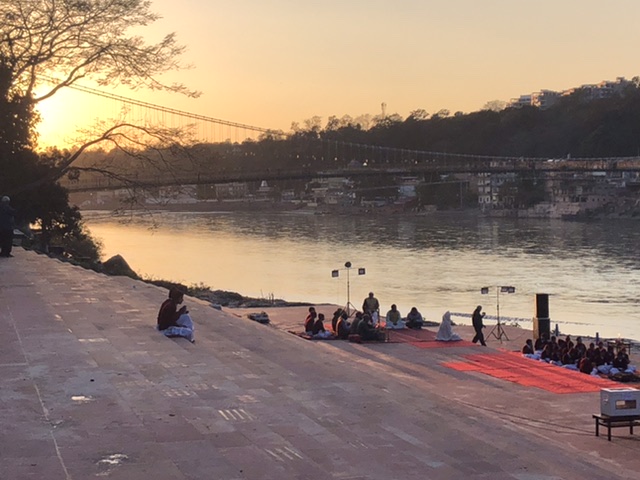
PS The above photo was taken from this very balcony three years ago. The most peaceful place on earth, Thumboly Beach


What’s the Deal about Travel?

My partner and I love to travel Have you ever had a dog who was at the door every time she heard the jangle of the car keys? That’s us.

As soon as our youngest child was old enough to be left with his brother and sisters and a caretaker we started taking at least a month of our winters to travel to far-flung places.

We’ve been to the Peruvian Amazon twice, Patagonia, the Galapagos Islands and lots of other places in South and Central America, Spain, Amsterdam, South Africa, three of the more out-of-the-way islands in the Caribbean, and to India twice for over six months altogether.

We have a friend who says he prefers to see the world from the comfort of his easy chair on his big screen tv – without the humidity, bugs, crowded trains and lack of electricity and WiFi. I get that but it makes me sigh.

Traveling by small motor boat for four hours to reach a lodge deep in the Amazon forest, feeling the weight of the heat and humidity, hearing bird calls in a night that is totally black because there’s no electricity for kilometers in every direction, coming upon thousands of ants who eat all the leaves off a huge tree in a day or two, peeling a cocoa plant to taste the bitter chocolate inside; you can’t experience any of that watching National Geographic on your tv.

But when I might answer the question of why we like to travel so much with that paragraph somehow it still leaves people puzzled.

I’m reading a book called Under the Wide and Starry Sky by Nancy Horan. It’s basically a sweet romance between the Scottish writer and poet, Robert Louis Stevenson, and his American wife, Fanny. A pleasant story; nothing earth-shattering. Very nicely written. And then I came across a few paragraphs written about Stevenson introducing Fanny to all the places in Paris that he remembers from trips there with his parents as a child. Many have been changed by war and the interceding years. They also explore new places together. Only a few paragraphs but the excitement of sharing the sights and memories and it all came together for me.

The bonding and beauty of travel.

Experiencing a new culture together; realizing how different cultures can be and, at the same time, how many commonalities there are between people, seeing animals in the wild, on their turf, living in freedom, moving out of our routine and, sometimes, out of our comfort zone – together – sharing the confusion, the hilarious mistakes, the unexpected.

We were once surprised by an elephant who stepped languidly out of the forested side of the narrow road and stood 15 feet from us calmly staring at us and munching on big leaves, before sauntering off to the other side of the road.

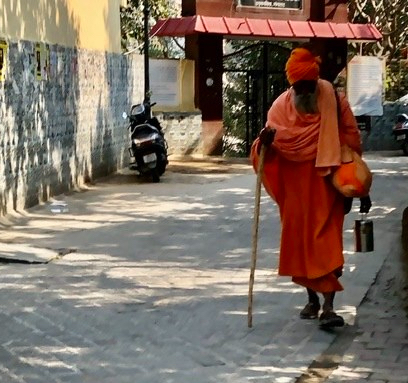
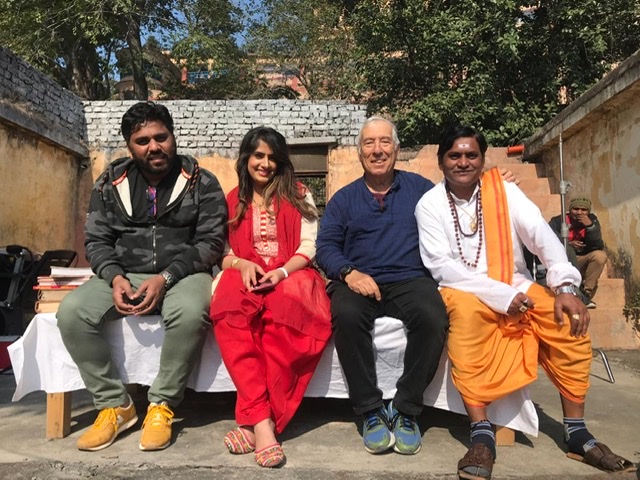
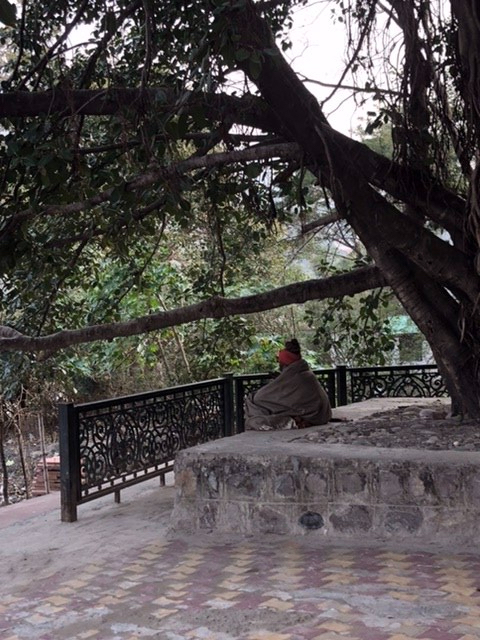
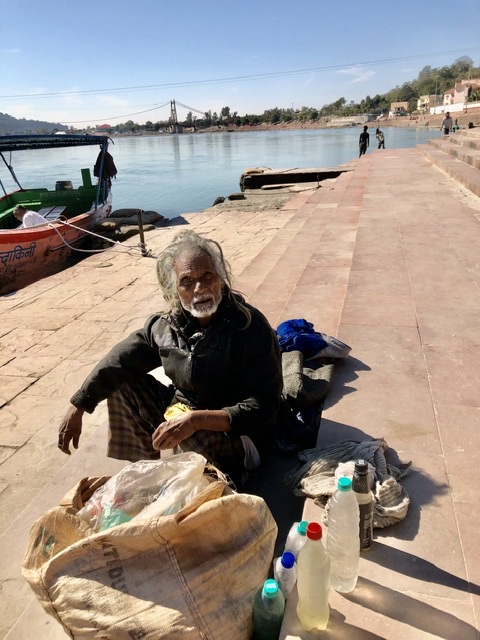
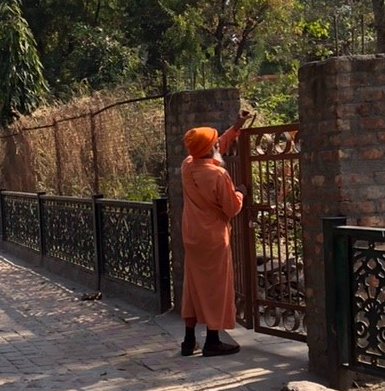
There was the exotic, elderly Sadu (spiritual street person) with whom we shared a few words every morning on our way to Hindi class. One day he told us he wouldn’t be there for a few days because he was going home to see his family. What? His family?

We traveled by train, plane, and taxi for the privilege of seeing families of some of the 3000 remaining white rhinoceroses in the world – mom, pop, and children – wandering freely in large fields.

And the bonding isn’t only between my partner or child and myself on our trips but between other travelers with whom we share a few days or a week in a place foreign and sometimes challenging for us all. Travelers tend to share intimacies their long-time friends have yet to hear. A Latvian couple, traveling with their two young children, left their kids in our care overnight while they spent a day and night with a shaman in the forest. We shared dinner with a couple from San Francisco several times over the years after becoming friends in South America.

How often is one of us reminded of something from our travels that when shared takes us both back to something amazing or funny or breathtaking or just brings a wistful smile to our lips?

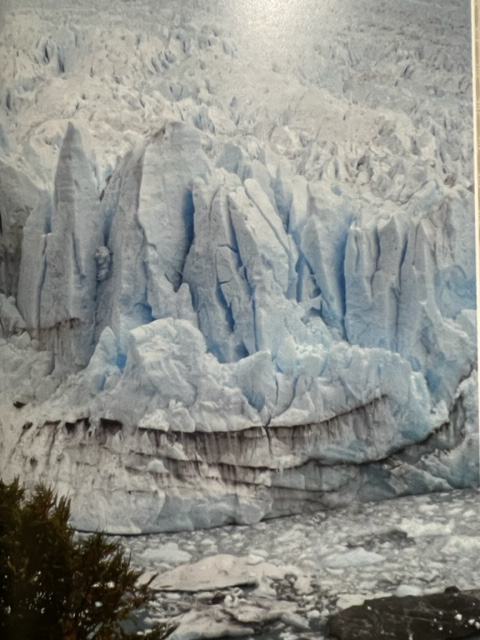
The magnificent noise and sight of a glacier calving into the water in Puerto Merino, hundreds of macaws congregated on a clay lick across from the small boat where we’ve spent an hour waiting for them to arrive, the impromptu street musicians sitting by the Laxman Bridge (where, incidentally, I was bitten by a monkey on one of our trips – ouch), the friendly guide who suggested we come home with him to meet his young family in their home in the slums of Mumbai.

The memories of the things that went “wrong’ are often the best memories of all.

My daughter and I alighting from a park employee transport in NE Thailand. The people on the transport knew no English but we understood from them that we just needed to follow the narrow asphalt trail to arrive at our bamboo hut in the cloud forest. Many kilometers later, with all our possessions on our backs, the asphalt path had become a dirt path and there was still no sign of civilization, much less our bamboo hut. At some point, after hours or walking, we had to put our backpacks down because we were giggling so hard that we couldn’t see for the tears of hilarity at our situation. No worries. We came upon the bamboo hut after about 10 kilometers and had an amazing time deep in the forest.

Driving a recommended shortcut through the mountains to reach an isolated farm, we suddenly found ourselves socked in by dense fog. I, the designated driver in countries where driving is on the left, literally photographed what I could see in front of me in my mind and closed my eyes in prayer driving each 50 feet, with a steep chasm on my right and a road not wide enough for two cars to pass each other. When we arrived, safely, at the farm, and described our hair-raising drive through the mountain pass he’d recommended, the wrinkled, crotchety old farmer wasn’t impressed. “Yep, it sometimes gets like that.”

Hill?!? Can’t see a sign thrugh dense fog, guys

I think many people don’t like to travel exactly because of all the surprises, challenges, lack of home familiarity and comfort, language issues, and that beast – the unknown. But in my opinion, all those parts make up the wonder and beauty of travel.

It’s a surprising and delicious world out there.

Close your eyes, take a deep breath, and jump into it all with both feet, and someone you love to share it with. Take a chance on being clueless, making the “wrong” decision, taking a turn by way of eeny meeny mayni mo and exploring whatever you find there.

One answer to Mary Oliver’s question of what you might do with your one precious life.

Mediating with Being Old

I just completed a 67-hour mediation course. The moderator/lecturer, Golan, was a charismatic guy in his early 50’s with vast experience and captivating stories about mediations he facilitated over the years. I wondered at the outset if I would be able to sit for five hours straight each Monday night without fidgeting and wishing I were elsewhere. Golan made the time fly. I didn’t have to do yogic breathing even once during the 10-week course.

One of the crucial concepts in mediation is the ability to differentiate the needs of the people in conflict as opposed to their positions, or presenting issues.

Eleven neighbors have entered into the mediation process regarding the parking lot between their houses where there are seven legitimate parking spaces. There are often clashes between people parked in legitimate spaces and people who park along the side of the lot making it difficult for those parked in legitimate spaces to extricate their cars. The eleven families have, between them, fifteen cars. As it turns out, two families do not have a car, one family has a driveway in which they park one of their two cars, one family has a driveway in which they park both their cars, one family does not park their two cars in the lot, and three families park only one of their two cars in the lot. One family parks two cars in the lot. Three families park one car each in the parking lot.

Have you seen this problem on a math test?

In case math wasn’t your thing, the eleven neighbors want to park nine vehicles in seven legitimate spaces.

Looks like a pretty cut-and-dry issue. Until it becomes clear that less than 50 yards away there’s a large parking lot that is virtually unused. So what are the actual needs of the people involved that must be addressed before the group can come to an amenable resolution for all involved? After all, they’re neighbors in a small community who have a common interest – living in harmony with one another.

Here’s a tip – it has more to do with the process of solving the parking problem than who parks where.

But what does this have to do with meditating with old age? And how can one meditate with old age anyway? It is what it is…isn’t it?

About seven weeks into my ten week course I found a small hole-in-the-wall Indian restaurant with a few tables outside on the cobblestone pathway. My partner and I, both Indophiles and aficionados of Indian food, were happy to find this place. The table was a bit unsteady on the cobblestones but we made do and had a great meal with lots of nostalgia. Getting up after the meal I rested my hand on the table for stability – stability from an unstable table? You can guess the results.

The cook stayed by my side until the ambulance arrived. The paramedics were extremely gentle and pleasant, in spite of the fact that they looked young enough to be in high school. My neighbor was one of the nurses in the orthopedic emergency room. The doctor was thorough and helpful. All in all, other than two weeks of being almost totally incapacitated with back pain, it was a smooth, fortuitous experience. It could’ve been so much worse.

Well-meaning friends encouraged me to sue the restaurant – never a possibility in my mind. Being in the middle of a mediation course, however, I did think about asking the restaurant owners if they would be interested into entering into the mediation process with me.

First I wanted to take myself through the mediation process of figuring out the difference between my presenting issues and my needs.

Issue #1: I was out approximately $700 for physical therapy, my deductible for the ambulance, and having missed teaching three classes. Not a huge sum but money.

Issue 2: I wanted to be reassured that the restaurant would correct for the instability of their tables on the cobblestones.

Need #1: I wanted to be seen as a person – not a fragile elderly person who lost her footing as a result of being old and unstable on my feet

Need #2: I wanted, as part of #1, for the restaurant to take partial responsibility for the objective elements of neglect which led to the injury.

Are you starting to get the point?

From the caring cook to the empathetic paramedics to the informative orthopedist in the hospital I thought I recognized that they didn’t really see me. They didn’t see a woman who teaches yoga eight times a week or drives six hours a week to visit with grandchildren, or who goes bowling, plays miniature golf, and spends months at a time in off-the-beaten-track places. For the first time in my life, I felt the invisibility that many elderly women describe. I felt small and irrelevant and “other”.

When I wrote to Golan that I’d only be coming to the simulation part of class because I’d had an accident, he had one kind of reaction. When I came to the simulation and mentioned that I was injured in a fall, his reaction was different. He thought it had been a car accident – happens to the best of us. A fall? Ah, elderly issues.

Clearly this may have all been in my head.

And that’s exactly the point. In life, as we all know, shit happens. The first arrow. Inevitable It’s our reaction to it that causes suffering…or not. The second arrow. Within our control.

In my recent revelations I realized that, yep, we can be in constant mediation with the aging process. Searching for our needs when hit in the face (or the back) with the issues. It’s an ongoing occurrence.

Not as easy as a one-time epiphany. Ah, yes, I can have a happy, peaceful old age through acceptance.

Oh yeah? What about when there’s a new challenge a few times a month? Or how about a few times a week? What about when it’s limited mobility? And how about the exasperation of the person who assumes you’re not getting his explanation of the electrical system in your home because you’re old?

The good news is that if you’re into the mediating process you’re well on your way toward living your life instead of killing time.

Or as Mary Oliver said, “What is it you plan to do with your one, wild and precious life?”

Thoughts from Corona India

Disclaimer: My thoughts are just that…MY thoughts. Based on my limited experience in India over the past week. India is a huge country and things may be very different in places other than those we’ve been. I’ve heard lots of stories from others, especially in two of my FaceBook groups specifically for people traveling in India, and they’re included in this post. Still – these thoughts only reflect my reality.

There are many wonderful things about India. That’s why so many people get bitten by the India bug and keep coming back.

Before the first trip there’s a feeling of trepidation. More so than a trip to South America or Canada. The names – of people and places – are ridiculously long and unpronounceable. They fly out of your head immediately, making it hard to figure out where to go and who to speak with. The food is spicy, fragrant (smelly), and unrecognizable, with names that don’t tell you anything. Driving is beyond conceivable. Rumored (and real) poverty and garbage everywhere doesn’t entice.

But a week into your first trip, you either want to beg to go home or you know you’ve found a place which will always occupy a part of your heart.

The country is full of color. The houses and the people’s clothing. It’s filled with people who radiate kindness in their smiles and in their eyes. They’re curious about you, open up their homes, their lives and their hearts to you. The natural wonders show the hand of God in a way that never ceases to be awe-inspiring. People are helpful beyond words. They love to help you navigate their food, their customs, and their railway system.

About a week ago, the background of positive curiosity and kindness began to change.

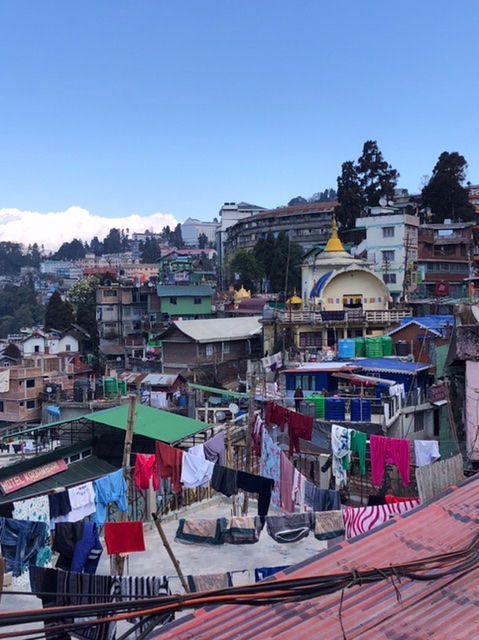
We were in a lovely hill station called Darjeeling. Neither of us knew why we wanted so much to go there – it’s way off the beaten track – but we felt a magnet drawing us there. The people there look very different from Indians in any of the other places we visited. Sort of Mongolian mixed with Chinese. The shops sell the types of mountain village items we’d seen in Mussoorie – another town in the foothills of the Himalayas but much, much further west.

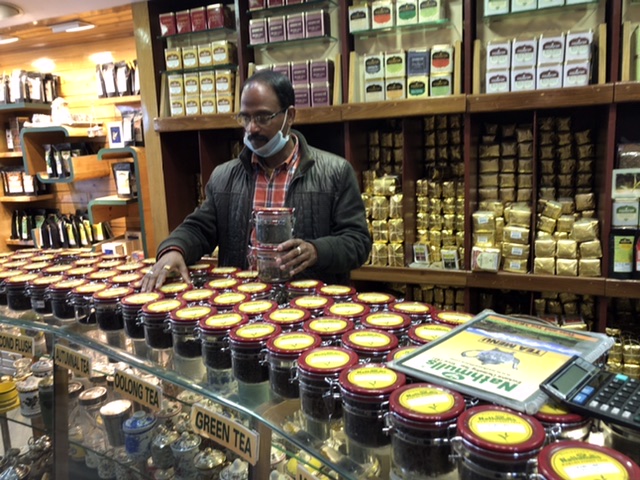
The staff at the hotel were as kind and welcoming as every other place we stayed – which is to say super kind and welcoming. We wandered up and down the steep streets daily, drank tea (Darjeeling, as its name suggests, is a center for excellent tea), took the World Heritage Toy Train, ate wonderful food, and took in the awesome mountain views daily.

And then things began to change.

We’d been following the Corona situation along with the rest of the world. Things didn’t look good but they didn’t look frightening…until they did.

One afternoon our very attentive guesthouse manager showed us something he posted in his group of hoteliers which mentioned the increasing incidence of guest houses refusing to accept foreigners and cabs refusing to allow foreigners into their cars and his own comment that this was not good behavior and he, for one, planned to welcome foreigners as Indians have always opened their hearts to them before.

Wait. What?!

Very quickly we began to see online discussions about whether or not to grab the first plane home. Some people were panicky; while others were still posting lovely photos of where they were and recommending guides in various towns. The pressure mounted until we spent at least a couple of hours every day deliberating our plans.

We were reluctant to cancel our time in Shimla, a place we both really wanted to go, and our return to Rishikesh, a place we spent three weeks and loved it so much we were planning another ten days there.

Finally, the morning we were to fly to Shimla we decided we were in denial.

We were spending so much time worrying about our decision, and asking each other if we were fiddling while Rome burned, that what were the chances we’d enjoy Shimla?

With a flurry of activity, we canceled two flights (and were refunded 1/3 of each), canceled our Airbnb in Shimla (Airbnb, btw, was wonderful and refunded the entire amount of our stay), and reserved a hotel in Delhi near the airport to be ready to hop on any plane we could find.

We had already shortened our trip to the end of March (originally we were due to fly home at the end of April), optimistically thinking it would be okay to still go to Shimla, but decided that we could smell the fires of Rome creeping closer.

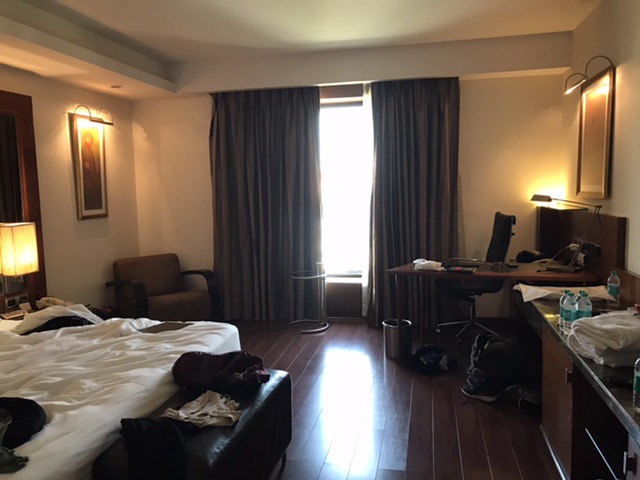
Decided to stay in a super pampering hotel (Radisson Blu Plaza) as compensation for our sadness in leaving India. Forget the fact that we’d already learned that the price of the food in these hotels is more than a 3-night stay in the level of places we mostly stayed.

The posts in my FaceBook group started changing dramatically. The panic was far more widespread. Entire regions of India closed off to foreigners. People being asked to leave their lodgings. More and more flights canceled. More and more countries closing their borders.

We’d reserved a flight on Ukraine Air only to hear the very next day that they closed their borders…and subsequently canceled our flight with no refund.

With the help of others in our FB group we found other options and eventually reserved tickets on Aeroflot (who closed their borders the next day) and Ethiopian Air (with a 17 hour layover in Addis Ababa – yikes!).

There’s no end to the getting home story yet, but we have boarding passes for Ethiopian Air for 02:40 which is 10 hours from now, so it’s looking hopeful. Aeroflot hasn’t canceled the connecting flight (Moscow to Tel Aviv), but we’ve heard rumors that some agents have said it won’t be happening. We’re not taking that chance. They’d advertised that because of Corona they’d give full refunds but now say that they won’t give any refund at all…and aren’t answering their telephones in India or Israel.

I don’t even want to start calculating the cost of all this. Money comes and money goes (as they say); and mostly goes. We want to get home, even though it means 2 weeks in quarantine in our home. Maybe that’ll be a good de-pressurizing time to gradually get back into our lives…in their new shape with this ongoing crisis.

One of the major points here, though, is the change in the social climate in India. There seems to be a natural desire to circle the wagons in face of fearful times, as can surely be seen in our crazed attempts to get home to a country which is in almost total lockdown. Many Indians have begun to fear foreigners as the source of Corona, in spite of the statistics which show that there are about 7 foreigners in India with Corona; all the others are Indians who came in contact with Indians returning from abroad. They want to distance themselves from the “other” and surround themselves with the familiar.

In our hotel there are mostly foreigners who are waiting to get a flight home. I keep imagining that this is how it must feel to be a foreign national fortressed in luxurious surroundings after a revolution, waiting to be evacuated home. The feeling is one of unpleasant desperation. The lower members of the staff are still helpful and kind; the upper levels not so much.

It’s impossible not to think of families in lockdown in small apartments, or people who are on forced leave from work (or fired) and have no income, or the elderly who are now isolated from everyone because of the danger to their health.

It’s important to keep our own experience in perspective. We’ve learned an important lesson about community, but we’re healthy and safe…and together.

When we all leave our bunkers once the danger passes, the world we find will be changed one. Entire sectors of the economy will have disappeared or altered drastically (air travel, hotels, tourism in general); debts will have incurred which may take years to tackle; styles of personal interaction will have to be rebuilt.

But as my oldest daughter said – maybe the changed world we find will be a better world.

From her mouth to God’s ear.

What is it About Rishikesh?

My partner and I spent 10 days in Rishikesh in 2016 and 3 weeks there so far on our current trip. We’ve decided to go back for another 10 days in April. We ran into many people there who told us they’ve been coming to Rishikesh every winter for the past 6 years, or 10 years or an incredible 20 years. One young person we spoke with last night (in Delhi) said he was there a month ago and finds that something about it is pulling him back.

So what is it about Rishikesh?

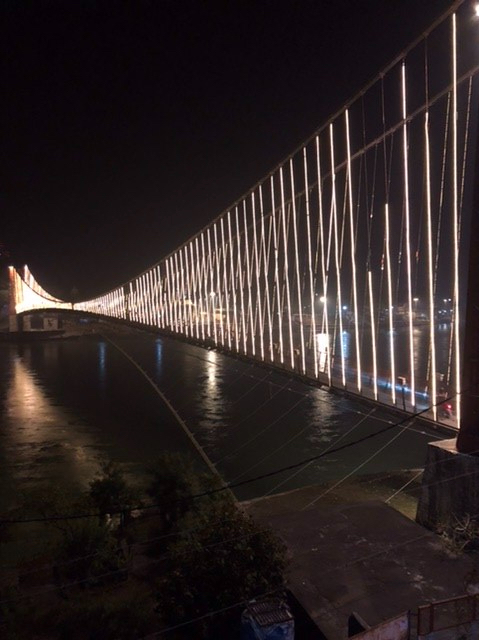
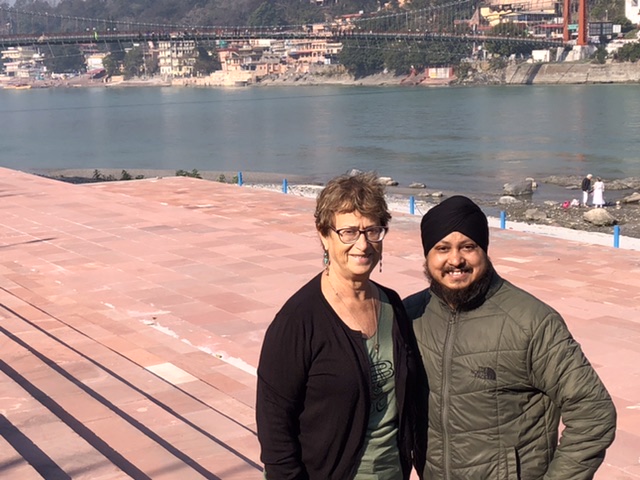
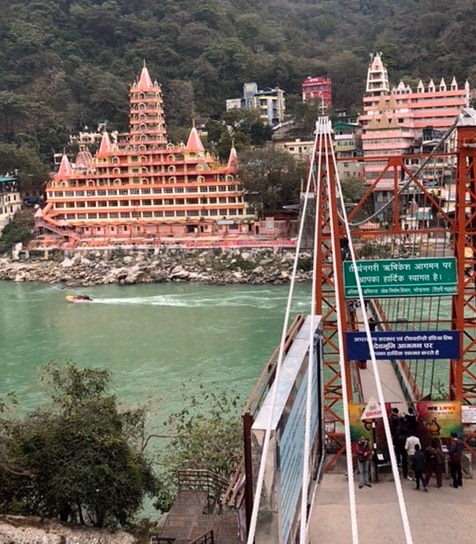
Rishikesh is a small city of a little over 100,000 people. It sits on both banks of The Ganges with two lovely suspension bridges spanning the river.

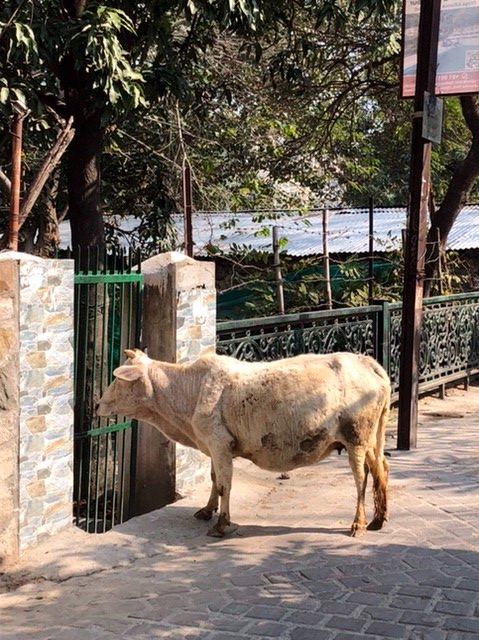
On one bridge, Ram Jhula, a few cows and monkeys maneuver between the foot traffic, motorcycles, carts, and bicycles. Things get busy on Ram by 9:30 am and don’t let up until twelve hours later, when the cacophony of horns and bicycle bells finally stops.

On the other, Laxman Jhula, they’ve recently installed barriers so there are no motorcycles or bicycles, but the monkeys there are far more numerous and aggressive (I was bitten by a monkey there in 2016).

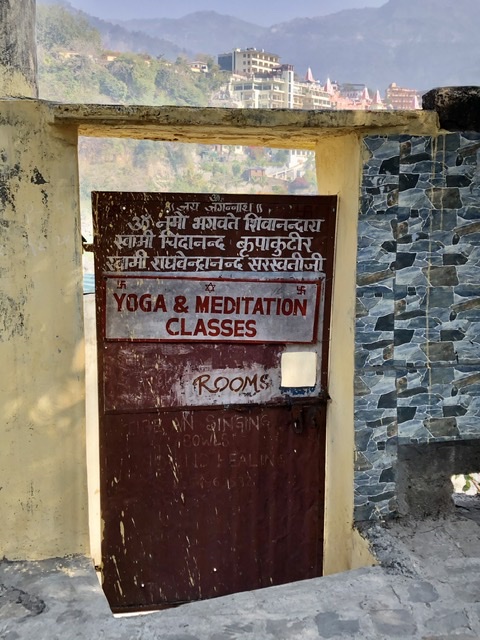
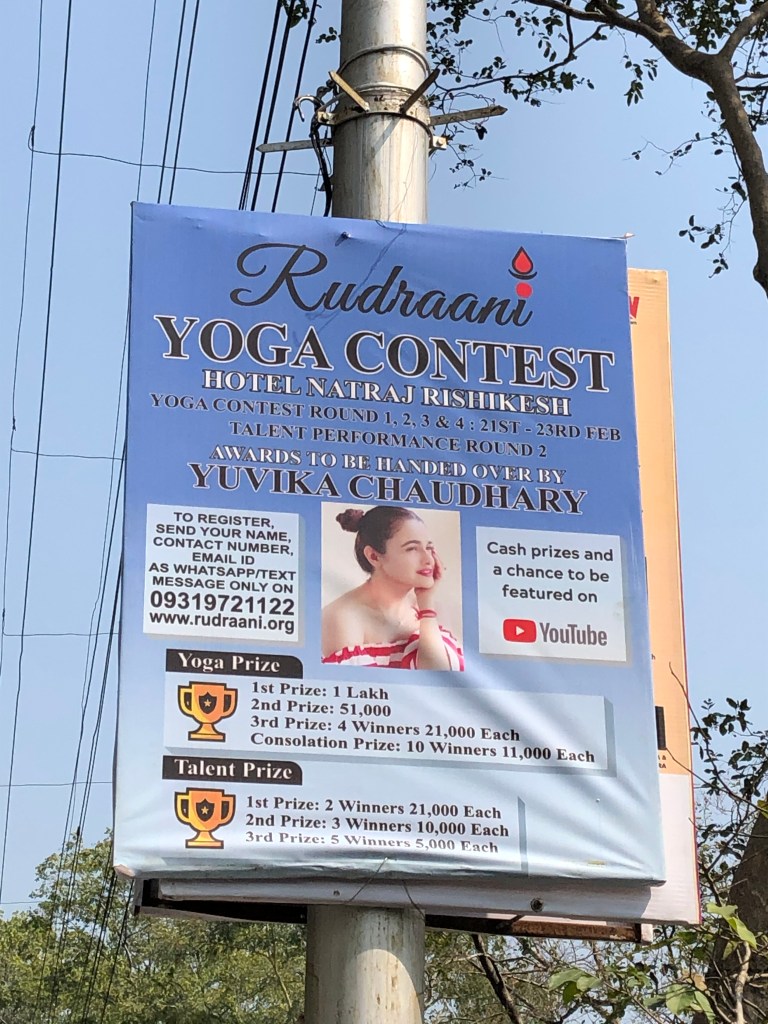
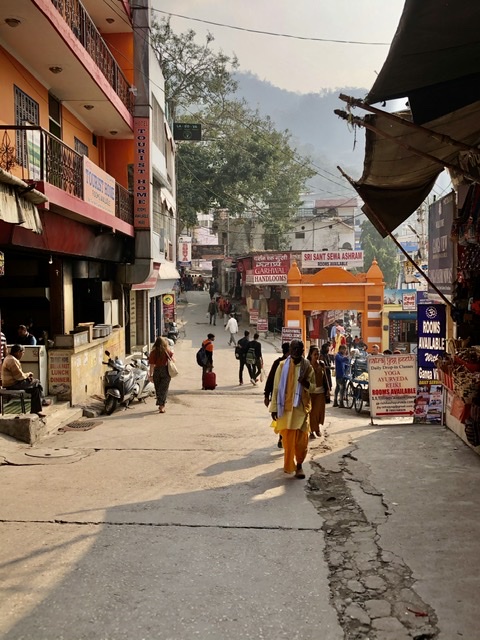
The small streets and alleyways are full of signs enticing people to take classes of all kinds – 200, 300, and 500 hour yoga certification courses, meditation classes, Hindi classes, music lessons of all kinds (harmonium, chanting, tabla, sitar to name a few), Ayurvedic massage and therapy classes – all for very low prices.

Some signs are in Hebrew, and many local people can speak a little Hebrew – a sign of how many Israelis visit and how much we make our presence felt wherever we are (for good and for bad – but mostly for good). In general, the average Indian is a big supporter of Israel, and especially of Bibi Netanyahu, expressing admiration for our strength in the face of great adversity. They enjoy the Israeli bonhomie and exuberance, responding to Israeli travelers’ warmth with readily extended friendship.

We’ve met with kindness, extraordinary customer service, warmth, and beauty all over India. We’ve been awed by the colors, the noise, the crowds of the huge cities and the striking isolation of much of the beaches, jungles, and countryside. And, still, Rishikesh inspires an attachment that’s different.

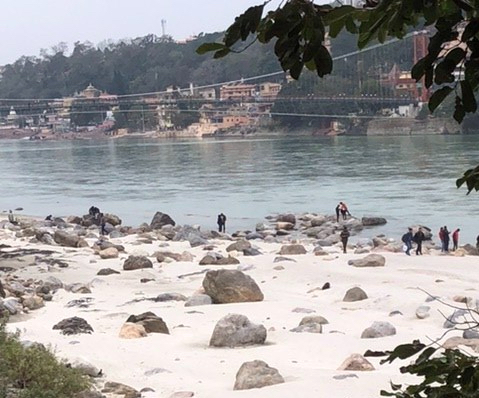
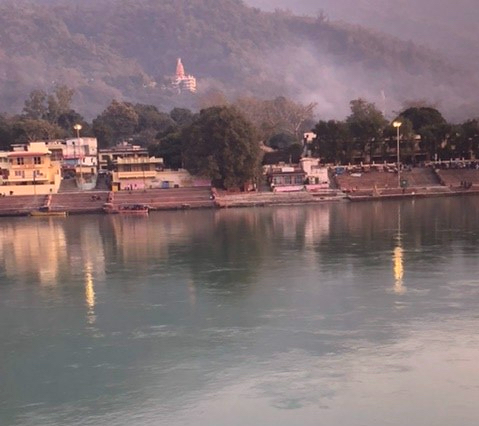
Maybe it’s The Ganges. Considered holy, originating from the matted hair of the Hindu god, Shiva, The Ganges starts in the western Himalayas, emptying finally into the Bay of Bengal. It becomes continually more polluted as it flows south and east. In Rishikesh it’s relatively clean. It also manages to be majestic and serene at the same time.

Half an hour before sunset, students and teachers from ashrams and schools congregate in their respective uniforms to sit by the river to prepare for the Puja ceremony. They chant to the music of the harmonium and the dholak drum. The ceremony culminates in fires being lit in small baskets of flowers, which are then put in the water to float downstream. As a Hindu ritual of reverence to the mother river, it is very removed from my own religion and culture. Yet the sound of the music and the sight of the small fires floating on the water are beautiful and moving. The respect for and love of the divine and nature found in India is close to my heart regardless of the different directions and beliefs that take us there.

Rishikesh is probably known best as the yoga center of India. Yoga practitioners from all over the world come to practice with Rishikesh yogis. Many of them come to take certification courses of varying lengths. From late February to mid-May it’s common to see people of all ages, speaking many different languages, walking through the streets of Rishikesh with a yoga mat slung over a shoulder.

The city is equally well-known as a spiritual center, hosting gurus such as Moojii for annual month-long retreats. Preparations begin several weeks in advance and in addition to meditation and satsang sessions for registered retreatants, a daily public talk with a Q&A session is open to all.

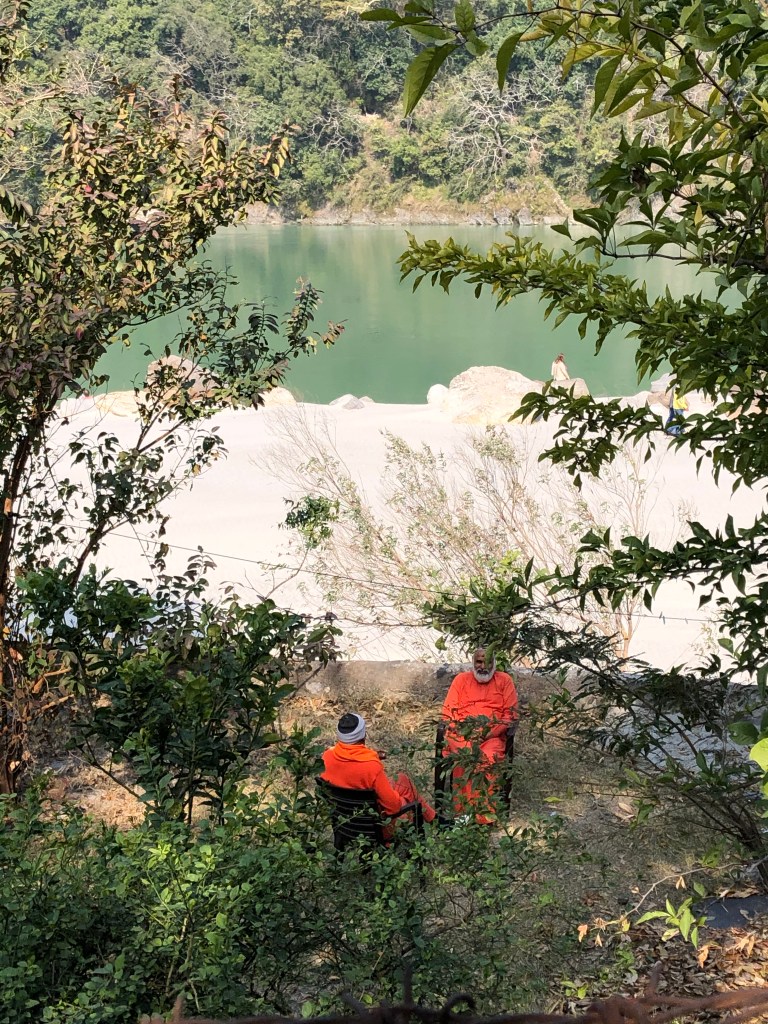
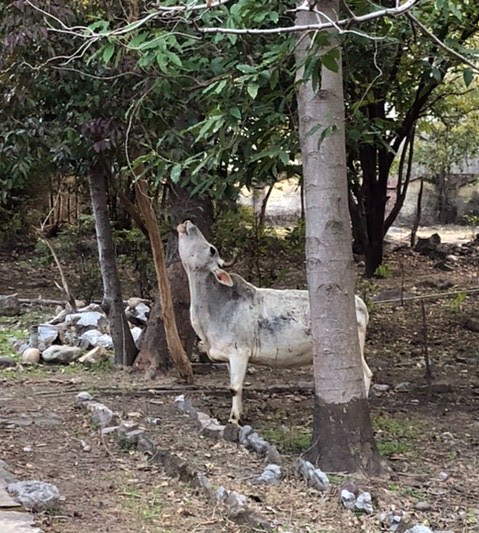
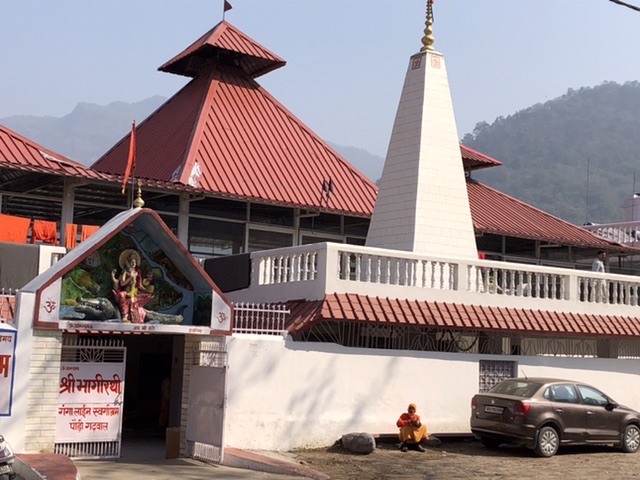
Orange is the color of Rishikesh. It is a sacred color in Hinduism, representing fire and the burning away of impurities. It’s the color worn by holy men…and many tourists. It brightens the atmosphere and, though thought garish in Western countries, is the norm in Rishikesh, just as the sound of bells – on anklets, cow collars and bags – is commonplace and cheery.

The Ganges, the chanting and music in the air, yoga, meditation, classes, cheery colors and sounds, cows and monkeys and dogs living in harmony with Sadus, spiritual seekers, tourists, shopkeepers and teachers. It’s all part of the magic of Rishikesh. But ultimately I really don’t know what it is about Rishikesh that imbues so many of us with peacefulness and calm smiles and burrows deep into our hearts.

The trick is safeguarding whatever that is and bringing it home with us.