South India Revisited 2025

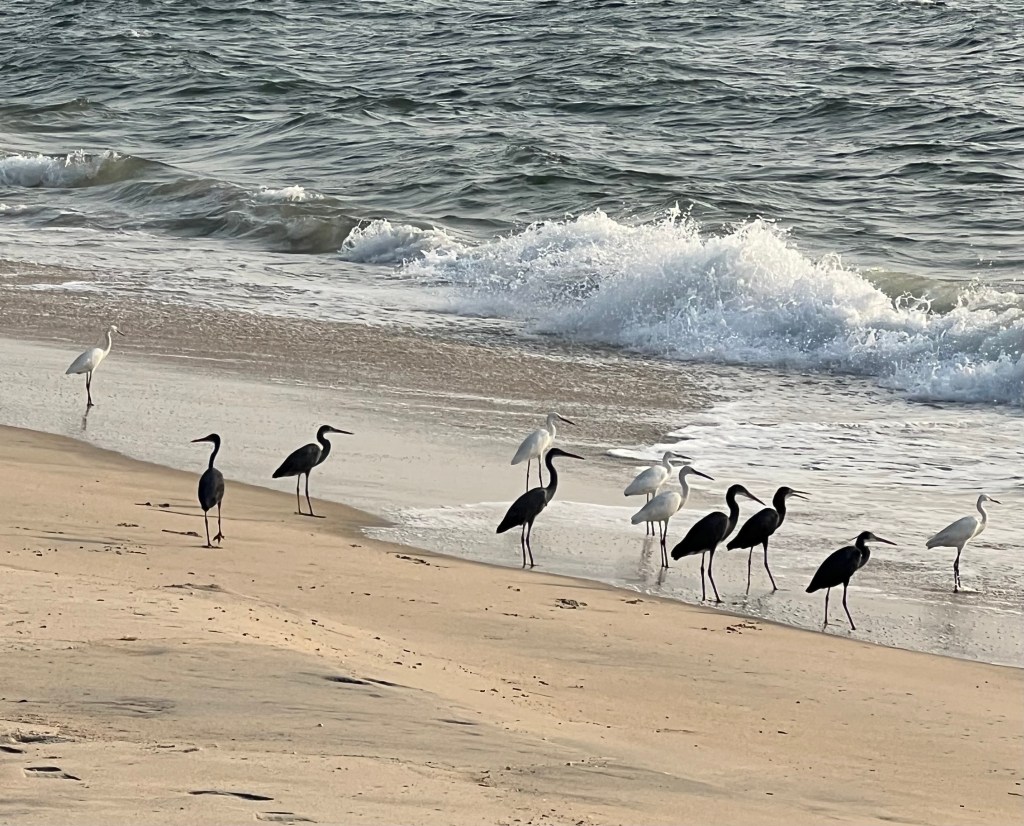
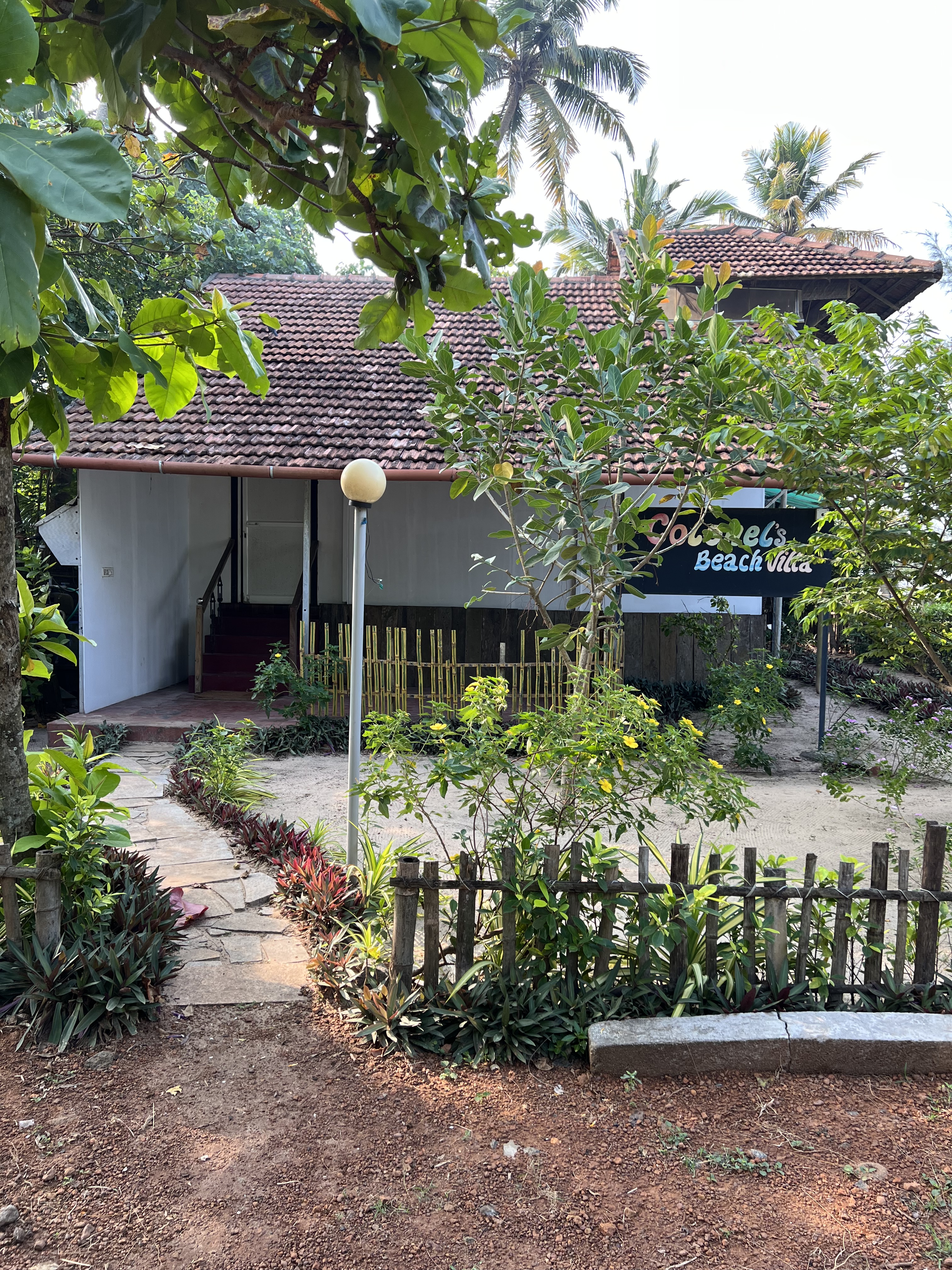
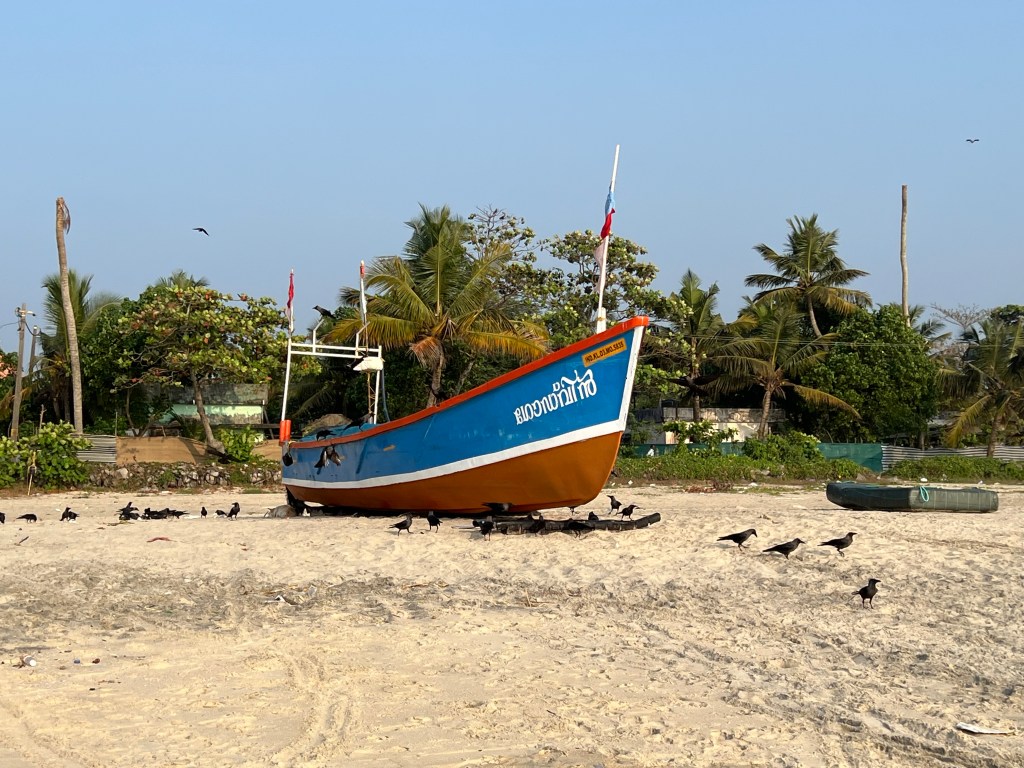
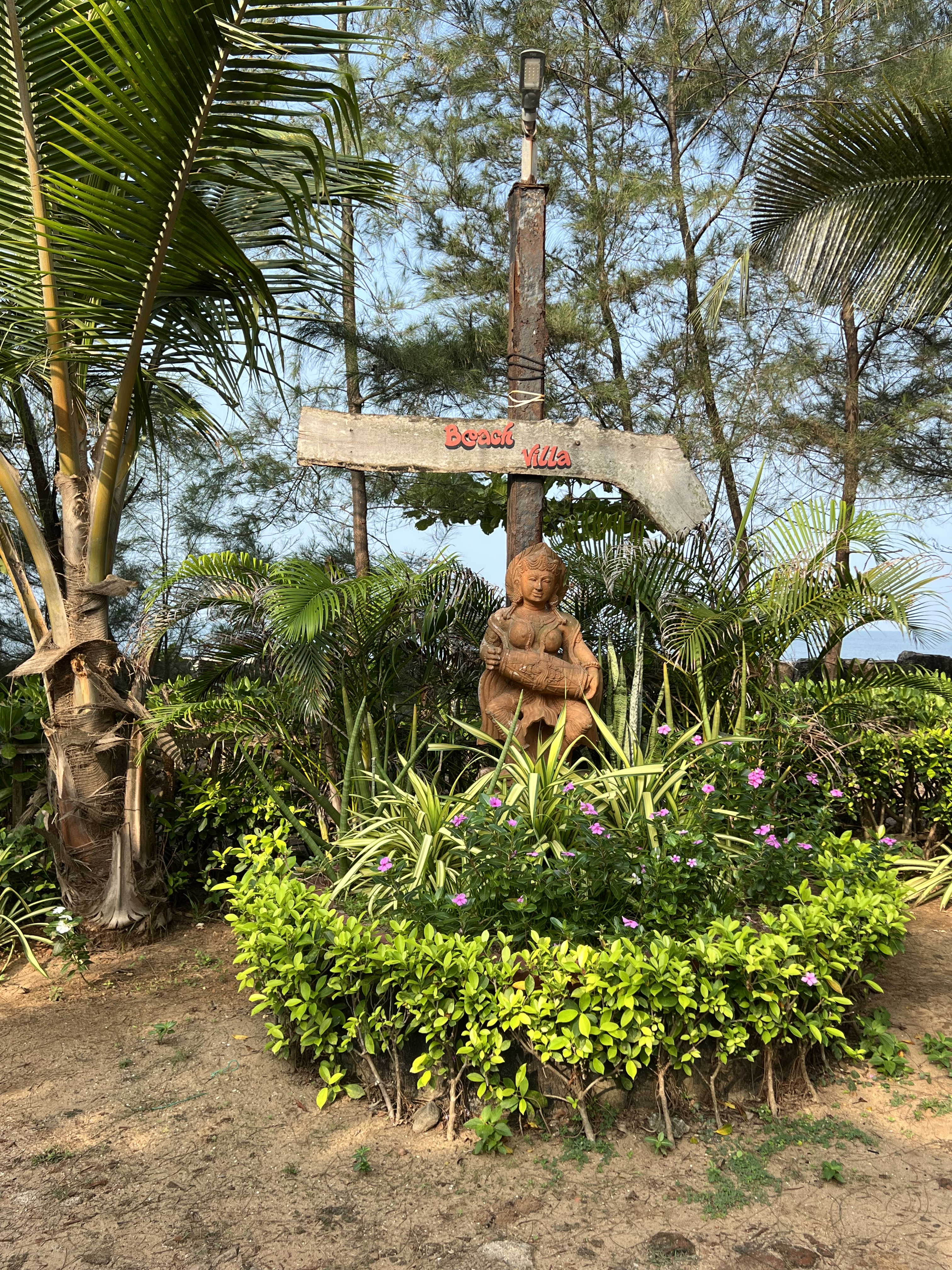
Our third week in the small fishing village of Thumboly Beach, half an hour by tuk tuk to Alapphuzha (aka Alleppey) about an hour from Kochi (aka Cochin). Our third time here at Colonel’s Beach Villa. It gets better every time and harder to leave.

Our room has an upstairs balcony that looks out onto The Arabian Sea. The sound of the waves provides constant companionship – gentle in the morning and more forceful from afternoon on into the night.

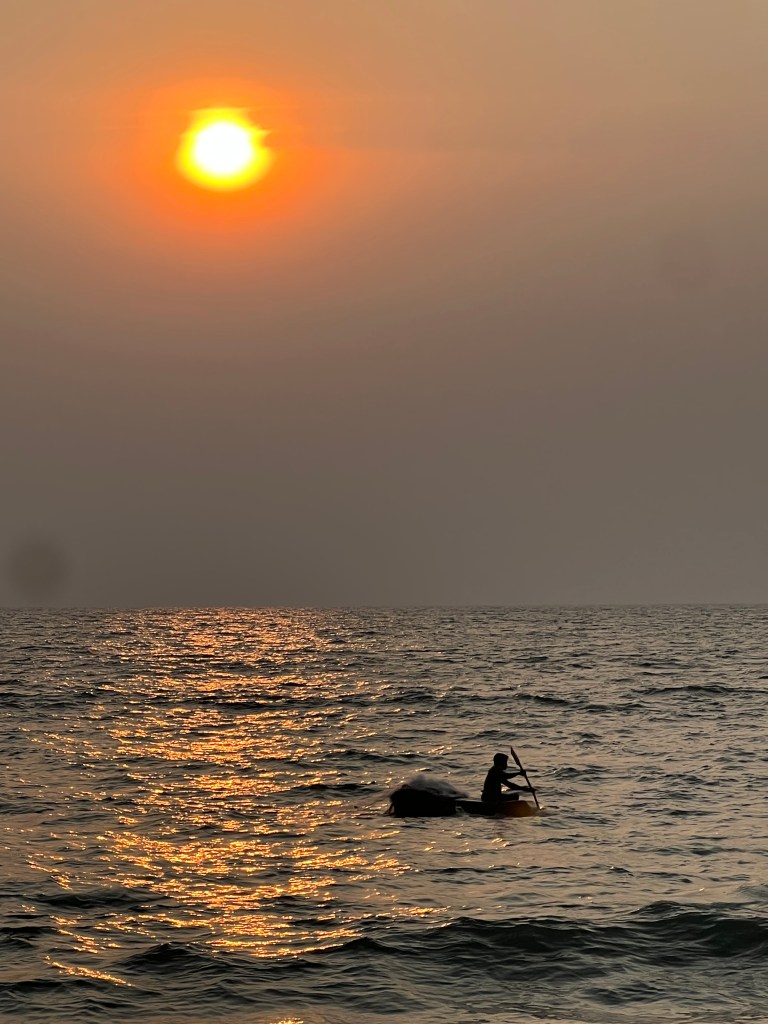
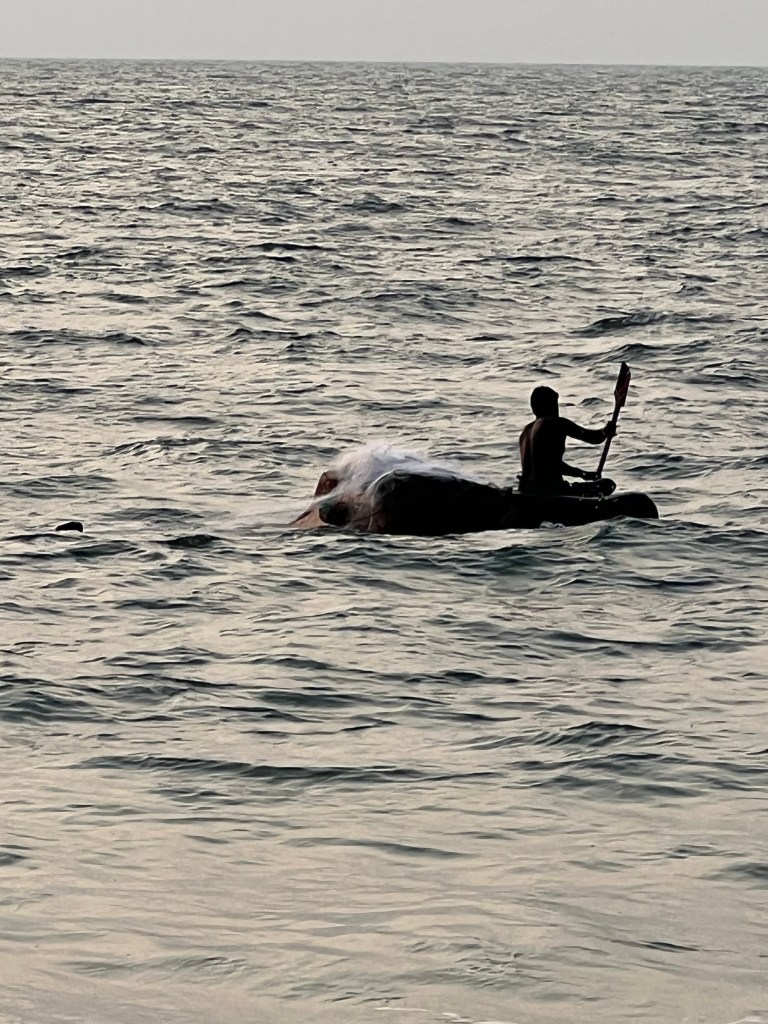
My partner goes out around 6 every morning to watch the fisherman carefully removing their catch from their nets. It’s a careful process. Some days there might be over 50 kilo of sardines and some days maybe a paltry kilo or two. Dogs and crows wait patiently nearby waiting for the rejects to be thrown their way.

Later in the day, after a delicious, simple vegetarian breakfast, and after reading and chatting on the balcony until the day cools off, we go for a walk around the village or take a tuk tuk to Alapphuzha.

People in the village have become familiar with us. They smile warmly and speak with us in the limited English they know. When I hurt my arm and had a bandage on it they seemed to all know about it and expressed concern. We stop in to say hello to Tomas at his market and Elsbet at her small store. The people at the corner fruit store let us know if they have pineapple because they know how much we like it.

Villagers are quite laid back. Many women walk together in pairs or more in the cooling day holding umbrellas to protect them from the sun. They wear light long dresses with slits up the side and leggings underneath. Most women do not work outside their homes and the daily socializing is a pleasant part of their day.


Many men can be seen sitting together on plastic chairs or on the sand under trees on the beach playing Rummy. They go out at 4 am in their small boats, fish until 6, gather their catch from the nets until 7, and then take their share of the day’s catch to sell on the nearby highway.

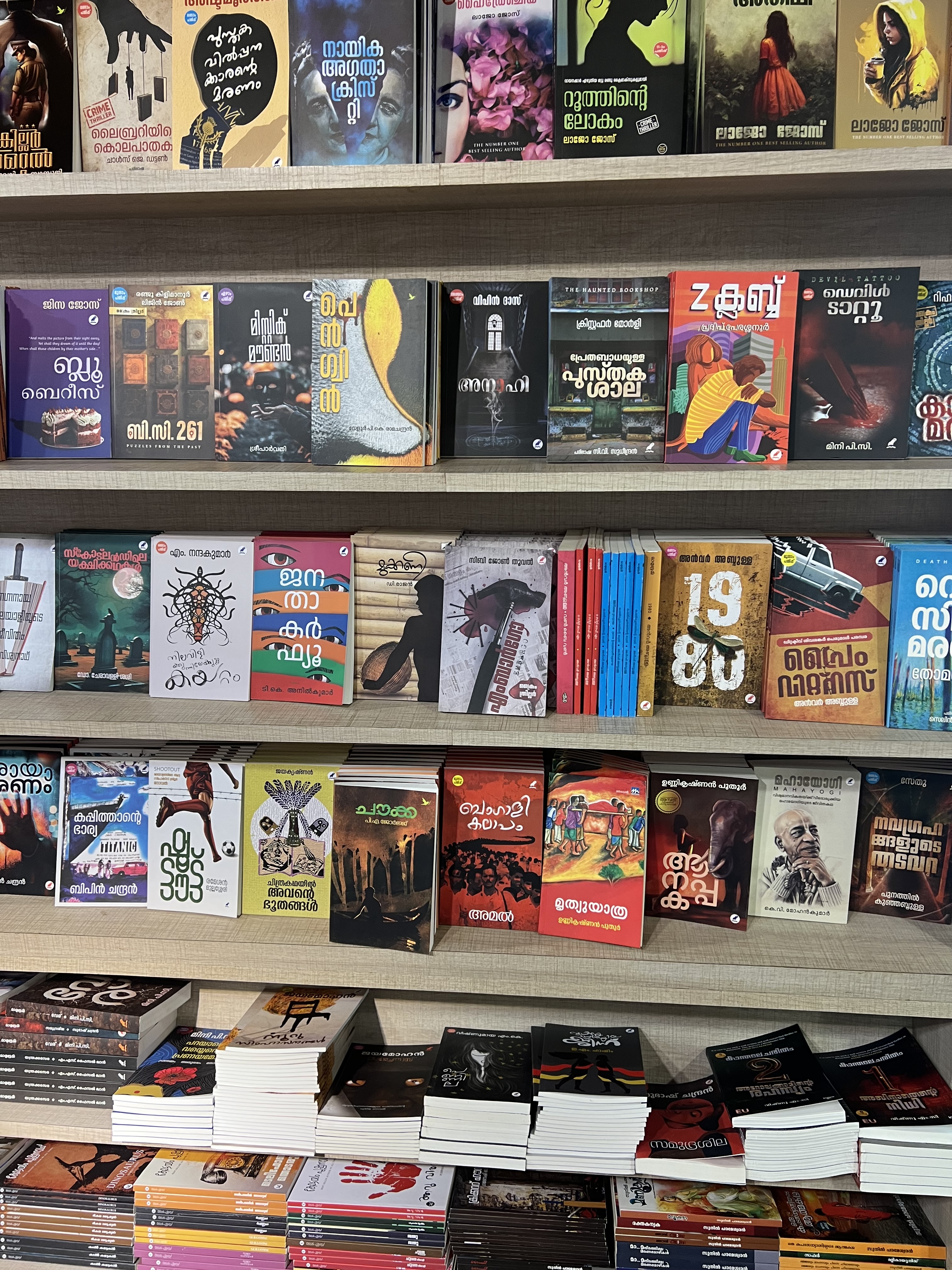
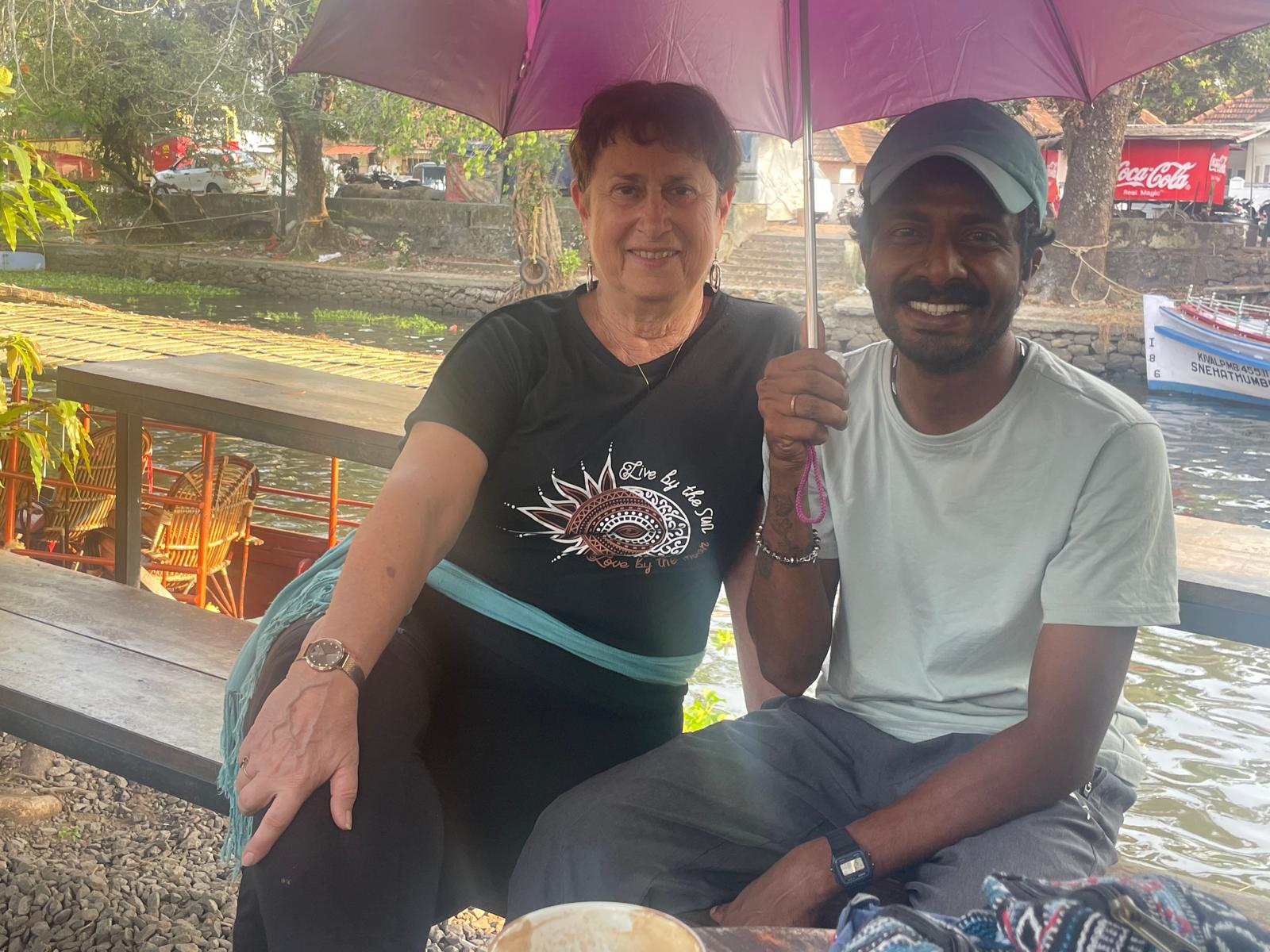
The guesthouse calls their tuk tuk to take us to Alapphuzha when we go there. He charges less than the tuk tuks we might flag down in the village. He drops us off in the commercial area where we like to absorb the colorful atmosphere and sometimes pick up a few things. There are aromatic spices, fresh garlands, fresh fruit and vegetable stands, kitchen shops, clothing shops including places to choose material, get measured, and have clothes made and ready in 24 hours. There’s an excellent bookstore and our favorite coffee shop by the river. We always stop in to say hello to Raul there, have a good cup of coffee and some fresh cold cut up watermelon.

The two young men from northeastern India – a 3 or 4 day train ride away – who do just about everything around the guesthouse are very quiet but have warmed up to us. They make us special little treats when they can. They know how we like our tea and coffee and when. They’re happy to see us in the morning and when we come back from our wanderings. Our customs, especially our Shabbat observance, are unusual for them. But they accept and adjust to everything with interest.

The serenity of The Arabian Sea, the beautiful garden, and the peaceful nature of the people provide the perfect background for my yoga practice. A small patch of red cemented patio just outside my door, shaded by a outhanging is just the right size and atmosphere. Teaching for 15 years, I often feel a staleness creep into my practice. Time spent in Southern India always inspires me to change it up, deepen it, renew the spirituality of it.

No hot water comes out of the shower head. At first we were taken aback. What?! No hot water for our shower? There’s a bucket and a big plastic cup inside. Hot water comes out of a spigot into the bucket. Cold water from the shower head to soap up and hot water from the cup in the bucket to wash off the soap. What!?! But we’re ENTITLED! Get with the program. This is India. You’d be surprised how quickly the system makes perfect sense in this climate.

Adapt. Adjust. Accept. And be pleasantly surprised when a cabinet shows up after you mention it’d be nice.

The city can be a cacophony of people and vehicles but absolutely serene and clean compared to Delhi.

It’s difficult to explain my love for Southern India and this area specifically. I wish my words t could make you smile and feel as happy as I feel when I’m here.

In a world so full of strife, confusion, fear, aggression and diviseness, Southern India is full of the opposite of all that. A local friend here thinks it’s because there have been no wars here for centuries. The culture looks askance at hostility and unkindness. Perhaps. Whatever the reason, I wish I could package this place and gift all of you with it.. .
Life in The Great Plains

The Great Plains of the United States is a vast area with few people and beautiful vistas. You can drive on the open roads in Montana, North and South Dakota, Wyoming, Nebraska, and Kansas for hours and see only a handful of cars. The houses are few and far between and without exception have an American flag flying in front. Each town’s population sign boasts between 29 and 1500 residents.

On our way from the Battlefield of Little Bighorn to Cody, Wyoming, where we’d be spending the night before heading into Yellowstone Park, we stopped in for some lunch at a small diner in the town of Lovell, Wyoming, population 2320.

During our travels, we’ve come to expect quirky, odd people and sights, but so far in this part of America what’s stood out the most is the utter normalcy of the people and towns. The diner was quite ordinary. Plain tables and chairs. Around one table were four middle-aged women having a girls’ lunch. Otherwise, we were alone. The menu was also nothing special. Hamburgers, french fries, pizza, tuna salad sandwiches.

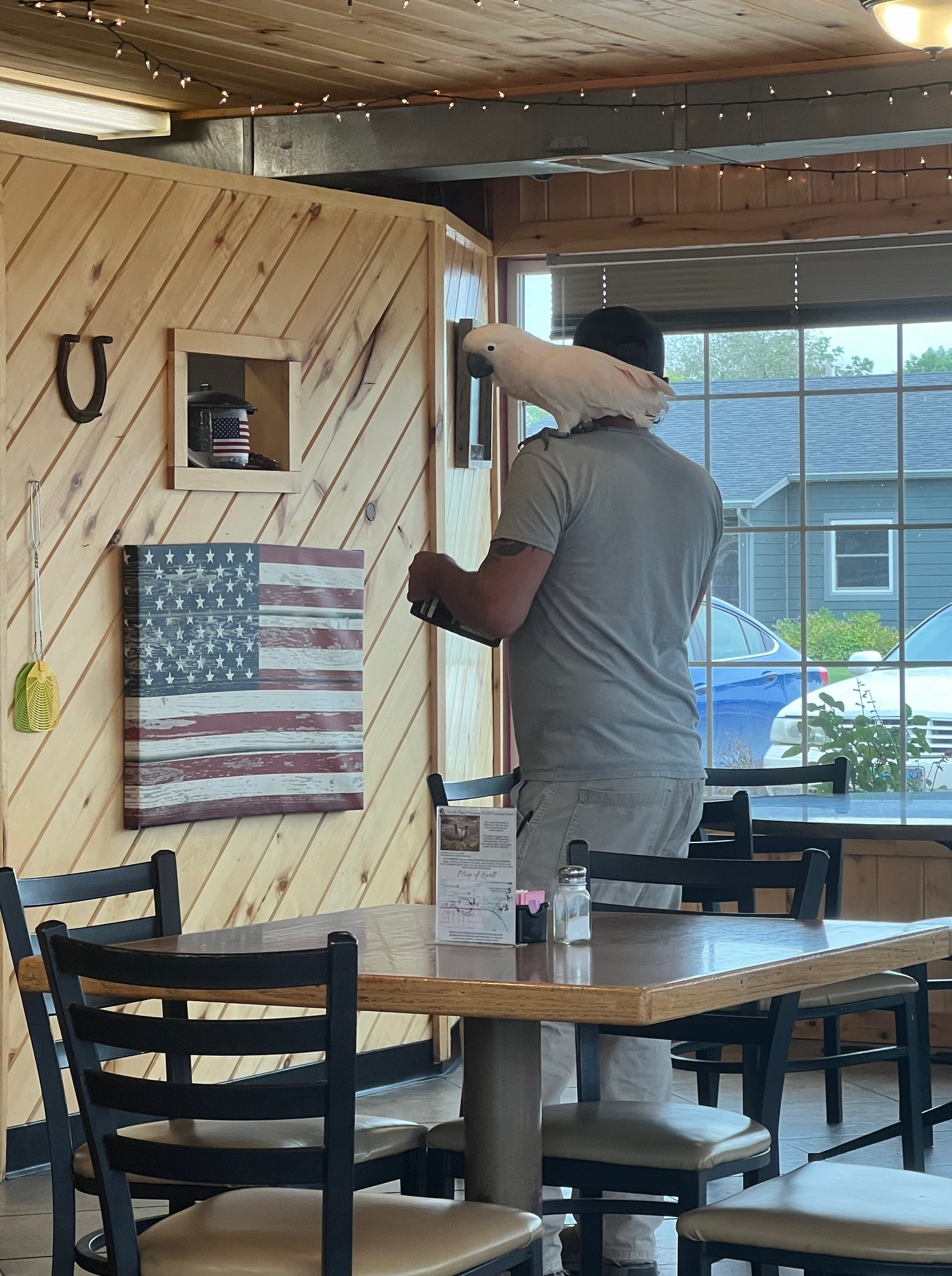
And then there was this sight –

No one seemed to think it strange. I guess man and bird are regulars.

Our teenage server was a fresh-faced, blonde girl. No tattoos. No piercings. No make-up. Just a few freckles and a friendly smile. I found myself wondering about her life. Being a teenager in a town of 2000 people in the Great Plains. The nearest city, Cody, boasting 10,000 residents, is an hour away.

After we’d eaten our sandwich and were waiting for coffee, I approached the girl and asked if she’d be open to talking about her life. She nodded with a respectful ‘yes’ and a shy smile. I started with an easy question.

“What do kids your age do for fun around here?”

She didn’t hesitate. She told me the obvious – there’s nothing to do in Lovell – but went on to say that, as a result, kids make their own fun. They sometimes build a campfire and sit around talking and telling stories. They go fishing. Most teenagers work in the summer and often after school during the school year.

I mentioned that I’d noticed the lack of tattoos, piercings, and make-up and asked if that was the norm. She replied that most families in Lovell are Mormon (she’s not), and have been brought up not to find those kinds of things attractive. There’s a strict dress code at her school, which is fine with her, but she wishes they were allowed to wear leggings. (that was her only objection)

I asked if she saw herself settling down in Lovell after school or moving to a bigger city. With a mischievous smile, she said that her dream was to go to New York City and become a cosmetologist but added that she’d likely get married and settle down in Lovell, or maybe as far away as Cody.

Interestingly enough, her parents divorced when she was 10 and after a year living with her mother in Denver, Colorado, she chose to move to Lovell to live with her father. Of course, the explanation may lie simply in a troubled relationship with her mother, but I wondered later if it was the siren call of a simpler life surrounded by stark natural beauty.

There are undoubtedly inconveniences living in a tiny town with limited options. But in the towns of the Great Plains states, there’s also the inspiration and peacefulness of being surrounded by natural beauty. The rush and tension that people love to hate in the big population centers are absent. There’s virtually unlimited space. Zero crowding on the roads, in the restaurants; no long lines in the grocery store or the post office (which each town has!). From our limited experience, no one is in a hurry. They have time for conversations with the neighbor ringing up their purchases and the customers in the diner.

At our server’s age, I was also a server in a restaurant. I worked in an Indian restaurant, wearing an elegant sari, where the choices on the menu were exotic and expensive. The restaurant was on the river that ran through the tourist area of San Antonio and was constantly packed with people. Without a reservation, people were out of luck. I saved my tip money to get the hell out of Dodge. San Antonio, a city of over a million people, was too familiar. I wanted nothing more than to strike out, on my own, for more interesting pastures.

It took me 50 years to reach the point that our server reached by 16. The point where I appreciate the empty open road, the farms where the closest neighbor is at least a kilometer away. When I can often think of nothing better than sitting in a wooden chair looking out at a calm lake for an hour or two with an unopened book on my lap.

Lubec, Maine

I used to think that living in the city provided more opportunity for connection to other people. I imagined living in rural areas to be isolating. Living in a small community of 5000 people created doubt in my mind and observing people and talking to people in The Great Plains sealed my recognition of my faulty reasoning. I now think that, while it clearly depends on the individual, living among fewer people may very well encourage kinder, more intimate connection than living in a city.

As the miles rolled by, we were finding the sheer size of the open, empty plains comforting. Neither my partner nor I being particularly stressed out or hyper people, we were, nevertheless, experiencing an inner loosening in our very souls.

I often thought of travel from Wisconsin, where I was at university for more years than I care to think about, to San Antonio, as boring. Lots of wheat fields. Lots of cornfields. they go on and one and…on.

The boredom of the 70s through the 90s is today’s meditation.