
I just completed a 67-hour mediation course. The moderator/lecturer, Golan, was a charismatic guy in his early 50’s with vast experience and captivating stories about mediations he facilitated over the years. I wondered at the outset if I would be able to sit for five hours straight each Monday night without fidgeting and wishing I were elsewhere. Golan made the time fly. I didn’t have to do yogic breathing even once during the 10-week course.

One of the crucial concepts in mediation is the ability to differentiate the needs of the people in conflict as opposed to their positions, or presenting issues.
Eleven neighbors have entered into the mediation process regarding the parking lot between their houses where there are seven legitimate parking spaces. There are often clashes between people parked in legitimate spaces and people who park along the side of the lot making it difficult for those parked in legitimate spaces to extricate their cars. The eleven families have, between them, fifteen cars. As it turns out, two families do not have a car, one family has a driveway in which they park one of their two cars, one family has a driveway in which they park both their cars, one family does not park their two cars in the lot, and three families park only one of their two cars in the lot. One family parks two cars in the lot. Three families park one car each in the parking lot.
Have you seen this problem on a math test?
In case math wasn’t your thing, the eleven neighbors want to park nine vehicles in seven legitimate spaces.
Looks like a pretty cut-and-dry issue. Until it becomes clear that less than 50 yards away there’s a large parking lot that is virtually unused. So what are the actual needs of the people involved that must be addressed before the group can come to an amenable resolution for all involved? After all, they’re neighbors in a small community who have a common interest – living in harmony with one another.

But what does this have to do with meditating with old age? And how can one meditate with old age anyway? It is what it is…isn’t it?
About seven weeks into my ten week course I found a small hole-in-the-wall Indian restaurant with a few tables outside on the cobblestone pathway. My partner and I, both Indophiles and aficionados of Indian food, were happy to find this place. The table was a bit unsteady on the cobblestones but we made do and had a great meal with lots of nostalgia. Getting up after the meal I rested my hand on the table for stability – stability from an unstable table? You can guess the results.


The cook stayed by my side until the ambulance arrived. The paramedics were extremely gentle and pleasant, in spite of the fact that they looked young enough to be in high school. My neighbor was one of the nurses in the orthopedic emergency room. The doctor was thorough and helpful. All in all, other than two weeks of being almost totally incapacitated with back pain, it was a smooth, fortuitous experience. It could’ve been so much worse.
Well-meaning friends encouraged me to sue the restaurant – never a possibility in my mind. Being in the middle of a mediation course, however, I did think about asking the restaurant owners if they would be interested into entering into the mediation process with me.
First I wanted to take myself through the mediation process of figuring out the difference between my presenting issues and my needs.
Issue #1: I was out approximately $700 for physical therapy, my deductible for the ambulance, and having missed teaching three classes. Not a huge sum but money.
Issue 2: I wanted to be reassured that the restaurant would correct for the instability of their tables on the cobblestones.
Need #1: I wanted to be seen as a person – not a fragile elderly person who lost her footing as a result of being old and unstable on my feet
Need #2: I wanted, as part of #1, for the restaurant to take partial responsibility for the objective elements of neglect which led to the injury.

Are you starting to get the point?
From the caring cook to the empathetic paramedics to the informative orthopedist in the hospital I thought I recognized that they didn’t really see me. They didn’t see a woman who teaches yoga eight times a week or drives six hours a week to visit with grandchildren, or who goes bowling, plays miniature golf, and spends months at a time in off-the-beaten-track places. For the first time in my life, I felt the invisibility that many elderly women describe. I felt small and irrelevant and “other”.
When I wrote to Golan that I’d only be coming to the simulation part of class because I’d had an accident, he had one kind of reaction. When I came to the simulation and mentioned that I was injured in a fall, his reaction was different. He thought it had been a car accident – happens to the best of us. A fall? Ah, elderly issues.
Clearly this may have all been in my head.
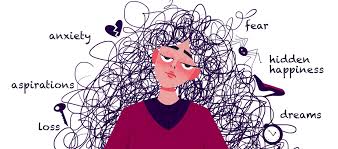
And that’s exactly the point. In life, as we all know, shit happens. The first arrow. Inevitable It’s our reaction to it that causes suffering…or not. The second arrow. Within our control.
In my recent revelations I realized that, yep, we can be in constant mediation with the aging process. Searching for our needs when hit in the face (or the back) with the issues. It’s an ongoing occurrence.
Not as easy as a one-time epiphany. Ah, yes, I can have a happy, peaceful old age through acceptance.
Oh yeah? What about when there’s a new challenge a few times a month? Or how about a few times a week? What about when it’s limited mobility? And how about the exasperation of the person who assumes you’re not getting his explanation of the electrical system in your home because you’re old?
The good news is that if you’re into the mediating process you’re well on your way toward living your life instead of killing time.
Or as Mary Oliver said, “What is it you plan to do with your one, wild and precious life?”

 gettingoutalive