

I’ve never looked like one of those thin, flexible women with ropy muscles and a BMI that barely hits 20. I’ve always looked more like the Russian and/or Polish peasant stock of my ancestors. You know, the ones who give birth in the field and go back to digging potatoes out of the earth.
Nowadays when I have no choice but to admit that I’m a yoga and meditation teacher I imagine that the (young) person asking the question is internally rolling her eyes, sometimes right after the (imaginary) once over.
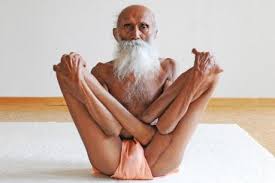
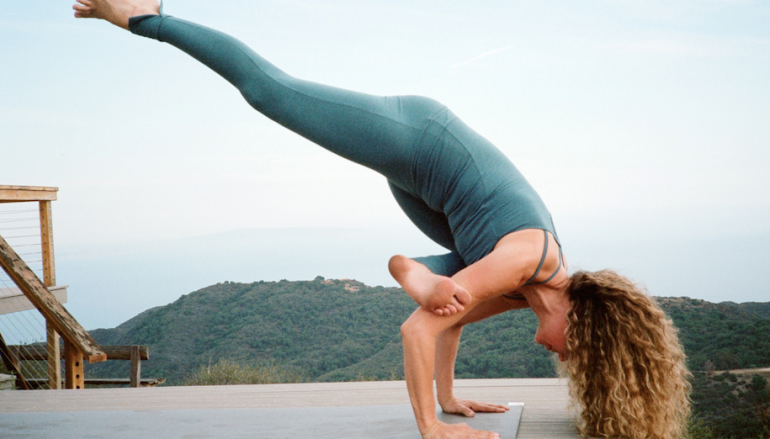
That’s all okay. Only mirroring what I know. I don’t come within many miles of looking like…
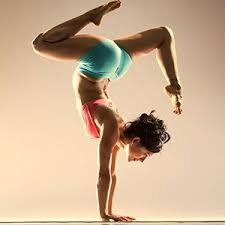
(and, no, I could never ever do that pose, whatever shape I might be in.)
But yoga and meditation teacher I am and have been for over ten years. My studio is thriving. New students joining all the time. As my body suggests I teach less, my heart doesn’t allow me to turn away students. I’ve begun teaching two young women my particular flavor of yoga and meditation, Raja Yoga, to lessen my load.
One of them is particularly serious; puts in the time and thought. She’s a personal trainer. I expected her to be an easy study when it came to the yoga poses so I chose to begin by looking at the philosophy of yoga; the spiritual side of things. We meandered through some of the more basic and beautiful parts of Pantanjali and then on to the eight limbs of yoga. She committed to sitting in meditation every day, and after a rocky beginning, stuck to it.
It didn’t take long for me to tumble to the fact that there’s a shitload of stuff to learn.
I began to seriously consider how I got to where I am today in my practice.
I began to recognize what stands behind the kind words I hear from my students and the word-of-mouth referrals. I teach kindness, compassion, and gratitude, and I suppose I related more to their having absorbed those lessons than any kind of real assessment of what they receive in class. All of a sudden I realized that they were receiving the gifts that I’ve received over the past 15 years. From the many hundreds of hours I’ve listened to and absorbed dharma talks, the many dozens of books and articles I’ve read, from the retreats I’ve gone to, and from the thousands of hours of my personal practice. My students are the continuous long chain of those gracious enough to share their knowledge and experience with me. A chain I joined not because of a conscious desire to change my life but because of my passion for and enjoyment of them.
For someone who teaches awareness, you might be surprised to read how shocked I was to realize that I’d absorbed so much and integrated it into my life with little recognition of the process.
There’s an annoying concept that says that when you chase after something in life it eludes you. When you stop chasing, you attain it.

So how does that work? What are we supposed to do with that? How can we attain something if we don’t try? What kind of New Age bs is that?
I’m here to say that I’ve been witness to this phenomenon more times than I can remember. At my age I might not remember them even if there were only a handful, but, trust me, there were many. And here I came face to face with another.
Those who bemoan being old, here’s a positive thought. You can’t be a wise crone unless you’re old. You have to absorb lots and lots of life to earn that badge. No one ever heard of a wise young crone. (p.s. you also have to be female, but maybe we shouldn’t go there)
So back to my serious young woman who’s learning to be a yoga teacher.
I abandoned the study of yoga philosophy temporarily and we began to get more deeply into asanas, yoga poses. She is, in fact, a joy to teach. She picks up everything immediately. She files it away and, contrary to many of us, remembers where she filed it in her brain and body so that it’s easily accessible.
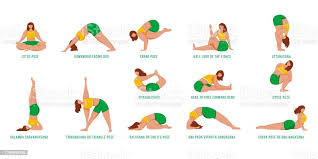
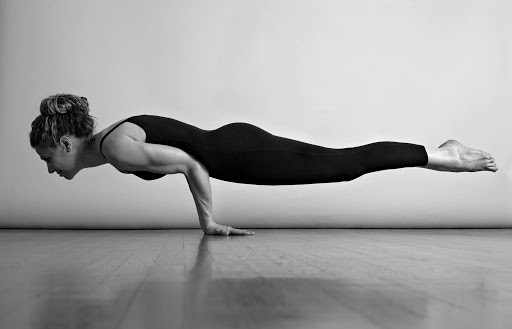
Then I asked her to build a sequence to teach during the first part of one of my classes. Okay, there were a couple of issues that were easily definable and corrected with practice. Speaking more loudly, taking more time with each pose, checking the room to see if some adjustments needed to be made to help people to more advantageously enter into and sustain poses, and organizing the sequence in a more logical manner. Maybe that sounds a little complicated, but it really isn’t. It just takes practice.
The hard part is that which only comes with a decade of passion.
I remember reading a book about ten years ago written by an experienced yoga teacher who wrote that the best yoga classes are the ones that aren’t planned. He explained that he walks into a class and feels the vibe in the room, senses the flow as he teaches, choosing the poses according to those variables. It seemed quite unprofessional and haphazard to me at the time. Sort of like attaining things by ceasing to strive for them.
But that’s how I’ve been teaching now for at least the past five years, and probably much more.
I realized after my young student taught that sequence that I had missed a crucial element. The one I missed earlier about the philosophical and spiritual nature of my classes. I hadn’t realized to what extent my classes are a by-product of hundreds of students and thousands of hours of yoga practice.
A good yoga teacher doesn’t have to look like the stereotypic Western yoga teacher. She can be of Russian/Polish stock. She doesn’t have to be able to twist her body into a pretzel. It’s not about the technique, (though beautiful yoga technique is a thing of beauty). Less about muscles and more about heart. (which is also a muscle, but you know what I mean)

The yoga teacher so many of us seek out has the ability to sense what’s going on in her body and in the bodies and hearts of the other people in the room at the moment. And she has to have a huge repertoire of poses so that she can flow into them spontaneously in response to what she feels is going on here and now.
I can’t provide instant access to that sixth sense, even though I recognize it now in myself, because I also realize that, like the spiritual and ethical gifts that changed my life over decades, I received similar gifts over decades from my students and from an internal tapas, or fire.
Can’t run after it; have to believe in it.
I can (and did) tell her that she should commit to learning ten poses extremely well each and every week. Go over and over them. Imprint them into her body. Befriend them – each and every one – so that they’ll be there for her when her instincts kick in.
Yoga, in all its eight limbs, sneaked up on me. I dived into its depths because I loved it. I listened to dharma talks because they nurtured and calmed my soul as well as giving me continuous food for thought. After a lifetime of believing in God, I felt the actual presence of God in my life and found it felt like home.
Hopefully, when I leave for an extended stay in India in February, my young student will be ready to teach my classes. Hopefully, I can finally teach less when I return. All that remains to be seen.
But what I’ve gotten out of teaching her has been far greater than finding someone with whom to share studio responsibilities. I’ve learned what I try to convey to my students every day. I’ve learned what Patanjali wrote 2500 years ago.
The beauty, joy, and life enrichment offered through a life of yoga are attainable by everyone when practiced properly, persistently, and for the long haul.
It’s led me to internalize the gratitude I feel toward my many teachers and students for the life I love.


It’s interesting that you realized these insights while ”handing over” the baton to your student. We get to where we are as a sum of all we’ve experienced but as you say, we’re often not aware of where particular bits came from. I love teaching! One learns so much in the process