Like Father; Like Daughter

I was looking for something in an old file the other day and came across a letter my father sent me 33 years ago. It was the day he found out that his cancer had returned and the prognosis was not good. In fact, within six months he would be dead.

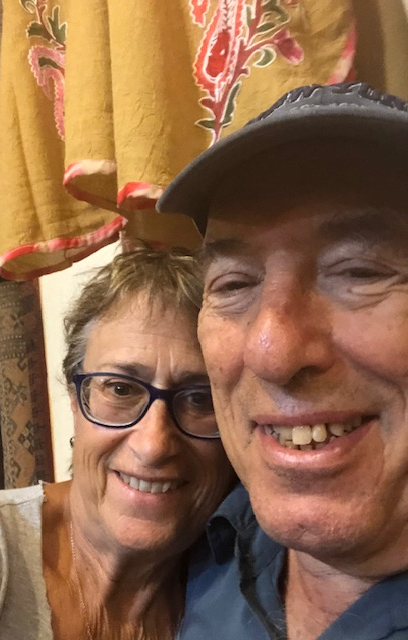
When I showed it to my partner, he said that it looked exactly like something I might have written. The sentiment is mine, Even the language is mine. And it’s very 2024, even though it was written in 1991.

My Dad. What a special person. A complicated man. A man never quite at home with his emotions. Quick to smile; slow to hug. A very active inner life. A very active public life. But most often not emotionally present for those of us he shared a house with.

I like to think things would be different today.

So here’s that very special letter, with those very special thoughts, lessons for us all, from that very special man who was my father.

  It was an idyllic morning in sunny Sarasota.

  I stepped outside the hospital, blinking in the sunlight. The everyday sights and sounds were different; they were as never before. The deep blue sky, the gently moving leaves, the traffic flow, the people — all seen in a new light.

  I reflected on how casual I had been, before my traumatic experience, to such common phenomena and to so much else in life — indeed, to life itself. And so I resolved to spend wisely whatever of life was yet to be mine; not to squander it. For life, I saw with stark clarity, is an incalculable gift. It should be held close, made the most of, constantly enriched, and cherished.

  That is one half of the lesson I learned there, standing in the sun. There was another.

  The wondrous sunlight enveloping me, could I retain it? Could I keep that sun from setting? Had I tried to halt its slipping away, and inevitably failed, how frustrated and saddened I could have been. But if that were my reaction I’d have transformed the glorious moment into one of regret and sorrow.

  But it is not only the sunlight which must slip away. Our youth and our years, our senses and our lives, these must go also. And we must accept their inevitable departure; be ever ready to let go.

  That is the other half of the lesson.

  This, then, is the paradoxical conclusion. Hold fast, hold close the precious gift of life, but with arms so loose as to be ever ready to release it; with arms virtually open.

  Is this an impossible challenge? Physically, yes; mentally, emotionally, of course not. We do it repeatedly throughout our lives. We give away our hearts in love, and we have more heart to give. We wear out our minds in deep thought, and we have a better, sharper mind. We are smitten by pity for the deprived, and we are the stronger for it.

  The key word in the conclusion about life is ‘inevitability’.

  Aware that life must and will inevitably end, each of life’s moments becomes all the more cherishable. The sole unknowns are the when and the how; when and how these moments will end. The choice is between succumbing to fruitless agonizing — fear and dread of the when and how — or living those moments richly, fully, gratifyingly; savoring them and saying, in effect, “I’ll relish this as long as I may, and whenever it ends I’ll be grateful for having had it — and hope there are some others who will be grateful that I had it also.”

  I imagine nodding heads. It does seem logical. But is it unduly difficult to transfer from the thought process to one’s inner being? To transplant the idea into actual, living reality? To live by it?

  It is not difficult. We do it again and again in our daily lives.

  Look. We are enthralled by a spectacular sunset. We are immersed in passionate expression of our love. We are transported by a rapturous violin concerto. Do we destroy such moments by dwelling upon their transitory nature? Our minds tell us these moments will pass. We know it. But do we permit that knowledge to suck out our enjoyment? How infinitely sad that would be. And in truth, we don’t, do we?

  So it is, or so it should be, with life.

  Life, that wonder-filled possession, is ours to keep for a while. Think of it as the wise sage Bruriah, wife of the Tanna Rabbi Meir, did, as a divine loan. How wholesome, how sensible, to make the most of the temporary gift while accepting that one day, any day, it will be taken back; that one day, as in Joshua Leibman’s lovely Day in the Park fable, the Great Nurse will beckon, “It’s time to go home now.”

  And, so, hold life close, with open arms.

  Of course, I have had frequent occasions in my life to recognize life’s precious worth — in peak moments of joy, or when escaping serious dangers. And, of course, I have long known that being mortal, my life must end at some time. But my acceptance of both of these truths was tucked away inside me somewhere. They were concepts I did not question. They were “givens”. I was never challenged to affirm them. I was never tested. How, then, could I be certain? When the Angel of Death confronted me, how would I really react?

  I have been tested now.

  And I thank God that I found, find, myself in total accord with the balance; with the synthesis of holding life close and readiness to let it go — of holding life with open arms. And in cognizance that I really believe this, that it has penetrated my inner being, I am warmed, strengthened, grateful, at peace.

  For you who may read or hear this, I pray that you find the wisdom to enjoy life, to cherish it, to make the very most of it for yourself and for those with whom your life is entwined; to hold it close — all the while accepting its inevitable departure without fear, frustration, or dread; prepared to let it go.

  And if you do that, if you really make that belief your innermost conviction, you will be among the most fortunate of mortals. For you will not only rob death of its anticipatory fright, replacing that with inner peace, but your life will be enriched beyond measure.

Amran Prero, March 1991

Addendum: I was with my father for the last few days of his life. We watched television together, chatted about my kids and about Israel, and he told me about a series of dreams he had on the nights leading up to his death. He was calm, at peace, happy, and in good spirits. He laughed at Tom Selleck’s Magnum P.I. as usual, giving him a constant barrage of advice.

He truly held life close with open arms.

Udaipur: The Village Tour

We met our daughter and her three children at the Delhi airport after they’d spent the weekend in Agra seeing the Taj Mahal. We flew together to UDAIPUR, a small, pretty city in the Rajasthan District. UDAIPUR is known as a romantic honeymoon location, home to the lovely Lake Pichola and impressive City Palace. My partner and I were there 7 years ago on our first trip to India and thought it would be a good place for children’s activities.

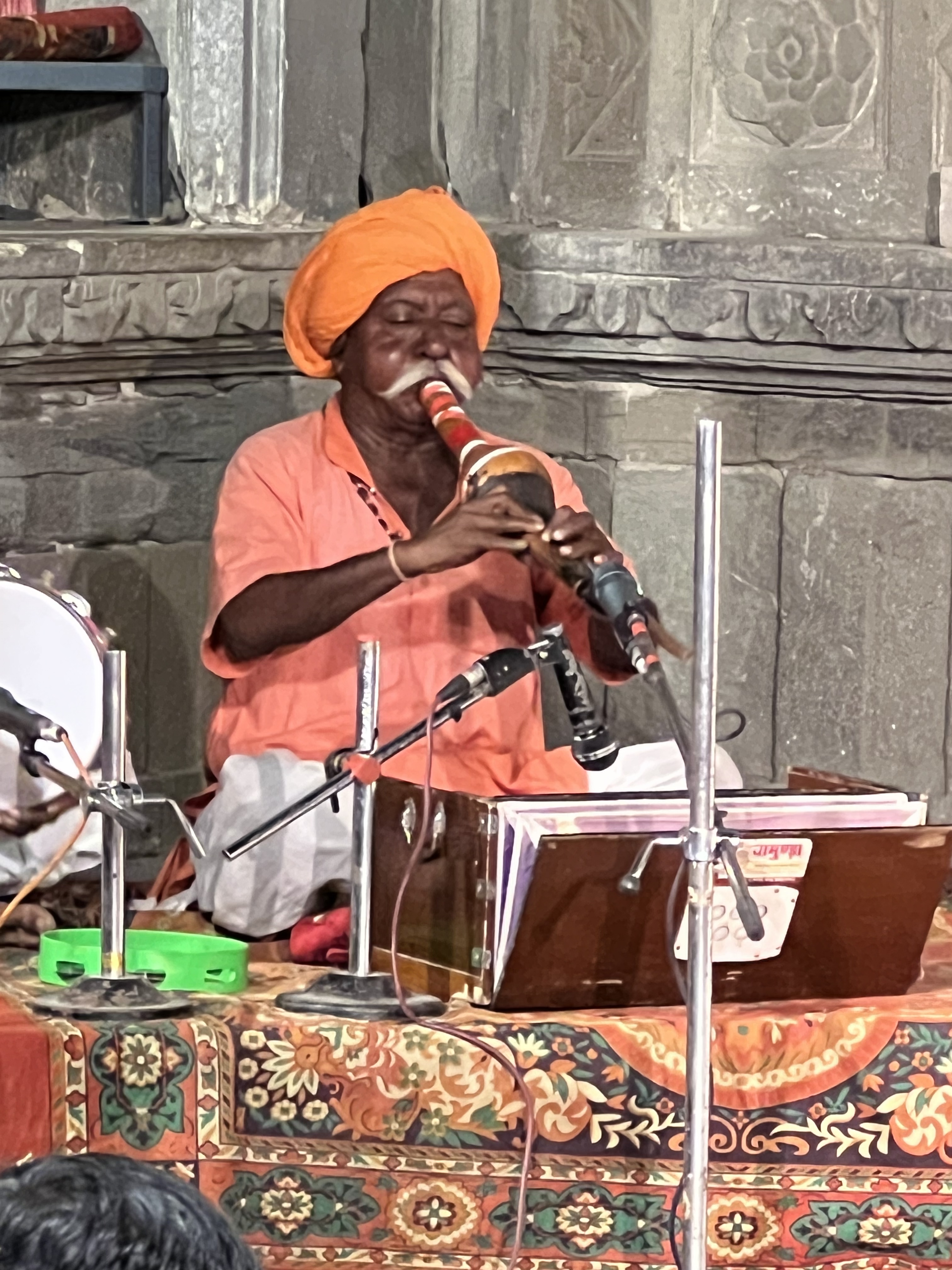
Rajasthan has its own rich history of colorful dress, dance, and music. We were sure the kids would love the cultural evening with the live Rajasthani music and groups of women dancing with bells on, fire pots on their heads, and especially the young woman dancing while balancing 10 colorful pots on her head. We were wrong. Luckily it was only an hour.

The next day we fared a lot better. All but one of us really got into the 3 hour art workshop where a patient, sweet, talented artist helped us each paint our very own miniature. Our daughter and granddaughter both created truly beautiful miniature paintings. My partner’s peacock and my dancing elephant weren’t bad but revealed that we needed a bit more instruction. Our youngest, a very active 7 year old, showed more focus and attention to detail in his prancing horse than I’d ever seen.

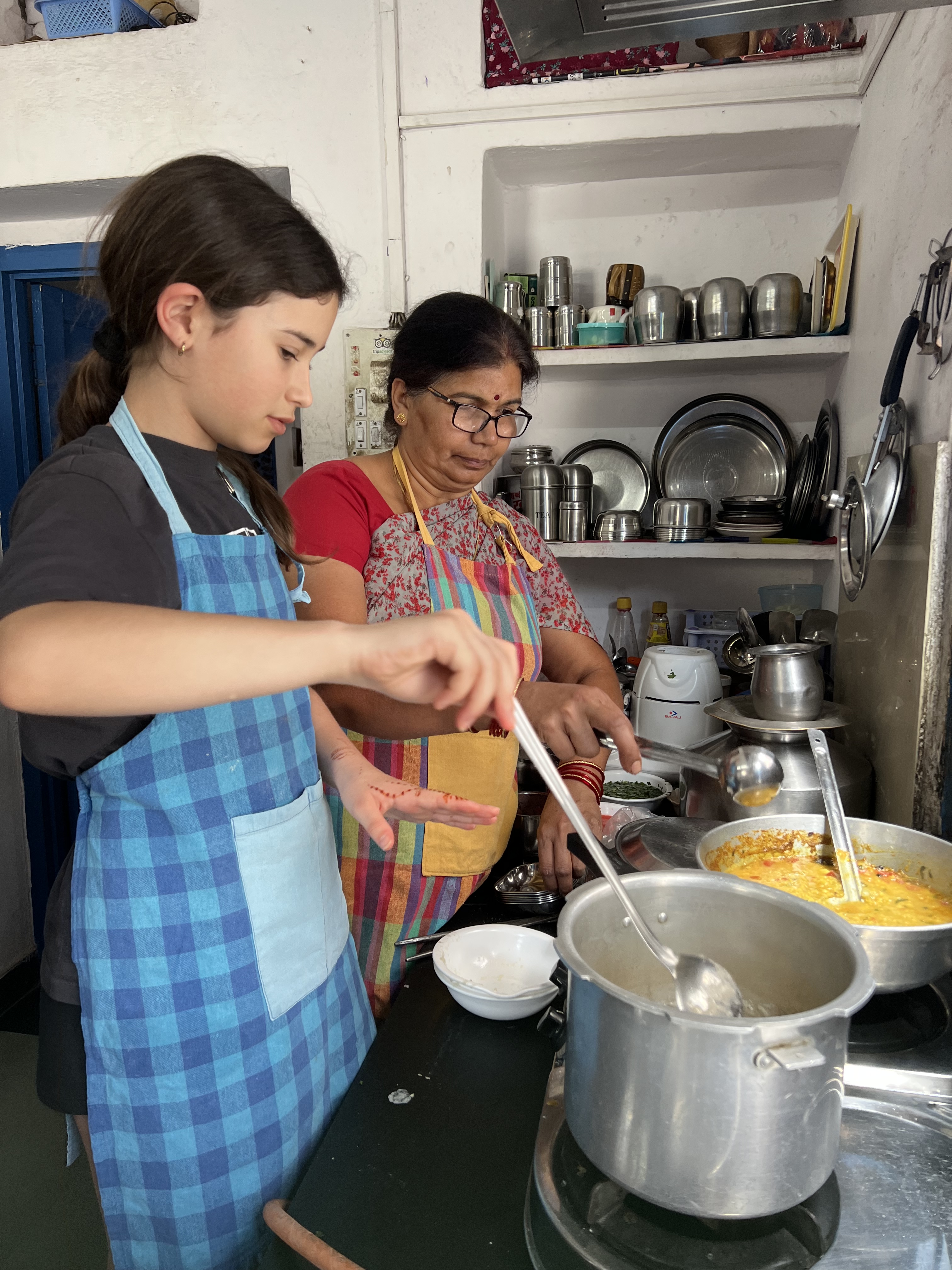
The 3 hour cooking class was a hit with all of us. It was very hands on – from the chopping to the kneading to the measuring and mixing of spices, to the frying…and, of course, the eating. The shy cook started off embarrassed that her English might not be good enough, but once she warmed up (and it’s hard not to warm up to these three kids!), she totally took over the instructions from her (very good looking) son, Gautam.

But the day none of us will ever forget is the day of the village tour.

My partner and I had taken a cab and driver out into the countryside 7 years previously. Our driver took us to several cottage industries – hand stamped textiles, pottery, a country art school for miniatures. We didn’t remember the names of the villages so after reading the glowing reviews of “Salim’s Day Village Tour” we decided to put our motley crew in Salim’s hands and follow wherever he led.

Salim, a devout soft-spoken Muslim, showed up dressed all in white in honor of the Muslim holiday of Ramadan. He brought another auto-rickshaw in addition to his own. We all piled in and off we went in the shimmering 35 degrees heat (95 degrees Fahrenheit).

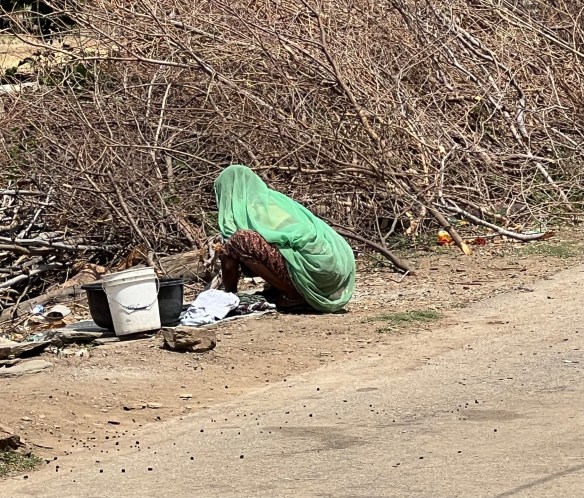
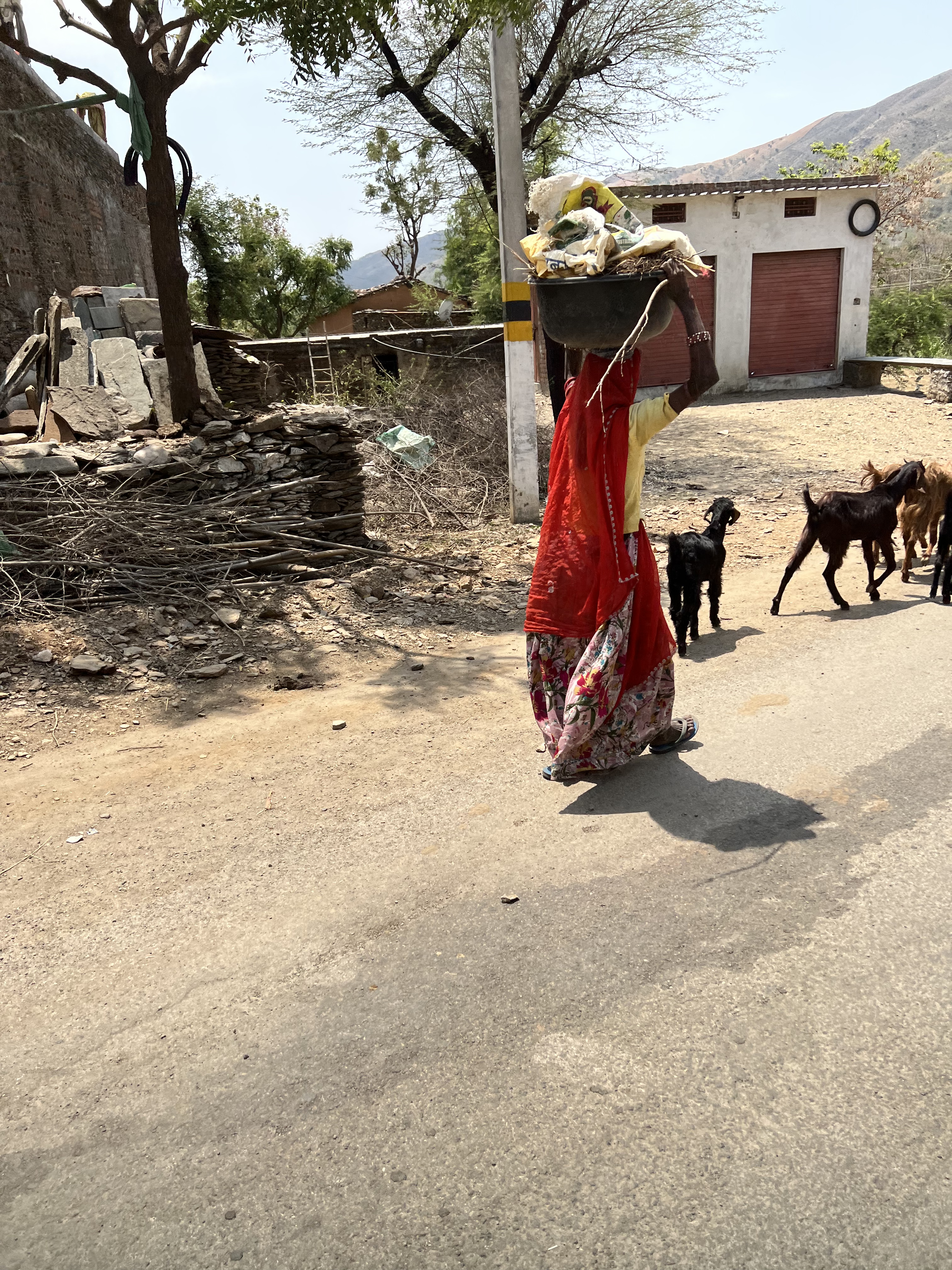
About half an hour later he pulled onto a dirt and gravel road and then turned again onto a rocky path where he parked after another 100 meters. Our first sight was of two women in the distance washing clothes in the small creek. The second was a woman, also dressed in a traditional, colorful sari, with a stack of cow patties balanced on her head.

We followed Salim into a lean-to where five men of varying ages sat on a flat stone area and several women stood by a counter leading into a small hut. It turned out that the father of the woman of the house had died and they were celebrating his life according to their Hindu custom. Somewhat similar to the Jewish shiva, but not exactly an act of mourning since they believe that while his physical manifestation is gone, his (much more important) essence remains.

Oddly enough, one of the ways they honor their guests is to give them cigarettes. Maybe to hasten their reunion with the recently departed? There were giggles from the women and guffaws from the men when my daughter took one of the cigarettes and lit up. Indian women do NOT smoke. But my very white, very light haired daughter differs from them in so many ways that a puff on a cigarette didn’t offend.

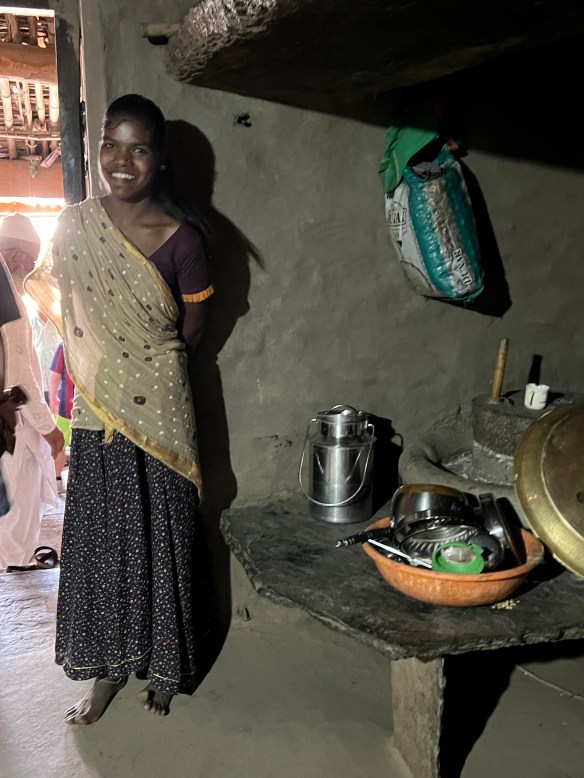
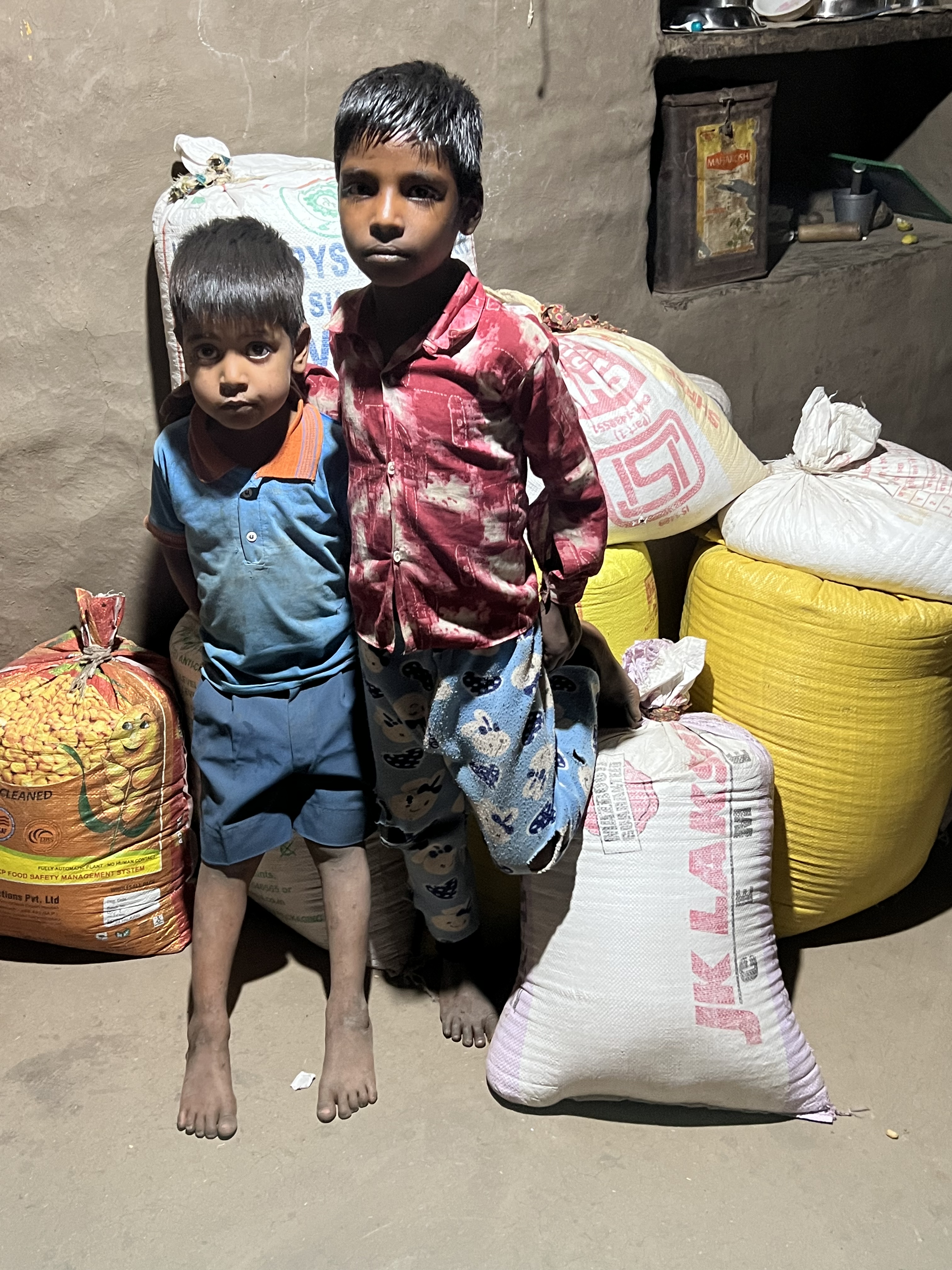
We asked to see inside their one-room home and they happily acquiesced. One of the young women whisked off the covering from a large pot to show us the gas burners (my daughter told us later that a mouse came barreling out). Inside it was quite dark. There were big sacks of flour and rice along one wall. There was one bed with pots, pans, metal plates and cups on it. Salim explained later that the couple sleep in the bed and the children, in this case three, sleep on mats on the floor. There was no bathroom; it’s presumably outside.

We asked if there was electricity and a man pointed the one bare, unlit, bulb hanging in the entranceway.

After our goodbyes we moved on to a day care center not too far away. There were about 15 gorgeous three and four year olds inside.

To say the cramped space was dark, dirty, with virtually no toys doesn’t come close to giving an adequate description.

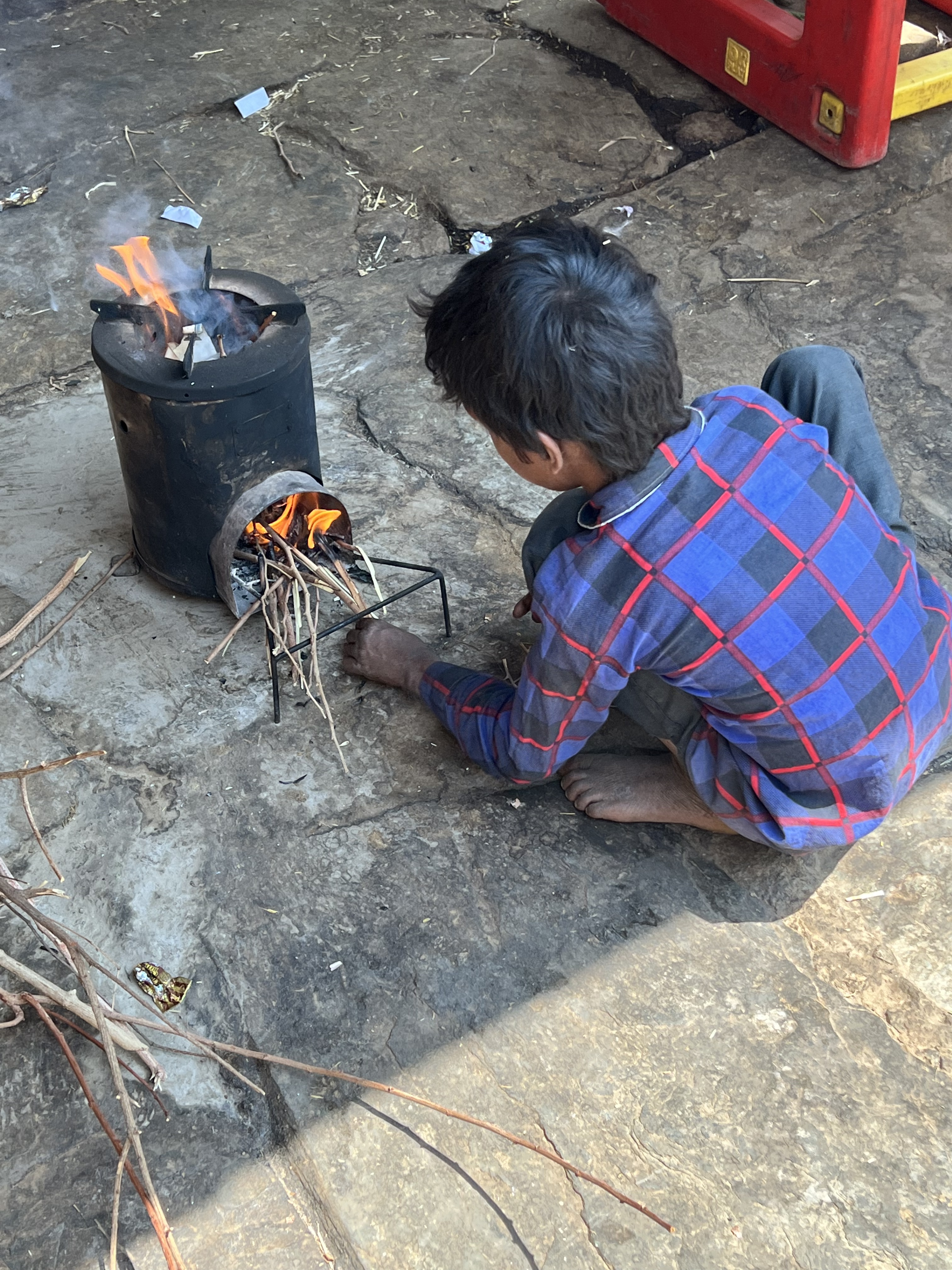
At one point a boy, who looked to be 8 or 9 years old, set fire to some kindling stuffed into a canister-looking contraption. We basically stood with our mouths open contemplating how many safety measures were being ignored while the smaller children heedlessly walked around the open flame. The lone day care worker put a pot of soup on top and began to prepare the children’s lunch.

Salim had recommended we bring candies. Our grandchildren had a great time handing out candies to the youngsters both inside the day care center and walking around the village. They were surprised that when they offered a candy to a child who, as it turned out, had already received one, she declined to take a second. What kid does that!?

By this time we were all drooping from the intense heat and more than ready to head back to our hotel. It wasn’t only because of the heat, though, that it was so quiet in the tuk-tuk on the ride back. There was a lot to think about.

We arrived at the gates to the 42 acres (over 160 dunam) surrounding our hotel. The turbaned guard called a buggy to come get us: goddess forbid we should walk the 150 meters to the entrance to the hotel. Along the way we saw peacocks roaming the grounds freely, smelled the fragrance of the beautiful flowers, and heard the splashing of many fountains.

Truth be told, we don’t usually stay in such elegant surroundings where there are so many impeccably dressed, beyond pleasant staff constantly bowing namaste in our direction over prayer hands. Our daughter is more accustomed to 5-star hotels and it’s actually much easier to enjoy a vacation with children, one of whom is a teenager, when they’re comfortable.

Inevitably at the dinner table when we talked about our impressions of our day, and after the grumbling about the schlepping around in too much heat for way too long, we all expressed our dismay at the parity between the lives of the villagers and the vacationing Indians sitting at the tables around us.

Almost 70% of the one and half billion people who live in India live outside the cities. As in most developing countries, every year people move to the city for employment or other ways of bettering the lives of their family – about 2% annually in India. The already overloaded infrastructure of the cities – Delhi with almost 33 million people, Mumbai with over 21 million, Bangalore with almost 14 million – is hard put to cope with more.

Prime Minister Modi, since his election in 2014, has instituted several programs to encourage villagers to remain in their villages. His government guarantees 100 days of employment to every villager who’s eligible. A gift of 150,000 rupee ($2000) is given to each village homeowner for home improvements, primarily to fortify roofs and walls to withstand monsoon season. 600 million toilets were purchased for the villages in the first five years of the present government .

And, still, the parity is huge.

We talked about the Indian trait of acceptance and the joy in the villagers’ children’s play. We talked about the bountiful nature of our own lives and how, even so, we so often strive for more and better. One of us reminds us of the pride in one man’s voice when he pointed out that his daughters were home visiting from college. So along with acceptance there can be a desire for change.

We conclude our conversation as so many of them end – knowing that we can only ever get a small peek into the depth and vastness of this amazing country called India.

None of us will ever forget these two weeks of ours as a family in India and this day will always stand out.

Riding the Rails

Literally billions of people ride the Indian Railways every year – 8.086 billion in 2022. Established in 1836, it remains the most utilized form of public transportation between cities in India. Cheap, reliable, and relatively comfortable, passengers can choose between at least 3 classes of travel from non-air conditioned, usually very crowded, sleeper class to air conditioned first class (not available on most trains) with only one person per berth. Clean sheets and pillow cases are provided. There’s a small table and individual reading light in each berth. The seats revert into beds. Often there is a western toilet as well as an Indian “toilet” and the bathrooms are relatively clean, although often stinky.

The reservation process is tricky.

We were fortunate our first time in India to be taken under the wing of the young man who arranged for us to see tigers in Bandhavgarth. Though not at all his job, he walked us through the complicated process of opening our own Indian Railway account. As a result, we’ve been able to purchase train tickets online on every trip since. Most foreigners use the ubiquitous travel agencies where they can purchase train tickets for an added fee.

The status of a reservation is crucial.

We didn’t understand what all the abbreviations stood for at first and learned by making funny mistakes which thankfully didn’t result in us getting kicked off trains, but only because Indians have inhuman patience with how life rolls.

There are many levels of waiting list status. The final status only becomes available 3-4 hours before the train leaves the station. That’s why so many Indian families can be seen sitting, or even sleeping, on the platform floor. Often they’ve brought stainless steel closed pots with food for the long wait.

If a seat has not become available money is automatically refunded.

If one traveler receives confirmed status, all travelers in her party can board the train but they may not have an actual seat. They can sit on the berth of the confirmed traveler…or on the floor.

And then there’s finding the correct platform and your particular train car’s position. The train may stop for only 2 minutes and each train is ridiculously long. If you read Tamil Nadu or Mayalayam you may not have trouble reading the electronic sign but, even so, the platform may change. The final platform may only be announced (thankfully also in English though so heavily accented sometimes that it’s a challenge to understand) 10 minutes before the train’s arrival. Being old and very white, people often approach us to ask if they can assist us in standing in the right place. Indian kindness and gentleness is found everywhere.

Our first time in India we had to keep asking where to get off the train. There’s no announcement of stations. The stations are often not lit up so there’s no possibility of seeing the name of the stations at night. At that time there was no live online running status as there has been for consequent trips. Again Saptarishi, our guardian angel on our first trip, stepped in to save us on one overnight journey. He called us as 4 am to tell us to get off at the next stop. Sweet guy. Who knows where we would’ve ended up?

There’s a sense of accomplishment in learning the twists and turns of using the train system. And not only fanagling our way effortlessly through the process.

Also realizing that less is more. Each trip I’ve packed less so as to be more comfortable getting on and off trains as well as having more space around me in the berth. And that’s a useful skill for every aspect of travel, imo.

Also being with Indian travelers and having some interesting conversations- glimpses into their lives. Once a large group of university students traveling to various cities to see different types of city planning. Another time two middle aged couples – friends – taking an annual vacation together. A few days ago a young man whose job it is to be sure used linens are removed and clean linens provided.

On one of our first train trips a 50-something couple, both professors, returning home from visiting their son at college explained the Hindu relationship with god/dess statues and shared their views on arranged marriages versus “love marriages” (they were shocked to learn that ours wasn’t an arranged marriage).

Another benefit is being able to move around, stretch your legs, and even do a little yoga if you’re so inclined. India is huge – Rajasthan, one state out of 28 – is the size of Germany. A journey between cities might be a couple of days or more. Hiring a car with a driver is relatively inexpensive but not only are you in a pristine bubble, removed from actual India, you’re also stuck in a car for hours and hours, day after day. Sure, you can stop whoever you want, and you can stay overnight in nice air conditioned hotels along the way, but it just takes that much longer and is, imo, claustrophobic.

Did I mention the vendors who hop on the train selling tea, coffee, snacks, and meals?

“Chai, chai, masala chai, coffee!”

So far we’ve only been on two train trips and I’m not sure how many more we’ll take this time around.

I’m already feeling a bit nostalgic..

A Gentler Way of Life

We’re leaving Thumpoly Beach later today.
Yesterday I spent two hours happily painting with acrylics surrounded by paintings of local artists and classical music in a specially designated room in a local art gallery. The owner of the gallery, a retired professor of political science and engineering, provides this wonderful experience for any tourist fortunate enough to learn of the possibility and make a reservation. There’s no fee.
He explained as we shared a cup of (way too sweet) coffee that he left the university five years before the age of retirement because his wife left her teaching position and was at home. There was a hint of illness on her part but he didn’t elaborate and I didn’t ask.
I sensed that the experiential opportunity he offers is an opportunity for him to socialize with people from all over the world now that he’s restricted to this lovely but insular fishing village. We chatted for an hour as he brought out spicy roasted cashews and cookies. A little politics (a big Modii and Bibi fan). A little religion (he’s Christian and fondly recalled his pilgrimage to Israel). A little economy (India has a vastly more reasonably priced medical system and price of living).
A man happy with his lot in life.
As I walked home I thought it could be very pleasant to be in Thumpoly for an extended visit and share afternoon tea and conversation with him from time to time.
I recognized several of the women I passed in their colorful saris with an umbrella held overhead to protect them for the sizzling sun. We smiled at each other, wagged our heads and offered a soft ‘namaste’.
Most stores are closed for a few hours when the sun is at its hottest and only now, at five o’clock, people are again out and about.
My partner and I had agreed just that morning that, as wonderful as it is here, we were ready to move on. But as I gazed at The Arabian Sea and the young men strolling along the beach I realized that I’m a little sad to be leaving.
Every morning we see the fishermen heading out for another day of catching whatever they can – and it isn’t much this time of year. They throw their gill nets or small trawling nets and harvest what they can. A few shrimp. A crab or two. A kilo of very small fish if they’re lucky. Later in the day we see exuberant children walk by in their school uniforms. Inevitably they stop to say hello, ask our names (again) and inquire after our health.
In the late afternoon, when there’s more of a breeze, we see various village residents walking by on the dirt path along the shore in front of our balcony. No one is in a hurry. They seem to be enjoying the sea air and the crash of the waves as much as we do, even though they’ve undoubtedly lived here all their lives.
I suppose there’s gossip and intrigues here as there are everywhere; heartbreak, ill health, kids making life choices their parents don’t understand.
There are very big beautiful homes and tiny unkempt hovels.
But in general life here seems to have a gentle rhythm and people seem to smile much more than in the towns with which I’m more familiar.
Our friends here have two children, which is the norm. One, their daughter, was accepted into the engineering program at a prestigious university very far away. The other, their son, is finishing high school and plans to spend seven years in the army.
Our friend, Antony, raised in this village, the son of a fisherman, was a career officer, head of the anti-terrorist units fighting in Kashmir, and retired as a colonel, one of the wealthier residents of Thumpoly. His wife is a school principal who (in spite of her profession?) is almost always smiling and happy.
Antony and Teresa both give much of their time to the community. Whether from modesty or simply relaying this village’s reality, Antony has told us often that giving to the community is the norm and not the exception.
There are certainly downsides to life in this crazy patchwork of a billion and a half people, over 25 spoken languages, millions living in slums alongside the abundance of IT employment, jewelry production and export, and a caste system which refuses to die, just to name a few challenges.
At the same time, there is a gentler way of life and a serene inner beauty to those who have less, in many cases a whole lot less, but retain an appreciation for what they do have.
So, yes, I’m a little sad to be moving on, even while I look forward to better physical conditions and an evening cocktail.
Ah! The contradictions of life.

Whatever happens, I’m satisfied

In Israel parents teach their children a saying very early on in life – Whatever happens, I’m satisfied. It rhymes in Hebrew and expresses a futile hope on the part of parents that it will nip complaining in the bud.

Pretty ironic since Israelis (and maybe Jews in general) are among the most, ahem, discerning (read critical, judgmental, complaining) people I’ve come across in my extensive travels. And I am one, so I’ve had plenty of experience.

On the positive side, perhaps that’s why we’re the start-up nation with more technological and medical innovation than any other place on earth. That squinting one-eyed gaze at everything around us and thinking…hmmm. I could do that better.

On the not-so-positive side, it’s a pain in the rear end to be so often surrounded by people who are almost never satisfied with the way things are. The food in the restaurant is never quite right even after an order reminiscent of Jack Nicolson in Five Easy Pieces (I’ll have omelette plain, with a chicken salad sandwich on wheat toast, no butter, no lettuce, no mayonnaise, hold the chicken). The room temperature is too cold or too hot. The teacher doesn’t pay enough attention to my kid or singles her out for special (not good) treatment.

I wasn’t feeling great the other day. Stuffed up, headache, scratchy throat, didn’t sleep well. Here I am in southern India. Home of Ayurvedic medicine. Decided to get an Ayurvedic massage. For the uninitiated, this involves total nudity and more oil than a Mediterranean diet calls for in a lifetime.

The very sweet young woman spoke no English – zero – and my Malayalam is pretty rusty. There was absolutely no possibility of any request whatsoever. None of the usual massage direction – harder, softer, higher, lower. Nada.

As I lay there swimming in oil I thought THIS is the opportunity of a lifetime to fulfill that Israeli saying – Whatever happens, I’m satisfied.

I found thoughts popping up about how I might prefer this, that, or the other thing she was doing but they disappeared as quickly as they arose. They were irrelevant given our mutual lack of communication skills.

Ultimately, after she wiped off a lot of oil and I pulled my shift over my head – this not being my first rodeo I knew that less is more is the rule when committing to a Ayurvedic massage – I showered and crawled back into my stuffed up, scratchy throated, headachy nest and realized my headache was gone, my throat a bit less scratchy, and that prickly low grade fever feeling had disappeared.

I woke up this morning with more energy than the past couple of days. Had a peaceful, flexible hour on my yoga mat, and sat down to ponder the potential of “Whatever happens, I’m satisfied.” She knew what she was doing and any direction from me would have just gotten in the way.

It’s a continual conundrum in my mind. This contentment with what is versus the striving for improvement.

What do you think?

PS The above photo was taken from this very balcony three years ago. The most peaceful place on earth, Thumboly Beach


Here and Now in the Land of Polymyalgia Rheumatica

Here are some things we all know:

Nothing lasts forever.

Attitude makes all the difference.

Sleep makes moving in the world possible.

Family, friends, and neighbors – love – make us stronger.

And, yet, sometimes when bad shit happens, we just want to curl up under a comfy duvet with a good book, ignore the phone, ignore all the things we know will make us feel better, and WALLOW. Does it make anything better? Nope. Does it at all change the bad shit? Unh unh. Not a bit. Do we know it’s counter-productive even at the very minute we’re doing it? Yep. But there it is. We’ve all been there.

So I’ve had an image of myself for a very long time. Maybe since I was seven years old. Dysfunctional family. I’m the youngest. Given/took on lots of responsibility from the age of seven. I’m not complaining. It was quite empowering. It was a process that has served me well all my life. And as I aged that image stuck with me. Healthier and more flexible than my cohorts. Quicker, more energetic, more adventurous. Sure, my body was creaky and achy in the morning, but it didn’t prevent me from doing all the stuff I wanted to do.

And then…Polymyalgia Rheumatica. Otherwise known as WAKE UP CALL.

One day teaching six yoga classes a week and driving all over tarnation to visit grandkids. The next day taking 20 minutes to get dressed using strategies that would make a contortionist proud. Legs didn’t lift on their own. Shoulders didn’t rotate on their own; or otherwise.And the pain? We won’t even go there.

Two weeks of that. Googling MS, ALS, and every other dire possibility. To be honest, I didn’t really wallow all that much. Scared myself silly but not a lot of wallowing. A few minutes every morning when I contemplated maneuvering myself out of bed. Sometimes in the middle of the night when the pain of turning over in bed woke me up.

But, here’s the thing. Not just writing a post to rehash the last one.

All those things above that we all know? They’re all true! And they add up to another thing we all know about – resilience. The capacity to recover from difficulties; the ability to spring back; elasticity.

After two weeks, I received a diagnosis and could take MS and ALS off the table (whew!). Uncertainty is such a basic and inevitable part of life, but sometimes it’s more challenging than others. Weird as it sounds, I made my peace with dire diagnoses and death during those two weeks. Glad I can pack them away for now but also glad to have done the work.

All my life I’ve been super careful about medications and medical interventions in general. Recreational drugs are one thing. Drugs that ruin your liver, lead to dialysis, or send you out into the streets looking for opioids are another. Aches and pains? One ibuprofen, maybe a couple of times a week. Torn meniscus? No surgery for me; I’ll treat it with yoga, thank you very much.

So here’s reality staring me in the face in the form of steroids. Steroids! Yikes – the boogeyman of medications. They eat away at your bones. Lead to mood swings. Water retention. Moon face. Can cause skyrocketing sugar levels.

On one side, all those side effects and a lifetime of avoiding medical intervention. On the other side decreased pain and increased mobility.

Not even close.

It won’t last forever. I’m relishing in every minute of walking, slowly, carefully, avoiding stairs, in the glorious autumn weather. Sure, the steroids make sleep elusive but on the 3rd night when I’m so exhausted that I actually sleep for 4 or 5 hours straight, wow!, living takes on a new meaning. I hired a cheerful, energetic cook, to free up my good hours for other things and happily peruse the refrigerator feeling like I live in a restaurant.

I can laugh at the list of 11 medical appointments coming up over the next 5 weeks. Hell, I can laugh at anything.

In Buddhist philosophy, there are lots and lots of lists. One of them is a list of five obstacles. The fifth is considered the most difficult. The fifth is doubt.

I spent a bunch of time during that first two weeks, and occasionally during the past week as well, standing, huffing and puffing, in front of that fifth obstacle. Taking deep breaths. Gauging its height. I gathered 20 years of dharma talks and yoga poses and psychology books, the love and support of family, friends, students, and neighbors, the lessons of my own strength and possibilities learned early in my dysfunctional home, the belief in the meaning of life and God’s plan, took a running leap and now find myself on the other side of doubt.

It’s a tricky disease, this Polymyalgia Rheumatic. Some people are on steroids for a year and wean off them and are fine – maybe an occasional flareup. Some people are on a low dose of steroids for years, or until they die (of something else).

I have good days and not-so-great days. I take advantage of all those things we know. I thank goddess for resilience. And I invite doubt for a nice Indian tea from time to time.

Loss and The Two Arrows

There are a bunch of things that no one tells you about aging. Or maybe they tell you but it goes in one ear and out the other. Not relevant. Things that register in the way the laws of physics register – ya da ya da ya da.

As I turned 60 and even more after 65, I became aware of the physical aches and pains that go along with aging and, in my case, are the price for having jumped and danced around and, taking advice from The Eagles, taken my body to the limits for decades. I remember an orthopedist once telling me to keep teaching hip hop, hiking, and doing whatever I loved because ultimately even sedentary people have joint aches and pains…but they have a lot less fun getting there. I totally agree. Even on the mornings that my knees wake me up with a call for help.

It’s some of the other things about aging that I never gave much thought to (or any).

  • finding conversations of people under 40 uninteresting
  • having read every permutation of book and movie plots ad nauseam
  • being cold (or hot) when no one else is
  • losing friends to illness, lack of mobility, or death
  • aging differently from significant people in my life

YIKES!!

It turns out that an inevitable part of aging is loss and grieving for those losses. Big losses and small losses. And some losses are harder than others; not necessarily the “big” ones.

We all do it differently. And it all looks different on other people.

I remember having no regrets at 50. Ha!

I remember letting go of hip hop and aerobics in the blink of an eye. Didn’t seem like fun anymore. Traded my spandex for yoga pants happily.

I remember not even entertaining the notion of a sedentary life requiring programmed exercise. Counting steps? Furthest thing from my mind.

I remember a time when illness and death weren’t even a tiny part of my thoughts.

I’d read about (other, much older) people complaining that many of their friends had fallen by the wayside one way or the other. I’d heard them extolling the virtues of cultivating younger friends to combat loneliness. Scroll up – in one ear and out the other.

My partner “lost” his mother 10 days ago. My mother-in-law died. She wasn’t a nice person. Not a good mother. A narcissist. She was lively and charismatic and loved to be the center of attraction, but her children and friends paid a heavy price. She had dementia for the last five of her 93 years and didn’t recognize my partner or his sister who, in spite of a complicated and challenging relationship, made sure her last years were comfortable. If emotions were rational, no one would mourn her death. But if emotions were rational they wouldn’t be called emotions.

emotion – derived from the Latin term emovere;

to agitate or stir up. The affective aspect of consciousness

My parents are both long gone. My father died thirty years ago and my mother about twenty. Fortunately for me, I made my peace with both of them while they were alive. They weren’t partners in the process, but the possibility of relating to them with equanimity in life was a blessing.

My partner wasn’t so fortunate.

Watching his mourning process has been thought-provoking and, yes, emotional. A loss of innocence. A loss of possibility. A loss of the luxury of avoidance. A recognition of the loss of reconciliation. A loss of the comforting delusion of immortality.

My mother had bi-polar disorder. The shadow of her disease lurked everywhere. Sometimes it blotted out all joy and normalcy; sometimes it was a vague and disquieting sadness in our house. It was always a sense of waiting for the other shoe to fall. I was entrusted with her care from a very young age. I gained confidence and self-esteem that’s served me well throughout my life. I also harbored resentment and fear of chaos in the world.

I used to imagine myself a very small figure, wrapping my arms around my knees, head bowed, before a huge Mr. Clean-type genie, rising out of a magic Aladdin’s lamp, arms folded, scowling down on me. I didn’t understand the image or why it recurred so consistently and persistently throughout my life.

Imagine him with a turban, beard, and ferocious expression

The image vanished, never to return again, once I worked through my relationship with my mother. It was a loss I recognized with gratitude. I forgave my mother, without her permission, and realized one day that I felt a loving, empathetic sadness for her; a brilliant woman whose life was taken from her by a crippling disease no one understood at the time. A tragic loss. No second chances.

Not so with my mother-in-law.

The frightening image my partner has of her is his to tell, not mine, but he has one no less frightening than mine.

It’s difficult to accept that a person can be unkind, cruel, and totally lacking in compassion. How much more so when it’s your parent; the person entrusted with your care, emotional and physical? It’s tempting – no, imperative – to search for an underlying reason to shed a more sympathetic light on such a parent.

He searched. We searched. The round of reasons we tried to fit into the square peg bulged and defied imagination.

Ultimately, the physical loss of his mother grew into the loss of innocence. The first kind of loss is met with a simple grief. She was, after all, turning 93 two weeks later and hadn’t been herself for years. The second kind of loss is far deeper and creates a grief that is painful at any age, but magnified at 70, after so many years of pretending, ignoring, excusing, and hoping.

Two of our sons were at their grandmother’s funeral to support my partner and express their respect for family ties. When I talked to our older son before he left to meet us at the airport, he asked how his father was doing. I explained that he had many unresolved issues with his mother and now they’d never be resolved. I added how important it is to confront unfinished business with a parent in life. Hint, hint. (He moved on.)

There’s a lot of loss involved in aging. Loss of a parent. Loss of freedom from pain. Loss of mobility. Loss of long term friends. Loss of mental acuity. Loss of hearing. (Shall I go on?)

A Buddhist parable addresses the problem of suffering. It describes the two arrows in every difficult situation in life. The first is the arrow of pain, in this case loss, and the second is the arrow of suffering. The first is inevitable but the second is optional. It’s the arrow we shoot into our own hearts with our reaction to the inevitable losses that come with aging.

So many circumstances are beyond our control. My mother’s disease; my mother-in-law’s nature.

We can only prepare ourselves by nurturing our souls. By taking a deep dive into ourselves and becoming familiar with the particles of a higher power which exist inside each of us. By honing our ear to hear the pure voice of equanimity which resides there.

Many years ago I weighed the option of starting a hospice center. I had a conversation with the man who created a small hospice center in Jerusalem. At the time he was in his early 80’s. He exuded empathy and kindness. We spoke after I took a tour of the center with a staff member. I was surprised to see that each of the rooms had two residents. I asked the founder of the center if it was disturbing for the residents to witness the death of their roommate. His answer equally surprised me. He said that with the work done with the residents, every death since the center’s inception had been peaceful, and inspired serenity in those who witnessed it.

Choosing equanimity isn’t a one shot deal, and it’s not easy. It takes diligence and practice and work. Committing ourselves to the effort doesn’t ensure total success, or success every time. But to quote a poet by whom many of our lives have been enriched, Mary Oliver,

“Tell me, what is it you plan to do with your one wild and precious life?”

India to Israel: Corona Again

For those of you who read my last post – yes, we made it home – by hook or by crook and by the hair on our chiny chin chins.

For those of you who remember the days when people used to kiss the tarmac when they arrived in Israel – for security reasons it’s no longer possible, but the feeling was certainly there for us on March 19, in these times of Corona.

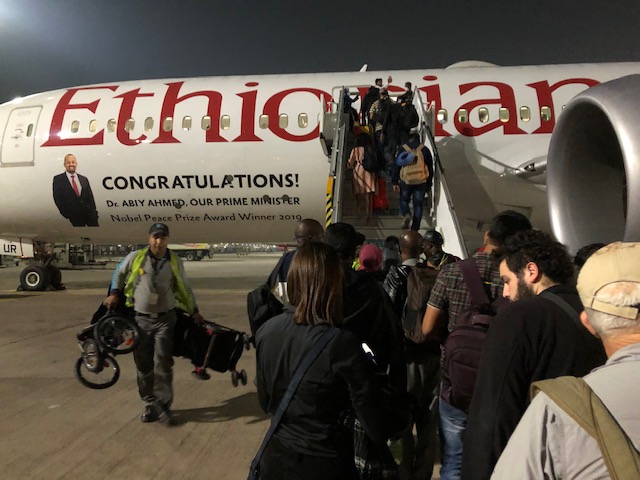
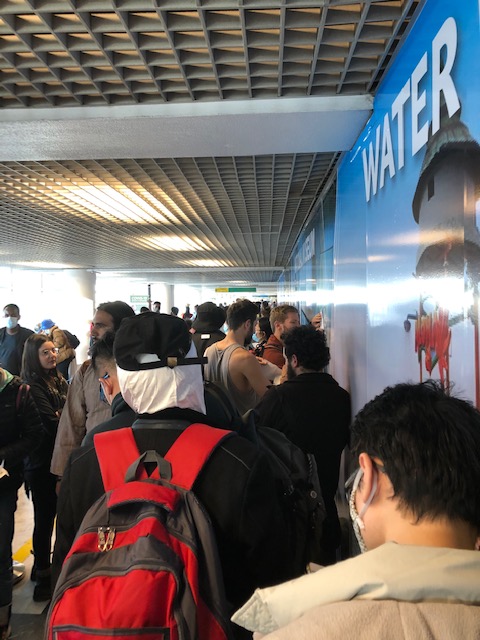
We spent 27 hours getting home from India on Ethiopian Airlines and didn’t even grumble about it. Seventeen hours in Addis Ababa? No complaints. A long line in the airport (several times) to have our temperature taken? That’s fine, thank you. Rowdy passengers (my partner calls them ‘enthusiastic’) unrestrained by the crew? Peachy.

The main thing was to get out of India and back home.

Things changed literally from every morning to every evening and then again the next morning. Prime Minister Mod’i, like many of the world’s leaders, proclaimed increasing restrictions from announcement to announcement, the difference being that he is responsible for 1.5 billion people – 17% of the population of the world! A critical mistake on his part could very well mean millions of Corona deaths; maybe tens of millions.

Within days all pending visas were canceled, and India closed its borders to foreigners. Within twelve days the skies were closed – no flights in or out.


One by one, the 29 states in India began closing their borders to foreigners. After that, one by one, they began requiring all foreigners present within each state to leave.

Cab drivers began to refuse foreigners. Guest houses did as well. The railway system shut down. Over a period of 10 days, intercity buses were canceled. Foreigners asked to leave their lodgings had limited options for travel elsewhere. Some began sleeping in the streets.

Within ten days Mod’i enforced a one day lockdown from 7 a.m. to 9 p.m. Four days later he proclaimed a nationwide lockdown…period. Anyone who’s experience the open market in Delhi or the crowded streets in Mumbai can imagine how eerie a sight that was.

By March 25th all domestic flights were canceled.

The Israeli embassy started organizing private buses to transport stranded Israeli citizens to Delhi and Mumbai to be close to an international airport for extraction.

In Israel, the restrictions of movement are barely enforced. In India, the police canvassed the streets beating non-complaint people with sticks.

We reserved flights with 5 airlines. They began canceling the day before take-off until we were left with Aeroflot and Ethiopian Air. We chose Ethiopian because Europe seemed unreliable with Russia announcing the closing of its borders for the day of our flight. After trying to get confirmation that our flight would still fly, calling Aeroflot offices in Israel, India, and Russia – including a conference call with a friend in Israel, me in India, my friend’s sister-in-law in Russia, and an Aeroflot agent in Moscow – the confirmation was still shaky.

We arrived in Israel at 3 a.m. Two friends had left one of our cars in the airport parking lot (one drove his own car to return both of them back home). No one spoke to us at the airport. No one asked us any questions or took our temperature. No one asked how we planned on getting home even though we were officially in quarantine once we touched down on Israeli land.

Go figure.

Our friends in Israel stocked our fridge and freezer. They decorated our home with welcome home posters. We even had daily visits with several of them on our back porch – six meters from us and on their own chairs. Friends are the best! We found out later than one of them called one of our children to enlist her aid in convincing us to leave India.

My Corona symptoms disappeared once I’d spent a few hours in my own home.

Friends we made in India were in touch with us – some more than once. They were all in lockdown but doing fine. Of course, none of our Indian friends are homeless or live in slums with collective toilets and corrugated roofs. They expressed happiness that we made it home, and, interestingly, appreciation for our sensitivity to India’s needs by leaving them to cope with Corona on their own.

We can’t go out for another eight days, not even to a pharmacy or grocery store, or to get exercise within 100 meters of our house, like others can do. But we’re fortunate in so many ways – first and foremost that we are healthy, and our children and grandchildren are healthy – and then:

  • We spent five months together in India and became even closer so that being together in our home with very limited contact with the outside world is not at all a hardship
  • We have a spacious house and even a yoga studio
  • We have a comfortable back porch with a large, lovely backyard
  • We live in a community where the youth are happy to help and have organized to do shopping and bring it to people’s homes
  • We have neighbors who pick up our garbage from the end of our front walk to throw it away.
  • We have enough income to survive these crazy times if we budget ourselves properly

Of course, we worry along with the rest of the world, listening to the horrific statistics of deaths and illness. Personally, I keep busy with yoga, meditation, reading and binging on tv series. All day I have a Pollyanna-ish feeling that all will be well soon, only to be brought down to earth when I listen to the evening news.

We check in with our children and grandchildren, with our friends and our siblings when the level of worry rises too high.

And we pray, along with other inhabitants of our beautiful earth, that we’ll emerge on the other side of this crisis more grateful for our lives and our many blessings, and with renewed commitment to ease the friction, poverty, and distress in the world.

If nothing else has taught us how interconnected we are, surely the map of COVID-19’s progress throughout the world is proof.

Is There a Spiritual-Material Spectrum?

Rishikesh is one of seven holy cities, Sapta Puri, in India. Aside from being alcohol-free and vegetarian, the city is a spiritual center, pilgrimage location, yoga and meditation center, and home to many Sadhus.

A Sadhu is a religious ascetic who has renounced the worldly life. He often lives on the street, with only the essential belongings for survival – his clothing, turban, towel, sandals, and beggar’s bowl. He is dependent upon the good will of others to provide him with enough money to buy sustenance-level nourishment each day.

On my way to yoga in the morning, after crossing the Ram suspension bridge, which is blessedly motorcycle-free at that time of day, I meet only cows, dogs, and Sadhus, all waking up after a night spent outside.

Sadus may be said to be at one side of the spirituality-materialism spectrum. As I wait for my sweet yoga teacher, Gagan, to arrive on his motorcycle, sharing the pergola which overlooks the Ganges with the same Sadu each time, I can often hear a passing Sadu chanting quietly or not at all quietly.

“Ram. Ram. Ram. Ram. Ram. Ram. Ram.”

Though they’ve renounced family, home and worldly endeavors and accoutrements, I’ve noticed that they tend to hang out in twos, threes, and fours – a social group of sorts – and they gather their few belongings safely around them or cover them with a tarp on a nearby bench. Some take advantage of government incentives and work at ashrams where they receive food and shelter in return.

As my yogi says, human nature is one of collecting: things, acclaim, friends, knowledge, money. Another distinction between other animals and the human animal.

We ate dinner with a group of 20 strangers in Delhi not too long ago. Nice people. Friendly. As travelers are wont to do, people spoke freely about their lives, philosophies, travels, and families. The two men who sat closest to us got into a long conversation (with my partner) about their various, and, it turns out, multitude of real estate investments all over the world. The ones they sometimes live in, the travails of having renters, the value and tax issues of different locations.

Neither was Bill Gates but neither was a Sadu either.

We’ve been in India for over three months now. It’s a long time to be out of mainstream living. With each day that our work commitments, family and friend socializing, and community presence gets further away, our bonding to each other and our investigation of personal values and beliefs becomes more intriguing. There’s more time spent observing, thinking, integrating and softening.

It could be that the inherent nature of India is friendlier and more conducive to this transformative process. It could be that an extended period of free time would create the possibility of this process anywhere.

In India specifically, as we travel, meeting other travelers, shopkeepers, restaurant and guesthouse staff, yoga practitioners, musicians, and language teachers, we can’t help but observe their everyday life and that of passersby. Some of them become a regular part of our day for the week, two or three that we are in their vicinity. We seem to be seeing the spirituality-materialism spectrum in real time.

Spirituality is in the air.

From JP, the owner of our guesthouse near Munnar, who gets up at 4 am each morning for 20 minutes of yoga, to the shopkeeper in Rishikesh who closes his shop at 10 pm, bends down 3 times to kiss the step in front of his shop door, touches the doorframe and then his forehead before getting on his motorcycle to head home, to the clearly well-to-do middle-aged Indian couple who travel to The Ganges to dip themselves in holy water annually, to my lovely harmonium teacher who has a smile for the pesky monkey who pushes open her door when she shakes her head in that ubiquitous, multi-meaning Indian wag and says “He, too, is one of the gods’ creations.”


The human nature of collecting is evident, too.

The same people mentioned above charge money for their goods and services. In general, they unabashedly charge foreigners more – sometimes shocking attempts to charge 10 times more. A Sadu might complain about a donation of 10 rupee (“But a chapati costs 20!”). One South Indian man we befriended had a candid conversation with us about his constant efforts to accumulate more wealth. The yogi with whom I practiced four years ago didn’t charge money (he reluctantly accepted my ‘donation’ of $75 for 10 classes) and this time made his charges clear before we began (less than $6/class).

So where does each of us choose to be on this spirituality-materialism spectrum?

Does being a Sadu, at one side of the spectrum, preclude a bit of materialism? Does being Jeff Bezos preclude a smidgen of spirituality? (btw, did you know that there is not one woman on the list of the top ten richest people in the world?)

Gagan believes that it’s easier for those who have wealth to take on spirituality. Perhaps this originates from his vantage point as a Sikh yogi whose path of relative poverty and practice was inherited, clear from the age of 10. Perhaps he envisions those who have large bank accounts as having the luxury and ease to choose to invest time in introspection and seeking spirituality.

It seems to me, from my vantage point of never having had to concern myself with the possible absence of my next meal or a roof over my head, that it’s easier for those who have not been educated to chase ever-improving material circumstances to take on spirituality.

Clearly Gagan and I bring different life experiences to our sense of things.

Seane Corn is one of the most famous (and wealthiest) yoga teachers in the world. Her net assets are reported to be over 20 million dollars. Not anywhere near Bill Gates’ estimated 100 billion dollars, but still not too shabby. While her exhibition-type, extreme style of yoga is not my cup of tea (maybe I just wish I could have her flexibility), I’ve admired her for years for her tireless work for altruistic causes. Her organization, Off the Mat into the World, offers yoga practitioners the opportunity to volunteer to build community centers in Africa, train young people to teach yoga and meditation in their villages and towns, and offer online courses for leadership initiative. A vegan, Seane teaches 250 days out of the year, and, when not teaching, calls a tiny yurt in Southern California home.

Miriam (not her real name) is a talented artist, living in a rural area of Israel. Her husband of 25 years is most often in the US where he teaches religious studies in a small community where there would be no religious learning if he didn’t offer it. They have little in the way of material wealth, other than the modest, heavily-mortgaged home Miriam lives in, and, sadly, have no children. Their daily lives are committed primarily to the deepening of their spiritual lives and sharing what they believe are their God-given talents – painting and teaching. Miriam offers half-day and full day retreats for women, providing spiritual, artistic and nutritional nourishment, charging on a sliding scale according to means. Her walls are covered with her beautiful original works, into which one can gaze, imbued with Kabbalist and/or personal spirituality.

(not Miriam’s work)

Most of us are neither Seane Corn nor Miriam. We’re neither millionaires nor Sadhus. Some of us may not give a second’s thought to spirituality or ethical behavior or the meaning of life; others may think about it fleetingly or in depth once a week, or at random times.
All that stuff has been in my thoughts for as long as I can remember. Sometimes it led me to political activism, sometimes to volunteer work, sometimes to prayer, sometimes to regrets, sometimes to books, sometimes to an open heart.
I’ve been blessed with 3 months of unrestricted time, a partner who’s happy to listen to and share philosophical thoughts, and surroundings that welcome it all.

We live in an age of moral subjectivism, relative realities, political correctness – some may be tempted to call it an age of wishy-washiness. We hear that there’s no objective right or wrong, better or worse, too much or not enough. It’s all what you choose for yourself. The glorification of the individual, regardless of…well, pretty much anything.

But, hand on heart, don’t we all actually know what having enough looks like? I’m guessing it doesn’t resemble Jay Leno’s collection of cars or Imelda Marcos’s shoe closet. It most probably isn’t even reflected in most American’s refrigerators or leisure time.
I’m a member of a FaceBook group of people traveling in India. Recently there was a post about whether or not to tip in India, and how much. Some of the responses were eye-openers. From ‘Indians don’t tip.’ to ‘It’s good enough to round up.’ to ‘They earn so little that 10 rupee significantly increases their income.’ (10 rupee is the equivalent of 15 cents)
Seriously, guys!?
Then there’s the feeling that we’re too busy to walk the breast cancer marathon or visit the aunt who’s broken her hip or volunteer at the literacy group downtown.

We each choose our own path, even though sometimes it doesn’t feel like it. We have internal voices that may sound a lot like one of our parents, our seventh grade teacher, our partner, our eighteen-year-old self, our rabbi, our neighbor, or all of those people and others besides. Voices that narrow our choices to, well, theirs. Or what they wish they’d chosen.

Confusing…and noisy. Hard to hear our own internal voice with all that racket going on.

Gagan shared his own belief about all this choosing, whether it’s about spirituality, materialism, or how much time to look at a screen of some sort. If you never regret your choice, your choice is good. (I wish you could see his expression and hear his voice as he says that.)

When I pushed him…what about an addict who ends up dying from his addiction?

The answer – If the addict dies with no regrets, then the choice is good.

Say whaaaat!?

That’s going too far for me, but I get it when he elaborates and adds that trying to guide someone else’s path is like trying to steer a passing car. Unless the driver pulls over, stops, and asks for directions, your shouts will just make you hoarse.

I’ve spent many hours perfecting work and making deadline only to find that the client didn’t bother to provide necessary material – and didn’t care. I’ve spent money and time fulfilling a promise that the person on the receiving end, it turned out, didn’t value much, or may have even forgotten. I’ve worried about people’s “wrong” decisions that turned out not to be so disastrous in the long run, or even had their positive aspects.

So if I believe people are happier with spirituality in their lives, authenticity, or altruism, or other people, I choose to resign as one of those internal voices that points it out.

I’ve chosen to integrate those attributes into my life and to respect your right to choose to integrate some, all or none of them into yours.

No regrets.


Nature or Nurture

Suspend the usual platitudes and accepted opinions of the social groups to which you’ve assigned yourselves. Mission accomplished? Now read on.

We’ve seen many beautiful animals over the past 10 weeks in India.

India really knows how to create and maintain national parks the way they should be. The kind where tourists are only allowed in a tiny percentage of the park lands and animals live in the rest according to their natural instincts and behaviors, without threat or fear of their main predator – us.

As it turns out, India also really knows how to create and maintain zoos the way they should be. The kind where the animals have enough space to live their lives as comfortably as possible, while being protected from their precarious reality out of captivity.

Of course the Saraus Crane, that very tallest of birds, might prefer to fly free, and that Bengal Tiger might prefer to roam the tropical and subtropical rainforests chasing prey, but their natural habitats are, sadly, disappearing or have become too dangerous for them.

We humans have been responsible for many of the causes of extinction and the threat of extinction for many members of the animal kingdom (though certainly not all). We have become one of the major causes of their comeback, too.

Wolves and buffalo, verging on extinction in the ‘60s, have made a valiant recovery as a result of protection laws passed in the ‘80s. Severals kinds of frogs, antelope, birds, turtles, and leopards have been saved from extinction by zoos. Yep, zoos.

Seeing wild elephants from a safe distance in Periyar Park creates a very different visual than seeing elephants in the Mysore zoo. That difference makes it tempting to condemn the zoo concept.

But that condemnation could paradoxically lead to the extinction of a large number of animal species.

I admit to some of my very best memories being the Macaws at the clay lick in the Amazon, the playful Otter family in their natural waters near Sandoval, the Blue Boobies on the cliffs in the Galapagos, the warm weather Penguins in the Patagonia plains…you get the picture.

But I’m happy that the Golden Lion Tamarin, once almost extinct, is thriving in captivity so that my grandchildren can get acquainted. Same for the California Condor and other majestic beasts.

Sometimes generally accepted ideas need to be re-thought.

Just saying.