But what about the family?

This trip started out as one of those ‘round the world’ tickets where you have to keep traveling in one direction – east or west – and can’t cross any specific ocean more than once. I must’ve played with that planning tool on the Star Alliance site for twenty hours or more over the course of several months.

Tel Aviv – St. Petersburg – Mumbai – all over India – China – Bora Bora – Alaska – Oregon Coast – California – Salt Lake City – Mount Rushmore – The Badlands – New Mexico – San Antonio – Fort Lauderdale – New York City – Toronto – The Bay of Fundy/Nova Scotia – Iceland – Tel Aviv

Juggling weather, direction, time.

How much is too ambitious? Australia, yes or no?

Should we rent an RV to travel around the US? A car with motel stays? Flights for the long bits?

But then the time came to make real decisions like renting out the house for the year and what to do with my yoga studio and my husband started hemming and hawing. There were hesitant chords of concern about leaving our lives for so long. I tried to ignore them. Gloss over them. Treat them like background noise.

A year. Twelve months.

I had to admit to myself that it was sounding like a really REALLY long time to me, too.

The house wasn’t the problem. Neither was the studio. Though I love both.

It was the kids, the grandkids, and the friends who have become no less our family in the 30+ years that we’ve shared a life.

So twelve months became ten months became six months and here we are with the second month of our six-month trip drawing to a close.

In this technological era, it’s pretty easy to keep in touch with people. We share our amazing surroundings and the interesting people who inhabit them with a WhatsApp group for our English-speaking friends daily. We post on FaceBook for our Hebrew-speaking friends or send separate WhatsApps or emails. We send messages to our family WhatsApp group, too, and keep in touch with them with video WhatsApp weekly when we can find a strong enough WiFi connection, or with audio WhatsApp when we can’t.

We spoke with our youngest son and his wife yesterday from an isolated snack food kiosk in the jungle as they drove home from an office party in Silicon Valley, California.

We remember the days, not too long ago, when we sat in Internet Cafes, paying for the internet per minute and waiting endlessly for the atrociously weak and slow connection. Then there was Ko Mak, an island in Thailand, where we had to hike an hour to the other side of the island daily for the only internet connection because I had left Israel in the middle of interviewing candidates for a position and had to go over resumes.

Earlier there just was no internet – impossible for our grandchildren to envision – so we made the occasional phone call when we could.

It seems that most of the important people in our lives are healthy and major crisis-free so far during this trip.

Before we left we knew that one friend was scheduled to have a small, probably cancerous, tumor removed from her kidney, and after we left we received the good news that all had gone well with her surgery.

One granddaughter had an ugly eye infection that seemed to linger endlessly. Endlessly finally came to an end after way too long a time for my taste. Her swollen-closed eye then returned to normal.

The worst of it so far has been a shocking but benign head tumor with sudden, unexpected, surgery that’s meant weeks of rehab for a neighbor who’s like a younger sister to me. That was a tough one because I knew that my presence could’ve been important for her morale, but, thankfully, her recovery seems to be going well.

Life is full of surprises – big and small; pleasant, unpleasant and neutral – and they don’t cease when we’re far away from our usual haunts.

So here’s the deal.

Relationships with people are one of the most important ingredients in the tasty soup of life. There’s our relationship with ourselves; our inner world. The one we take with us wherever we go, whether it’s to the living room or to India. Then there are all the others.

The ones we choose; the ones we’re born into; the ones we birth; the ones we marry into; the ones we grow into because of circumstances; the ones who are part of the landscape of our lives.

There are even relationships we’re semi-unaware of until they’re brought to our attention.

There are close relationships and casual relationships. There are close relationships that become casual sometimes and casual relationships that become close at others.

There are relationships that take us by surprise and relationships like old slippers – comfy and constant.

But there’s one reality of important relationships that my husband has pointed out to me many times – they have a past, a present and a future. If one of those elements is missing, the relationship is a like the one with that second grade teacher you had in elementary school. She may have been one of the most significant people in your life when your were seven but she’s only a fond memory today.

Anyone who knows me knows that I’m a relentless technological freak. I love the newest, the most creative, the most surprising new concept, gadget or app. I’m that person that buys the out-of-the-box FaceBook solution for neck tension and was one of the first to contract out administrative projects to freelancers online fifteen years ago. I never give up communicating with people in the Mayalayam spoken and written on my translation app in spite of dozens of puzzled expressions. I trust Uber and Waze and UpWork.

I prefer email and WhatsApp to phone calls or personal business meetings. If you WhatsApp me, chances are you’ll get an immediate reply sixteen or seventeen hours out of twenty-four, even from the tropical jungle of Kerala.

And yet.

I’ve learned to embrace another reality about relationships.

The important ones cannot, ultimately, be sustained with technology. They can be maintained temporarily in a loving electronic space when watered sufficiently – pardon the mixed metaphor – but they will eventually rise from the lower berth to the 3rd tier berth of relationships and become your second grade teacher.
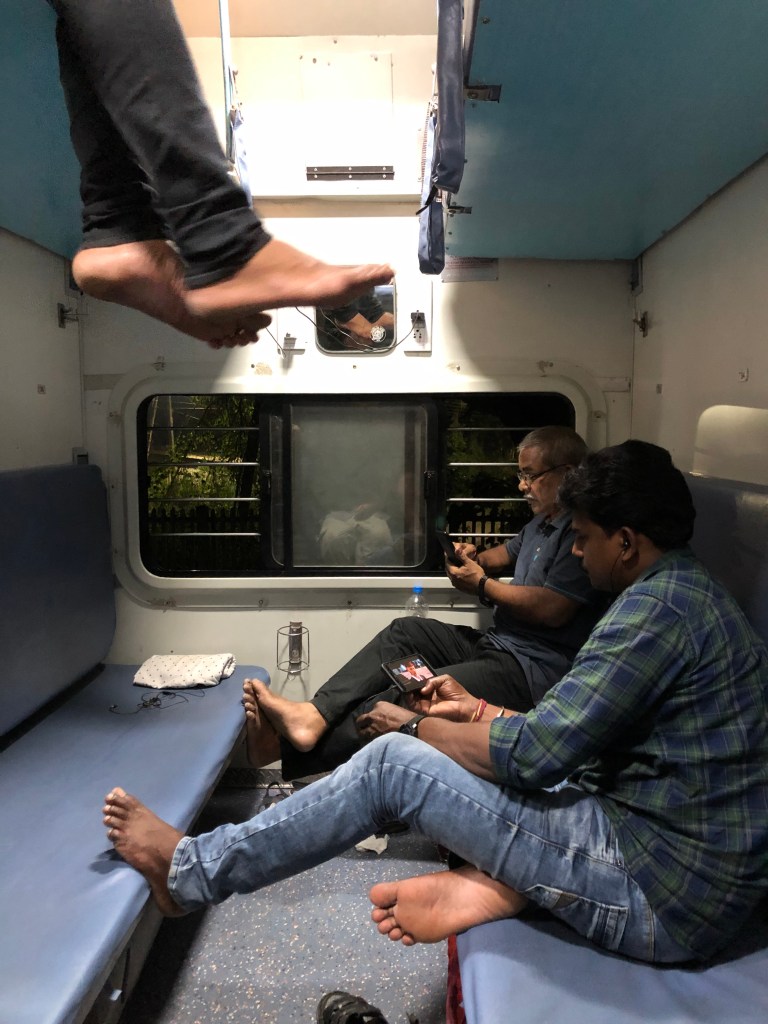
It’s true of best friends, of sisters, of kids, and probably most of all of grandkids, who have the disadvantage of being too young to have solidified any relationship enough to withstand the loss of perpetual physical proximity.

I love to travel. Someday I may not be able, physically, to climb into a train berth or even get on a plane to travel to another exotic location, but I’m guessing I’ll become an armchair traveler. Meanwhile, I look forward to the next four months in India, a week in Greece with my daughter and granddaughter in July, and am already planning to rent a little place for three months in Guatemala next winter.

But I won’t be fiddling with that ‘round the world’ Star Alliance again in anticipation of a year of travel. I have a feeling that I won’t even be looking at six months again. I’m so happy that we grabbed the opportunity to take this incredible journey. I’m seriously enjoying every single day.

While I tend to feel ageless, I am aging. But that’s not the thing. It’s not fun to do many things I used to have fun doing but I’ve barely noticed that I’ve stopped doing them. I’ve moved on to things I may have once thought slow or unexciting and get a huge kick out them now.

The thing is that all the people I love are aging. Yep, even Alex, our youngest grandchild. And certainly our family-like-friends who have almost seventy years on her.

I want to be IN those important relationships. I don’t want a single one of them to become my second grade teacher and I don’t want to be theirs.

I’m so grateful that I’ve birthed, married into, grown into, chosen, and been brought by circumstances into relationships with multi-faceted, quirky, wonderful people whom I love and, wonder of wonders, love me back.

One of the best things about my life is that I’m fortunate enough to live in time that I can nourish both my love of travel and my love of relationship, if I can only remember to balance them and adjust to the times. After all, I could’ve been born under a bridge in Mumbai.

Happy Monday to all from 20 kilometers from the middle of nowhere.
Of Beaches, Lakes and Rivers

The word ‘traveling’ has nine letters and just as many aspects to the activity the word describes. There’s the actual mode of transportation involved which can fill hours, days, or even weeks,

seeing the sights, experimenting with new food, learning about new cultures, seeking spirituality, discovering history, embracing nature, deepening your understanding of yourself, your travel partner, and your relationships with both, opening your heart, your mind…YOUR EYES.

As the husband of my cooking teacher, who spent years on the sea as the captain of a commercial vessel, told me, “Life is like a book. Those who don’t travel are always reading the same page.”

At the risk of offending all too many of you, I have to admit to agreeing with that statement to some extent, but will rein in my judgey side a bit and add that there’s plenty to learn from our everyday lives in our very own homes, too. We just have to do it. Harder than it sounds.

But that’s another story.

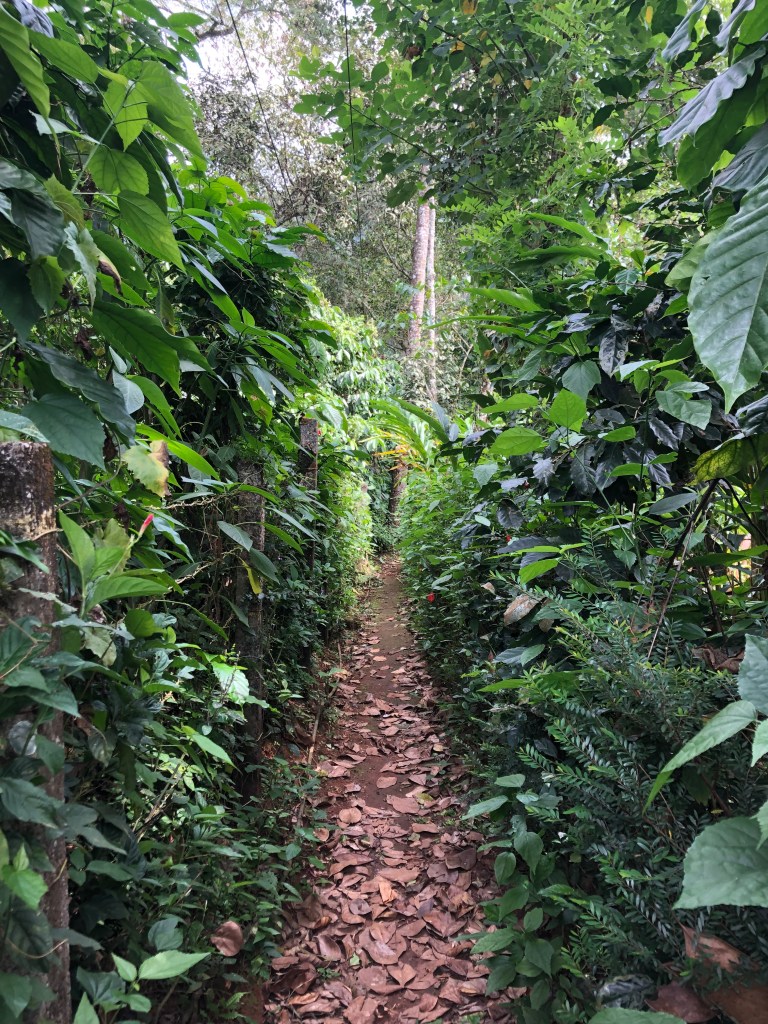
I could write an entire blog – or three – on each aspect of traveling, and might do just that, but this one is about an epiphany I’ve had as I’ve moved from my western, Israeli, specifically ideology-driven, life, to crowded Diwali Mumbai, the vast sandy beaches of Goa, the serene backwaters near Alleppey and now to the hill station, tropical green mountain area near Munnar.

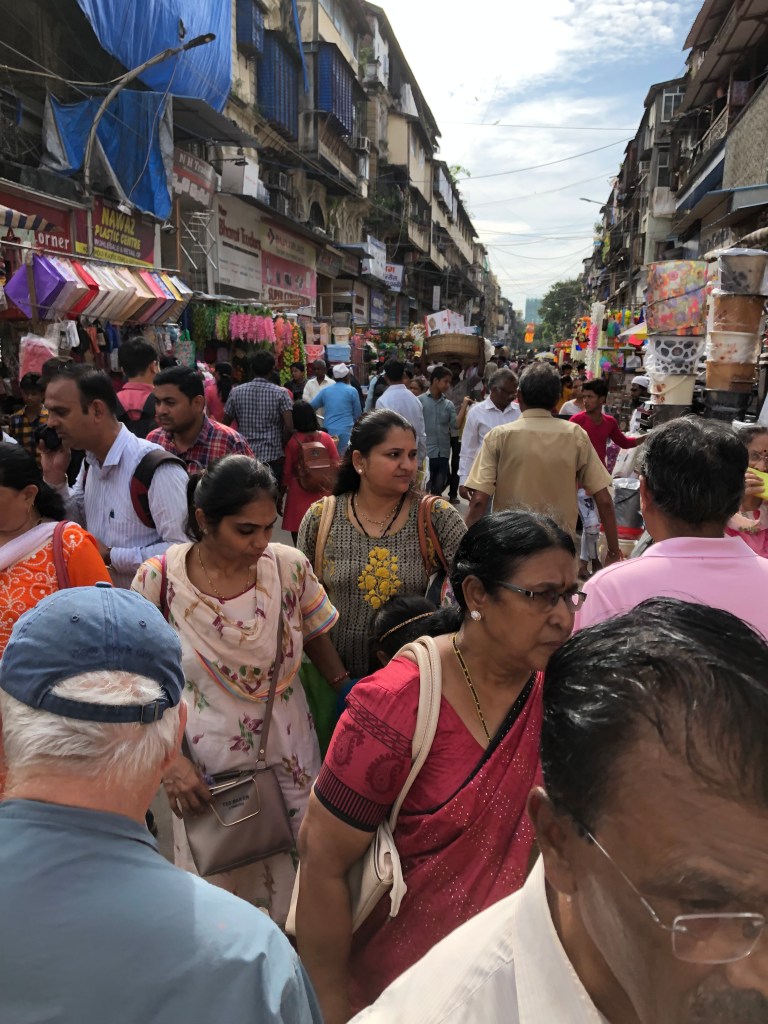
I get into the vibrancy of the city-even Diwali Mumbai with all the millions- the constant movement, lights, traffic, endless options and continual visceral stimulation. There seems to be no limit to the number of shops I enjoy entering. I’m happy walking for hours down busy streets, wandering through museums – both conventional and quirky – waiting in winding snake lines of multitudes of people to see the most touristy of sights or hop on the boat, tuk-tuk, or train at the end of the crowd. I have no problem with getting lost for a while or not understanding or being able to make myself understood. It all works out in the end.

I’m attracted to drama, and there’s plenty of that to be observed in the city. Participation voluntary. For the most part.

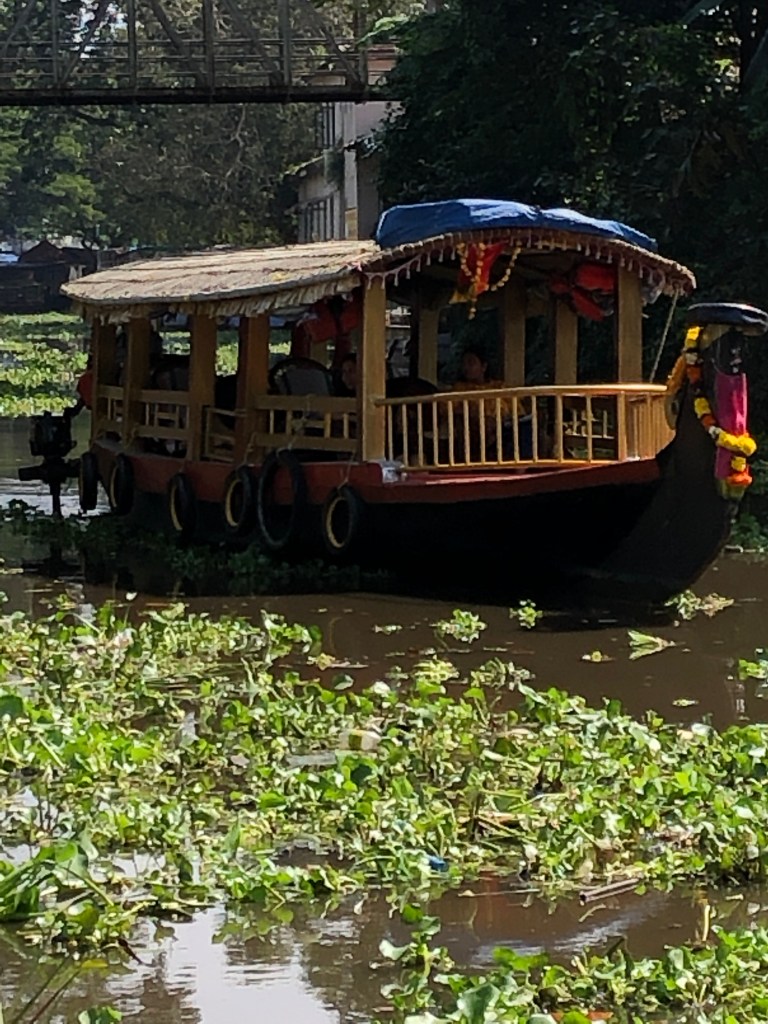
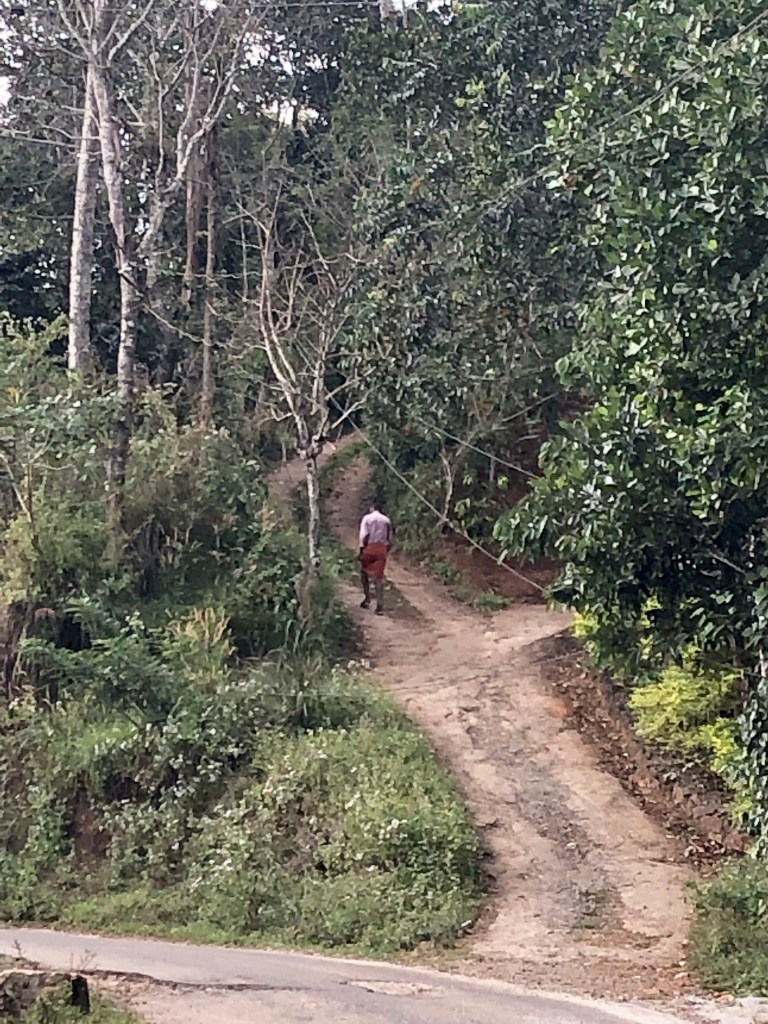
Over the past eight weeks we’ve gradually made the transition inland. From waves crashing onto the rock barrier thirty meters from our balcony and dolphins playing twenty meters beyond that, to the gurgling stream just outside our backyard tropical mountain surroundings. We were somewhat prepared by the serenity of Kerala’s backwaters, running alongside the noisy towns of Alleppey, Ernakulum and Fort Kochi, as well as the steadily deteriorating road between Kochi and Pallivasal near Munnar but nothing can really prepare you for the quiet here.

Being isolated in nature is something that has to be experienced.

We made a conscious decision to settle into our new environment and let it settle into us. No martial arts performance yet. No trip into the town of Munnar. No tea plantation or spice garden tour. Just nature and quiet and us.

It took 24-hours for the monkey chatter to subside.

My yoga practice has been evolving…getting better and better.

I experienced a meditation so deep two days ago that it scared me a bit. The pang of fear brought me to the surface so fast I thought I’d get whiplash. Fear of what? Who knows.

Yesterday’s yoga, just before dusk, was the best yet. Fluid. Soothing and refreshing simultaneously.

At one point I felt I wanted to continue forever.

And then it was just the right moment to finish.

There’s such an awareness of productivity – accomplishing things – in the city.

There’s more an awareness of being out here.

Is there a productiveness in being? Can there be?

Since getting more involved in Eastern Philosophy, yoga and meditation, I find that there’s far less drama in my relationship with the people I love. I’ve integrated the concept of non-grasping without really making an effort to do so. It’s just happened with all the reading, thinking and practice of the past two decades. I worried that it was too much. That I’d become too detached from the lives and challenges of the people I love.

He asked me to close my eyes and try to take myself back to the time when there was more drama and intensity in my relationships. It took a minute of my precious 15 minutes with him but I was able to do it.

Then he asked me to return to a more recent time, with less drama in my relationships and, after a minute or two, asked what I felt in those moments as opposed to the previous ones.

I didn’t have to answer out loud. I opened my eyes to the answering smile on his face.

I love the city. I love the satisfaction of completing many, many tasks during the day. Love noise and crowds and shops and movement.

My body and soul are nourished by nature, by being, by deep silence.

Shabbat Shalom – Peace to us all.

The Quality of Sleep

Some people get into bed at night, fall asleep immediately, and wake up in the morning refreshed.

My husband is one of those lucky people.

We have good friends who go to sleep relatively early and sleep until 10 a.m. if their schedules permit.

I’m not one of those people.

I’ve always been a night person. I’m happy and productive until well after midnight. Two a.m. is the witching hour for me – that hour that marks the border between being able to function well the next day and resigning myself to a zombie day. I’ve trained myself to get into bed by midnight in order to rise at 7 and join my partner for the breakfast he pampers me with, once I smell the wafting scent of coffee.

I no longer fight my inability to fall asleep quickly. Over the years I’ve accepted that resting with my eyes closed during those minutes or hours that I wake up in darkness, dawn far away, can replenish my body, instead of bringing the frustration and monkey mind of trying to bully my way into sleep.

Every now and then – sometimes even once a week – I have nights with virtually no sleep. Those nights are still difficult. I have a bag of tricks that includes breathing techniques and imagery, yoga nidra and other relaxation strategies, but there are nights that nothing brings sleep or rest. I might end up taking half a sleeping pill – that always works – or deciding that the next day will be a lost day. Either is okay; neither is good.

India is a busy, hectic place. Even in villages, the noise level is beyond…well, beyond anything experienced in the western world. There always seems to be something happening: a festival, a rally, a parade, a celebration, a call to worship. In Mumbai, Delhi and other big-beyond-imagination cities, the traffic never ceases. I mean, never.

In the beach towns in which we’ve chosen to begin our six-month adventure, there’s a different rhythm.

For two weeks in Morjim Beach, in Northern Goa, we joined the few people there half an hour before sunset to wait for the big event of the day. Gradually, Russian tourists and Indian residents made their way from their places of refuge from the heat to the kilometers-long, clean, sandy beach for nature’s daily phenomenon. The burst of orange that invariably accompanied the sinking of the sun into The Arabian Sea never failed to mesmerize. The wispy cloud formations lit by the hues of light thrown off with the sun’s seemingly-reluctant relinquishment of energy differed each day, but never failed to enchant.

We could both feel our inner pace slowing daily; our minds becoming less cluttered.

Each beach has its own ambience. Its  own sound. Its own flora and fauna. Each place we stay has its own staff, each with his or her own unique personality, and its own daily sights.

It takes a couple of days, and an open mind and heart, to adapt to new surroundings. To see that the curt, expressionless hotel manager makes it his personal mission to insure your enjoyment and welfare. To realize that anything lacking in your room can easily be obtained by graciously asking for it, and anything that can’t be obtained in this manner isn’t a necessity. To learn the possibilities nearby, how to navigate your way to and from them, and how to balance doing with being.

Thumboly Beach is not Morjim Beach.

Below our second-floor balcony is a sandy yard with a hammock, some tree stump seats, and a raised cement platform where I do my daily yoga and meditation. Beyond the wood-slat fence, with its greenery, is a walkway of sand and spotty grass where solitary villagers or small groups of school children can be observed passing by from time to time.

The apparel is of unending wonder and fascination.

Many men wear baggy shorts made of a large cloth tied in a mysterious way which provides modesty in spite of the tie in front that they open frequently to readjust, and a looseness essential in the humid heat of Kerala by the sea. Others wear a long skirt wrapped around their lower bodies.

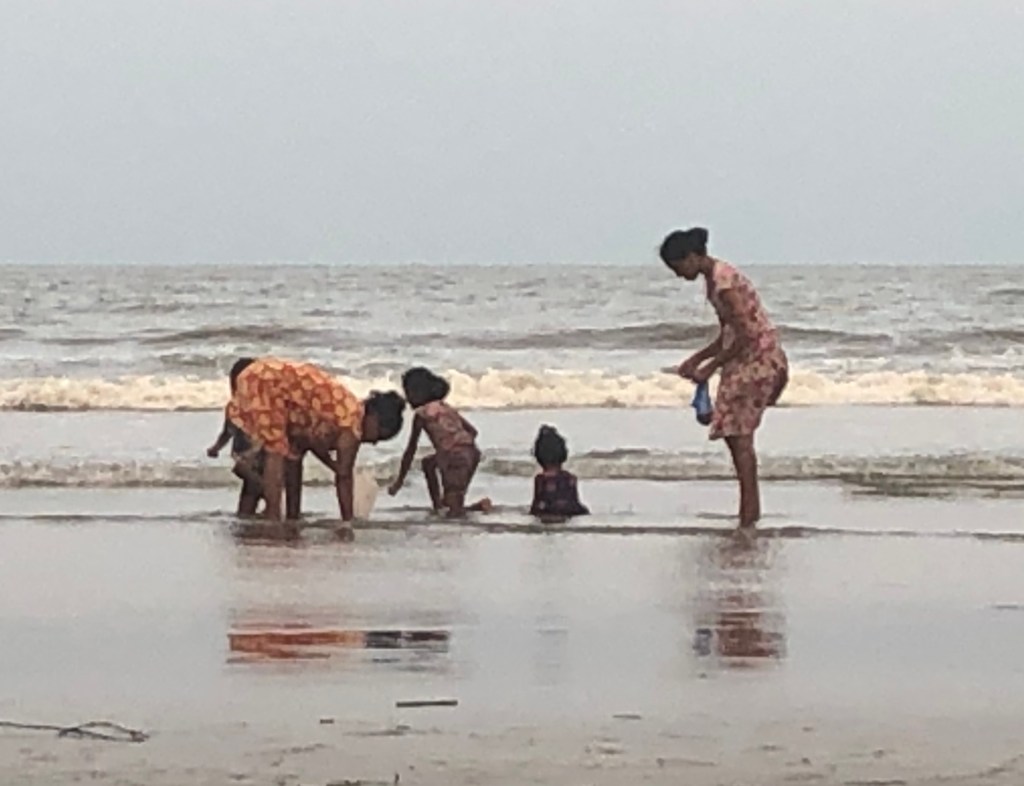
Women wear colorful saris or leggings with a tunic on top. They even go into the water dressed this way – but only to their knees. Their modesty is a constant, although their midriff is bare in their saris and partially exposed. Shorts and bathing suits are nowhere to be seen. If on the beach in Tel Aviv women show the maximum amount of skin possible, here women show the least.

Beyond the path is a wall of rocks and boulders set up as a barrier between the village structures and the sea. The waves constantly break onto the rock barrier; sometimes in a gentle lullaby; sometimes with louder music; sometimes crashing with an impressive exhibition of spray. My afternoon yoga is usually accompanied by that drama.

Beyond the waves, the calm, flat Arabian Sea is dotted with fishing boats. Some are barely big enough for one person and his fishing nets; some for three; in darkness, some are big enough for fifteen. Early in the morning we can stand on the beach and watch the fishermen pluck the fish caught in their nets. The catch is never large – 20 kilo on a good day – and the fish are never big. It’s incomprehensible how they make a living from this work. We don’t have a grasp of their reality, though, so it may make perfect sense in their world.

Breakfast arrives on our balcony table at 7-ish every morning and dinner at 8-ish every evening. The creator and carrier of our vegetarian meals is a young man, Veejay, whose wife and five-year-old daughter live a 3-day train ride from here, near the border of Bhutan. The language he shares with the owner of the hotel (for lack of a better word) is Hindi, though his native language is Nepalese and the owner’s is Mayalayam.

Veejay is a vegetarian but accustomed to very simple food. He makes a huge effort to provide a variety of vegetarian meals for us and succeeds admirably. Even when the food is not exactly what we might choose, his intention is so pure that we’re happy to eat with gusto.

His work is endless. He lives onsite and is available 24/7 to provide refreshments, call a tuk-tuk or try to rouse the WiFi. If we were ever lackadaisical about Shabbat, watching people here work every day, all day, has reminded us to be grateful for the wise decision made thousands of year ago in Judaism to set aside 25 hours for rest and spiritual nourishment. The concept, the necessity for such a time and the benefit it brings, was unheard of back then and is still unheard of in India, other than among the Christians.

Our host, Anthony, is a very special person. Born and raised in this small fishing village, his father was a fisherman and, growing up, Anthony loved nothing more than going out on the boat with him. A bright and curious mind has made him an eclectic adult with a well-respected past as a career officer in the anti-terrorist section of the Indian army. He retired as a colonel after 24 years, most of which was spent in Kashmir, the region of continual conflict and terrorism.

Our long conversations include history, not exclusively Indian history, philosophy, science, religion (he’s a Christian with some Hindu undertones), sociology, politics, and ethics. He’s well-versed in current events and spent time in Israel on pilgrimage. He had words of praise for Israeli organization, cleanliness and ingenuity, and said that when he crossed the border into the chaos of Egypt he felt at home.

He has three businesses and has to travel much more than he’d like as a result, but is never happier than when he’s close enough to the sea to hear the waves lapping the shore. He keeps working in spite of yearning for the sea, to maintain employment for his 90 employees. He believes that a person has no self-respect without employment, and finds personal fulfillment providing opportunity for his neighbors. His plan is to work until his 60th birthday – he’s 49 today – and then sell off his businesses to remain within earshot of the waves until the end of his life.

When my husband expressed his fascination with the fishing boats, Anthony called a fisherman friend and hopped – happy as a child – into a small, 3-person fishing boat with his friend and my partner for an hour at sea. I watched as they returned to shore, Anthony paddling, his bare upper body glistening, a big smile on his face. Did I mention that he’s quite beautiful?

But about the sleeping thing.

There’s virtually no internet here. Just enough to entice you into attempts to be online.

I had several logistic necessities to be accomplished online and couldn’t complete any of them, even in the wee hours when the WiFi is at its strongest. I spent one night in a futile attempt, giving up only at 3 a.m. to toss and turn, sleep elusive, my mind dashing from train tickets unreserved and cell phone data packages unrenewed. Breathing didn’t help. Nothing helped. I gave up into the reality of a sleepless night and may (or may not) have dozed off for a short while here and there.

The next day we were able to renew the cell phone data and take care of a few other errands in town. With that off my mind, falling asleep came easily but waking up several times a night came just as easily. Each time, I heard the gentle music of the waves 30 meters from our bed, and drifted back into a peaceful sleep.

Each night since has been the same.

In the morning, I open my eyes only after my ears have opened to the sound of the waves. I feel rocked awake in nature’s arms just as I’m rocked to sleep in the dark of night to the same music.

This morning I awoke to that primordial sound of comfort and a minute later found myself contemplating, with reluctance, our departure from Thumboly Beach four days from now. I gave myself a mental shake to return to the present moment – wherein I’m still in Thumboly Beach and still accompanied by The Arabian Sea.

Our next stop is The Pimenta Cooking School. A cooking course I’ve been looking forward to for months.

My guess is that the sound of The Arabian Sea will be part of me until the end of my conscious life.

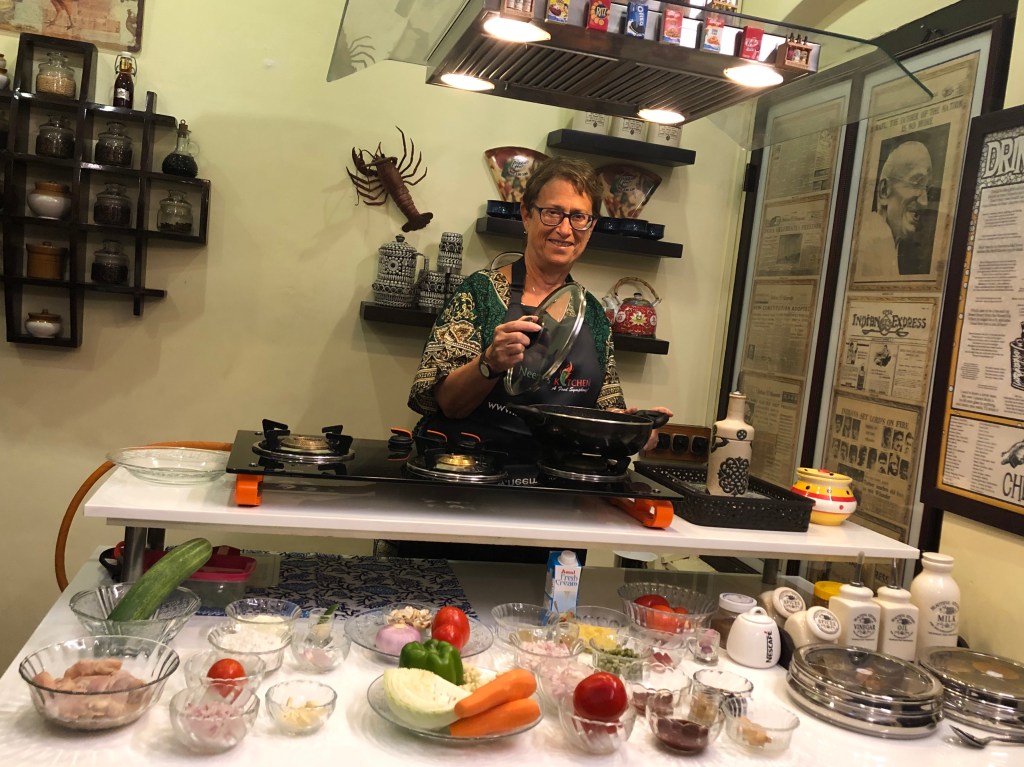
In the midst of my cooking course, surrounded by Indian cooking utensils, spices, vegetables and the incredible array of non-wheat flours, I’ll probably have a moment here and there of regret that I’ll be moving on from that kitchen experience at some point down the road.

The bittersweet flavor of traveling. And of life.

Change is a wonderful thing. As I’ve mentioned before, I’m a change junky.

I love my life at home. I love my family, friends and students, my house, studio, and community, and, yet, I get itchy after a while. It might take 6 months or a year, and planning my next trip may keep the itch at bay for months at a time, but the world and its infinite wonders call me louder and louder until I have to go.

Feeling full of gratitude for each moment in this amazing world of ours.


Anyone can Detox on Morjim Beach

I think that after those last few days of stomach butterflies at home leading up to our departure from life as we know it, we chose well with Mumbai as our first stop. The drastic difference of Morjim Beach from those days of checking off the last items on our “to do” list would’ve have been too great a shock to our systems. Mumbai, with its crowds and our 17,000 steps-a-day touring, was a perfect jumping in point.

The five days of incredible Mumbai, with its teeming population of 22 million and the additional Diwali festival crowds, may sound even more hectic than organizing our life to exist without us, but the contrast between colorful India, spicy Indian food, traditionally clothed people passing us on the street and our own reality in Israel made it perfect.

Five days was enough.

We chose Morjim Beach in Northern Goa for two reasons: for the promise of turtles coming ashore to lay their eggs (which hasn’t happened yet) and the claim of serenity and lack of crowds.

Expectations are problematic for travelers. We choose because we can’t stand at the intersection without choosing right, left or straight, but if we expect our lodging to be exactly as pictured/described or expect the town/beach/tourist site to be exactly what we were looking for, without leaving our mind and heart open to accepting a different reality, we’re often setting ourselves up for a bad time.

The relatively few tourists on beautiful, sandy Morjim Beach are Russian (true to what’s reported by google), and Indians. We’ve yet to meet a tourist from an English-speaking country or an Israeli. The beach is almost deserted most of the day. People frolic in The Arabian Sea from early morning until around 10, before the extreme heat arrives, and wander back down to the beach about an hour before sunset to watch the big event.

There are pubs here and there for nightlife but pulsing music is very localized and can’t be heard from our hotel.

Our first week in Morjim Beach was spent at Baywalk Goa where two exceedingly nice, polite, helpful men eased us into beach life. Breakfast was delicious. Service was immediate. Our room was spacious and had a front and back balcony. The older of the two men even showed me his yoga routine, which included an interesting pose that was new to me. The only drawback was that it was not directly on the beach (about 100 meters away) and about a kilometer down the beach from the restaurants.

We spent the weekend in Anjuna, about 30 kilometers away, where the Chabad House correspondence had prepared us for the possibility of it being non-existent that Shabbat. Not that they said that, but they just sounded flakey. As a result, we chose a more luxurious hotel ($40/nite instead of $30) with a quiet Shabbat around the pool as a possibility. In fact, Chabad House was closed and we loved our Shabbat in the pampered surroundings. There was even a surprise bonus of a wonderful Rajasthani Dance and Music performance on Saturday night. The beautiful dancer invited me to dance with her, which I did, and I had a great time.

On Friday we walked to a coffee shop/restaurant that I’d been following online and getting some India travel tips from for several months. The owners are an Israeli man, Moshe, and his German wife, Anastasia. There’s a big lending library with books in a multitude of languages in the restaurant, a wide variety of “Mediterranean” food options – all vegetarian or vegan – a space for yoga, and a bulletin board filled with notices about yoga classes, meditation groups, tai chi classes and upcoming concerts. A very comfortable, safe hang-out for travelers and people like Moshe and Anastasia who have made Anjuna their home.

I IMd Moshe after we left asking if he’d like to be interviewed for the book I’m writing about people who have stood at that proverbial intersection and chosen a path very different from their background and peers. I mentioned that we would be at our hotel all the next day because we keep Shabbat and suggested we get together on Sunday. Then Shabbat started and I wasn’t online to receive his answer.

Saturday in the early afternoon we were sitting around the pool and Moshe appeared. He had come to be interviewed. We sat and talked (mostly I asked a question here and there and he talked) for over two hours. I don’t know if his story will end up in my book – maybe – but it was interesting and I liked him. He’s been in Anjuna for almost 25 years. He’s approaching 50 years old. He sees himself as a citizen of the world and when asked to visualize his two daughters’ future (they’re now 10 and 12), he imagines they will live somewhere out there in the world – not India – and he’ll relish their happiness. Having had three children spend years each in the U.S., I could tell him that it’s much easier to relish one’s children’s happiness from closer up, but why burst his bubble. And, who knows, maybe he won’t feel that way.

Back to Morjim Beach on Sunday but to a place directly on the beach this time and close to restaurants – Ciiroc. Gershon found the manager taciturn and took an instant dislike to him. We’d checked the place out when we were at Baywalk and it seemed very nice. Little cabins surrounding a pristine pool, with comfy beds, a fridge, and pleasant porch.

Expectations.

Reality came in the form of a small(ish) cockroach prancing across the bed as we watched Blue Bloods on my iPad, an internet connection that was so slow that it was truly useless, and no cups to go along with the hot water kettle. As it turns out, though, one has only to ask and everything appears. The “taciturn” manager provides whatever we ask, including better internet by turning off and on the router whenever we ask.

The cockroach had no friends.

We’d eaten at the restaurant the previous week and already knew that they didn’t have about 3/4 of the items listed on the very extensive menu. When we tried (again) to order fish and were told they didn’t have any, the manager came over with an explanation. The fish in the market hadn’t been good that day so they were only serving it to non-guests. He hoped to have better luck the next day at the market and would make fish available to us then. A little scary for those non-guests, eh?

One important thing to note is that every single dish we ordered (that they actually had) was delicious and more than made up for the 3/4 of things on the menu that were unavailable.

We were the only customers most evenings for dinner and could only wonder at the four or five people in the kitchen. I was invited in to take a look at the kitchen and, while primitive, it was clean and a great space to prepare food.

Today we walked the other way on the divine beach and spent an hour or more investigating a rock jetty with tidal pools and many, many living things. There are four kinds of crabs here – bubbler crabs with their amazing artwork, hermit crabs who teach us an important life lesson – to be satisfied with what we have and not chase what looks a bit better – ghost crabs, and a kind of crab we saw on the rocks that Gershon has not as yet identified. The beach and shallows are populated by thousands of tiny clams that women bring their children to gather to add flavor to their soups. There are fish in the tidal pools and the inevitable birds who feast on crabs and fish.

I participated twice in a yoga and meditation class on the beach giving by a 68 year old yogi who seems to be the real deal. I could probably learn  a lot from him but each class is a basic class because he caters to the Russian tourists who come and go. Too much talking and not enough meditating or yoga for my taste. But a very cool experience.

I have to go now. It’s almost time to see the sunset.


Glorious India

The plan to spend an extended amount of time in India was conceived so long ago that trying to remember when, how and who initiated the thought leads mostly to fractured fairy tales.

I think it was my husband’s idea to change his life radically to serve the same function as cleaning your palate between courses. He was looking forward to total retirement and fantasized about a period of time to wipe the slate clean and begin to formulate a next stage in his life.

Life has a way of whisking away parts of our ideas and morphing them into other versions of themselves. Total retirement, when contemplated in the reality of the altering of lifestyle that financial change would necessitate, has been postponed for another few years and transformed into six months working and six months…not working. (Still no definition as to what that might entail.)

But that might be exactly what led us to sitting around the pool at The Fern Spazio Resort and Spa – which sounds far fancier than it is; though it’s very nice – in Arjuna, North Goa, India. It might be kismet, karma, or just one of life’s serendipitous events. It’s feeling a lot like one of those proverbial gift horses in whose mouths we’ve been forewarned not to look too carefully

Five days in bustling Mumba; a city with a population of an unbelievable 22 million people. Mumbai is a city of contrast. Extreme wealth in its commercial center and extreme poverty with literally millions living in the slums with which we became familiar in Slum Dog Millionaire (which, by the way, is quoted extensively by guides in Mumbai.)

We arrived during the Diwali Festival – five days of vacation celebrating the removal of darkness and ignorance; The Festival of Lights (not to be confused with Chanukah, though there are similarities). The fireworks were on Sunday so we missed them but we didn’t miss the crowds of Indians on holiday in Mumbai.

As we approached The Gateway of India, lovely architecture reminding us of the not-so-lovely period of British Rule when in 1911 the stone gateway was built for the king and queen’s visit, we saw a mass of humanity second only to the million people we joined at Woodstock. Dripping sweat in the hot Mumbai humidity, I could only smile at the outlandish possibility of inserting myself into that press of people. It seemed so ludicrous.

My children pointed out to me long ago that the only possibility of not having to stand in a long line for activities for kids is choosing really boring activities. I take my grandchildren into lines and crowds I never would’ve taken my children. The funny thing is that when I mentioned that recently to one of my kids she said she was happy that I take her kids to those crowded fun places because she’s not willing to.

A sweet young man was kind enough to show us the right line to be in to get onto the ferry to Elephant Island to see the caves, and seemed to be saying that the tickets would sort themselves out. The long but orderly snake line looked daunting but he assured us it would only take half an hour. Google advised getting on the 2 o’clock ferry so we were standing in the hottest sun Mumbai could serve up and it was plenty hot. At some point a man came and sold us tickets and, lo and behold, in 40 minutes we were on a ferry. The promised 45 minute ride stretched out to an hour and a half, but the breeze was welcome.

Elephant Island has no elephants and neither do the elephant caves. It seems that once upon a time there were two big statues of elephants at the entrance to the island. The British, as is their wont, stole them and took them wherever they fancied, but the name stuck.

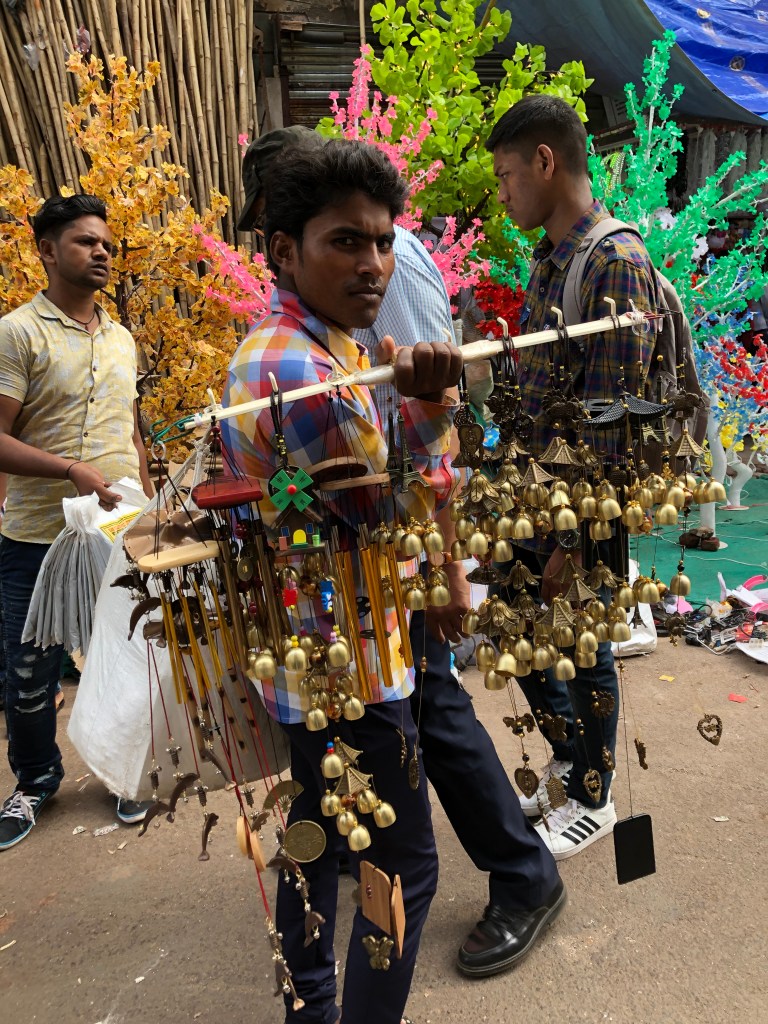
We took a local guide, Harish, one of the 1200 inhabitants of the island, and made our way up 125 narrow stone steps, four and five abreast, with people packed in front of and behind us. Along both sides of the stairs was a market of trinkets, including wonderful Tibetan singing bowls for a tenth the price we pay for them in Israel. Carried along by the crowd, we ignored the vendors’ pleas.

The Portuguese (who also ruled here for a little more than 500 years) tried to destroy the elephant caves but the beautiful carvings of the nine images of Shiva as well as the caves themselves are made of basalt and remained mostly impervious to the attempts. The carvings are beautiful and their stories well told.

We went on a private car tour of Mumbai and a walking tour of the markets. The sights were interesting but the guides were more so. We saw the in/famous Mumbai laundry, got a peek at the slums surrounding it, and were fascinated by the Gandhi Museum.

Our driver/guide told us a tragic story that may or may not have been partially or totally true. He said his father died when he was 12 and his mother ran off. He slept on the streets or in temples and learned English from an old man who read the newspaper with him to teach him. He married and rents a tiny place in the slums for himself, his wife and their two children. We said hello to his two, very sweet, children on his phone.

There’s really no need for a guide in the Mumbai markets but our pleasant 25 year old guide gave us many tips for bargaining that have come in very handy as well as sharing his insights into Indian culture. He yearns to move out of his parents’ home and live independently, mostly to indulge his desire to have unbridled fun. He and his parents disagree about what he should be doing to prepare for his future as well as what his future should look like. (Sounds like young people here, or at least this one, have a lot in common with their age group in the States).

We both took to pure vegetarian food immediately again, as if we hadn’t been carnivores for the past 3 years since leaving India. We found our special place to eat dinner and ate there most evenings. At home I make an effort to get to 6000 steps a day; here I get to 11,000 and even 18,000 without trying. At home I’ve developed tricks to remain hydrated; here I swig liters of water constantly.

Feeling healthy and happy and relaxed after a week in Northern Goa. Met up with a wonderful yogi/teacher on the beach.

But that will wait for my next post.

Namaste

Awakening Again

I made a new friend on my walk today. We’ve met with mutual suspicion six times a week for a few weeks now. He lowers his head, looks at me surreptitiously, and keeps his distance. I keep my eye on him as I pass on the other side of the path. But today was different.

I walk for about an hour every day except Thursday, usually alone. It’s a peaceful time. I listen to a talk for part of the time, and to music the rest of the time, except for Saturday morning. Saturday is Shabbat and my time off from electronics. My Saturday walk is a little less quiet – all that noise in my head. That’s okay, too, though. My curiosity gets a kick out of all those thoughts. “What? THAT one again?”

I started this walking thing – or I should say I got back to it after a very long break – about 2 months ago. It seemed an easily accessible habit, useful for changing the sedentary lifestyle that crept up on me when I began having hip pain from my Nordic machine.

Research shows that it takes 28 days to create a habit. That seems true for my walking regime. It’s become a habit. I check the weather & my schedule to decide the best time to get out there. The time arrives and I lace up my sneakers. I connect my earbuds, choose the talk I want, slip the phone into a back pocket, and I’m out the door.

Today’s walk started out the same. Aside from a sore throat and a little cough, nothing warned of a difference in today’s walk. After almost a full day of rain yesterday – with just enough delay to allow for a walk under threatening skies – the sun warmed the crisp mid-winter air just enough to allow me to shed my down jacket after fifteen minutes.

The talk I chose was good. They always are. The winding road up the hill was pleasant – not too easy and not too challenging. It always is.

The difference came from inside, I guess. One of those awakenings that come upon us all of a sudden. Or it seems to be all of a sudden, but I’m betting it’s the culmination of lots of stuff. For some reason, today, after about forty similar walks, I felt how strong my legs have become and how easy my breath comes on the incline now. I was aware of my sure-footedness coming downhill on loose gravel. I realized that I was enjoying the walk for its own sake. I had a glimmer of why hikers love to hike. Today it wasn’t about being healthier or exercising my knee or my hip. Today was pure pleasure.

When I got near the top of the penultimate hill I saw the same dog I’d seen in the very same place on every walk, but this time I didn’t pass him warily. This time I approached him with my hand extended. He didn’t move. He, too, had created a habit. But he let me rest my hand on his head and, after a few seconds, his tail started wagging as I massaged his neck. It was only a moment in time. Then he went his way and I went mine.

Later, on a secluded, wooded path, I danced to “Fallin’ All in You” before resuming a sedate demeanor more suitable to a 66-year-old woman on a bright noon somewhere in January.

(please click on the photo)

Hours later I can’t stop the feelings of gratitude. Thankful for my body’s vitality (with all its aches and pains of aging, coughs and sniffles of winter) – the muscles in my legs, my lungs, my heart. Thankful for the undeveloped countryside right near my home. Thankful for the resources and the freedom to wander. Thankful for my many teachers – official & unofficial – who imbue me with the ability to see the half-full glass (and the occasional moments when I realize that it’s full).

Maybe I’ll meet my friend again tomorrow.

News Flash: Old Age is Not the Enemy

Old Super people                            Old People iin Wheelchairs

Fight                                   Or flight?

Remember when 40 sounded old? Remember when you weren’t sure if your mother was 38 or 83 (because, hey, what was the difference?) Remember when you hoped you’d live long enough not to have to do homework? Or wait for summer to have some fun?

Okay, kids, here we are. We made it!

anxiety

NOW WHAT?!?

Truth is that it kind of creeped up on me. The 40’s were great years. And then the 50’s? Even better. And then came…THE SIXTIES.

I breezed past my 60th birthday. We had a big birthday to mark the accomplishment. But, really, I just liked having all those people in the same room – the people I love and like and some I hadn’t seen in awhile. I didn’t really think of being 60 as a big deal.

The rest of that year began what I like to think of as my period of enlightenment.

Awakening to the reality of small aches and pains becoming larger and not so easy to ignore. Awakening to an EVEN SLOWER metabolism. (how was that even possible?)

And as the 60’s progressed I couldn’t deny that I  had less energy, less ambition and less cartilage in my knees.

Old white water rafting                                                                       =   Old canoe

A new stage in life began the day I closed  my company.

Stage One

business woman>>>>>>  No work

Another stage of life began when I stopped agreeing to meet with people who just “have a couple of questions”.

Stage Two

Then another stage when the answer to “So, what do you do?” began without disclaimers.

justify

Followed by a blissful couple of years when I:

  1. wrote a book and published it.  http://www.amazon.com/Yoga-Detectives-Lesson-A-E-Prero/dp/1512109371

Yoga Wed am 002                   Yoga photos 004

2. created a yoga studio

and 3. filled it with classes

4. got into a regular habit of spending quality time with my grandchildren

036  (maybe the most fun of all)    001

And now? Now I seem to have arrived at Stage Four.

Partially I’ve arrived here on my own, in a natural kind of way, and partially I’m being dragged into it and, I admit, initially with a bit of kicking and whining, by my friends. Noooo

This is a Stage of wondering a lot about how to best do this thing called “Old Age”. Give into it? Okay, THAT sounds bad. Fight it? Hmm. That sounds tiring.

Road Lesds Traveled And I haven’t found a good guide book yet. Not on Lonely Planet or Footprint or even Google.

Oh, there are plenty of books out there on the topic. I’ve read a bunch of them. Probably the one I liked the best was From Age-ing to Sage-ing http://www.amazon.com/Age-Ing-Sage-Ing-Revolutionary-Approach-Growing/dp/1455530603/ref=sr_1_1?s=books&ie=UTF8&qid=1449132020&sr=1-1&keywords=from+age-ing+to+sage-ing+a+revolutionary+approach+to+growing+older   But I don’t seem to have many people in my life who are looking for a sage. And, truth be told, it sounds a teeny big presumptuous.

Coach?  Yuck! Gives me a rash thinking of that title. Mentor? Better but headed toward ‘sage’.

And, anyway, is this Stage about what I am for others or for myself!?

pondering

When I taught aerobics and hip hop it was all about pushing to your limit and going one step beyond.

When I teach yoga it’s more about investigating your limits and taking one step back.

But in this evolving life of mine, where old age has creeped up on me? A step forward? A step back? What does that even MEAN?

Many of us loved what Dylan Thomas had to say about it:

Do not go gentle into that good night,

Old age should burn and rage at close of day,

Rage, rage against the dying of the light

But, you know what?, now it just makes me roll my eyes. And, hey, he was in his mid-40’s when he wrote that. I might have agreed more when I was in MY mid-40’s.

Raging and burning? Unh unh. No raging and burning for me. I have a feeling that road leads to frustration and grumpiness.

Old and grumpy

For the past 2-3 months I’ve been feeling like I’ve over-scheduled my life; like there’s not enough time to sit and write or sit and read or just sit. But facts must be faced…right?…and the fact is that I’m still teaching the same amount of classes and private lessons a week and I’m still traveling each week to visit the same number of homes to which I’ve lent my grandchildren.

It’s that bogeyman of all bogeymen…old age. I just have less energy for it all. So when I’ve finished teaching all the classes and private lessons and finished driving and playing with my amazing grandkids and finished shopping and cooking and cleaning, I’m POOPED.

Now there are some who make fun of us older people and our running out of energy mid-afternoon

Old Woman sleeping  but there can be some nice things about napping.  Old People Napping  And maybe, just maybe, that’s part of it all.
No, no, not napping. But pedaling down some of those things we love to more manageable bites.

Meditation for Elders  Old woman enjoying music   Old person reading

And maybe we can sage our way into some nourishing and gratifying volunteering  Old professors  Old knitter

Okay, so we tend to freak about forgetting a couple of details

Old person forgetting

But young people forget stuff, too, they just don’t worry about it.

Young person forgetting

And there are some great things about long term memory.

Old woman telling stories

I think I DO want to fight the tendency to decrease the size of one’s world to the boundaries of what’s familiar to me; to what’s easy and comfy. I want to fight to keep my boundaries open to new ideas and new activities, new places and new people.

But, at the same time, I want to accept gracefully my decreasing physical energy and re-direct my time to the ever-changing physical reality of old age. And, yep, I want to accept that my mind isn’t quite so quick, quite so sharp and, at times, quite so reliable.

Ultimately, I know that ‘old age’ is NOT the enemy. It’s my own fears that I need to remain mindful of and face with compassion, kindness and awareness.

Older yoga  Old women walking  Old cooking

I can hear you saying, “Yeah, right. Blah blah blah.” So here’s what I have to say to you…

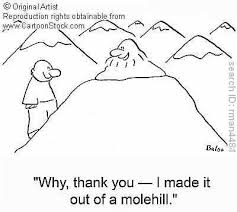
mountain out of molehill

Well, maybe.

Let’s hope so!


The Writing Experience is one of Muditta

There’s a book on one of my book shelves that has my name on the cover.

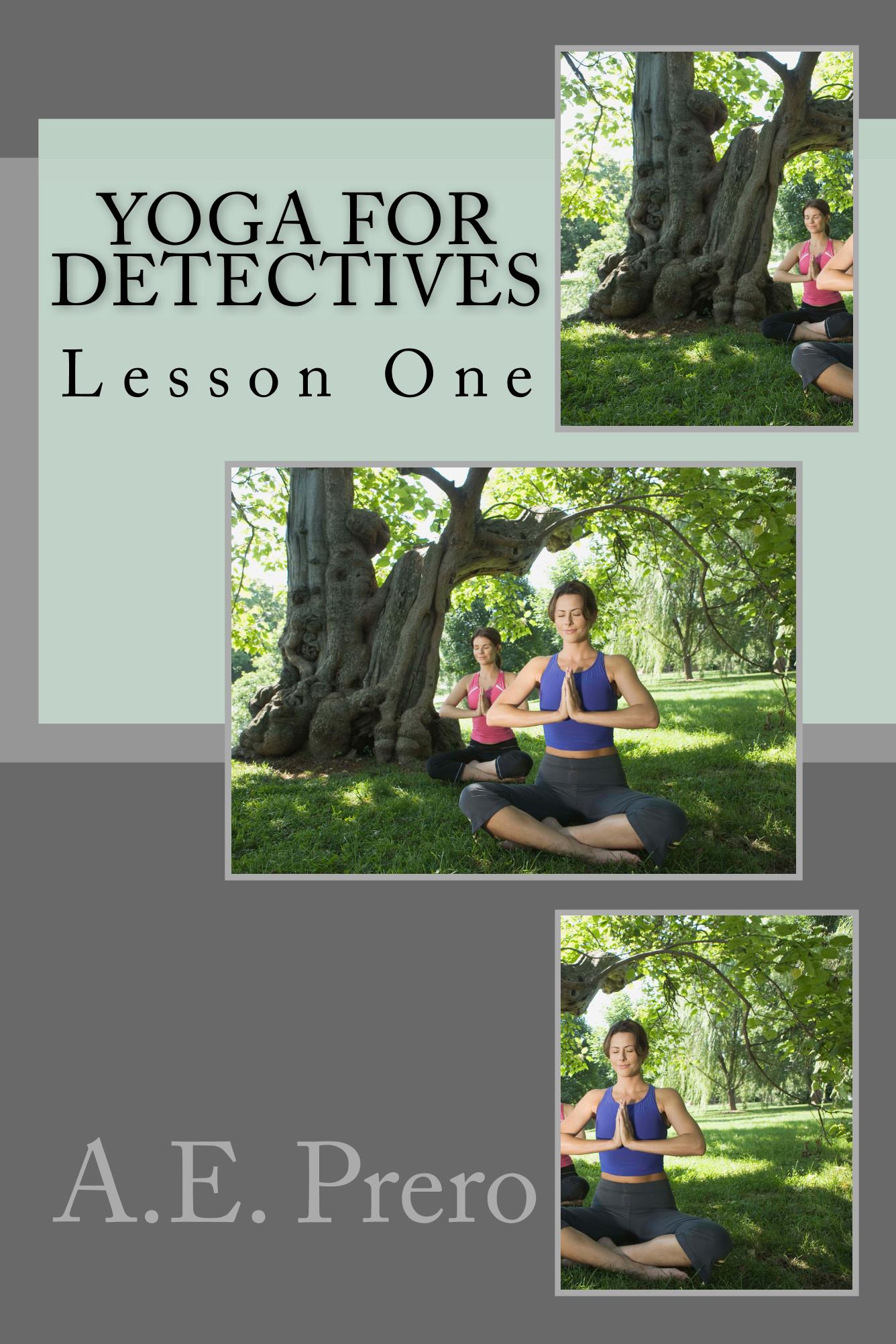
Yoga_for_Detectives_Cover_for_Kindle Yep, that’s me. A.E. Prero. And that’s a book I wrote and published.

http://www.amazon.com/Yoga-Detectives-Lesson-A-E-Prero/dp/1512109371

It took me about 8 months to write it and another month to format the darn thing to turn it into a paperback book and, after my own feeble attempts, $50 to pay someone to format it for Kindle. And now, here it is, sitting on my shelf and the shelves of at least 25 other people, according to the Amazon stats.

Hand on heart, how many of you truly think you, too, have a book in you, if you could only find the time to sit down and write it? And maybe you’ll even do it someday. I’m here to tell you that it’s well worth the effort, even if that book inside you never makes it into a physical reality on your bookshelf.

Don’t get me wrong. I love having actual books in people’s hands which are the product of my imagination, time and self-discipline. Yay!

snoopy dancing

But, believe it or not, there are many other gratifying results from plowing through the entire process of writing a book.

Beginning to end.

Concept to character development to plot to consistency to description:conversation ratio to word usage to editing, proofreading and formatting….and maybe even marketing, though I haven’t begun the serious lifting where that’s concerned.

I’ve read some great books about how to write. Writing down the Bones is probably the best.Writing Down the Bones

But Natalie Goldberg has others out there, and some different authors have offered some helpful ideas, too.

reading

When I actually sat down to write, I realized that while much of what those people suggested had registered in my brain, it all became a  mutant version once the spices of my own personality and imagination were added to the soup…and that was okay, even good.

I learned what I, as a reader, liked.

I pondered what made me pull out one book from a bookstore bookshelf and not another. I asked myself what it was about one first chapter that pulled me into reading a book as opposed to putting down another. I went so far as to correspond with one author whose first paragraphs in her many books never fail to hook me and ask if I could use her formula.

NO way Wow! Now, THAT was a surprise.

After a few months, I could finally sit down to write even if I hadn’t:

  • Washed the dishes,
  • done the laundry,
  • watered the plants,
  • made dinner,
  • cleaned out the studio,
  • answered emails, phone calls and text messages,
  • updated Facebook, or
  • had coffee with every neighbor within walking distance.

mess

No, that’s not really my house but there were days when it felt like that…and I wrote anyway.

The further along I got with my book, the more I grew to appreciate the beautiful turn of a phrase or use of a word in the books I was reading. “Wow! How does she do that?”

The more I grimaced at a much over-used adjective or descriptive tool.  ouch

The more I became enchanted with how one character became someone I cared about while another was just plain irritating.

You might think that the magic of the well-written, well thought-out book  would be lost once the smoke cleared and the mirrors were revealed. But the opposite has been true for me.

Sure, there are some books I can’t look at anymore. I can’t easily fill time with just any old thing I find around the house, on my friends’ shelves or on the table at the doctor’s office. But I’ve developed a full hearted, deep, experiential response to other books.

I feel the author behind the words. And they become my friends as much as do the characters they skillfully develop. I’m happy for them for their work well done. Reading has become a double pleasure. Pleasure in the book and pleasure for the author’s success in having written a book which brings pleasure.

Natalie GoldbergRoland Merullo    Natalie Goldberg

                                                                                                                                   Roland Merullo

     Scott Pratt   Scott Pratt          Anna Quindlen     Anna Quindlen

Gay Hendricks                       Tinker Lindsay

       Gay Hendricks                    and                   Tinker Lindsay

And, isn’t that the real meaning of Muditta? Empathetic joy.

The happiness we feel when others succeed and are happy?

Writing has opened a whole new vista of Muditta in my life.

Vegan Experience Brings Gratitude in Unlikely Places

I went to a wonderful one-day yoga retreat about seven months ago. It almost looked like there wouldn’t be enough people registered for the retreat to take place, and then, at the last moment, there were.

We were hosted by an interesting, lovely woman in her amazing house, with beautiful gardens. The weather was perfect. The yoga teacher, my original teacher who created that spark in me with which began my love affair with yoga, was wonderful. (thank you, Rachel!)

Displaying 2014-06-06 15.13.33.jpg                                                            Displaying 2014-06-06 11.30.42.jpg

As an additional treat, a vegan chef prepared our meals, taught us about the vegan lifestyle and how to prepare several of the gorgeous foods she prepared.

Displaying 2014-06-05 19.46.03.jpg                                               Displaying 2014-06-06 12.42.52.jpg

She became vegan for all the health benefits about which she spoke and also because of her deep commitment to respecting the lives of all living things.

animals

Hmmm. Sounded good to me. I’m not all that against eating animals, truth be told. I don’t get teary-eyed when contemplating a steak on my plate or a little Cornish hen that even looks like she could get up and waddle away. But I’m not against refraining from eating them either. And lowering my cholesterol while, perhaps, losing a big of weight, might finally get my levels to a more comfortable place in the middle of that pesky graph.

And, not only that, but I could be COOL.

All the coolest people are vegan these days, right?

I could be IN.

Yay!

Cool Kids

Gershon put up lots of shelves in our pantry for all the containers with nuts, grains, dried soy chunks, coconut oil, beans and lentils. I bought a little  extra refrigerator for that pantry to put all the leafy green things and the overflow of vegetables in.

He was supportive and I was…

INTO     IT!

Vegan pyramind

I was careful not to preach to anyone else. (how obnoxious is it when people do that, right?) I cooked all the usual victims for Gershon and he didn’t roll his eyes even once at the odd side dishes on his plate (my main course).

cholesterol

My cholesterol went down 20 points.

proud of myself


All was going just spiffy there for a minute until…wait!

WHAT THE HECK IS THIS???

Diarrhea  D I A R R H E A!!

I don’t mean the kind where you have to go an extra time or two a day. Or the kind where there’s a slight change in texture or color. Okay, this is getting a bit graphic for the weak of heart but you get the picture.

I’m talking BIG TIME and 4 months.

So, I googled the heck out of the subject from every which way. I went to my family physician. We did tests. Blood tests and stool specimens. All normal. I took soy products out of my diet and started peeling vegetables and fruits. No change.

Finally, I picked up the phone and sent out a few emails to people I know who were vegans for years and either became simple vegetarians or, as one friend put it, now eat a paleolithic diet (yeah, I had to look it up, too)

carnivore

And guess what? Every single last one of them said that they changed their diet because THEY WERE SICK…

FOR MONTHS!

Ha Ha Ha! Joke’s on me. Eating healthy was making me sick. And not only that but all that healthy eating makes lots of those COOL people sick.

So you guys all know I’m a yoga and meditation instructor, right? At least 6 times a week I tell my students that they should incorporate body and mind awareness into everything they do; not just yoga. If they find themselves doing something that doesn’t feel good they should ask themselves why the Sam Hill they’re doing it. And if the answer is, among other things, to be COOL, well, they need to cut it to heck out.

If you’re gossiping to entertain your friends; you might want to find new material (or different friends).

If you’re wearing high heels to attract men; you might want to find a good podiatrist (or a different kind of man).

And if you’re eating in a way that gives you diarrhea for four months; you might want to find a different way of eating!

And, so, I decided on Monday that I would start eating eggs and chicken and even add a few milk products into my life and kick all those beans and whole grains out. I unceremoniously (or maybe a bit ceremoniously actually, if that’s a word) and literally threw out everything that had a whiff of soy in it.

Lo! and behold. Immediate relief. And I mean immediate.

By Tuesday my digestive system switched back from Mr. Hyde to Dr. Jekyll. And, a bonus, I had more energy. I thought I was feeling a bit lethargic because of it being winter but, it turns out, it was all that healthy eating. In case you think this might be my imagination, one of those ex-vegan friends said that giving up grains upped her energy level like 5 cups of coffee for breakfast.

jump for joy 2

And here comes the gratitude part for those of you who get annoyed when the title has no distinguishable connection with the book or, in this case, blog.

Grateful to be energetically out of the bathroom, yes. But also grateful for my friends and relations who didn’t feel the need to warn me about the connection between veganism and feeling crappy (only a little sorry for the pun). Why, you might ask, would I be grateful for that?

There’s nothing like learning for oneself through experience (as long as it’s not lethal). That’s first off.

Would I have listened to them? Maybe, but then I might’ve always wondered.

I wonder

And then there are all the lessons that I’ve internalized.

  • the one about not giving advice where none has been solicited
  • the one about being forthcoming and honest when it has
  • the one about examining goals with clarity (and throwing out the ones that are unskillfully motivated)
  • the one about APPRECIATING the glorious natural functioning of my body (recovering from 4 months of diarrhea is a super teacher for this one)

So, thank you, friends and relatives. Thank you, body. Thank you, Gershon. (a friend AND a relative but his support is distinctly different from anyone else’s) Thank you, eggs. Thank you, chicken.

And now I have to go eat some chorizo.  See ya’

Listen to your body


Gratitude in the Challenging Situations

Have you ever been struck to discover that all that reading you’ve done over recent years has actually made an integral change in your life…just like “they” say it can?

For the past 5 years or so, I’ve been  reading a lot of the research coming out of the Laboratory for Affective Neuroscience, The Waisman Center for Brain Imaging and Behavior (Richard Davidson), the Massachusetts Neuropsychological Society and The Center for Mindfulness in Medicine, Health Care and Society at UM/Boston (Jon Kabat-Ziin).

In fact, I get a weekly email from Rick Hanson (http://www.rickhanson.net/writings/just-one-thing/) which is often based on Richard Davidson’s work. Nice, succinct and almost always useful.

For awhile I kept up a Gratitude Journal

gratitude journal

Writing 3 things that happened during the course of a day (even a crappy day) toward which I could nod a quick “thank you” before going to sleep.

Research shows that writing down 3-5 things to be grateful for each night develops and then strengthens new neuro-passages in the brain, eventually creating a default there.

That particular outlook on life and life’s daily events strengthens the part of the brain anatomically associated with happiness, satisfaction and positive self-image which, in turn, have been shown in other research to be associated with physical health, healthy relationships and, perhaps surprisingly, task completion.

brain neuronsWho knew?

Well, it turns out quite a few people knew. It just took time for “real” scientists, respected in the “real” sciences, to prove it with the amazing tools, developed over the last decade or so, which map the brain.

Many of us, Jews, begin our day everyday with a one-sentence prayer, thanking God for compassionately returning our soul to us.  Personal confession: I grew up doing this but have only returned to it over the past couple of years after more than a few years of rolling out of bed, headed for my toothbrush, with nary a thought as to how that happened , or that it happened at all. wake up

And, really, isn’t it a great idea to be grateful for opening our eyes to a new day, full of potential, just waiting for us to make choices – again – about what we do and how we do it?

So  maybe we don’t all think there’s a God who gave us this gift again this morning. But can most of us agree that, if we made it, we might want to say a word of gratitude for the opportunity, regardless of how it happened?

Here’s the rub. And many of you may have thought of this instantly when you read the last sentence of the paragraph before this one.

For some of us, our reality seems more like this –

Suffering

Maybe not everyday. But maybe a lot of them.

Maybe our health is dicey. Maybe we’ve lost people, jobs, capabilities, relationships, opportunities that were really REALLY important to us.

Maybe our goals, our path, our very existence has gotten a little fuzzy, out of focus or just plain LOST.

Life has a way of knocking us around, off balance.

Remember those neuro-passages we can develop and strengthen? The downside is that the people and situations that insult, hurt and humiliate us, the tasks, improvements, and goals we don’t accomplish, the aches and pains (psychic and physical) that pop up (and the ones that stick around) – these all build and strengthen neuro-passages, too.

Sometimes we feel like Sisyphus with the proverbial rock, trying to stave off impending doom and disaster in our lives – day after day after day.

sysiphus


And are we really grateful for the opportunity to do THAT – again?


Well, here’s the deal, guys. Feeling gratitude for the small, maybe tiny and flickering, lights of goodness in our lives will help break up that huge boulder into more manageable rocks and then, maybe someday, stones and, maybe, if we’re really lucky, pebbles.

Those little specks of goodness can be so tiny that our frontal cortex has trouble overriding the medulla oblongata, which controls our fight, flight or freeze response. That’s the part of the brain that insured our survival back in the days when our major threat was the lion that might be lurking behind the trees waiting to pounce on his dinner (us). lion 2


We should be grateful for this part of our brain, too.


But our threats today, for the most part, are more psychological than physical. Even our physical threats are influenced by our psychological responses to them it seems.

Yesterday I had an appointment with a doctor I’d waited almost 3 months to see. Unfortunately, he’d forgotten to tell his office (or computer scheduler) that he would be on vacation last week when I (and lots of other folks) had my appointment scheduled.

The office ended up scheduling in all the people whose appoinwaitingtments had to be re-scheduled into this week’s schedule in between other clients.

Yay!

Not so much.


Naturally, there were the people who forget (or never learned) that a public place isn’t their personal space. Lots of cell phones ringing, loud conversations (on the phone or with their companions), and those people who “only have a quick question”.

In short, what could’ve been a 20 minute event in my day ended up being a 3-hour event.

There was a time when I would’ve been in alert, tense mode (fight) to prevent people from cutting in front of me with their “quick questions”, or just because my medulla oblongata was being activated way before I even got there. Maybe even when I got the original phone call telling me of the re-scheduling. meditating woman

Not to say that I was calmly in touch with  my inner peace for 3 hours. Oh no!

There were certainly moments of consciously going into meditative Ujai breathing…right after that inner voice shouted “SERIOUSLY? Talking on the phone – in my ear – again, dude?!?) and “Who the hell has a Barbra Streisand ringtone…and then let’s it ring 10 damn times…EVERY time?!”

But, aside from Ujai, I had my gratefulness practice, and all those articles and emails, to steer me into the very objective reality of being grateful for (basically) FREE MEDICAL CARE! How amazing is that in this day and age where (here’s a shocker) 45,000 Americans die annually from inadequate or inaccessible health care? And that’s not the Third World where who-the-Sam-Hill knows how many people lack health care.  doctor appt

Yep, folks, we, in Israel, get it for free.

And it’s great health care for the most part. Up to date tests and treatments. Excellent doctors.

So the price we pay is waiting for certain kinds of specialists and being patient with our fellow patients-in-waiting by cultivating some patience-in-waiting skills.

Wow! Small price to pay, right? Feeling grateful yet?

Waiting for the doctor pales in comparisons to many of the Sisyphus-ian boulders in many people’s lives but it’s a practice.

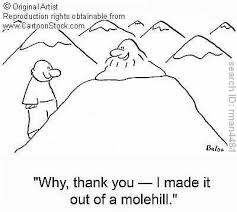
And, really, how many of our boulders are our  medulla oblongata seeing a mountain where there’s a proverbial molehill?

So – lots of compassion for those whose mountains are mountains and also compassion for those of us whose mountains are molehills but still mountains for us in our mind’s eye and in our hearts. mountain out of molehill


No judgment. Just a suggestion.


Set aside 30-60 seconds every night before you roll over to go to sleep to think of 3 things for which, in spite of all, you can, in all honesty, be grateful.

food


Even if it’s as basic as the food on your table.


deep breath


Or the ability to breathe.


                                            I make one promise:  ONLY GOOD THINGS CAN HAPPEN.