But Nobody Died!

Our youngest son, Rafael, moved with his family to New Jersey last night. We don’t know how long they’ll be there. We don’t know why they moved.

Neither of their excellent jobs requires the move. They have a beautiful house here that they renovated just 5 years ago to their exact specification. Their garden is flourishing, as are their kids. All four kids have many friends and are happy here. They have an active social life with friends and with their siblings/cousins. The other grandparents live a 15-minute walk away, are retired, and are always happy to have the kids over, pick them up, and take them places.

The given reason is that they get itchy when they’re in one place too long. They seek adventure (in New Jersey? 😂) They seek a challenge when things are too settled and smooth. Our son fears getting stodgy (he’s 42). At 40, having made partner at the most prestigious law firm here, he quit to do something else. He didn’t want to get stuck in a rut.

I sort of get it. I was that way myself. But once we had kids, I reframed my need for change into something more compatible with having first one and then, within 7 years, five kids. I changed professions six times; just about every 2 or 3 years. I wrote a few books. Once the kids were a bit older we traveled…a lot.

And, of course, the biggie – we moved from the US to Israel.

Rafael and his family moved to the US once already. They spent 5 years in Silicone Valley. He’s a hi-tech lawyer so that made sense. It provided him with the lift he needed to become one of the younger partners in his law firm. We missed him. The 10-hour time difference and 16-hour flight were brutal. But it made sense. And once was enough.

This move makes less sense to us.

Of course, we’re ten years older.

My in-laws were devastated when we moved our own young family to Israel. My mother-in-law literally keened and wailed when we parted at the airport. But, we felt, we were moving toward something. It was an ideological move. It was living our dedication to Zionism. We still feel that way.

What kind of ideology could possibly warrant a move to New Jersey – the state Americans love to mock? Clearly (to us) they are moving away from something and not toward something.

I get that, too. Living in Israel is not for the faint of heart.

Although it has one of the strongest, most stable economies in the world, wages are relatively low, real estate is ridiculously priced out of most young families’ reach, and many families struggle to get through the month. None of this applies to Rafael, who is blessed with financial stability.

Israel has been at war from the moment the state was established in 1948. Sometimes the war is more volatile and sometimes less, but it’s a constant threat. Our neighbors make no bones about hating us and have consistently made clear their goal of destroying our state and killing us all. The past two years, since the atrocities of October 7th, have been traumatic for every single family in Israel, and continue to be so.

Hard times, however, seem to strengthen Israelis’ resolve, not weaken it.

The divisiveness in Israeli society over politics and religion seems to be more of a factor in people leaving Israel than the war. The exaggerations and fears on each side lead to a lack of tolerance that feeds on itself.

For those of us who left comfortable lives in the US (or other Western countries) to live in Israel, we take a dim view of those who leave. It would be more accurate to say that many of us look upon it as betrayal of an ideal; betrayal of the country. In addition, given the current ugly anti-Semitism in the world, we believe that Jews should be aware today more than ever that Israel is the place for Jews to live.

We worry about our children and grandchildren’s safety. We worry about our grandchildren being taken out of a place where they are like most everybody else – it’s not an issue – and put in a place where they are ‘the other’.

We believe that our son and daughter-in-law have a tremendous amount of talent and skills to give to our country, and that our country needs people exactly like them.

And, perhaps most of all, I’ll miss being able to drive an hour whenever the spirit moves me and enjoy a good cup of coffee and great conversation with my youngest son. He’s the best! I’ll miss all the many special things about each and every one of those four delicious children. And, yes, sometimes, of course, I feel that strong twinge of sadness and loss in my heart.

Tisha B’Av is the day that our first two holy temples were destroyed. The date is commemorated with a 25-hour fast and special prayers. When tragedy strikes and someone is very sad we might say she has on her Tisha B’Av face.

That’s the face I see on many of our friends lately when considering our son’s departure with his beautiful family.

And, ironically enough, I want to console them.

“But nobody died! They’re only going to New Jersey!”

As hard as it is for us to imagine, they’re off on what they see as an adventure for their family. We made our choices. Some of them were great and some not so great, but they were ours to make. And if they turned out to be not so great, we readjusted and reframed and began a new adventure. Or at least I hope you all did, because we sure did. Why be stuck when life is so fleeting?

I, personally, believe they’ll be back in a couple of years. After all…New Jersey. And in the meantime, how fortunate that in this day and age there’s Facetime and WhatsApp and convenient flights.

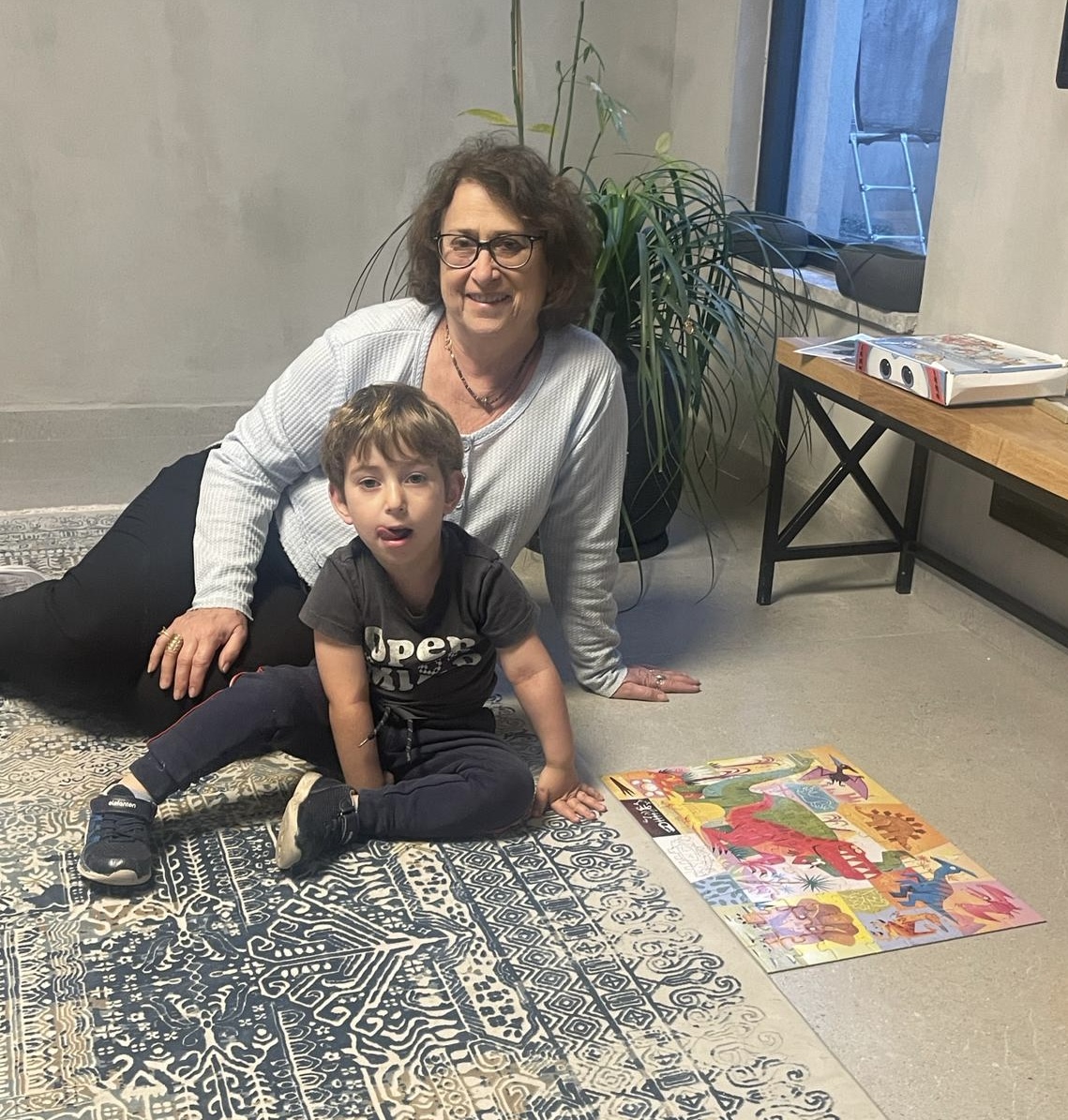
They’re a happy, successful, healthy couple with four amazing, funny, quirky, interesting, healthy kids. We’ve had them near us for five blessed years and, G-d willing, we’ll have them near us again one of these days.

So chin up, friends, no Tisha B’Av faces, please.

Lucky, Blessed, or Something Else?

I was reading a book by one of my favorite authors the other day (Table for Two by Amor Towles). In a bit of a digression, where some of the best of his extraordinarily expressive language lives, he took me back over 50 years to my first encounters with my husband. When I say he took me back, I mean in that instant I felt a flash of pure joy all through my body. It wasn’t just a memory of thought. It was a full body experience of the senses.

I saw him sitting with one blue-jeaned leg dangling, the other under his butt, leaning forward, crossed arms resting on his thighs. His hair was dark and long – a little under his chin all over. He was wearing a dark green, long sleeve t-shirt. His eyes were sparkling – sorry if that sounds kitsch but I don’t know how else to convey the feeling that his eyes conveyed.

I imagine the immense talent of an author to create such an event in his reader makes it all worth it.

It was a flash. No more than 5 seconds. But it started me on a journey.

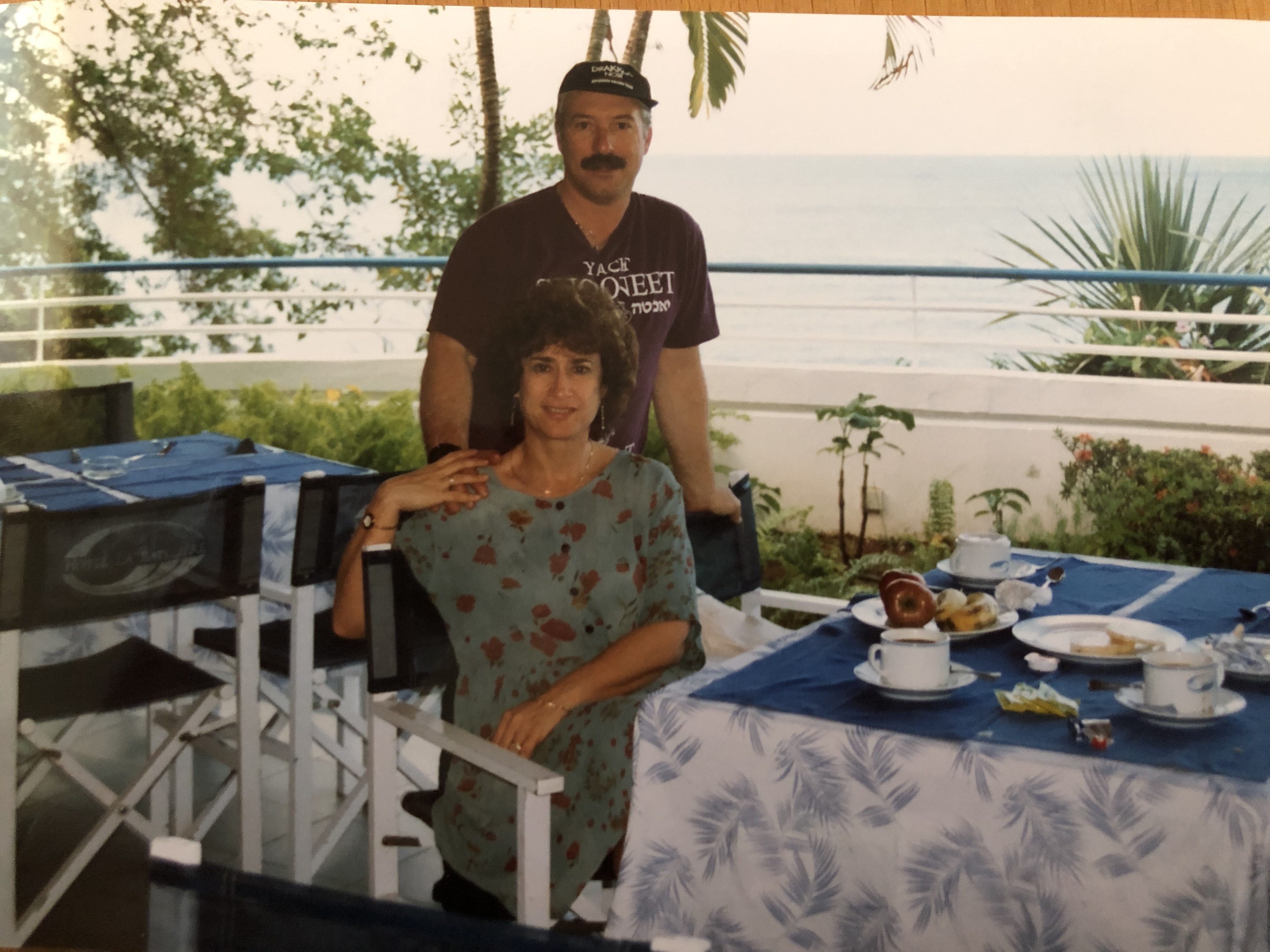
My husband and I have been together for over 50 years. We thought we were all grown up, adults, when we met. We’d both been living on our own for several years. He was 23 and I was 21. Kids. It was the early 70s. We’d come of age in the 60s with all that entails: the music, the drugs, the irreverence, the belief that we could change the world.

He was the political activist: co-founder of the very first Earth Day, member of SDS (until their anti-Israel stance, an anathema to him even in those days), arrested at anti-Vietnam war demonstrations. I was the flower child, grooving to The Jefferson Airplane and Country Joe and the Fish on the grass in Golden Gate Park, selling candles at Woodstock.

We fell in love over bowls of chili at Rennebom’s Drug Store, 6 foot tall photographs of Galapagos turtles, street parties, and listening to Nixon resign the presidency where we sat in a small bar in Texarkana and the big-haired bartender cried.

We were first stunned to find out we were going to be parents and then confident that we would be able to do it all. Finish graduate school, feed and house the three of us, and continue to change the world

I had the confidence and sense of adventure to be immediately excited at the prospect of what our love had produced (how hard could it be?) and he had the concern about how we were actually going to make it work to keep us grounded. From food stamps, to married student housing, to a cooperative day care solution, our two natures combined to see him through his Masters degree, and nourish a beautiful, sweet natured little girl who constantly charmed us both.

From digging our car out of the snow to get to a pharmacy during a miscarriage scare, to meandering with my best friend, our first daughter, through the arboretum, to the shock of looking at the primitive ultrasound of our twin babies two years later we lived the roller coaster together.

As anyone who’s been lucky or blessed or stubborn enough to persevere and arrive at the point where a marriage can be labeled a Long Term Relationship knows, it’s not always smooth sailing. Plenty of drama, tears, and crises. And it doesn’t always seem worth it. Raising five children with no financial support, not having experience a good example of parenting, and doing it all in a country with a new language and culture is not a recipe for harmony.

I know that my spontaneity, sense of adventure, confidence, and love of change can be scary and downright annoying for someone whose natural need to think things through, check things out, and retain a sense of skepticism and pessimism can drive me from eye rolling to distraction.

We started our lives together as kids, believing ourselves to be quite grown up, unformed but quite sure of our opinions about and view of the world. Life is a better argument for Darwinism than the finch in the Galapagos. It molds us as we make many seemingly inconsequential decisions (as well as the obvious big ones, of course) and we evolve without realizing just how much until a trigger has us looking back at the journey as Amor Towles triggered me.

It’s satisfying for me, having gone on this journey, to realize that it’s been a good journey so far.

Sure, I would change some of my decisions and behaviors if I had it to do over again, but I also forgive myself because I remember where I started, who I was, and who I’ve become. I couldn’t have made those better decisions or behaved in those better ways before I became who I’ve become.

One very gratifying feeling is that of great appreciation of and love for my husband and partner of over fifty years. Sure, I would change some of his behaviors and decisions if someone put me in charge of such things. It’s a very good thing that no one will be doing that because I have a feeling it’s the disconsonance of our natures that makes it all work.

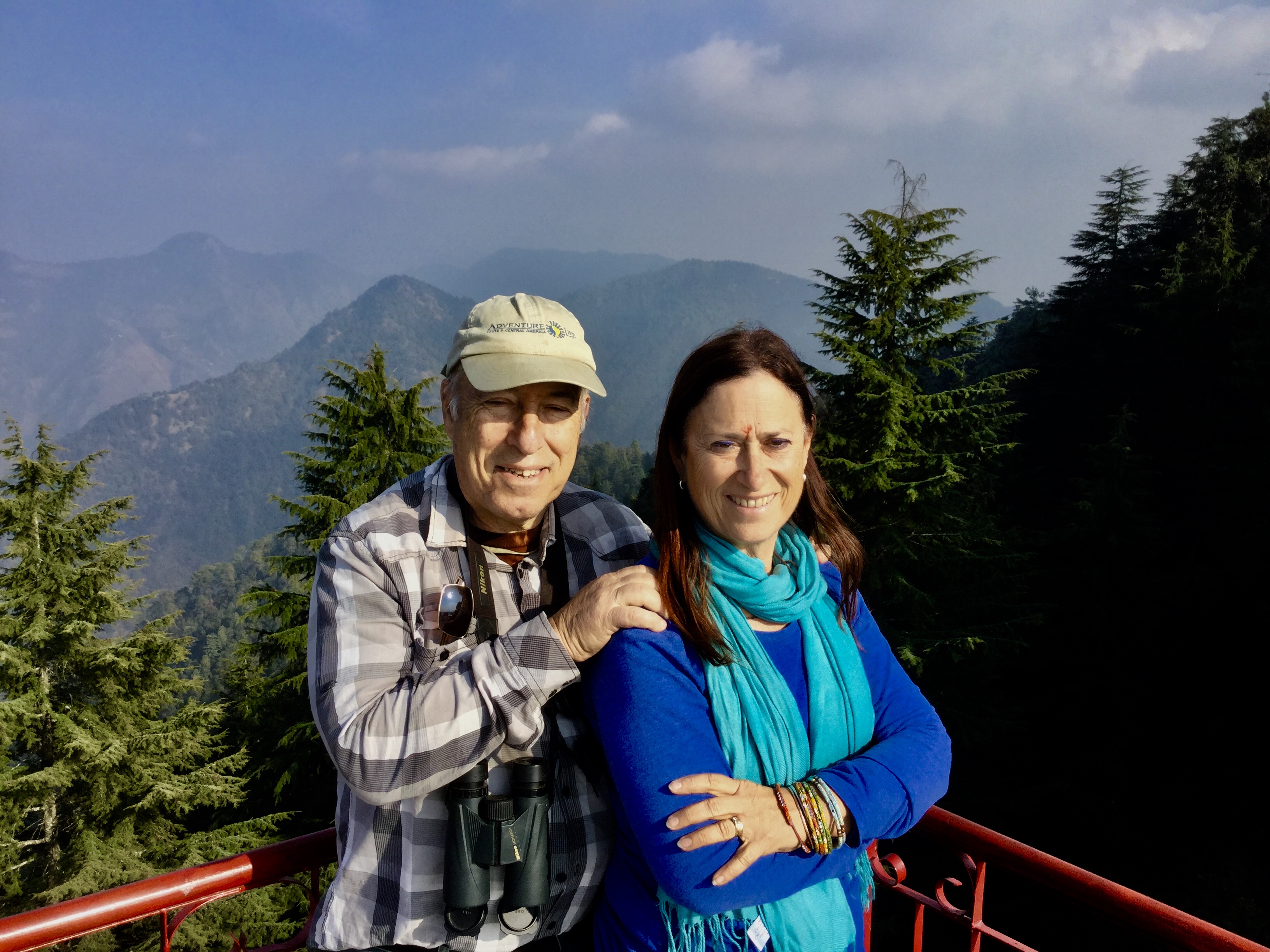
And, after all, he was doing yoga every morning for over a month in Rishikesh and is even beginning to be less squeamish about calling it yoga instead of exercise.

I don’t know where I’m going with this Ode to My Long Time Relationship just as I don’t know where our life together will take us from this charming old fashioned haveli lodging in Jaipur. I think I write partially out of nostalgia for a simpler time when couples more often stuck it out long enough to reap the benefits of the companionship and kindness of a Long Term Relationship. And maybe partially out of an awareness of the constantly evolving nature of love born from extended travel together.

It’s a wonderful thing and I wish it for more people even as I recognize that the Western world has been moving in the other direction.

I think this sociological evolution is the bastard child of good intentions. In my generation’s desire to change the world we went dashing down the path with little awareness of possible consequences. They’ve not all been good.

But that’s a thought for a different time and place.

I’m Not Your Son: You’re Not My Father

Four years ago James Blunt released a single called Monsters about his father’s life-threatening illness and his own relation to his father’s situation. A beautiful song with haunting lyrics, for some reason it escaped my attention until a young man named Iam Tongi performed it, struggling to sing through his tears, on America’s Got Talent earlier this year. Blunt’s father, Charles, diagnosed with stage 4 renal disease, received a transplant in response to the singer’s public plea for help and is doing well. Iam’s father, Rodney, Tongi’s musical mentor, died of kidney failure just months before the high schooler’s audition on AGT.

https://youtube.com/clip/Ugkx3u5ItnckHY_OfbO4WSGwkfpwL8ARPR-t

For me, the song reawakened feelings about my own experience many years ago with my father’s final illness and then death. It was shocking for me to realize that I was 39, a year younger than our youngest child, when my father died. I felt very grown up at that age, a mother of five, in a responsible position at work.

My father was a community rabbi, loved, admired, practically idolized by the people in his Texas congregation. Diminutive in height, maybe 5’6″ (167 centimeters), he was a giant in his personal stature of charisma, empathy, cleverness, and depth in his sermons and other teachings. Having grown up in Chicago in an ultra-Orthodox Satmar home, his ideological embrace of Conservative Judaism was anathema to his stern Satmar Rabbinical father. His adoption of Texas cowboy boots and, with time, a slight Texas twang belied his yeshiva background.

I was born the third daughter of three. It was a huge disappointment to my father that there would be no sons for him to sit and learn Torah with, in spite of his ambivalence, and a long love/hate relationship with traditional Judaism. He insisted for a while on giving me a boy’s name – back in the day when genderized names were the thing – but my mother’s wishes prevailed.

There was a period of time when he sat and learned Torah with me after school in the afternoons, time with him I cherished until family dramas of a different nature overcame us both.

I frequently accompanied him on shiva calls to grieving families in order to have more time with him. Our bonding during those drives stood us in good stead during the stormy years when my angry rebellion and his equally angry response drove us apart.

I left home just prior to my 17th birthday to join The Age of Aquarius in Haight Ashbury during the summer of peace and love in 1969. In the last minutes before my departure his final words to me were “If you walk out that door, I won’t have anything to do with you again.”

Five years later he danced at my wedding, a wedding he performed in my parents’ backyard. We took the opportunity to rekindle our mutual fan club of two, never actually talking about our estrangement, but expressing relief at reuniting.

Over the following years, he called on me many times to come take care of my mother so that he could visit his own mother in Israel or attend conferences or give lectures around the US.

We had ample time to share his regrets about his choice of vocation (he would’ve loved to be a political science professor at a top university) and his failure to make amends with his father before his death. We talked about my doubts about giving up a future in law in favor of moving to Israel, and my concerns about bringing children into a world of materialism and violence.

Two subjects we never discussed were his feelings about religion and his lack of skills as a father while we three daughters were growing up. I think we both sensed these topics to be too painful, possibly too divisive. to overcome.

Since his death, I’ve often wished we’d talked about both.

When he had his first surgery for lung cancer in the spring of 1991, I flew to Florida from Israel to be with him. Though my mother was often with him, he found excuses to her to leave us alone for quality time. We didn’t speak about heavy subjects. I remember him filling me in on his favorite television shows, mostly detective shows, and me sharing photos with him of my kids who were 9-16 years old at the time. We reminisced about their bar and bat mitzvahs he’d attended in Israel, talked about Gershon’s trials and tribulations in his orchards, about various people in his San Antonio congregation, and what was going on in their lives. I especially remember him talking about future trips he planned to make. He seemed optimistic that his illness was a blip in his life plan.

During the months between his first surgery and his final illness in the summer, we exchanged many letters. I’m so grateful today that this was before the age of emails and texting. My father was as eloquent in his correspondence as he was articulate as a speaker and teacher. In his beautiful cursive script, he shared his admiration for my life choices, his ultimate satisfaction with his own life, his worry about my mother’s life without him, and about my sisters. He wrote about being happy to have been able to say goodbye to people in Texas in a timely manner. He wrote sweet wishes for each of my children and expressed sorrow at not being able to watch them grow into adults and marry.

I flew in again, with a very heavy heart, when he was hospitalized for what would clearly be his final days.

Four days before his death he sent my mother on an errand and described a dream he’d had the previous night. In this dream, he was a very young child again, living in a railroad-type of apartment in Jerusalem. He could see from one end of the apartment to the other and described each room in great detail.

It was the first time he’d ever talked about his childhood to me. He related a simple, mundane memory of his mother scolding him for getting his shirt dirty outside.

On each of the three remaining days he again found an excuse for my mother to absent herself from the room and related another dream to me. In each dream he was older than the previous one. On Friday he described his wedding to my mother, where three rabbis – no less – performed the ceremony much to my maternal grandmother’s, an anti-religion atheist, chagrin.

I instinctively knew there would be no more dreams.

I recognized the process he’d been going through, as did he.

We spoke with my mother and the hospice team who were to help me care for my father in my parents’ home when we came home on Tuesday, but he and I exchanged understanding glances throughout.

When my mother and I left that afternoon I let my mother leave the room first and stayed behind to give my father, never a physically affectionate person, a hug. He gave me a squeeze with what energy he could summon.

We felt no need in those last days to discuss his mistakes and mine; we both understood them well enough. I felt no need to read him his rights and wrongs, felt so painfully as a child and then as an adolescent in a dysfunctional family with an emotionally detached father.

While I didn’t say to him that it was my turn to chase the monsters away, I think my reactions to his dreams said it as loud and clear as James Blunt and Iam Tongi.

When the phone rang that night, after the Sabbath had begun, though I don’t answer the phone on the Sabbath, I picked up.

Rabbi Amram Prero, 1915-1991

A complicated, magnificent life.

I miss you.