Like Father; Like Daughter

I was looking for something in an old file the other day and came across a letter my father sent me 33 years ago. It was the day he found out that his cancer had returned and the prognosis was not good. In fact, within six months he would be dead.

When I showed it to my partner, he said that it looked exactly like something I might have written. The sentiment is mine, Even the language is mine. And it’s very 2024, even though it was written in 1991.

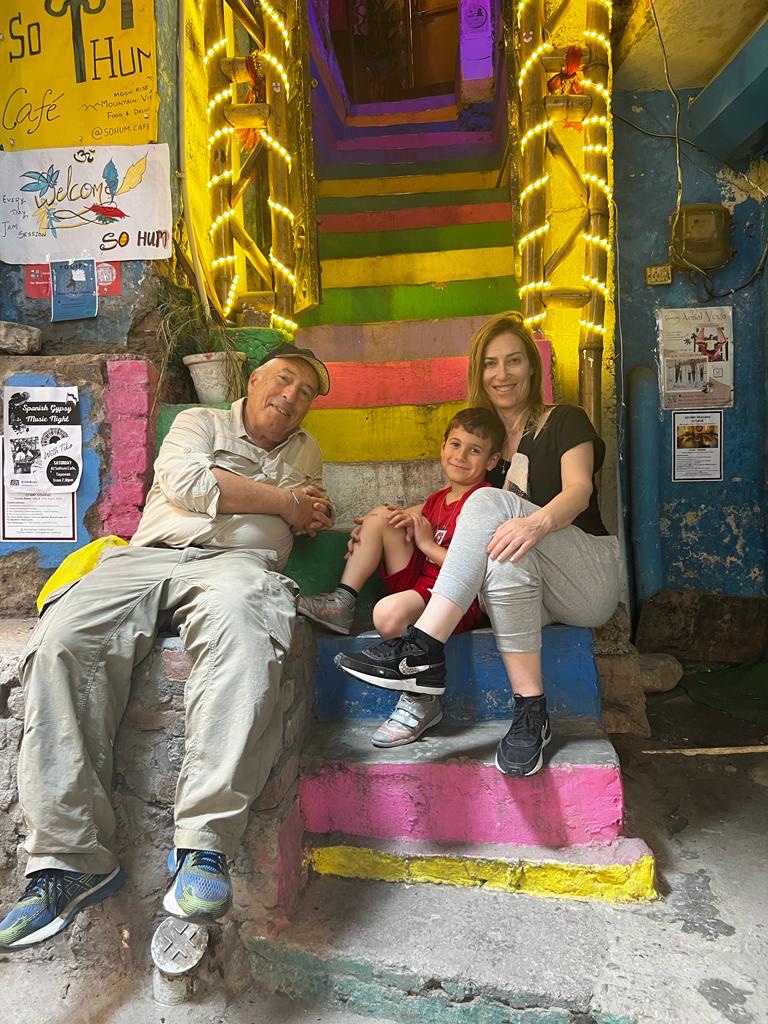
My Dad. What a special person. A complicated man. A man never quite at home with his emotions. Quick to smile; slow to hug. A very active inner life. A very active public life. But most often not emotionally present for those of us he shared a house with.

I like to think things would be different today.

So here’s that very special letter, with those very special thoughts, lessons for us all, from that very special man who was my father.

  It was an idyllic morning in sunny Sarasota.

  I stepped outside the hospital, blinking in the sunlight. The everyday sights and sounds were different; they were as never before. The deep blue sky, the gently moving leaves, the traffic flow, the people — all seen in a new light.

  I reflected on how casual I had been, before my traumatic experience, to such common phenomena and to so much else in life — indeed, to life itself. And so I resolved to spend wisely whatever of life was yet to be mine; not to squander it. For life, I saw with stark clarity, is an incalculable gift. It should be held close, made the most of, constantly enriched, and cherished.

  That is one half of the lesson I learned there, standing in the sun. There was another.

  The wondrous sunlight enveloping me, could I retain it? Could I keep that sun from setting? Had I tried to halt its slipping away, and inevitably failed, how frustrated and saddened I could have been. But if that were my reaction I’d have transformed the glorious moment into one of regret and sorrow.

  But it is not only the sunlight which must slip away. Our youth and our years, our senses and our lives, these must go also. And we must accept their inevitable departure; be ever ready to let go.

  That is the other half of the lesson.

  This, then, is the paradoxical conclusion. Hold fast, hold close the precious gift of life, but with arms so loose as to be ever ready to release it; with arms virtually open.

  Is this an impossible challenge? Physically, yes; mentally, emotionally, of course not. We do it repeatedly throughout our lives. We give away our hearts in love, and we have more heart to give. We wear out our minds in deep thought, and we have a better, sharper mind. We are smitten by pity for the deprived, and we are the stronger for it.

  The key word in the conclusion about life is ‘inevitability’.

  Aware that life must and will inevitably end, each of life’s moments becomes all the more cherishable. The sole unknowns are the when and the how; when and how these moments will end. The choice is between succumbing to fruitless agonizing — fear and dread of the when and how — or living those moments richly, fully, gratifyingly; savoring them and saying, in effect, “I’ll relish this as long as I may, and whenever it ends I’ll be grateful for having had it — and hope there are some others who will be grateful that I had it also.”

  I imagine nodding heads. It does seem logical. But is it unduly difficult to transfer from the thought process to one’s inner being? To transplant the idea into actual, living reality? To live by it?

  It is not difficult. We do it again and again in our daily lives.

  Look. We are enthralled by a spectacular sunset. We are immersed in passionate expression of our love. We are transported by a rapturous violin concerto. Do we destroy such moments by dwelling upon their transitory nature? Our minds tell us these moments will pass. We know it. But do we permit that knowledge to suck out our enjoyment? How infinitely sad that would be. And in truth, we don’t, do we?

  So it is, or so it should be, with life.

  Life, that wonder-filled possession, is ours to keep for a while. Think of it as the wise sage Bruriah, wife of the Tanna Rabbi Meir, did, as a divine loan. How wholesome, how sensible, to make the most of the temporary gift while accepting that one day, any day, it will be taken back; that one day, as in Joshua Leibman’s lovely Day in the Park fable, the Great Nurse will beckon, “It’s time to go home now.”

  And, so, hold life close, with open arms.

  Of course, I have had frequent occasions in my life to recognize life’s precious worth — in peak moments of joy, or when escaping serious dangers. And, of course, I have long known that being mortal, my life must end at some time. But my acceptance of both of these truths was tucked away inside me somewhere. They were concepts I did not question. They were “givens”. I was never challenged to affirm them. I was never tested. How, then, could I be certain? When the Angel of Death confronted me, how would I really react?

  I have been tested now.

  And I thank God that I found, find, myself in total accord with the balance; with the synthesis of holding life close and readiness to let it go — of holding life with open arms. And in cognizance that I really believe this, that it has penetrated my inner being, I am warmed, strengthened, grateful, at peace.

  For you who may read or hear this, I pray that you find the wisdom to enjoy life, to cherish it, to make the very most of it for yourself and for those with whom your life is entwined; to hold it close — all the while accepting its inevitable departure without fear, frustration, or dread; prepared to let it go.

  And if you do that, if you really make that belief your innermost conviction, you will be among the most fortunate of mortals. For you will not only rob death of its anticipatory fright, replacing that with inner peace, but your life will be enriched beyond measure.

Amran Prero, March 1991

Addendum: I was with my father for the last few days of his life. We watched television together, chatted about my kids and about Israel, and he told me about a series of dreams he had on the nights leading up to his death. He was calm, at peace, happy, and in good spirits. He laughed at Tom Selleck’s Magnum P.I. as usual, giving him a constant barrage of advice.

He truly held life close with open arms.

Traveling with Family – Part 2

Families are complicated. Large families are largely complicated. I used to think my own dysfunctional family – bipolar mother and clergyman father – was more complicated than most. Then I grew up.

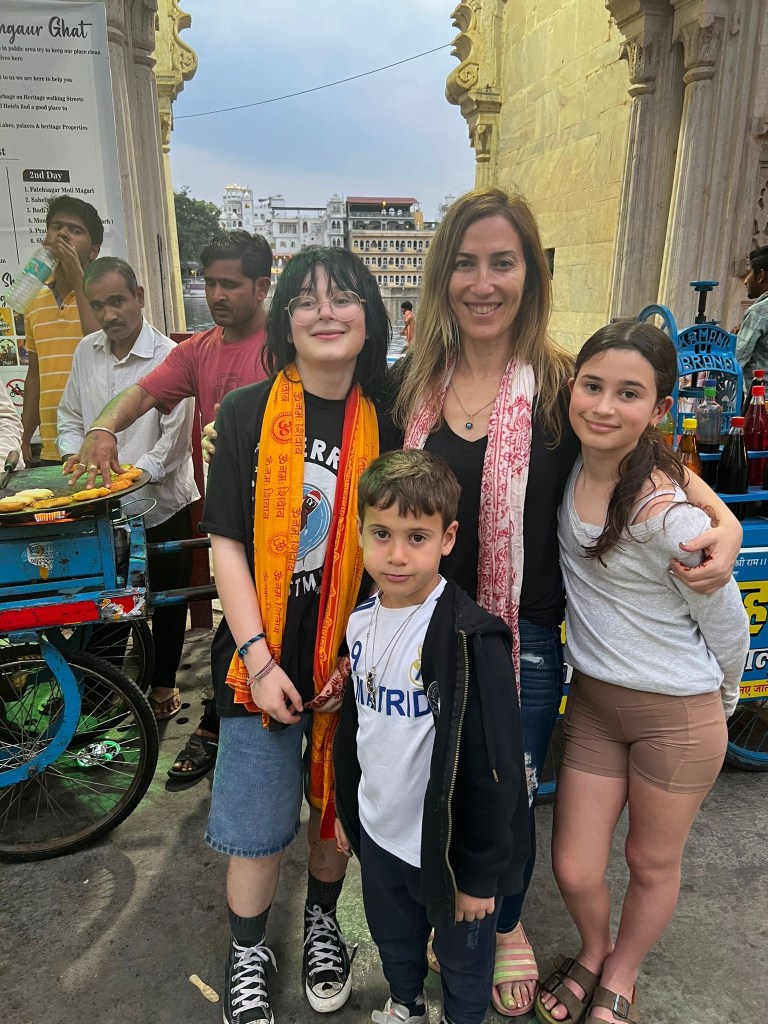
My partner and I have five adult children and sixteen grandchildren. It goes without saying that each of the twenty-eight people in our family is a multi-faceted, quirky, fascinating person in her own right (we are 17 females and 11 males but I’ll be using all sorts of pronouns).

Just the fact that, to my mother-in-law’s great anger, we “turned our backs on the great country which gave us so much” and moved to Israel already sets us apart from mainstream USA. Add to that oh so many others of our personal traits and decisions and it becomes easy to see why I add the word ‘quirky’ to a list that otherwise applies to one and all.

But this isn’t about our family in entirety, just Tsippy’s family of 4 (not counting her soon-to-be ex-husband), and us.

As you read in Part 1, Tsippy is a successful career woman who has been raising her three children virtually on her own for the past two years. Her kids are 14, almost-12, and almost-8. Not particularly easy ages, but are there really easy ages? I think that might be a myth.

One of the things you didn’t read in Part 1 is that her oldest is a trans boy. There’s so much that entails. Heartache and joy, difficult challenges, serious crises and decisions, celebrated achievements, lots of introspection, acceptance, juggling, tears, eye-rolling, embarrassment, laughter, and, finally, and most importantly, love.

He and I are very close.

He doesn’t like a lot of people. He has no patience for bullsxxt.

He can take social situations like school (because he has to) and family gatherings (because he’s learned they’re theoretically healthy and relatives’ intentions toward him are good) but only in limited doses. After 3-4 hours he’s emotionally exhausted and needs alone time,

For whatever reason, he’s chosen me as “his person”. If his Mom is his coping strategy, as he’s told me, I’m his #2 (At least most days).

He agreed to come to India because I’d be there. I was flattered.

His almost-12 year old sister is the exact opposite socially. She has a gajillion friends, is a talented dancer, and a good student. She’s cheerful, physically affectionate (a great hugger), and has a killer smile. She drives her brother crazy and, at the same time, idolizes him. She’s ridiculously understanding of how hard his life is and the attention he requires from their Mom. She reminds her Mom that she requires attention, too…a lot.

The youngest is the kind of boy who wakes his Mom up every morning with “I love you, Mommy.” An amazing soccer player. Give him a soccer ball, pizza with lots of tomato sauce, and his Mom, and he’s good to go.

Add doughnuts to the list of things he loves

Tsippy herself is an inspiration. Many single Moms are. She’s learned the importance of balance the hard way – each of her kids’ needs, her own needs, work, home, friends, extended family, keeping up appearances and also not giving a crap, asking for help from the right people, accepting that she’s not in control of how a lot of stuff turns out – even the stuff she cares about the most.

So that’s the constellation, other than me and my partner. You’ve met us and gotten to know us here over the past umpteen posts. If you haven’t, you can go back and do your homework.

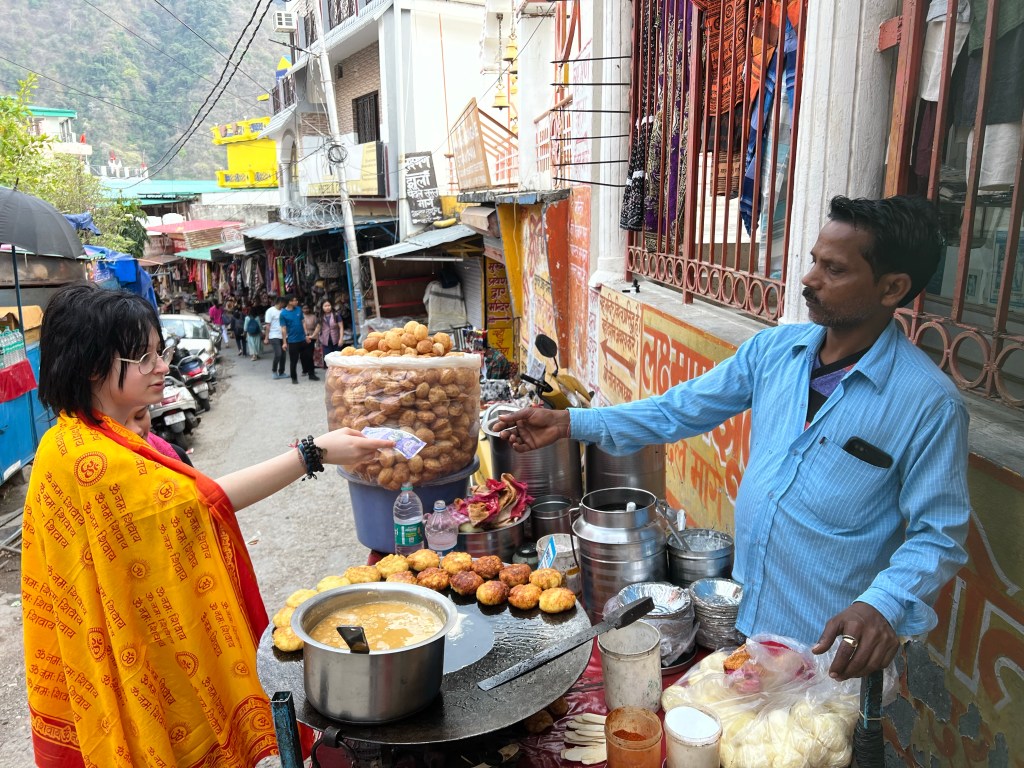
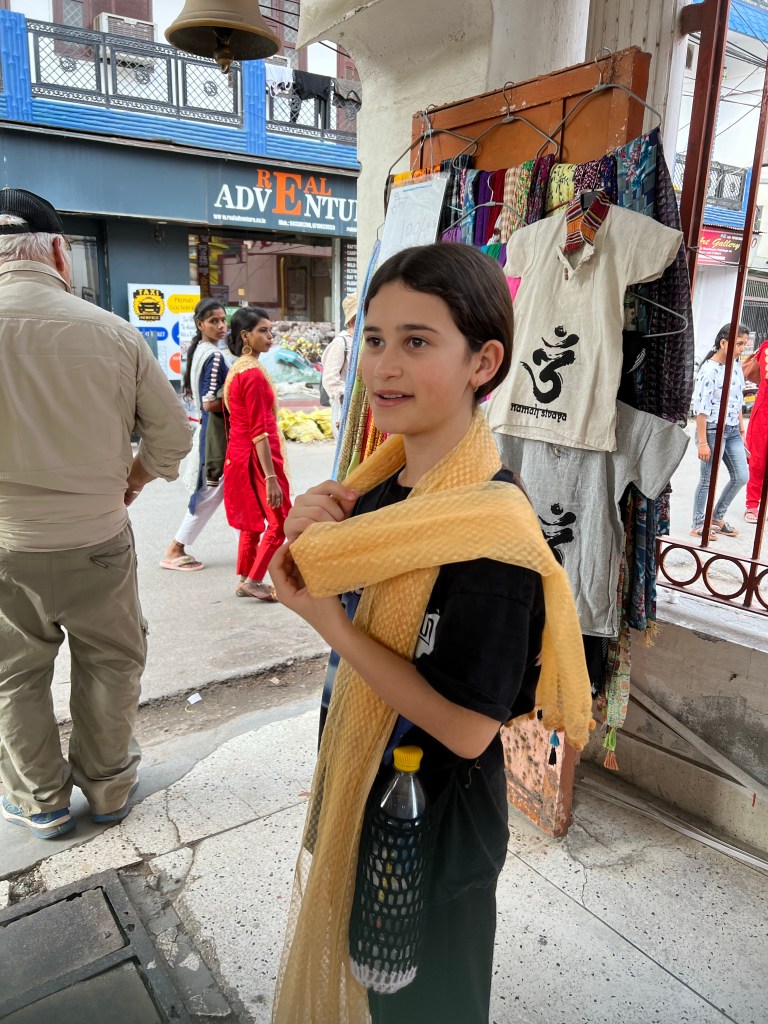
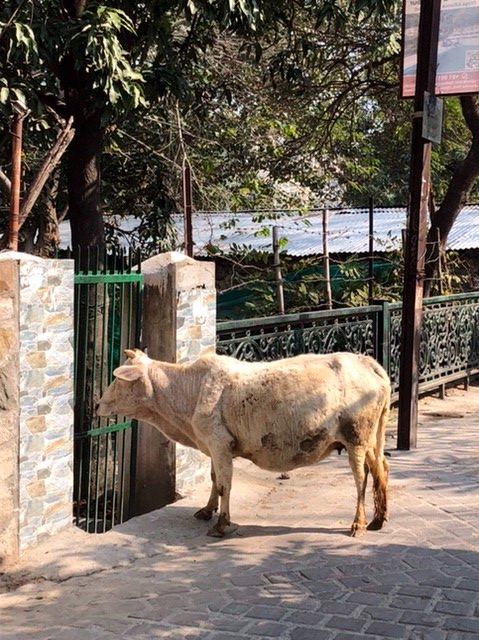
We met up with them after their 5 hour cab ride from the Delhi airport to Rishikesh. They’d slept in the car and were on a high. Excited about the cows wandering the streets, the kiosks with colorful clothes, jewelry, and bags of all sizes, and the diversity of dress and skin color of the people passing by.

They wanted to taste all the street food we saw and tell us all about their flights. Preferably at the same time. They tried on scarves and checked out the saris and salwar kameez. They only very reluctantly agreed to go to their hotel.

Food became an issue. We’d discussed it before the trip and prepared for it as well as we could. We chose restaurants with varied menus; Indian food but also pizza, chips (French fries), and cornflakes. The pizza and chips were a bit different than what they were used to so we often left 3/4 of every dish behind. They ate pringles, chocolates, rice, cornflakes, and doughnuts. Not a great way to sustain human life but it was only for two weeks.

They didn’t complain.

Not about the food, or the endless shopping, or the loud craziness on the streets, horns blaring, or the cow sxxt which required diligent attention, or the limitations we set on how much money they could each give to the ubiquitous (and deserving) kids and adults with their hands out and a sad look in their eyes.

There was very little bickering – much less than at home – and not many flare ups.

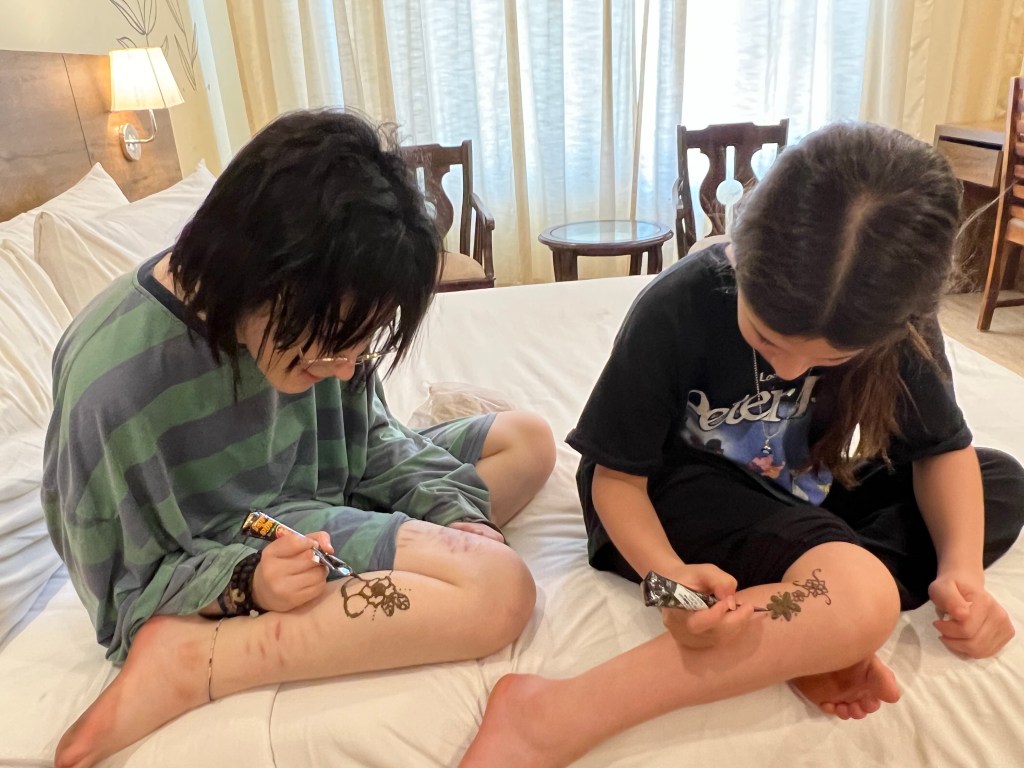
When the henna drawing on the oldest’s leg didn’t come out like he hoped, he took it out on his sister. Big time. Why? (what silly person asks a 14 year old why?)

So far so good…until it wasn’t

We all saw how much of an effort the oldest made to participate in all our activities. He really wanted to be a part of it all. Even the activities that strained his coping skills to the max. When his perfectionism ruined his pleasure in his miniature painting of a peacock during our 3-hour workshop, he barely mentioned it. He just set it down, wandered off, and found a place to sit with his phone.

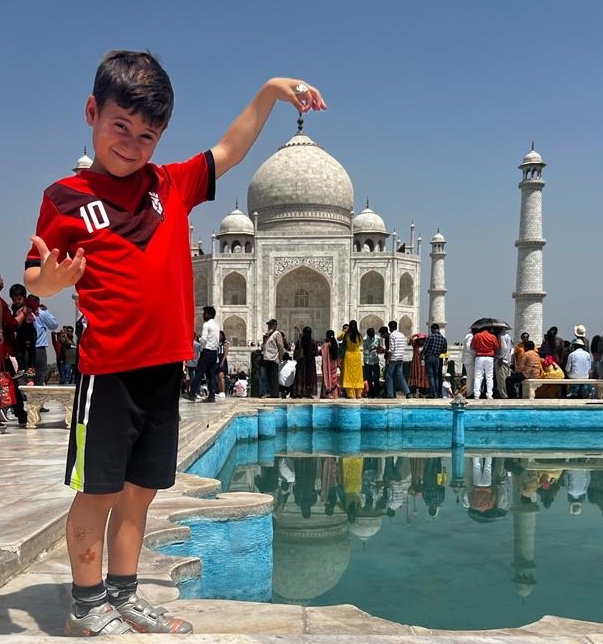
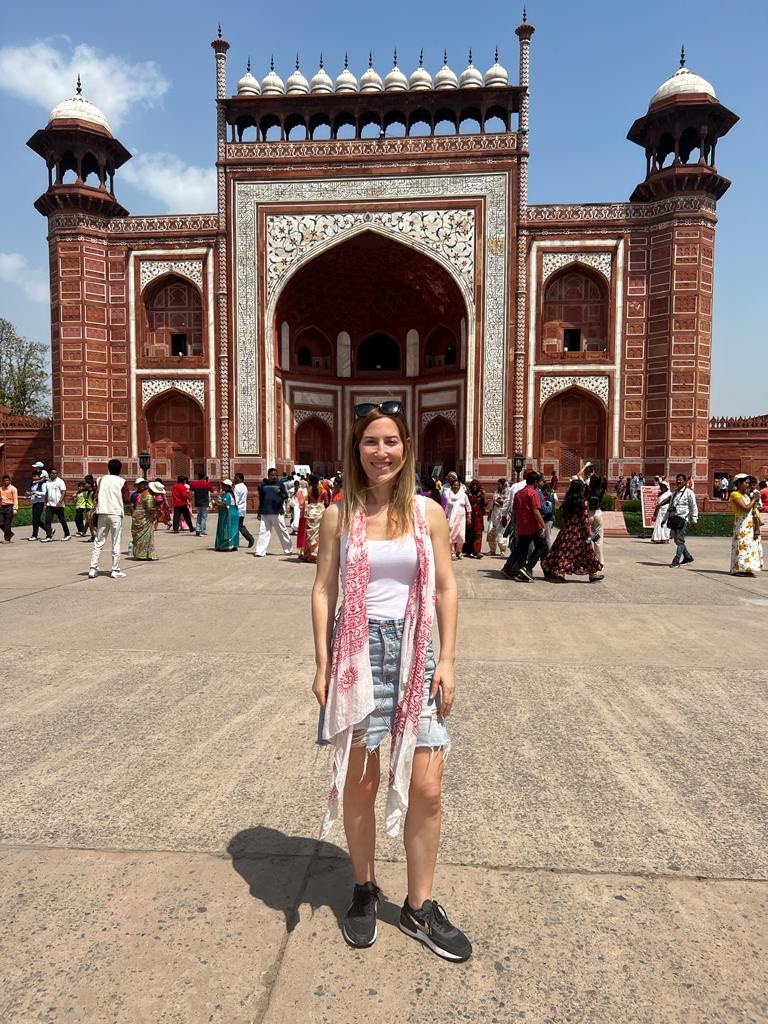
When he chose to remain in the hotel in Agra, Tsippy and the others went to the Taj Mahal on their own and had a great time taking goofy photos. No guilt tripping. Everybody was happy.

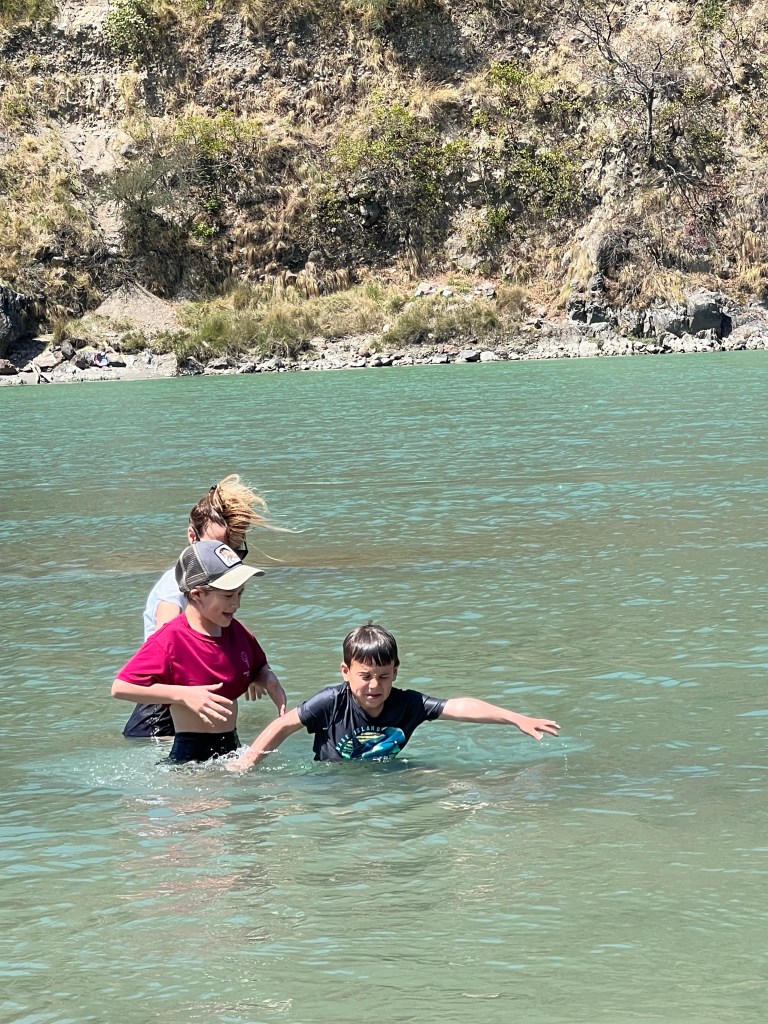
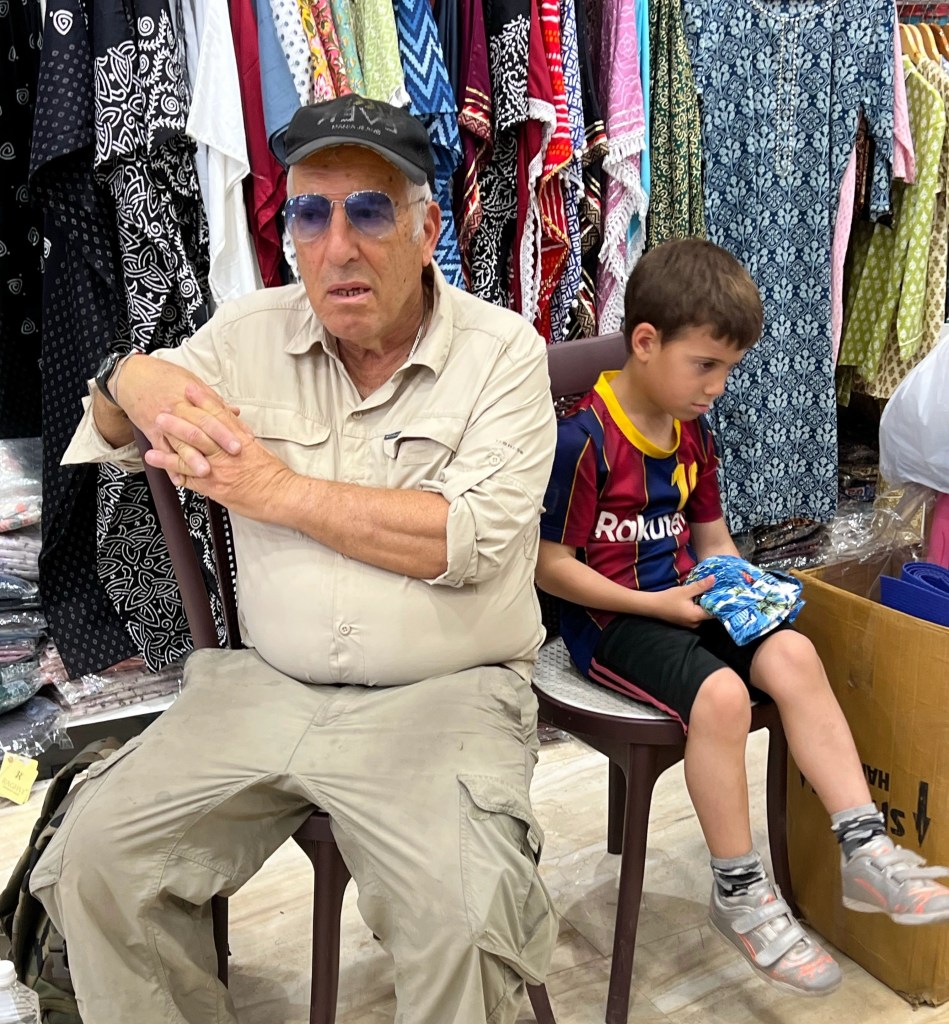
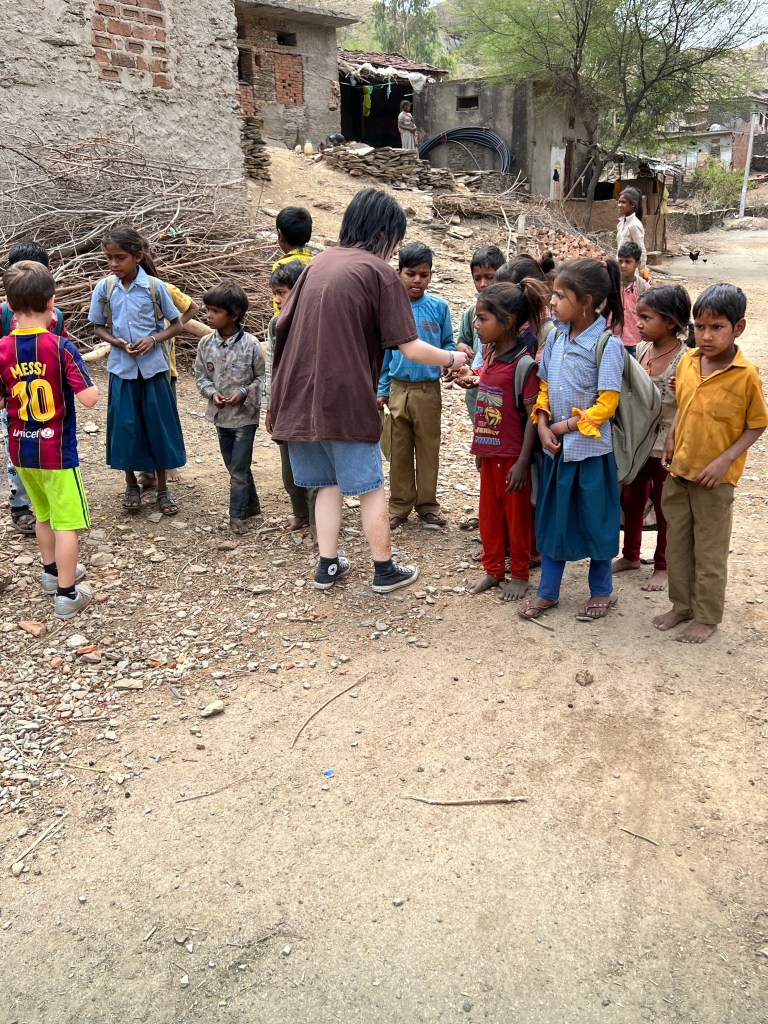
The youngest was patient (long suffering) as we shopped. He had his grandfather to hang out with. He got compensation with a long dip in the (very cold) Ganges. The oldest was happy to hand out candies to all the village children in compensation for what he defined as the day from hell (4 hours of extreme heat). The sandwich kid who has a VERY hard time making decisions was allowed all the time she needed, even when (inevitably) she decided not to decide.

There was a lot of give and take. A lot of mutually respecting personal boundaries and foibles. A lot of appreciation for our time together; even if it required taking a few deep breaths from time to time. Even when the oldest said at one point, admirably, “You know, I’m totally restraining myself from yelling at you for that very annoying comment.”

And it wasn’t only an amazing bonding experience for the grandkids.

My partner is quite religious. He observes all the rituals; keeps all the restrictions. Our kids aren’t religious and have always had a strained relationship with their father around these issues. They see him as inflexible and putting religion before his relationship with them.

He feels that because he’s “the religious one” and none of the kids observe the rituals and restrictions, if he doesn’t make a point of observing them when he’s with our kids and grandkids there won’t be any room for those observances there. No one will make sure there’s a space for him to do what he needs to do.

I see both sides and understand the behaviors but it’s mostly not my story to rewrite. I know that he puts his family above and before everything else in his life.

Of course if no one felt threatened the kids would make a respectful place for my partner’s religious observances in their homes, and he would be more flexible and make space for them not to observe while he does.

Easier said than done.

Our time in India with Tsippy and her family coincided with the Jewish holiday of Passover. Lots of restrictions and observances.

Tsippy and the grandkids were positive and respectful at the Seder and my partner was understanding and encouraging when they’d had enough and asked to be excused.

We found out which of the many Indian bread options are not made with wheat, and made the decision to eat kitniyot (legumes and rice) which are not considered “not kosher for Passover” but are, for the most part, not eaten by Ashkenazi Jews (which we are). That made it possible for us to eat with our family, and for Tsippy to say towards the end of the trip that his flexibility made her very happy and feel very embraced by him.

No words were ever more welcome.

It was two weeks of grace; of kindness, love, acceptance, and gratitude. It wasn’t without its sad moments; realizing (not for the first time) that we can’t create a bubble of perfection and ease for the people we love. But it was two weeks we’ll all remember for the bonds we made.

There’s talk of a trip together to the Serengeti.

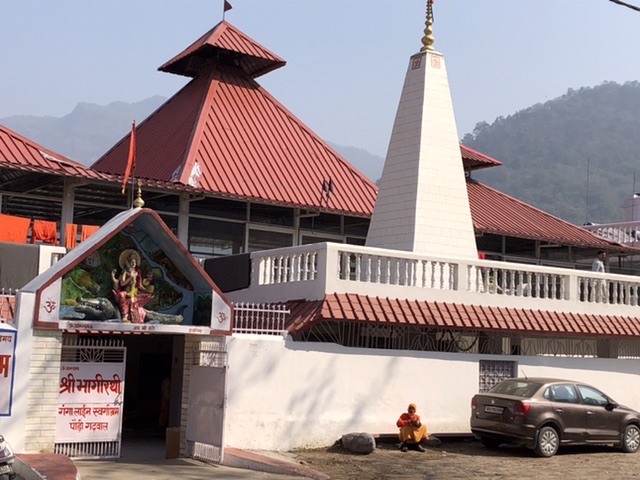
What is it About Rishikesh?

My partner and I spent 10 days in Rishikesh in 2016 and 3 weeks there so far on our current trip. We’ve decided to go back for another 10 days in April. We ran into many people there who told us they’ve been coming to Rishikesh every winter for the past 6 years, or 10 years or an incredible 20 years. One young person we spoke with last night (in Delhi) said he was there a month ago and finds that something about it is pulling him back.

So what is it about Rishikesh?

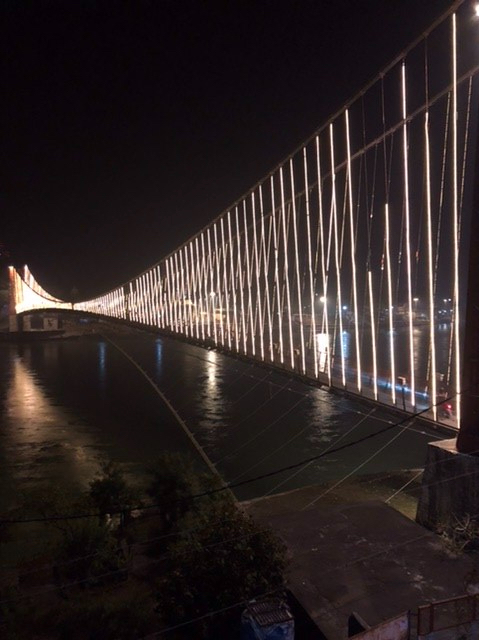
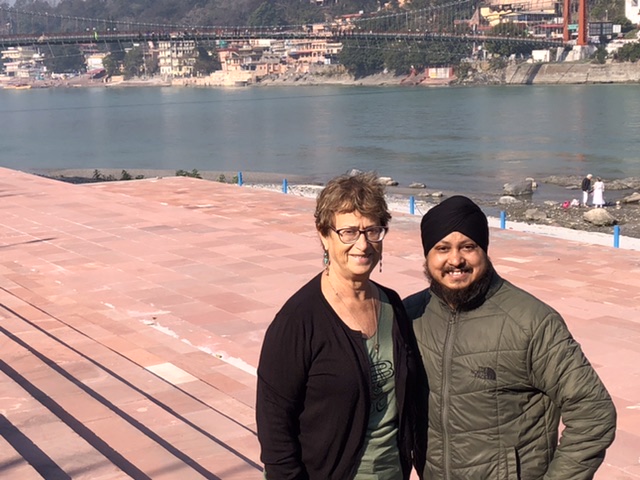
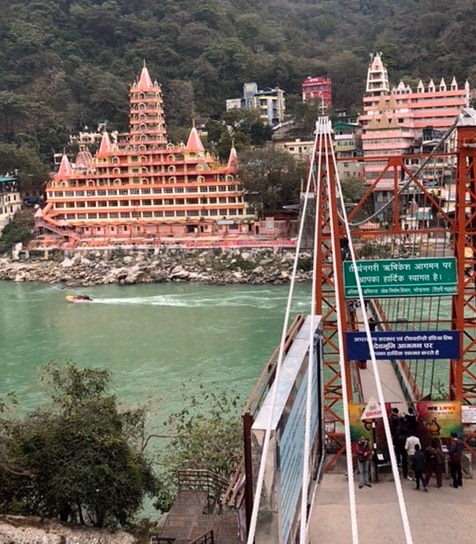
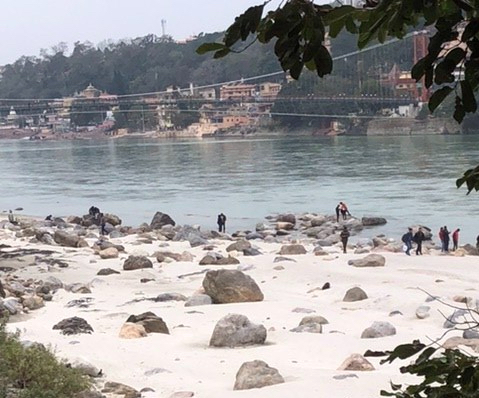
Rishikesh is a small city of a little over 100,000 people. It sits on both banks of The Ganges with two lovely suspension bridges spanning the river.

On one bridge, Ram Jhula, a few cows and monkeys maneuver between the foot traffic, motorcycles, carts, and bicycles. Things get busy on Ram by 9:30 am and don’t let up until twelve hours later, when the cacophony of horns and bicycle bells finally stops.

On the other, Laxman Jhula, they’ve recently installed barriers so there are no motorcycles or bicycles, but the monkeys there are far more numerous and aggressive (I was bitten by a monkey there in 2016).

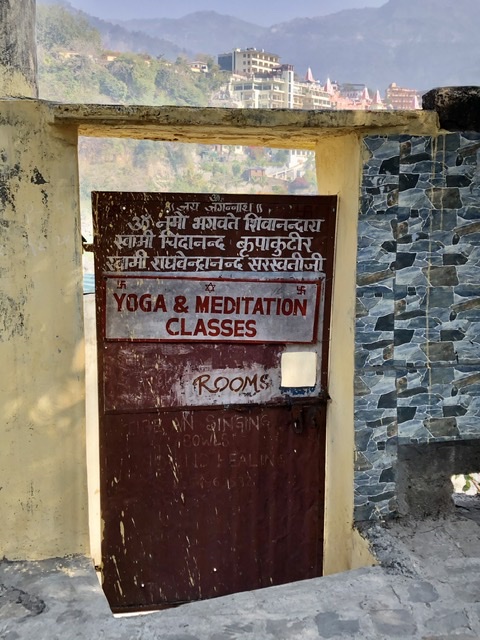
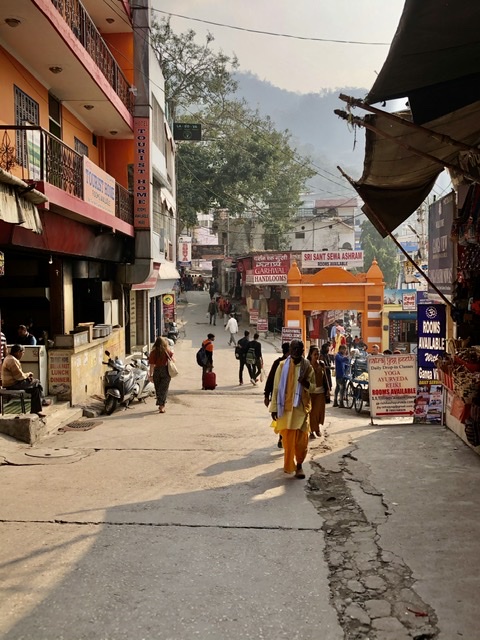
The small streets and alleyways are full of signs enticing people to take classes of all kinds – 200, 300, and 500 hour yoga certification courses, meditation classes, Hindi classes, music lessons of all kinds (harmonium, chanting, tabla, sitar to name a few), Ayurvedic massage and therapy classes – all for very low prices.

Some signs are in Hebrew, and many local people can speak a little Hebrew – a sign of how many Israelis visit and how much we make our presence felt wherever we are (for good and for bad – but mostly for good). In general, the average Indian is a big supporter of Israel, and especially of Bibi Netanyahu, expressing admiration for our strength in the face of great adversity. They enjoy the Israeli bonhomie and exuberance, responding to Israeli travelers’ warmth with readily extended friendship.

We’ve met with kindness, extraordinary customer service, warmth, and beauty all over India. We’ve been awed by the colors, the noise, the crowds of the huge cities and the striking isolation of much of the beaches, jungles, and countryside. And, still, Rishikesh inspires an attachment that’s different.

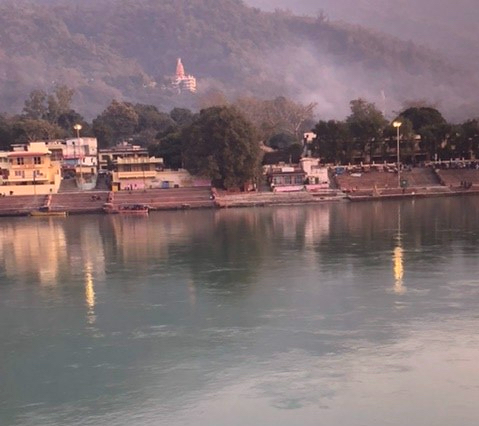
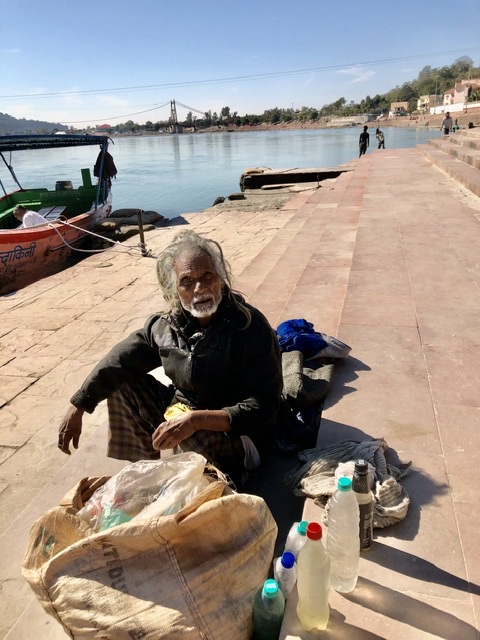
Maybe it’s The Ganges. Considered holy, originating from the matted hair of the Hindu god, Shiva, The Ganges starts in the western Himalayas, emptying finally into the Bay of Bengal. It becomes continually more polluted as it flows south and east. In Rishikesh it’s relatively clean. It also manages to be majestic and serene at the same time.

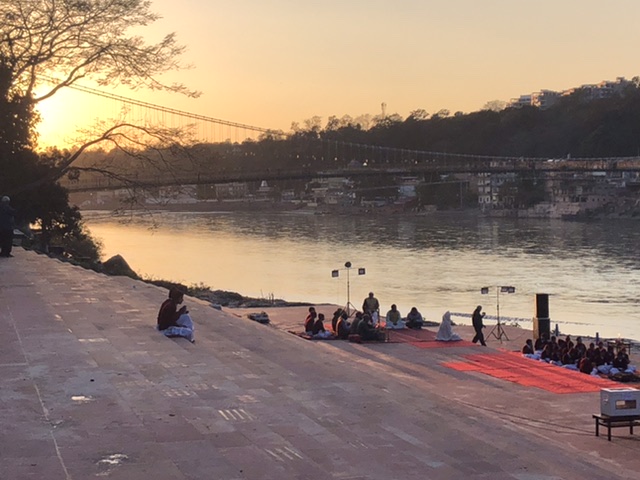
Half an hour before sunset, students and teachers from ashrams and schools congregate in their respective uniforms to sit by the river to prepare for the Puja ceremony. They chant to the music of the harmonium and the dholak drum. The ceremony culminates in fires being lit in small baskets of flowers, which are then put in the water to float downstream. As a Hindu ritual of reverence to the mother river, it is very removed from my own religion and culture. Yet the sound of the music and the sight of the small fires floating on the water are beautiful and moving. The respect for and love of the divine and nature found in India is close to my heart regardless of the different directions and beliefs that take us there.

Rishikesh is probably known best as the yoga center of India. Yoga practitioners from all over the world come to practice with Rishikesh yogis. Many of them come to take certification courses of varying lengths. From late February to mid-May it’s common to see people of all ages, speaking many different languages, walking through the streets of Rishikesh with a yoga mat slung over a shoulder.

The city is equally well-known as a spiritual center, hosting gurus such as Moojii for annual month-long retreats. Preparations begin several weeks in advance and in addition to meditation and satsang sessions for registered retreatants, a daily public talk with a Q&A session is open to all.

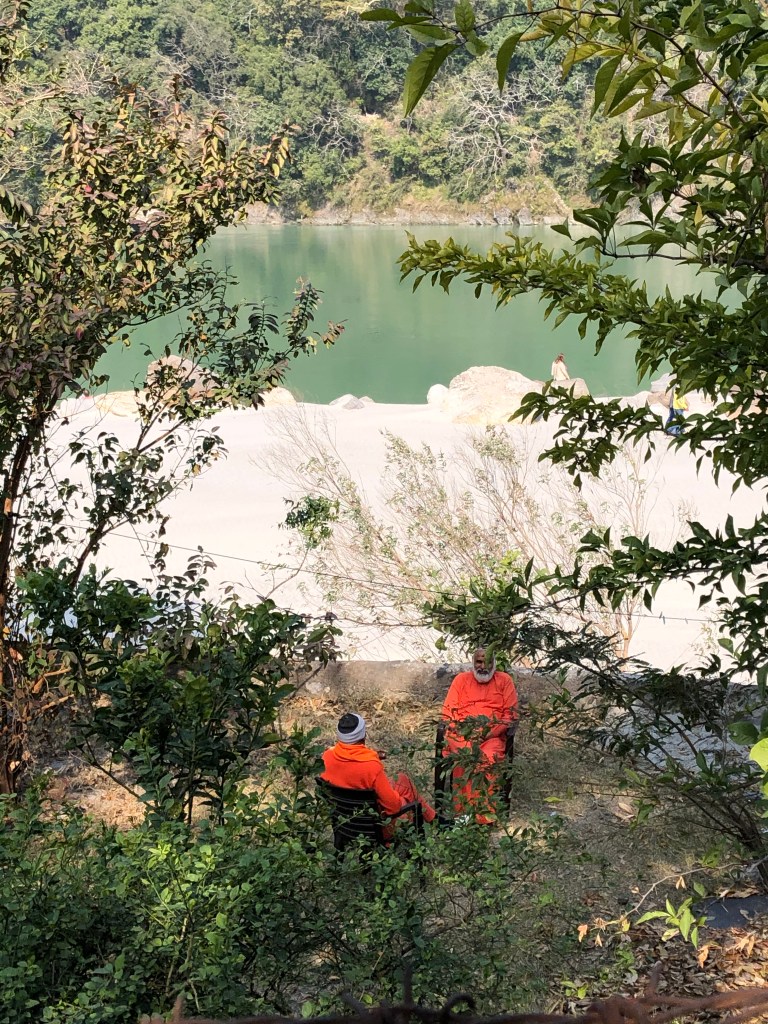
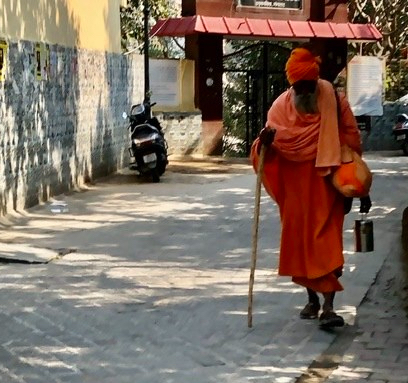
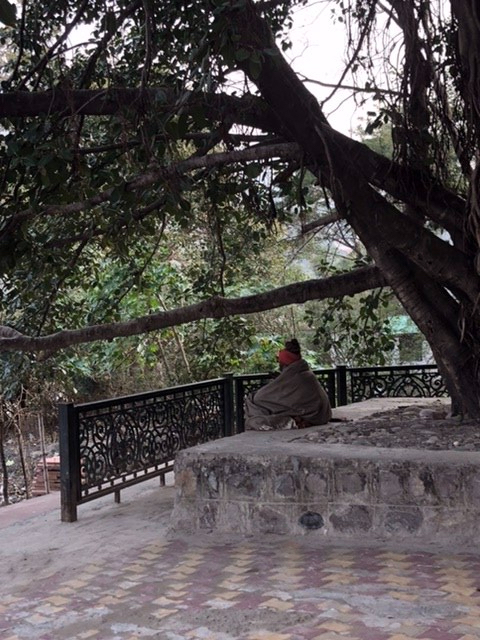
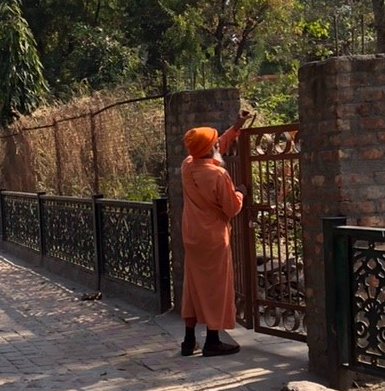
Orange is the color of Rishikesh. It is a sacred color in Hinduism, representing fire and the burning away of impurities. It’s the color worn by holy men…and many tourists. It brightens the atmosphere and, though thought garish in Western countries, is the norm in Rishikesh, just as the sound of bells – on anklets, cow collars and bags – is commonplace and cheery.

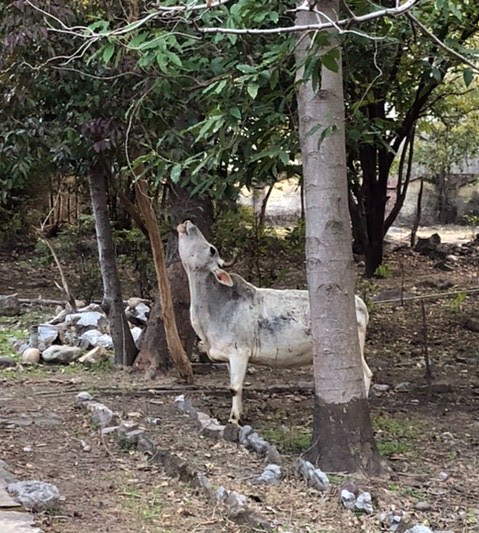
The Ganges, the chanting and music in the air, yoga, meditation, classes, cheery colors and sounds, cows and monkeys and dogs living in harmony with Sadus, spiritual seekers, tourists, shopkeepers and teachers. It’s all part of the magic of Rishikesh. But ultimately I really don’t know what it is about Rishikesh that imbues so many of us with peacefulness and calm smiles and burrows deep into our hearts.

The trick is safeguarding whatever that is and bringing it home with us.