Do We Really Get It?

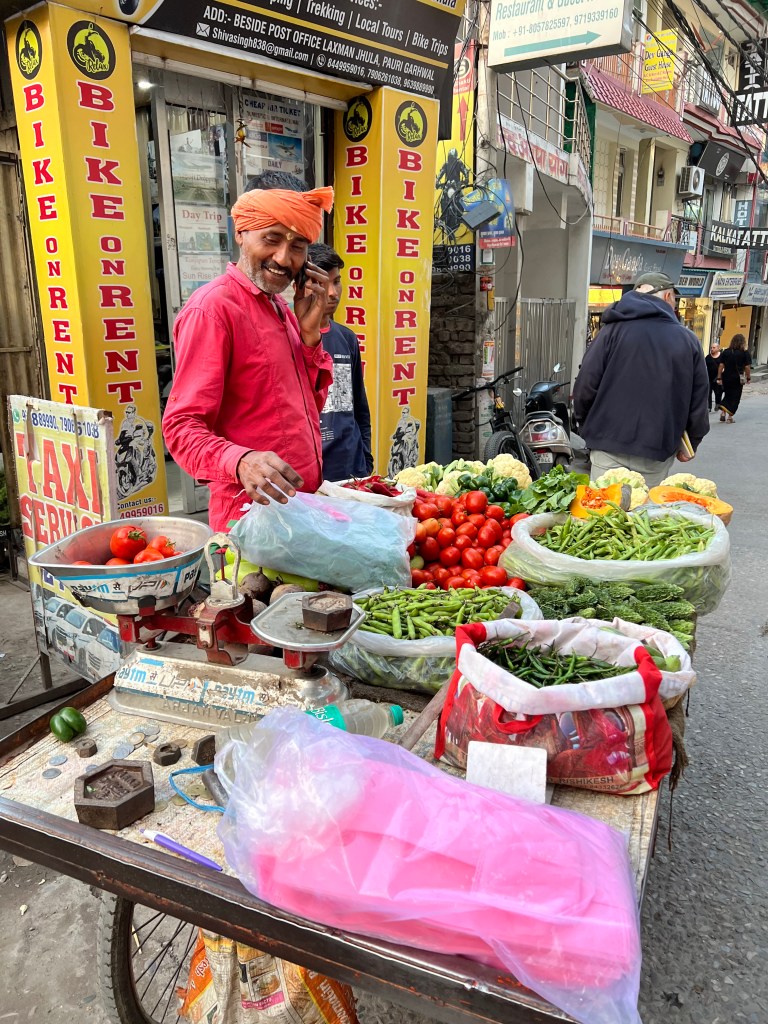
All told, we’ve been in India almost a year. We’ve spent over two months in Kerala, four months in Rishikesh, and a week to ten days in Hampi, Meysore, Delhi, Goa, Mumbai, Varanasi, Darjeeling, Khajuraho yogashram, Kaziranga, Puri, Shimla, Dharamshala, Dalhousie, Chennai, Pondicherry, Auroville, Bandhavgargh, Rambagh, Jim Corbett, and the Andaman Islands.

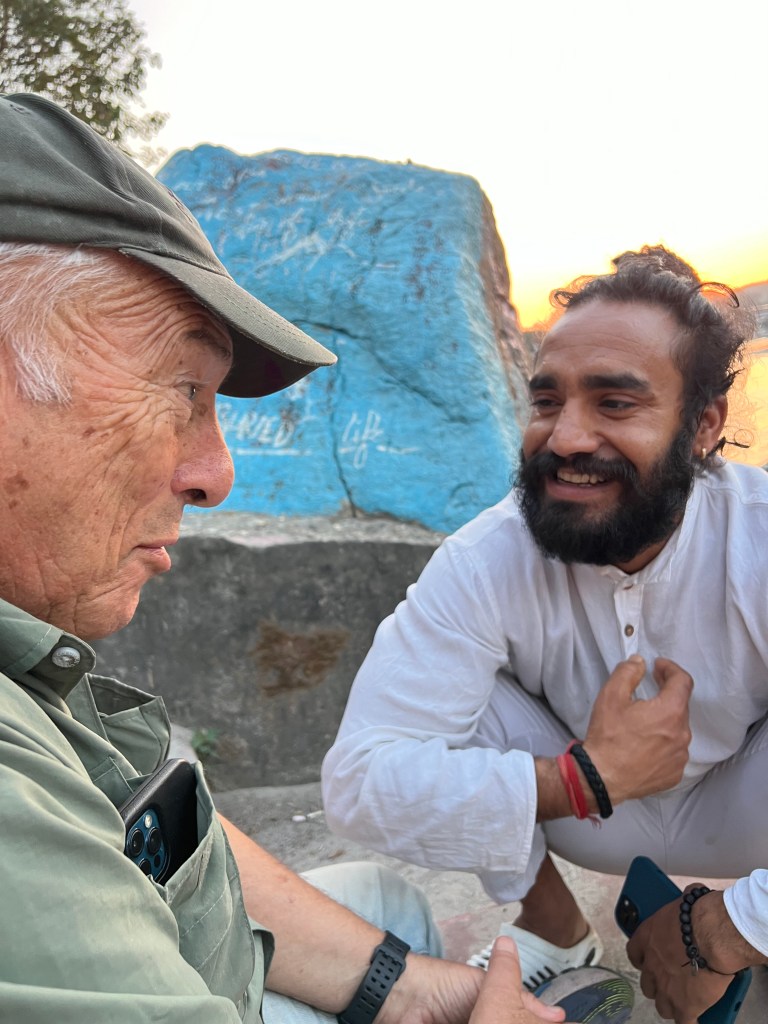
My partner has been learning Hindi off and on for 7 years. Between his Hindi and Google audio translate we’ve had many conversations with people about their lives and their opinions about many issues – geopolitical, philosophical, sociological, religious, and how they view the future.

We’ve observed familial interactions, public and less public behaviors, hygiene and eating habits, changing clothing preferences, and acceptable and less acceptable commercial activities.

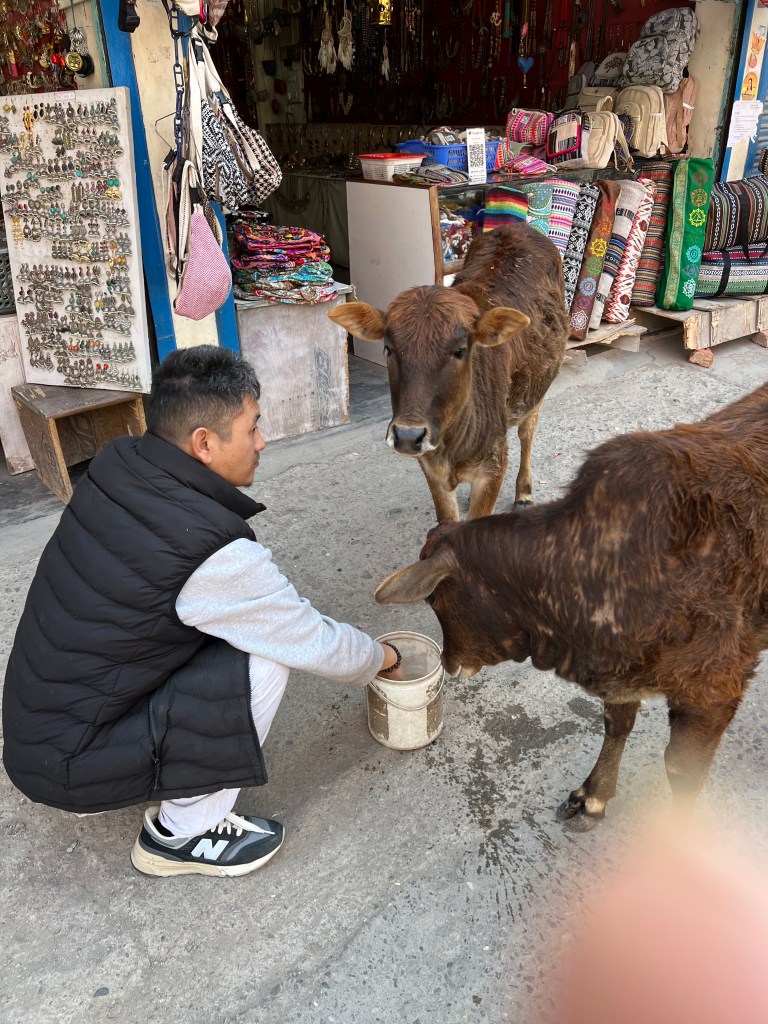
We’ve experienced the kindness, patience, and acceptance of Indians in many different situations from driving to waiting in line to communication difficulties to cultural misunderstandings.

When asked how many children an Indian has they will invariably give a number that reflects only male children. Mothers as well as fathers respond in this way. Sexist? I don’t think so. It seems that in traditional Indian families (and in spite of rapid and visible change it’s estimated that over 90% of Indian marriages are still arranged marriages) sons remain in the nuclear family home after they marry. Their wives become subservient to the matriarch who travels with them on vacations and sets the tone for parenting. Daughters move on to their spouse’s family. They are only temporarily part of their parents’ lives. I’ve come to believe that is why they’re not included in the natural spontaneous reply about the number of children in the nuclear family.

Is this belief accurate? Maybe. Maybe not. One thing I’ve learned is there’s no point in asking for clarification. Such requests are met with puzzled expressions followed by acceptance of my theory regardless of its accuracy or inaccuracy.

Here’s a much more prosaic, but much more day to day question I’ve been asking in vague euphemistic terminology since our very first visit in 2016. Why don’t Indians, especially women, use toilet paper? It’s excellent for the ecology of every country and certainly one with a billion and a half people, and yet… What’s the deal? It’s all well and good that our tushes and other intimate places are actually cleaner after that spritz from the bidet but what is it about walking around wet that doesn’t annoy them? And is it even hygienic?

They’ve learned that foreigners need toilet paper. Hotels provide small rolls of it and are happy to replenish it as frequently as their patrons allow themselves to make the request (we tend to buy our own to avoid the issue altogether). But when asked why they don’t require it themselves I’ve been met with puzzled expressions and literally no answers, They don’t understand why I do require it but accept it and I don’t understand why they don’t require it but still ask from time to time.

The nearest things I’ve received to an answer have been (1) the concept of the comfort of dry being preferable over damp is a Western concept (really?!?) and (2) you can carry a small towel to dry off, keep it in a small plastic bag all day and wash it in the evening (a nice solutionbut I doubt Indian women actually do that).

That may be similar to something an Indian friend of ours said recently. He owns an amazing guesthouse literally 50 meters from a pristine Arabian Sea beach. He’s made lots of improvements over the past few years. Indian tourists are accustomed to ordering their meals and eating in their rooms. They seem to prefer it. It might be a question of the chicken and the egg. Maybe at one time hotels didn’t have restaurants. So our friend didn’t have a restaurant but realized that the (mostly foreign) guests preferred not to eat in their rooms so he added a really nice place to eat.

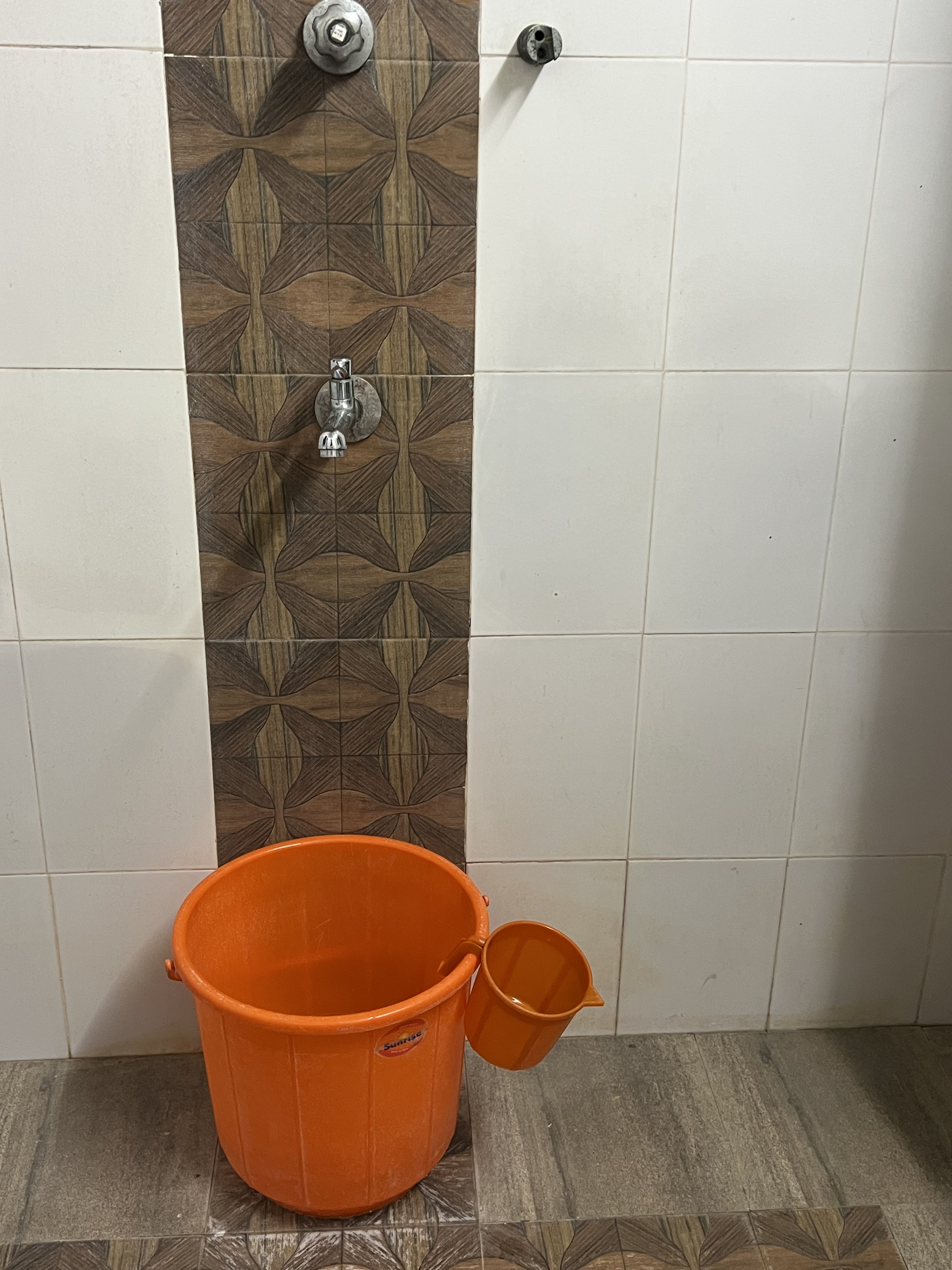
His showers had no hot water. Granted it’s quite hot in Thumboly Beach and the locals see no need for hot water but others do. As a result, he decided to arrange hot water and told us he had done so. In most Indian showers there’s a shower head and also a faucet beneath it about a foot annd an half off the floor with a bucket and plastic cup below it. Turns out he set up water in the lower faucet and not in the shower head.

When we laughed about it with him he said something quite true and profound. He said that one of the differences between Israelis and Indians is that Israelis look at something and immediately start figuring out ways to improve upon it while Indians look at the same thing, accept it as is, and immediately figure out a way to live with it. There are pluses and minuses in both approaches.

And what about respect for personal space, acceptable noise levels in public places or in hotels late at night, what it means to be a couple, the relative merit of avoidance or honesty in confronting legitimate disagreement or misunderstanding; the cultural differences go in and on.

Even when we think we get it we have to keep asking ourselves if we really get it.

There’s no escaping the fact that part of the joy in being in India is the adventure of the Western shrug of shoulders or the Indian wag of the head. The humor in “I don’t know.” The puzzled expression followed by a smile.

You aren’t in Kansas anymore, Dorothy. And ain’t that grand?

Whatever happens, I’m satisfied

In Israel parents teach their children a saying very early on in life – Whatever happens, I’m satisfied. It rhymes in Hebrew and expresses a futile hope on the part of parents that it will nip complaining in the bud.

Pretty ironic since Israelis (and maybe Jews in general) are among the most, ahem, discerning (read critical, judgmental, complaining) people I’ve come across in my extensive travels. And I am one, so I’ve had plenty of experience.

On the positive side, perhaps that’s why we’re the start-up nation with more technological and medical innovation than any other place on earth. That squinting one-eyed gaze at everything around us and thinking…hmmm. I could do that better.

On the not-so-positive side, it’s a pain in the rear end to be so often surrounded by people who are almost never satisfied with the way things are. The food in the restaurant is never quite right even after an order reminiscent of Jack Nicolson in Five Easy Pieces (I’ll have omelette plain, with a chicken salad sandwich on wheat toast, no butter, no lettuce, no mayonnaise, hold the chicken). The room temperature is too cold or too hot. The teacher doesn’t pay enough attention to my kid or singles her out for special (not good) treatment.

I wasn’t feeling great the other day. Stuffed up, headache, scratchy throat, didn’t sleep well. Here I am in southern India. Home of Ayurvedic medicine. Decided to get an Ayurvedic massage. For the uninitiated, this involves total nudity and more oil than a Mediterranean diet calls for in a lifetime.

The very sweet young woman spoke no English – zero – and my Malayalam is pretty rusty. There was absolutely no possibility of any request whatsoever. None of the usual massage direction – harder, softer, higher, lower. Nada.

As I lay there swimming in oil I thought THIS is the opportunity of a lifetime to fulfill that Israeli saying – Whatever happens, I’m satisfied.

I found thoughts popping up about how I might prefer this, that, or the other thing she was doing but they disappeared as quickly as they arose. They were irrelevant given our mutual lack of communication skills.

Ultimately, after she wiped off a lot of oil and I pulled my shift over my head – this not being my first rodeo I knew that less is more is the rule when committing to a Ayurvedic massage – I showered and crawled back into my stuffed up, scratchy throated, headachy nest and realized my headache was gone, my throat a bit less scratchy, and that prickly low grade fever feeling had disappeared.

I woke up this morning with more energy than the past couple of days. Had a peaceful, flexible hour on my yoga mat, and sat down to ponder the potential of “Whatever happens, I’m satisfied.” She knew what she was doing and any direction from me would have just gotten in the way.

It’s a continual conundrum in my mind. This contentment with what is versus the striving for improvement.

What do you think?

PS The above photo was taken from this very balcony three years ago. The most peaceful place on earth, Thumboly Beach


Mediating with Being Old

I just completed a 67-hour mediation course. The moderator/lecturer, Golan, was a charismatic guy in his early 50’s with vast experience and captivating stories about mediations he facilitated over the years. I wondered at the outset if I would be able to sit for five hours straight each Monday night without fidgeting and wishing I were elsewhere. Golan made the time fly. I didn’t have to do yogic breathing even once during the 10-week course.

One of the crucial concepts in mediation is the ability to differentiate the needs of the people in conflict as opposed to their positions, or presenting issues.

Eleven neighbors have entered into the mediation process regarding the parking lot between their houses where there are seven legitimate parking spaces. There are often clashes between people parked in legitimate spaces and people who park along the side of the lot making it difficult for those parked in legitimate spaces to extricate their cars. The eleven families have, between them, fifteen cars. As it turns out, two families do not have a car, one family has a driveway in which they park one of their two cars, one family has a driveway in which they park both their cars, one family does not park their two cars in the lot, and three families park only one of their two cars in the lot. One family parks two cars in the lot. Three families park one car each in the parking lot.

Have you seen this problem on a math test?

In case math wasn’t your thing, the eleven neighbors want to park nine vehicles in seven legitimate spaces.

Looks like a pretty cut-and-dry issue. Until it becomes clear that less than 50 yards away there’s a large parking lot that is virtually unused. So what are the actual needs of the people involved that must be addressed before the group can come to an amenable resolution for all involved? After all, they’re neighbors in a small community who have a common interest – living in harmony with one another.

Here’s a tip – it has more to do with the process of solving the parking problem than who parks where.

But what does this have to do with meditating with old age? And how can one meditate with old age anyway? It is what it is…isn’t it?

About seven weeks into my ten week course I found a small hole-in-the-wall Indian restaurant with a few tables outside on the cobblestone pathway. My partner and I, both Indophiles and aficionados of Indian food, were happy to find this place. The table was a bit unsteady on the cobblestones but we made do and had a great meal with lots of nostalgia. Getting up after the meal I rested my hand on the table for stability – stability from an unstable table? You can guess the results.

The cook stayed by my side until the ambulance arrived. The paramedics were extremely gentle and pleasant, in spite of the fact that they looked young enough to be in high school. My neighbor was one of the nurses in the orthopedic emergency room. The doctor was thorough and helpful. All in all, other than two weeks of being almost totally incapacitated with back pain, it was a smooth, fortuitous experience. It could’ve been so much worse.

Well-meaning friends encouraged me to sue the restaurant – never a possibility in my mind. Being in the middle of a mediation course, however, I did think about asking the restaurant owners if they would be interested into entering into the mediation process with me.

First I wanted to take myself through the mediation process of figuring out the difference between my presenting issues and my needs.

Issue #1: I was out approximately $700 for physical therapy, my deductible for the ambulance, and having missed teaching three classes. Not a huge sum but money.

Issue 2: I wanted to be reassured that the restaurant would correct for the instability of their tables on the cobblestones.

Need #1: I wanted to be seen as a person – not a fragile elderly person who lost her footing as a result of being old and unstable on my feet

Need #2: I wanted, as part of #1, for the restaurant to take partial responsibility for the objective elements of neglect which led to the injury.

Are you starting to get the point?

From the caring cook to the empathetic paramedics to the informative orthopedist in the hospital I thought I recognized that they didn’t really see me. They didn’t see a woman who teaches yoga eight times a week or drives six hours a week to visit with grandchildren, or who goes bowling, plays miniature golf, and spends months at a time in off-the-beaten-track places. For the first time in my life, I felt the invisibility that many elderly women describe. I felt small and irrelevant and “other”.

When I wrote to Golan that I’d only be coming to the simulation part of class because I’d had an accident, he had one kind of reaction. When I came to the simulation and mentioned that I was injured in a fall, his reaction was different. He thought it had been a car accident – happens to the best of us. A fall? Ah, elderly issues.

Clearly this may have all been in my head.

And that’s exactly the point. In life, as we all know, shit happens. The first arrow. Inevitable It’s our reaction to it that causes suffering…or not. The second arrow. Within our control.

In my recent revelations I realized that, yep, we can be in constant mediation with the aging process. Searching for our needs when hit in the face (or the back) with the issues. It’s an ongoing occurrence.

Not as easy as a one-time epiphany. Ah, yes, I can have a happy, peaceful old age through acceptance.

Oh yeah? What about when there’s a new challenge a few times a month? Or how about a few times a week? What about when it’s limited mobility? And how about the exasperation of the person who assumes you’re not getting his explanation of the electrical system in your home because you’re old?

The good news is that if you’re into the mediating process you’re well on your way toward living your life instead of killing time.

Or as Mary Oliver said, “What is it you plan to do with your one, wild and precious life?”

Glorious India

The plan to spend an extended amount of time in India was conceived so long ago that trying to remember when, how and who initiated the thought leads mostly to fractured fairy tales.

I think it was my husband’s idea to change his life radically to serve the same function as cleaning your palate between courses. He was looking forward to total retirement and fantasized about a period of time to wipe the slate clean and begin to formulate a next stage in his life.

Life has a way of whisking away parts of our ideas and morphing them into other versions of themselves. Total retirement, when contemplated in the reality of the altering of lifestyle that financial change would necessitate, has been postponed for another few years and transformed into six months working and six months…not working. (Still no definition as to what that might entail.)

But that might be exactly what led us to sitting around the pool at The Fern Spazio Resort and Spa – which sounds far fancier than it is; though it’s very nice – in Arjuna, North Goa, India. It might be kismet, karma, or just one of life’s serendipitous events. It’s feeling a lot like one of those proverbial gift horses in whose mouths we’ve been forewarned not to look too carefully

Five days in bustling Mumba; a city with a population of an unbelievable 22 million people. Mumbai is a city of contrast. Extreme wealth in its commercial center and extreme poverty with literally millions living in the slums with which we became familiar in Slum Dog Millionaire (which, by the way, is quoted extensively by guides in Mumbai.)

We arrived during the Diwali Festival – five days of vacation celebrating the removal of darkness and ignorance; The Festival of Lights (not to be confused with Chanukah, though there are similarities). The fireworks were on Sunday so we missed them but we didn’t miss the crowds of Indians on holiday in Mumbai.

As we approached The Gateway of India, lovely architecture reminding us of the not-so-lovely period of British Rule when in 1911 the stone gateway was built for the king and queen’s visit, we saw a mass of humanity second only to the million people we joined at Woodstock. Dripping sweat in the hot Mumbai humidity, I could only smile at the outlandish possibility of inserting myself into that press of people. It seemed so ludicrous.

My children pointed out to me long ago that the only possibility of not having to stand in a long line for activities for kids is choosing really boring activities. I take my grandchildren into lines and crowds I never would’ve taken my children. The funny thing is that when I mentioned that recently to one of my kids she said she was happy that I take her kids to those crowded fun places because she’s not willing to.

A sweet young man was kind enough to show us the right line to be in to get onto the ferry to Elephant Island to see the caves, and seemed to be saying that the tickets would sort themselves out. The long but orderly snake line looked daunting but he assured us it would only take half an hour. Google advised getting on the 2 o’clock ferry so we were standing in the hottest sun Mumbai could serve up and it was plenty hot. At some point a man came and sold us tickets and, lo and behold, in 40 minutes we were on a ferry. The promised 45 minute ride stretched out to an hour and a half, but the breeze was welcome.

Elephant Island has no elephants and neither do the elephant caves. It seems that once upon a time there were two big statues of elephants at the entrance to the island. The British, as is their wont, stole them and took them wherever they fancied, but the name stuck.

We took a local guide, Harish, one of the 1200 inhabitants of the island, and made our way up 125 narrow stone steps, four and five abreast, with people packed in front of and behind us. Along both sides of the stairs was a market of trinkets, including wonderful Tibetan singing bowls for a tenth the price we pay for them in Israel. Carried along by the crowd, we ignored the vendors’ pleas.

The Portuguese (who also ruled here for a little more than 500 years) tried to destroy the elephant caves but the beautiful carvings of the nine images of Shiva as well as the caves themselves are made of basalt and remained mostly impervious to the attempts. The carvings are beautiful and their stories well told.

We went on a private car tour of Mumbai and a walking tour of the markets. The sights were interesting but the guides were more so. We saw the in/famous Mumbai laundry, got a peek at the slums surrounding it, and were fascinated by the Gandhi Museum.

Our driver/guide told us a tragic story that may or may not have been partially or totally true. He said his father died when he was 12 and his mother ran off. He slept on the streets or in temples and learned English from an old man who read the newspaper with him to teach him. He married and rents a tiny place in the slums for himself, his wife and their two children. We said hello to his two, very sweet, children on his phone.

There’s really no need for a guide in the Mumbai markets but our pleasant 25 year old guide gave us many tips for bargaining that have come in very handy as well as sharing his insights into Indian culture. He yearns to move out of his parents’ home and live independently, mostly to indulge his desire to have unbridled fun. He and his parents disagree about what he should be doing to prepare for his future as well as what his future should look like. (Sounds like young people here, or at least this one, have a lot in common with their age group in the States).

We both took to pure vegetarian food immediately again, as if we hadn’t been carnivores for the past 3 years since leaving India. We found our special place to eat dinner and ate there most evenings. At home I make an effort to get to 6000 steps a day; here I get to 11,000 and even 18,000 without trying. At home I’ve developed tricks to remain hydrated; here I swig liters of water constantly.

Feeling healthy and happy and relaxed after a week in Northern Goa. Met up with a wonderful yogi/teacher on the beach.

But that will wait for my next post.

Namaste

The Writing Experience is one of Muditta

There’s a book on one of my book shelves that has my name on the cover.

Yoga_for_Detectives_Cover_for_Kindle Yep, that’s me. A.E. Prero. And that’s a book I wrote and published.

http://www.amazon.com/Yoga-Detectives-Lesson-A-E-Prero/dp/1512109371

It took me about 8 months to write it and another month to format the darn thing to turn it into a paperback book and, after my own feeble attempts, $50 to pay someone to format it for Kindle. And now, here it is, sitting on my shelf and the shelves of at least 25 other people, according to the Amazon stats.

Hand on heart, how many of you truly think you, too, have a book in you, if you could only find the time to sit down and write it? And maybe you’ll even do it someday. I’m here to tell you that it’s well worth the effort, even if that book inside you never makes it into a physical reality on your bookshelf.

Don’t get me wrong. I love having actual books in people’s hands which are the product of my imagination, time and self-discipline. Yay!

snoopy dancing

But, believe it or not, there are many other gratifying results from plowing through the entire process of writing a book.

Beginning to end.

Concept to character development to plot to consistency to description:conversation ratio to word usage to editing, proofreading and formatting….and maybe even marketing, though I haven’t begun the serious lifting where that’s concerned.

I’ve read some great books about how to write. Writing down the Bones is probably the best.Writing Down the Bones

But Natalie Goldberg has others out there, and some different authors have offered some helpful ideas, too.

reading

When I actually sat down to write, I realized that while much of what those people suggested had registered in my brain, it all became a  mutant version once the spices of my own personality and imagination were added to the soup…and that was okay, even good.

I learned what I, as a reader, liked.

I pondered what made me pull out one book from a bookstore bookshelf and not another. I asked myself what it was about one first chapter that pulled me into reading a book as opposed to putting down another. I went so far as to correspond with one author whose first paragraphs in her many books never fail to hook me and ask if I could use her formula.

NO way Wow! Now, THAT was a surprise.

After a few months, I could finally sit down to write even if I hadn’t:

  • Washed the dishes,
  • done the laundry,
  • watered the plants,
  • made dinner,
  • cleaned out the studio,
  • answered emails, phone calls and text messages,
  • updated Facebook, or
  • had coffee with every neighbor within walking distance.

mess

No, that’s not really my house but there were days when it felt like that…and I wrote anyway.

The further along I got with my book, the more I grew to appreciate the beautiful turn of a phrase or use of a word in the books I was reading. “Wow! How does she do that?”

The more I grimaced at a much over-used adjective or descriptive tool.  ouch

The more I became enchanted with how one character became someone I cared about while another was just plain irritating.

You might think that the magic of the well-written, well thought-out book  would be lost once the smoke cleared and the mirrors were revealed. But the opposite has been true for me.

Sure, there are some books I can’t look at anymore. I can’t easily fill time with just any old thing I find around the house, on my friends’ shelves or on the table at the doctor’s office. But I’ve developed a full hearted, deep, experiential response to other books.

I feel the author behind the words. And they become my friends as much as do the characters they skillfully develop. I’m happy for them for their work well done. Reading has become a double pleasure. Pleasure in the book and pleasure for the author’s success in having written a book which brings pleasure.

Natalie GoldbergRoland Merullo    Natalie Goldberg

                                                                                                                                   Roland Merullo

     Scott Pratt   Scott Pratt          Anna Quindlen     Anna Quindlen

Gay Hendricks                       Tinker Lindsay

       Gay Hendricks                    and                   Tinker Lindsay

And, isn’t that the real meaning of Muditta? Empathetic joy.

The happiness we feel when others succeed and are happy?

Writing has opened a whole new vista of Muditta in my life.