Do We Really Get It?

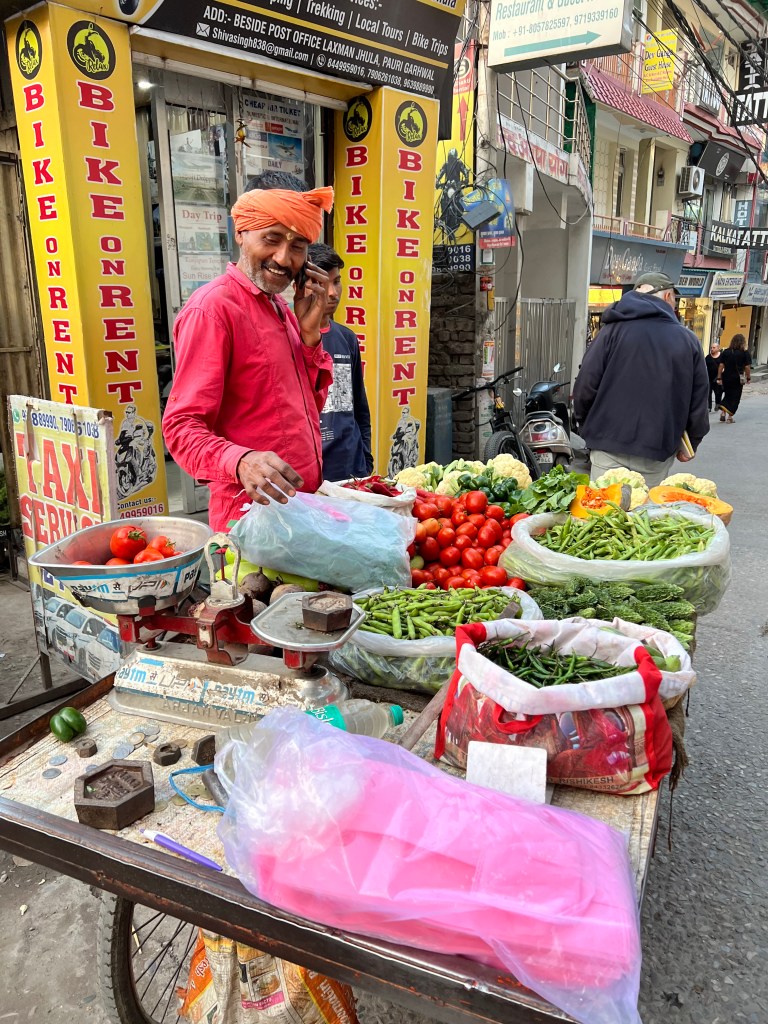
All told, we’ve been in India almost a year. We’ve spent over two months in Kerala, four months in Rishikesh, and a week to ten days in Hampi, Meysore, Delhi, Goa, Mumbai, Varanasi, Darjeeling, Khajuraho yogashram, Kaziranga, Puri, Shimla, Dharamshala, Dalhousie, Chennai, Pondicherry, Auroville, Bandhavgargh, Rambagh, Jim Corbett, and the Andaman Islands.

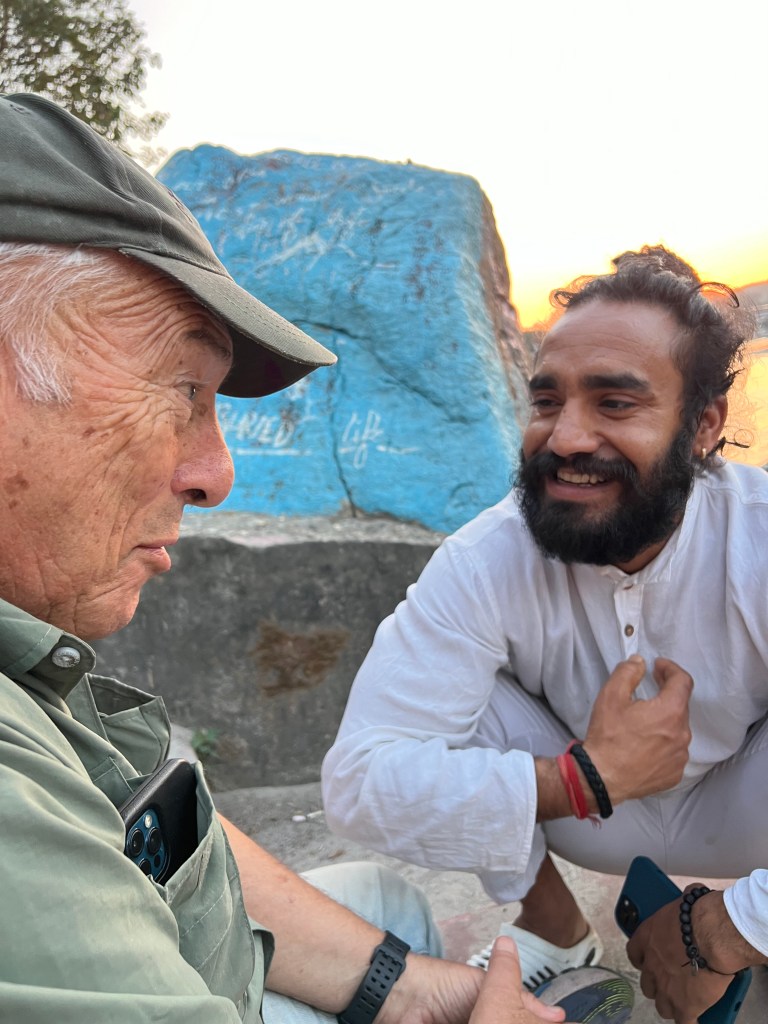
My partner has been learning Hindi off and on for 7 years. Between his Hindi and Google audio translate we’ve had many conversations with people about their lives and their opinions about many issues – geopolitical, philosophical, sociological, religious, and how they view the future.

We’ve observed familial interactions, public and less public behaviors, hygiene and eating habits, changing clothing preferences, and acceptable and less acceptable commercial activities.

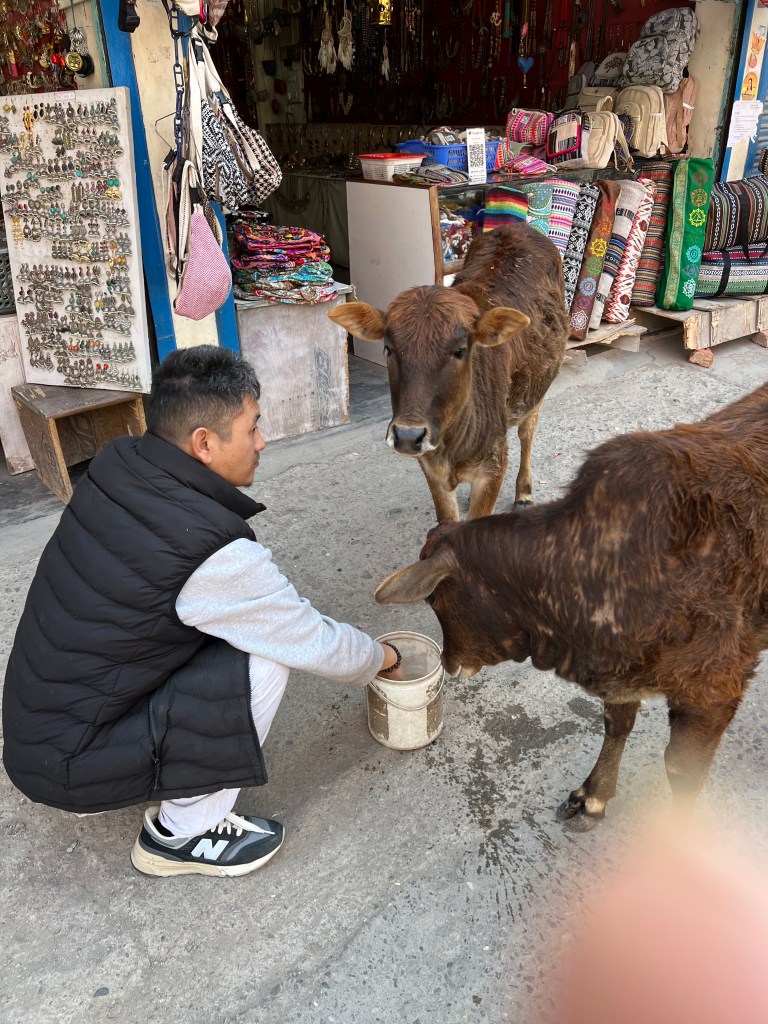
We’ve experienced the kindness, patience, and acceptance of Indians in many different situations from driving to waiting in line to communication difficulties to cultural misunderstandings.

When asked how many children an Indian has they will invariably give a number that reflects only male children. Mothers as well as fathers respond in this way. Sexist? I don’t think so. It seems that in traditional Indian families (and in spite of rapid and visible change it’s estimated that over 90% of Indian marriages are still arranged marriages) sons remain in the nuclear family home after they marry. Their wives become subservient to the matriarch who travels with them on vacations and sets the tone for parenting. Daughters move on to their spouse’s family. They are only temporarily part of their parents’ lives. I’ve come to believe that is why they’re not included in the natural spontaneous reply about the number of children in the nuclear family.

Is this belief accurate? Maybe. Maybe not. One thing I’ve learned is there’s no point in asking for clarification. Such requests are met with puzzled expressions followed by acceptance of my theory regardless of its accuracy or inaccuracy.

Here’s a much more prosaic, but much more day to day question I’ve been asking in vague euphemistic terminology since our very first visit in 2016. Why don’t Indians, especially women, use toilet paper? It’s excellent for the ecology of every country and certainly one with a billion and a half people, and yet… What’s the deal? It’s all well and good that our tushes and other intimate places are actually cleaner after that spritz from the bidet but what is it about walking around wet that doesn’t annoy them? And is it even hygienic?

They’ve learned that foreigners need toilet paper. Hotels provide small rolls of it and are happy to replenish it as frequently as their patrons allow themselves to make the request (we tend to buy our own to avoid the issue altogether). But when asked why they don’t require it themselves I’ve been met with puzzled expressions and literally no answers, They don’t understand why I do require it but accept it and I don’t understand why they don’t require it but still ask from time to time.

The nearest things I’ve received to an answer have been (1) the concept of the comfort of dry being preferable over damp is a Western concept (really?!?) and (2) you can carry a small towel to dry off, keep it in a small plastic bag all day and wash it in the evening (a nice solutionbut I doubt Indian women actually do that).

That may be similar to something an Indian friend of ours said recently. He owns an amazing guesthouse literally 50 meters from a pristine Arabian Sea beach. He’s made lots of improvements over the past few years. Indian tourists are accustomed to ordering their meals and eating in their rooms. They seem to prefer it. It might be a question of the chicken and the egg. Maybe at one time hotels didn’t have restaurants. So our friend didn’t have a restaurant but realized that the (mostly foreign) guests preferred not to eat in their rooms so he added a really nice place to eat.

His showers had no hot water. Granted it’s quite hot in Thumboly Beach and the locals see no need for hot water but others do. As a result, he decided to arrange hot water and told us he had done so. In most Indian showers there’s a shower head and also a faucet beneath it about a foot annd an half off the floor with a bucket and plastic cup below it. Turns out he set up water in the lower faucet and not in the shower head.

When we laughed about it with him he said something quite true and profound. He said that one of the differences between Israelis and Indians is that Israelis look at something and immediately start figuring out ways to improve upon it while Indians look at the same thing, accept it as is, and immediately figure out a way to live with it. There are pluses and minuses in both approaches.

And what about respect for personal space, acceptable noise levels in public places or in hotels late at night, what it means to be a couple, the relative merit of avoidance or honesty in confronting legitimate disagreement or misunderstanding; the cultural differences go in and on.

Even when we think we get it we have to keep asking ourselves if we really get it.

There’s no escaping the fact that part of the joy in being in India is the adventure of the Western shrug of shoulders or the Indian wag of the head. The humor in “I don’t know.” The puzzled expression followed by a smile.

You aren’t in Kansas anymore, Dorothy. And ain’t that grand?

South India Revisited 2025

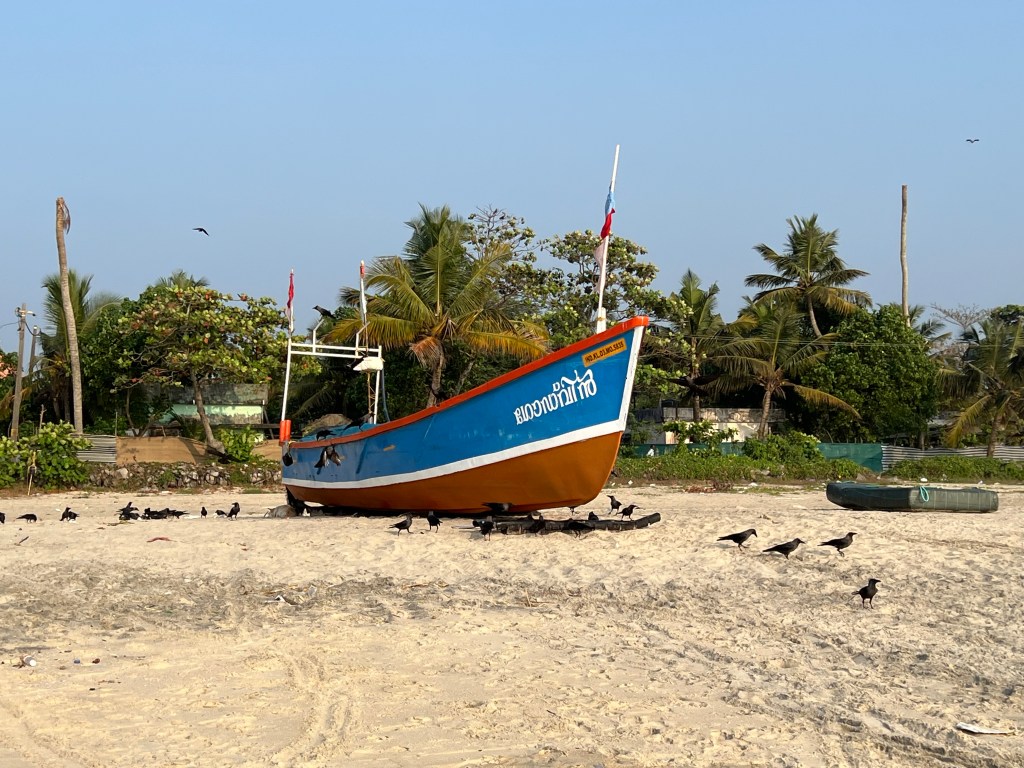
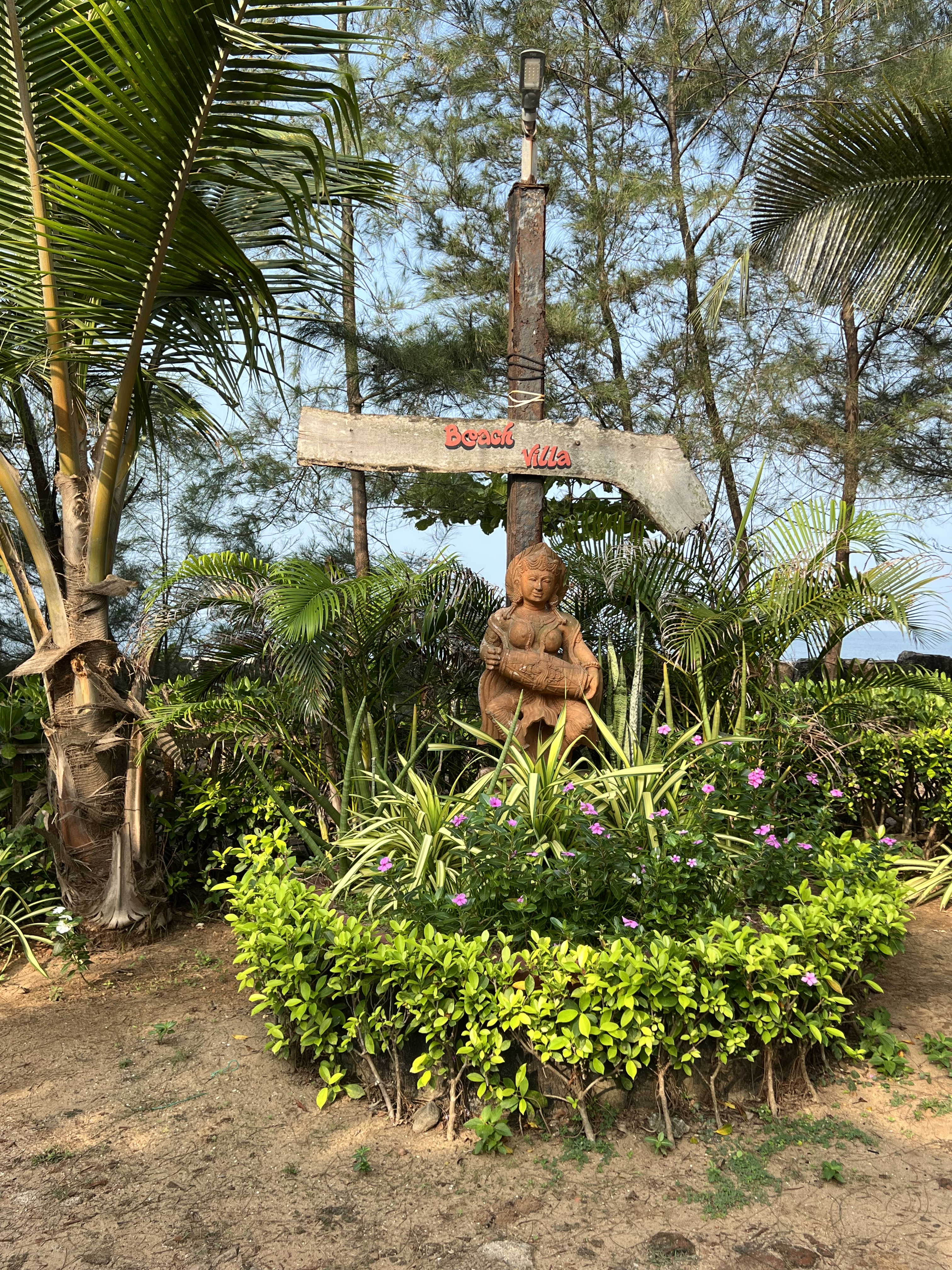
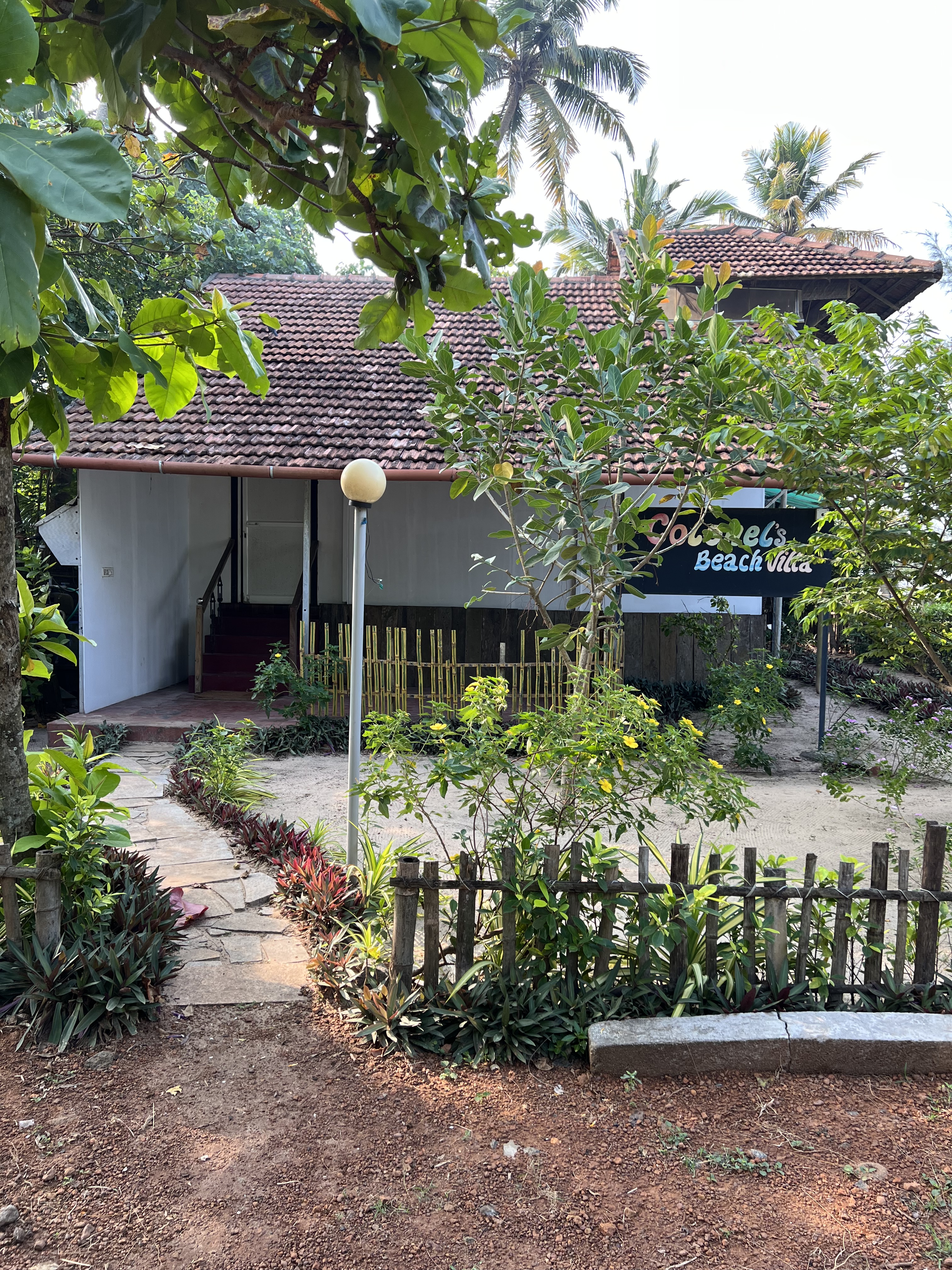
Our third week in the small fishing village of Thumboly Beach, half an hour by tuk tuk to Alapphuzha (aka Alleppey) about an hour from Kochi (aka Cochin). Our third time here at Colonel’s Beach Villa. It gets better every time and harder to leave.

Our room has an upstairs balcony that looks out onto The Arabian Sea. The sound of the waves provides constant companionship – gentle in the morning and more forceful from afternoon on into the night.

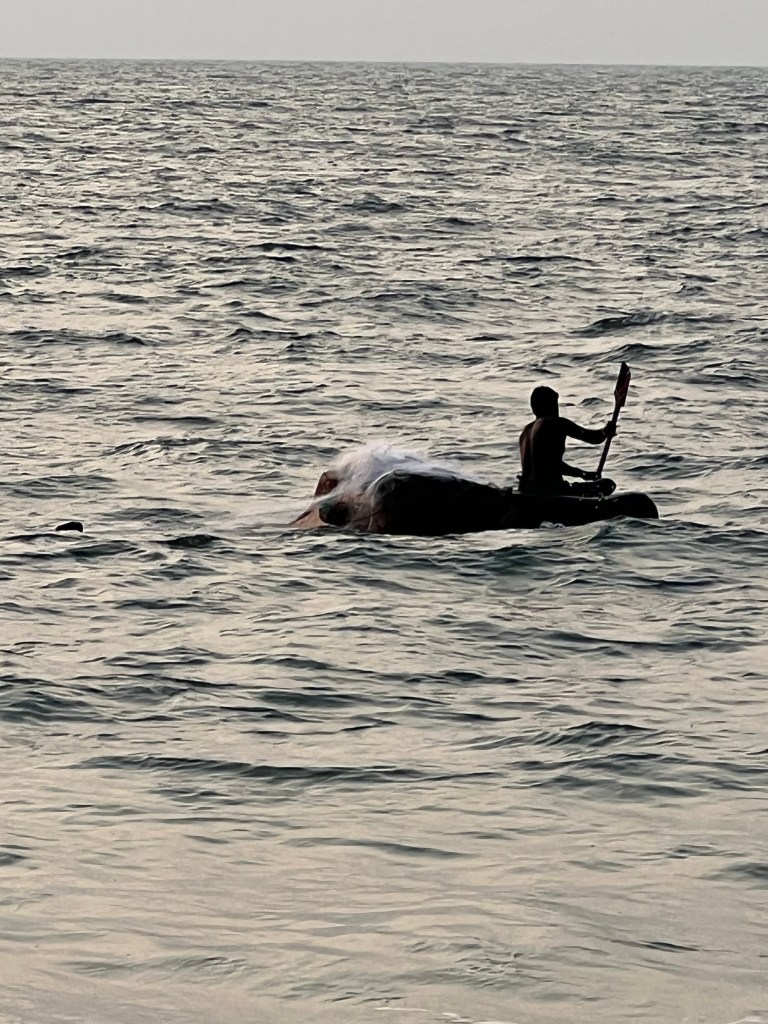
My partner goes out around 6 every morning to watch the fisherman carefully removing their catch from their nets. It’s a careful process. Some days there might be over 50 kilo of sardines and some days maybe a paltry kilo or two. Dogs and crows wait patiently nearby waiting for the rejects to be thrown their way.

Later in the day, after a delicious, simple vegetarian breakfast, and after reading and chatting on the balcony until the day cools off, we go for a walk around the village or take a tuk tuk to Alapphuzha.

People in the village have become familiar with us. They smile warmly and speak with us in the limited English they know. When I hurt my arm and had a bandage on it they seemed to all know about it and expressed concern. We stop in to say hello to Tomas at his market and Elsbet at her small store. The people at the corner fruit store let us know if they have pineapple because they know how much we like it.

Villagers are quite laid back. Many women walk together in pairs or more in the cooling day holding umbrellas to protect them from the sun. They wear light long dresses with slits up the side and leggings underneath. Most women do not work outside their homes and the daily socializing is a pleasant part of their day.


Many men can be seen sitting together on plastic chairs or on the sand under trees on the beach playing Rummy. They go out at 4 am in their small boats, fish until 6, gather their catch from the nets until 7, and then take their share of the day’s catch to sell on the nearby highway.

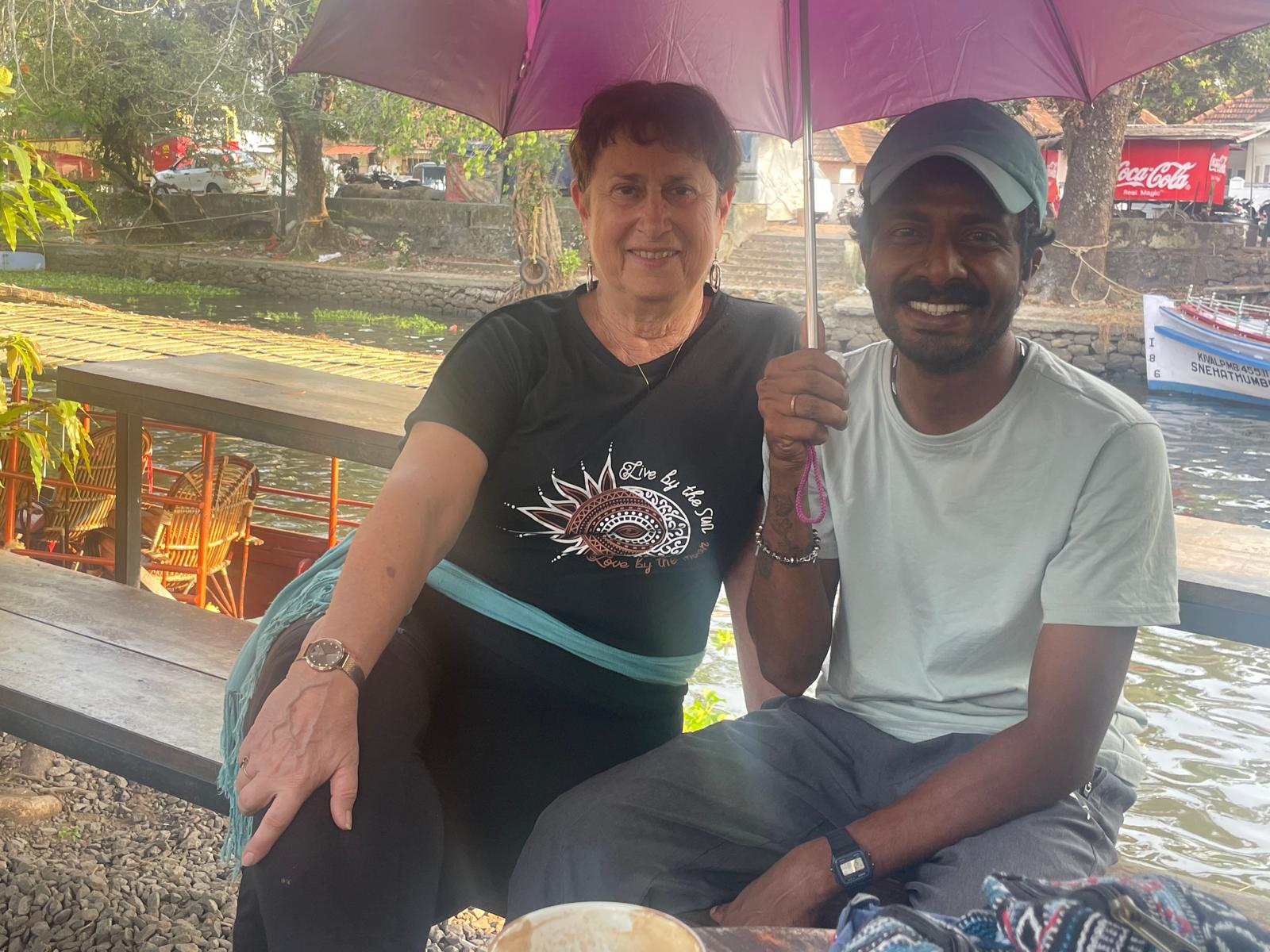
The guesthouse calls their tuk tuk to take us to Alapphuzha when we go there. He charges less than the tuk tuks we might flag down in the village. He drops us off in the commercial area where we like to absorb the colorful atmosphere and sometimes pick up a few things. There are aromatic spices, fresh garlands, fresh fruit and vegetable stands, kitchen shops, clothing shops including places to choose material, get measured, and have clothes made and ready in 24 hours. There’s an excellent bookstore and our favorite coffee shop by the river. We always stop in to say hello to Raul there, have a good cup of coffee and some fresh cold cut up watermelon.

The two young men from northeastern India – a 3 or 4 day train ride away – who do just about everything around the guesthouse are very quiet but have warmed up to us. They make us special little treats when they can. They know how we like our tea and coffee and when. They’re happy to see us in the morning and when we come back from our wanderings. Our customs, especially our Shabbat observance, are unusual for them. But they accept and adjust to everything with interest.

The serenity of The Arabian Sea, the beautiful garden, and the peaceful nature of the people provide the perfect background for my yoga practice. A small patch of red cemented patio just outside my door, shaded by a outhanging is just the right size and atmosphere. Teaching for 15 years, I often feel a staleness creep into my practice. Time spent in Southern India always inspires me to change it up, deepen it, renew the spirituality of it.

No hot water comes out of the shower head. At first we were taken aback. What?! No hot water for our shower? There’s a bucket and a big plastic cup inside. Hot water comes out of a spigot into the bucket. Cold water from the shower head to soap up and hot water from the cup in the bucket to wash off the soap. What!?! But we’re ENTITLED! Get with the program. This is India. You’d be surprised how quickly the system makes perfect sense in this climate.

Adapt. Adjust. Accept. And be pleasantly surprised when a cabinet shows up after you mention it’d be nice.

The city can be a cacophony of people and vehicles but absolutely serene and clean compared to Delhi.

It’s difficult to explain my love for Southern India and this area specifically. I wish my words t could make you smile and feel as happy as I feel when I’m here.

In a world so full of strife, confusion, fear, aggression and diviseness, Southern India is full of the opposite of all that. A local friend here thinks it’s because there have been no wars here for centuries. The culture looks askance at hostility and unkindness. Perhaps. Whatever the reason, I wish I could package this place and gift all of you with it.. .

Dharamsala – Little Israel

Ever since I can remember there’s been a rite of passage of sorts for Israeli young people when they finish their army service. There’s even a name for it – the trip after the army. (in Hebrew it sounds a bit better). Two of our five kids took their respective turns with this rite of passage. Each spent a year traveling the world. Australia, New Zealand, Thailand, Laos, Cambodia, Vietnam, New York City.

But for the past decade, the destinations of choice have been South America and India.

India often includes Nepal and SE Asia but the main component is India, and the main components in India are Dharamsala as the gateway to the North and on into the Himalayas – Manali, Leh, and Ladakh.

There’s a window of opportunity to be in Northern India. Many of the roads, not the safest mountain roads even in the best of weather, are closed for much of the year due to snow and ice. We’d planned on making it up there on our second trip but Covid had other plans for us. On our current trip, we were finally in the right place at the right time.

At the risk of sounding like a yoga heretic, I wasn’t at all excited about the idea of going to Dharamsala. Many of my students have spent time there. After Rishikesh it’s THE place to go. In my mind, though, it was a mountainous town with steep climbs every time you go out of your lodging, and hundreds of yoga wannabees. It’s also known for its varied workshops but I wasn’t really in a workshop state of mind.

At first, we planned 10 days there but as the time to make final arrangements got closer the less I wanted to dedicate such a big hunk of time – if any – to it.

Dharamsala is divided into four sections; the city of Dharamsala, the lowest point, McLeod is next, home to The Dalai Lama and the Tibetan refugees, then Bagsu, and finally Dharmkot.

The Dalai Lama and I had a falling out many years ago, though he’s not aware of it. I was disappointed in his statements about the Arab/Israeli problem which reflected an appalling lack of knowledge of the history of the area. He’s since carefully avoided speaking about the issue so I suspect that he recognized his oversimplification of a complicated situation. Nevertheless, I wasn’t interested in trying to schedule an audience with him.

I was, however, interested in learning more about the motivation behind the arrival of thousands of young Israelis in Dharmkot and Bagsu every year. So we decided to spend five days of investigation in Bagsu.

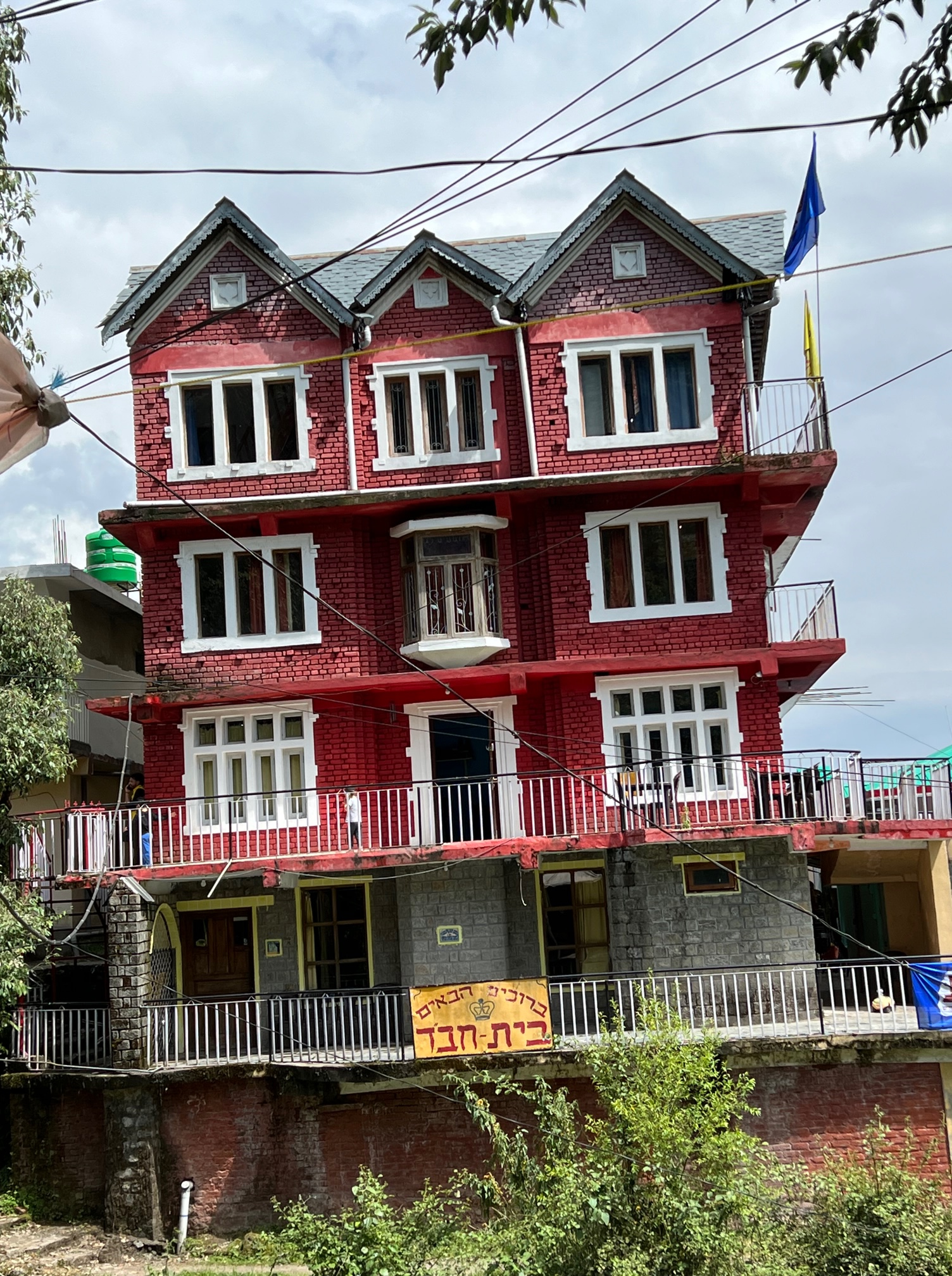
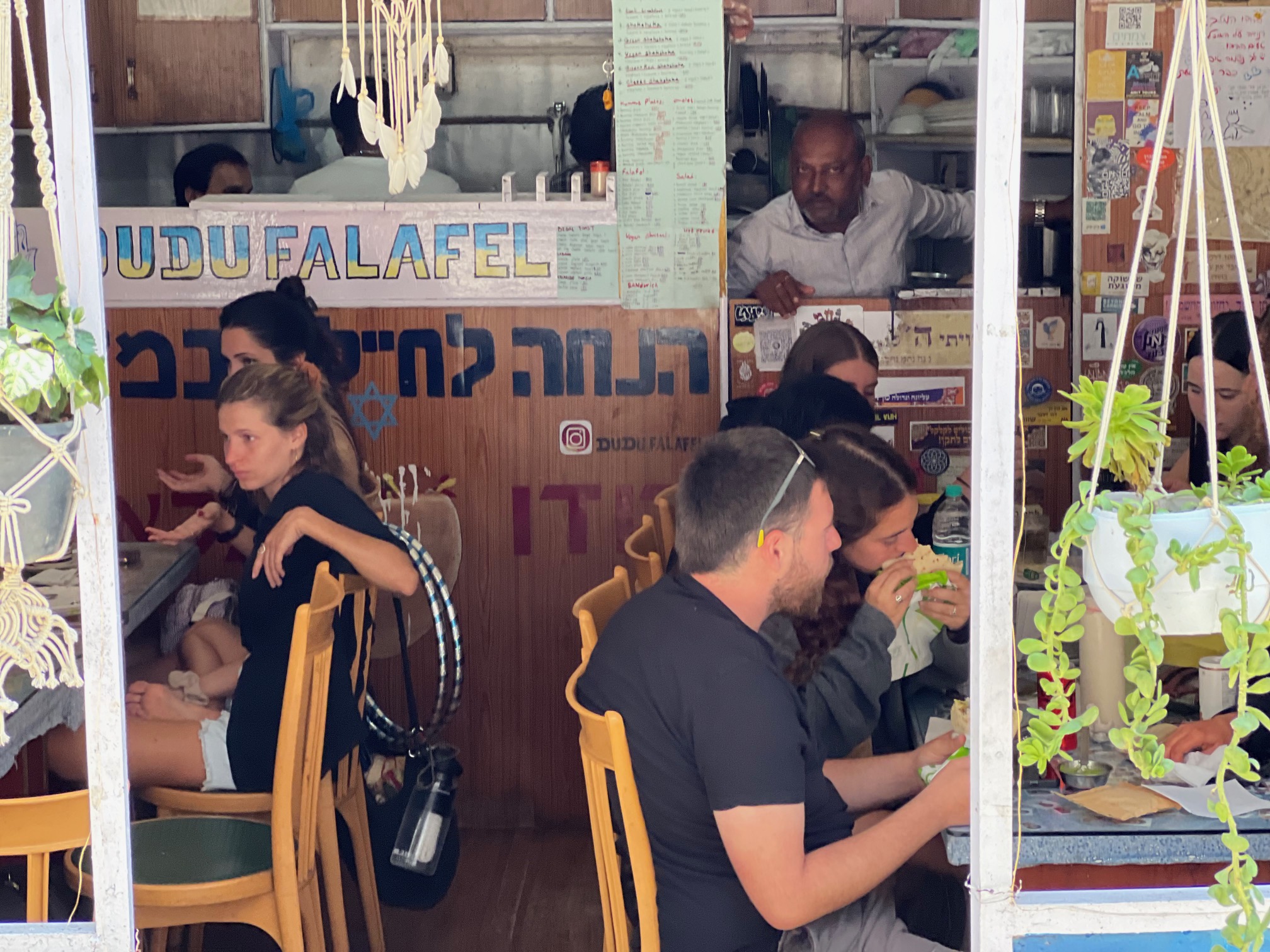
True to form but still a shock to our systems, the language heard most on the streets and in the shops of Bagsu and Dharmkot is Hebrew. The shopkeepers, restaurant servers, and hotel staff speak passable Hebrew. Many signs are in Hebrew. There are Israeli foods on the menus. There are two Chabad Houses, one in Bagsu and one in Dharmkot. Chabad provides a home away from home for traveling Jews, with kosher food, religious services, and a meeting place to schmooze with similar people, secular and religious.

When our youngest daughter was on her “trip after the army” she said she learned very quickly to keep her distance from other Israelis. It wasn’t a snobby thing or a dislike of her compatriots. She was interested in getting a feeling for the culture and people of the countries she was visiting. She said that Israeli young people tend to travel in groups of 12-14, speaking Hebrew enthusiastically (read: loudly), making it difficult to go places with narrow passages or restricted access and a challenge to get close to and speak to natives. She wanted to do volunteer work with families in need in Laos and in an institution for children damaged by landmines in Cambodia – acitivities not well suited for large groups.

As we traveled through India, even though we tend not to travel the “hummus trail” – the places most frequented by Israelis – whenever we saw Israelis they did, in fact, tend to be in groups and happily so.

But it wasn’t until we got to Dharamsala that we gained an understanding of the phenomenon.

As it turns out, people travel to India for several different reasons.

We, like our daughter, are interested in the many varied cultures and societies, the family structures, the generational trends, the various religions and religious practices, political positions, and how people get through the day, the month, physically, and financially. That dictates how we travel (on trains and other public transport rather than hiring a car and driver), where we stay (not in 5-star hotels too expensive for most Indians), and the destinations we choose. It means that my partner has been studying Hindi seriously and can carry on a bit of a conversation with Hindi-speaking Indians. (I rely on my excellent app) It means that over the years we’ve made friends in India with whom we now visit whenever we’re in the country.

There are people who go to India for spirituality. It’s in the very air people breathe there. For the hundreds of thousands of people who found and developed their inner spirituality in Buddhism or in India in general at one time in their lives, a few weeks in India revitalize and reinforce that equanimity and balance in their lives.

There are people who go to India for a variation of spirituality – inner peace, inner quiet, what’s called shanti in Hindi – an absence of the stress and tension of Western life. Although Indians drive like maniacs, hooting their horns for no apparent reason as well as when they’re passing someone with only 4 centimeters to spare, in other areas of their lives they project basic quiet happiness, peaceful acceptance, and interest without being intrusive. Coming as I do from a society where people not only drive like maniacs but exude an energy that vibrates like lightning, always running after the next thing, the better thing, rarely satisfied with what is, once I decompress during the first couple of days in India I can feel my emotional borders opening up, my natural curiosity blossoming, my breath deepening, my muscles relaxing. I sleep better. I feel lighter. My mind opens to all sorts of possibilities.

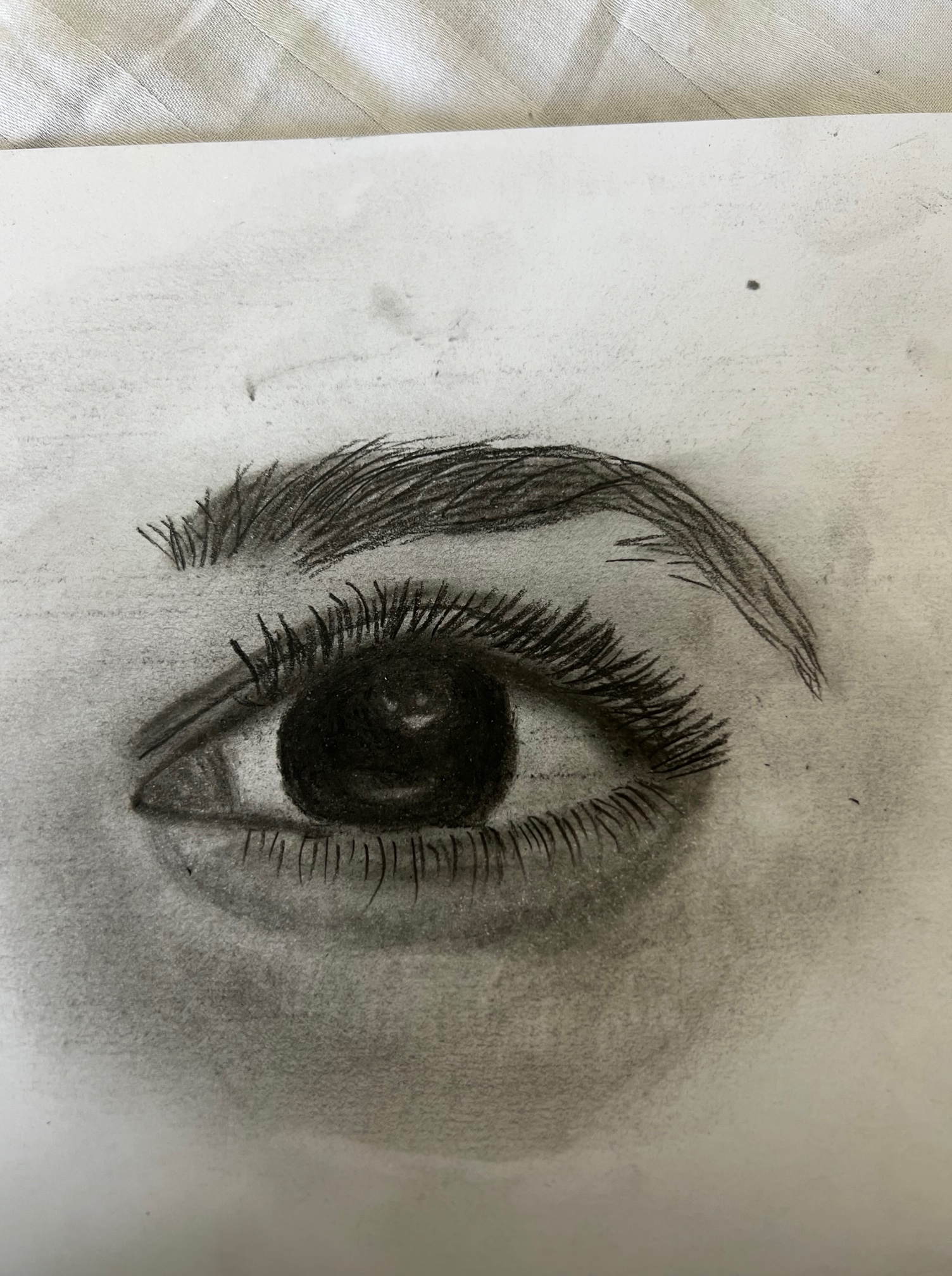
This time I learned to play the Indian flute, sketch, draw traditional Kolam chalk drawings and do hand and ear reflexology.

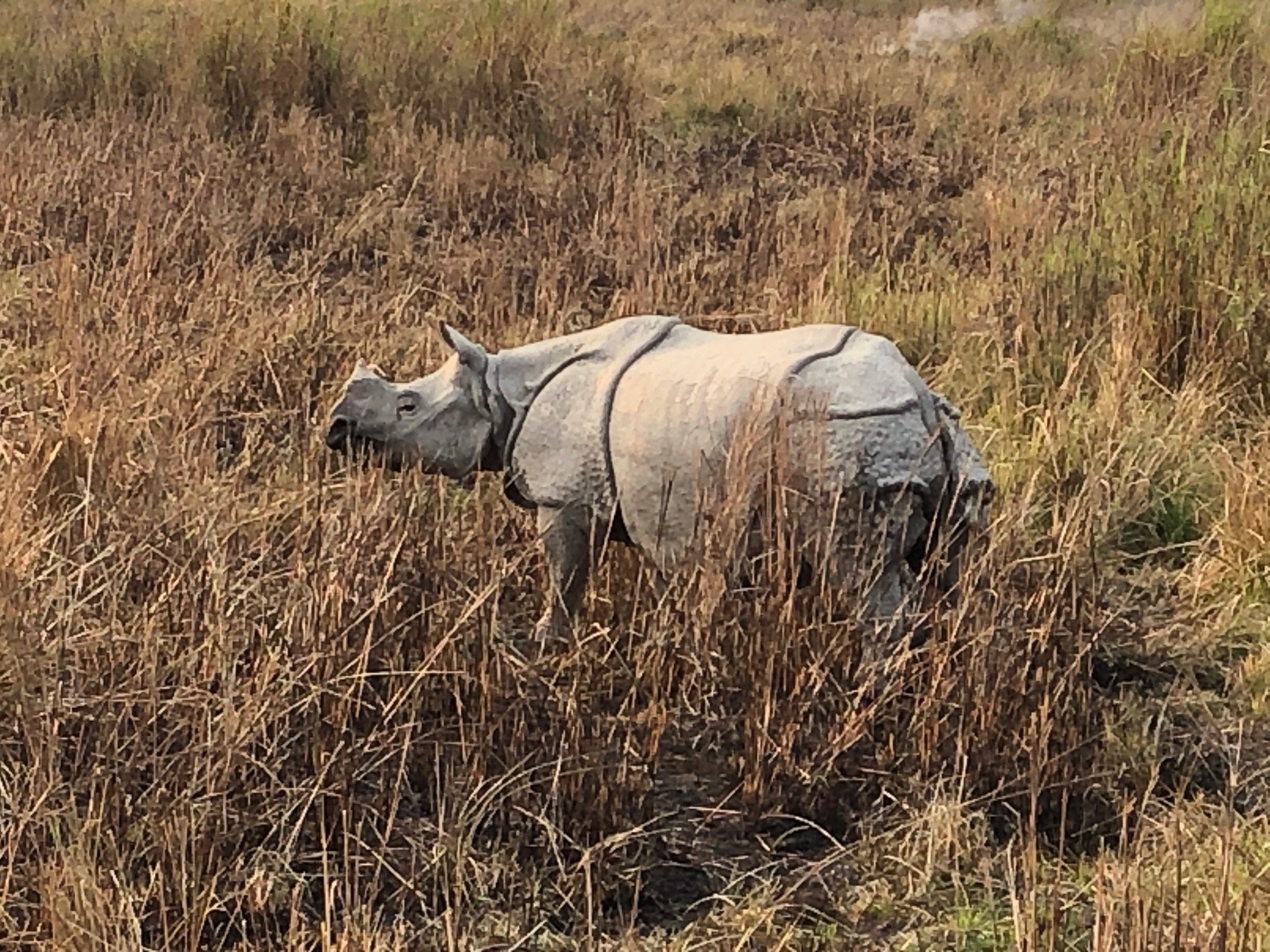
There are those who go to India for the incredible natural beauty found there. From the beaches of Goa to the heights of The Himalayas. There are one day easy hikes and two week treks with stopping points set up for spreading out a sleeping back along the way. There are awesome waterfalls hidden away, the sight of which is earned by days of climbing, lakes, rushing rivers, forests, all accessible to the strong of body and heart. There are tigers, leopards, bears, and the rare, verging on extinct, white rhinoceros of Kazaranga.

And then there are Israeli young people.

I’m sure there are Israeli young people whose motivation is found in one or more of the categories above but my impression after sitting and asking them and listening to their answers is that they’re in a category all their own.

They’ve just finished two years or more in a highly structured environment, the military, where they have little or no control over how they spend their time, how they dress, how they speak, when they sleep or eat. Not only two years with no control over their lives but, for many of them, a life interspersed with hours or days of danger and tension. Israel has one of the toughest military services in the world. Our country is always in a state of existence/non-existence and we rely heavily on these young men and women who spend at least two years training and guarding and protecting us every day. Without them our country would’ve ceased to exist long ago. It’s a heavy responsiblity to place on their young shoulders, but a necessary one.

Israelis at heart are a lively, joyful, energetic people. They don’t like discipline – in their families, in school, on the roads. They lack the spit and polish of the US Marine, the starched, ironed appearance of the British, the punctuality of the Germans. And yet they step up and serve for two years, suppressing (more or less) their tendency to scoff at authority.

And once it’s over – they’ve survived – they go to India.

India is so cheap, they can travel, spending the night in groups of 3 and 4 to a room, for a full year. No time restrictions. No dress restrictions. No family obligtions. They can wake up in the morning (maybe at noon or later) and decide to grab a sleeper bus to a place they’ve heard of from a fellow traveler…or not. And they can do all this in their native tongue with other young people just like themselves; who know what they’ve been through and where they come from. If the prices, accessible trasportantion, and natural beauty were available in a different country they might choose that country. It’s not India per se. Not the culture or the spirituality or the people of India.

They’re young people who have earned this amazing possibility to return to their exuberant selves.

Ultimately Dharamsala isn’t a destination I would return to. But I’m happy it’s there as a gateway to the North for these Israeli young people. And I loved getting to know some of them during our time there. We hear a lot about the Israeli “kids” who come to Northern India and sit around smoking dope. I’m sure those people are there, too, but the young Israelis we saw were wholesome in the way so many Israelis have managed to remain in this 21st century. Joyful. Caring. Patriots on a time out.

There’s plenty of time in life for school, work, building a family, all that serious stuff. And, yes, there’s a danger in getting carried away and not knowing when enough is enough, but the young people we talked to had plans for all that stuff. Later.

We worried when our girls took off for their “trip after the army” and now, two decades later, one is a partner in an accounting firm and one is a high school counselor. And we’re so happy for them that they had that time out of time.

Sad Westernization

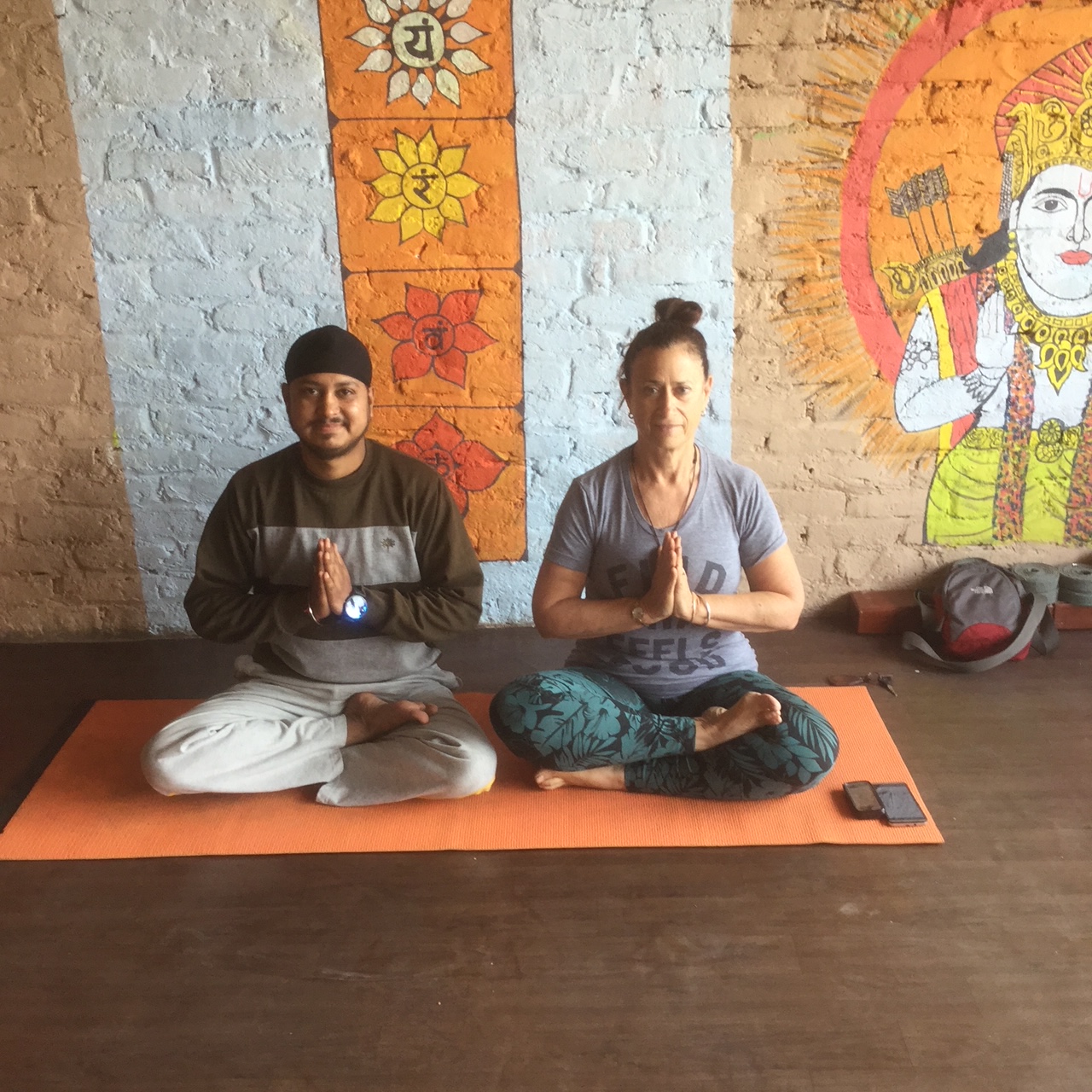
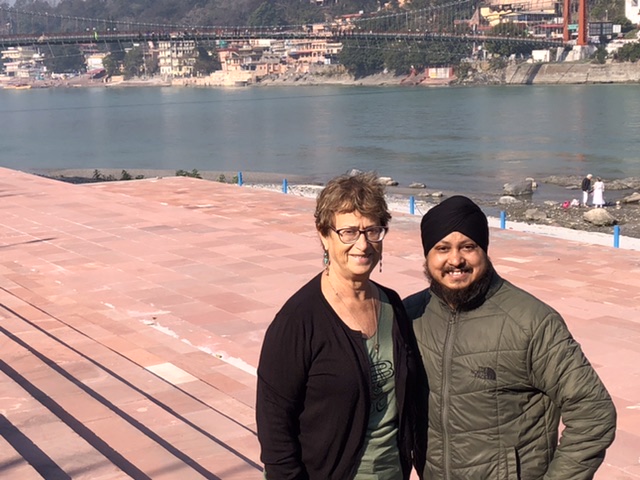
Seven years ago, before leaving home for India, I received the name and phone number of a yoga teacher in Rishikesh. I’d been teaching yoga for six years and thought learning with an Indian master might add something special to my practice. As it turned out when I arrived in Rishikesh, that particular yogi was traveling abroad but his phone was answered by a young Sikh yogi and, since one unknown Indian yogi was the same as any other for me, I made arrangements to do yoga with him every morning of our five day stay there.

The studio was a large room with murals on one way and a large window overlooking The Ganges on another. We climbed a precarious metal spiral staircase outside to reach the room.

My newly-discovered teacher was very young and had only been teaching a year longer than me. But he was very sweet and I realized long ago that if I open my eyes, my ears, and my heart, lessons can be learned in unexpected places from unexpected people.

We met for 3 hours every day for the five days I spent in Rishikesh.

He taught me a long series of poses called Pawanmuktasana especially suited to loosening and strengthening our joints. My husband still begins every workout at the gym with poses from Pawanmuktasana and I often integrate some of the poses in my classes.

We exchanged interpretations of philosophical issues even if we didn’t always understand each other perfectly.

We learned a bit about each others lifestyles and cultures.

When our time together came to an end I asked him him how much to pay him. He said there was no payment to be made. At my urging he agreed to accept whatever I wanted to pay. I’d asked around and paid him a bit more than what was being paid at studios in the area, still about a third of what I would’ve had to pay at any Western studio for 15 hours of drop in classes.

Three years ago I was in touch with him before our return trip to India. We agreed that we would meet again for classes. By that time I’d been teaching for ten years and lost my enthusiasm for trying other styles of yoga and other teachers. I’d taken a two year yoga and yoga therapy course to receive Western certification, been to a dozen silent retreats of various lengths, been to yoga festivals, marathon sun salutation sessions, and taught hundreds of classes. Out of respect, I agreed to take two classes a week with him. My partner took an additional three classes a week.

This time he was teaching in a small, dark room with inadequate ventilation to save money and told us up front that there was a required payment per session. He’d begun teaching a few foreign groups from time to time and realized that it was possible to increase his income.

The classes were lackluster and the short dharma talks he gave lacked the depth of the hundreds of hours I’d heard over the previous four years from so many talented teachers.

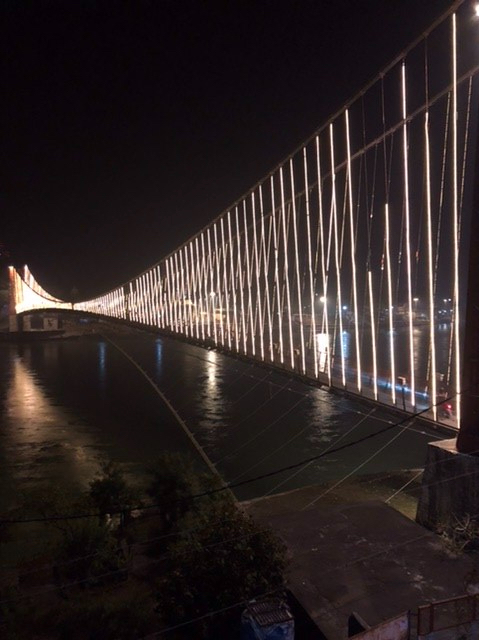
Before returning to India on our current trip I asked for his input about lodging near Beit Chabad in Rishikesh. We were planning to be there for the holiday of Passover and needed to have easy access to a Seder, food according to the holiday’s restrictions, and prayer. The iconic Laxman Bridge is no longer in use and staying across the river is no longer a practical option.

He was very helpful.

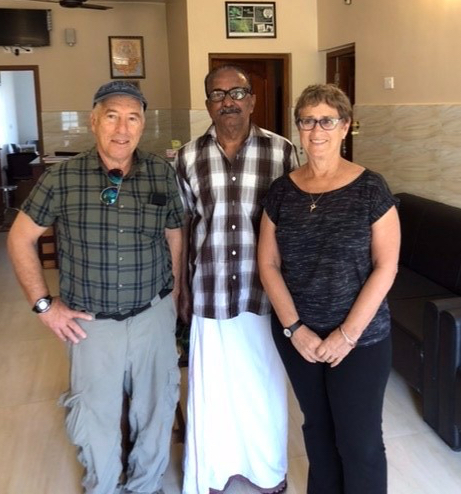
During our first month in India we were down south at beautiful Thumpoly Beach at our friend Antony’s place, then Kanyakumari, Pondicherry, and Auroville. From time to time we got WhatsApp messages from him asking about our trip. Odd, but okay.

We spent a week in Rishikesh as planned, where one of our daughters and her three children joined us before we all headed off to Rajasthan for a week. While in Rishikesh our former yoga teacher asked to come by a few times. Out of respect, we agreed. Awkward, but okay.

On our first full day back in Rishikesh we happily explored learning possibilities for our month visit.

And then received progressively angrier and hostile audio WhatsApp’s from our former yoga teacher.

Inexplicably he was under the impression that we would be doing yoga with him every day for a month. He’d set aside that time for us and put off other potential clients.

He’d told us his days were filled with lucrative online classes of people from the UK, US, and Israel. We never dreamed he was counting on us for his monthly income. We weren’t even positive we’d be in Rishikesh for a full month because many people said it gets too hot to go outside (it doesn’t).

We were confused at his assumptions, dismayed by his feeling that we’d used him as a travel agent and misled him, and taken aback at his claim to be losing a 10-15,000 rupee payment. We offered to meet three times a week but kept getting more angry audio WhatsApp’s. Eventually we stopped responding, as did he, and we thankfully haven’t heard from his since,

My husband found an excellent yoga teacher just a five minute walk away, not surprising since if you toss a stone here chances are you’ll hit a cow or a yoga teacher.

Our new teacher. He’s also teaching me Ayurvedic massage and reflexology.

My partner is taking Hindi classes daily from the same pedantic teacher he studied with three years ago. He’s actually speaking Hindi to people already. He practices like a demon.

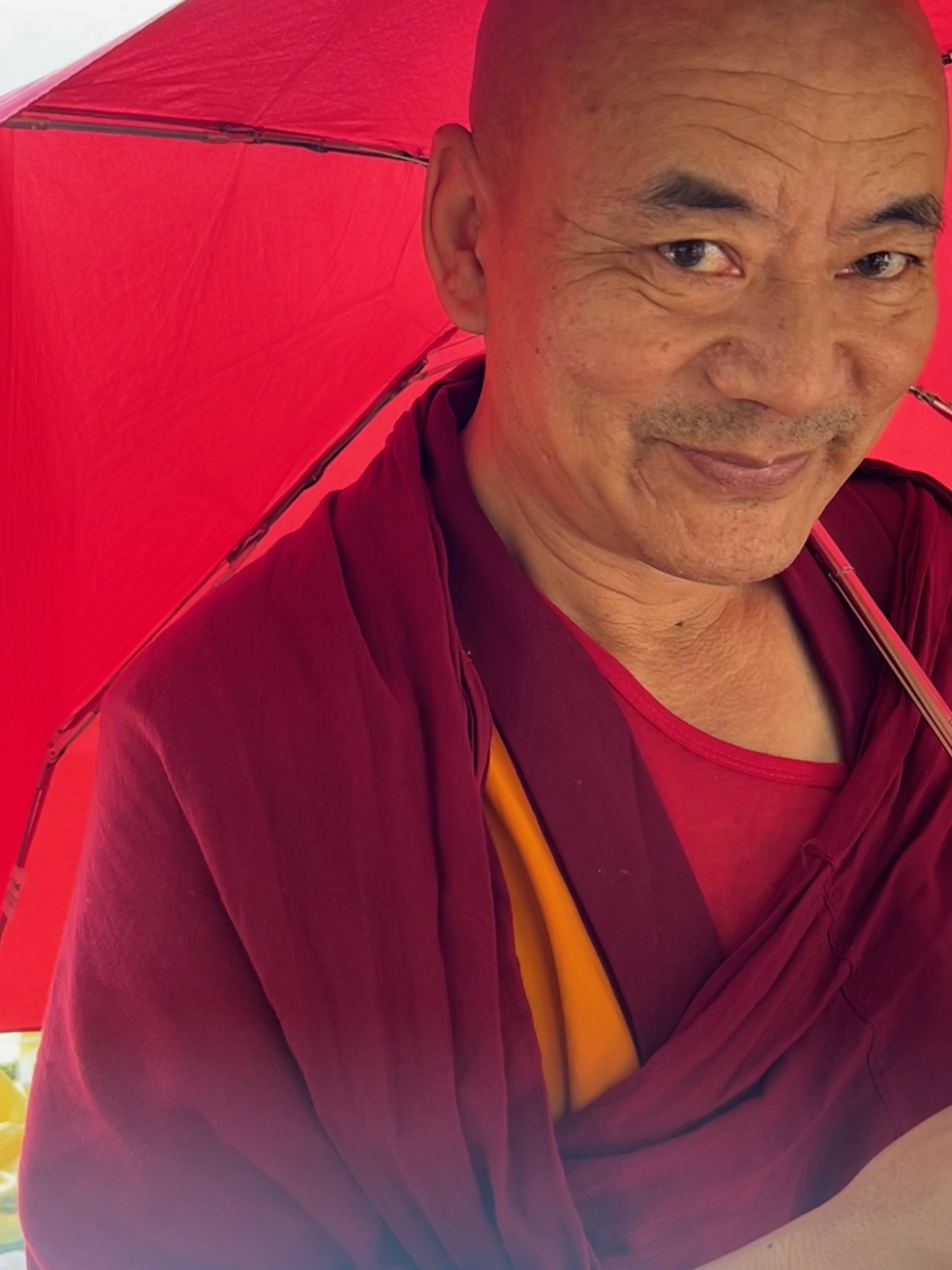
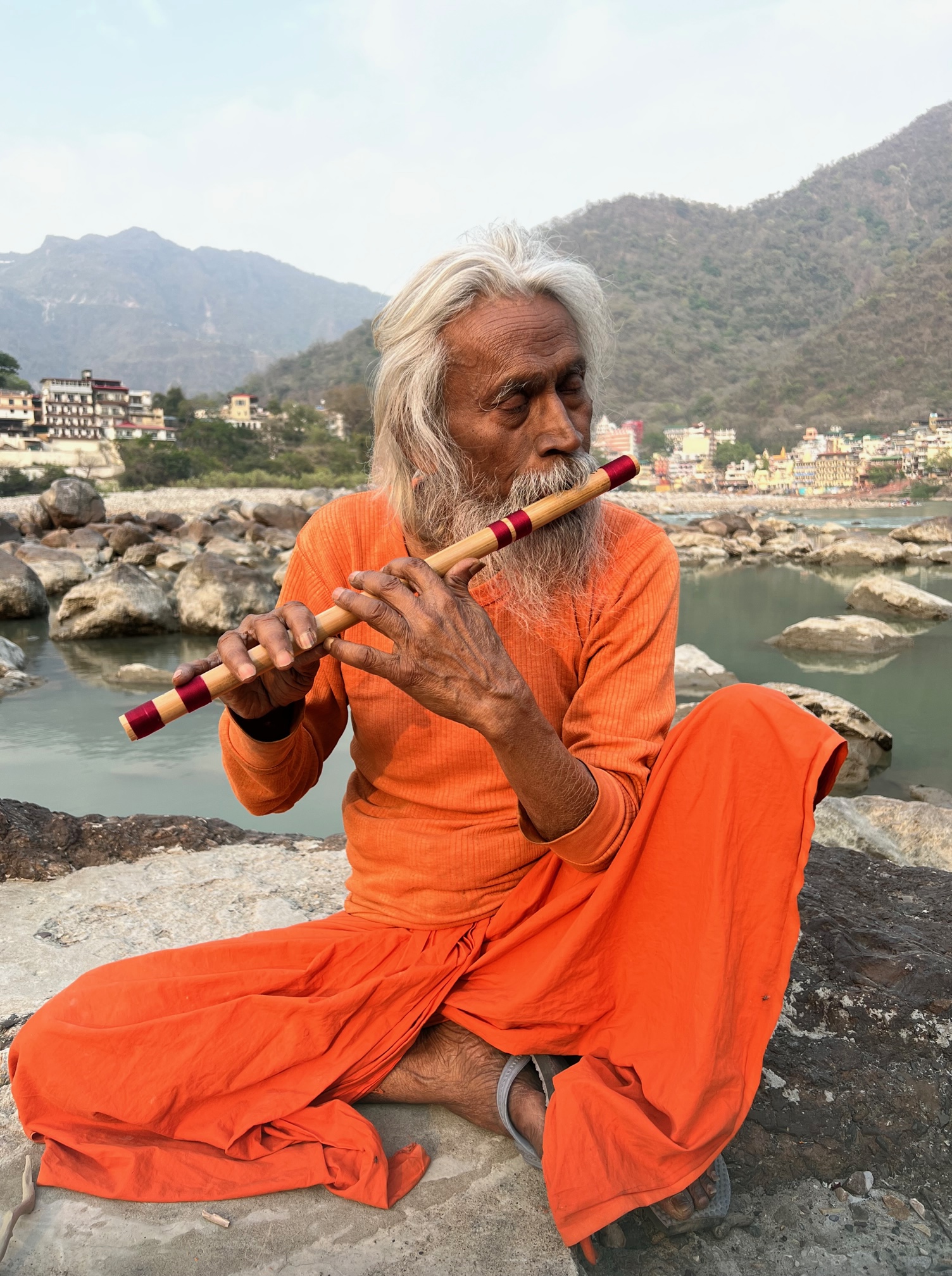
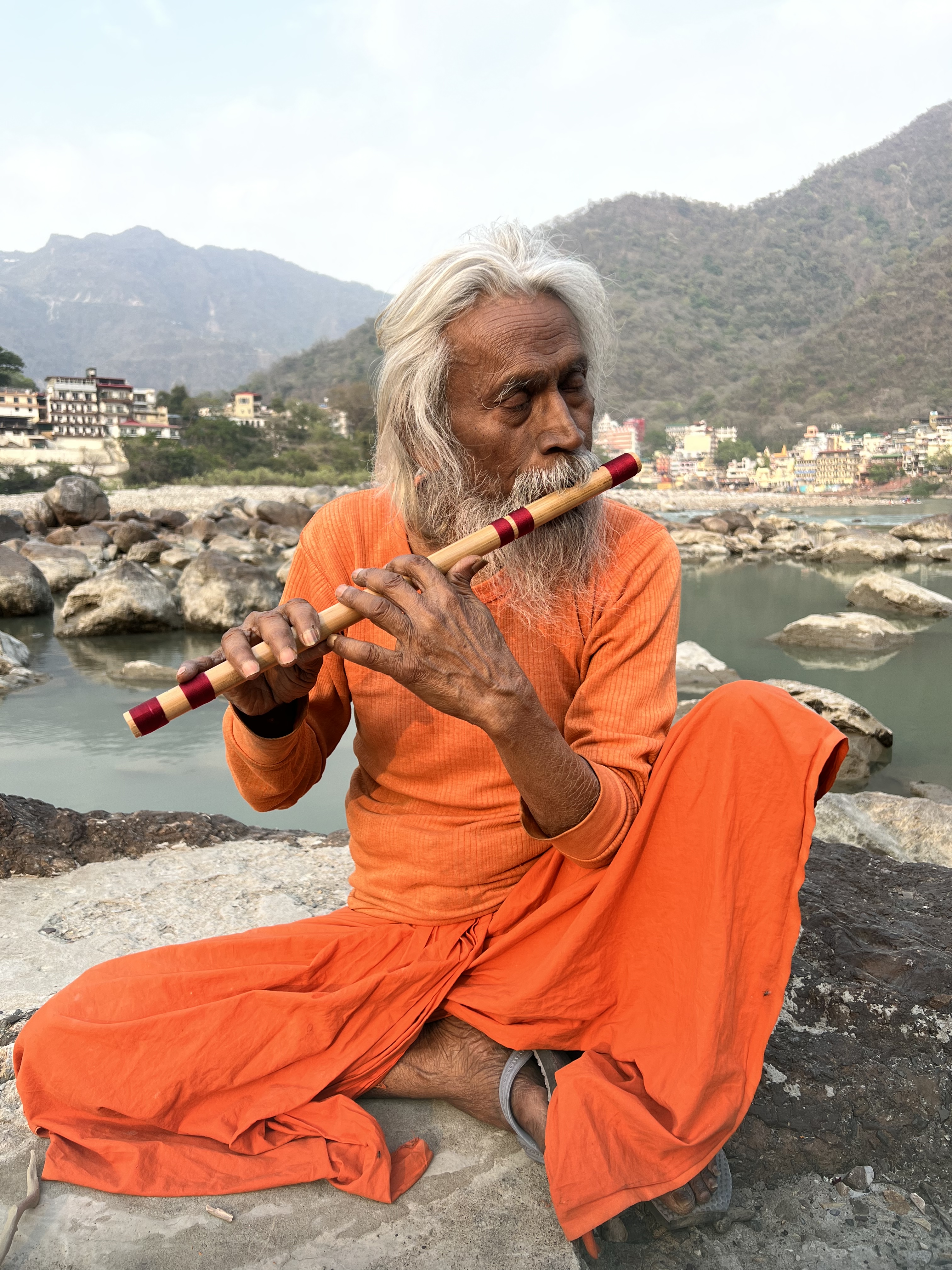
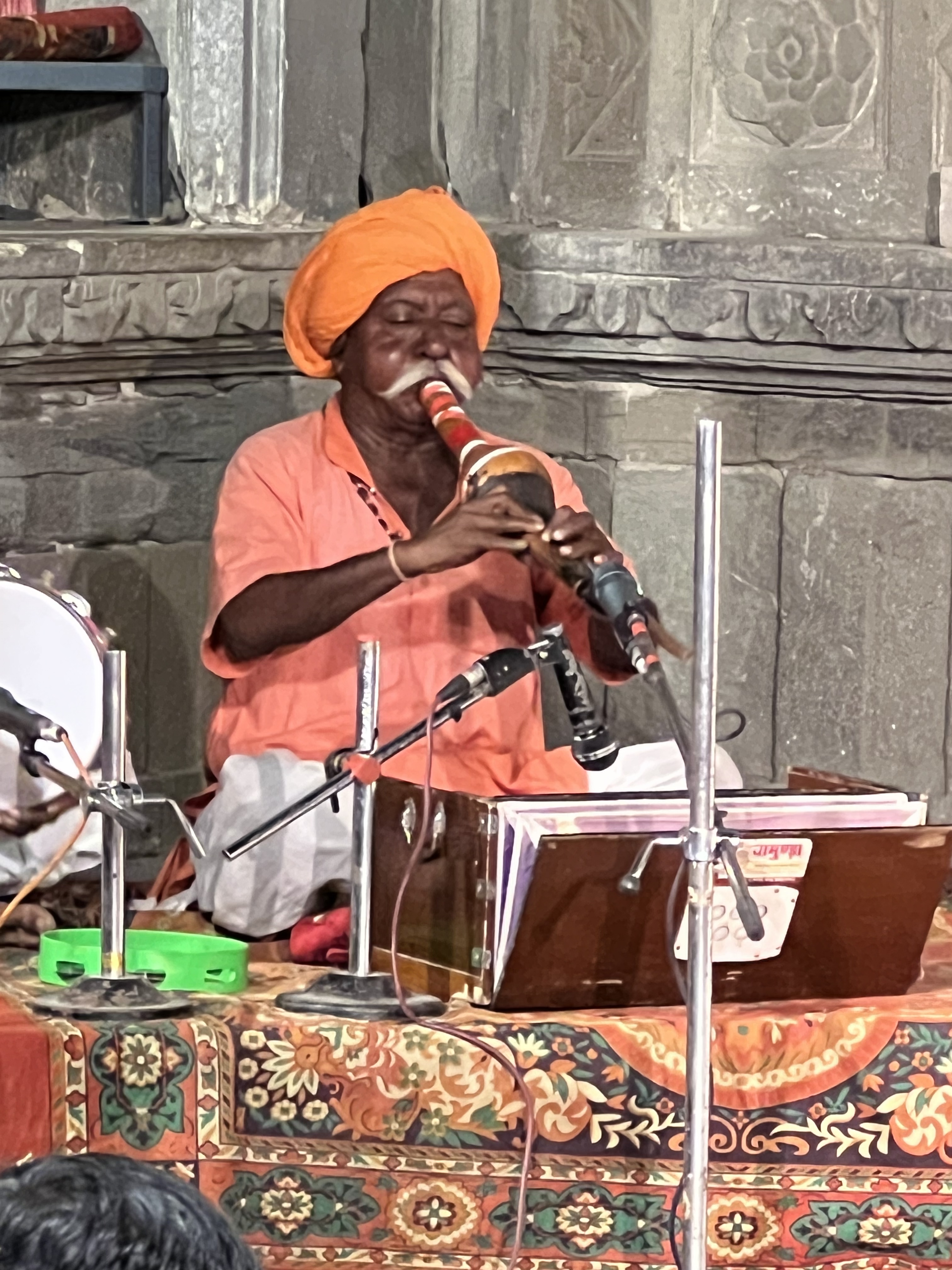
And I meet with a charming monk at a nearby ashram from time to time to learn to play the Indian flute, but mostly to listen to his stories, watch his expressive face, and soak in the atmosphere. He, also, by the way, refuses payment and is only willing to receive a donation according to what I feel is appropriate.

I feel sad when I think of the epitome of yoga I met seven years ago who taught yoga out of love and took payment only through Dana or Dan – personal giving from the heart.
I’m convinced that he became corrupted by his contact with foreign tourists and his online classes. He told us that he enjoys working with them since it doesn’t bother them to pay high prices. His Facebook is full of the new car he purchased and his many holidays. His messages to us were filled with ego and grasping.

Necessarily, in my opinion, the increase in the Westernization of yoga leads to a decrease in living and practicing according to the beautiful ideals of the eight limbs of yoga. It’s a huge challenge to combat that reality.

In my studio there are four teachers. Two of us are happy to charge little, encourage our students to attend class whether or not they’re able to pay, and remain flexible about keeping track of payment. One teacher lives with that approach comfortably but will probably be happy to earn more if she decides to work elsewhere. And one teacher constantly struggles with the studio’s approach.

They’re all excellent teachers. I feel that part of my role as the owner of the studio is that of helping all of us remain as much as possible within the healthy, self-nourishing framework of the philosophy of yoga. As I often remind them, and myself, we’re not an after school music lesson or drama group.

Being a yoga teacher is a commitment to a lifestyle.

Being a yoga teacher in this way is, first and foremost, a gift to ourselves.

It may be impractical and out of fashion in today’s world but I believe it still has a place that should be protected.

Udaipur: The Village Tour

We met our daughter and her three children at the Delhi airport after they’d spent the weekend in Agra seeing the Taj Mahal. We flew together to UDAIPUR, a small, pretty city in the Rajasthan District. UDAIPUR is known as a romantic honeymoon location, home to the lovely Lake Pichola and impressive City Palace. My partner and I were there 7 years ago on our first trip to India and thought it would be a good place for children’s activities.

Rajasthan has its own rich history of colorful dress, dance, and music. We were sure the kids would love the cultural evening with the live Rajasthani music and groups of women dancing with bells on, fire pots on their heads, and especially the young woman dancing while balancing 10 colorful pots on her head. We were wrong. Luckily it was only an hour.

The next day we fared a lot better. All but one of us really got into the 3 hour art workshop where a patient, sweet, talented artist helped us each paint our very own miniature. Our daughter and granddaughter both created truly beautiful miniature paintings. My partner’s peacock and my dancing elephant weren’t bad but revealed that we needed a bit more instruction. Our youngest, a very active 7 year old, showed more focus and attention to detail in his prancing horse than I’d ever seen.

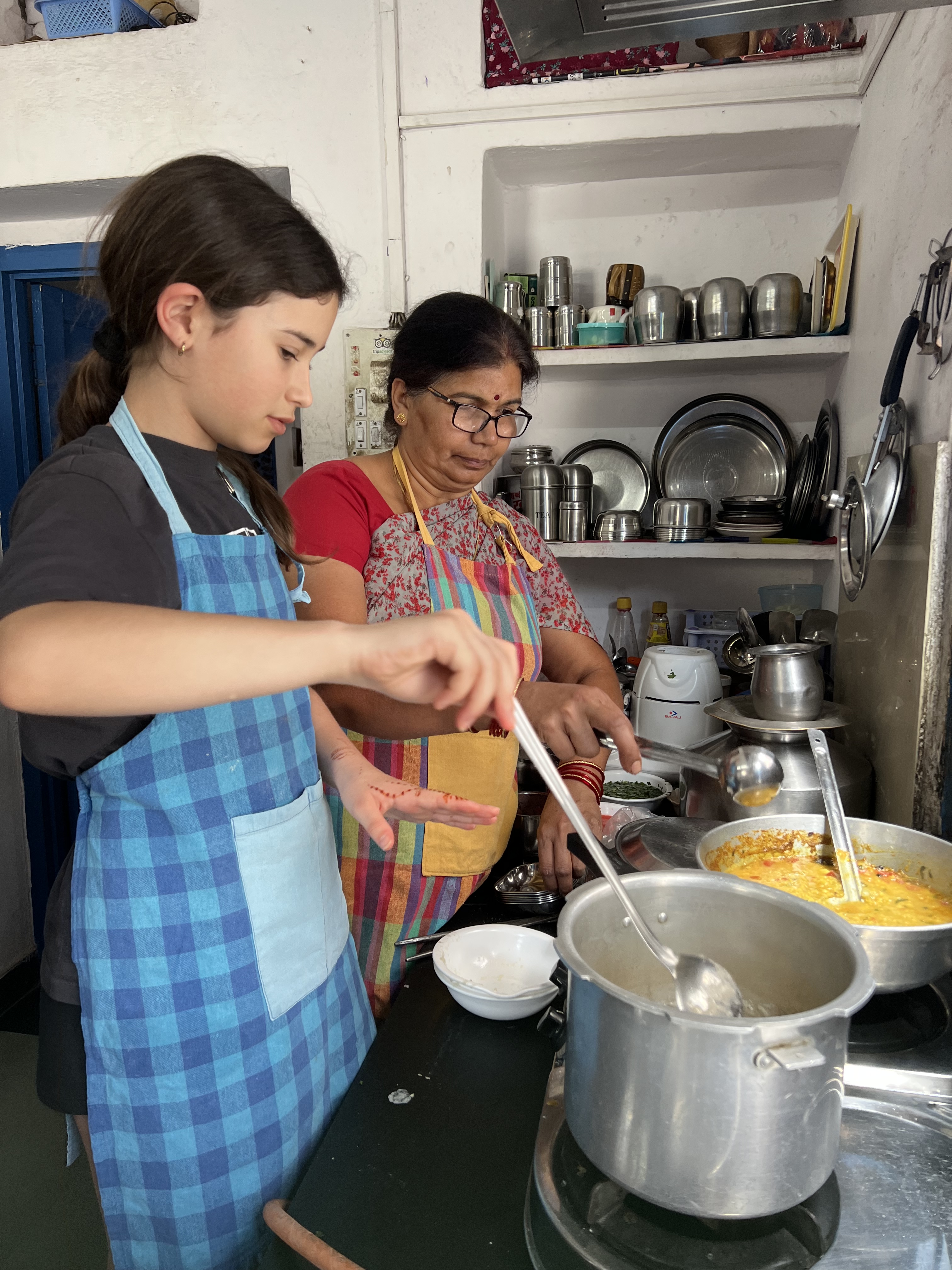
The 3 hour cooking class was a hit with all of us. It was very hands on – from the chopping to the kneading to the measuring and mixing of spices, to the frying…and, of course, the eating. The shy cook started off embarrassed that her English might not be good enough, but once she warmed up (and it’s hard not to warm up to these three kids!), she totally took over the instructions from her (very good looking) son, Gautam.

But the day none of us will ever forget is the day of the village tour.

My partner and I had taken a cab and driver out into the countryside 7 years previously. Our driver took us to several cottage industries – hand stamped textiles, pottery, a country art school for miniatures. We didn’t remember the names of the villages so after reading the glowing reviews of “Salim’s Day Village Tour” we decided to put our motley crew in Salim’s hands and follow wherever he led.

Salim, a devout soft-spoken Muslim, showed up dressed all in white in honor of the Muslim holiday of Ramadan. He brought another auto-rickshaw in addition to his own. We all piled in and off we went in the shimmering 35 degrees heat (95 degrees Fahrenheit).

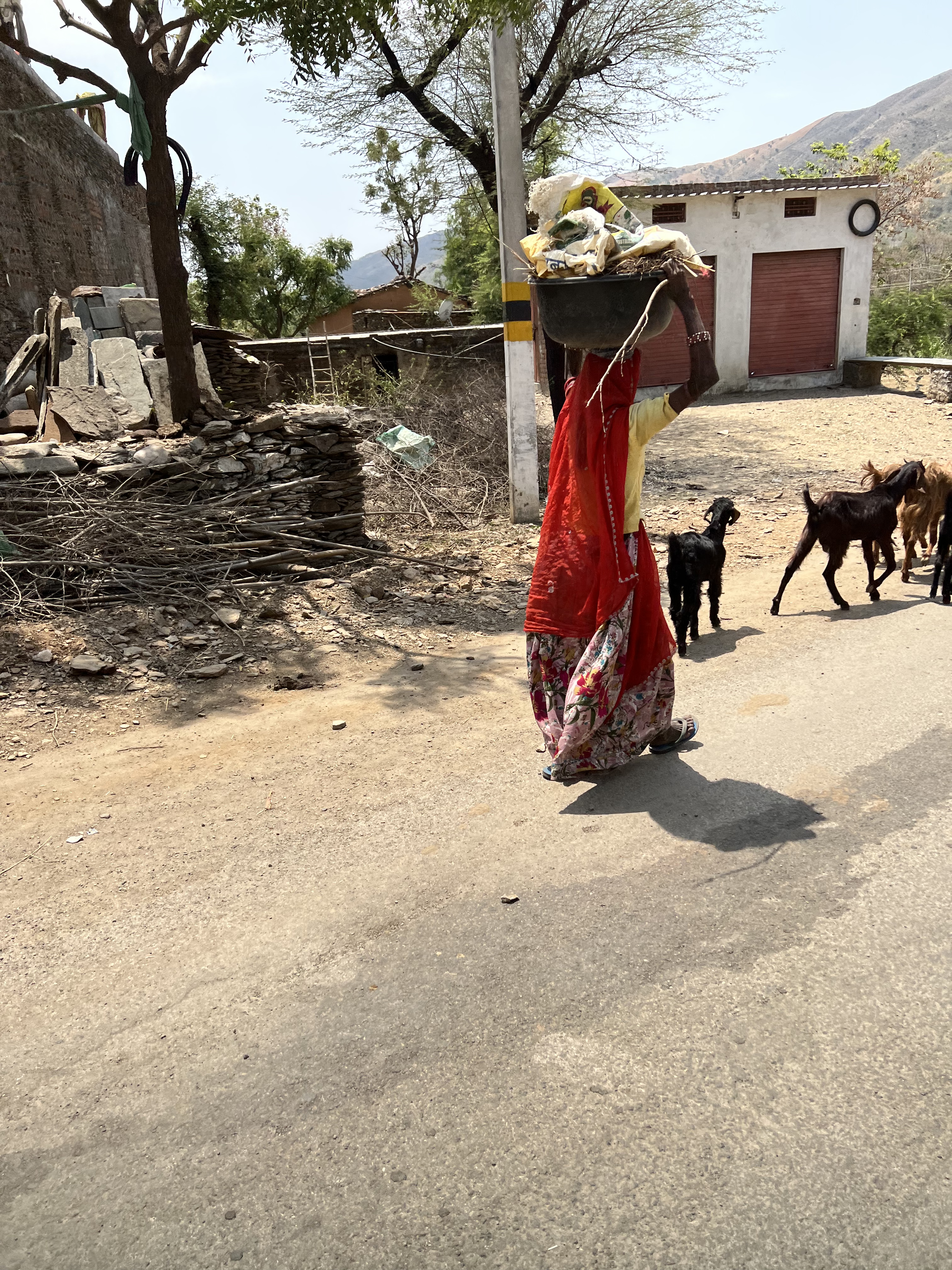
About half an hour later he pulled onto a dirt and gravel road and then turned again onto a rocky path where he parked after another 100 meters. Our first sight was of two women in the distance washing clothes in the small creek. The second was a woman, also dressed in a traditional, colorful sari, with a stack of cow patties balanced on her head.

We followed Salim into a lean-to where five men of varying ages sat on a flat stone area and several women stood by a counter leading into a small hut. It turned out that the father of the woman of the house had died and they were celebrating his life according to their Hindu custom. Somewhat similar to the Jewish shiva, but not exactly an act of mourning since they believe that while his physical manifestation is gone, his (much more important) essence remains.

Oddly enough, one of the ways they honor their guests is to give them cigarettes. Maybe to hasten their reunion with the recently departed? There were giggles from the women and guffaws from the men when my daughter took one of the cigarettes and lit up. Indian women do NOT smoke. But my very white, very light haired daughter differs from them in so many ways that a puff on a cigarette didn’t offend.
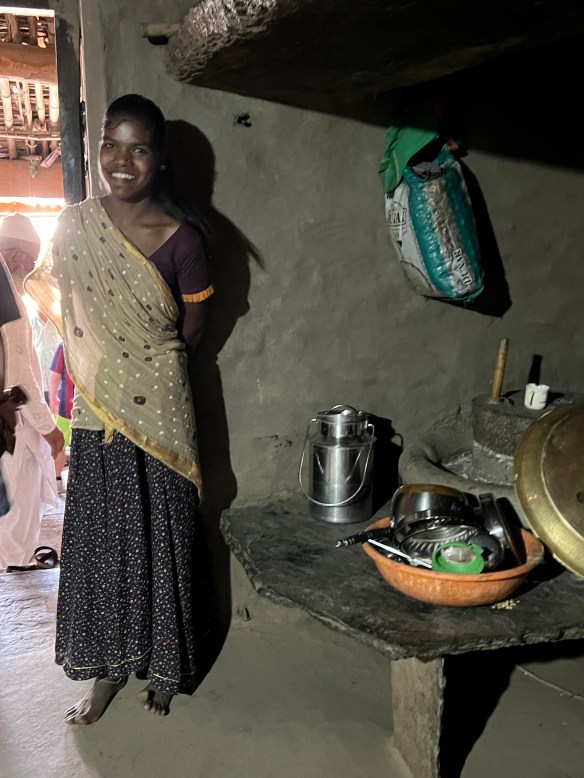
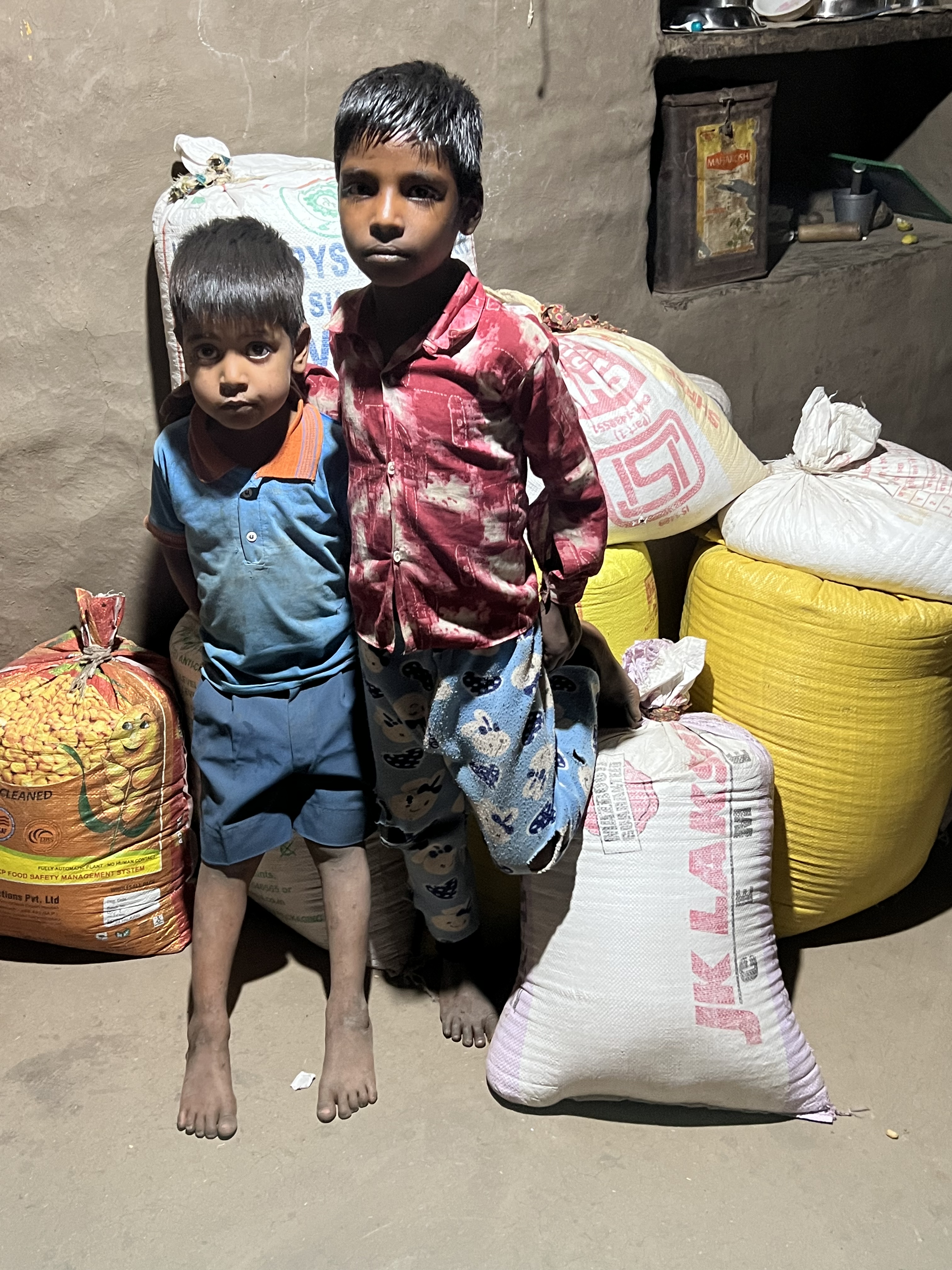
We asked to see inside their one-room home and they happily acquiesced. One of the young women whisked off the covering from a large pot to show us the gas burners (my daughter told us later that a mouse came barreling out). Inside it was quite dark. There were big sacks of flour and rice along one wall. There was one bed with pots, pans, metal plates and cups on it. Salim explained later that the couple sleep in the bed and the children, in this case three, sleep on mats on the floor. There was no bathroom; it’s presumably outside.

We asked if there was electricity and a man pointed the one bare, unlit, bulb hanging in the entranceway.

After our goodbyes we moved on to a day care center not too far away. There were about 15 gorgeous three and four year olds inside.

To say the cramped space was dark, dirty, with virtually no toys doesn’t come close to giving an adequate description.

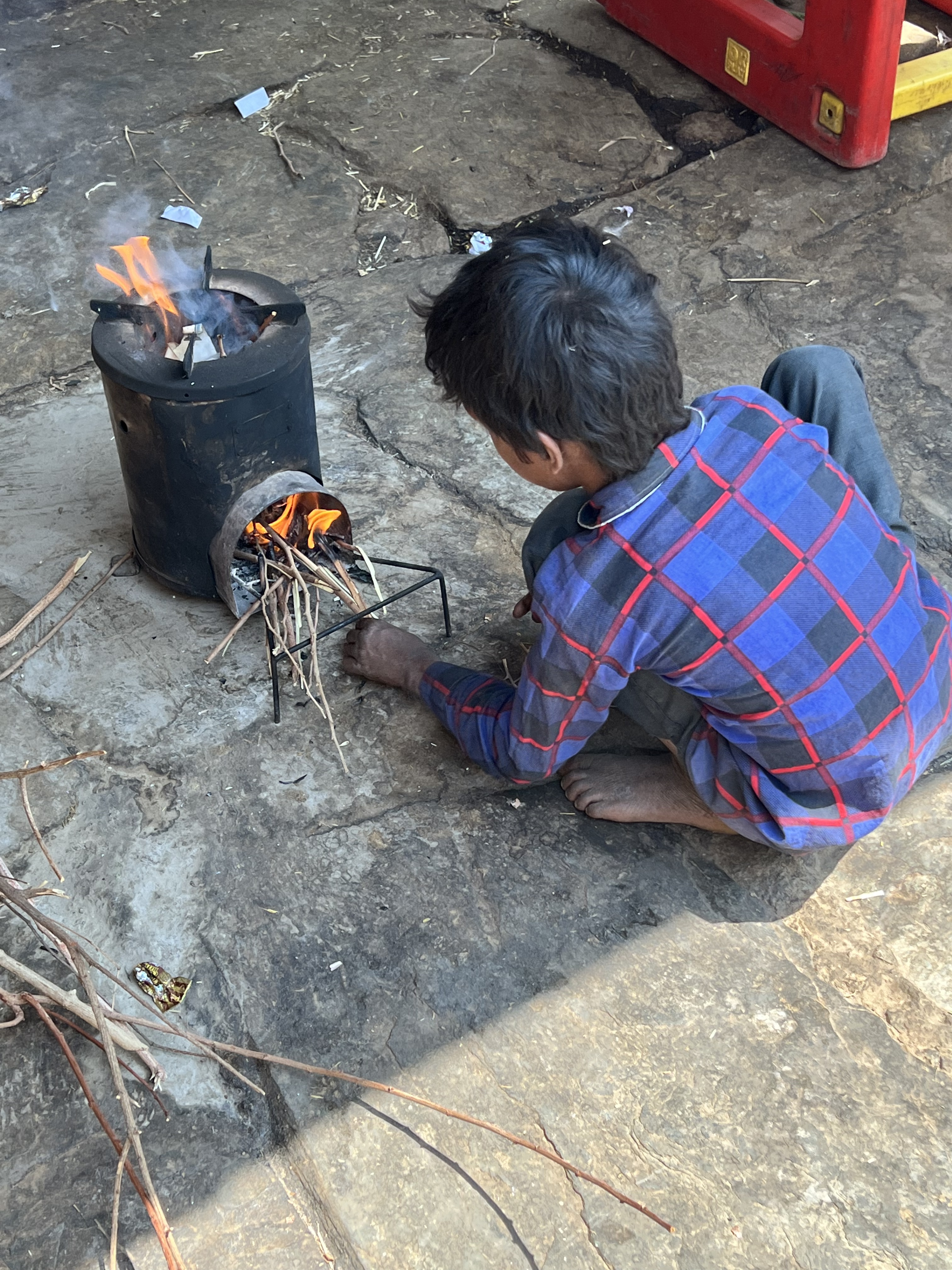
At one point a boy, who looked to be 8 or 9 years old, set fire to some kindling stuffed into a canister-looking contraption. We basically stood with our mouths open contemplating how many safety measures were being ignored while the smaller children heedlessly walked around the open flame. The lone day care worker put a pot of soup on top and began to prepare the children’s lunch.

Salim had recommended we bring candies. Our grandchildren had a great time handing out candies to the youngsters both inside the day care center and walking around the village. They were surprised that when they offered a candy to a child who, as it turned out, had already received one, she declined to take a second. What kid does that!?

By this time we were all drooping from the intense heat and more than ready to head back to our hotel. It wasn’t only because of the heat, though, that it was so quiet in the tuk-tuk on the ride back. There was a lot to think about.

We arrived at the gates to the 42 acres (over 160 dunam) surrounding our hotel. The turbaned guard called a buggy to come get us: goddess forbid we should walk the 150 meters to the entrance to the hotel. Along the way we saw peacocks roaming the grounds freely, smelled the fragrance of the beautiful flowers, and heard the splashing of many fountains.

Truth be told, we don’t usually stay in such elegant surroundings where there are so many impeccably dressed, beyond pleasant staff constantly bowing namaste in our direction over prayer hands. Our daughter is more accustomed to 5-star hotels and it’s actually much easier to enjoy a vacation with children, one of whom is a teenager, when they’re comfortable.

Inevitably at the dinner table when we talked about our impressions of our day, and after the grumbling about the schlepping around in too much heat for way too long, we all expressed our dismay at the parity between the lives of the villagers and the vacationing Indians sitting at the tables around us.

Almost 70% of the one and half billion people who live in India live outside the cities. As in most developing countries, every year people move to the city for employment or other ways of bettering the lives of their family – about 2% annually in India. The already overloaded infrastructure of the cities – Delhi with almost 33 million people, Mumbai with over 21 million, Bangalore with almost 14 million – is hard put to cope with more.

Prime Minister Modi, since his election in 2014, has instituted several programs to encourage villagers to remain in their villages. His government guarantees 100 days of employment to every villager who’s eligible. A gift of 150,000 rupee ($2000) is given to each village homeowner for home improvements, primarily to fortify roofs and walls to withstand monsoon season. 600 million toilets were purchased for the villages in the first five years of the present government .

And, still, the parity is huge.

We talked about the Indian trait of acceptance and the joy in the villagers’ children’s play. We talked about the bountiful nature of our own lives and how, even so, we so often strive for more and better. One of us reminds us of the pride in one man’s voice when he pointed out that his daughters were home visiting from college. So along with acceptance there can be a desire for change.

We conclude our conversation as so many of them end – knowing that we can only ever get a small peek into the depth and vastness of this amazing country called India.

None of us will ever forget these two weeks of ours as a family in India and this day will always stand out.

Stories Our Parents Tell Us

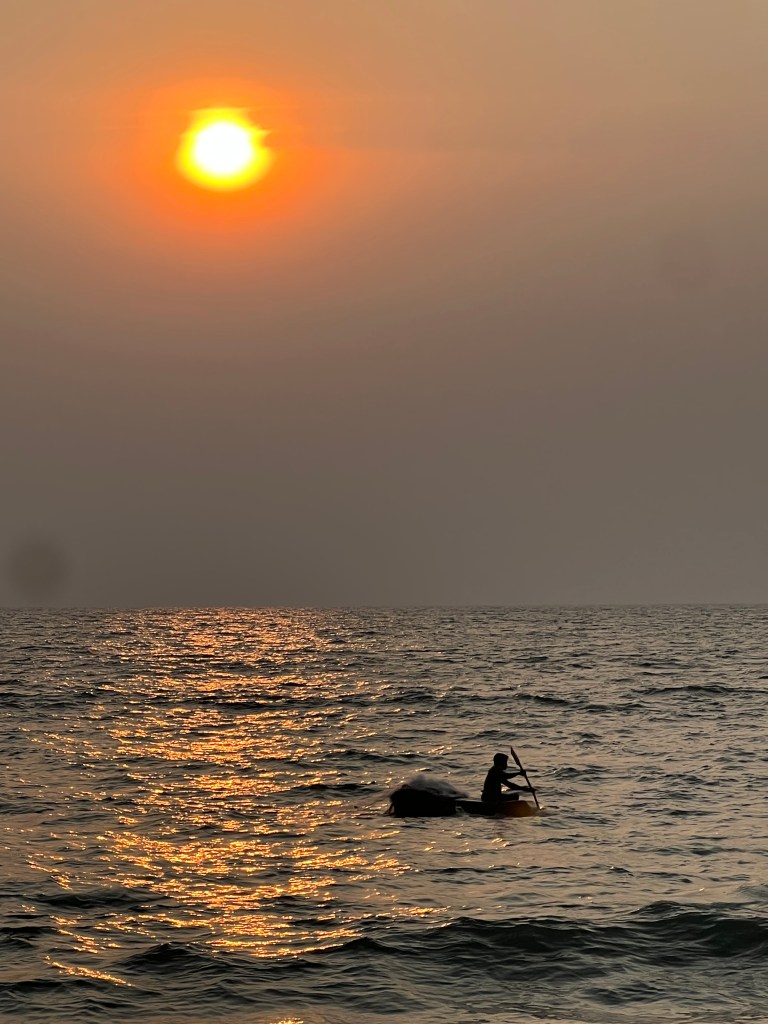
Just back from a dip in The Arabian Sea.

I’m sitting on the wooden balcony just outside our room, watching the mid-morning calm waves, really ripples, just as I’ve been contented to do most of my waking hours over the past four days.

There’s a rhythm to the sea. Several actually. And a rhythm to life here dictated by the sea.

The waves arrive from the south and break on the shore traveling northward, but oddly seem to recede back into the sea at the same time along the shore for quite a way. I’m sure there are physicists among you who can explain that phenomenon to me in language I wouldn’t understand.

In the morning the sea is so calm that the ripples have no sea froth. By mid-morning they are already small waves complete with white caps. In the afternoon the waves become quite healthy. At night they are loud and powerful and often stormy.

When they are at their calmest the fishermen in this small village of Thumboly are out in force. They employ several different techniques but none of them catches much, and the few fish they catch are tiny. We’re told there was a time when fishing was a viable industry here but that time is long over.

By mid-morning there isn’t a soul on the pristine beach other than the occasional tourist. By mid-afternoon the fisherman are out repairing their nets or playing card gambling games , sitting on the sand in groups of six to ten men.

It’s a bit of a mystery where the women are. Home, I suppose. We see the occasional woman shopkeeper and saw a little girl out playing with a little boy on their shared bicycle on one of our afternoon walks. But mostly we see men and boys. Playing soccer. Playing volleyball on the beach. Walking the village streets.

Our days are quite serene.

My partner takes a morning beach walk early every morning. He always comes home with a new adventure to tell me about. One morning it was two children out walking their crab…on a leash.

We have a breakfast of some kind of unfamiliar grain dish in various forms, a vegetable in soupy sauce to put over it, papaya or some other fruit, and tea.

Once breakfast is digested I spend an hour on my yoga mat. My practice immediately returned to its full glory with the first unfurling of my mat opposite The Arabian Sea. It had sadly stagnated for the past six months.

We read, write, and chat most of the day to the accompaniment of the sea’s music.

In the late afternoon we take a walk through the narrow byways of the residential area, where people happily greet us with a friendly “Namaste” and often ask us in to eat (which we politely decline) or into the small commercial area just past the large church.

Today, we decided, was the day we would venture into the water. We were out there at 9:45 when the waves were just starting to be more than ripples. My partner went in first to scout out the drop off and reported that it was sudden but not too steep. The water was warm and delightful.

In I went. But not far and not for long.

Sixty years ago my mother told me about her good friend, Joseph. They were childhood friends and both enrolled at Northwestern University in Chicago. He was an engineering student and she was a drama major so they didn’t share classes but they shared social circles.

In their sophomore year they went to the beach one afternoon with a group of friends. A beach on Lake Michigan they often frequented. Like Israel’s Kineret, Lake Michigan could be treacherous in the afternoon, with a strong undercurrent.

As the story went, on that fateful day Joseph decided to go back in the water long after the others deemed it unwise. As my mother and her friends watched helplessly he was rolled over and over, dragged under and drowned. No one could save him without endangering their own lives.

I love the ocean. If I have a few free hours I sometimes jump in the car and drive an hour or more to walk along the beach. On my way home from visiting grandkids I often take the slower, longer route to stop off for a half hour of breathing sea air and watching sea birds hop in the shallows.

I’m not convinced that my mother’s story about her friend, Joseph, was true or just a cautionary tale, but it accompanies me to the beach every time I go. I rarely go in the water past my ankles or, if I do, it’s only a little above my waist. I need both feet firmly planted. I have what I like to call a healthy respect for the power of the ocean, while recognizing it as anxiety that’s not always justified.

I enjoy my grandchildren’s fearless frolicking in the waves and beyond but only while keeping an eye on the lifeguard to make sure she remains alert. I’m happy that some of my children and grandchildren surf; proof that Joseph isn’t a filter through which they experience the sea.

I’d love to ask my mother if she actually had a friend named Joseph and if she actually watched him drown in Lake Michigan. But she’s been dead for twenty years and, really, does it even matter?
Beware all you parents out there. Stories our parents tell us are powerful beyond logic.

Whatever happens, I’m satisfied

In Israel parents teach their children a saying very early on in life – Whatever happens, I’m satisfied. It rhymes in Hebrew and expresses a futile hope on the part of parents that it will nip complaining in the bud.

Pretty ironic since Israelis (and maybe Jews in general) are among the most, ahem, discerning (read critical, judgmental, complaining) people I’ve come across in my extensive travels. And I am one, so I’ve had plenty of experience.

On the positive side, perhaps that’s why we’re the start-up nation with more technological and medical innovation than any other place on earth. That squinting one-eyed gaze at everything around us and thinking…hmmm. I could do that better.

On the not-so-positive side, it’s a pain in the rear end to be so often surrounded by people who are almost never satisfied with the way things are. The food in the restaurant is never quite right even after an order reminiscent of Jack Nicolson in Five Easy Pieces (I’ll have omelette plain, with a chicken salad sandwich on wheat toast, no butter, no lettuce, no mayonnaise, hold the chicken). The room temperature is too cold or too hot. The teacher doesn’t pay enough attention to my kid or singles her out for special (not good) treatment.

I wasn’t feeling great the other day. Stuffed up, headache, scratchy throat, didn’t sleep well. Here I am in southern India. Home of Ayurvedic medicine. Decided to get an Ayurvedic massage. For the uninitiated, this involves total nudity and more oil than a Mediterranean diet calls for in a lifetime.

The very sweet young woman spoke no English – zero – and my Malayalam is pretty rusty. There was absolutely no possibility of any request whatsoever. None of the usual massage direction – harder, softer, higher, lower. Nada.

As I lay there swimming in oil I thought THIS is the opportunity of a lifetime to fulfill that Israeli saying – Whatever happens, I’m satisfied.

I found thoughts popping up about how I might prefer this, that, or the other thing she was doing but they disappeared as quickly as they arose. They were irrelevant given our mutual lack of communication skills.

Ultimately, after she wiped off a lot of oil and I pulled my shift over my head – this not being my first rodeo I knew that less is more is the rule when committing to a Ayurvedic massage – I showered and crawled back into my stuffed up, scratchy throated, headachy nest and realized my headache was gone, my throat a bit less scratchy, and that prickly low grade fever feeling had disappeared.

I woke up this morning with more energy than the past couple of days. Had a peaceful, flexible hour on my yoga mat, and sat down to ponder the potential of “Whatever happens, I’m satisfied.” She knew what she was doing and any direction from me would have just gotten in the way.

It’s a continual conundrum in my mind. This contentment with what is versus the striving for improvement.

What do you think?

PS The above photo was taken from this very balcony three years ago. The most peaceful place on earth, Thumboly Beach


Yoga Sneaking up on Me

I’ve never looked like one of those thin, flexible women with ropy muscles and a BMI that barely hits 20. I’ve always looked more like the Russian and/or Polish peasant stock of my ancestors. You know, the ones who give birth in the field and go back to digging potatoes out of the earth.

Nowadays when I have no choice but to admit that I’m a yoga and meditation teacher I imagine that the (young) person asking the question is internally rolling her eyes, sometimes right after the (imaginary) once over.

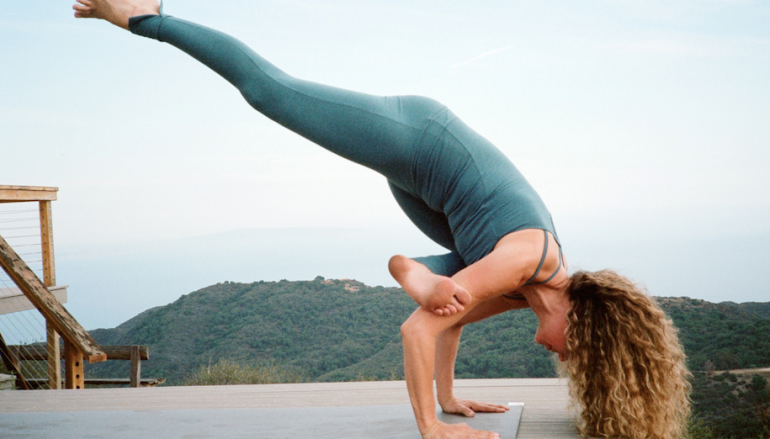
That’s all okay. Only mirroring what I know. I don’t come within many miles of looking like…

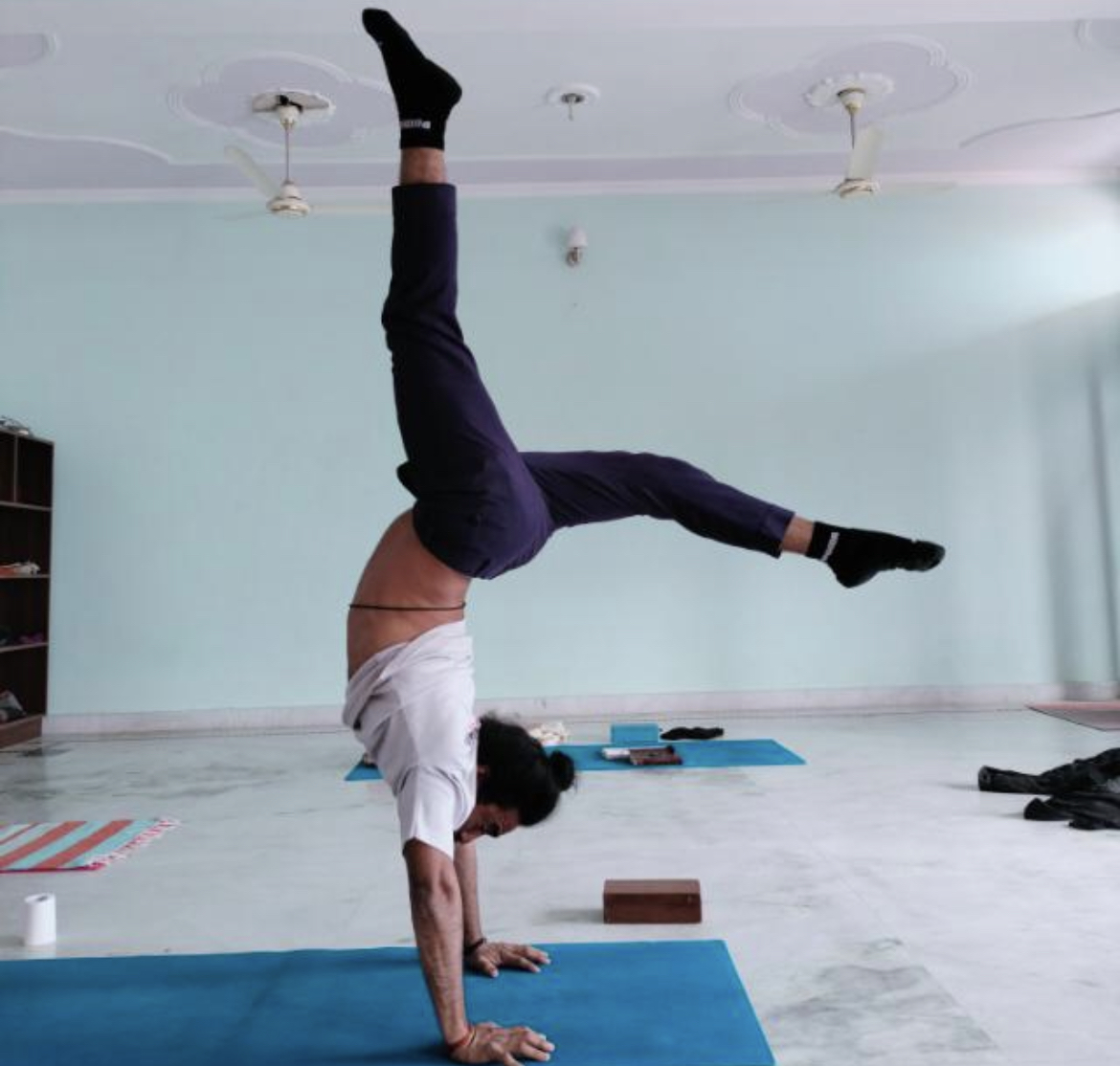
(and, no, I could never ever do that pose, whatever shape I might be in.)

But yoga and meditation teacher I am and have been for over ten years. My studio is thriving. New students joining all the time. As my body suggests I teach less, my heart doesn’t allow me to turn away students. I’ve begun teaching two young women my particular flavor of yoga and meditation, Raja Yoga, to lessen my load.

One of them is particularly serious; puts in the time and thought. She’s a personal trainer. I expected her to be an easy study when it came to the yoga poses so I chose to begin by looking at the philosophy of yoga; the spiritual side of things. We meandered through some of the more basic and beautiful parts of Pantanjali and then on to the eight limbs of yoga. She committed to sitting in meditation every day, and after a rocky beginning, stuck to it.

It didn’t take long for me to tumble to the fact that there’s a shitload of stuff to learn.

I began to seriously consider how I got to where I am today in my practice.

I began to recognize what stands behind the kind words I hear from my students and the word-of-mouth referrals. I teach kindness, compassion, and gratitude, and I suppose I related more to their having absorbed those lessons than any kind of real assessment of what they receive in class. All of a sudden I realized that they were receiving the gifts that I’ve received over the past 15 years. From the many hundreds of hours I’ve listened to and absorbed dharma talks, the many dozens of books and articles I’ve read, from the retreats I’ve gone to, and from the thousands of hours of my personal practice. My students are the continuous long chain of those gracious enough to share their knowledge and experience with me. A chain I joined not because of a conscious desire to change my life but because of my passion for and enjoyment of them.

For someone who teaches awareness, you might be surprised to read how shocked I was to realize that I’d absorbed so much and integrated it into my life with little recognition of the process.

There’s an annoying concept that says that when you chase after something in life it eludes you. When you stop chasing, you attain it.

WHAT?!?

So how does that work? What are we supposed to do with that? How can we attain something if we don’t try? What kind of New Age bs is that?

I’m here to say that I’ve been witness to this phenomenon more times than I can remember. At my age I might not remember them even if there were only a handful, but, trust me, there were many. And here I came face to face with another.

Those who bemoan being old, here’s a positive thought. You can’t be a wise crone unless you’re old. You have to absorb lots and lots of life to earn that badge. No one ever heard of a wise young crone. (p.s. you also have to be female, but maybe we shouldn’t go there)

So back to my serious young woman who’s learning to be a yoga teacher.

I abandoned the study of yoga philosophy temporarily and we began to get more deeply into asanas, yoga poses. She is, in fact, a joy to teach. She picks up everything immediately. She files it away and, contrary to many of us, remembers where she filed it in her brain and body so that it’s easily accessible.

Then I asked her to build a sequence to teach during the first part of one of my classes. Okay, there were a couple of issues that were easily definable and corrected with practice. Speaking more loudly, taking more time with each pose, checking the room to see if some adjustments needed to be made to help people to more advantageously enter into and sustain poses, and organizing the sequence in a more logical manner. Maybe that sounds a little complicated, but it really isn’t. It just takes practice.

The hard part is that which only comes with a decade of passion.

I remember reading a book about ten years ago written by an experienced yoga teacher who wrote that the best yoga classes are the ones that aren’t planned. He explained that he walks into a class and feels the vibe in the room, senses the flow as he teaches, choosing the poses according to those variables. It seemed quite unprofessional and haphazard to me at the time. Sort of like attaining things by ceasing to strive for them.

But that’s how I’ve been teaching now for at least the past five years, and probably much more.

I realized after my young student taught that sequence that I had missed a crucial element. The one I missed earlier about the philosophical and spiritual nature of my classes. I hadn’t realized to what extent my classes are a by-product of hundreds of students and thousands of hours of yoga practice.

A good yoga teacher doesn’t have to look like the stereotypic Western yoga teacher. She can be of Russian/Polish stock. She doesn’t have to be able to twist her body into a pretzel. It’s not about the technique, (though beautiful yoga technique is a thing of beauty). Less about muscles and more about heart. (which is also a muscle, but you know what I mean)

The yoga teacher so many of us seek out has the ability to sense what’s going on in her body and in the bodies and hearts of the other people in the room at the moment. And she has to have a huge repertoire of poses so that she can flow into them spontaneously in response to what she feels is going on here and now.

I can’t provide instant access to that sixth sense, even though I recognize it now in myself, because I also realize that, like the spiritual and ethical gifts that changed my life over decades, I received similar gifts over decades from my students and from an internal tapas, or fire.

Can’t run after it; have to believe in it.

I can (and did) tell her that she should commit to learning ten poses extremely well each and every week. Go over and over them. Imprint them into her body. Befriend them – each and every one – so that they’ll be there for her when her instincts kick in.

Yoga, in all its eight limbs, sneaked up on me. I dived into its depths because I loved it. I listened to dharma talks because they nurtured and calmed my soul as well as giving me continuous food for thought. After a lifetime of believing in God, I felt the actual presence of God in my life and found it felt like home.

Hopefully, when I leave for an extended stay in India in February, my young student will be ready to teach my classes. Hopefully, I can finally teach less when I return. All that remains to be seen.

But what I’ve gotten out of teaching her has been far greater than finding someone with whom to share studio responsibilities. I’ve learned what I try to convey to my students every day. I’ve learned what Patanjali wrote 2500 years ago.

The beauty, joy, and life enrichment offered through a life of yoga are attainable by everyone when practiced properly, persistently, and for the long haul.

It’s led me to internalize the gratitude I feel toward my many teachers and students for the life I love.

Thoughts from Corona India

Disclaimer: My thoughts are just that…MY thoughts. Based on my limited experience in India over the past week. India is a huge country and things may be very different in places other than those we’ve been. I’ve heard lots of stories from others, especially in two of my FaceBook groups specifically for people traveling in India, and they’re included in this post. Still – these thoughts only reflect my reality.

There are many wonderful things about India. That’s why so many people get bitten by the India bug and keep coming back.

Before the first trip there’s a feeling of trepidation. More so than a trip to South America or Canada. The names – of people and places – are ridiculously long and unpronounceable. They fly out of your head immediately, making it hard to figure out where to go and who to speak with. The food is spicy, fragrant (smelly), and unrecognizable, with names that don’t tell you anything. Driving is beyond conceivable. Rumored (and real) poverty and garbage everywhere doesn’t entice.

But a week into your first trip, you either want to beg to go home or you know you’ve found a place which will always occupy a part of your heart.

The country is full of color. The houses and the people’s clothing. It’s filled with people who radiate kindness in their smiles and in their eyes. They’re curious about you, open up their homes, their lives and their hearts to you. The natural wonders show the hand of God in a way that never ceases to be awe-inspiring. People are helpful beyond words. They love to help you navigate their food, their customs, and their railway system.

About a week ago, the background of positive curiosity and kindness began to change.

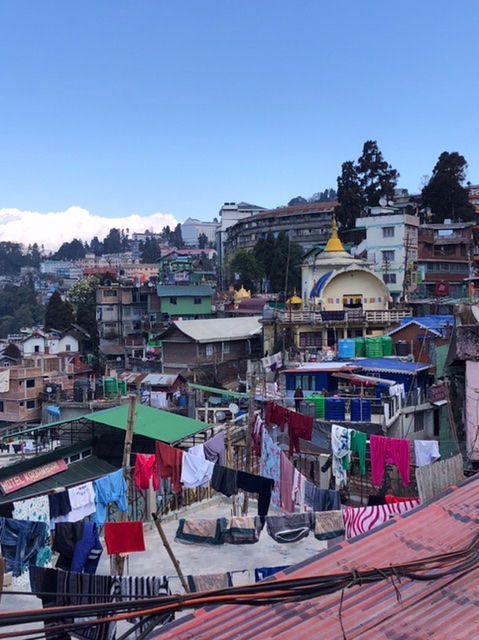
We were in a lovely hill station called Darjeeling. Neither of us knew why we wanted so much to go there – it’s way off the beaten track – but we felt a magnet drawing us there. The people there look very different from Indians in any of the other places we visited. Sort of Mongolian mixed with Chinese. The shops sell the types of mountain village items we’d seen in Mussoorie – another town in the foothills of the Himalayas but much, much further west.

The staff at the hotel were as kind and welcoming as every other place we stayed – which is to say super kind and welcoming. We wandered up and down the steep streets daily, drank tea (Darjeeling, as its name suggests, is a center for excellent tea), took the World Heritage Toy Train, ate wonderful food, and took in the awesome mountain views daily.

And then things began to change.

We’d been following the Corona situation along with the rest of the world. Things didn’t look good but they didn’t look frightening…until they did.

One afternoon our very attentive guesthouse manager showed us something he posted in his group of hoteliers which mentioned the increasing incidence of guest houses refusing to accept foreigners and cabs refusing to allow foreigners into their cars and his own comment that this was not good behavior and he, for one, planned to welcome foreigners as Indians have always opened their hearts to them before.

Wait. What?!

Very quickly we began to see online discussions about whether or not to grab the first plane home. Some people were panicky; while others were still posting lovely photos of where they were and recommending guides in various towns. The pressure mounted until we spent at least a couple of hours every day deliberating our plans.

We were reluctant to cancel our time in Shimla, a place we both really wanted to go, and our return to Rishikesh, a place we spent three weeks and loved it so much we were planning another ten days there.

Finally, the morning we were to fly to Shimla we decided we were in denial.

We were spending so much time worrying about our decision, and asking each other if we were fiddling while Rome burned, that what were the chances we’d enjoy Shimla?

With a flurry of activity, we canceled two flights (and were refunded 1/3 of each), canceled our Airbnb in Shimla (Airbnb, btw, was wonderful and refunded the entire amount of our stay), and reserved a hotel in Delhi near the airport to be ready to hop on any plane we could find.

We had already shortened our trip to the end of March (originally we were due to fly home at the end of April), optimistically thinking it would be okay to still go to Shimla, but decided that we could smell the fires of Rome creeping closer.

Decided to stay in a super pampering hotel (Radisson Blu Plaza) as compensation for our sadness in leaving India. Forget the fact that we’d already learned that the price of the food in these hotels is more than a 3-night stay in the level of places we mostly stayed.

The posts in my FaceBook group started changing dramatically. The panic was far more widespread. Entire regions of India closed off to foreigners. People being asked to leave their lodgings. More and more flights canceled. More and more countries closing their borders.

We’d reserved a flight on Ukraine Air only to hear the very next day that they closed their borders…and subsequently canceled our flight with no refund.

With the help of others in our FB group we found other options and eventually reserved tickets on Aeroflot (who closed their borders the next day) and Ethiopian Air (with a 17 hour layover in Addis Ababa – yikes!).

There’s no end to the getting home story yet, but we have boarding passes for Ethiopian Air for 02:40 which is 10 hours from now, so it’s looking hopeful. Aeroflot hasn’t canceled the connecting flight (Moscow to Tel Aviv), but we’ve heard rumors that some agents have said it won’t be happening. We’re not taking that chance. They’d advertised that because of Corona they’d give full refunds but now say that they won’t give any refund at all…and aren’t answering their telephones in India or Israel.

I don’t even want to start calculating the cost of all this. Money comes and money goes (as they say); and mostly goes. We want to get home, even though it means 2 weeks in quarantine in our home. Maybe that’ll be a good de-pressurizing time to gradually get back into our lives…in their new shape with this ongoing crisis.

One of the major points here, though, is the change in the social climate in India. There seems to be a natural desire to circle the wagons in face of fearful times, as can surely be seen in our crazed attempts to get home to a country which is in almost total lockdown. Many Indians have begun to fear foreigners as the source of Corona, in spite of the statistics which show that there are about 7 foreigners in India with Corona; all the others are Indians who came in contact with Indians returning from abroad. They want to distance themselves from the “other” and surround themselves with the familiar.

In our hotel there are mostly foreigners who are waiting to get a flight home. I keep imagining that this is how it must feel to be a foreign national fortressed in luxurious surroundings after a revolution, waiting to be evacuated home. The feeling is one of unpleasant desperation. The lower members of the staff are still helpful and kind; the upper levels not so much.

It’s impossible not to think of families in lockdown in small apartments, or people who are on forced leave from work (or fired) and have no income, or the elderly who are now isolated from everyone because of the danger to their health.

It’s important to keep our own experience in perspective. We’ve learned an important lesson about community, but we’re healthy and safe…and together.

When we all leave our bunkers once the danger passes, the world we find will be changed one. Entire sectors of the economy will have disappeared or altered drastically (air travel, hotels, tourism in general); debts will have incurred which may take years to tackle; styles of personal interaction will have to be rebuilt.

But as my oldest daughter said – maybe the changed world we find will be a better world.

From her mouth to God’s ear.

What is it About Rishikesh?

My partner and I spent 10 days in Rishikesh in 2016 and 3 weeks there so far on our current trip. We’ve decided to go back for another 10 days in April. We ran into many people there who told us they’ve been coming to Rishikesh every winter for the past 6 years, or 10 years or an incredible 20 years. One young person we spoke with last night (in Delhi) said he was there a month ago and finds that something about it is pulling him back.

So what is it about Rishikesh?

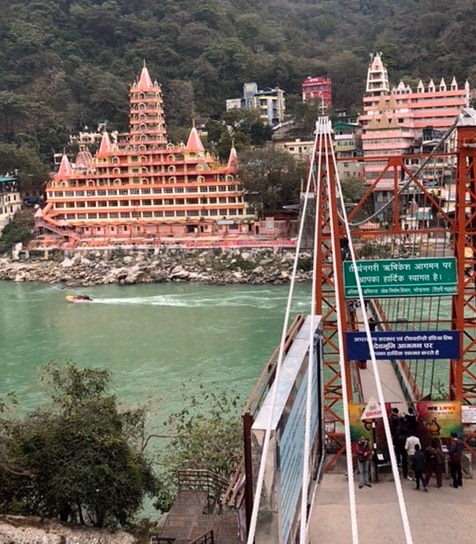
Rishikesh is a small city of a little over 100,000 people. It sits on both banks of The Ganges with two lovely suspension bridges spanning the river.

On one bridge, Ram Jhula, a few cows and monkeys maneuver between the foot traffic, motorcycles, carts, and bicycles. Things get busy on Ram by 9:30 am and don’t let up until twelve hours later, when the cacophony of horns and bicycle bells finally stops.

On the other, Laxman Jhula, they’ve recently installed barriers so there are no motorcycles or bicycles, but the monkeys there are far more numerous and aggressive (I was bitten by a monkey there in 2016).

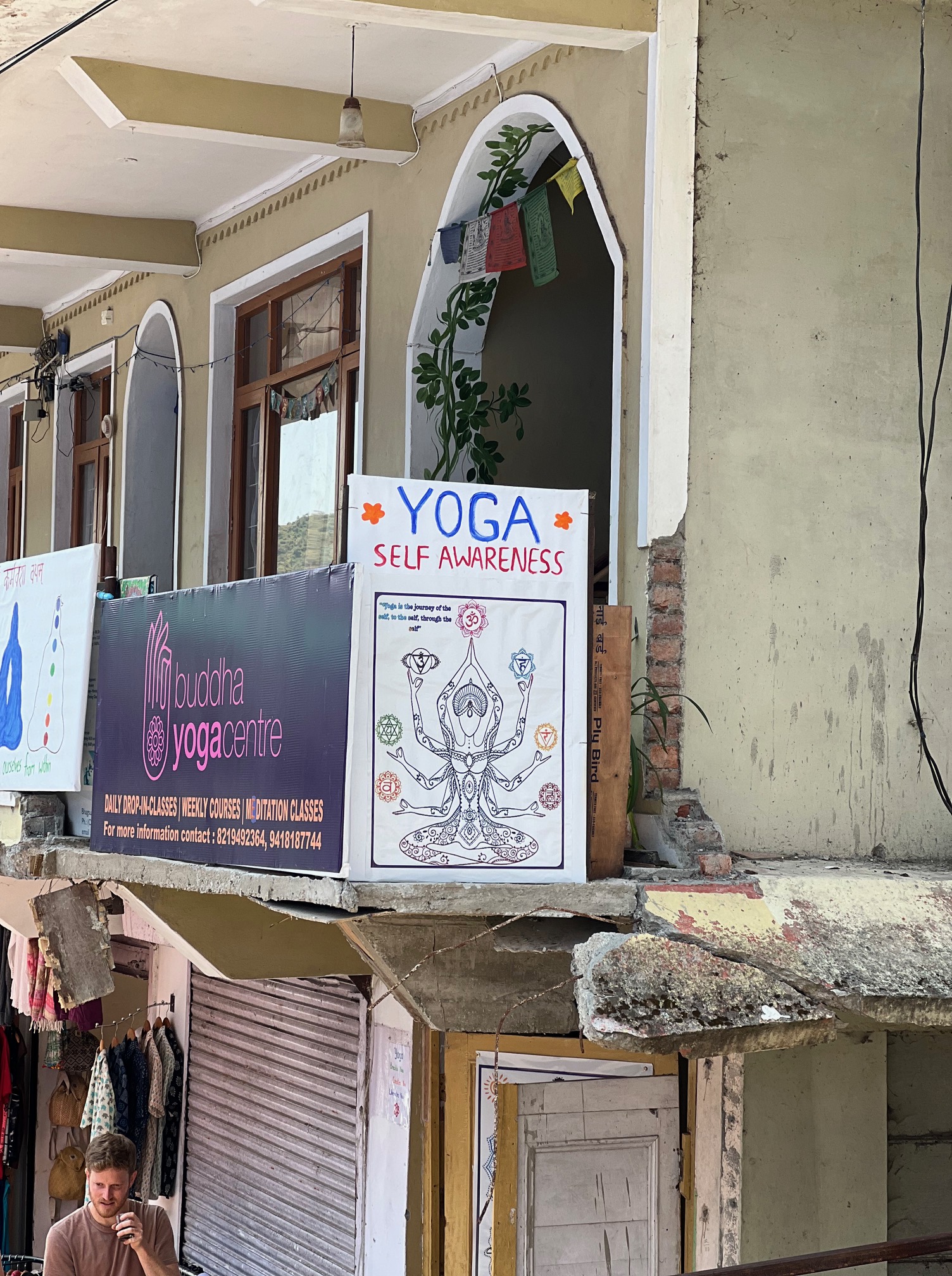
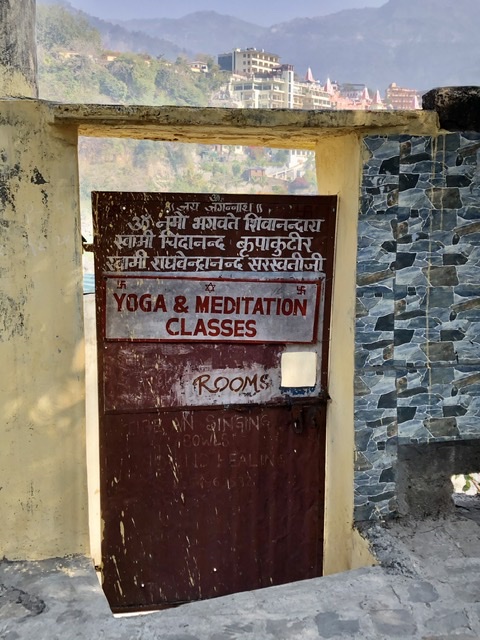
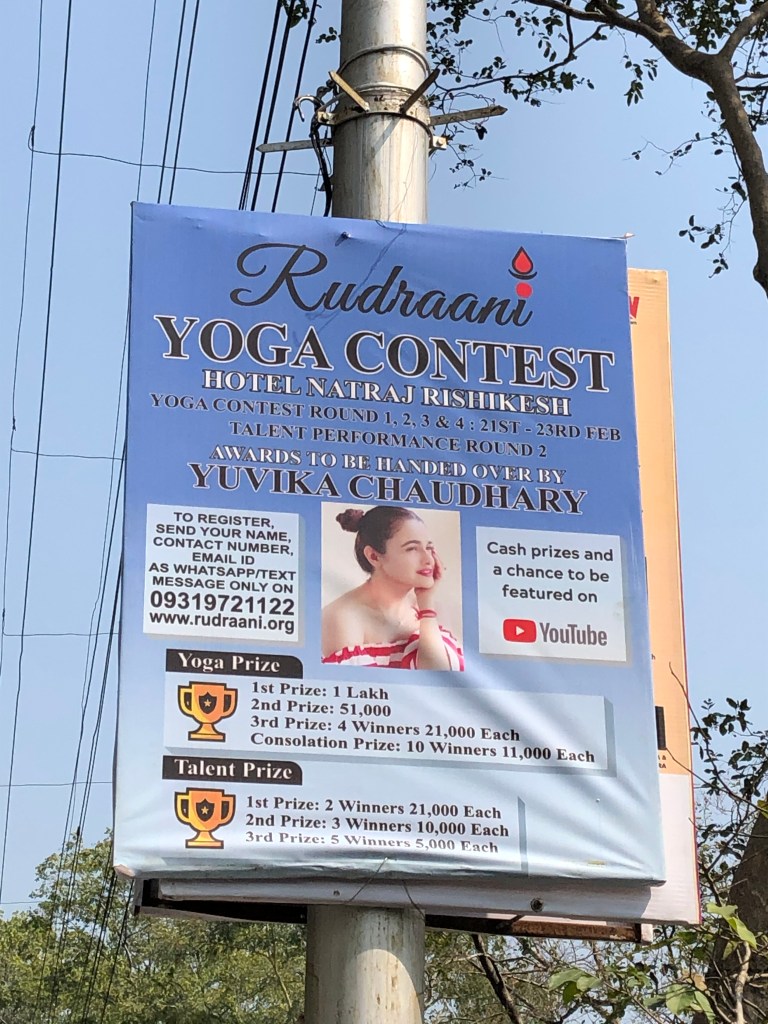
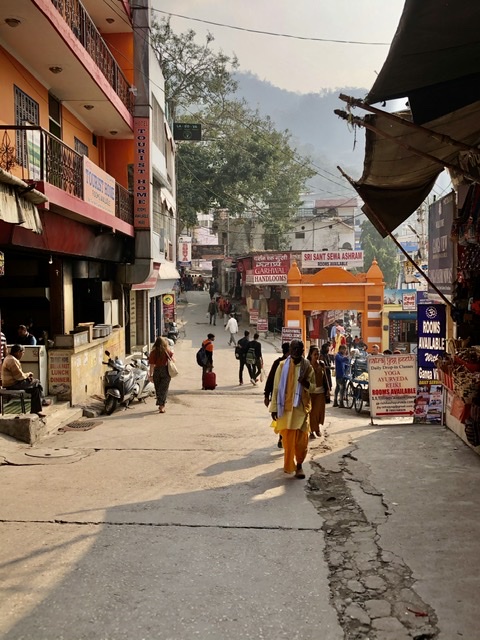
The small streets and alleyways are full of signs enticing people to take classes of all kinds – 200, 300, and 500 hour yoga certification courses, meditation classes, Hindi classes, music lessons of all kinds (harmonium, chanting, tabla, sitar to name a few), Ayurvedic massage and therapy classes – all for very low prices.

Some signs are in Hebrew, and many local people can speak a little Hebrew – a sign of how many Israelis visit and how much we make our presence felt wherever we are (for good and for bad – but mostly for good). In general, the average Indian is a big supporter of Israel, and especially of Bibi Netanyahu, expressing admiration for our strength in the face of great adversity. They enjoy the Israeli bonhomie and exuberance, responding to Israeli travelers’ warmth with readily extended friendship.

We’ve met with kindness, extraordinary customer service, warmth, and beauty all over India. We’ve been awed by the colors, the noise, the crowds of the huge cities and the striking isolation of much of the beaches, jungles, and countryside. And, still, Rishikesh inspires an attachment that’s different.

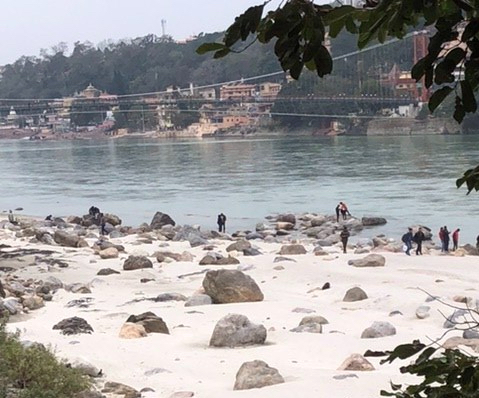
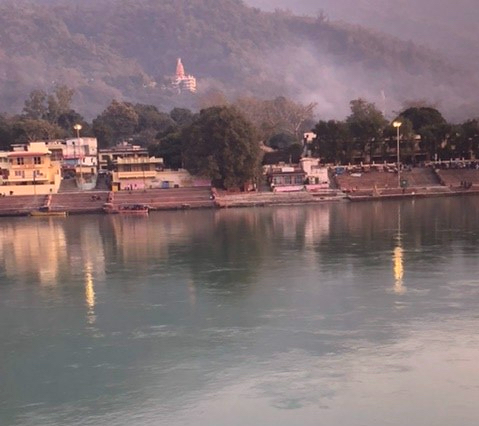
Maybe it’s The Ganges. Considered holy, originating from the matted hair of the Hindu god, Shiva, The Ganges starts in the western Himalayas, emptying finally into the Bay of Bengal. It becomes continually more polluted as it flows south and east. In Rishikesh it’s relatively clean. It also manages to be majestic and serene at the same time.

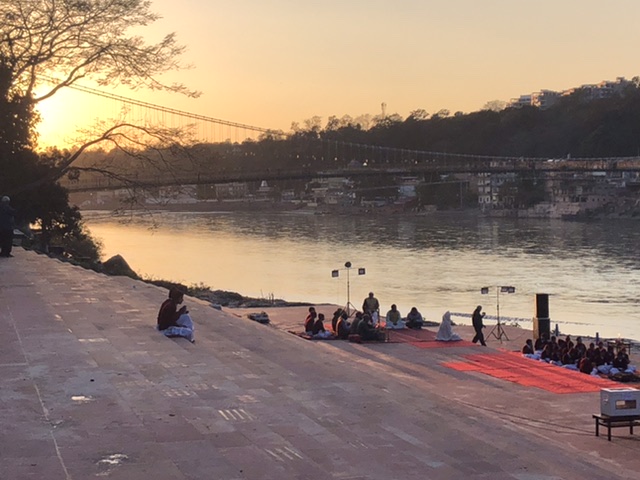
Half an hour before sunset, students and teachers from ashrams and schools congregate in their respective uniforms to sit by the river to prepare for the Puja ceremony. They chant to the music of the harmonium and the dholak drum. The ceremony culminates in fires being lit in small baskets of flowers, which are then put in the water to float downstream. As a Hindu ritual of reverence to the mother river, it is very removed from my own religion and culture. Yet the sound of the music and the sight of the small fires floating on the water are beautiful and moving. The respect for and love of the divine and nature found in India is close to my heart regardless of the different directions and beliefs that take us there.

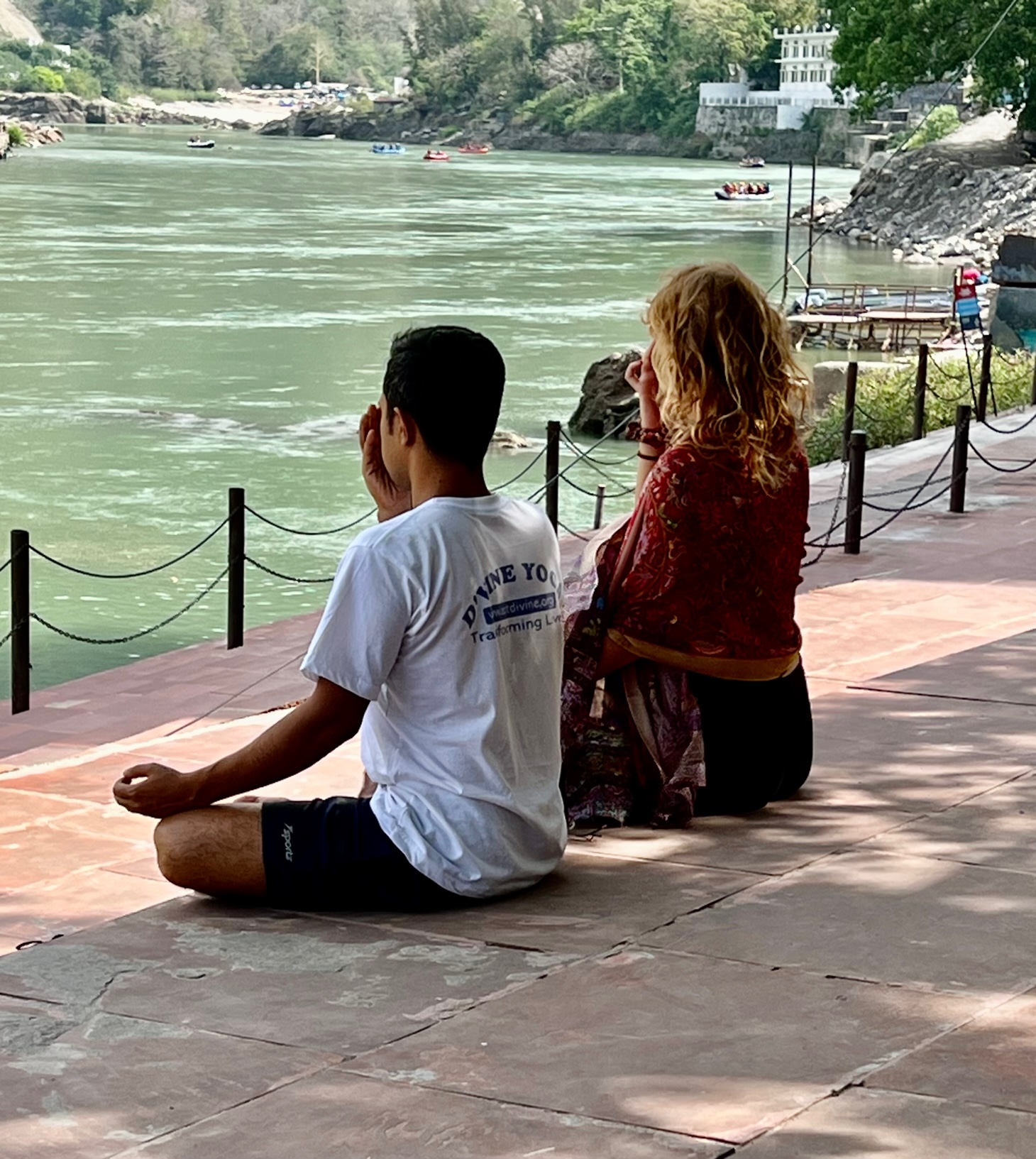
Rishikesh is probably known best as the yoga center of India. Yoga practitioners from all over the world come to practice with Rishikesh yogis. Many of them come to take certification courses of varying lengths. From late February to mid-May it’s common to see people of all ages, speaking many different languages, walking through the streets of Rishikesh with a yoga mat slung over a shoulder.

The city is equally well-known as a spiritual center, hosting gurus such as Moojii for annual month-long retreats. Preparations begin several weeks in advance and in addition to meditation and satsang sessions for registered retreatants, a daily public talk with a Q&A session is open to all.

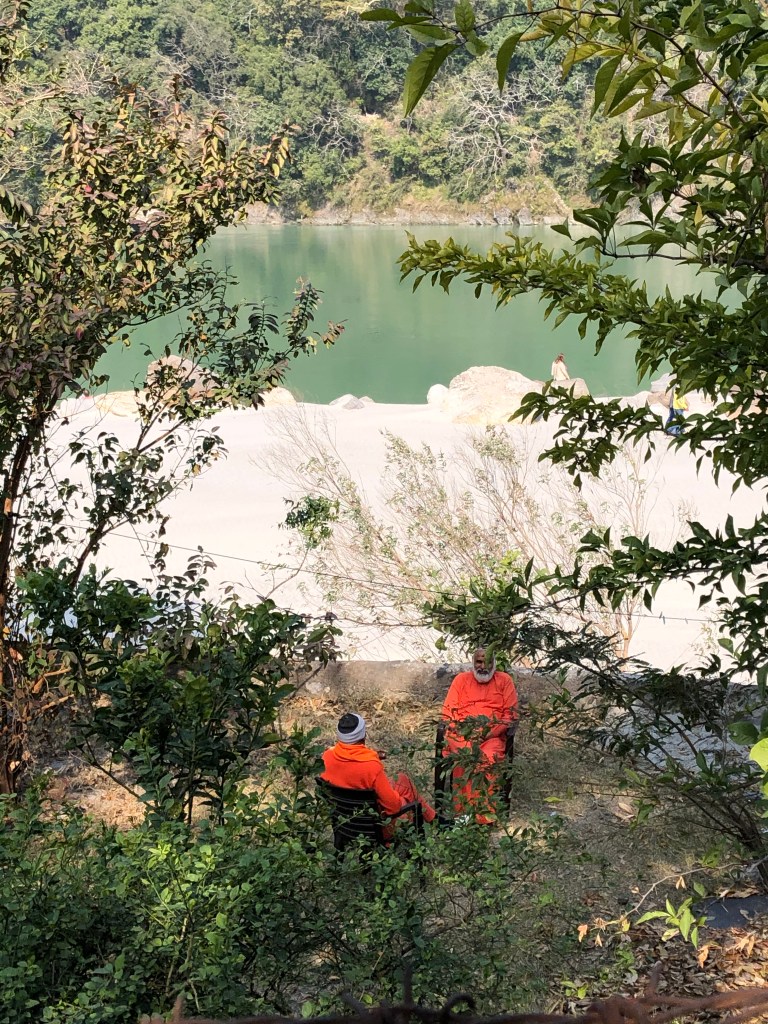
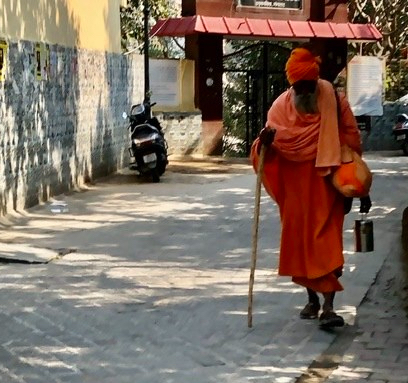
Orange is the color of Rishikesh. It is a sacred color in Hinduism, representing fire and the burning away of impurities. It’s the color worn by holy men…and many tourists. It brightens the atmosphere and, though thought garish in Western countries, is the norm in Rishikesh, just as the sound of bells – on anklets, cow collars and bags – is commonplace and cheery.

The Ganges, the chanting and music in the air, yoga, meditation, classes, cheery colors and sounds, cows and monkeys and dogs living in harmony with Sadus, spiritual seekers, tourists, shopkeepers and teachers. It’s all part of the magic of Rishikesh. But ultimately I really don’t know what it is about Rishikesh that imbues so many of us with peacefulness and calm smiles and burrows deep into our hearts.

The trick is safeguarding whatever that is and bringing it home with us.