Read the most recently received. Electricity being what it is here in southern India, the first version went out unfinished and unedited.
If you receive “Stories our parents tell us” twice…
1


Read the most recently received. Electricity being what it is here in southern India, the first version went out unfinished and unedited.
Just back from a dip in The Arabian Sea.
I’m sitting on the wooden balcony just outside our room, watching the mid-morning calm waves, really ripples, just as I’ve been contented to do most of my waking hours over the past four days.
There’s a rhythm to the sea. Several actually. And a rhythm to life here dictated by the sea.
The waves arrive from the south and break on the shore traveling northward, but oddly seem to recede back into the sea at the same time along the shore for quite a way. I’m sure there are physicists among you who can explain that phenomenon to me in language I wouldn’t understand.
In the morning the sea is so calm that the ripples have no sea froth. By mid-morning they are already small waves complete with white caps. In the afternoon the waves become quite healthy. At night they are loud and powerful and often stormy.
When they are at their calmest the fishermen in this small village of Thumboly are out in force. They employ several different techniques but none of them catches much, and the few fish they catch are tiny. We’re told there was a time when fishing was a viable industry here but that time is long over.
By mid-morning there isn’t a soul on the pristine beach other than the occasional tourist. By mid-afternoon the fisherman are out repairing their nets or playing card gambling games , sitting on the sand in groups of six to ten men.
It’s a bit of a mystery where the women are. Home, I suppose. We see the occasional woman shopkeeper and saw a little girl out playing with a little boy on their shared bicycle on one of our afternoon walks. But mostly we see men and boys. Playing soccer. Playing volleyball on the beach. Walking the village streets.
Our days are quite serene.
My partner takes a morning beach walk early every morning. He always comes home with a new adventure to tell me about. One morning it was two children out walking their crab…on a leash.
We have a breakfast of some kind of unfamiliar grain dish in various forms, a vegetable in soupy sauce to put over it, papaya or some other fruit, and tea.
Once breakfast is digested I spend an hour on my yoga mat. My practice immediately returned to its full glory with the first unfurling of my mat opposite The Arabian Sea. It had sadly stagnated for the past six months.
We read, write, and chat most of the day to the accompaniment of the sea’s music.
In the late afternoon we take a walk through the narrow byways of the residential area, where people happily greet us with a friendly “Namaste” and often ask us in to eat (which we politely decline) or into the small commercial area just past the large church.
Today, we decided, was the day we would venture into the water. We were out there at 9:45 when the waves were just starting to be more than ripples. My partner went in first to scout out the drop off and reported that it was sudden but not too steep. The water was warm and delightful.
In I went. But not far and not for long.
Sixty years ago my mother told me about her good friend, Joseph. They were childhood friends and both enrolled at Northwestern University in Chicago. He was an engineering student and she was a drama major so they didn’t share classes but they shared social circles.
In their sophomore year they went to the beach one afternoon with a group of friends. A beach on Lake Michigan they often frequented. Like Israel’s Kineret, Lake Michigan could be treacherous in the afternoon, with a strong undercurrent.
As the story went, on that fateful day Joseph decided to go back in the water long after the others deemed it unwise. As my mother and her friends watched helplessly he was rolled over and over, dragged under and drowned. No one could save him without endangering their own lives.
I love the ocean. If I have a few free hours I sometimes jump in the car and drive an hour or more to walk along the beach. On my way home from visiting grandkids I often take the slower, longer route to stop off for a half hour of breathing sea air and watching sea birds hop in the shallows.
I’m not convinced that my mother’s story about her friend, Joseph, was true or just a cautionary tale, but it accompanies me to the beach every time I go. I rarely go in the water past my ankles or, if I do, it’s only a little above my waist. I need both feet firmly planted. I have what I like to call a healthy respect for the power of the ocean, while recognizing it as anxiety that’s not always justified.
I enjoy my grandchildren’s fearless frolicking in the waves and beyond but only while keeping an eye on the lifeguard to make sure she remains alert. I’m happy that some of my children and grandchildren surf; proof that Joseph isn’t a filter through which they experience the sea.
I’d love to ask my mother if she actually had a friend named Joseph and if she actually watched him drown in Lake Michigan. But she’s been dead for twenty years and, really, does it even matter?
Beware all you parents out there. Stories our parents tell us are powerful beyond logic.
In Israel parents teach their children a saying very early on in life – Whatever happens, I’m satisfied. It rhymes in Hebrew and expresses a futile hope on the part of parents that it will nip complaining in the bud.
Pretty ironic since Israelis (and maybe Jews in general) are among the most, ahem, discerning (read critical, judgmental, complaining) people I’ve come across in my extensive travels. And I am one, so I’ve had plenty of experience.
On the positive side, perhaps that’s why we’re the start-up nation with more technological and medical innovation than any other place on earth. That squinting one-eyed gaze at everything around us and thinking…hmmm. I could do that better.
On the not-so-positive side, it’s a pain in the rear end to be so often surrounded by people who are almost never satisfied with the way things are. The food in the restaurant is never quite right even after an order reminiscent of Jack Nicolson in Five Easy Pieces (I’ll have omelette plain, with a chicken salad sandwich on wheat toast, no butter, no lettuce, no mayonnaise, hold the chicken). The room temperature is too cold or too hot. The teacher doesn’t pay enough attention to my kid or singles her out for special (not good) treatment.
I wasn’t feeling great the other day. Stuffed up, headache, scratchy throat, didn’t sleep well. Here I am in southern India. Home of Ayurvedic medicine. Decided to get an Ayurvedic massage. For the uninitiated, this involves total nudity and more oil than a Mediterranean diet calls for in a lifetime.
The very sweet young woman spoke no English – zero – and my Malayalam is pretty rusty. There was absolutely no possibility of any request whatsoever. None of the usual massage direction – harder, softer, higher, lower. Nada.
As I lay there swimming in oil I thought THIS is the opportunity of a lifetime to fulfill that Israeli saying – Whatever happens, I’m satisfied.
I found thoughts popping up about how I might prefer this, that, or the other thing she was doing but they disappeared as quickly as they arose. They were irrelevant given our mutual lack of communication skills.
Ultimately, after she wiped off a lot of oil and I pulled my shift over my head – this not being my first rodeo I knew that less is more is the rule when committing to a Ayurvedic massage – I showered and crawled back into my stuffed up, scratchy throated, headachy nest and realized my headache was gone, my throat a bit less scratchy, and that prickly low grade fever feeling had disappeared.
I woke up this morning with more energy than the past couple of days. Had a peaceful, flexible hour on my yoga mat, and sat down to ponder the potential of “Whatever happens, I’m satisfied.” She knew what she was doing and any direction from me would have just gotten in the way.
It’s a continual conundrum in my mind. This contentment with what is versus the striving for improvement.
What do you think?
PS The above photo was taken from this very balcony three years ago. The most peaceful place on earth, Thumboly Beach
I’ve been teaching meditation in one form or another for the past 20 years. During that time I’ve listened to hundreds, maybe thousands, of hours of dharma talks given by insightful teachers. I’ve been a member of meditation groups – presently a wonderful group of people from the west coast of the USA on Zoom every other week – pretty much consistently for decades. I’ve read dozens of books about mindfulness, awareness, no self, here and now, letting go, equanimity, and lots and lots of other catchwords and phrases. You know the ones.
All this is to say that from many different sources, I’ve received the magnificent gifts of self-knowledge and the possibility of inner serenity during tough and not-tough times. I’m hugely grateful to all my many teachers, those who call themselves teachers and those who don’t, who give of themselves so generously and to God for giving me the time and resources to take advantage of it all. As my husband and I often say when thinking of our bountiful lives – We couldn’ve been born under a bridge in Mumbai.
But it’s only recently that the light went on over my head concerning not only the reality of being born under a bridge in Mumbai – having few material resources and few possibilities of their attainment – but living in a reality that doesn’t allow for integrating those catchwords into one’s life.

It came about one evening after teaching a Raja yoga class (which includes a segment of meditation). I stood talking to one of my students, a particularly beautiful young woman who looks startingly like a well-known gorgeous movie star. She’d obviously lost some weight from her already-very-thin frame and had black circles under her eyes. Her entire affect was one of misery. As it turns out she was caught up in the turmoil of what she saw as a terrible injustice on the part of the employer at the job she’d just left. She felt that, while she’d left the company, others were still suffering the injustice and she was struggling with the idea of suing the company. It took me a few questions to realize that, in fact, it had nothing to do with her directly anymore. I kept thinking surely I must be missing something.

She said that she hadn’t been sleeping and had lost her appetite; that she couldn’t stop thinking about the bad behavior of her former employer. I suggested that she might focus on her supportive husband, healthy scrumptious kids, and her new (more appropriate) employment. We spoke about the possibility of letting the drama and injustice go. She said she’d think about it, but I could tell she wasn’t happy with the direction our conversation had taken.
Since she only comes to my classes sporadically, I noticed that I hadn’t seen her in a while but didn’t think much of it. I wished her well in my heart and hoped that she was able to make peace with not championing those who had remained with her former employer.
About a month later she got in touch with me. She’d been on a 10-day silent retreat. Her first.
She said that when we’d had the conversation about her former employer she’d been very angry with me. She thought my idea of letting the injustice in her former workplace go was surrendering to unethical behavior and part of the larger problems in the world. (in the world!! no less). It was only very far along into the retreat that she felt what she called a clarification which was like the lifting of a heavy fog. She realized that the entire issue of the injustice wasn’t her issue at all; that her inability to see what was clear to me lay in her having always been responsible for her siblings and even her parents in her dysfunctional home. She needed to take care of everyone around her to feel okay about herself. Once she recognized that she was able to let it go. She felt a huge physical relief as if a suit of armor had been lifted from her body.

Of course, I was happy for her and hopeful that she would continue to safely investigate her feelings. I know there’s a lot of inner disquiet and deep fragility there. But I was also chagrined at my cavalier projecting onto others with catchwords and phrases I never stopped to consider might be out of the realm of possibility for some of them.
I know better than that on so many levels, and, apparently, know less than that on others.
I began to look more carefully at other concepts I act as though are healthy, positive, and accessible to all, with a more discerning eye. Is this one really accessible to all? And that one?

It’s all fine and well to talk about relinquishing our narratives and not letting them be in control of our present lives, for instance, but is that accessible to everyone in the present moment of their lives?
Easy to talk about being grateful and satisfied with what is, but how does that resonate with someone who never experienced the unconditional parental love that encourages an ability to feel that one has enough, that one is enough?
And what about letting go, being joyful at the happiness of others, and oh so many others?
I’m embarrassed to say that I seemed to operate on the belief that saying it’s possible, telling stories and legends about people who have integrated such things into their lives, could shine a light bright enough to make it come true for my students. But while I like to think that it could and did for many of them, I will be making amends/changes to accommodate those for whom it’s not part of their reality…yet.
My reality is an ever-changing thing. Nothing in this life is permanent. So why in the world should my ever-changing reality be anyone else’s reality. For the most part, even in our uniqueness, we share quite a bit of similarity to those in our general milieu, but not enough to assume….well, anything.
You know what they say about people who assume…

My partner and I love to travel Have you ever had a dog who was at the door every time she heard the jangle of the car keys? That’s us.

As soon as our youngest child was old enough to be left with his brother and sisters and a caretaker we started taking at least a month of our winters to travel to far-flung places.
We’ve been to the Peruvian Amazon twice, Patagonia, the Galapagos Islands and lots of other places in South and Central America, Spain, Amsterdam, South Africa, three of the more out-of-the-way islands in the Caribbean, and to India twice for over six months altogether.
We have a friend who says he prefers to see the world from the comfort of his easy chair on his big screen tv – without the humidity, bugs, crowded trains and lack of electricity and WiFi. I get that but it makes me sigh.
Traveling by small motor boat for four hours to reach a lodge deep in the Amazon forest, feeling the weight of the heat and humidity, hearing bird calls in a night that is totally black because there’s no electricity for kilometers in every direction, coming upon thousands of ants who eat all the leaves off a huge tree in a day or two, peeling a cocoa plant to taste the bitter chocolate inside; you can’t experience any of that watching National Geographic on your tv.

But when I might answer the question of why we like to travel so much with that paragraph somehow it still leaves people puzzled.
I’m reading a book called Under the Wide and Starry Sky by Nancy Horan. It’s basically a sweet romance between the Scottish writer and poet, Robert Louis Stevenson, and his American wife, Fanny. A pleasant story; nothing earth-shattering. Very nicely written. And then I came across a few paragraphs written about Stevenson introducing Fanny to all the places in Paris that he remembers from trips there with his parents as a child. Many have been changed by war and the interceding years. They also explore new places together. Only a few paragraphs but the excitement of sharing the sights and memories and it all came together for me.
The bonding and beauty of travel.
Experiencing a new culture together; realizing how different cultures can be and, at the same time, how many commonalities there are between people, seeing animals in the wild, on their turf, living in freedom, moving out of our routine and, sometimes, out of our comfort zone – together – sharing the confusion, the hilarious mistakes, the unexpected.
We were once surprised by an elephant who stepped languidly out of the forested side of the narrow road and stood 15 feet from us calmly staring at us and munching on big leaves, before sauntering off to the other side of the road.
There was the exotic, elderly Sadu (spiritual street person) with whom we shared a few words every morning on our way to Hindi class. One day he told us he wouldn’t be there for a few days because he was going home to see his family. What? His family?

We traveled by train, plane, and taxi for the privilege of seeing families of some of the 3000 remaining white rhinoceroses in the world – mom, pop, and children – wandering freely in large fields.
And the bonding isn’t only between my partner or child and myself on our trips but between other travelers with whom we share a few days or a week in a place foreign and sometimes challenging for us all. Travelers tend to share intimacies their long-time friends have yet to hear. A Latvian couple, traveling with their two young children, left their kids in our care overnight while they spent a day and night with a shaman in the forest. We shared dinner with a couple from San Francisco several times over the years after becoming friends in South America.
How often is one of us reminded of something from our travels that when shared takes us both back to something amazing or funny or breathtaking or just brings a wistful smile to our lips?
The magnificent noise and sight of a glacier calving into the water in Puerto Merino, hundreds of macaws congregated on a clay lick across from the small boat where we’ve spent an hour waiting for them to arrive, the impromptu street musicians sitting by the Laxman Bridge (where, incidentally, I was bitten by a monkey on one of our trips – ouch), the friendly guide who suggested we come home with him to meet his young family in their home in the slums of Mumbai.
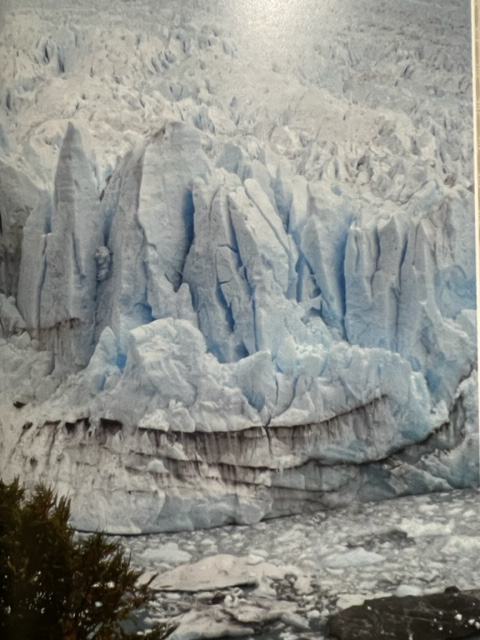
The memories of the things that went “wrong’ are often the best memories of all.
My daughter and I alighting from a park employee transport in NE Thailand. The people on the transport knew no English but we understood from them that we just needed to follow the narrow asphalt trail to arrive at our bamboo hut in the cloud forest. Many kilometers later, with all our possessions on our backs, the asphalt path had become a dirt path and there was still no sign of civilization, much less our bamboo hut. At some point, after hours or walking, we had to put our backpacks down because we were giggling so hard that we couldn’t see for the tears of hilarity at our situation. No worries. We came upon the bamboo hut after about 10 kilometers and had an amazing time deep in the forest.
Driving a recommended shortcut through the mountains to reach an isolated farm, we suddenly found ourselves socked in by dense fog. I, the designated driver in countries where driving is on the left, literally photographed what I could see in front of me in my mind and closed my eyes in prayer driving each 50 feet, with a steep chasm on my right and a road not wide enough for two cars to pass each other. When we arrived, safely, at the farm, and described our hair-raising drive through the mountain pass he’d recommended, the wrinkled, crotchety old farmer wasn’t impressed. “Yep, it sometimes gets like that.”

I think many people don’t like to travel exactly because of all the surprises, challenges, lack of home familiarity and comfort, language issues, and that beast – the unknown. But in my opinion, all those parts make up the wonder and beauty of travel.
It’s a surprising and delicious world out there.
Close your eyes, take a deep breath, and jump into it all with both feet, and someone you love to share it with. Take a chance on being clueless, making the “wrong” decision, taking a turn by way of eeny meeny mayni mo and exploring whatever you find there.
One answer to Mary Oliver’s question of what you might do with your one precious life.
Here are some things we all know:
Nothing lasts forever.

Attitude makes all the difference.


Sleep makes moving in the world possible.
Family, friends, and neighbors – love – make us stronger.

And, yet, sometimes when bad shit happens, we just want to curl up under a comfy duvet with a good book, ignore the phone, ignore all the things we know will make us feel better, and WALLOW. Does it make anything better? Nope. Does it at all change the bad shit? Unh unh. Not a bit. Do we know it’s counter-productive even at the very minute we’re doing it? Yep. But there it is. We’ve all been there.

So I’ve had an image of myself for a very long time. Maybe since I was seven years old. Dysfunctional family. I’m the youngest. Given/took on lots of responsibility from the age of seven. I’m not complaining. It was quite empowering. It was a process that has served me well all my life. And as I aged that image stuck with me. Healthier and more flexible than my cohorts. Quicker, more energetic, more adventurous. Sure, my body was creaky and achy in the morning, but it didn’t prevent me from doing all the stuff I wanted to do.
And then…Polymyalgia Rheumatica. Otherwise known as WAKE UP CALL.
One day teaching six yoga classes a week and driving all over tarnation to visit grandkids. The next day taking 20 minutes to get dressed using strategies that would make a contortionist proud. Legs didn’t lift on their own. Shoulders didn’t rotate on their own; or otherwise.And the pain? We won’t even go there.
Two weeks of that. Googling MS, ALS, and every other dire possibility. To be honest, I didn’t really wallow all that much. Scared myself silly but not a lot of wallowing. A few minutes every morning when I contemplated maneuvering myself out of bed. Sometimes in the middle of the night when the pain of turning over in bed woke me up.
But, here’s the thing. Not just writing a post to rehash the last one.
All those things above that we all know? They’re all true! And they add up to another thing we all know about – resilience. The capacity to recover from difficulties; the ability to spring back; elasticity.
After two weeks, I received a diagnosis and could take MS and ALS off the table (whew!). Uncertainty is such a basic and inevitable part of life, but sometimes it’s more challenging than others. Weird as it sounds, I made my peace with dire diagnoses and death during those two weeks. Glad I can pack them away for now but also glad to have done the work.
All my life I’ve been super careful about medications and medical interventions in general. Recreational drugs are one thing. Drugs that ruin your liver, lead to dialysis, or send you out into the streets looking for opioids are another. Aches and pains? One ibuprofen, maybe a couple of times a week. Torn meniscus? No surgery for me; I’ll treat it with yoga, thank you very much.
So here’s reality staring me in the face in the form of steroids. Steroids! Yikes – the boogeyman of medications. They eat away at your bones. Lead to mood swings. Water retention. Moon face. Can cause skyrocketing sugar levels.

On one side, all those side effects and a lifetime of avoiding medical intervention. On the other side decreased pain and increased mobility.
Not even close.
It won’t last forever. I’m relishing in every minute of walking, slowly, carefully, avoiding stairs, in the glorious autumn weather. Sure, the steroids make sleep elusive but on the 3rd night when I’m so exhausted that I actually sleep for 4 or 5 hours straight, wow!, living takes on a new meaning. I hired a cheerful, energetic cook, to free up my good hours for other things and happily peruse the refrigerator feeling like I live in a restaurant.
I can laugh at the list of 11 medical appointments coming up over the next 5 weeks. Hell, I can laugh at anything.
In Buddhist philosophy, there are lots and lots of lists. One of them is a list of five obstacles. The fifth is considered the most difficult. The fifth is doubt.
I spent a bunch of time during that first two weeks, and occasionally during the past week as well, standing, huffing and puffing, in front of that fifth obstacle. Taking deep breaths. Gauging its height. I gathered 20 years of dharma talks and yoga poses and psychology books, the love and support of family, friends, students, and neighbors, the lessons of my own strength and possibilities learned early in my dysfunctional home, the belief in the meaning of life and God’s plan, took a running leap and now find myself on the other side of doubt.

It’s a tricky disease, this Polymyalgia Rheumatic. Some people are on steroids for a year and wean off them and are fine – maybe an occasional flareup. Some people are on a low dose of steroids for years, or until they die (of something else).
I have good days and not-so-great days. I take advantage of all those things we know. I thank goddess for resilience. And I invite doubt for a nice Indian tea from time to time.
I thought I knew about aging. After all, I turned 60 a full decade ago. In kindness to my knees, I stopped teaching hip hop and aerobics. Took up yoga instead. Out of kindness to my brain, I became more selective about the books I read and the movies I see. Out of kindness to my heart, I stopped following the news. Out of awareness of the generation gap and changing society, I became more curious about how my grown children were making child-rearing and professional decisions and less opinionated about all that.
I thought my practice of acceptance of the aging process in so many areas was pretty admirable.
Aching knees, varying levels of lower back pain, a 15-year acquaintance with sleep problems, sight issues.
Check, check, check, and check – all accepted graciously.

I think of myself as an optimist but not disconnected from reality. I realize that sickness and death are inevitable. Looking around me at friends with cancer, MS, joint replacements, and a general decrease in energy, I sometimes wondered what awaited me…specifically.
But no more than the occasional and very brief thought.
And then over a period of a week my quadriceps decided to work at 25% capacity and provide unwelcome pain, my shoulders and collarbone joined the party, and my knees refused to be left out.
I went from 90% mobility to 20% mobility over that week. One morning it took me twenty minutes to get dressed. Pain moved in as a permanent body mate.
I felt and walked like a 90-year-old woman…and not a healthy one.
In the past ten days, I’ve seen my family doctor 3 times. I began a series of tests for everything imaginable. Being fortunate enough to live in a country with excellent national health insurance and health care, the bureaucracy is daunting but the availability and affordability are there.
I’ve gone through the process of learning to let go of activities I love like a ninja on steroids. I haven’t driven to visit with grandchildren or taught a yoga class in over a week. I haven’t met friends for coffee, shopping, or a museum visit, either. My walks have gone from 4 or 5 kilometers a day to 1 kilometer on a flat surface…on a good day. Cooking, which I love, has become the simplest preparation with the least standing time. And sometimes I leave the whole thing to my very supportive, caring husband.

I love to read, but when that’s pretty much the only thing I can do it gets old. I love to watch tv series, but I’ve discovered the limits of that, too. I’m super appreciative of my friends who drop by to chat, pick up a few things at the grocery store for me, or just check in to see how I’m doing.
I’m pretty careful about the meds I’m willing to use and how much. I’ve always been very stringent with things like ibuprofen and even simpler pain medications. My pain threshold is pretty high. I went from an ibuprofen or two a week, to one a day, to two a day, and then on to something stronger. Waking up to debilitating pain in so many joints and muscles every day has turned me into a junkie for the 3-7 hours of significantly decreased pain that a Naxyn 500 pill can give me.
My kids are great. They call. They listen. They’re supportive.
The hard truth of this thing, though, is that all of the wonderful people in my life give me a big morale boost and are very logistically helpful, and necessary, but ultimately pain is an individual experience.

Twenty years of meditation and learning Eastern philosophy have been helpful to me in so many areas of my life. And I’m finding that they get me through the occasional moments of deep feelings of loss – loss of mobility, loss of the activities I love, loss of comfort in my body – and allow my natural optimism to revive from occasional panic.
Exercising my deep, mindful breathing muscles and doing a lot of acceptance, living in the moment, and letting go. My ego gets in the way from time to time and the monkey chatter gets really loud, but so far I mostly can reach that sweet spot of equanimity.
Hopefully, we’ll get to the bottom of this. Find a diagnosis and management plan that works. Hopefully, I’ll be able to go back to some or all of the activities I love. Hopefully, we’ll still make that 4-month trip to India in late February.
Meanwhile, it’s been one of life’s toughest lessons yet and I’m grateful for all the many blessings in my life that are coming to my aid.

I’ve never looked like one of those thin, flexible women with ropy muscles and a BMI that barely hits 20. I’ve always looked more like the Russian and/or Polish peasant stock of my ancestors. You know, the ones who give birth in the field and go back to digging potatoes out of the earth.
Nowadays when I have no choice but to admit that I’m a yoga and meditation teacher I imagine that the (young) person asking the question is internally rolling her eyes, sometimes right after the (imaginary) once over.
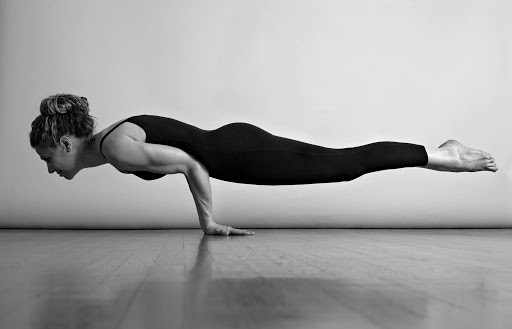
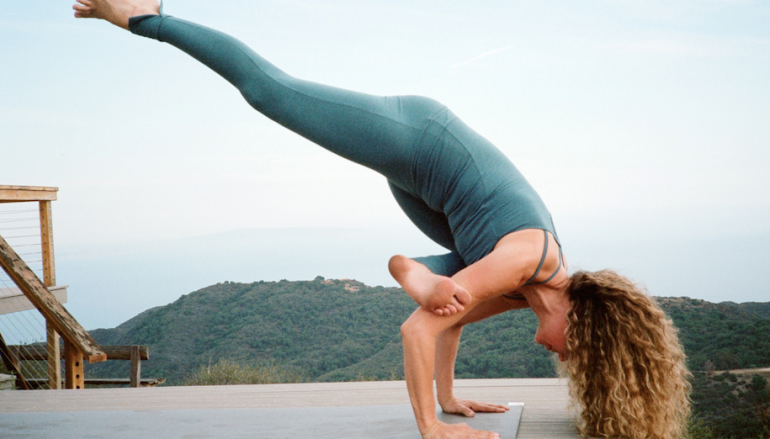
That’s all okay. Only mirroring what I know. I don’t come within many miles of looking like…

(and, no, I could never ever do that pose, whatever shape I might be in.)
But yoga and meditation teacher I am and have been for over ten years. My studio is thriving. New students joining all the time. As my body suggests I teach less, my heart doesn’t allow me to turn away students. I’ve begun teaching two young women my particular flavor of yoga and meditation, Raja Yoga, to lessen my load.
One of them is particularly serious; puts in the time and thought. She’s a personal trainer. I expected her to be an easy study when it came to the yoga poses so I chose to begin by looking at the philosophy of yoga; the spiritual side of things. We meandered through some of the more basic and beautiful parts of Pantanjali and then on to the eight limbs of yoga. She committed to sitting in meditation every day, and after a rocky beginning, stuck to it.

It didn’t take long for me to tumble to the fact that there’s a shitload of stuff to learn.
I began to seriously consider how I got to where I am today in my practice.
I began to recognize what stands behind the kind words I hear from my students and the word-of-mouth referrals. I teach kindness, compassion, and gratitude, and I suppose I related more to their having absorbed those lessons than any kind of real assessment of what they receive in class. All of a sudden I realized that they were receiving the gifts that I’ve received over the past 15 years. From the many hundreds of hours I’ve listened to and absorbed dharma talks, the many dozens of books and articles I’ve read, from the retreats I’ve gone to, and from the thousands of hours of my personal practice. My students are the continuous long chain of those gracious enough to share their knowledge and experience with me. A chain I joined not because of a conscious desire to change my life but because of my passion for and enjoyment of them.
For someone who teaches awareness, you might be surprised to read how shocked I was to realize that I’d absorbed so much and integrated it into my life with little recognition of the process.
There’s an annoying concept that says that when you chase after something in life it eludes you. When you stop chasing, you attain it.

So how does that work? What are we supposed to do with that? How can we attain something if we don’t try? What kind of New Age bs is that?
I’m here to say that I’ve been witness to this phenomenon more times than I can remember. At my age I might not remember them even if there were only a handful, but, trust me, there were many. And here I came face to face with another.
Those who bemoan being old, here’s a positive thought. You can’t be a wise crone unless you’re old. You have to absorb lots and lots of life to earn that badge. No one ever heard of a wise young crone. (p.s. you also have to be female, but maybe we shouldn’t go there)
So back to my serious young woman who’s learning to be a yoga teacher.
I abandoned the study of yoga philosophy temporarily and we began to get more deeply into asanas, yoga poses. She is, in fact, a joy to teach. She picks up everything immediately. She files it away and, contrary to many of us, remembers where she filed it in her brain and body so that it’s easily accessible.
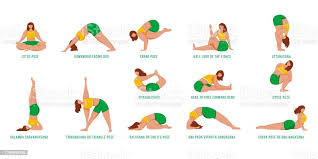
Then I asked her to build a sequence to teach during the first part of one of my classes. Okay, there were a couple of issues that were easily definable and corrected with practice. Speaking more loudly, taking more time with each pose, checking the room to see if some adjustments needed to be made to help people to more advantageously enter into and sustain poses, and organizing the sequence in a more logical manner. Maybe that sounds a little complicated, but it really isn’t. It just takes practice.
The hard part is that which only comes with a decade of passion.
I remember reading a book about ten years ago written by an experienced yoga teacher who wrote that the best yoga classes are the ones that aren’t planned. He explained that he walks into a class and feels the vibe in the room, senses the flow as he teaches, choosing the poses according to those variables. It seemed quite unprofessional and haphazard to me at the time. Sort of like attaining things by ceasing to strive for them.
But that’s how I’ve been teaching now for at least the past five years, and probably much more.
I realized after my young student taught that sequence that I had missed a crucial element. The one I missed earlier about the philosophical and spiritual nature of my classes. I hadn’t realized to what extent my classes are a by-product of hundreds of students and thousands of hours of yoga practice.
A good yoga teacher doesn’t have to look like the stereotypic Western yoga teacher. She can be of Russian/Polish stock. She doesn’t have to be able to twist her body into a pretzel. It’s not about the technique, (though beautiful yoga technique is a thing of beauty). Less about muscles and more about heart. (which is also a muscle, but you know what I mean)

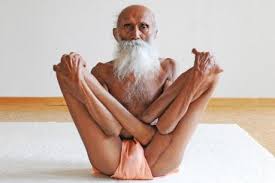
The yoga teacher so many of us seek out has the ability to sense what’s going on in her body and in the bodies and hearts of the other people in the room at the moment. And she has to have a huge repertoire of poses so that she can flow into them spontaneously in response to what she feels is going on here and now.
I can’t provide instant access to that sixth sense, even though I recognize it now in myself, because I also realize that, like the spiritual and ethical gifts that changed my life over decades, I received similar gifts over decades from my students and from an internal tapas, or fire.
Can’t run after it; have to believe in it.
I can (and did) tell her that she should commit to learning ten poses extremely well each and every week. Go over and over them. Imprint them into her body. Befriend them – each and every one – so that they’ll be there for her when her instincts kick in.
Yoga, in all its eight limbs, sneaked up on me. I dived into its depths because I loved it. I listened to dharma talks because they nurtured and calmed my soul as well as giving me continuous food for thought. After a lifetime of believing in God, I felt the actual presence of God in my life and found it felt like home.
Hopefully, when I leave for an extended stay in India in February, my young student will be ready to teach my classes. Hopefully, I can finally teach less when I return. All that remains to be seen.
But what I’ve gotten out of teaching her has been far greater than finding someone with whom to share studio responsibilities. I’ve learned what I try to convey to my students every day. I’ve learned what Patanjali wrote 2500 years ago.
The beauty, joy, and life enrichment offered through a life of yoga are attainable by everyone when practiced properly, persistently, and for the long haul.
It’s led me to internalize the gratitude I feel toward my many teachers and students for the life I love.
I just completed a 67-hour mediation course. The moderator/lecturer, Golan, was a charismatic guy in his early 50’s with vast experience and captivating stories about mediations he facilitated over the years. I wondered at the outset if I would be able to sit for five hours straight each Monday night without fidgeting and wishing I were elsewhere. Golan made the time fly. I didn’t have to do yogic breathing even once during the 10-week course.

One of the crucial concepts in mediation is the ability to differentiate the needs of the people in conflict as opposed to their positions, or presenting issues.
Eleven neighbors have entered into the mediation process regarding the parking lot between their houses where there are seven legitimate parking spaces. There are often clashes between people parked in legitimate spaces and people who park along the side of the lot making it difficult for those parked in legitimate spaces to extricate their cars. The eleven families have, between them, fifteen cars. As it turns out, two families do not have a car, one family has a driveway in which they park one of their two cars, one family has a driveway in which they park both their cars, one family does not park their two cars in the lot, and three families park only one of their two cars in the lot. One family parks two cars in the lot. Three families park one car each in the parking lot.
Have you seen this problem on a math test?
In case math wasn’t your thing, the eleven neighbors want to park nine vehicles in seven legitimate spaces.
Looks like a pretty cut-and-dry issue. Until it becomes clear that less than 50 yards away there’s a large parking lot that is virtually unused. So what are the actual needs of the people involved that must be addressed before the group can come to an amenable resolution for all involved? After all, they’re neighbors in a small community who have a common interest – living in harmony with one another.

But what does this have to do with meditating with old age? And how can one meditate with old age anyway? It is what it is…isn’t it?
About seven weeks into my ten week course I found a small hole-in-the-wall Indian restaurant with a few tables outside on the cobblestone pathway. My partner and I, both Indophiles and aficionados of Indian food, were happy to find this place. The table was a bit unsteady on the cobblestones but we made do and had a great meal with lots of nostalgia. Getting up after the meal I rested my hand on the table for stability – stability from an unstable table? You can guess the results.


The cook stayed by my side until the ambulance arrived. The paramedics were extremely gentle and pleasant, in spite of the fact that they looked young enough to be in high school. My neighbor was one of the nurses in the orthopedic emergency room. The doctor was thorough and helpful. All in all, other than two weeks of being almost totally incapacitated with back pain, it was a smooth, fortuitous experience. It could’ve been so much worse.
Well-meaning friends encouraged me to sue the restaurant – never a possibility in my mind. Being in the middle of a mediation course, however, I did think about asking the restaurant owners if they would be interested into entering into the mediation process with me.
First I wanted to take myself through the mediation process of figuring out the difference between my presenting issues and my needs.
Issue #1: I was out approximately $700 for physical therapy, my deductible for the ambulance, and having missed teaching three classes. Not a huge sum but money.
Issue 2: I wanted to be reassured that the restaurant would correct for the instability of their tables on the cobblestones.
Need #1: I wanted to be seen as a person – not a fragile elderly person who lost her footing as a result of being old and unstable on my feet
Need #2: I wanted, as part of #1, for the restaurant to take partial responsibility for the objective elements of neglect which led to the injury.

Are you starting to get the point?
From the caring cook to the empathetic paramedics to the informative orthopedist in the hospital I thought I recognized that they didn’t really see me. They didn’t see a woman who teaches yoga eight times a week or drives six hours a week to visit with grandchildren, or who goes bowling, plays miniature golf, and spends months at a time in off-the-beaten-track places. For the first time in my life, I felt the invisibility that many elderly women describe. I felt small and irrelevant and “other”.
When I wrote to Golan that I’d only be coming to the simulation part of class because I’d had an accident, he had one kind of reaction. When I came to the simulation and mentioned that I was injured in a fall, his reaction was different. He thought it had been a car accident – happens to the best of us. A fall? Ah, elderly issues.
Clearly this may have all been in my head.
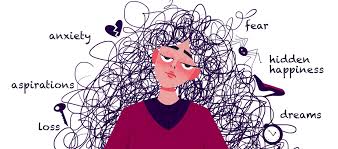
And that’s exactly the point. In life, as we all know, shit happens. The first arrow. Inevitable It’s our reaction to it that causes suffering…or not. The second arrow. Within our control.
In my recent revelations I realized that, yep, we can be in constant mediation with the aging process. Searching for our needs when hit in the face (or the back) with the issues. It’s an ongoing occurrence.
Not as easy as a one-time epiphany. Ah, yes, I can have a happy, peaceful old age through acceptance.
Oh yeah? What about when there’s a new challenge a few times a month? Or how about a few times a week? What about when it’s limited mobility? And how about the exasperation of the person who assumes you’re not getting his explanation of the electrical system in your home because you’re old?
The good news is that if you’re into the mediating process you’re well on your way toward living your life instead of killing time.
Or as Mary Oliver said, “What is it you plan to do with your one, wild and precious life?”

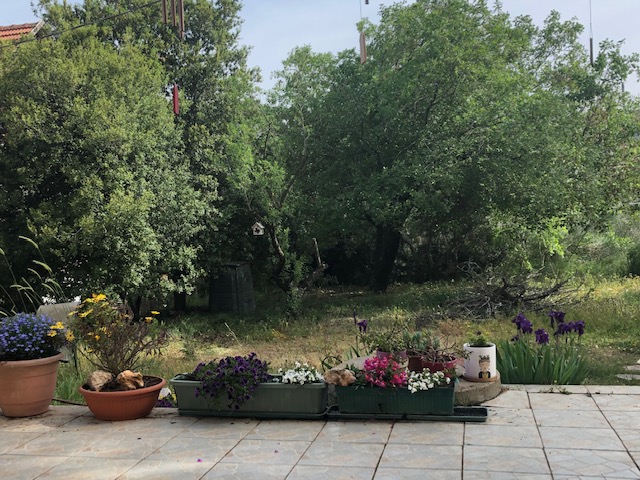
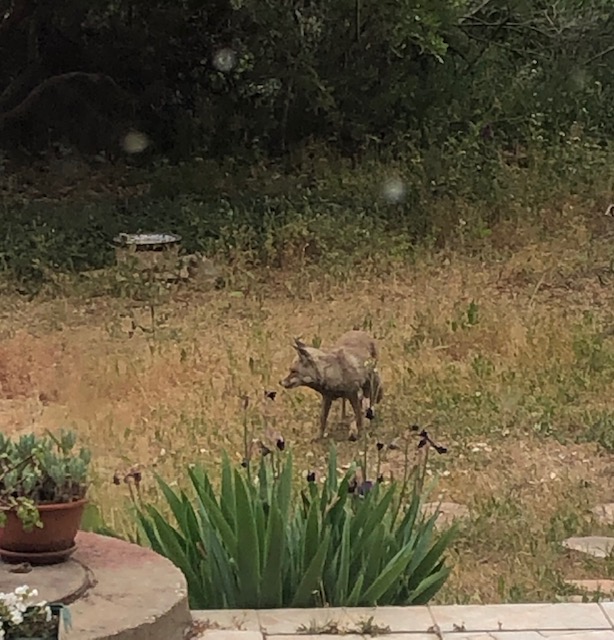
I live in a pastoral, peaceful community of 1000 families. Forty years ago, I’m told, there were no birds because there were no trees. Today my partner and I sit outside on our back porch, eat our breakfast of fresh fruit and freshly brewed coffee and tea, and watch dozens of birds eat theirs – the pieces of bread I scatter for them in our backyard every morning – before they drink from their bird bath or take leisurely baths. Sometimes a fox makes a brief visit, too. Idyllic.
The Corona pandemic is over in Israel. Stores and schools have been open for a while now. We haven’t been required to wear masks outside for weeks. In another week we won’t be required to wear them inside, either. During the various times when it was advised that people over 60 remain at home, teenagers in our community brought us the food we ordered from the community grocery store, and were happy to be able to help.
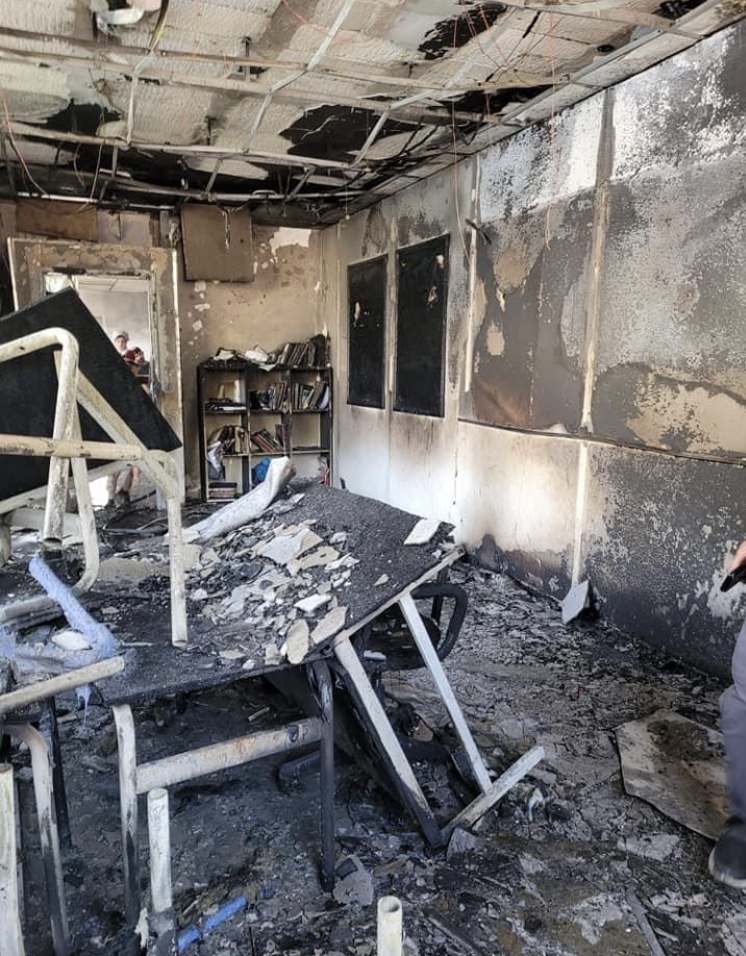
Recently Hamas, with differing excuses, renewed their shelling of our cities. Thousands of rockets were shot off indiscriminately toward residential areas, sending children and their parents rushing for bomb shelters. In some places, they had 15 seconds to get there before the rockets fell. Luckily, or by the hand of God as some people believe, we’ve developed a device to prevent 90% of the rockets from falling to the earth.
Here in our community, we have been an oasis of serenity, even as rockets fell and Arabs burned Jewish cars and synagogues in Lod, Acre, and Yafo. Communities where Jews and Arabs have been trying for over a decade to share neighborhoods in experiments of true co-existence, the veil of illusion was brutally torn away.
As anyone who watches television series or isn’t totally cut off from the news knows, the US is consuming itself like a snake devouring itself from its tail. Black protests, complete with vandalism, theft, and, in some cases, violence; Asians coming out of the closet concerning the decades-old prejudice against them, triggered by the murder of Asian spa workers. Whites feeling marginalized; any action on their part is wrong. Anti-semitism on the rise. Jews feeling it’s unsafe to walk on the streets of America wearing a kippah (Jewish head covering), and being assaulted in places as far-flung as New Mexico.
Books are being censored. History is being rewritten, People are being canceled.


“Politically correct” reigns and woe be unto the person who uses the wrong pronoun.
George Floyd, killed by police officers while resisting arrest, was found to have fentanyl in is system to the point of intoxication. His autopsy also revealed recent methamphetamine use at the time he was arrested for allegedly trying to pass a counterfeit $20 bill. He had advanced heart disease including an enlarged heart, one artery 90% blocked and two others 75% narrowed. Excessive force was used in restraining him, which, along with the other factors, resulted in his death.
George Floyd was made a martyr for the cause of Black Lives Matter. Of course they matter. No more or less than the lives of all other people. George Floyd may represent the hundreds of Blacks stopped unnecessarily by police officers, treated with suspicion and hostility, who are fearful for their lives during such stops. But does anyone really want to raise their children to think of a repeat criminal, convicted of eight crimes between 1997 and 2005 as a hero? A man who served four years in prison for aggravated robbery during a home invasion?
In what universe is every Black person in prison a victim while Jews running for shelter from falling rockets are aggressors? In what universe is a pandemic a worldwide government conspiracy and the vaccine to prevent further spreading of the virus an extension of that conspiracy? In what universe are children who come home from school with a barely passing grade met with “Good Job!” by the parents? In what universe is the murderer of an elderly woman beaten and thrown out of her window acquitted because he was under the influence of marijuana at the time? In what universe are people arrested for violent crimes released on their own cognizance immediately because it would be discrimination against the poor to require them to post bond? In what universe are crimes against Blacks hate crimes while crimes against Jews are not?


It’s a universe which is addled, afflicted, and astray. Where reality is what the media reflects instead of what we actually experience; where a person’s word is no longer the truth as she knows it but as she wants you to believe it to be. Where anything goes if you can sell it, and you have no responsibility for the consequences. Where nothing is expected to last – not jobs, appliances or relationships. Instant food, instant gratification, instant success, or move on.
Lots of people are saying what a tough year it’s been. I’m reminded of the two arrows – the first one is the inevitable pain in life such as a pandemic. The second arrow is self-inflicted suffering like societies consuming themselves like a snake eating itself from its tail.
How bad will things get before we wake up to the absurdities? I hope I live to see it. I also hope the damage done in the meantime won’t be too horrendous.

 gettingoutalive